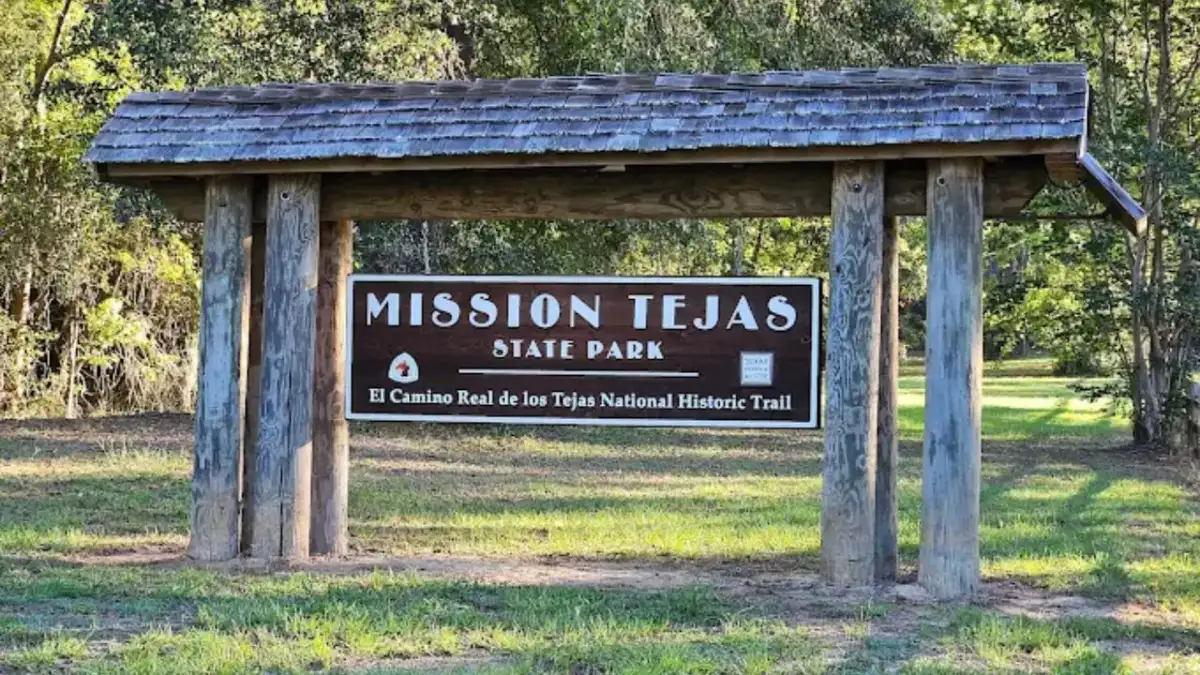
The red dirt of the historic El Camino Real stretches beneath towering loblolly pines at Mission Tejas State Park. Located in Houston County, this 660-acre park protects three centuries of frontier heritage, combining colonial Spanish trade routes, pioneer homesteads, and quiet forest recreation.
Note
Key Takeaways for Mission Tejas State Park
- Location: 120 State Park Road 44, Grapeland, TX 75844 (Houston County in the East Texas Pineywoods).
- Day Admission: $4 for adults (ages 13+); children 12 and under enter free; Texas State Parks Pass accepted.
- Camping: 17 water and electric campsites ($15/night) and 5 primitive hike-in campsites ($10/night).
- Trails: 8.5 miles of hiking and biking trails, featuring original trail ruts along the El Camino Real.
- Historic Landmarks: Commemorative 1934 CCC log mission replica and the restored 1828 Rice Family Log Home.
Mission Tejas at a Glance: Hours, Fees, and Fast Facts
Mission Tejas operates daily from 8:00 AM to 10:00 PM for day-use visitors. Because the park maintains an intimate campground with only 22 total campsites, booking a day pass or overnight reservation in advance via the official TPWD Mission Tejas State Park Official Portal prevents turnarounds during busy spring weekends.
The $4 adult day fee makes the destination an affordable outdoor retreat when touring the best East Texas state parks. Guests can download an official Mission Tejas State Park map at the headquarters to navigate trail intersections and historical markers with ease.
| Camping Facility | Nightly Rate | Total Sites | Amenities & Hookups |
|---|---|---|---|
| Water & Electric Campsites | $15.00 | 17 sites | 30-amp electric, city water hookup, picnic table, fire ring with grill, nearby restrooms with hot showers |
| Primitive Hike-In Campsites | $10.00 | 5 sites | Hike-in distance 0.5 to 1.0 mile, fire ring, pack-in pack-out water, secluded forest setting |
| Group Picnic Pavilion | $50.00 | 1 pavilion | Capacity up to 75 guests, stone fireplace, picnic tables, electric outlets, scenic ridge view |
Travelers comparing Grapeland TX state parks appreciate the park's tranquil pace. Unlike larger lakeside parks, the intimate acreage ensures that trailheads and picnic pavilions remain peaceful throughout the afternoon.
Historical Journey: From 1690 Spanish Mission to CCC Legacy
Exploring Mission Tejas connects travelers to the foundational chapters of Texas history. The park honors the memory of Mission San Francisco de los Tejas, the very first Spanish mission established in East Texas back in 1690.
While masonry structures like Mission San Jose represent later stone architecture in South Texas, the East Texas wilderness required early Franciscan friars to adapt to dense pine forests using heavy timber construction.
The Disappearance and Rebirth of Mission San Francisco de los Tejas
Father Damian Massanet and Spanish soldiers originally established the outpost near a Nabedache Caddo village. Unfortunately, crop failures, European diseases that devastated the native population, and mounting hostility forced the friars to abandon the settlement within three years.
In the autumn of 1693, the retreating friars buried the heavy mission bell and burned the wooden mission to prevent its desecration. For nearly two and a half centuries, the exact original site remained hidden in the forest.
During the Great Depression in 1934, young men from Civilian Conservation Corps Company 888 erected the handsome log chapel standing in the park today. Built using native timber, hand-hewn logs, and hand-forged hardware, the replica honors both early colonial pioneers and the craftsmanship of 1930s conservation workers.
The Rice Family Log Home: A Stagecoach Stop in the Wilderness
Another major historical treasure on the grounds is the Rice Family Log Home. Constructed by Joseph Redmund Rice, Sr. between 1828 and 1838, this large dog-trot cabin originally stood sixteen miles away along the Old San Antonio Road.
The structure functioned as an essential stagecoach stop, boardinghouse, and tavern for early immigrants traveling through the wild Texas territory. In 1973, preservationists relocated the historic homestead into the state park to safeguard its cedar log walls from demolition.
Visitors can inspect the hand-notched timber joints and broad open breezeway. The architecture reveals how early settlers adapted their living spaces to catch East Texas summer cross-breezes.
Exploring the East Texas Pineywoods: Hiking and Biking Trails
Hikers and trail runners can explore 8.5 miles of multi-use Mission Tejas State Park trails winding through deep ravines, sandy hills, and hardwood creek bottoms. Travelers who enjoy this hilly wooded terrain will find a similar woodland atmosphere at Fort Boggy State Park further west.
San Pedro Creek cuts through the property, carving dramatic ravines that surprise visitors expecting flat East Texas plains. Elevation changes range up to 150 feet across ironstone ridges, providing a great aerobic hike.
Hiking the Nabedache Loop and the El Camino Real Segment
The Nabedache Loop serves as the central artery of the trail system, offering a gentle 1.1-mile stroll through loblolly pine canopies. The path passes close to the CCC mission replica, parking areas, and picnic clearings.
A designated spur trail leads directly down into the sunken earthen ruts of the National Park Service El Camino Real de los Tejas National Historic Trail. Stepping into these deep swales puts you on the exact path traversed by Spanish friars, soldiers, and Anglo-American settlers centuries ago.
The CCC Bathtub Trail: A Quirky Historical Walk
One of the park's most charming surprises is the CCC Bathtub Trail. This short quarter-mile path leads to a carved stone basin hollowed out of solid sandstone bedrock by CCC laborers in the mid-1930s.
Camp records indicate that weary workers channeled cool spring water into the rock pool to wash off red dust during humid summer afternoons. Today, the secluded moss-covered basin provides clear evidence of the humor and ingenuity of Depression-era workers.
Mission Tejas Camping: From Electric Hookups to Primitive Hike-In Sites
Overnight campers can choose between modern utility hookups and secluded backcountry tent spots. Travelers driving motorhomes can verify site lengths and utility amperages through the TPWD Mission Tejas campsites and fees directory, similar to the planning needed when visiting Lake Bob Sandlin State Park.
All standard campsites are positioned beneath mature pine and sweetgum trees that cast dense shade during the midday hours. The park's remote location away from highway noise ensures remarkable stargazing on clear East Texas nights.
Choosing the Best Campsite for Your Stay
The 17 water and electric sites feature 30-amp electrical pedestals, pressurized potable water spigots, picnic tables, and in-ground fire pits with grill grates. Modern restrooms with hot showers and flush toilets are positioned within easy walking distance.
Campers seeking an East Texas Pineywoods camping experience with genuine solitude can reserve one of five primitive sites. These tent-only clearings require packing all gear and water up to a mile down forested paths, rewarding backpackers with undisturbed night sounds.
Essential Gear and Seasonal Camping Tips
Spring and autumn bring the finest camping weather to Houston County, with crisp morning temperatures in the 50s and pleasant daytime highs in the 70s. Winter stays are equally enjoyable, provided campers bring sleeping gear rated for freezing overnight temperatures.
Summer campers must come prepared for high humidity, mosquitoes, and ticks. Packing fine-mesh screened shelters, permethrin-treated clothing, and DEET insect repellent ensures a comfortable outdoor stay.
Beyond the History: Things to Do at Mission Tejas State Park
While history serves as the primary magnet, the park provides rich wildlife observation and nature photography. Visitors who love pine forest biodiversity often pair this destination with a stop at Huntsville State Park to the south.
Birders regularly spot pileated woodpeckers, pine warblers, red-shouldered hawks, and barred owls calling through the tree canopy. White-tailed deer frequently graze around the open meadows near the Rice Home at dawn and dusk.
Fishing and Nature Watching in the Pineywoods
A tranquil 1.5-acre pond stocked with largemouth bass, channel catfish, and sunfish sits near the main day-use area. Under Texas State Parks regulations, visitors do not need a state fishing license to fish from the bank or pier inside park borders.
The park office offers free loaner rods, reels, and basic tackle boxes through the TPWD Tackle Loaner Program. It is an ideal setting to introduce children to the joys of casting without buying specialized gear.
Catching the Dogwood Bloom: Photography Tips
Each spring, usually between late March and early April, the understory explodes with brilliant white dogwood and crimson redbud blossoms. Experiencing the dogwood bloom East Texas season is a cherished regional tradition for nature photographers.
The most colorful blooms cluster along the Nabedache Loop trail and the hill crests surrounding the Rice Log Home. Arriving during the golden hour after dawn captures morning sunlight filtering softly through the blooming tree branches.
Frequently Asked Questions
Where is Mission Tejas State Park located?
Mission Tejas State Park is located at 120 State Park Road 44 in Houston County, roughly 20 miles northeast of Grapeland, Texas, along the northern boundary of the Davy Crockett National Forest.
Is Mission Tejas State Park free to visit?
No. Adult day admission costs $4 per person aged 13 and older, while children 12 and under enter free. Texas State Parks Pass holders receive unlimited free entry for their entire carload.
What is the most visited state park in Texas?
Garner State Park in the Texas Hill Country typically ranks as the most visited state park in Texas, attracting hundreds of thousands of swimmers and campers each year. By contrast, Mission Tejas offers a peaceful, uncrowded forest escape.
Are dogs allowed at Mission Tejas State Park?
Yes. Pets are welcome throughout the park campgrounds and along trails, provided they remain on a secure leash no longer than six feet at all times.
Can you swim at Mission Tejas State Park?
No. The 1.5-acre pond at Mission Tejas is dedicated strictly to shoreline fishing and nature observation; swimming is not allowed. Nearby Ratcliff Lake in the Davy Crockett National Forest provides public swimming beach areas.
What happened to the original Mission San Francisco de los Tejas?
Established in 1690 near a Nabedache Caddo village, the original mission was abandoned in 1693 following epidemics, crop failures, and rising tensions. Friars buried the mission bell and burned the wooden buildings. The log mission standing in the park today is a commemorative replica built by the CCC in 1934.