The Lady Bird Johnson Wildflower Center Austin TX spans 284 acres of cultivated display gardens, oak woodlands, and open Hill Country trails at 4801 La Crosse Avenue. Founded in 1982 by Lady Bird Johnson and Helen Hayes, this native Texas plant garden conserves regional flora while delivering interactive family recreation.
Key takeaways
- The Lady Bird Johnson Wildflower Center operates daily from 9:00 AM to 5:00 PM from September through May, shifting to summer hours of 7:00 AM to 3:00 PM between June 1 and August 31.
- General admission costs $15 for adults on weekdays ($18 Friday through Sunday), $9 for youth ages 3 to 17 ($12 on weekends), and remains free for children age 2 and under as well as University of Texas students and faculty.
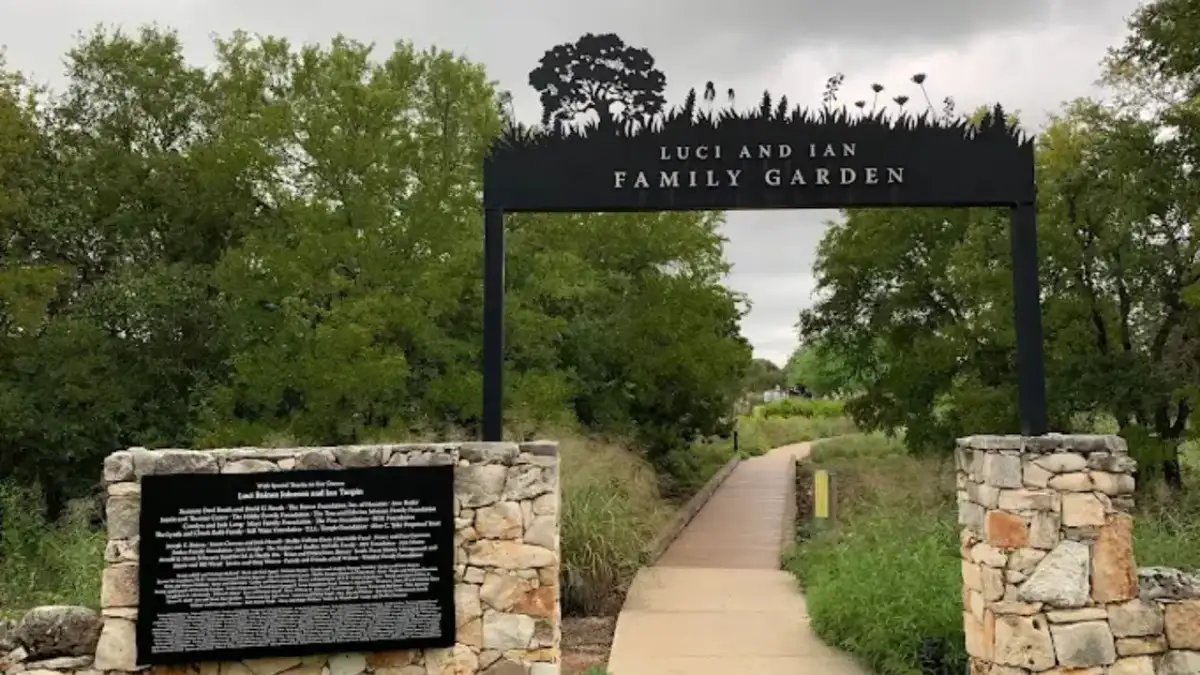
- The 4.5-acre Luci and Ian Family Garden provides interactive nature play, including a giant stumpery, giant walk-in birds’ nests, a native shrub maze, and the shallow Dino Creek.
- The Mollie Steves Zachry Texas Arboretum encompasses 16 acres featuring a one-mile accessible trail, shaded porch swings hung from historic live oaks, and more than 50 native Texas tree species.
- Pets and emotional support animals are strictly prohibited across the Wildflower Center campus and parking lots to protect native wildlife; only trained service animals are admitted.
Travelers visiting Austin find that Wildflower Center Austin delivers an educational experience distinct from urban municipal parks. As an acclaimed Southwest Austin botanical garden, the facility emphasizes regional ecological conservation, native plant propagation, and water stewardship.
What Is the Lady Bird Johnson Wildflower Center in Austin?
The Lady Bird Johnson Wildflower Center is the official Botanic Garden and Arboretum of Texas, spanning 284 acres at 4801 La Crosse Avenue in Southwest Austin. The sanctuary conserves over 900 native Texas plant species across cultivated display gardens, arboretum paths, and Hill Country research wildlands.
The University of Texas Field Stations Wildflower Center Research Profile highlights how this unit advances ecological restoration across the Edwards Plateau and Blackland Prairie ecoregions. Guests explore historic stone cistern towers, research greenhouses, and demonstration landscapes that demonstrate practical water conservation techniques.
More than 240,000 visitors tour the grounds each year to experience seasonal blooms and botanical exhibits. The grounds rank among the best things to do in Austin for nature lovers, gardeners, and traveling families seeking an immersive outdoor excursion.
The central courtyard features shaded limestone arches, tranquil reflection ponds filled with native water lilies, and the Wildflower Cafe. Visitors can stroll through themed courtyards to discover pollinator habitats and drought-tolerant perennials suitable for home landscapes.
| Garden Area / Zone | Footprint | Signature Highlights | Accessibility | Best For |
|---|---|---|---|---|
| Central Display Gardens | 5 acres | Courtyard cistern tower, perennial beds, lily ponds | Paved paths, fully wheelchair accessible | Casual walks, architectural photos |
| Luci and Ian Family Garden | 4.5 acres | Shrub maze, Dino Creek, giant nests, stumpery | Smooth crushed granite and paved trails | Hands-on nature play with kids |
| Mollie Steves Zachry Texas Arboretum | 16 acres | 1-mile trail, Cathedral of Oaks, wooden swings | Level crushed granite, wheelchair friendly | Shaded walks, tree enthusiasts |
| Savanna Meadow & Hill Country Trails | 70+ acres | Open wildflower fields, native grasses, wildlife | Natural unpaved dirt and rock paths | Spring bluebonnets, bird watching |
What Are Lady Bird Johnson Wildflower Center Hours and Ticket Prices?
Lady Bird Johnson Wildflower Center tickets cost $15 on weekdays and $18 on weekends for adults, while youth ages 3 to 17 pay $9 on weekdays and $12 on weekends. Operating hours run 9:00 AM to 5:00 PM most of the year, switching to 7:00 AM to 3:00 PM in summer.
The Lady Bird Johnson Wildflower Center Ticket Reservation Portal confirms that regular hours apply from September 1 through May 31, with final admission permitted until 4:00 PM daily. Summer hours take effect June 1 through August 31, opening at 7:00 AM so visitors can explore before midday temperatures peak.
Current Wildflower Center admission prices offer discounts for seniors ages 65 and older and military personnel with valid identification ($12 weekdays, $15 weekends). Children age 2 and under enter free, as do University of Texas at Austin students, faculty, and staff presenting valid university credentials.
General admission covers access to all open display gardens, children's play zones, and outdoor trail systems. Guests can purchase advance tickets online through the reservation portal to secure their preferred arrival time during peak spring bloom weekends.
Tip
Reserve weekend morning time slots at least five days in advance during April peak bluebonnet season, as admissions can sell out quickly.
What Activities Are at the Luci and Ian Family Garden?
The Luci and Ian Family Garden is a 4.5-acre interactive children's landscape inside the Wildflower Center designed for tactile nature play and environmental learning. The garden features giant climb-in woven birds' nests, a native shrub maze, a balance stumpery, and a flowing creek with replica dinosaur tracks.
Children can explore natural play elements without the plastic equipment found in typical playgrounds. Hand-carved limestone caves and water-collection streams encourage youngsters to engage directly with Texas geology and native ecology.
The stumpery challenges balance with recycled tree trunks, while shaded pavilions provide seating for resting caregivers. Families comparing Central Texas outdoor play spaces often contrast this native setting with the urban playground at Mueller Lake Park Austin TX.
Parents should bring extra clothing or towels for children who enjoy wading through the shallow waters of Dino Creek. Wide pathways accommodate double strollers easily, making this zone comfortable for multi-generational groups with toddlers and grandparents alike.
What Walking Trails and Trees Are in the Texas Arboretum?
The Mollie Steves Zachry Texas Arboretum encompasses 16 acres dedicated to native Texas trees, centered around a one-mile accessible loop trail under mature live oaks. Key attractions include the Cathedral of Oaks, shaded wooden porch swings, and the Hall of Texas Heroes showcasing descendants of historic Texas trees.
More than 50 distinct tree species grow throughout this sprawling collection, including cedar elms, Texas persimmons, and bigtooth maples. The Hall of Texas Heroes features saplings cultivated from acorns of legendary landmark trees across the Lone Star State.
Large wooden swings suspended from sturdy oak limbs offer quiet spots to relax in the breeze. The wide crushed granite loop provides a level surface suitable for wheelchairs, running strollers, and leisurely afternoon walks.
Connecting paths like the Roadrunner Trail link the arboretum directly back to the Family Garden and Central Complex. Benches positioned every few hundred feet give walkers ample opportunities to pause and admire the woodland canopy.
When Is Peak Wildflower Bloom Season in Austin?
Peak wildflower bloom season in Austin typically spans late March through mid-April, when Texas bluebonnets, pink evening primroses, and Indian paintbrushes create dense carpets of color. Subsequent seasonal blooms of purple coneflowers, firewheels, and Mexican hats extend floral color well into June and July.
Weather conditions and winter rainfall dictate the exact timing and density of blossoms each spring. The Wildflower Center bloom season begins in late February with golden groundsel and redbud blossoms before exploding into full bluebonnet color by late March.
Visitors planning regional road trips can review our guide to Texas Hill Country bluebonnet trails to coordinate rural driving routes with garden visits. The center's cultivated meadows offer reliable photo backdrops even during drier years when highway flowers remain sparse.
Autumn brings its own distinct display as yellow Maximillian sunflowers, gayfeather, and inland sea oats show their golden seed heads. A visit during September or October highlights native grass textures that thrive in Central Texas soils.
What Are the Parking and Visitor Rules at the Wildflower Center?
Visitor parking at the Lady Bird Johnson Wildflower Center is completely free in designated on-site lots at 4801 La Crosse Avenue. Facility rules strictly prohibit pets, alcohol, glass containers, drones, and neighborhood street parking, while outside picnic food is welcomed in designated areas.
Wildflower Center parking rules protect the surrounding residential neighborhoods by requiring guests to park only in marked facility spaces. If parking attendants indicate that lots are full during festival days, guests should follow directions to designated overflow lanes on campus.
The center enforces a strict service animal policy to safeguard sensitive wildlife habitats and rare plant species. Non-service pets and emotional support animals are forbidden on campus grounds and may not be left unattended inside parked vehicles.
Travelers planning rugged canyon hikes with their canine companions should head to dog-friendly outdoor spaces like the Barton Creek Greenbelt Austin TX instead. Loaner wheelchairs are available free of charge at the admissions kiosk on a first-come, first-served basis for visitors requiring mobility assistance.
How Can You Pair the Wildflower Center With Southwest Austin Attractions?
Visitors can pair a trip to the Wildflower Center with a cycling ride on the adjacent 3.1-mile Veloway or an early hike along the Violet Crown Trail. The center's Southwest Austin location also sits convenient to Circle C Ranch dining spots and Texas Hill Country day trips.
The City of Austin Parks and Recreation Department Directory details regional park connections, including the 13-mile trail segment that connects central Austin to the Violet Crown Trail trailhead off La Crosse Avenue. Hikers must use official municipal trailhead parking rather than parking in Wildflower Center visitor lots for trail-only access.
Cyclists and rollerbladers can cross La Crosse Avenue to reach the Veloway, an asphalt loop reserved exclusively for non-motorized wheeled recreation. The paved circuit winds through oak savanna and offers an excellent cardio workout after a relaxed garden stroll.
Southwest Parkway and Highway 290 provide easy access westward to scenic vineyards, barbecue spots, and open-air ranches. Exploring these regional corridors connects smoothly with broader itineraries featuring things to do in the Texas Hill Country.
Frequently Asked Questions About the Wildflower Center
Travelers frequently have practical questions regarding admission, pet policies, child-friendly amenities, and peak bloom timing before visiting the grounds in Southwest Austin.
What are the Wildflower Center operating hours?
The botanical garden is open daily from 9:00 AM to 5:00 PM from September 1 through May 31, with final admission at 4:00 PM. From June 1 through August 31, summer hours run from 7:00 AM to 3:00 PM daily to help visitors avoid afternoon heat.
How much does it cost to visit the Wildflower Center in Austin?
Adult tickets cost $15 Monday through Thursday and $18 Friday through Sunday. Youth admission for ages 3 to 17 is $9 on weekdays and $12 on weekends, while children 2 and under enter free.
Are dogs allowed at the Wildflower Center?
Pets and emotional support animals are strictly prohibited on the entire Wildflower Center campus, including within parked vehicles in the parking lots. Only trained service animals assisting an individual with a disability are permitted inside the grounds.
Is the Wildflower Center good for kids?
The Wildflower Center is an outstanding destination for families thanks to the 4.5-acre Luci and Ian Family Garden. Children can navigate a native shrub maze, scramble over cedar logs in the stumpery, and explore dinosaur tracks along Dino Creek.
Where do visitors park at the Wildflower Center in Austin?
Visitors park for free in designated paved lots located directly off La Crosse Avenue near the main entrance kiosk. Guests are strictly requested not to park along residential neighborhood streets when on-site lots reach temporary peak capacity.