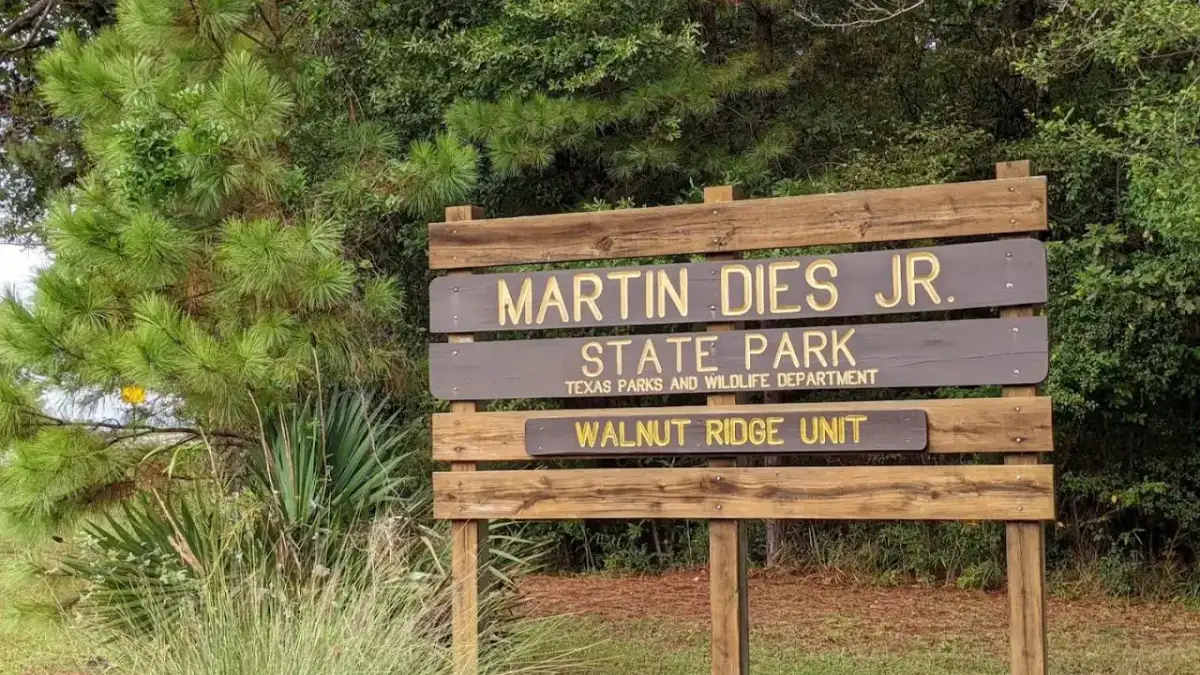
Martin Dies Jr State Park Texas occupies 705 protected acres of Pineywoods forest along the eastern edge of the Big Thicket region. Positioned at the junction of the Angelina and Neches Rivers, the park surrounds the expansive backwaters of B.A. Steinhagen Reservoir. Visitors encounter dense stands of loblolly pines, bald cypress swamps, and a maze of quiet sloughs that shelter diverse East Texas wildlife.
Key takeaways
- Martin Dies Jr State Park charges a daily entry fee of $4 for adults 13 and older, while children 12 and under enter free.
- The park features over 200 campsites across Hen House Ridge and Walnut Ridge units, with basic water sites at $14 nightly and 50-amp full electric sites at $20 nightly.
- Paddlers can navigate nearly 14 miles of official inland water trails across Walnut Slough, Sandy Creek, and the Neches River.
- Free fishing without a state fishing license is permitted from the shoreline, banks, and lighted fishing piers within park borders.
- Native American alligators inhabit the reservoir sloughs, requiring paddlers and hikers to maintain a strict 30-foot buffer distance at all times.
Overview of Martin Dies Jr State Park and the Big Thicket
This 705-acre sanctuary sits along Highway 190 between Woodville and Jasper in deep East Texas. Located on the shores of B.A. Steinhagen Reservoir, the preserve serves as a primary access corridor to the rich biodiversity of the Big Thicket.
Originally founded in 1964 as Dam B State Park near Dam B Texas, the property was renamed in 1965 to honor State Senator Martin Dies, Jr. for his dedication to regional conservation. Today, the destination is celebrated among well-known East Texas nature reserves for its mixture of bottomland hardwood forest, pine savannahs, and aquatic marshlands.
According to official state park surveys, the facility protects 705 forested acres along the 10,687-acre impoundment, supporting 14 miles of marked inland paddling trails and more than 200 campsites.
Understanding the Three Park Units: Hen House Ridge, Walnut Ridge, and Cherokee
The park is divided into three distinct, non-contiguous units situated along Highway 190. Visitors drive across causeways and local bridges to travel between the different sectors of the park.
The Hen House Ridge Unit sits on the south side of Highway 190. This sector serves as the administrative center, housing park headquarters, the visitor store, the lighted fishing pier, screened shelters, and modern rental cabins.
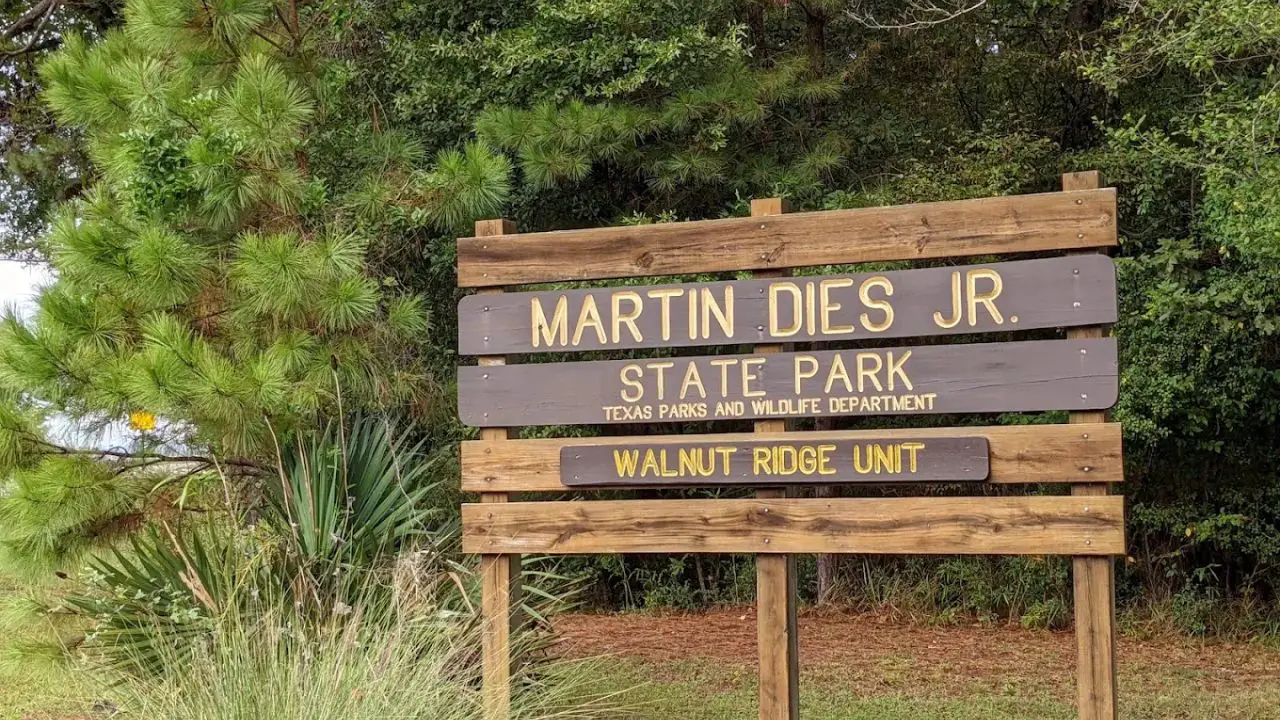
The Walnut Ridge Unit is located north of Highway 190. Walnut Ridge is heavily forested with towering loblolly pines and offers immediate launch access to quiet sloughs and river channels.
The Cherokee Unit functions exclusively as a day-use destination. Located west of the main river bridges, Cherokee provides quiet picnic areas, shaded bank fishing clearings, and shoreline views without overnight camper traffic.
B.A. Steinhagen Reservoir and Neches River Confluence
B.A. Steinhagen Reservoir was constructed by the U.S. Army Corps of Engineers following the completion of Town Bluff Dam in 1953. The reservoir covers roughly 10,687 surface acres, impounding the combined flow of the Angelina and Neches Rivers.
Unlike deep Highland Lakes in Central Texas, B.A. Steinhagen is shallow and riverine. Water depths across large sections of the sloughs average four to eight feet, creating ideal conditions for aquatic plants, submerged timber, and cypress knees.
Water currents move steadily along the central channels of the Angelina and Neches. When paddling away from marked shorelines, boaters must account for channel currents and submerged hazards.
Martin Dies Jr State Park Camping: Sites, Cabins, and Rates
Martin Dies Jr State Park camping costs $14 per night for water-only sites, $16 for 30-amp electric hookups, and $20 for 50-amp full utility hookups. Screened shelters cost $45 per night and climate-controlled Martin Dies Jr State Park cabins cost $55 per night.
Every campsite includes an outdoor picnic table, a ground fire ring with a cooking grill, and direct access to nearby hot-water restrooms and community dump stations. Guests making Texas state park camping reservations can review rules and fees on the Texas Parks and Wildlife Department Martin Dies Jr. Fees and Facilities portal.
| Accommodation Type | Unit Location | Utilities / Hookups | Nightly Base Fee | Best For |
|---|---|---|---|---|
| Water-Only Campsite | Walnut Ridge & South Unit | Potable water, fire ring, picnic table | $14 | Tent campers & lightweight setups |
| 30-Amp Electric Campsite | Both Main Campgrounds | 30-amp electric, water, fire ring | $16 | Pop-ups & medium travel trailers |
| 50-Amp Electric Campsite | Hen House Ridge | 50-amp electric, water, fire ring | $20 | Large motorhomes & full-size travel trailers |
| Screened Shelter | South Unit | Electricity, A/C, ceiling fan, table | $45 | Summer campers seeking shade & insect relief |
| Cabin with Screened Porch | South Unit | Electricity, A/C, heater, screened porch | $55 | Families wanting climate-controlled comfort |
Campers accustomed to Lake Livingston State Park camping will appreciate the dense forest canopy here. The trees provide natural separation and shade between campsite pads.
Tip
RV travelers should pack leveling blocks. Pine root systems and natural forest grades in the older loops of Walnut Ridge can leave parking pads slightly uneven.
Hen House Ridge vs. Walnut Ridge: Choosing Your Campsite
Choosing between the two primary overnight camping loops depends on your planned outdoor activities and group preferences. Each loop presents distinct advantages for overnight visitors.
The southern campground loop is best for families and anglers who want quick access to central park amenities. It sits close to the nature center, playground, roped swimming cove, and lighted fishing pier.
Walnut Ridge appeals to kayakers, birders, and tent campers seeking solitude. Campsites in this northern unit are tucked deeper into the pine forest, offering direct walking access to paddling trail launches.
Screened Shelters and Cabin Amenities
For visitors who want protection from heat and insects without towing an RV, the park offers screened shelters and mini-cabins in the southern sector. Screened shelters feature solid roofs, insect mesh walls, interior electrical outlets, and air conditioning units.
Rental cabins feature enclosed cedar walls, heating and air conditioning, and a private screened porch facing the woods. Cabins do not include indoor plumbing or mattresses, so guests must bring their own sleeping pads, cots, and bedding.
Modern restrooms with private flush toilets and hot showers are located within a short walk of both the cabin and shelter loops. Weekend bookings during spring and autumn foliage periods often fill two to three months in advance.
Paddling Trails: Exploring Walnut Slough and Neches River
Martin Dies Jr State Park paddling trails encompass nearly 14 miles of marked inland routes, including the 4.3-mile Walnut Slough loop, 5.4-mile Sandy Creek loop, and the Neches River route ranging from 2.8 to 16 miles. Paddlers can bring personal boats or rent kayaks on-site.
These designated routes wind through quiet blackwater sloughs, stands of flooded bald cypress, and open river bends. Paddlers can consult the Texas Parks and Wildlife Boat Rentals and Paddling Guide for equipment rules and water safety standards.
Much like the scenic waterways found along Village Creek State Park paddling routes, these trails allow paddlers to observe herons, egrets, turtles, and river otters in their natural habitats.
Walnut Slough Paddling Trail (4.3-Mile Loop)
The Walnut Slough trail is a 4.3-mile protected loop that begins and ends at the Walnut Ridge Unit canoe dock. It represents the most popular trail for beginner paddlers and wildlife photographers.
The route winds through tranquil backwaters shielded from open-lake winds by thick cypress stands and hardwood islands. White trail markers affixed to cypress trunks guide paddlers through the wetland channels.
Because the water is calm and current is minimal, navigating the full loop generally takes two to three hours. Paddlers should watch for underwater cypress knees that sit just beneath the surface during periods of lower lake elevation.
Sandy Creek Paddling Trail (5.4-Mile Loop)
The Sandy Creek trail spans 5.4 miles, launching from either the Hen House boat ramp or the Sandy Creek canoe launch. This trail explores the eastern edge of B.A. Steinhagen Reservoir before looping through shaded creek channels.
Paddlers will cross open water stretches that can become choppy on breezy afternoons. Early morning departures offer the smoothest water and highest chances of spotting wading waterfowl.
The route passes multiple shoreline clearings where paddlers can pause for water breaks. Plan for three to four hours to complete the entire 5.4-mile loop comfortably.
Neches Paddling Trail (2.8 to 16 Miles)
Experienced paddlers looking for distance can tackle the Neches Paddling Trail, which ranges from a 2.8-mile short loop near the dam up to a 16-mile expedition. The trail follows the main channel of the Neches River into the northern sloughs.
This river trail exposes paddlers to sustained river currents, open winds, and commercial boat traffic. The journey rewards adventurers with high sandy riverbanks, dense river bluffs, and soaring bald eagle sightings.
Heading upriver requires stamina and steady paddling technique against the current. Always check Neches River flow rates at the park headquarters before setting out on the full 16-mile journey.
Kayak Rentals and Boat Ramp Access
Visitors without personal watercraft can rent single and tandem kayaks at the park. An automated, self-service rental kiosk operates near the canoe dock in the Hen House Ridge Unit during daylight hours.
Rental fees include paddles and approved personal flotation devices. Visitors can check out equipment directly using a smartphone and credit card.
Motorized watercraft can launch from multiple dual-lane concrete boat ramps situated in both main units. Boaters should navigate cautiously near shorelines where submerged timber is common.
Alligator Safety and Wildlife Viewing Protocols
Alligators reside in all open waters and wetlands throughout the area. State park regulations mandate keeping at least 30 feet of distance from alligators, keeping pets leashed, and never feeding wildlife under penalty of state law.
American alligators are a vital native species in East Texas wetland ecology. They maintain natural balances among rough fish, turtles, and small mammal populations across the reservoir basin.
Alligators are generally shy and avoid human interaction unless they have been fed or cornered. Understanding their natural behavior allows visitors to enjoy viewing these reptiles safely.
The 30-Foot Distance Rule and Water Safety
Texas Parks and Wildlife enforces a mandatory 30-foot distance rule from all wild alligators. If an alligator approaches your kayak or canoe, stop paddling, remain calm, and paddle slowly in the opposite direction.
Never corner an alligator in narrow sloughs or block its direct exit path to open water. During sunny mid-mornings, alligators frequently sunbathe on half-submerged logs along the banks of Walnut Slough.
Feeding wild alligators is illegal under Texas Parks and Wildlife Code and constitutes a Class C misdemeanor punishable by fines up to $500. Feeding encourages dangerous habituation and makes animals associate humans with food.
Pet Regulations and Leash Requirements
The park welcomes dogs, but strict leash rules are enforced for their safety. Pets must be kept on a handheld leash no longer than six feet at all times.
Alligators perceive small dogs and cats as natural prey. Never permit pets to splash in the water, drink from marsh edges, or run unattended near slough banks.
Pets are permitted along all hiking trails and inside outdoor camping loops. However, animals are strictly forbidden inside park buildings, restrooms, screened shelters, and rental cabins.
Fishing and Boating on B.A. Steinhagen Reservoir
Fishing is free from the park shoreline and lighted piers without needing a Texas fishing license. Anglers frequently catch largemouth bass, crappie, bluegill, and channel catfish around submerged structure and river channels.
Under state park guidelines, anyone can fish from state park soil or piers without buying a license. However, anglers who launch boats into open reservoir waters outside park boundaries must adhere to the Texas Parks and Wildlife Department Outdoor Annual Fishing Regulations.
Anglers should familiarize themselves with Texas fishing license guidelines before motoring into open reservoir channels or venturing into downstream river stretches.
Free Fishing from Piers and Shoreline
The park features lighted fishing piers that project into deep water along Hen House Ridge and Walnut Ridge. These piers provide safe, accessible fishing for families with young children.
Night fishing on the southern pier is especially popular during warm summer months. The submerged green lights attract baitfish, which in turn draw hungry crappie and catfish.
Anglers fishing under free state park rules must still adhere to daily statewide bag limits, length minimums, and gear restrictions. Current catch limits are posted on information boards near each pier entrance.
Target Species, Tackle Tips, and Boat Ramps
B.A. Steinhagen Reservoir holds healthy populations of largemouth bass, spotted bass, black crappie, and channel catfish. The lake’s tannin-stained water makes high-visibility and high-vibration lures effective.
For largemouth bass, pitch dark-colored soft plastic worms or weedless jigs around cypress knees and brush piles. In spring, cast spinnerbaits along shallow grass lines in the morning.
Catfish respond well to cut shad, chicken liver, and prepared stink baits fished along the river channel drop-offs. Concrete boat ramps in both major units provide ample parking for boat trailers.
Visitor Essentials: Hours, Entrance Fees, and Planning Tips
The grounds open daily from 6:00 AM to 10:00 PM for day-use visitors, with an adult entry fee of $4 per person aged 13 and older. Overnight camping fees are charged in addition to daily entry fees unless visitors hold a Texas State Parks Pass.
The park office and store operate daily from 8:30 AM to 5:00 PM, with a brief closure between noon and 1:15 PM. Visitors can consult the Texas Parks and Wildlife Department Martin Dies Jr. State Park Portal for real-time alerts and gate access codes.
Travelers looking for similar cypress-filled landscapes can also explore the historic waters of Caddo Lake State Park cypress bayous during an East Texas road trip.
Entrance Fees and Park Operating Hours
Day-use visitors must arrive after 6:00 AM and depart by the 10:00 PM gate closing. Self-pay stations at the park gates accept credit cards and exact cash for arrivals outside office hours.
Daily entrance costs $4 for individuals aged 13 and older, while children 12 and under enter free of charge. Frequent park visitors can save money by purchasing an annual Texas State Parks Pass for $70.
The annual pass grants unlimited free admission to all Texas state parks for the cardholder and all passengers in their non-commercial vehicle for 12 months.
Packing for Humidity and East Texas Insects
East Texas summers bring high humidity and active biting insects to the Pineywoods. Packing proper clothing and gear ensures an enjoyable outdoor trip.
Bring high-concentration DEET or picaridin insect repellent, especially when venturing along the swamp trails or launching kayaks at dusk. Wearing lightweight, long-sleeved sun shirts and quick-dry trousers protects against both insects and sun exposure.
Sturdy waterproof hiking shoes or closed-toe water sandals are essential for dealing with muddy lake banks and boat docks. Always carry plenty of fresh drinking water, as summer humidity increases dehydration risk.
Best Time of Year to Visit Martin Dies Jr State Park
The best time of year to visit Martin Dies Jr State Park is from late October through November when temperatures cool and bald cypress needles turn a deep rusty red. This autumn window provides comfortable hiking conditions, minimal insect activity, and exceptional foliage photography across the sloughs.
Spring from March through May offers blooming dogwoods, wild azaleas, and active bass fishing. However, springtime paddlers should prepare for higher humidity and sudden seasonal rainstorms.
Summer visits require planning outdoor activities during the early morning hours before midday heat peaks. After 11:00 AM, visitors typically retreat to shaded screened shelters or the roped swimming area at Hen House Ridge.
Frequently Asked Questions About Martin Dies Jr State Park
What outdoor activities are available at the park?
Visitors can paddle nearly 14 miles of marked water trails, hike forested trails, and camp at more than 200 dedicated sites. The park also provides lighted fishing piers, mountain biking paths, and seasonal ranger programs.
Are there alligators in Martin Dies Jr State Park?
Yes, native American alligators inhabit all waterways, sloughs, and shoreline marshes throughout the park. Visitors must keep a minimum distance of 30 feet from any alligator and keep pets on a six-foot leash.
Do you need a fishing license at the park?
No fishing license is required when casting from the shoreline, banks, or piers inside park boundaries under Texas free fishing regulations. Anglers launching boats into open reservoir waters outside park boundaries must carry a valid Texas fishing license.
Is the state park dog-friendly?
Dogs are welcome throughout outdoor trails and standard campgrounds on a secure leash no longer than six feet. Pets are not permitted inside restrooms, administrative buildings, screened shelters, or rental cabins.
Can you swim in BA Steinhagen Reservoir at the park?
Swimmers can use the designated roped swimming area located in the Hen House Ridge Unit at their own risk without lifeguards present. Swimming outside marked zones is discouraged due to boat traffic, submerged cypress knees, and resident wildlife.