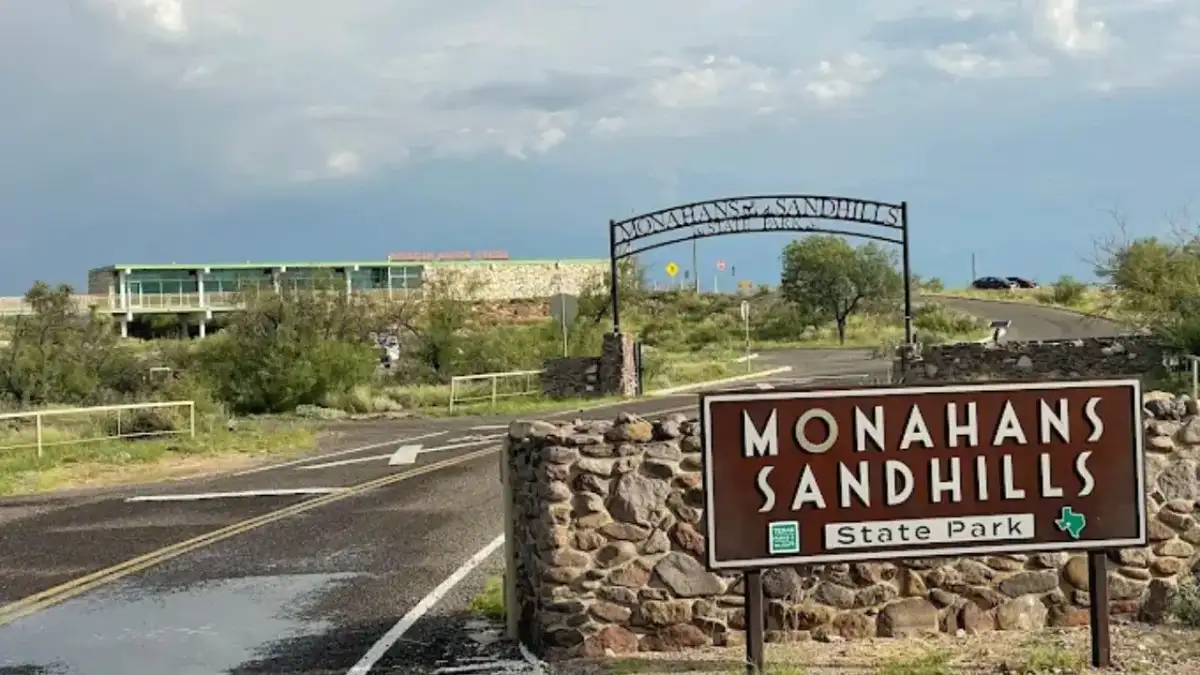
Monahans Sandhills State Park spans 3,840 acres of wind-sculpted silica sand dunes in the Permian Basin of West Texas. Located along Interstate 20 near the city of Monahans, this public recreation area invites guests to slide down 70-foot dunes, explore a miniature underground oak forest, and camp beneath dark desert night skies. Its rolling white dunes resemble the Sahara Desert, earning it a featured spot on our guide to places in Texas that don’t look like Texas.
Key takeaways
- Monahans Sandhills State Park charges a daily entrance fee of $4 for adults aged 13 and older, while children 12 and under enter free.
- Dunagan Visitor Center rents plastic sand-sledding discs and wax pucks daily between 8:30 a.m. and 4:30 p.m. for downhill riding.
- Campers can reserve 26 developed campsites featuring 30-amp or 50-amp electrical hookups, potable water spigots, and covered shade structures.
- Summer sand surface temperatures regularly exceed 120 degrees Fahrenheit, requiring closed-toe footwear and early morning visits.
- Equestrian visitors have access to an 800-acre riding zone and three horse campsites provided they present a negative Coggins test.
What to Expect at Monahans Sandhills State Park
This protected reserve preserves a dynamic sandbox landscape where massive dunes continuously shift and reform with prevailing prairie breezes. Unlike static mountain ranges, every strong wind gust reshapes the ridges, creating an ever-changing terrain for hikers and outdoor enthusiasts.
Among all Monahans sand dunes Texas destinations, this park offers the easiest highway access directly off Interstate 20 at Exit 86. Visitors often combine an excursion here with historic architecture and things to do in Fort Stockton for a complete regional itinerary.
| Park Feature | Specification / Detail | Operational Note |
|---|---|---|
| Park Size | 3,840 total acres | Spans Ward and Winkler counties |
| Max Dune Height | Up to 70 feet | Steeper windward slopes face southwest |
| Daily Entry Fee | $4 adults (13+) | Children 12 and under enter free |
| Operating Hours | 7:00 a.m. to 10:00 p.m. | Open every day year-round |
| Campsites | 26 water and electric sites | Includes 3 dedicated equestrian sites |
| Visitor Center | Dunagan Visitor Center | Open 8:30 a.m. to 4:30 p.m. daily |
Geological Origin of the Sand Dunes
These sweeping West Texas sand dunes represent the southern tip of a 200-mile sand belt extending north into New Mexico. Over centuries, seasonal runoff carried quartz sediment down from the southern Rocky Mountains into the Pecos River basin.
Regional winds subsequently gathered fine quartz grains from dry floodplains and layered them across the limestone plateau. The shallow water table beneath the sand traps moisture, stabilizing the lower dune layers while allowing surface crests to shift freely.
The Dunagan Visitor Center Experience
The Dunagan Visitor Center functions as the educational hub and administrative headquarters for the park. Inside, interpretive exhibits display native wildlife, archaeological artifacts recovered from dune blowouts, and botanical diagrams of deep root structures.
Large viewing windows overlook an active wildlife garden and feeding station. Observers frequently spot scaled quail, black-tailed jackrabbits, and native desert songbirds gathering around the sheltered watering troughs.
Day-Use Entrance Fees and Operating Hours
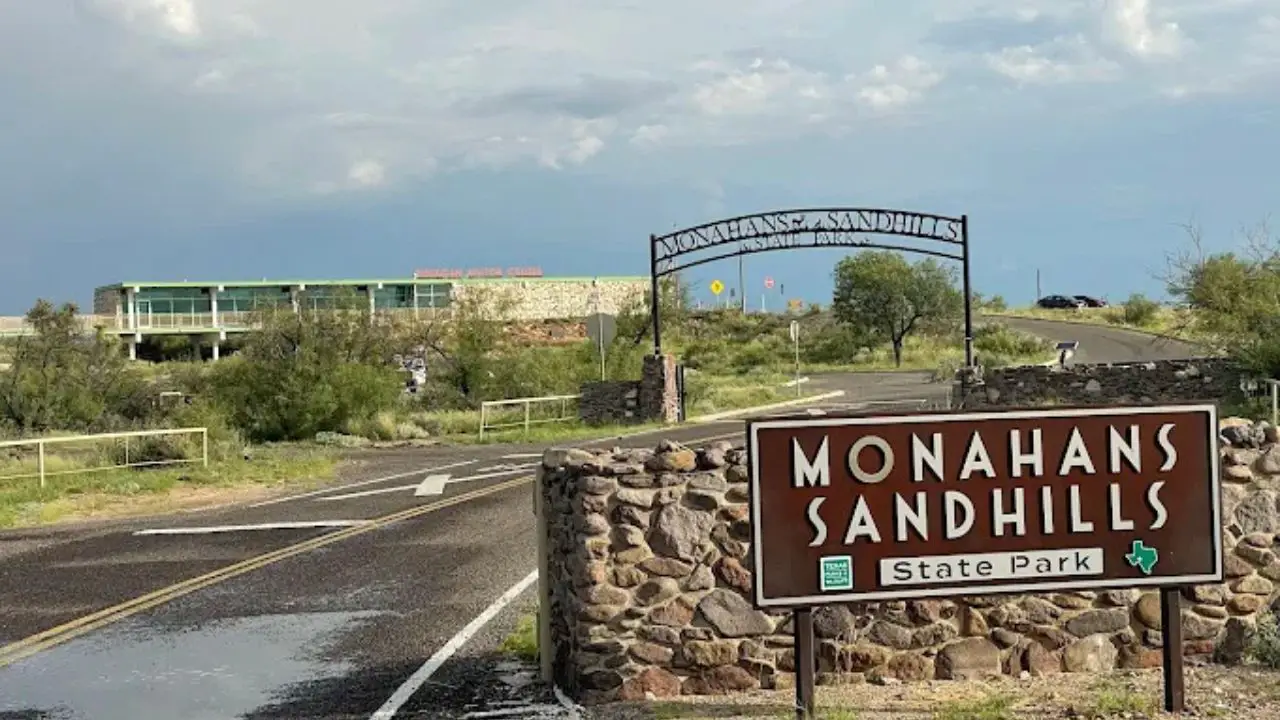
Checking Monahans State Park hours and fees before your drive guarantees a smooth arrival at the entrance gate. Reserving a day-use permit in advance through the Texas Parks and Wildlife Monahans Sandhills Fees and Facilities Portal ensures guaranteed vehicle entry during popular spring weekends.
Travelers exploring multiple natural landmarks often pair this desert destination with a refreshing swim at the Balmorhea State Park swimming guide.
Daily Entry Rates and Passes
Daily adult admission is $4 for all visitors aged 13 and older. Children aged 12 and under enter free of charge, making family outings economical.
Holders of an active Texas State Parks Pass receive unlimited free entry for themselves and all accompanying guests in their non-commercial passenger vehicle. Day permits remain valid from gate opening until closing time at 10:00 p.m.
Gate Hours and Peak Visitation Windows
Park gates open promptly at 7:00 a.m. and close at 10:00 p.m. daily. The Dunagan Visitor Center operates on a shorter schedule from 8:30 a.m. to 4:30 p.m. for retail purchases and rental disc distribution.
Spring break in March and holiday weekends in October represent the busiest periods of the calendar year. Arriving before 9:30 a.m. allows travelers to avoid the hottest hours of the day and secure rental equipment before supplies run out.
Tip
Pick up your rental sand discs before 11:00 a.m. during peak spring weekends. Visitor center inventory is finite and discs frequently rent out completely by midday.
Sandboarding and Sand Sledding Rental Guide
Monahans sandhills sandboarding draws outdoor enthusiasts from across the country to carve lines down towering 70-foot slopes. Because dry silica sand produces substantial friction against plastic surfaces, proper gear preparation is critical for a smooth ride.
Visitors can choose any unobstructed slope across thousands of open acres. There are no designated slide tracks, giving sliders complete freedom to select their preferred incline.
Renting Discs at the Visitor Center
Travelers seeking sand disc rentals Monahans outposts can pick up gear directly at the park headquarters. The Dunagan Visitor Center maintains an inventory of circular plastic sledding discs available for day rental, each supplied with a puck of sliding wax.
Rental transactions require a modest fee and a valid photo identification card. Guests who own specialized wooden or composite sandboards with laminate bases may also bring their private gear without paying supplemental park fees.
Wax Application and Riding Technique
Proper wax application determines whether a sled glides smoothly or stops dead on the dune face. Users should rub the wax puck vigorously in circular patterns across the entire base of the disc before every run.
Riders sit upright in the center of the disc while keeping their hands inside the perimeter lip to avoid finger abrasions. Leaning slightly backward prevents the front edge from digging into loose sand and pitching the rider forward.
Monahans Sandhills State Park Camping and Facilities
Camping among the dunes offers an exceptional stargazing environment isolated from municipal glare. The park ranks among the memorable top state parks in Texas for desert night sky photography and quiet solitude.
Campers can locate individual loops and facilities by referencing the official Texas Parks and Wildlife Monahans Sandhills Park Map. The campground layout accommodates both recreational vehicle travelers and tent campers.
Standard Drive-In Campsites
The park provides 26 drive-in campsites split across convenient paved loops near the visitor center. Every site includes 30-amp or 50-amp electrical service, a dedicated water spigot, a sturdy picnic table, and an elevated metal shade pavilion.
Modern climate-controlled restrooms with hot showers sit within short walking distance of each campsite loop. Nightly camping fees range around $16 to $20 in addition to standard daily entry fees, unless waived by a Texas State Parks Pass.
Equestrian Campsites and Dune Riding
Riders booking equestrian camping Monahans sites must carry valid health certificates. Horseback travelers can access an 800-acre riding pasture reserved specifically for livestock where deep sand demands well-conditioned mounts.
Three dedicated equestrian campsites feature pipe corrals and easy trailer pull-through parking pads. State statutory regulations require horse owners to show official documentation of a negative Coggins test completed within the prior 12 months before unloading livestock.
Critical Desert Gear and Heat Safety Realities
The reflective silica sand amplifies solar radiation significantly across the dune field. While ambient air temperatures may read 90 degrees Fahrenheit, direct sunlight quickly warms the ground to dangerous levels.
Travelers accustomed to mountain terrain should study our Guadalupe Mountains National Park guide to compare how elevation, shade availability, and ground reflection affect hydration needs across West Texas.
Protecting Feet from Superheated Silica
Direct sun exposure regularly drives dune surface temperatures above 120 degrees Fahrenheit during summer afternoons. Thin sandals, open flip-flops, or bare feet can experience painful thermal burns within seconds on exposed southern dune faces.
Experienced dune hikers wear closed-toe athletic shoes with tightly woven gaiters, or double layers of thick wool socks. Wool fibers form a protective thermal cushion that lets fine sand grains sift through rather than causing friction blisters against bare skin.
Hydration and Sun Exposure Guidelines
Dry desert winds accelerate dehydration because perspiration evaporates before skin feels damp. Every visitor venturing beyond the parking lots should carry at least one quart of drinking water per hour of physical activity.
Wide-brimmed hats, UV-blocking sunglasses, and broad-spectrum sunscreen are mandatory field gear. Because the dunes offer zero natural tree shade, outdoor exertion should be focused in early morning or late afternoon hours.
Havard Oak Forests and Archaeological History
Beneath the sweeping sand ridges lies a remarkably resilient ecosystem that has supported life for thousands of years. Historical records compiled by the Texas State Historical Association Monahans Sandhills Guide document centuries of human travel through these dependable water stops.
Hikers who appreciate historic desert landscapes can continue their journey south to review the Big Bend National Park trail guide for additional cultural discoveries.
Quote-Worthy Field Statistic Monahans Sandhills State Park protects a 3,840-acre sand system where dwarf Havard oaks reach mature heights of only three to four feet, yet anchor themselves with underground root networks plunging 70 to 90 feet down into subterranean aquifer reserves.
The Dwarf Oak Underground Canopy
The low green shrubs scattered across the dune hollows are not ordinary desert bushes. They belong to a rare Havard oak shinnery forest (Quercus havardii), forming an extensive subterranean forest that stabilizes the interior dunes.
While the visible canopy barely rises above waist height, the trees produce unusually large acorns that nourish desert wildlife. Under the sand, heavy taproots extend dozens of feet downward to tap into the high water table of the Pecos Valley alluvium.
Indigenous Heritage and Trans-Pecos Travelers
For more than 12,000 years, Native American hunters and gatherers utilized the sandhills as a critical oasis across the arid Llano Estacado. Shifting winds regularly exposed natural seep springs in dune depressions, providing freshwater in an otherwise dry territory.
Comanche and Apache bands later used the dunes as tactical sanctuaries where pursuit was hindered by deep sand and drifting winds erased tracks. Today, archaeological artifacts from these ancient desert crossings are preserved in the park museum collection.
Frequently Asked Questions About Monahans Sandhills State Park
Can you sandboard at Monahans Sandhills State Park?
Yes, visitors can sandboard and sled anywhere across the park’s open dunes. Plastic sand discs and specialty wax are available for rent at the Dunagan Visitor Center.
How much does it cost to enter the park?
Daily entrance costs $4 for adults ages 13 and older, while children 12 and under receive free admission. Texas State Parks Pass holders enter free with their vehicle passengers.
Are rental cabins available on-site?
No, this state natural area does not offer indoor rental cabins. The park instead provides 26 drive-in campsites equipped with water, electricity, and shade pavilions.
Are dogs allowed at the park?
Yes, leashed dogs are permitted throughout the campgrounds and dune fields. Pet owners must monitor ground temperatures closely, as hot silica sand can blister canine paw pads within minutes.
What is unique about the trees at Monahans Sandhills?
The park hosts one of the world’s largest shinnery forests of Havard oaks that stand only three to four feet tall. Beneath the surface, their extensive root systems plunge 70 to 90 feet into the underlying groundwater.