Spanning arid limestone canyons, high-elevation pine woodlands, and historic frontier outposts, West Texas preserves some of the most dramatic landscapes in North America. Beyond the well-traveled corridors of Interstate 10, travelers discover spring-fed desert waters, ancient shelter pictographs, dark-sky observatories, and celebrated contemporary art colonies.
Key takeaways
- Balmorhea State Park houses the world’s largest spring-fed swimming pool, fed by San Solomon Springs discharging up to 28 million gallons of 72°F to 76°F artesian water daily.
- Guadalupe Mountains National Park preserves Texas’s highest point at Guadalupe Peak (8,751 feet) alongside colorful bigtooth maple woodlands inside McKittrick Canyon.
- Hueco Tanks State Park and Historic Site caps unguided day-use entry at 70 visitors simultaneously to protect fragile rock basins and ancient pictographs.
- The Greater Big Bend International Dark Sky Reserve surrounds the McDonald Observatory, hosting public evening Star Parties under unpolluted night skies.
- Remote desert highways like US-90 and FM 170 require careful trip planning because service stations and cellular signals sit 60 to 90 miles apart.
What Are the Top Hidden Gems in West Texas?
The top hidden gems in West Texas include Balmorhea State Park, Hueco Tanks, Seminole Canyon, Monahans Sandhills, and the McDonald Observatory. These remote destinations offer artesian spring swimming, ancient pictographs, rolling desert dunes, and world-class stargazing far away from crowded urban centers.
Exploring west texas hidden gems allows road trippers to experience dramatic topography without navigating heavy tourist crowds. Finding secret spots in west texas often involves driving two-lane desert highways that wind past ghost towns and isolated mountain passes.
These off the beaten path west texas locations range from spring pools to ancient caves. Travelers starting their journeys in the far western corner can also explore family-friendly things to do in El Paso before heading into the rugged Trans-Pecos desert.
Top Hidden Gems in West Texas At-a-Glance
Ranking the best hidden places in west texas helps road trippers organize balanced multiday routes across vast county lines. Planning a comprehensive tour across West Texas requires understanding the distinct offerings and admission details of each desert stop.
| Destination | Location / Nearest Town | Primary Attraction | Admission / Day Pass | Best For |
|---|---|---|---|---|
| Balmorhea State Park | Toyahvale (Reeves County) | San Solomon Springs artesian swimming pool | $7 adults; free for kids 12 and under | Spring swimming and scuba diving |
| Monahans Sandhills State Park | Monahans (Ward County) | 70-foot quartz sand dunes and dune surfing | $4 adults; free for kids 12 and under | Sand sledding and dune photography |
| Amistad National Recreation Area | Del Rio (Val Verde County) | 57,000-acre border reservoir on the Rio Grande | $10 vehicle lake pass; valid 3 days | Boating, bass fishing, and paddling |
| Pecos River High Bridge Overlook | Comstock (Val Verde County) | 273-foot canyon highway bridge vista | Free public roadside overlook | Scenic canyon views and road trip photography |
| Guadalupe Mountains National Park | Pine Springs (Culberson County) | Guadalupe Peak (8,751 ft) and McKittrick Canyon | $10 per person (valid 7 days) | Challenging summit hikes and fall foliage |
| Hueco Tanks State Historic Site | El Paso (El Paso County) | Ancient pictographs and granite bouldering | $7 adults; free for kids 12 and under | World-class bouldering and rock art tours |
| Seminole Canyon State Historic Site | Comstock (Val Verde County) | Fate Bell Shelter prehistoric rock art | $4 entry + $8 guided tour per adult | Archaeological tours and canyon hiking |
| Big Bend Ranch State Park | Presidio / Terlingua (Brewster County) | Over 311,000 acres of remote wilderness | $5 adults; free for kids 12 and under | Rugged 4x4 trails, rafting, and solitude |
| Davis Mountains State Park | Fort Davis (Jeff Davis County) | Skyline Drive scenic loop and Indian Lodge | $6 adults; free for kids 12 and under | Cool mountain hiking and birdwatching |
| Big Bend National Park (Fossil Exhibit) | Panther Junction (Brewster County) | Fossil Discovery Exhibit and Lost Mine Trail | $30 per vehicle (valid 7 days) | Paleontology exhibits and Chisos mountain hikes |
| Franklin Mountains State Park | El Paso (El Paso County) | 27,000-acre urban mountain wilderness | $5 adults; free for kids 12 and under | Ridge scrambling and city skyline views |
| Marfa Art Spaces | Marfa (Presidio County) | Chinati Foundation and mysterious Marfa Lights | Chinati tours $25; Lights viewing free | Minimalist contemporary art and night skies |
| Terlingua Ghost Town | Terlingua (Brewster County) | Quicksilver ruins, cemetery, and Starlight Theatre | Free to tour town site; dining varies | Live music, frontier ruins, and desert sunsets |
| McDonald Observatory | Fort Davis (Jeff Davis County) | Mount Locke research telescopes and Star Parties | $20 to $25 per adult for Star Parties | Deep-sky astronomy and guided stargazing |
| Historic Langtry | Langtry (Val Verde County) | Judge Roy Bean Visitor Center and Jersey Lilly | Free admission | Wild West frontier courtroom history |
| Historic Fort Stockton | Fort Stockton (Pecos County) | Restored 1858 military garrison and Annie Riggs Museum | Fort grounds free; museum $3 adults | Frontier military history and Victorian artifacts |
| Alpine | Alpine (Brewster County) | Museum of the Big Bend and downtown murals | Museum admission by donation | Regional history, ranching culture, and galleries |
| Marathon | Marathon (Brewster County) | Historic Gage Hotel and dark sky viewing | Free town walking; lodging rates vary | Historic luxury and Big Bend gateway lodging |
| Del Rio & Val Verde Winery | Del Rio (Val Verde County) | Texas's oldest winery and Whitehead Memorial Museum | Winery tastings from $5; museum $5 adults | Wine heritage and frontier border culture |
| Pecos | Pecos (Reeves County) | West of the Pecos Museum and first rodeo arena | $5 adults; $3 children | Old West saloon history and rodeo heritage |
Spring-Fed Oases and Sand Dune Wonders
West Texas features unexpected aquatic habitats and shifting sand dunes that overturn typical desert preconceptions. Natural springs in this arid climate sustain unique plant communities and offer welcome relief from summer temperatures.
Balmorhea State Park and San Solomon Springs
Balmorhea State Park centers on San Solomon Springs, where artesian waters discharge between 15 million and 28 million gallons of crystal-clear mineral water every single day. San Solomon Springs is the most celebrated of west texas natural springs, sustaining a 3.5-million-gallon pool that maintains a constant 72°F to 76°F year-round.
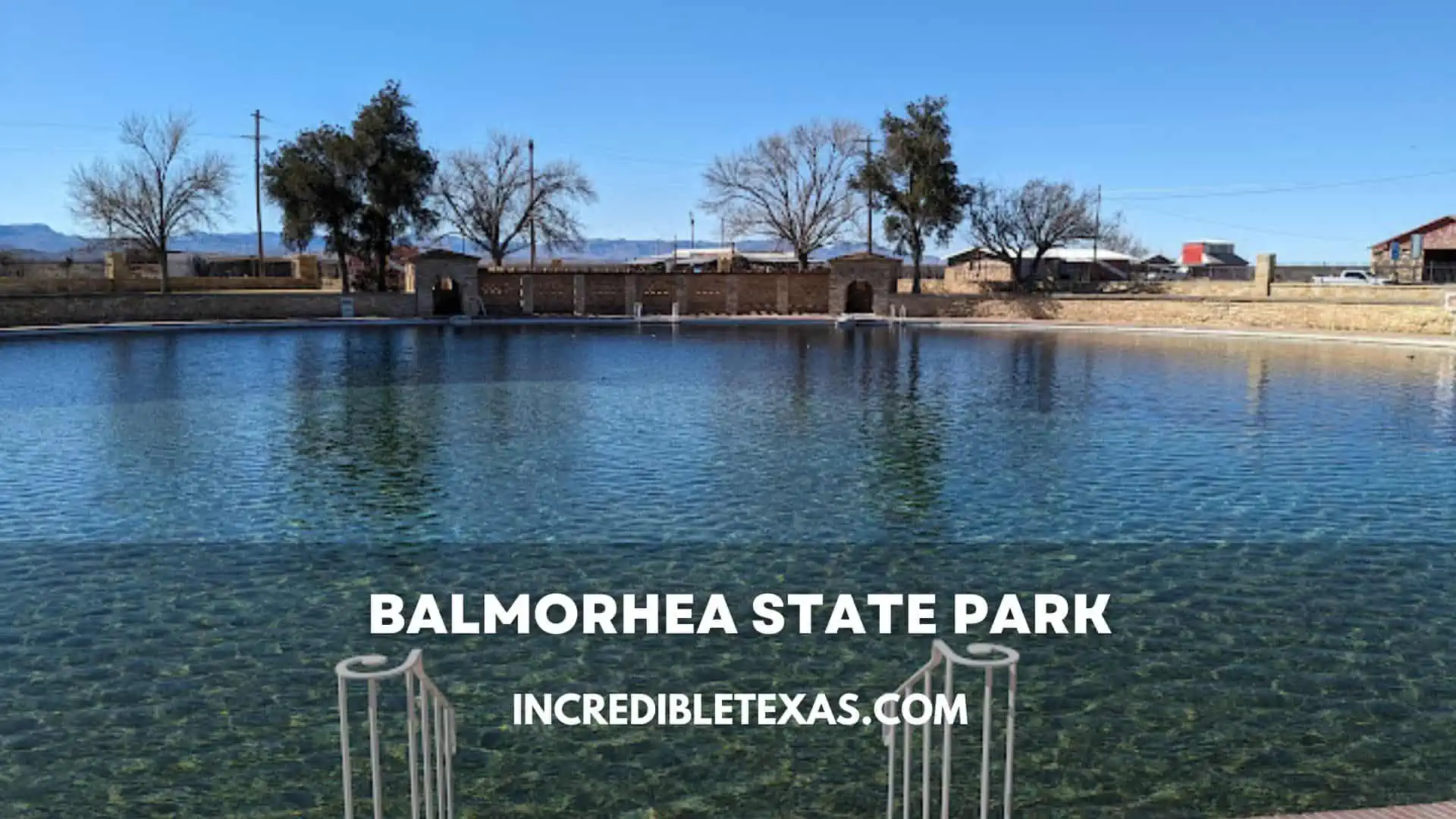
Reaching depths of 25 feet, the historic stone pool allows visitors to swim, snorkel, and scuba dive alongside native desert pupfish. Travelers can review the complete Balmorhea State Park camping and pool guide to plan overnight stays and campsite reservations. Current fee schedules and pool capacity guidelines are maintained on the official Texas Parks and Wildlife Balmorhea State Park Portal.
- Location: 9207 TX-17, Toyahvale, TX 79786 (4 miles south of Balmorhea off I-10)
- Admission: $7 per adult; free for children 12 and under
- Operating Hours: 8:00 AM to 7:30 PM (or sunset daily)
- Key Highlights: Deep-water scuba diving platform, spring swimming lanes, and restored desert cienega
Tip
Day-use entry passes frequently sell out weeks in advance for summer weekends. Reserve your day pass online through Texas Parks and Wildlife before driving to Toyahvale to guarantee pool admission.
Monahans Sandhills State Park
Monahans Sandhills State Park protects a 3,840-acre landscape of rolling sand dunes that rise up to 70 feet above the desert floor. These shifting mounds belong to a larger dunefield spanning roughly 200 miles from West Texas into eastern New Mexico.
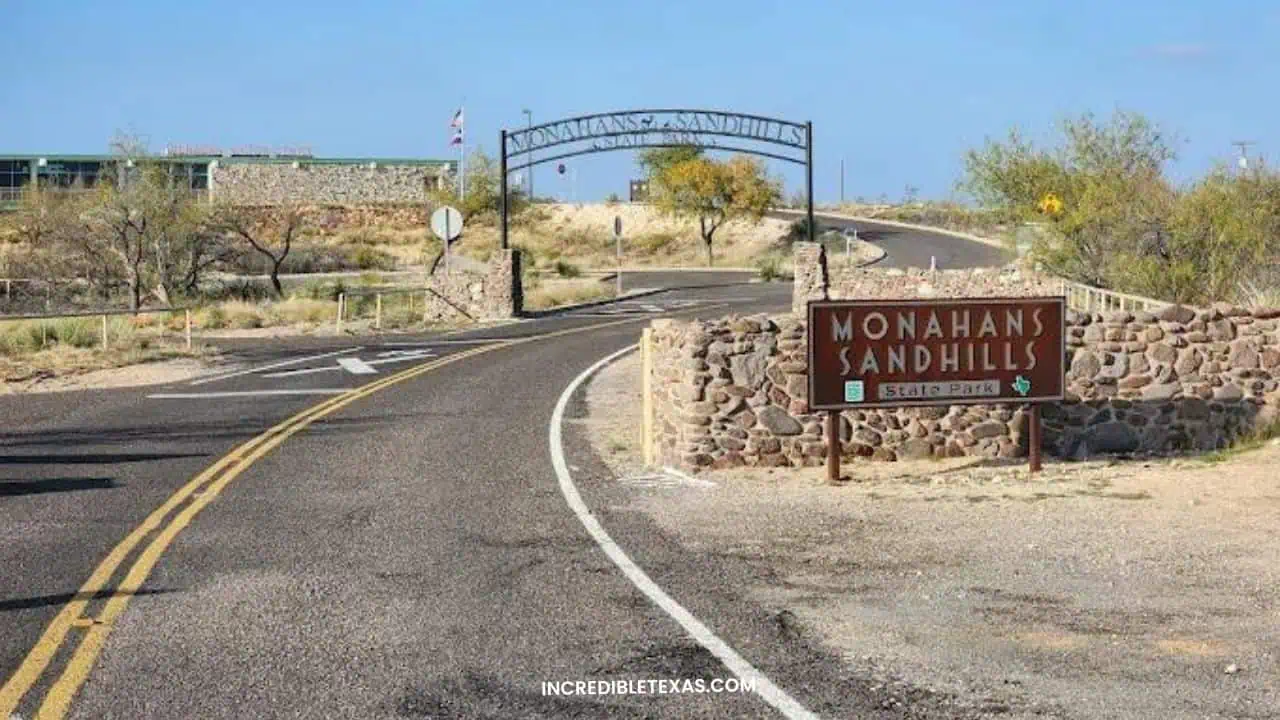
Visitors can rent specialized plastic sand disks and surface wax at the park headquarters to slide down the steep dune slopes. Morning hours provide cooler sand surfaces and crisp wind ripples that create striking opportunities for landscape photography.
- Location: Park Road 41, Monahans, TX 79756 (off Interstate 20 Exit 86)
- Admission: $4 per adult; free for children 12 and under
- Operating Hours: 8:00 AM to 10:00 PM daily
- Key Highlights: Sand disk sledding, 26 hookup campsites, and a miniature Shin Oak forest
Amistad National Recreation Area
Amistad National Recreation Area encompasses 57,000 surface acres of open water along the United States-Mexico border, formed by the confluence of the Rio Grande, Devils River, and Pecos River. The reservoir provides sport fishing for largemouth bass, channel catfish, and striped bass.
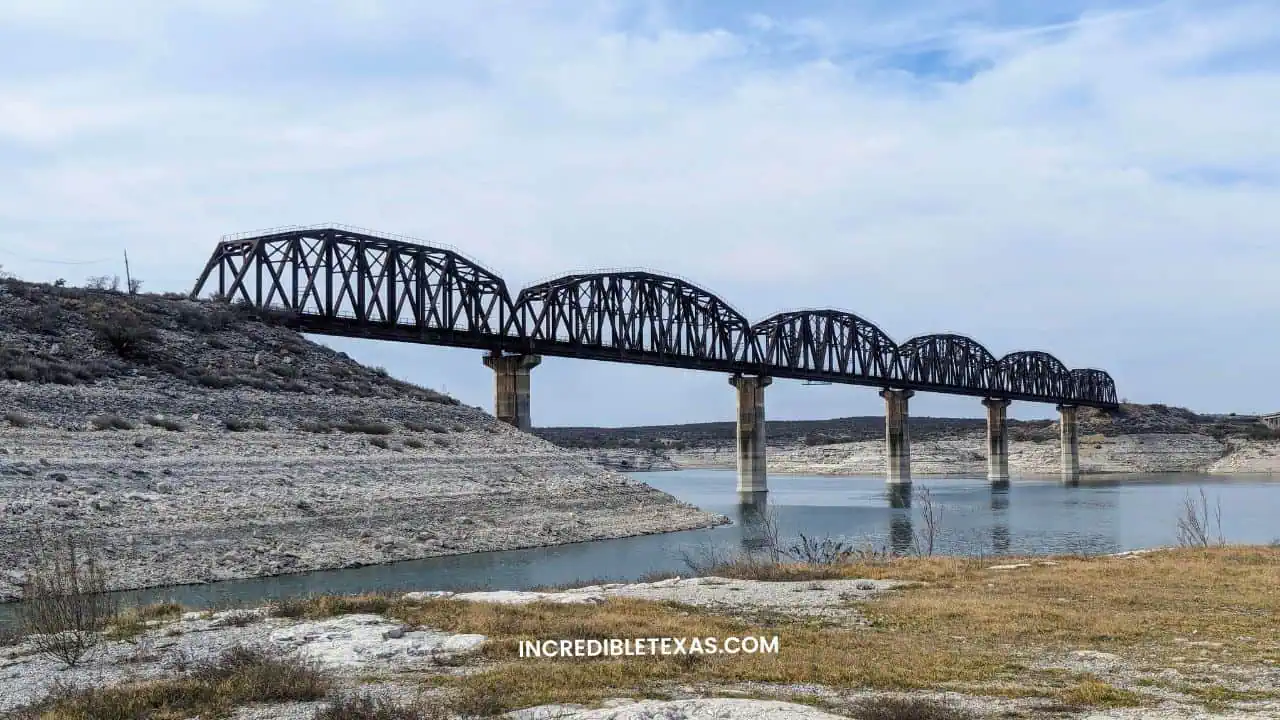
Paddlers explore tall limestone bluffs and secluded canyon inlets by kayak and canoe. The recreation area also protects over 300 resident and migratory bird species, making it an essential wildlife viewing corridor in southwest Texas.
- Location: 4121 Highway 90 West, Del Rio, TX 78840
- Admission: $10 vehicle lake pass (valid for 3 consecutive days); $40 annual pass
- Operating Hours: Open 24 hours daily; park visitor center open 8:00 AM to 4:30 PM
- Key Highlights: Deep-canyon paddling, multiple public boat ramps, and shoreline tent camping
Pecos River High Bridge Overlook
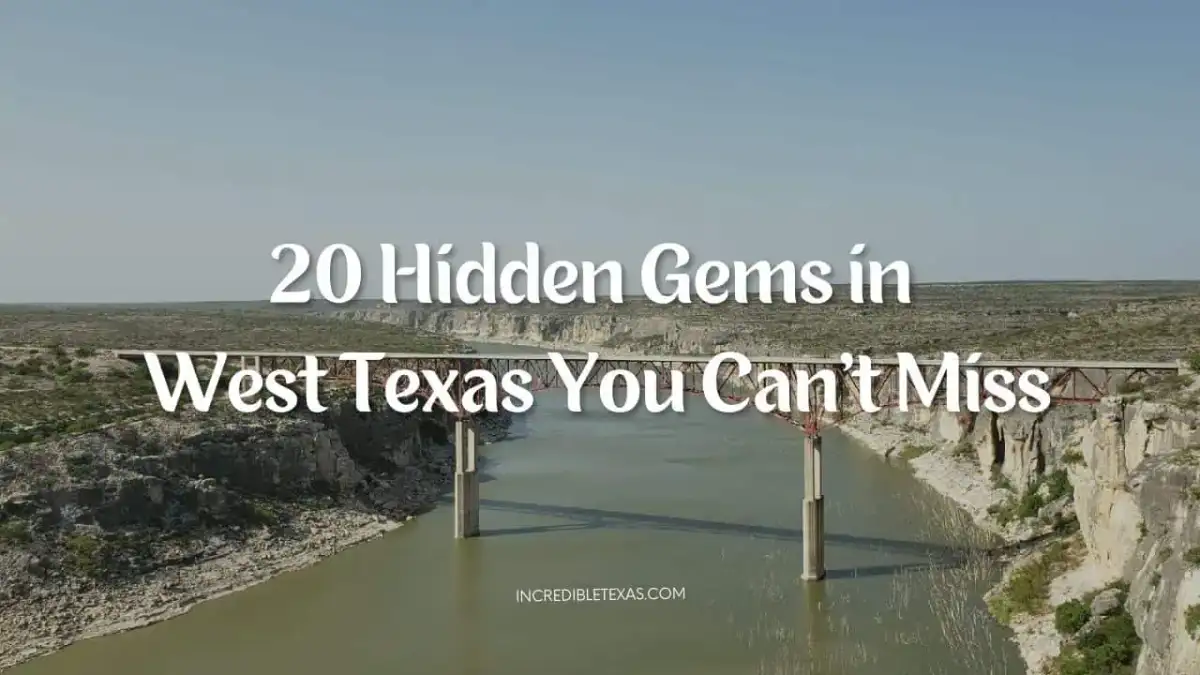
The Pecos River High Bridge carries US Highway 90 across a steep limestone gorge just upstream from Lake Amistad. Rising 273 feet above the water, it stands as the highest highway bridge in the state of Texas.
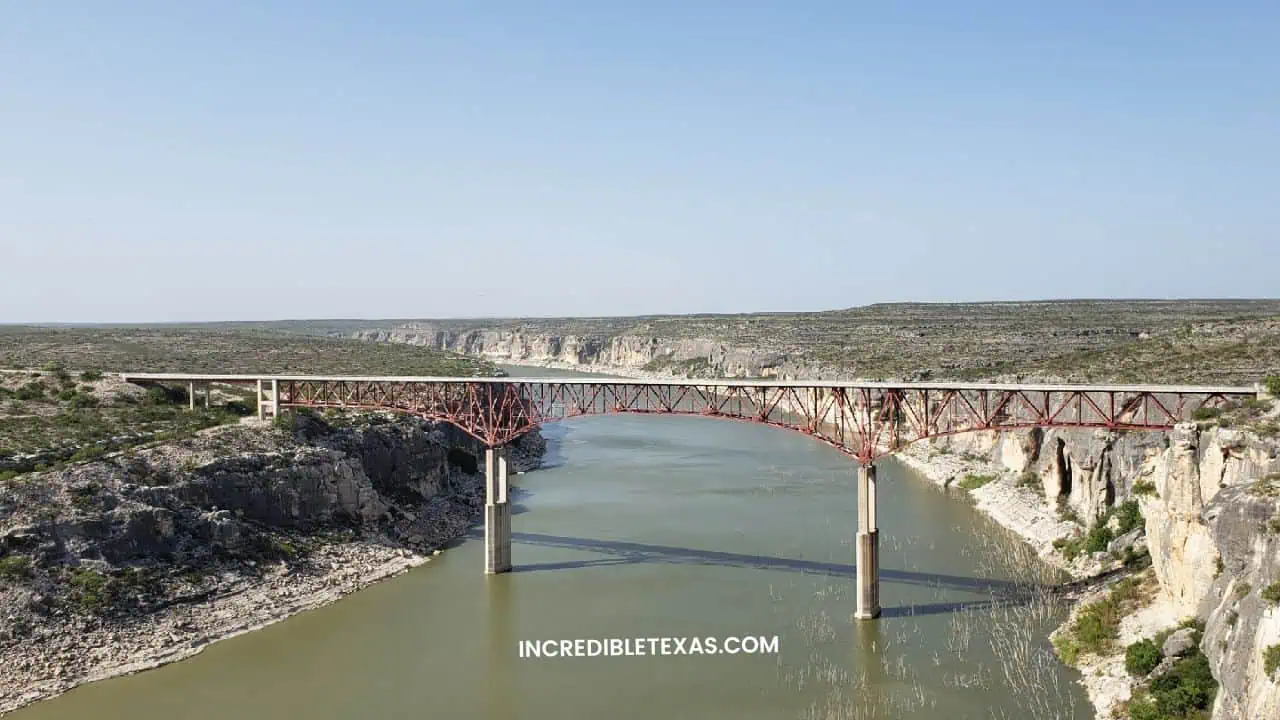
A paved roadside park on the eastern bluff offers panoramic views of the canyon waters and rugged desert mesas. The overlook ranks among the most dramatic scenic spots in west texas, featuring shaded picnic shelters, historical plaques, and clean restrooms for travelers navigating US-90.
- Location: US Highway 90, Comstock, TX 78837 (roughly 45 miles west of Del Rio)
- Admission: Free public highway overlook
- Operating Hours: Open 24 hours daily
- Key Highlights: Canyon photography, shaded picnic pavilions, and historical markers
Mountain Parks and Ancient Canyons
West Texas mountain ranges protect towering fossil reefs, ancient shelter overhangs, and sheer river canyons across the Chisos, Davis, and Guadalupe ranges. Travelers seeking hidden gems near big bend frequently discover that these rugged parks provide unmatched wilderness exploration.
Guadalupe Mountains National Park
Guadalupe Mountains National Park protects the ancient Capitan Reef, an extensive Permian fossil formation rising sharply from the Chihuahuan Desert. The park includes Guadalupe Peak, which reaches 8,751 feet as the highest point in Texas.
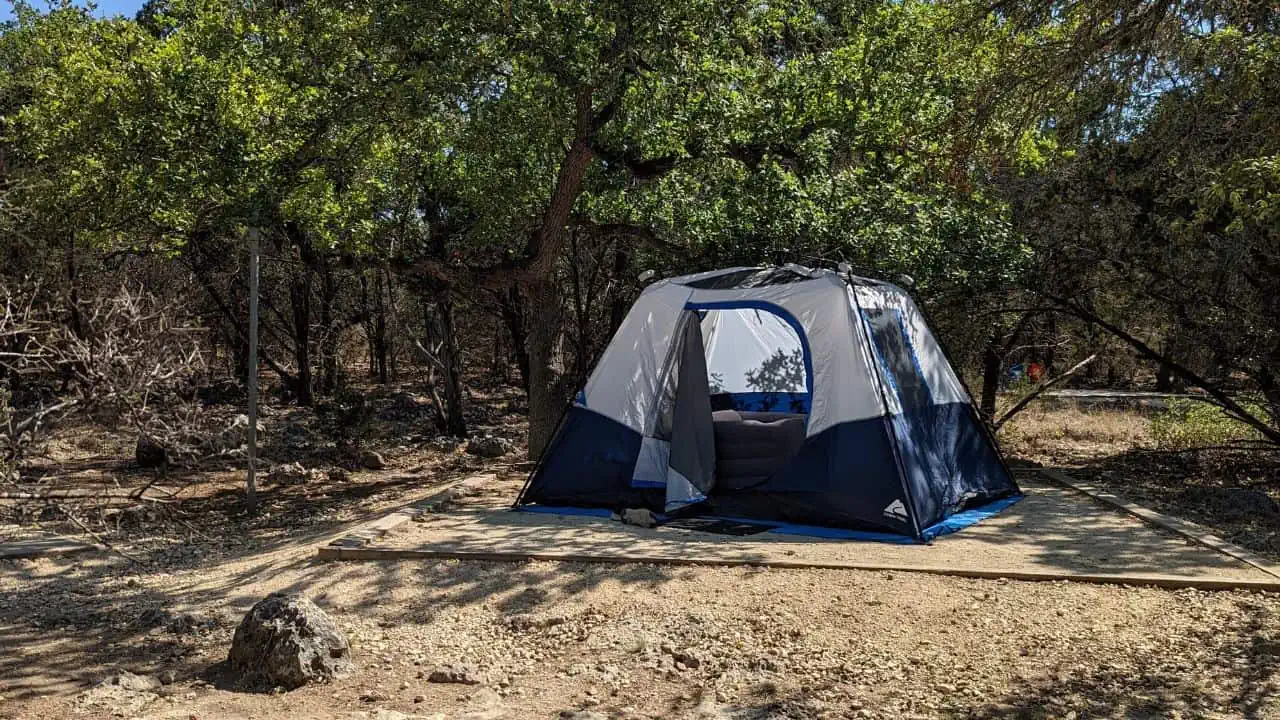
Summiting Guadalupe Peak requires an 8.5-mile round-trip climb that gains 3,000 vertical feet over rocky switchbacks. For a gentler experience, the McKittrick Canyon trail winds past stone grottos and maple stands that turn brilliant red and gold in late autumn. Hikers can consult our Guadalupe Mountains National Park hiking guide for route profiles, and review current pass requirements via the National Park Service Guadalupe Mountains Entrance Fees page.
- Location: 400 Pine Canyon Drive, Salt Flat, TX 79847 (on US 62/180)
- Admission: $10 per person (valid for 7 days); digital park passes accepted
- Operating Hours: Park grounds open 24 hours; McKittrick Canyon gate open 8:00 AM to 4:30 PM Mountain Time
- Key Highlights: Guadalupe Peak summit trail, Pratt Cabin, Devil's Hall trail, and Pine Springs camping
Hueco Tanks State Park and Historic Site
Hueco Tanks State Park and Historic Site sits 30 miles east of El Paso, preserving massive syenite granite hills dotted with natural water-holding hollows called huecos. Indigenous peoples gathered here for thousands of years, leaving behind hundreds of historic and prehistoric pictographs.
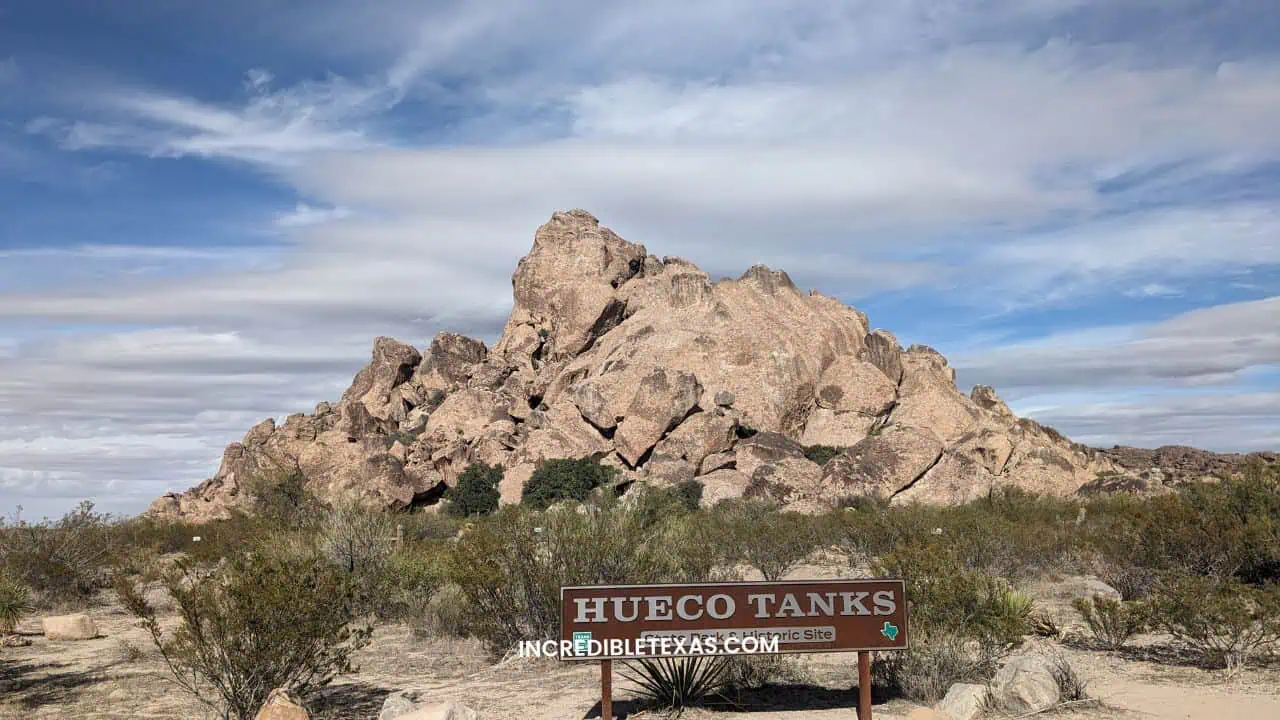
The park is a world-renowned destination for technical bouldering. To prevent habitat degradation and protect delicate cultural art, Texas Parks and Wildlife caps self-guided entry on North Mountain to strictly 70 visitors at a time. The remaining mountains require official volunteer or staff guides. Review reservation protocols through the Texas Parks and Wildlife Hueco Tanks Regulations.
- Location: 6900 Hueco Tanks Road No. 1, El Paso, TX 79938
- Admission: $7 per adult; free for children 12 and under
- Operating Hours: Wednesday through Sunday 8:00 AM to 6:00 PM (winter) / 7:00 PM (summer)
- Key Highlights: Ancient mask pictographs, boulder problems, and ranger-led interpretive hikes
Tip
Call the park reservation line up to 90 days in advance to secure one of the 70 daily North Mountain unguided permits, particularly between November and March when climbing conditions peak.
Seminole Canyon State Park and Historic Site
Seminole Canyon State Park and Historic Site borders the Rio Grande near the Pecos River confluence. The park shelters some of North America's oldest pictographs, dating back over 4,000 years to early Archaic hunter-gatherer cultures.
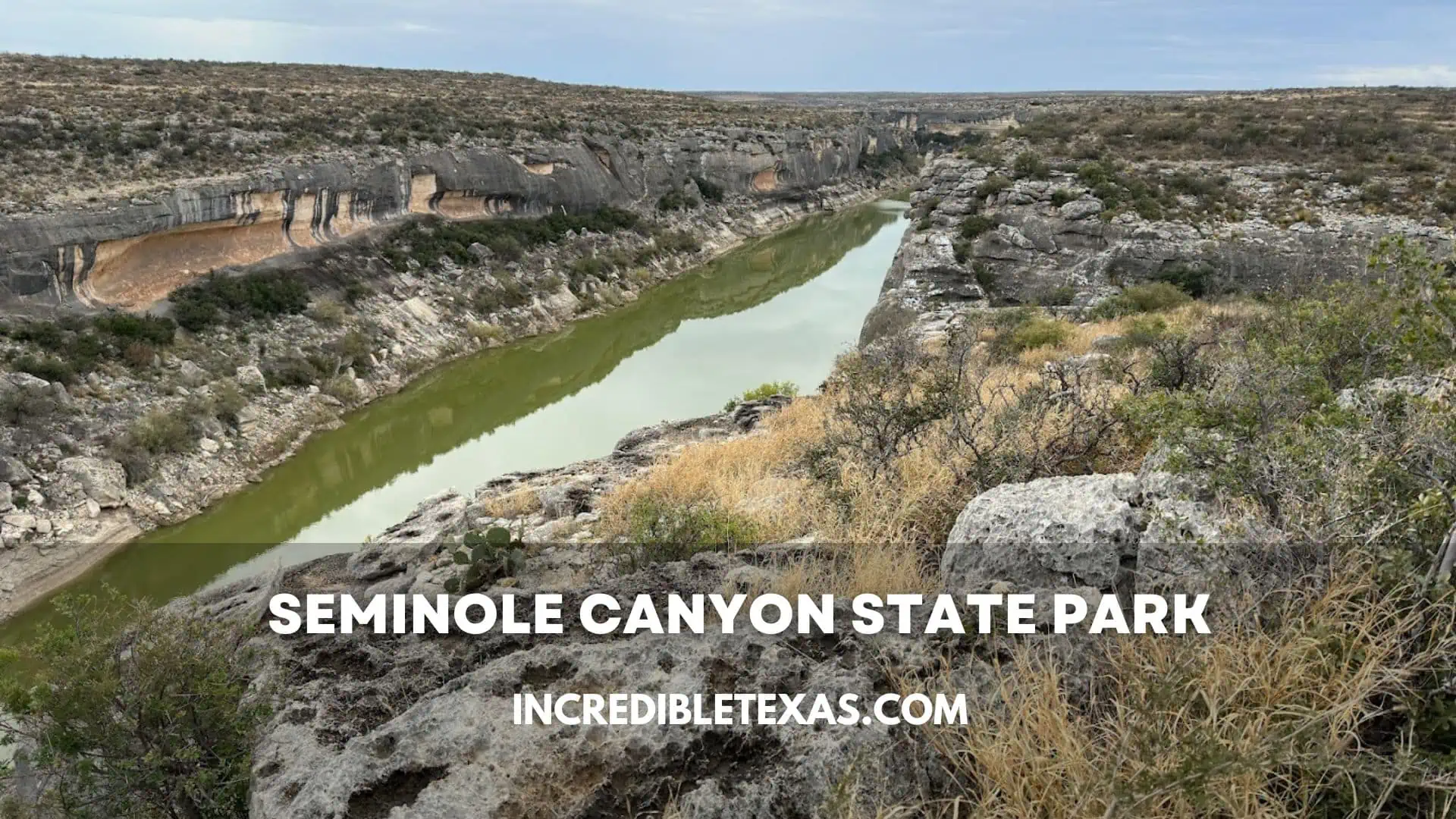
Visitors can only access the Fate Bell Shelter via ranger-led tours that depart Wednesday through Sunday. Above the canyon, the 4.9-mile Canyon Rim Trail provides sweeping views across limestone bluffs down to the Rio Grande and northern Mexico.
- Location: US Highway 90 West, Comstock, TX 78837 (9 miles west of Comstock)
- Admission: $4 adult day use; guided Fate Bell Shelter tour is $8 per adult ($5 for ages 5-12)
- Operating Hours: Daily 8:00 AM to 5:00 PM; tours at 10:00 AM and 3:00 PM
- Key Highlights: Fate Bell Shelter tour, Canyon Rim Trail, and modern visitor center exhibits
Big Bend Ranch State Park
Big Bend Ranch State Park spans over 311,000 acres along the Rio Grande, earning the title of the largest state park in Texas. Known as the Other Side of Big Bend, the park offers remote gravel roads, dramatic volcanic formations, and peaceful desert solitude (see our complete guide to Big Bend Ranch State Park activities and camping).
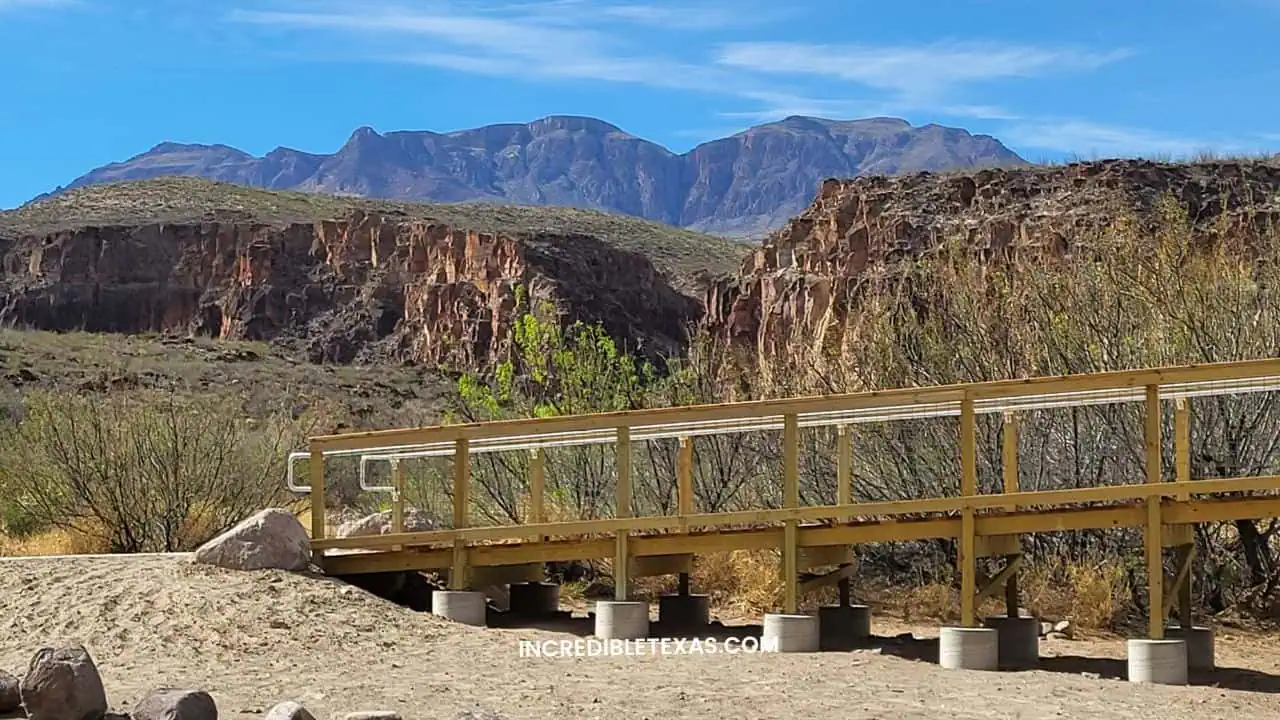
The park features 238 miles of multi-use trails suitable for hiking, mountain biking, and equestrian riding. Drive along FM 170 (The River Road) between Lajitas and Presidio to experience steep 15-percent highway grades and sweeping river canyon panoramas.
- Location: FM 170, Terlingua / Presidio, TX (Sauceda headquarters located 27 miles interior via gravel)
- Admission: $5 per adult; free for children 12 and under
- Operating Hours: Open 24 hours daily; ranger stations open 8:00 AM to 4:30 PM
- Key Highlights: Solitario volcanic collapse crater, Closed Canyon trail, and backcountry primitive camps
Davis Mountains State Park
Davis Mountains State Park nestles in the high-elevation woodlands near Fort Davis, offering cooler temperatures and pinyon-juniper hills. Built during the 1930s by the Civilian Conservation Corps, the park features native stone and adobe architecture.
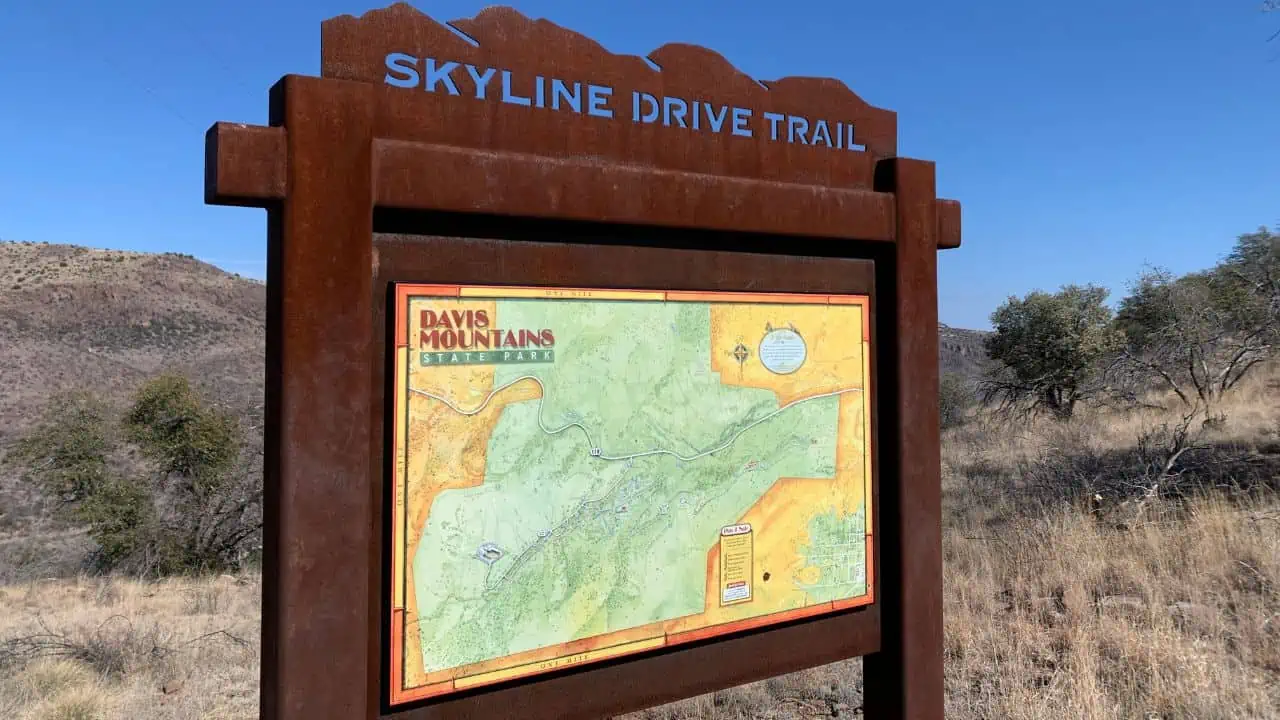
Hikers can trek along the 4.5-mile Skyline Drive Trail for elevated views of Mount Locke and the surrounding peaks. Within the park boundaries, the historic Indian Lodge provides full-service adobe hotel accommodations and dining surrounded by mountain ridges.
- Location: TX-118 North, Fort Davis, TX 79734 (4 miles northwest of Fort Davis)
- Admission: $6 per adult; free for children 12 and under
- Operating Hours: Open daily 8:00 AM to 10:00 PM
- Key Highlights: Indian Lodge hotel, Skyline Drive scenic overlook, and enclosed wildlife bird viewing blind
Big Bend National Park Beyond the Crowds
Big Bend National Park encompasses more than 801,000 acres of protected desert, river, and mountain terrain. While popular spots like Santa Elena Canyon draw seasonal crowds, the northern desert expanse hides quieter attractions like the Fossil Discovery Exhibit.
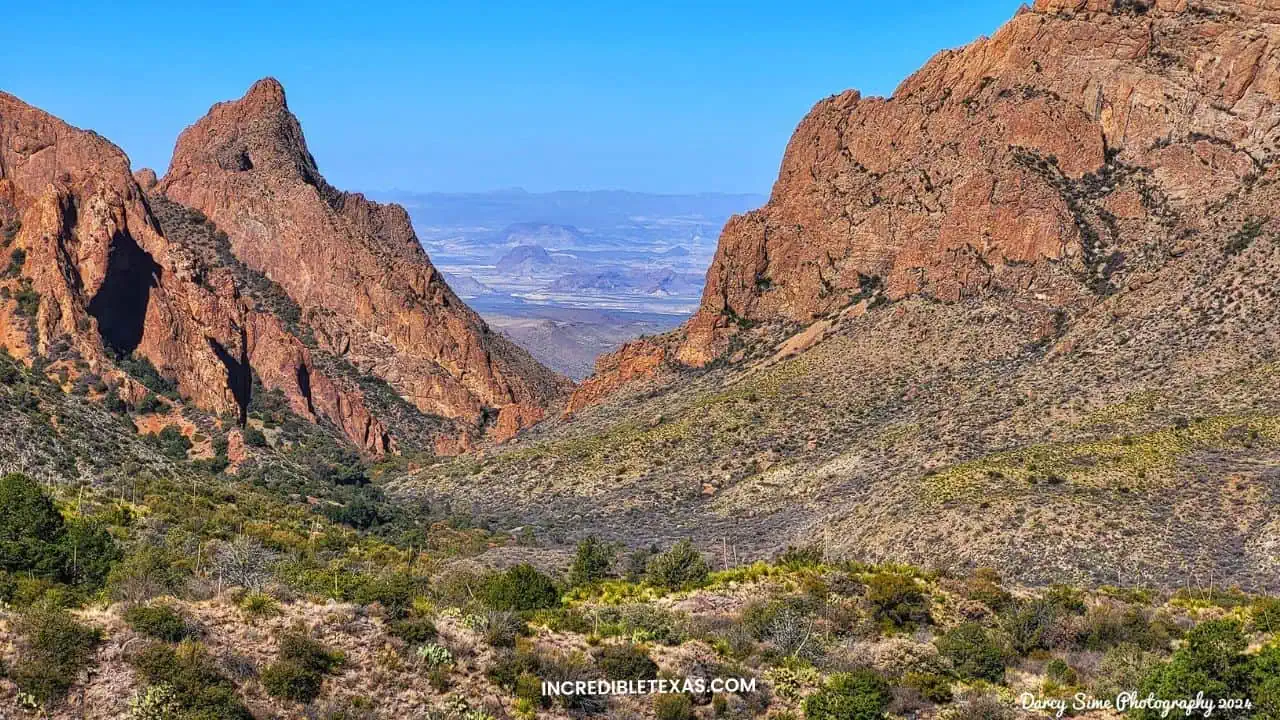
Located 8 miles north of Panther Junction, the open-air Fossil Discovery Exhibit chronicles 130 million years of local geologic history with full-scale replicas of ancient giant crocodiles and flying pterosaurs. Hiking trails around Dagger Flat and the Old Ore Road provide solitude away from the busier Chisos Basin.
- Location: Highway 385, Big Bend National Park, TX 79834
- Admission: $30 per vehicle (valid for 7 consecutive days)
- Operating Hours: Open 24 hours daily; visitor centers open 8:30 AM to 4:00 PM
- Key Highlights: Fossil Discovery Exhibit, Ernst Tinaja trail, and Dagger Flat auto trail
Franklin Mountains State Park
Franklin Mountains State Park covers over 27,000 acres entirely within the municipal city limits of El Paso. As one of the largest urban parks in the United States, it divides the city with rugged Chihuahuan Desert ridgelines.
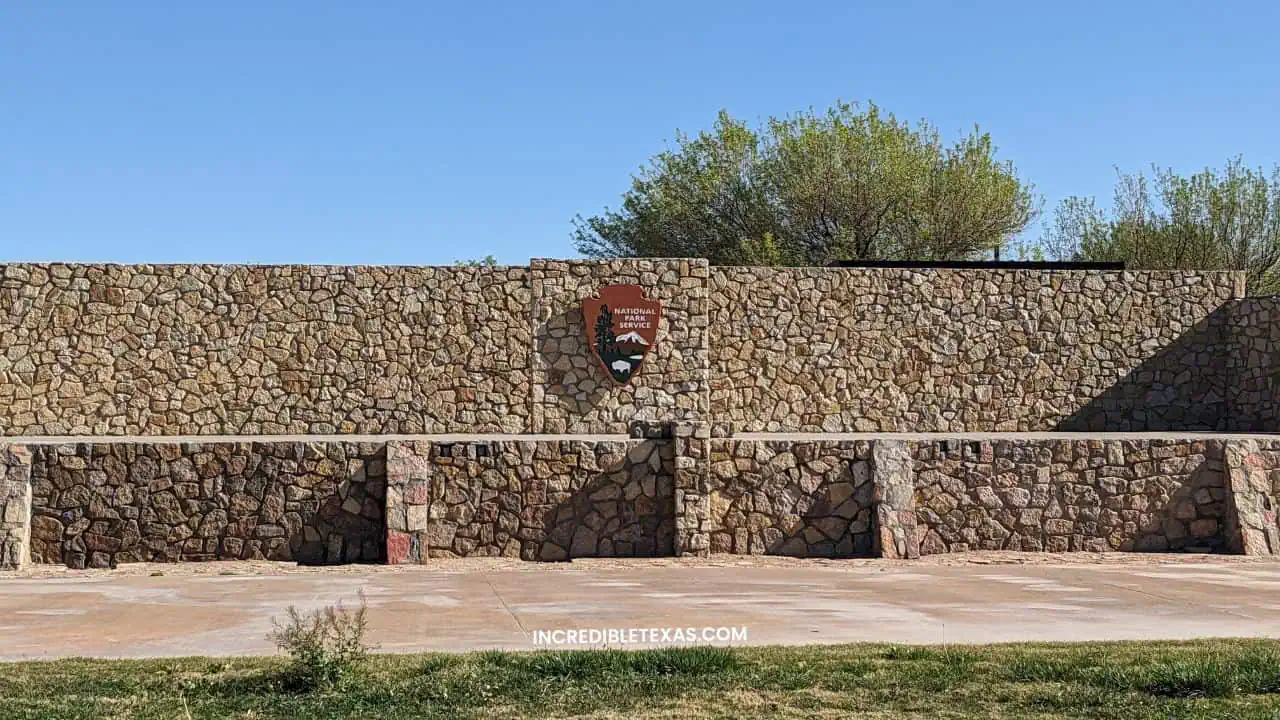
The park offers more than 100 miles of multi-use trails, including the technical Ron Coleman Trail connecting McKelligon Canyon to Trans-Mountain Road. Mountain bikers and rock climbers use the Tom Mays Unit for high-elevation recreation and night sky views overlooking the borderlands.
- Location: Tom Mays Park Access Road, El Paso, TX 79930 (off Trans-Mountain Road)
- Admission: $5 per adult; free for children 12 and under
- Operating Hours: Daily 8:00 AM to 5:00 PM (open until 8:00 PM during summer)
- Key Highlights: Aztec Caves trail, Ron Coleman ridgeline scramble, and walk-in desert campsites
Ghost Towns, Frontier Outposts, and Art Colonies
Frontier military heritage, ghost town mining ruins, and contemporary art define the storied towns scattered across the Trans-Pecos and Llano Estacado plains. These secluded west texas desert getaways offer an intriguing blend of frontier resilience and contemporary creative culture.
Among the most captivating small towns in west texas to visit are Marfa, Alpine, and Marathon, each preserving distinct architectural character. From tracking unexplained desert illumination to sand surfing on towering dunes, unusual things to do in west texas reward curious travelers who venture beyond standard city itineraries.
Marfa: Minimalist Art and Desert Illusions
Marfa stands out as an international hub for contemporary minimalist art in the high desert of Presidio County. Established by artist Donald Judd in the late 1970s, the Chinati Foundation occupies 340 acres of former Fort D.A. Russell military grounds. For complete tour schedules, gallery planning, and desert lodging, consult our dedicated [Marfa weekend itinerary](/marfa-weekend-itinerary-art-food-hotels-trips/).
Chinati displays monumental permanent installations, including Judd's 15 outdoor concrete works and 100 milled aluminum pieces housed in historic artillery sheds. Nine miles east of town on US-90, the free Marfa Lights Viewing Area allows visitors to look out across Mitchell Flat at dusk to spot unexplained glowing orbs that have intrigued travelers for over a century. Visitors traveling over Labor Day weekend can also consult our guide to the Marfa Lights Festival schedule and tickets for live courthouse music and street parades.
- Location: 1 Cavalry Row, Marfa, TX 79843 (Chinati Foundation)
- Admission: Viewing platform free; Chinati guided tours cost $25 per adult
- Operating Hours: Viewing area open nightly; Chinati open Wednesday through Sunday 9:00 AM to 4:30 PM
- Key Highlights: Chinati Foundation indoor and outdoor collections, Ballroom Marfa, and evening Marfa Lights viewing
Terlingua Ghost Town and the Starlight Theatre
Terlingua Ghost Town was once a productive quicksilver mining community founded around the Chisos Mining Company in the early 1900s. After mercury demand collapsed following World War II, the town emptied, leaving adobe ruins, mine shafts, and an evocative desert cemetery.
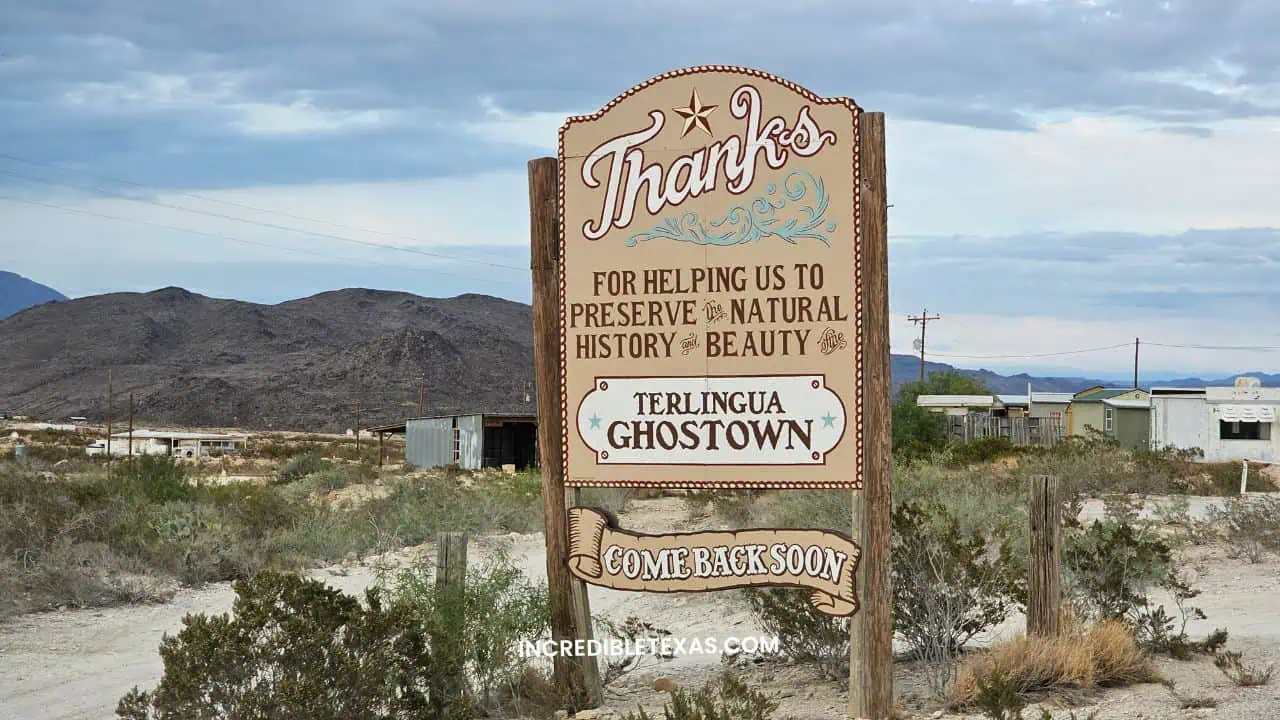
Today, Terlingua thrives as a lively hub for Big Bend adventurers. Visitors gather nightly on the porch of the Starlight Theatre for live music, smoked barbecue, and prickly pear margaritas under the desert stars. Check out our comprehensive Terlingua Ghost Town travel guide for dining, lodging, and chili cook-off details.
- Location: 631 Ivey Road, Terlingua, TX 79852 (off TX-118 near FM 170)
- Admission: Free access to town ruins and historic cemetery; restaurant costs vary
- Operating Hours: Town ruins accessible dawn to dusk; Starlight Theatre open daily 5:00 PM to midnight
- Key Highlights: Historic Terlingua Cemetery, Perry Mansion ruins, and the Starlight Theatre Restaurant
McDonald Observatory and Dark Sky Star Parties
Perched atop Mount Locke and Mount Fowlkes in the Davis Mountains at 6,791 feet, the McDonald Observatory is a leading astronomical research facility operated by the University of Texas at Austin. The observatory sits in the core of the Greater Big Bend International Dark Sky Reserve.
The facility hosts evening Star Parties at the Frank N. Bash Visitors Center, allowing guests to view nebulae, distant star clusters, and planets through large aperture telescopes. Advance ticket booking is required online through the University of Texas McDonald Observatory Visitor Programs portal, as programs routinely sell out weeks beforehand.
- Location: 3640 Dark Sky Drive, Fort Davis, TX 79734 (16 miles northwest of Fort Davis on TX-118)
- Admission: Star Party passes $20 to $25 per adult; daytime tours $10 per adult
- Operating Hours: Tuesday through Saturday; daytime hours 10:00 AM to 5:00 PM; evening programs vary
- Key Highlights: Telescope viewings, Rebecca Gale Telescope Park, and solar telescope daytime viewing
Historic Langtry and Judge Roy Bean Visitor Center
Located on a quiet loop off US-90 near the Rio Grande, Langtry preserves the colorful frontier justice of Judge Roy Bean. Declaring himself the Law West of the Pecos, Bean operated his courtroom directly inside the Jersey Lilly saloon during the late 19th century.
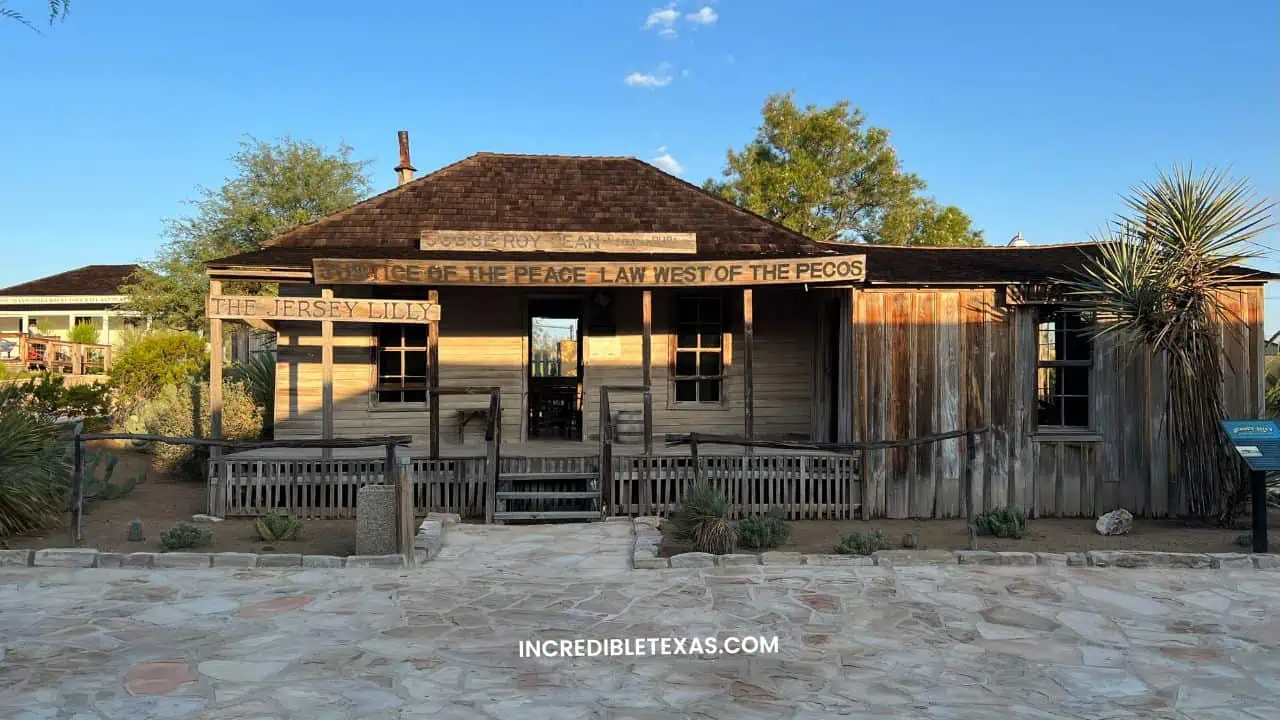
The Texas Department of Transportation maintains the Judge Roy Bean Visitor Center as an educational rest stop. Travelers tour Bean's original wooden saloon, the adjacent opera house, and a desert garden showcasing native cacti and succulents.
- Location: 526 Torres Avenue, Langtry, TX 78871 (off US-90)
- Admission: Free admission
- Operating Hours: Open daily 8:00 AM to 5:00 PM
- Key Highlights: Original Jersey Lilly saloon, historic opera house, and desert flora interpretive paths
Historic Fort Stockton and Annie Riggs Memorial Museum
Fort Stockton developed around Comanche Springs and a frontier military garrison established in 1858 to protect mail routes along the San Antonio-El Paso Road. Today, visitors can explore the restored original officer quarters, barracks, and guardhouse at the historic fort grounds.
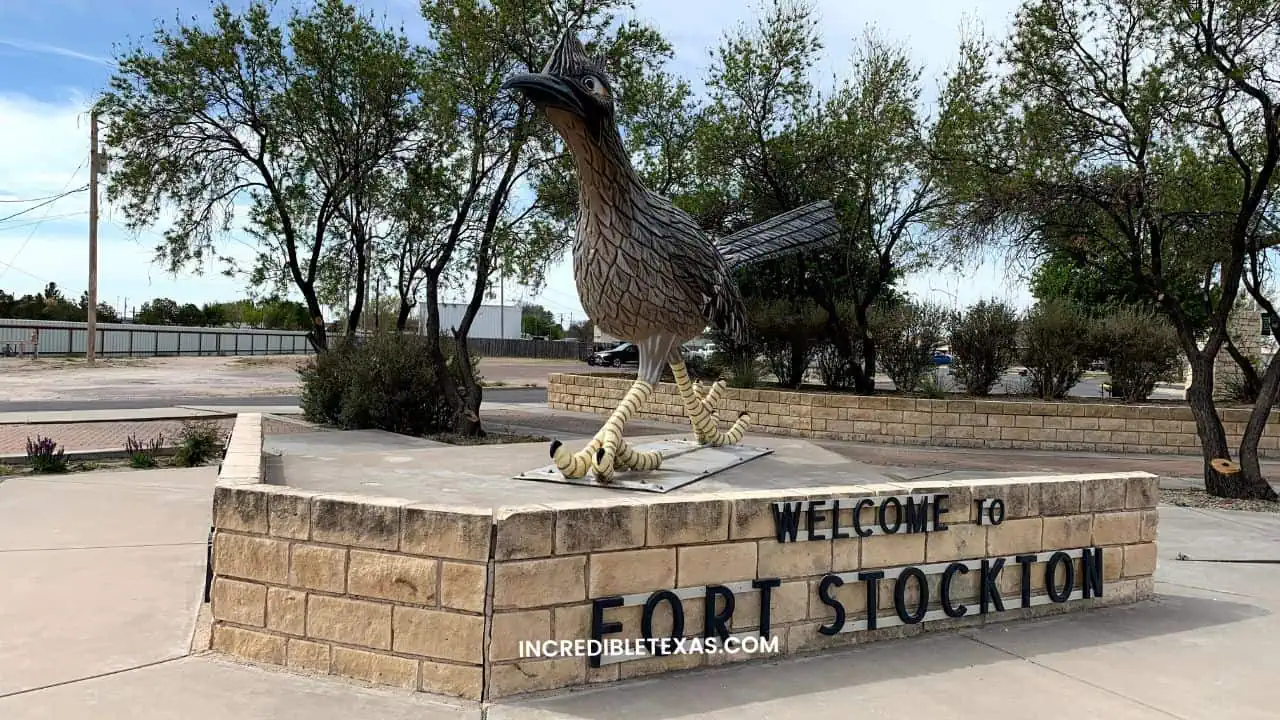
Downtown, the Annie Riggs Memorial Museum occupies a 1900 Victorian-era hotel built from native limestone and adobe. The museum displays pioneer ranching artifacts, early paleontology specimens, and historic Pecos County records.
- Location: 301 S. Main Street, Fort Stockton, TX 79735 (Annie Riggs Museum)
- Admission: Fort grounds free; museum admission $3 per adult ($1 children)
- Operating Hours: Fort open Monday through Saturday 8:00 AM to 5:00 PM; museum open Tuesday through Saturday 10:00 AM to 4:00 PM
- Key Highlights: 1858 garrison barracks, Victorian hotel exhibits, and Paisano Pete roadside roadrunner statue
Alpine and the Museum of the Big Bend
Alpine sits at an elevation of 4,475 feet in a mountain valley, serving as the cultural and commercial anchor of the Big Bend region. The town is home to Sul Ross State University, which hosts the acclaimed Museum of the Big Bend on its campus.
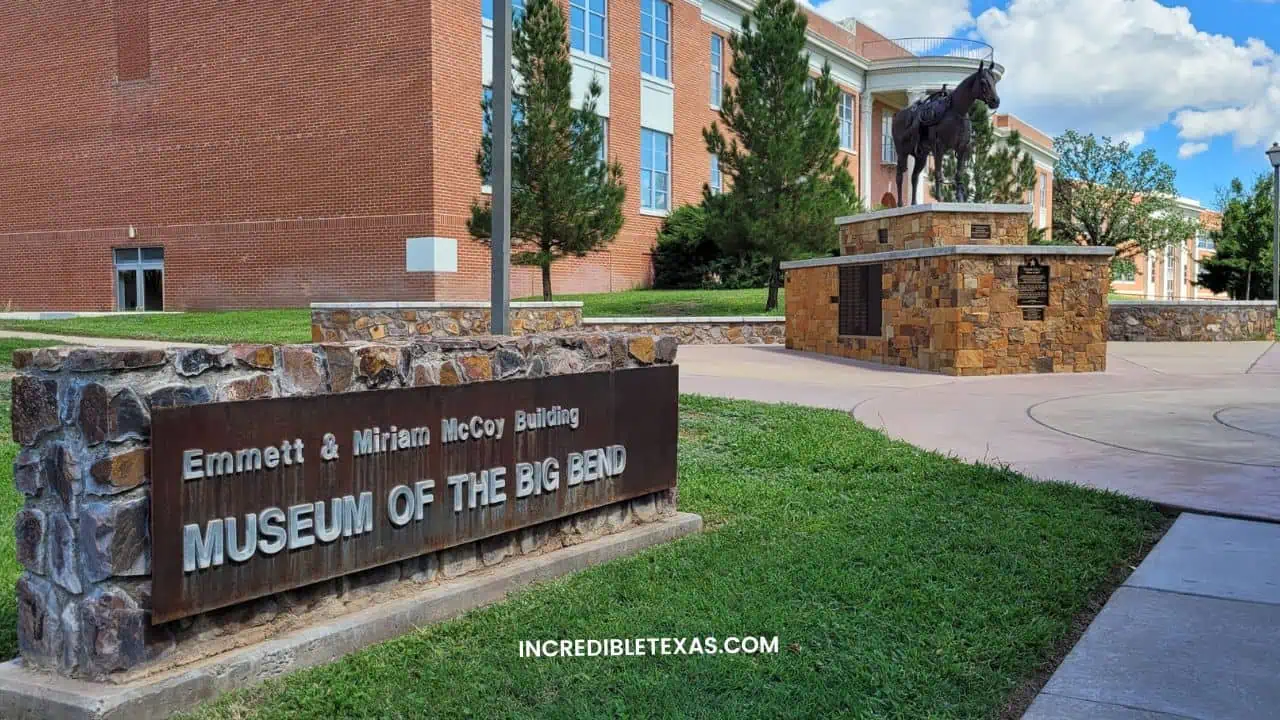
The museum highlights indigenous artifacts, Spanish expedition routes, and pioneer cattle history alongside temporary Western art galleries. Walking through downtown Alpine reveals dozens of outdoor historic murals, independent bookstores, and popular local cafes along Holland Avenue.
- Location: 400 N. Harrison Street, Alpine, TX 79832 (Sul Ross State University campus)
- Admission: Museum admission by voluntary donation ($5 suggested per adult)
- Operating Hours: Tuesday through Saturday 10:00 AM to 4:00 PM; closed Sundays and Mondays
- Key Highlights: Texas map collection, Western art wing, and downtown walking mural trail
Marathon and the Historic Gage Hotel
Marathon provides a quiet entry point to Big Bend National Park along US-90, surrounded by open rangeland and clean desert air. The town centers on the historic Gage Hotel, constructed in 1927 by San Antonio architect Henry Trost for rancher Alfred Gage.
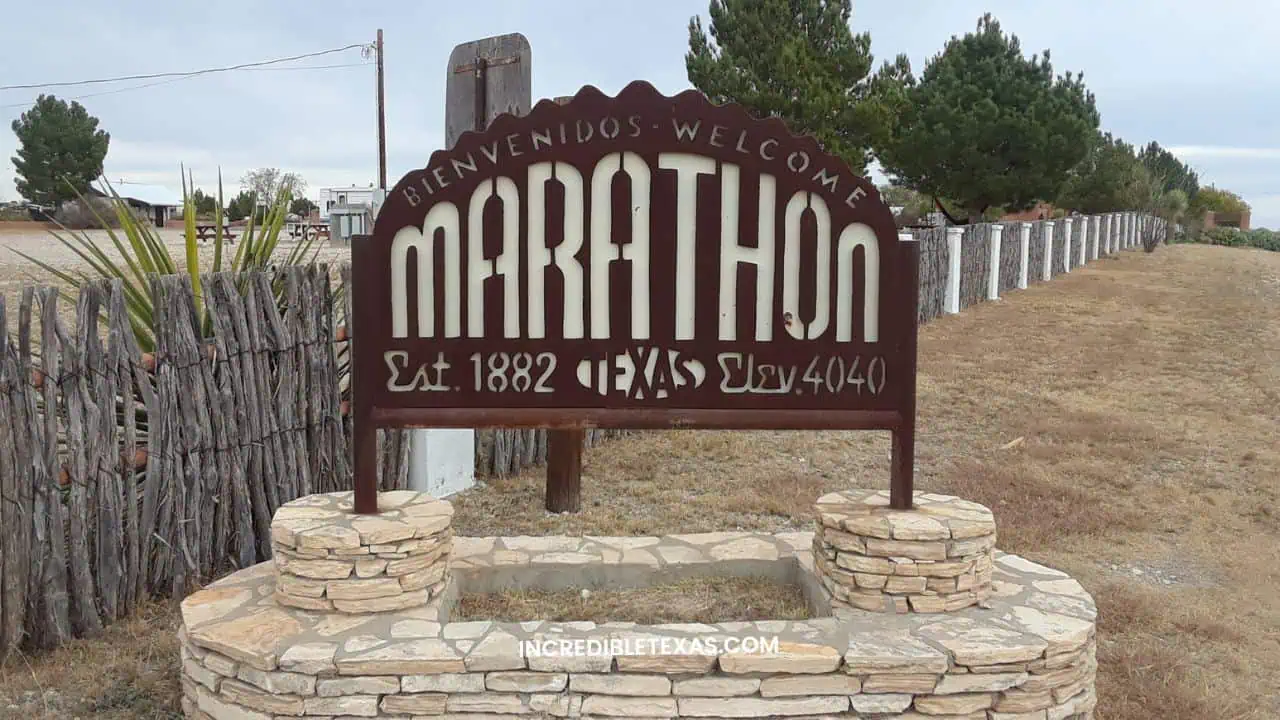
The mission-style property features landscaped native cactus gardens, outdoor fire pits, and the renowned 12 Gage Restaurant. Marathon also offers exceptional dark skies, with public astronomy viewing sessions offered on the grounds of the Marathon Motel.
- Location: 102 NW 1st Street, Marathon, TX 79842 (on US-90)
- Admission: Free to walk town streets and hotel gardens; dining and lodging costs vary
- Operating Hours: Hotel grounds open daily; 12 Gage Restaurant open nightly from 5:30 PM
- Key Highlights: 27-acre Gage Gardens, White Buffalo Bar, and unpolluted night sky viewing
Del Rio and Val Verde Winery
Situated on the Rio Grande, Del Rio blends border hospitality with historical landmarks. The city is home to Val Verde Winery, founded in 1883 by Italian immigrant Frank Qualia, holding the title of the oldest continuously operating winery in the state of Texas.
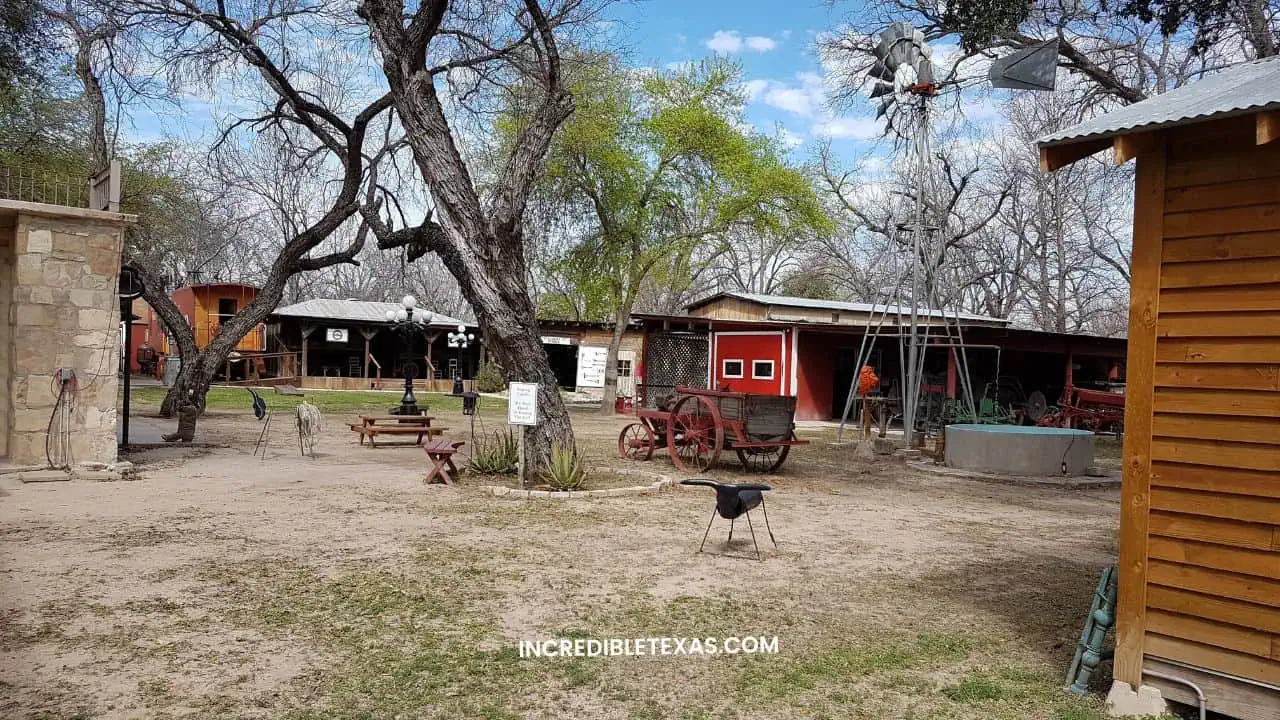
The family-run winery offers tastings of Lenoir and Herbemont grape varietals inside its rustic adobe tasting room. Nearby, the Whitehead Memorial Museum spans two acres with an 1887 frontier mercantile store and the gravesite of Judge Roy Bean.
- Location: 100 Qualia Drive, Del Rio, TX 78840 (Val Verde Winery)
- Admission: Standard winery tastings $5 to $15; museum entry $5 per adult
- Operating Hours: Winery open Monday through Saturday 10:00 AM to 6:00 PM; closed Sundays
- Key Highlights: Historic barrel cellars, heritage grape tastings, and the Whitehead Memorial Museum grounds
Pecos and the West of the Pecos Museum
Pecos serves as a classic gateway to West Texas cattle country and the Permian Basin. In 1883, local cowhands held what is recognized as the world's first public rodeo in Pecos, an anniversary celebrated annually during the West of the Pecos Rodeo each summer.
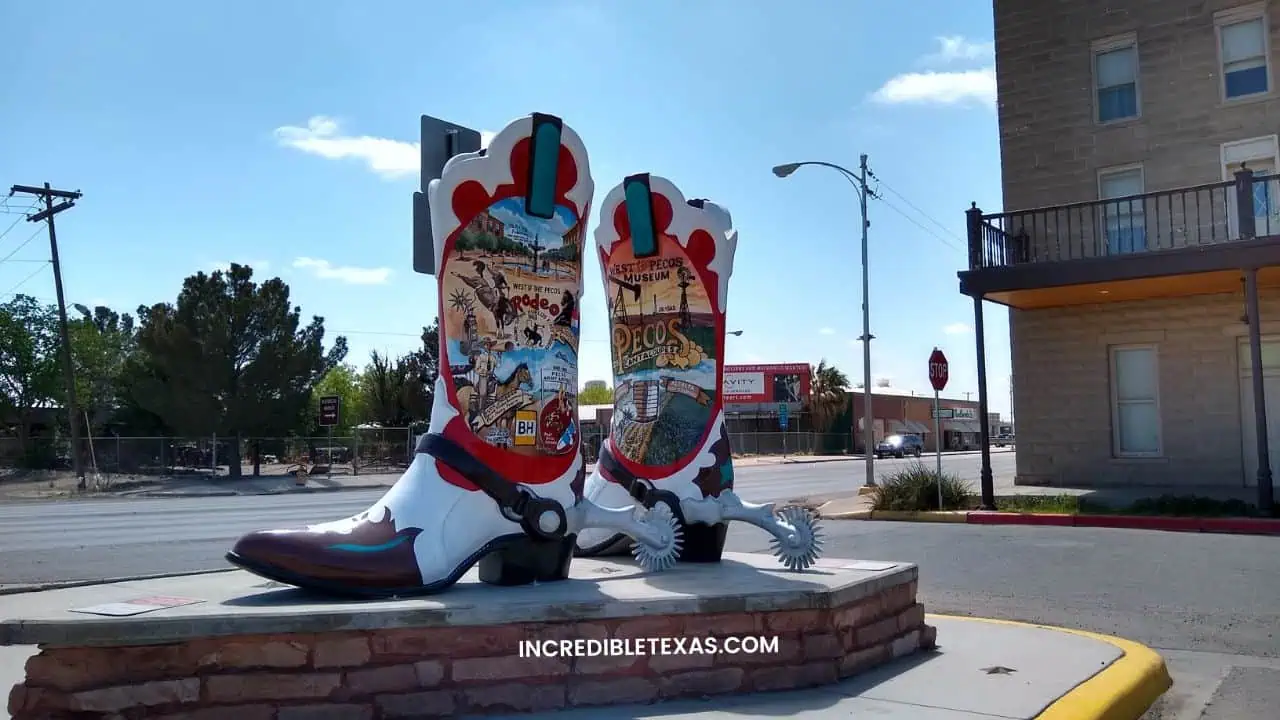
The West of the Pecos Museum occupies three floors of the restored 1896 Orient Hotel and Saloon. Exhibits display genuine frontier saloon counters, bullet holes from early gunfights, and extensive artifacts documenting early cowboy and rodeo heritage.
- Location: 120 E. 1st Street, Pecos, TX 79772
- Admission: $5 per adult; $3 for children ages 6 to 17
- Operating Hours: Monday through Saturday 9:00 AM to 5:00 PM; Sundays 1:00 PM to 5:00 PM
- Key Highlights: Restored 1896 saloon, cowboy gear galleries, and historical rodeo park
West Texas Road Trip Logistics and Travel Tips
Connecting multiple west texas road trip destinations safely requires disciplined vehicle preparation and environmental awareness. Towns across this region often sit 50 to 90 miles apart, and long highway segments lack reliable cellular voice or data reception.
Always fill your vehicle gas tank before departing major transit towns like Del Rio, Alpine, or El Paso. Travelers crossing through Pecos County should review local services and things to do in Fort Stockton before driving south toward Marathon or Big Bend. Download offline navigation maps on your mobile devices before departure, because GPS routing services fail when cell towers drop out along US-90, US-67, and FM 170.
Carry a minimum of one gallon of potable drinking water per person for every day of desert exploration. The high-altitude desert atmosphere evaporates moisture rapidly, making dehydration a real hazard even during spring and autumn hikes.
Tip
Respect dark-sky lighting guidelines across Fort Davis, Alpine, and Terlingua. Use red-beam flashlights during evening stargazing to preserve natural night vision for everyone in the area.
Frequently Asked Questions About West Texas Travel
What is the best hidden gem to visit in West Texas?
Balmorhea State Park ranks as the top hidden gem in West Texas due to its massive, crystal-clear spring pool that stays between 72°F and 76°F year-round. It offers a refreshing, unexpected desert oasis paired with scuba diving, swimming, and mountain views.
What is the best month to plan a West Texas road trip?
October and April provide optimal road trip weather across West Texas with daytime temperatures averaging 70°F to 80°F and crisp desert nights. Summer temperatures routinely exceed 100°F in desert lowlands, while winter nights frequently drop below freezing at higher mountain elevations.
Do you need advance reservations for West Texas state parks?
Advance day-use reservations are strongly recommended through Texas Parks and Wildlife for popular destinations like Balmorhea, Hueco Tanks, and Davis Mountains. Hueco Tanks caps North Mountain access to 70 people at a time, making phone reservations up to 90 days ahead critical for climbers and hikers.
How many days are recommended for a West Texas itinerary?
A thorough West Texas itinerary requires at least 5 to 7 full days to comfortably navigate the multi-hour driving distances between desert hubs. This timeline provides adequate time to hike the national and state parks, attend an observatory star party, and tour historic towns without rushed driving.