
Texas spans 367 miles of Gulf Coast shoreline with diverse coastal getaways. The best beaches in Texas range from untouched barrier dunes at Padre Island National Seashore to full-service island resorts.
Travelers comparing the top beaches in Texas will find everything from emerald surf to family-friendly bay waters. Those exploring Nueces County can also review our guide to the 17 best beaches in Corpus Christi for neighborhood itineraries.
Key takeaways
- South Padre Island features the clearest emerald-green water in Texas due to offshore Gulf currents and deep-water tidal flushing through Brazos Santiago Pass.
- Padre Island National Seashore protects 66 miles of undeveloped barrier island coastline south of Corpus Christi, accessible with a $25 weekly vehicle pass.
- Port Aransas Beach permits vehicle driving on 18 miles of packed sand between Beach Marker 0 and Marker 62 with an annual $12 city parking sticker.
- Rockport Beach on Aransas Bay is Texas’s first Blue Wave certified beach, providing calm shallow waters, 65 shaded palapa sites, and free pedestrian entry.
- Galveston’s Stewart Beach and East Beach sit approximately 50 miles south of downtown Houston, offering certified lifeguards, beach wheelchair loaners, and quick urban access.
Texas Beaches at a Glance: Quick Comparison
Texas coastal shorelines vary widely by wave action, water clarity, vehicle access, and entry fees across 367 miles of coast. Vacationers frequently contrast mainland corpus christi beaches with barrier destinations like Mustang Island.
Use this comparison table to identify the ideal destination based on your travel priorities, budget, and vehicle setup:
| Beach Destination | Location & Region | Entry / Parking Fee | Vehicle Sand Access | Best For |
|---|---|---|---|---|
| Padre Island National Seashore | South of Corpus Christi | $25 per vehicle (7-day pass) | Yes (4WD past Mile 5) | Wilderness camping, wildlife, shelling |
| Port Aransas Beach | Mustang Island (Port Aransas) | $12 annual vehicle sticker | Yes (Marker 0 to 62) | Tailgate beach setups, water sports |
| Rockport Beach | Aransas Bay (Rockport) | $10 daily per vehicle | No (Designated lots only) | Toddlers, calm wading, palapa picnics |
| Malaquite Beach | North Padre Island (PINS) | Included with PINS entry | No (Pedestrian only) | Facilities, visitor center, sea turtles |
| Surfside Beach | Brazoria County | Free (Permit for sand driving) | Yes (Designated village sand) | Surfing, bonfires, Houston day trips |
| Isla Blanca Park | South Padre Island | $15 daily per vehicle | No (Paved parking lots) | Clear water, fishing jetty, RV camping |
| Whitecap Beach | North Padre Island | Free public parking | Yes (Permit required on sand) | Couples, quiet sunsets, evening walks |
| Stewart Beach | Galveston Island | $15 daily per vehicle | No (Paved lot parking) | Staffed family amenities, lifeguards |
| East Beach | Galveston Island | $15 daily per vehicle | Limited seasonal access | Social gatherings, concerts, leashed dogs |
| Sylvan Beach Park | La Porte (Galveston Bay) | Free park admission ($4 pier) | No (Park bayside parking) | Wave-free wading, family fishing |
1. Padre Island National Seashore: Best Undeveloped Wilderness Beach
Padre Island National Seashore protects 66 miles of wild barrier island shoreline south of Corpus Christi. It is the longest undeveloped barrier island in the world.
Visitors pay a $25 weekly private vehicle pass to access primitive beach camping, sea turtle hatchling releases, and surf fishing. Review the National Park Service Padre Island Fees and Passes portal to download passes in advance, as cellular reception disappears quickly south of the entrance station.
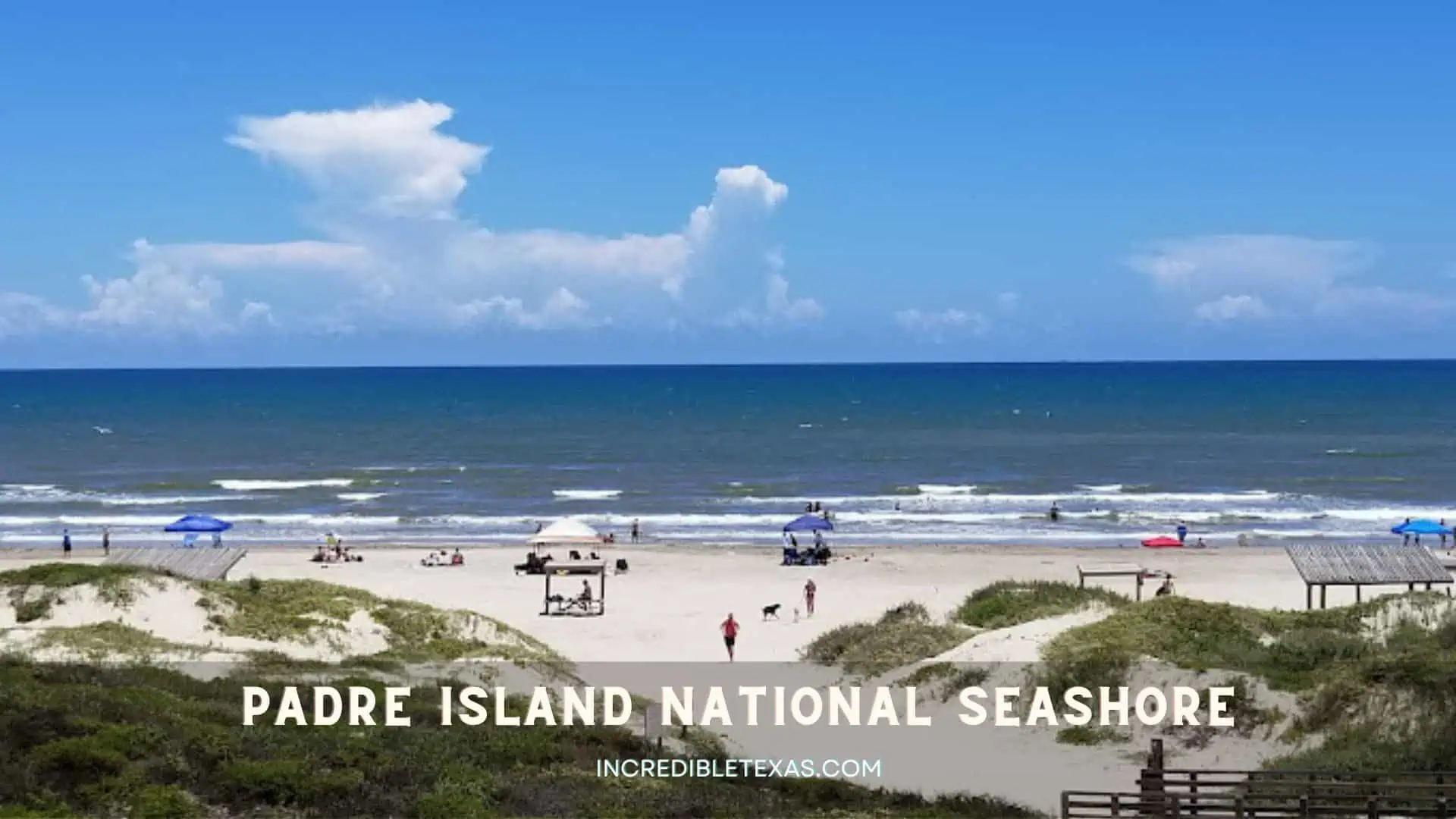
The park spans Kleberg and Kenedy counties along Park Road 22. Review our Padre Island National Seashore camping and driving guide for 4WD safety guidelines, campground fees, and tide advice. Entry is included at no additional cost for holders of the federal America the Beautiful interagency annual pass.
Wildlife and Sea Turtle Conservation
Padre Island National Seashore hosts more than 380 bird species along the Central Flyway migration route. Birdwatchers regularly spot reddish egrets, brown pelicans, and endangered peregrine falcons feeding along tidal flats and coastal dunes.
The national seashore serves as the primary nesting sanctuary in the United States for the critically endangered Kemp’s ridley sea turtle. Park rangers lead public hatchling releases between mid-June and August at dawn, where visitors gather near the Malaquite Beach shoreline to watch newly emerged sea turtles scramble into the Gulf surf.
Camping and Beach Activities
Primitive camping is permitted directly on the sand at North Beach, South Beach, and Yarborough Pass without additional camping permits beyond the standard park entry fee. South Beach provides 60 miles of uninterrupted open sand for self-contained campers willing to manage off-grid conditions.
- Seashell Collecting: Ocean currents concentrate over 200 species of marine shells along South Beach, including sand dollars, lightning whelks, and scotch bonnets.
- Surf Fishing: Anglers target bull redfish, black drum, and pompano directly from the surfline year-round.
- Four-Wheel Drive Rules: Conventional two-wheel drive vehicles can safely access North Beach and the first five miles of South Beach, but deep sand beyond Mile 5 requires high-clearance 4WD.
- Pet Guidelines: Leashed dogs are welcome along all park beaches except the Malaquite Pavilion boardwalk and deck areas.
Tip
Always deflate four-wheel drive tires to approximately 15 PSI before venturing past Mile 5 on South Beach. Commercial beach towing services from Corpus Christi routinely charge over $500 to extract stranded vehicles from deep shell banks.
2. Port Aransas Beach: Best Drive-On Shoreline
Port Aransas Beach provides 18 miles of wide, driveable Gulf shoreline on Mustang Island where motorists can park directly on the sand with an annual $12 permit. Mustang Island sits among the best beaches near corpus christi tx, giving day-trippers direct highway access from the mainland. Explore our comprehensive Mustang Island State Park guide to compare this public city beach with the adjacent protected state park sands.
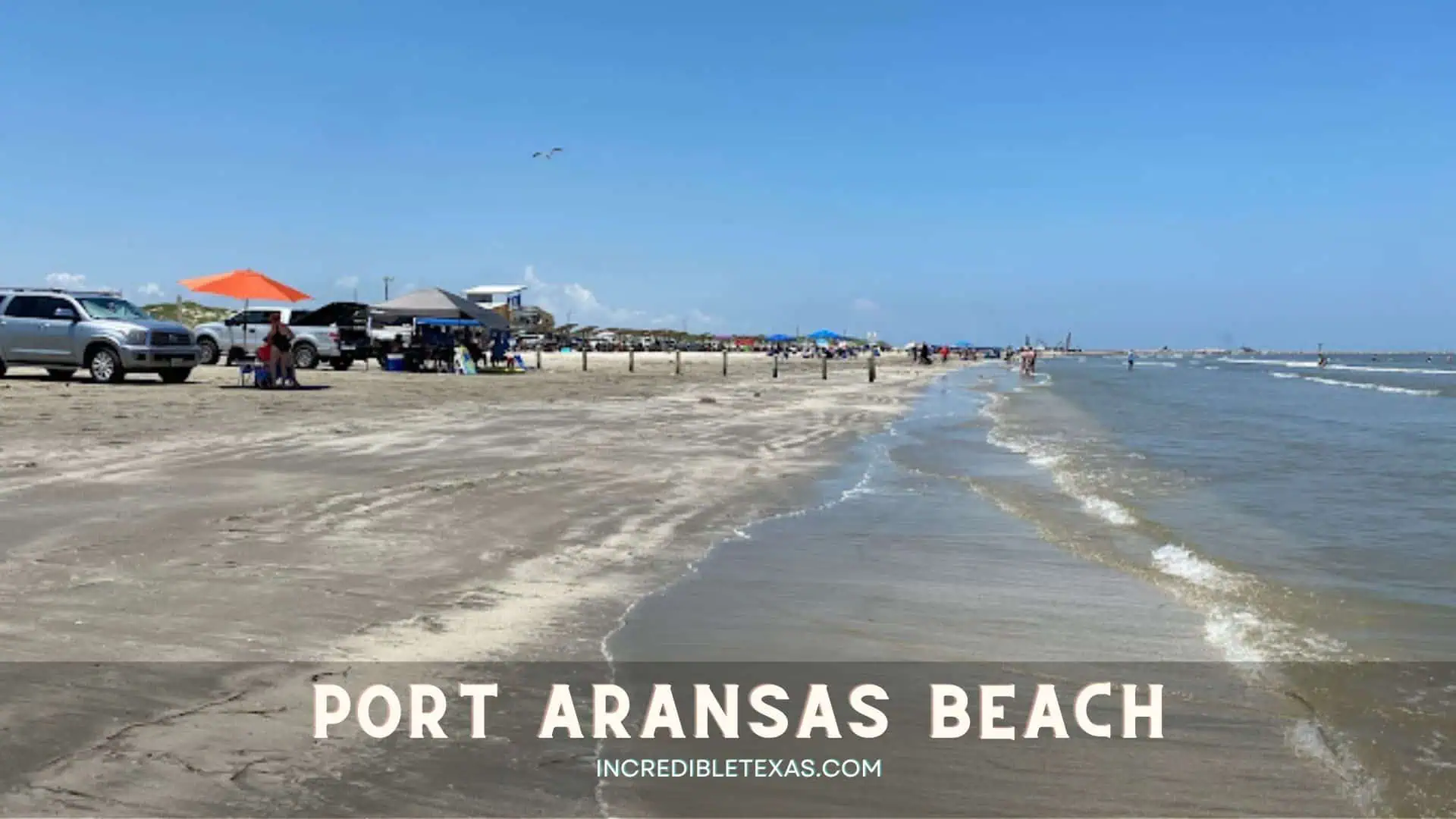
Visitors can also explore the adjacent coastal dunes managed on the Texas Parks and Wildlife Mustang Island State Park Portal. Free city parking zones exist between the south jetty and Horace Caldwell Pier (Marker D), as well as between Beach Markers 52 and 58.
Fishing and Water Sports
Port Aransas functions as the sportfishing capital of the Texas coast, hosting seasonal offshore charter tournaments for kingfish, dorado, and red snapper. Inshore anglers catch speckled trout and redfish casting from the Horace Caldwell Pier or wading the calm surfline at sunrise.
Local beach outfitters rent boogie boards, ocean kayaks, golf carts, and stand-up paddleboards with delivery directly to your tailgate on the sand. Beach bonfires are permitted in small contained fires no larger than three feet by three feet, provided fires are fully extinguished with water rather than buried in hot sand.
- Vehicle Access: Driving speed is capped at 15 mph along the shoreline roadway.
- Permit Purchases: Stickers can be bought at local grocery stores, convenience stops, or City Hall for $12.
- Beach Camping: Tent camping is permitted along the beach sand for up to three consecutive nights.
- Restrooms: Portable restrooms and outdoor rinse showers are placed near major street-end access ramps.
3. Rockport Beach: Blue Wave Certified Family Escape
Rockport Beach is Texas’s first certified Blue Wave Beach, celebrated for calm Aransas Bay waters, exceptional sanitation, and family amenities. Day-use vehicle entry costs $10, which includes access to 65 shaded palapa sites, playgrounds, and an 800-foot lighted fishing pier. Pedestrians and bicyclists enter free through the pedestrian turnstiles.
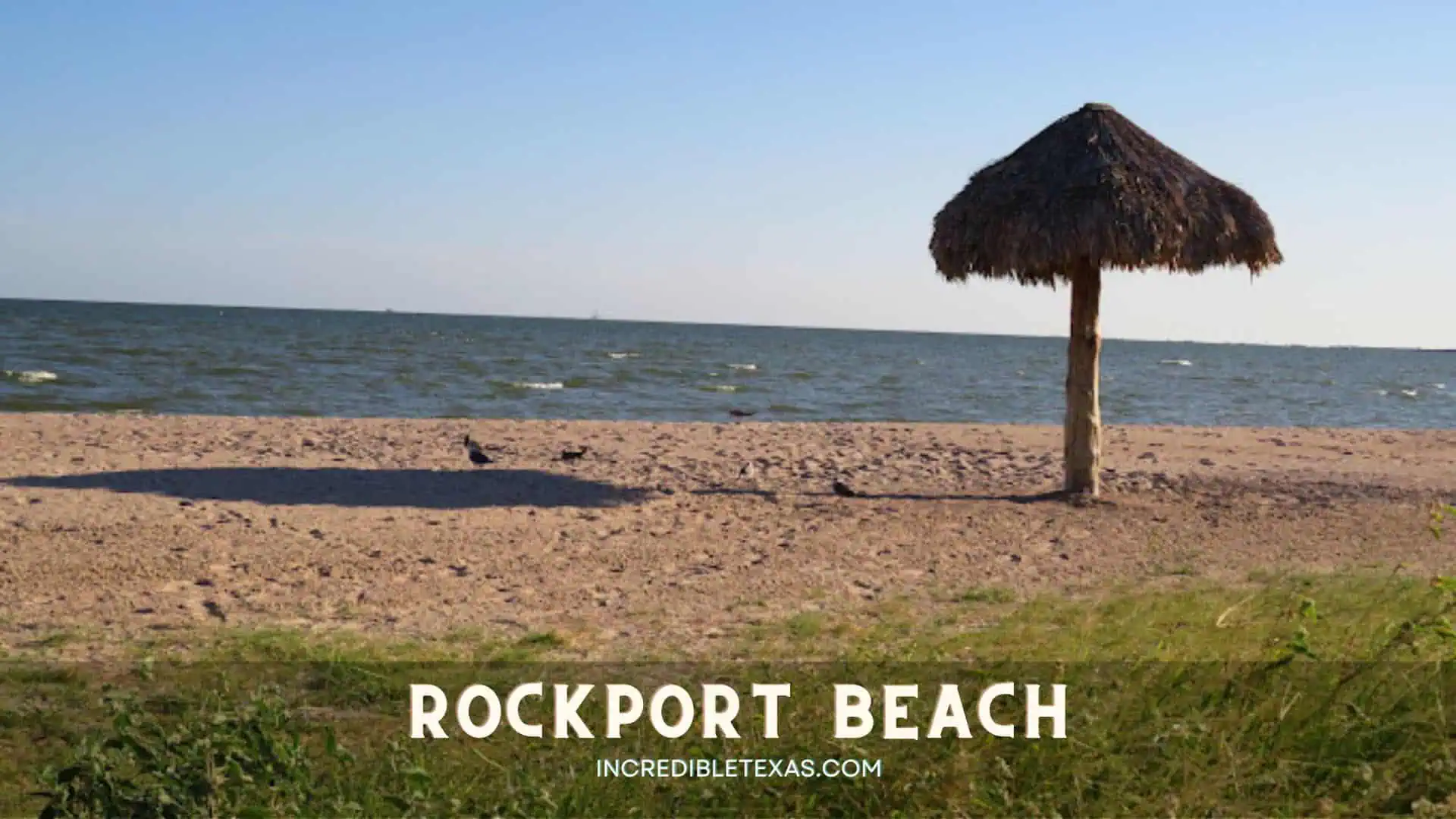
The park is managed by the Aransas County Navigation District. Review the Rockport Beach Park Rules and Admission page for seasonal pavilion reservation details and updated operating hours.
Family Amenities and Birdwatching
Rockport Beach eliminates the heavy breakers and undertows found on open ocean coastlines because it sits securely inside Aransas Bay. Toddlers and young children can wade hundreds of feet into shallow, knee-deep water without encountering sudden drop-offs or dangerous rip currents.
The park grounds feature clean tiled restrooms, outdoor freshwater rinse showers, two children’s playgrounds, and volleyball courts. Because the beach borders the Aransas migratory flyway, birders regularly spot roseate spoonbills, black skimmers, and blue herons wading along the adjacent salt marshes.
- Strict Pet Prohibition: Dogs and pets are strictly banned from all sandy areas to maintain Blue Wave water cleanliness standards.
- Palapas and Grills: Thatched shade palapas with barbecue grills are available on a first-come, first-served basis.
- Driving Restrictions: Vehicles are restricted to paved parking lots; no driving on the sand is permitted.
- Hours of Operation: Gates remain open from 6:00 AM to 11:00 PM Sunday through Thursday, extending to midnight on weekends.
4. Malaquite Beach: Sea Turtle Nesting and Visitor Center
Malaquite Beach serves as the developed recreation hub of Padre Island National Seashore, offering outdoor rinse showers, modern flush restrooms, and a paved educational visitor center. Vehicle traffic is strictly prohibited on the sand here, creating a safe, pedestrian-friendly shoreline for families. Access is included with the standard $25 national seashore private vehicle pass.
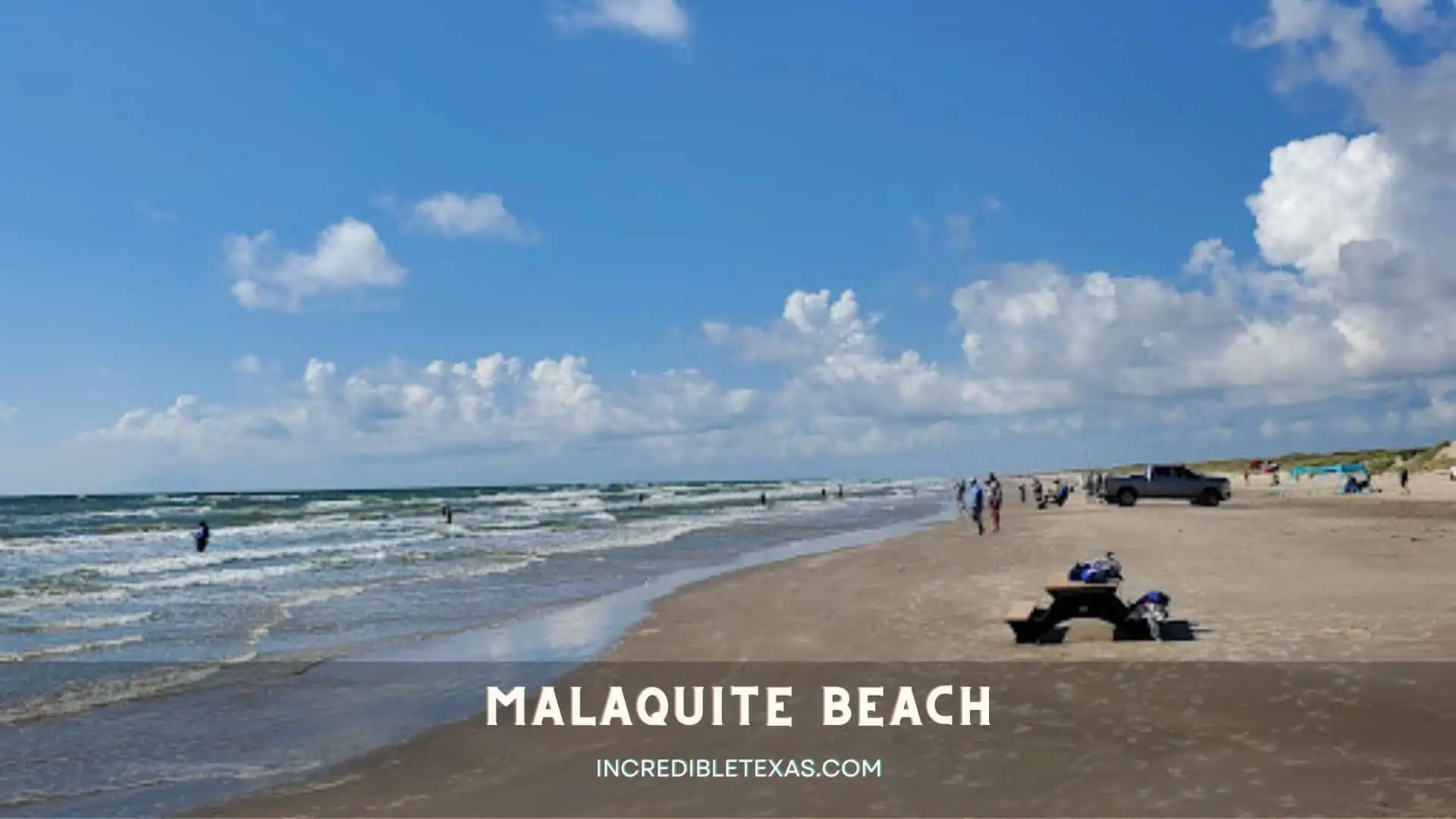
The Malaquite Visitor Center operates daily from 9:00 AM to 5:00 PM, featuring museum exhibits detailing barrier island geology, Spanish shipwrecks, and sea turtle biology. Elevated wooden boardwalks carry visitors safely over delicate coastal sand dunes down to the water’s edge.
- Semi-Primitive Camping: Malaquite Campground offers 48 paved sites for tents and RVs with flush toilets and cold water showers for $14 per night.
- Shaded Pavilions: Large shaded picnic areas provide relief from intense midday coastal sun.
- Safe Swimming: Gentle bottom contours and the absence of vehicles make Malaquite one of the safest open ocean swimming beaches in south Texas.
- Educational Bookstore: The visitor center features a park store with regional nature field guides and educational coastal gear.
5. Surfside Beach: Free Sand and Surf Near Houston
Surfside Beach in Brazoria County sits roughly 65 miles south of downtown Houston, providing uncrowded sandbars, consistent surf breaks, and designated bonfire areas. Pedestrian access is completely free, while driving on village sand stretches requires an inexpensive annual permit. Its location off State Highway 288 makes it one of the quickest coastal escapes for travelers coming from the Houston metroplex.
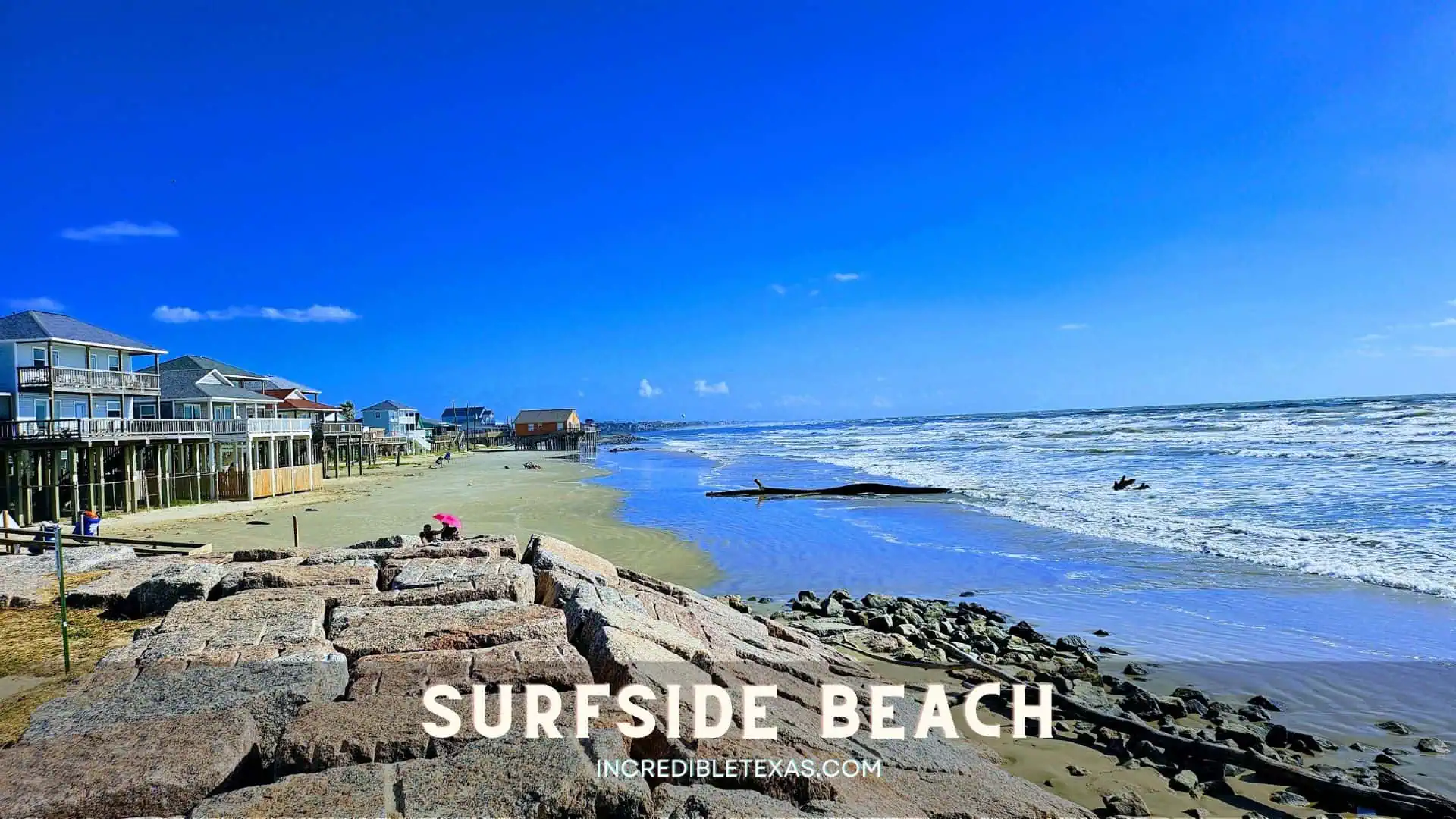
Unlike many northern Gulf beaches where water remains extremely shallow, Surfside Beach features deeper nearshore troughs that generate rideable waves for coastal surfers and bodyboarders. The village allows beach campfires outside of dune vegetation zones, making it a favorite sunset gathering spot.
- Bonfire Guidelines: Small wood fires are permitted on the open sand; burn bans must be verified before lighting fires.
- Free Pedestrian Access: Park in designated roadside lots along Bluewater Highway to walk onto the beach without paying vehicle fees.
- Dog Policy: Dogs are allowed on leashes throughout the beach year-round.
- Angler Access: The Surfside jetty park at the mouth of the Freeport harbor channel offers exceptional angling for spanish mackerel and speckled trout.
6. Isla Blanca Park: South Padre Island Clear Water and Pier
Among all south padre island beaches, Isla Blanca Park occupies the southern tip of South Padre Island, featuring the clearest green-blue waters and cleanest sand along the Texas coast. Managed by Cameron County Parks, the park charges $15 per vehicle for access to beachfront pavilions, full RV hookups, and a 1,000-foot lighted walking jetty. The park details facilities and entry requirements on the Cameron County Parks Isla Blanca Park Directory.
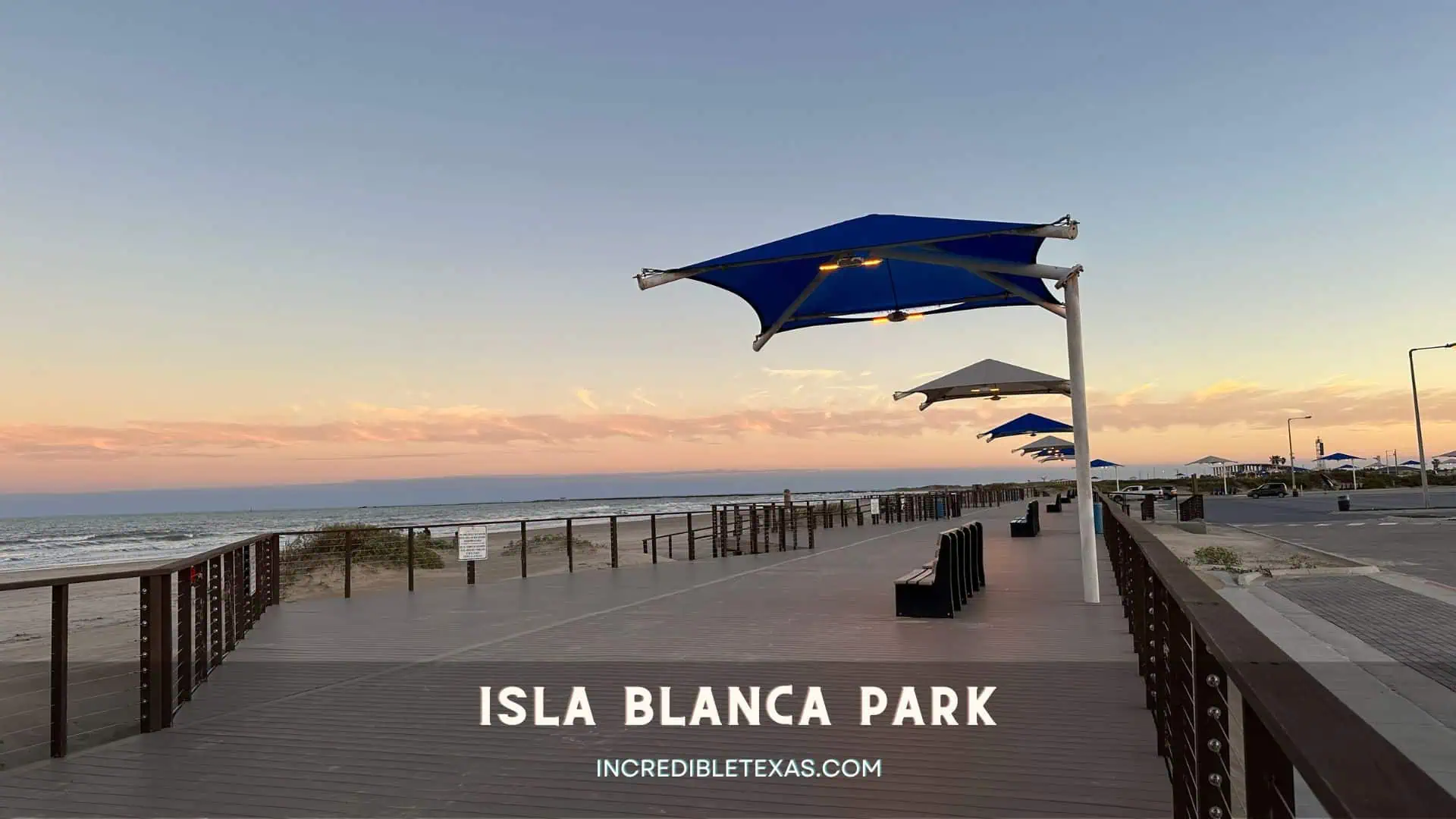
The exceptional water clarity at Isla Blanca Park stems from its geographical location near the deep Brazos Santiago Pass navigation channel. Deep Gulf currents continuously sweep through the pass, refreshing shoreline waters and preventing river sediment from accumulating near the beach.
- Full RV Hookups: The park hosts over 600 full-hookup RV sites steps from the sand, making it a winter destination for coastal campers.
- Lighted Jetties: The concrete-topped Brazos Santiago jetty provides safe footing for anglers and walkers watching dolphin pods navigate into the bay.
- Modern Facilities: Shaded gulf-front pavilions, outdoor rinse towers, and on-site concession eateries provide comfortable day-use infrastructure.
- No Vehicle Sand Access: Vehicles remain in paved parking areas, keeping the beachfront clean and pedestrian-friendly.
7. Whitecap Beach: Quiet Sands for Couples on North Padre Island
Whitecap Beach on North Padre Island delivers peaceful, uncrowded sands with free public parking at the end of Whitecap Boulevard. Whitecap Beach is known as the best quiet beach in Texas for couples due to its uncrowded sands and tranquil evening surf. As one of the most accessible corpus christi texas beaches, it offers free public parking right off Park Road 22.
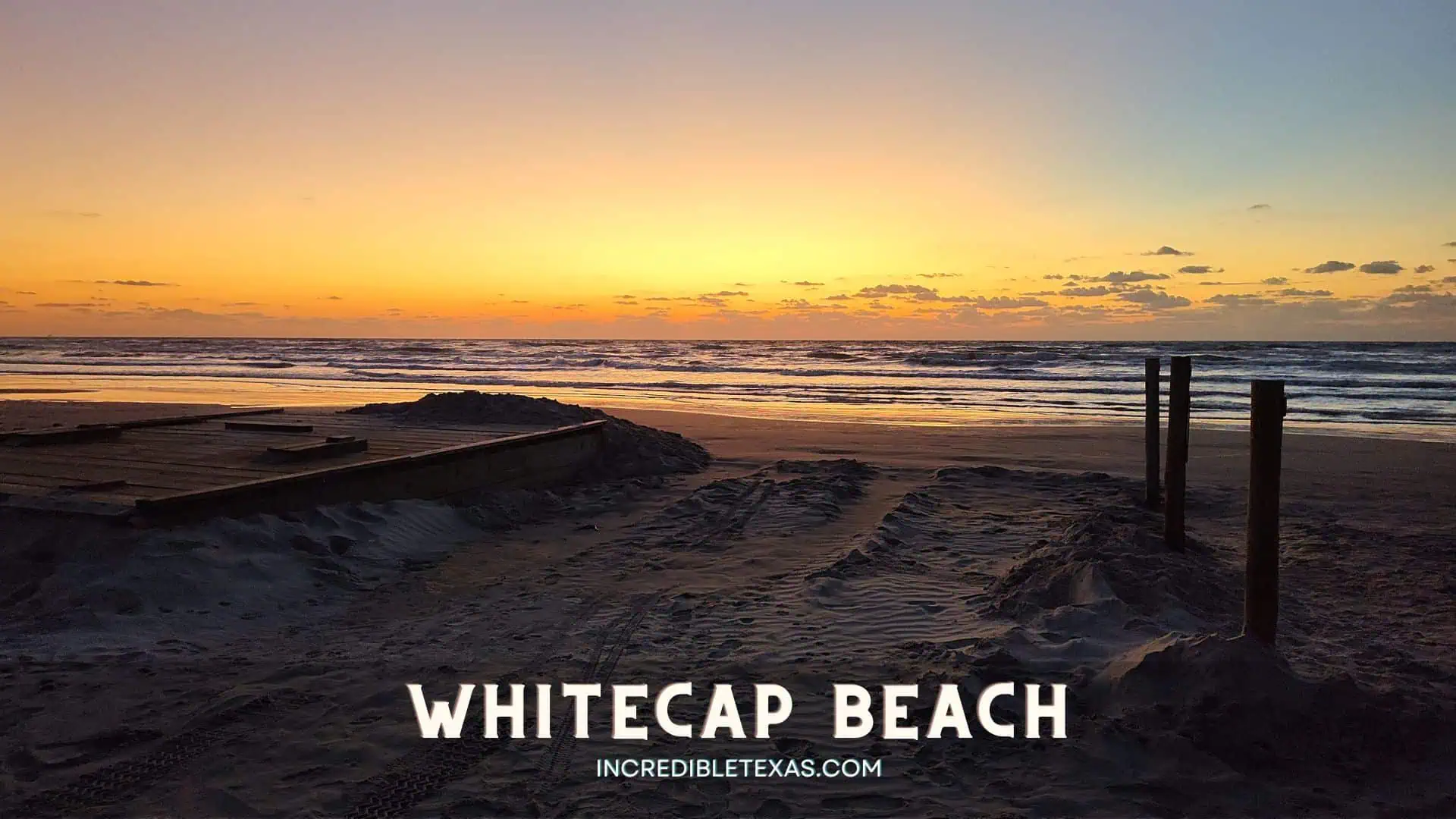
Whitecap Beach marks the transition point between the active resort beaches of Corpus Christi and the wild dunes of the national seashore. Travelers seeking peaceful beaches appreciate the lack of commercial boardwalks while staying within a short drive of urban dining and things to do in Corpus Christi.
- Free Roadside Parking: Park without charge in the paved cul-de-sac at the seawall terminus.
- Drive-On Sand: Motorists with a $12 annual beach parking permit can drive down the beach to find private stretches of sand.
- Minimal Commercial Noise: Bring your own shade canopies, coolers, and umbrellas as there are no permanent vendor booths.
- Pet Access: Leashed pets are welcomed on the sand at all times of the year.
8. Stewart Beach in Galveston: Staffed Family Amenities and Rentals
Stewart Beach is Galveston’s flagship staffed family beach park, located at the eastern foot of Broadway Avenue with certified seasonal lifeguards, umbrella rentals, and concessions. Vehicle entry is $15, and the park enforces a strict alcohol ban to maintain a family-oriented atmosphere. Full facility details are published on the Galveston Park Board Beach Parks Directory.
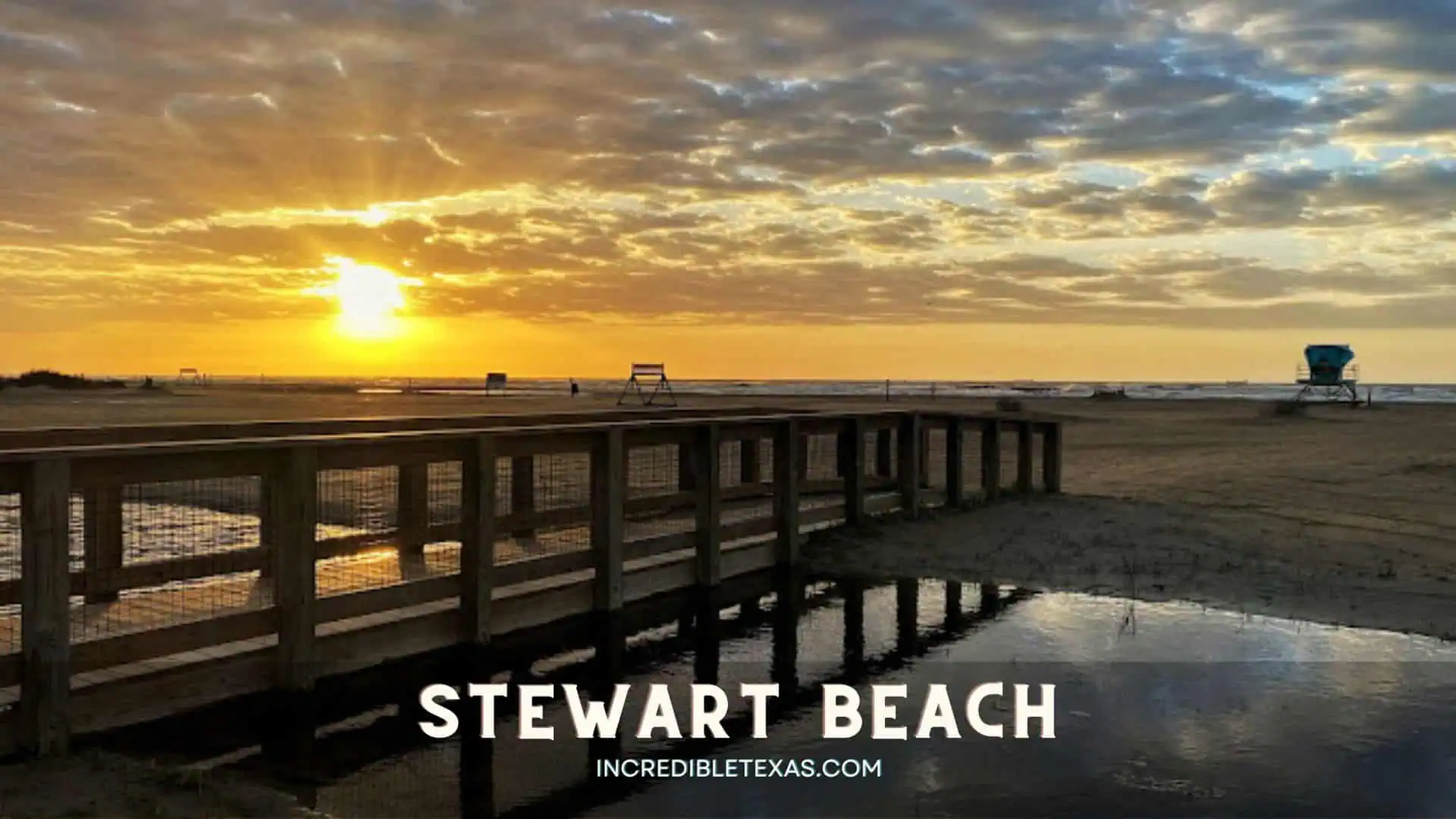
The beach is maintained daily by mechanical beach-sweeping tractors that remove natural seaweed and debris from the tideline. Visitors can rent beach lounge chairs and heavy canvas umbrellas directly on the sand, saving families the hassle of hauling heavy beach gear from their cars.
- Lifeguard Coverage: United States Lifesaving Association (USLA) certified guards staff towers daily from Memorial Day through Labor Day.
- Accessibility Programs: Free beach-accessible balloon-tire wheelchairs are loaned to visitors with mobility impairments upon presenting a valid government ID.
- Family Amenities: Restroom pavilions feature private changing stalls, rinse showers, and children’s playground structures.
- Prohibited Items: Alcohol and glass bottles are strictly illegal across all areas of Stewart Beach.
9. East Beach in Galveston: Lively Festivals and Dog-Friendly Shoreline
East Beach, also known as R.A. Apffel Park, is Galveston’s largest and most lively public beach, situated on the eastern tip of Galveston Island. Unlike Stewart Beach, East Beach permits alcohol consumption, welcomes leashed dogs, and hosts annual outdoor concert series and sandcastle competitions. Pet owners researching dog friendly beaches galveston often make East Beach their primary destination.
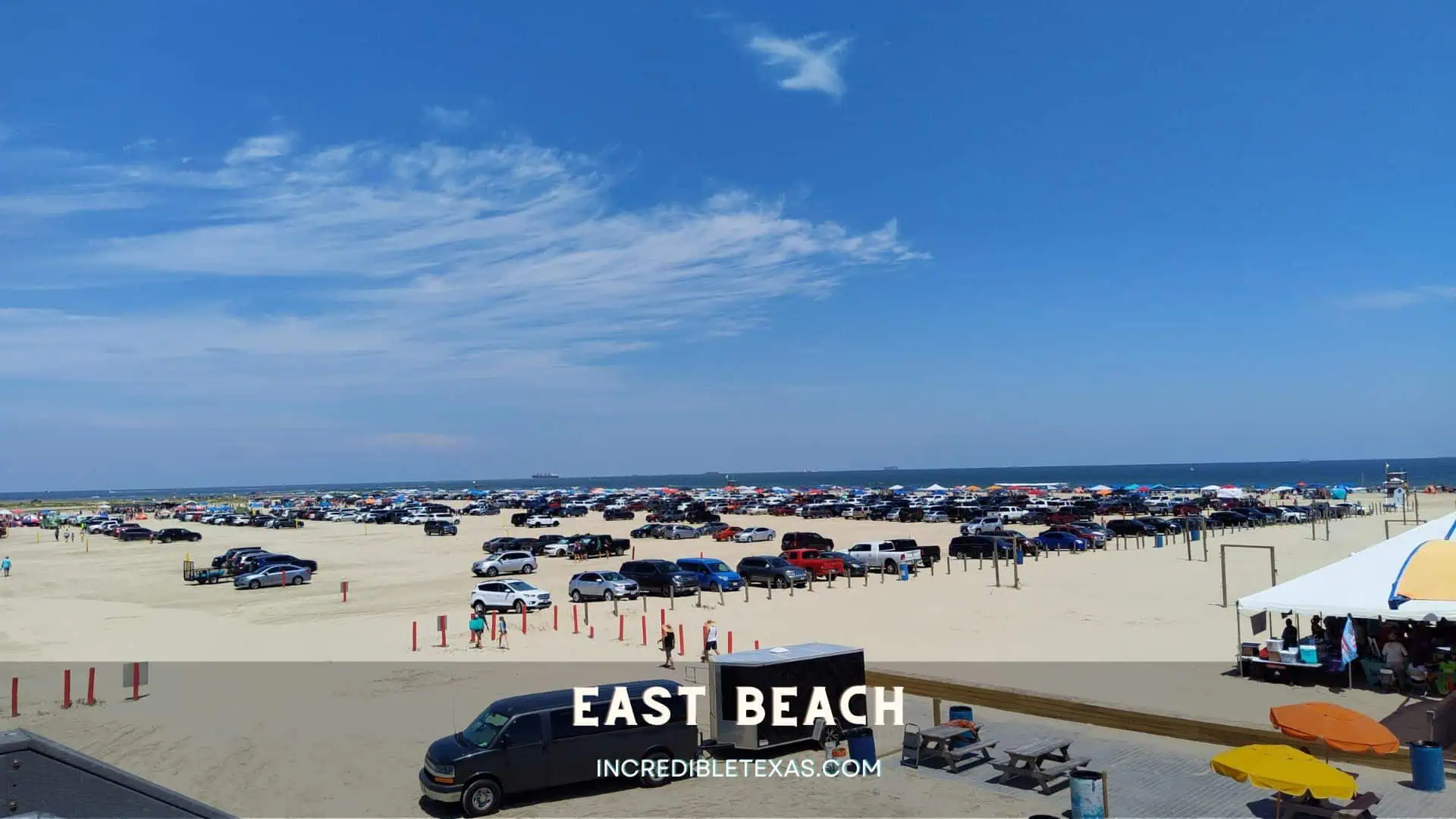
Unlike stricter city parks, this stretch ranks among the top beaches in galveston that permit leashed four-legged companions. Dog owners can compare park guidelines in our curated guide to dog-friendly beaches in Galveston before heading out with their pets.
- Alcohol Policy: Responsible consumption of canned beer and wine is permitted; glass containers are strictly prohibited.
- Seasonal Drive-On Sand: Designated sections of the beach allow vehicles directly on the sand during dry weather periods.
- Vehicle Admission: Day-use parking is $15 per passenger vehicle, matching Stewart Beach rates.
- Pet Rules: Dogs must be kept on a leash at all times, with pet waste stations provided near the boardwalk exit.
10. Sylvan Beach Park in La Porte: Gentle Galveston Bay Waters and Fishing Pier
Sylvan Beach Park in La Porte offers free public access to 31 acres of parkland and white sandy shoreline along the protected waters of Galveston Bay. Managed by Harris County Precinct 2, the park provides calm wave-free swimming, two playgrounds, a boat launch, and a $4 pay-to-fish pier. Its location along Upper Galveston Bay makes it the closest sandy waterfront to east Houston and Pasadena.
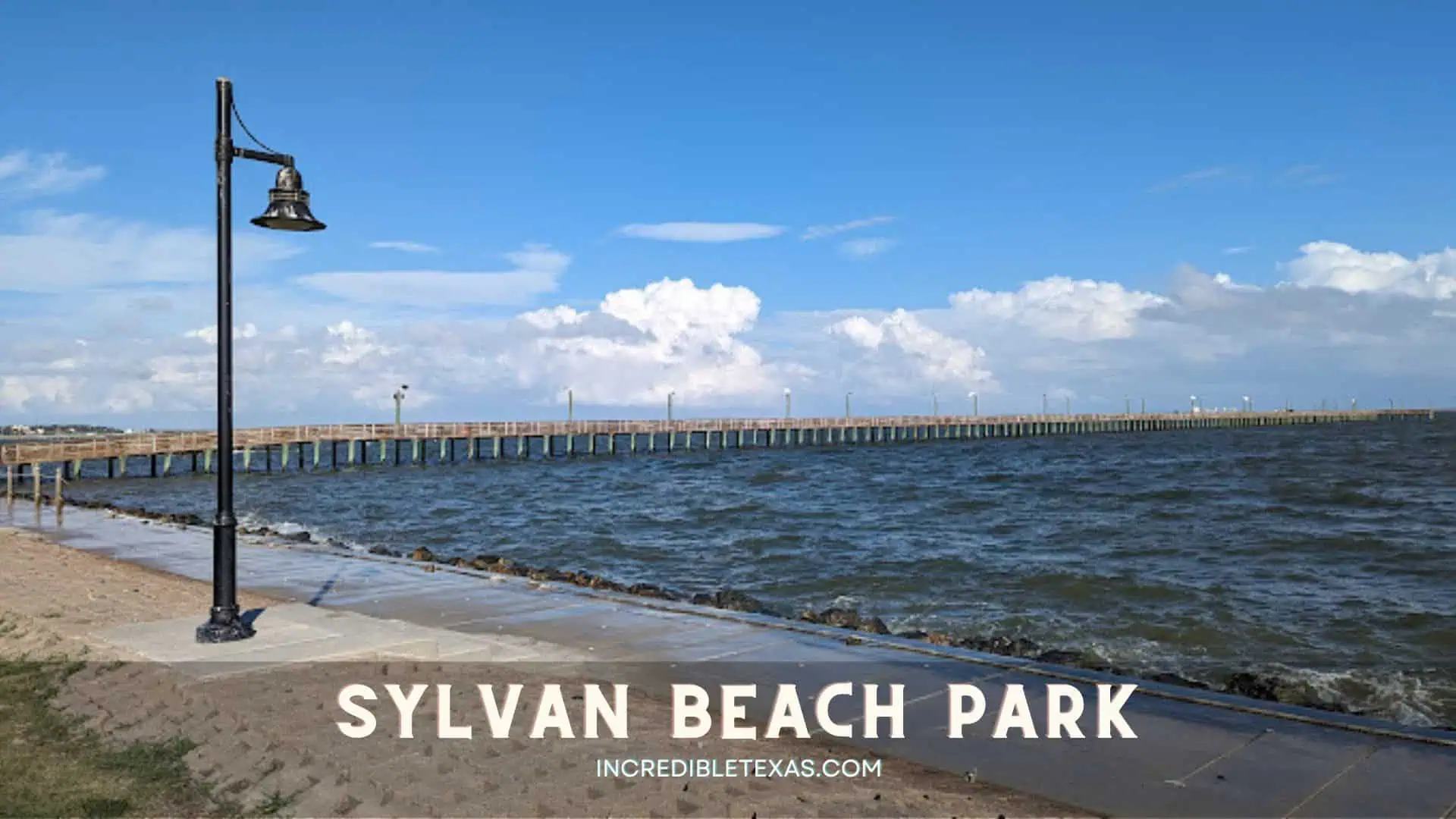
The park’s bayfront location prevents large ocean swells and dangerous rip currents, creating comfortable wading conditions for families with infants. While bay water lacks the clear turquoise color of south Texas, the park’s manicured grounds and air-conditioned rental pavilion make it a popular community gathering point.
- Free Admission: Entry to the park grounds, picnic pavilions, and beach sand is completely free.
- Public Fishing Pier: Anglers pay $4 to access the lighted pier, which produces speckled trout, black drum, and redfish.
- Amenities: Shaded oak groves feature picnic tables, public barbecue pits, tennis courts, and a skate park.
- Location Clarification: Sylvan Beach is located in La Porte off Bayshore Drive, not in La Marque.
Closest Texas Beach to Houston, Dallas, Austin, and San Antonio
Travelers in Texas often ask which beach requires the least amount of highway driving from their home city. North Texas travelers researching dallas beaches quickly learn that the DFW metroplex has lakefront swim beaches rather than ocean shores. Finding true ocean beaches in dallas texas requires heading south along Interstate 45 to the Gulf of Mexico.
Review this drive-time summary to plan your quickest route to the coast:
| Metro Origin | Closest Beach Destination | Distance & Drive Time | Primary Driving Route | Best Alternate Option |
|---|---|---|---|---|
| Houston | Stewart Beach (Galveston) | 50 miles (55 minutes) | Interstate 45 South | Surfside Beach (65 miles, State Hwy 288) |
| San Antonio | Rockport Beach | 160 miles (2 hrs 30 mins) | Interstate 37 South to US-181 | Port Aransas Beach (175 miles via ferry) |
| Austin | Port Aransas Beach | 200 miles (3 hrs 20 mins) | State Hwy 130 to US-183 South | Rockport Beach (190 miles via US-183) |
| Dallas / Fort Worth | Stewart Beach (Galveston) | 290 miles (4 hrs 30 mins) | Interstate 45 South | Surfside Beach (305 miles via I-45 & Hwy 288) |
When seeking coastal beaches near dallas, Stewart Beach in Galveston is the closest beach to dallas tx at 290 miles. Travelers can make the drive down Interstate 45 in approximately four and a half hours.
Drivers heading to ocean beaches in corpus christi or Galveston can reach the shoreline in a single morning. Central Texas travelers leaving Austin or San Antonio enjoy the fastest coastal transit by heading straight to the Coastal Bend rather than navigating Houston traffic.
Best Dog-Friendly Beaches in Texas: Leash Rules and Policies
Texas maintains welcoming coastal dog policies, though pet rules differ substantially between individual municipalities. The majority of Gulf Coast beaches permit leashed dogs year-round, while specific high-sanitation parks ban pets entirely to protect water certifications.
- Padre Island National Seashore: Dogs on leashes up to six feet are permitted across all 66 miles of beach sand. Pets are excluded only from the interior Malaquite visitor center and boardwalk deck.
- East Beach (Galveston): Leashed dogs are welcomed on the sand throughout the year. Galveston’s municipal shoreline provides the most accessible galveston beaches for millions of regional city dwellers.
- Port Aransas Beach: Dogs are permitted along all 18 miles of shoreline on standard leashes. Owners must remove and dispose of pet waste properly.
- Surfside Beach: Brazoria County welcomes dogs on leashes across all public beach parcels without seasonal time restrictions.
- Rockport Beach (Strict Pet Ban): Pets are strictly forbidden on the sand, in the water, and on the fishing piers. This rule is rigorously enforced to maintain the park’s Blue Wave environmental certification.
Texas Beaches You Can Drive On: Permits and Vehicle Guidelines
Driving on the sand is a long-standing coastal tradition protected under state law. Under the Texas General Land Office Open Beaches Act Guidance, the public holds guaranteed recreation rights across 367 miles of continuous Gulf shoreline, while local cities regulate vehicular access to balance safety and dune conservation.
- Port Aransas Beach: Motorists must display an annual $12 beach parking sticker on their windshield between Beach Marker 0 and Marker 62. Speed is strictly capped at 15 mph.
- Crystal Beach on Bolivar Peninsula: A 27-mile stretch of beach permits driving with an annual county permit sticker, accessible via the free Galveston-Bolivar ferry.
- Padre Island National Seashore South Beach: Vehicles can drive freely on the first five miles of hard-packed sand. Driving beyond Mile 5 requires four-wheel drive and self-recovery equipment.
- Boca Chica Beach near Brownsville: This wild, undeveloped beach near the SpaceX Starbase launch complex allows free vehicle access directly to the water’s edge when launch safety closures are not in effect.
Tip
Never drive across coastal sand dunes or park on sea oats vegetation. Damaging coastal dunes violates Texas Natural Resources Code and carries fines of up to $2,000 per violation.
Free Beaches and Camping in Texas: No Entry Fee Required
Budget-conscious travelers can take advantage of numerous Texas beaches that require no day-use fees or vehicle parking charges. Many of these locations also provide free primitive camping directly on the sand for up to two consecutive weeks. Anglers planning multi-day shoreline trips can also check our guide to Sea Rim State Park camping for managed state park alternatives.
| Free Beach Destination | Coastal Area & County | Overnight Camping Rules | Sand Driving Status | Signature Feature |
|---|---|---|---|---|
| Magnolia Beach | Matagorda Bay (Calhoun Co.) | Free camping up to 14 days | Hard-packed shell sand | Exceptional RV stability, calm bay water |
| Surfside Beach | Brazoria County | Pedestrian access free | Driving permit required on sand | Surfing waves, sunset bonfires |
| Whitecap Beach | North Padre Island (Nueces Co.) | Day use free (paved lot) | Driving permit required on sand | Quiet atmosphere, close to Corpus Christi |
| Crystal Beach | Bolivar Peninsula (Galveston Co.) | Free beach access | Annual permit for vehicle parking | Expansive tailgating, uncrowded sands |
| Boca Chica Beach | Cameron County | Free primitive access | Drive on sand permitted | Views of Gulf mouth and rocket launch towers |
Magnolia Beach in Calhoun County stands out as the top free coastal camping location in Texas. Its unique crushed-shell shoreline creates a solid, hard-packed surface that easily supports heavy travel trailers and motorhomes without risk of sinking into soft sand.
Best Time to Visit Texas Beaches: Seasonal Weather and Water Temperatures
Texas beaches remain accessible 365 days a year, but coastal conditions fluctuate significantly between seasons. Gulf water temperatures range from a chilly 58°F in January to a tropical 88°F during August.
- Fall (Late September through November): This is widely considered the best time to visit Texas beaches. Coastal humidity drops, daytime temperatures hover around 80°F, water remains warm for swimming, and summer crowds evaporate after Labor Day. Because this timeframe overlaps with peak tropical storm activity, check our Texas Gulf Coast hurricane season guide when monitoring late-season Gulf swells.
- Spring (March through May): Spring brings comfortable warm breezes and blooming coastal wildflowers. March brings intense spring break crowds to South Padre Island and Port Aransas, so advance hotel bookings are necessary.
- Summer (June through August): Summer delivers peak water temperatures and full lifeguard operations. Midday humidity is high, and beach parking lots at popular destinations regularly reach full capacity before 10:30 AM on weekends.
- Winter (December through February): Winter brings mild weather ideal for birdwatching, surf fishing, and beachcombing. Strong cold fronts occasionally drop temperatures into the 40s with stiff northern winds.
Texas Beach Safety: Rip Currents, Jellyfish, and Water Quality Monitoring
Staying informed about natural coastal hazards ensures a safe experience for all beachgoers. The Texas coast features diverse marine life, active tidal currents, and fluctuating water conditions monitored by state and federal environmental agencies. Those interested in marine exploration beyond the shore can consult our guide to the top scuba diving spots in Texas for offshore reef conditions.
Rip Currents
Rip currents represent the most serious physical hazard along Texas Gulf Coast beaches, particularly near piers, jetties, and submerged sandbars. If pulled offshore by a rip current, remain calm and float rather than swimming against the incoming surge. Swim parallel to the shoreline until you escape the narrow seaward current, then angle diagonally toward the beach.
Jellyfish and Marine Life
Portuguese man-o-war and cabbage head jellyfish appear periodically in nearshore waters, particularly following sustained onshore winds. Never touch stranded jellyfish on the sand, as stinging tentacles remain active for hours after death. When wading through shallow Gulf waters, execute the “stingray shuffle” by sliding your feet across the sandy bottom to alert resting stingrays before stepping on them.
Water Quality Monitoring
Under the 1959 Texas Open Beaches Act, the public holds guaranteed recreation rights across 367 miles of continuous Gulf Coast shoreline, where the Texas General Land Office tests water quality across more than 160 monitoring stations.
Before swimming, review federal coastal recreation benchmarks on the EPA Beach Water Quality and Protection Program portal. State laboratories test coastal water samples weekly during the summer swim season to ensure enterococcus bacterial levels remain well within safe recreational swimming standards.
Frequently Asked Questions About Texas Beaches
What is the prettiest beach in Texas?
South Padre Island is widely considered the prettiest beach in Texas because of its wide golden sandbars and emerald-green Gulf waters. Malaquite Beach within Padre Island National Seashore ranks as a close second for travelers seeking untouched, undeveloped natural scenery without commercial buildings.
What beach in Texas has the clearest water?
Isla Blanca Park on South Padre Island offers the clearest water of any Texas beach due to deep tidal currents flushing through Brazos Santiago Pass. Farther north, Gulf beaches tend to carry more river silt and sediment, resulting in darker coastal waters.
What are the best beaches in Texas for families?
Rockport Beach and Stewart Beach in Galveston rank as the best beaches in Texas for families due to calm water, clean public restrooms, and active lifeguards. Rockport Beach provides wave-free shallow bay wading, while Stewart Beach delivers rental umbrellas, concessions, and playground equipment.
Can you drive on Texas beaches?
Yes, many Texas beaches allow passenger vehicles to drive directly on the sand under local municipal regulations. Port Aransas Beach permits driving with an annual $12 permit, while Crystal Beach on Bolivar Peninsula and South Beach at Padre Island National Seashore also allow vehicle access.
Which Texas beach is closest to Houston and Dallas?
Galveston beaches, located 50 miles south via Interstate 45, are the closest Gulf beaches to Houston with an average drive time of one hour. Dallas residents face a 290-mile drive down Interstate 45 to reach Galveston, making it the closest ocean coastline to north Texas metros.
Final Thoughts: Planning Your Texas Beach Trip
With 367 miles of Gulf Coast shoreline, Texas provides an extraordinary spectrum of coastal getaways. Whether you choose the tranquil bay shallows of Rockport Beach, the 4WD wilderness of Padre Island National Seashore, or the resort waters of South Padre Island, planning around parking permits, pet rules, and seasonal temperatures guarantees a memorable journey.
Before packing your gear, verify local beach permit regulations and check current water quality reports on official state portals. A prepared traveler discovers that the Texas coast offers some of the most accessible and diverse beaches in the country.