Brazos Bend State Park is a 4,897-acre coastal wildlife sanctuary located in Needville, Texas, roughly 45 miles southwest of downtown Houston. Best known for wild American alligators, 37 miles of multi-use trails, six fishing lakes, and dark-sky stargazing at the George Observatory, the sanctuary welcomes over 300,000 visitors annually. It ranks among the top outdoor destinations in Southeast Texas for wildlife observation and nature photography.
The gates operate daily from 8:00 a.m. until 10:00 p.m. Daily entrance fees $7 apply for adults, while children 12 and under receive free admission. Advance day pass reservations are strongly advised on pleasant weekends when parking lots reach full capacity before midday.
Plan Your 2026 Visit: Quick Essentials
Official brazos bend state park hours run from 8:00 a.m. to 10:00 p.m. daily throughout the year. Day-use entrance is $7 for adults ages 13 and older, while children 12 and under enter free.
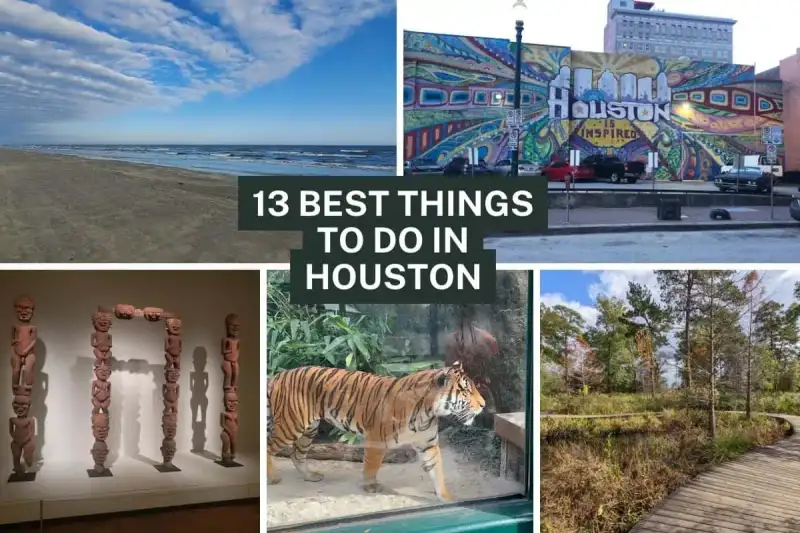
While there are no large state parks in houston city limits, this Fort Bend County reserve sits less than an hour away. It ranks among the most rewarding things to do in Houston day trippers enjoy in every season.
Among the various state parks near houston, this preserve offers the highest density of visible native reptiles and wading birds.
Choosing the Best Time to Visit
Late autumn through early spring delivers the most comfortable hiking weather across Brazos Bend State Park Texas. Daytime highs typically range between 60 and 75 degrees Fahrenheit, keeping humidity manageable and insect activity low.
Spring brings colorful wildflower blooms across coastal prairie zones, with bluebonnets, winecups, and Indian paintbrushes lining park roadways. Neotropical songbirds also arrive in large numbers during April, creating outstanding birdwatching conditions.
Summer visits require extra preparation because temperatures routinely cross 95 degrees with high humidity. Hikers should start by 8:00 a.m. and complete long loop trails before midday heat intensifies.
Park Fees and Day Passes
Adult admission costs $7 per day, while children 12 and under enter free of charge. Texas State Park Pass holders receive unlimited free entry for themselves and their vehicle guests.
According to the official Texas Parks and Wildlife Fees and Facilities Guide, visitors should reserve day passes online up to 30 days in advance. Reserving day-use brazos bend state park tickets online guarantees admission during busy spring and fall weekends when parking areas fill early.
Brazos Bend State Park Highlights at a Glance
The preserve blends aquatic wetlands, dense bottomland hardwood forests, and tallgrass coastal prairie across nearly 5,000 acres. Picking up an official brazos bend state park map at the entrance station clarifies distances between trail loops and helps visitors avoid unnecessary backtracking.
| Feature / Spot | Trail / Area | Key Highlights | Rules & Regulations | Best For |
|---|---|---|---|---|
| 40 Acre Lake | 40 Acre Lake Trail (1.2 mi) | Observation tower, basking alligators, wading bird rookeries | 30-foot wildlife distance, leashed pets | Alligator spotting & photography |
| Elm Lake | Elm Lake Loop (1.7 mi) | Fishing piers, wooden boardwalks, abundant waterfowl | No swimming, no wading, two poles per angler | Birdwatchers & family strolls |
| Creekfield Lake | Nature Trail (0.5 mi) | Paved ADA path, touch exhibits, shaded rest deck | Accessible path, trackchair friendly | Toddlers, seniors & wheelchairs |
| George Observatory | Observatory Spur Trail | 36-inch research telescope, astronomy exhibits | Separate HMNS ticket required in advance | Night sky viewing & couples |
| Pilant Lake | Pilant Slough Trail (1.2 mi) | Ancient moss-draped live oaks, secluded wetlands | Stay on marked gravel trail | Solitude & raptor watching |
| Burr Oak Loop | Camping Area | Electric and water hookups, modern restrooms, hot showers | Quiet hours 10 p.m. to 6 a.m., 8 guests per site | Tent campers & RV travelers |
Complete Guide to Park Activities
Outdoor recreation centers on wildlife viewing, trail exploration, and astronomy across three distinct ecosystems. Covering 37 miles, brazos bend state park trails range from crushed granite paths to primitive forest tracks. For visitors seeking romantic things to do in Houston, an afternoon walk followed by observatory stargazing offers a memorable outdoor date.
1. World-Class Alligator Spotting
Alligator spotting represents the primary draw for most first-time guests at this wildlife sanctuary. An estimated 250 to 350 adult American alligators inhabit the waterways, along with hundreds of juveniles.
On mild, sunny mornings, reptiles pull themselves out of the water to warm their bodies on exposed trail banks. Watching an eight-foot apex predator resting quietly six yards from your trail offers an unforgettable wildlife encounter.
Rangers mandate that visitors maintain at least 30 feet of separation from every alligator. Never corner an animal, walk between a mother and her young, or make aggressive movements toward the water.
2. Stargazing at the George Observatory
Located on the banks of Creekfield Lake, the George Observatory is a well-equipped astronomical research complex operated by the Houston Museum of Natural Science. The complex houses three dome telescopes, including the historic 36-inch Gueymard Research Telescope.
Saturday night public sessions at george observatory brazos bend require separate tickets purchased in advance. Knowledgeable volunteer astronomers set up personal scopes across the outdoor viewing deck to guide visitors through constellations.
Per the Houston Museum of Natural Science George Observatory Portal, passes must be purchased online prior to arrival. Park entrance passes do not include observatory admission, so plan to reserve both tickets well ahead of your Saturday trip.
3. Birding in the Columbia Bottomlands
The bottomland hardwood forests and shallow wetlands create rich feeding grounds for resident and migratory birds. More than 300 unique avian species have been recorded inside the boundary.
Spring and autumn migrations bring colorful flurries of warblers, vireos, and tanagers to the tree canopies. Year-round wetland residents include roseate spoonbills, white ibises, great blue herons, and anhingas.
According to the Texas Parks and Wildlife Bottomland Nature and Wildlife Overview, the combination of coastal prairie and bottomland hardwood provides essential seasonal refuge for coastal flyway species. The observation platform at 40 Acre Lake offers an elevated panoramic viewpoint for tracking flocks across the sloughs.
4. Hiking and Nature Trails
The trail network features 37 miles of well-marked paths that navigate dense woods, open prairies, and lake borders. Terrain remains predominantly flat, making paths comfortable for families with kids and casual walkers.
Crushed granite and packed dirt surfaces stay firm during dry weather, though low-lying sections collect water after severe thunderstorms. Trail markers clearly display junction numbers and distances, simplifying navigation across intersecting loops.
The Creekfield Lake Nature Trail is paved along its entire half-mile loop. It features interpretive signs, raised boardwalk sections, and tactile bronze wildlife sculptures designed for visually impaired travelers.
5. Biking and Horseback Riding
Cyclists can ride most multi-use trails within the preserve, including wide loops circling Elm Lake and 40 Acre Lake. Gravel bikes, mountain bikes, and hybrid cruisers handle the dirt paths with ease.
Speed limits are posted at 15 miles per hour to ensure pedestrian safety. Riders must yield to hikers and announce their approach when passing around blind woodland corners.
Equestrian visitors have access to 13 miles of dedicated multi-use bridle paths along the perimeter. Horse trailers park at the designated equestrian staging area, and owners must present current negative Coggins documentation at check-in.
6. Fishing Without a License
Under Texas state park regulations, anyone can fish from the banks or piers without a Texas fishing license. Because no license is needed from the bank, brazos bend state park fishing is accessible to anglers of all skill levels.
The six lakes hold healthy populations of largemouth bass, channel catfish, bluegill, and black crappie. Anglers must stick to pole-and-line fishing, with a maximum limit of two rods per person.
If you do not own gear, stop by headquarters to utilize the free Tackle Loaner Program. Staff provide basic rods, reels, and tackle boxes for day-use visitors on a first-come, first-served basis.
7. Geocaching and Scavenger Hunts
Modern treasure hunters can search for multiple official geocaches hidden across marked paths. Caches range from micro-containers tucked into cedar trees to weatherproof ammunition cans containing trading trinkets.
Using a handheld GPS unit or mobile navigation app, families can follow coordinates while learning about local ecosystems. Cache placements strictly respect sensitive vegetation and wildlife buffer zones.
Remember to sign the logbook and trade items of equal or greater value if you take a souvenir. Return every container exactly where you discovered it to keep the game active for subsequent explorers.
Deep Dive: The Six Lakes of Brazos Bend
The park's six freshwater lakes offer distinct habitats ranging from open marshland to dense bottomland timber. 40 Acre Lake and Elm Lake harbor dense alligator populations, while Hale Lake and Creekfield Lake prioritize accessible family exploration.
40 Acre Lake and Elm Lake: The Alligator Hubs
These two connected water bodies form the geographic core of wildlife viewing in the preserve. Trails trace the water's edge, giving visitors continuous views across lotus beds and duckweed channels.
40 Acre Lake features a prominent three-story observation tower at its northern corner. From the upper platform, hikers can scan the marsh for alligators, turtles, and roosting egrets across hundreds of yards.
Elm Lake is ringed by a 1.7-mile trail fitted with wooden fishing piers and shade shelters. Shoreline vegetation provides ideal shelter for wetland birds feeding along muddy shallows.
Hale Lake and Creekfield Lake: Accessible Exploration
Hale Lake sits closer to the main entrance road and offers a tranquil setting beneath majestic live oak canopies. Shaded picnic tables, paved parking stalls, and an accessible fishing pier make it ideal for family gatherings.
Creekfield Lake serves as the educational center of the park. Its paved loop wraps around quiet marshes, connecting directly to the park nature center and George Observatory.
Tactile trail exhibits allow children to feel replica animal footprints and listen to audio recordings of frog calls. It remains the top choice for guests using strollers or mobility devices.
Pilant Lake and Horseshoe Lake: The Wild Interior
Pilant Lake stretches across the northern wetland boundary, creating an expansive slough choked with buttonbush and bald cypress trees. During spring nesting periods, thousands of herons and spoonbills gather here in massive breeding rookeries.
Horseshoe Lake rests in the secluded oxbow woodland along Big Creek. The trail requires a longer hike through bottomland hardwood forests, which filters out casual day crowds.
Hikers along Horseshoe Lake frequently encounter river otters, white-tailed deer, and pileated woodpeckers. The dense forest canopy provides welcomed shade during sunny afternoon excursions.
Safety Scenarios: Mastering Alligator Etiquette
Visitors must maintain a minimum distance of 30 feet from all alligators at all times. If an alligator is on the trail, wait quietly for it to move, or turn around and take an alternate path. Never feed or harass wildlife.
According to the Texas Parks and Wildlife Alligator Safety Rules and Guidance, alligators are naturally reclusive creatures that view humans with caution unless conditioned by illegal feeding. Review these practical scenarios to navigate trail encounters safely.
Scenario 1: Alligator on the Trail
If an alligator is lying across the trail path, stop immediately and assess the distance. Never attempt to step over the tail, poke the animal with a walking stick, or throw rocks to induce movement.
Give the animal time to slide back into the water on its own schedule. If the alligator does not move after several minutes, turn around and select a connecting trail route.
Alligators rely on solar radiation to regulate their internal temperature. Once warmed, they almost always slip quietly into the nearest slough without incident.
Scenario 2: Alligator Hissing
An alligator hiss sounds like an escaping blast of high-pressure air and signals that you have breached its personal comfort bubble. This is an explicit defensive warning to back away immediately.
Do not run in panic or wave your arms frantically. Step backward deliberately, keeping your eyes on the animal until you have restored at least 40 feet of separation.
Once you give the alligator adequate breathing room, the hissing stops. Respect the warning and detour around the zone.
Scenario 3: Alligators Near the Water's Edge
The shoreline represents the prime hunting zone for alligators waiting for fish and waterfowl. Keep children and family pets at least 30 feet back from open water banks at all times.
Alligators can remain completely submerged with only nostrils and eyes exposed, blending seamlessly into floating duckweed. A bank that looks unoccupied can conceal a mature reptile just beneath the surface.
Never clean freshly caught fish directly along the dirt water bank. Use designated fish cleaning stations or process your catch back at camp.
Monthly Wildlife & Nature Calendar (2026)
Wildlife activity peaks during specific seasonal windows throughout 2026. Winter brings bald eagles and white pelicans, spring delivers wildflower blooms and migratory warblers, and late spring initiates alligator bellows and rookery nesting. For travelers expanding their itinerary, checking out the Houston Zoo exhibits and hours pairs well with a regional nature trip.
January & February: Winter Raptor Season
Winter brings crisp, insect-free hiking conditions and unobstructed forest views through bare tree branches. Resident red-shouldered hawks and visiting bald eagles perch high on dead cypress snags overlooking the water.
Flocks of American white pelicans gather on 40 Acre Lake, contrasting against dark swamp waters. Alligators remain sluggish during cold fronts but emerge onto south-facing banks during sunny winter afternoons.
March & April: The Spring Bloom and Migration
Spring is widely considered the most scenic period of the entire year across the wetlands. Fields of bluebonnets and Indian paintbrushes bloom across the coastal prairie, creating dynamic photo backdrops.
Late March through April brings the peak of the spring songbird migration. Neotropical migrants use the mature forest canopies as an essential rest stop after crossing the Gulf of Mexico.
May & June: Nesting and Alligator Bellowing
Late spring marks the height of the alligator courtship and mating season. Visitors can often hear the low, vibrating bellows of bull alligators resounding across Elm Lake.
Rookeries at Pilant Lake buzz with activity as great egrets, snowy egrets, and herons feed their hatchlings. Photographers position themselves along trail boardwalks to photograph nest exchanges.
July & August: Summer Heat and Wetland Life
Midsummer brings high heat, requiring early morning visits before the sun bakes open marsh trails. Alligators hunt active frogs, fish, and turtles during cool dawn hours.
By late August, female alligators stand guard over large mud-and-vegetation nests along quiet banks. Newborn hatchlings measure just eight inches long, sporting distinctive yellow and black stripes.
September & October: Fall Migration and Monarchs
Cooler autumn mornings offer a welcome relief from oppressive summer humidity. Thousands of migratory Monarch butterflies pass through coastal prairie fields, feeding on blooming goldenrod and mistflower.
Southbound shorebirds and wading birds stop at refuge lakes to refuel. Fall camping bookings fill rapidly for October weekends as comfortable evening weather returns.
November & December: Winter Waterfowl Arrival
Late autumn heralds the arrival of tens of thousands of migratory waterfowl. Pintails, teals, mallards, and northern shovelers populate open water channels across Pilant and Elm Lakes.
Clear night skies make late autumn and early winter prime seasons for Saturday astronomy viewings. The lack of haze provides sharp views of constellations and distant star systems.
Photography Pro Tips for Wildlife & Landscapes
Wildlife photographers achieve the best results using a 300mm to 600mm telephoto lens to capture intimate portraits while respecting safe distances. Capturing memorable brazos bend state park photos is easiest during early morning hours when marsh mist hangs over the lakes.
Gear Recommendations
A telephoto lens with at least 300mm focal length is essential for photographing alligators and wading birds safely. This allows photographers to fill the frame with detailed feather or scale textures without crowding the wildlife.
Bring a sturdy monopod or lightweight tripod for tracking fast-flying birds across the sky. Circular polarizing filters help cut harsh reflections off lake water surfaces when shooting midday aquatic scenes.
Lighting and Timing
The first two hours after sunrise offer soft golden light and gentle mist rising from cool wetland waters. Animals are actively feeding and swimming before daytime trail traffic peaks.
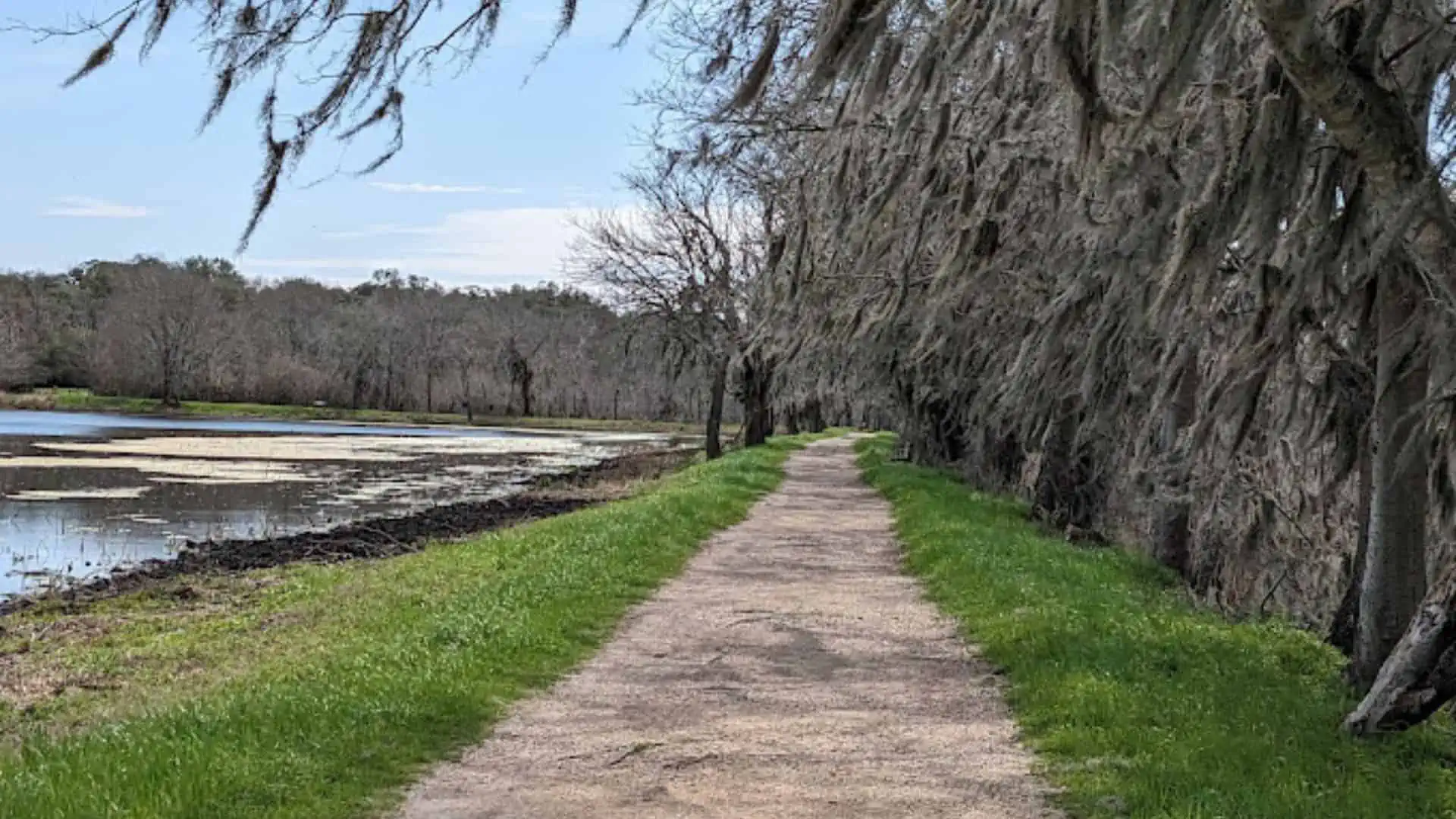
Late afternoon light illuminates Spanish moss hanging from live oaks along the 40 Acre Lake trail. Position yourself with the setting sun over your shoulder to bring out warm amber tones in alligator eyes.
Trail Safety and Ethical Exploration
Responsible exploration protects both visitors and native species in the bottomland ecosystem. Stick to designated trail routes, pack out all trash, and keep domestic pets leashed on cords no longer than six feet. When planning broader adventures across the Lone Star State, review our overview of the best state parks in Texas to discover other notable conservation lands.
The Leave No Trace Principles
Carry out all food packaging, water bottles, and fruit peels rather than leaving them beside benches. Discarded food attracts raccoons and feral hogs, altering wildlife foraging habits.
Stay strictly on established trail pathways to prevent soil compaction and protect fragile wetland root systems. Cutting across trail switchbacks causes severe erosion during seasonal Brazos River floods.
Ethical Wildlife Viewing
Never feed any wild animal inside the boundary, as doing so removes their natural fear of humans. Fed alligators lose their wariness and eventually must be euthanized by wildlife officers.
Keep noise levels low, especially near bird rookeries during active nesting periods in spring. Loud shouting or barking dogs can startle brooding adults into abandoning their fragile clutches.
Comprehensive Trail Guide for Explorers
The trail system features 37 miles of multi-use pathways suitable for walking, jogging, and bicycling. The flat terrain makes routes family-friendly, while loop configurations allow for custom distance combinations up to a full day hike.
Detailed Trail Descriptions
Creekfield Lake Nature Trail (0.5 Miles): Paved and fully wheelchair accessible, this loop winds around Creekfield Lake with tactile exhibits, rest benches, and direct access to the George Observatory.
40 Acre Lake Trail (1.2 Miles): Encircles 40 Acre Lake and leads to the three-story observation tower. It is the top trail in the park for spotting large alligators and wading bird flocks.
Elm Lake Loop (1.7 Miles): A flat gravel path encircling Elm Lake, featuring several wooden fishing piers and footbridges. It is ideal for casual cycling, jogging, and leisurely birdwatching walks.
Big Creek Loop (1.7 Miles): Traverses dense bottomland hardwood forests along the eastern boundary. Mature oak trees provide excellent canopy shade during warm afternoon hikes.
Pilant Slough Trail (1.2 Miles): Connects the nature center to the northern lake complexes. Huge moss-covered live oaks line the gravel path, making it popular for photography.
Camping and Lodging: Staying at Brazos Bend
Overnight stays make brazos bend state park camping a favorite weekend getaway for local scouts and families. The grounds feature 141 campsites ranging from $12 primitive walk-in tent spots to $25 electric and water sites, plus screened shelters for $25 per night. For travelers researching overnight getaways, our guide to camping in Houston compares this preserve with regional coastal and pine forest campgrounds.
Campsite and Lodging Options
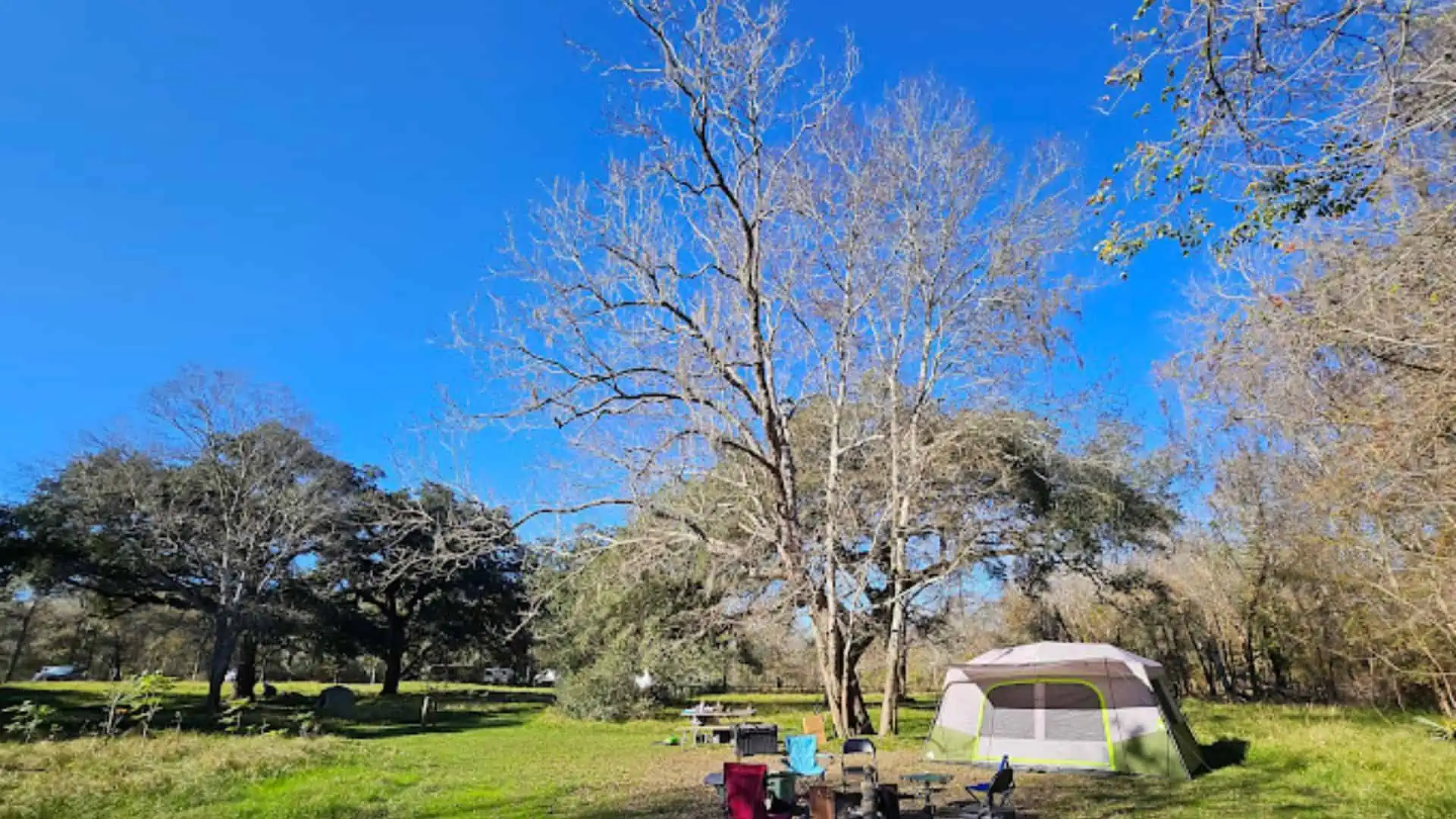
The Burr Oak and Red Buckeye loops provide 141 developed campsites equipped with 30-amp and 50-amp electrical hookups, potable water, fire rings, and picnic tables. Sites accommodate both travel trailers and family tents.
Screened shelters offer a dry, enclosed alternative with electric outlets, ceiling fans, and outside picnic tables for $25 per night. Six primitive walk-in campsites sit roughly 50 yards from the parking apron, renting for $12 nightly.
Check-in starts at 2:00 p.m., while checkout time is strictly 12:00 p.m. Quiet hours run nightly from 10:00 p.m. to 6:00 a.m. to ensure a restful atmosphere for all campers.
Accessibility for Elderly and Disabled Visitors
This destination is widely recognized as one of the most accessible parks in the state system. Multiple campsites in the Burr Oak loop offer paved concrete pads and barrier-free access routes to restrooms.
Headquarters offers all-terrain electric "Eco-Rover" trackchairs for loan at no extra cost. These specialized trackchairs enable visitors with mobility challenges to explore unpaved trails that standard wheelchairs cannot navigate.
Call the office at (979) 553-5101 several days in advance to reserve a trackchair for your visit. Rangers will have the unit charged and ready upon arrival.
Historical Heritage: A Legacy of the Land
Human habitation along the lower Brazos River dates back more than 2,000 years to prehistoric indigenous hunters. Locals occasionally refer to the property colloquially as brazos state park, though its full designated title is Brazos Bend State Park.
According to the Texas State Historical Association Brazos Bend State Park Handbook, the land was once part of Stephen F. Austin's original colonial land grants in Mexican Texas. Nineteenth-century settlers cleared fields for sugarcane, cotton, and cattle grazing along the river bottoms.
In 1984, the Texas Parks and Wildlife Department opened the park to the public after extensive ecological restoration. Today, it serves as a living model for wetland conservation and public education in Texas.
Practical Information: Logistics and Supplies
The entrance is situated in rural Fort Bend County along FM 762. Located at 21901 FM 762, brazos bend state park needville tx provides easy highway access from regional suburbs.
Visitors should arrive with a full tank of fuel, bug repellent, sunscreen, and drinking water, as on-site concessions are limited. If you are building a regional road trip, discover additional scenic day trips from Houston located within a two-hour drive of the city.
Grocery Stores and Gas Stations
Needville sits 15 minutes north along FM 762, offering gas stations, convenience markets, and local diners. Travelers can pick up ice, campfire wood, and cold drinks on the drive into the park.
For extensive grocery shopping, Richmond and Rosenberg sit 25 minutes northwest along US-59. These larger suburban cities provide major supermarkets, outdoor outfitters, and pharmacy chains.
Essential Tips for a Share-Worthy Trip
Rave brazos bend state park reviews frequently praise the close-up alligator viewing and knowledgeable volunteer naturalists. Following these practical rules ensures a smooth, rewarding outdoor experience.
- Book Early: Reserve day-use entry permits up to 30 days ahead via the TPWD reservation portal.
- Carry Bug Spray: Mosquitoes can be aggressive in hardwood bottomlands after humid summer rain showers.
- Maintain 30 Feet: Never approach within 30 feet of any alligator on the trail or near the water.
- Bring Water: Carry at least two liters of water per person when hiking multi-mile lake loops.
Brazos Bend State Park: Visitor FAQs
What is Brazos Bend State Park best known for?
The sanctuary is best known for its dense population of wild American alligators, 37 miles of multi-use trails, and the George Observatory. It is one of the top wildlife viewing and dark-sky stargazing destinations in Southeast Texas.
Can you go swimming or boating at the park?
No, swimming, wading, and private boating are strictly prohibited in all lakes and waterways. Because hundreds of mature reptiles inhabit the waters, entering the lakes poses severe safety hazards to visitors and domestic pets.
How many alligators live in the park?
Wildlife biologists estimate that 250 to 350 adult American alligators live within the protected wetlands. In addition, hundreds of juvenile alligators and hatchlings inhabit the 1,000 acres of freshwater lakes and marshes year-round.
Are pets allowed on the park trails?
Yes, leashed dogs are permitted on hiking trails, but leashes must measure six feet or shorter. Owners must keep pets away from the water's edge at all times, as alligators view domestic animals as natural prey.
Is a fishing license required within the park?
No, visitors do not need a Texas fishing license to fish from the shores or piers within the boundaries. Anglers must fish with a pole and line, adhering to a limit of two rods per person.
How far is Brazos Bend from downtown Houston?
The entrance is located 45 miles southwest of downtown Houston in Fort Bend County. Driving time typically takes 50 to 65 minutes along Highway 288 South and FM 762, depending on metropolitan traffic.
What are the daily entrance hours for visitors?
The gates open daily at 8:00 a.m. and close at 10:00 p.m. for day-use visitors. Overnight campers arriving after gate hours must use their reservation access code and complete self-check-in at headquarters the following morning.
How do I purchase tickets for the George Observatory?
Tickets for Saturday night stargazing sessions must be purchased online in advance through the Houston Museum of Natural Science website. Headquarters does not sell observatory tickets on site, and sessions frequently sell out.
Are the trails accessible for all visitors?
Yes, the Creekfield Lake Nature Trail is a paved 0.5-mile ADA-accessible loop with tactile exhibits and boardwalks. In addition, headquarters provides free all-terrain electric trackchairs for mobility-impaired visitors who reserve them in advance.
Final Thoughts on Brazos Bend State Park
This coastal wildlife refuge offers a remarkable wilderness escape just an hour outside Houston's urban core. Where else can you watch an eight-foot alligator sunning itself along a trail morning walk, and peer into distant galaxies through a 36-inch research telescope that same night?
By respecting park wildlife, securing advance day passes, and packing proper trail gear, visitors will enjoy an authentic slice of wild Texas. Respect the 30-foot alligator rule, take your time along the lake boardwalks, and experience the bottomland beauty of Fort Bend County.