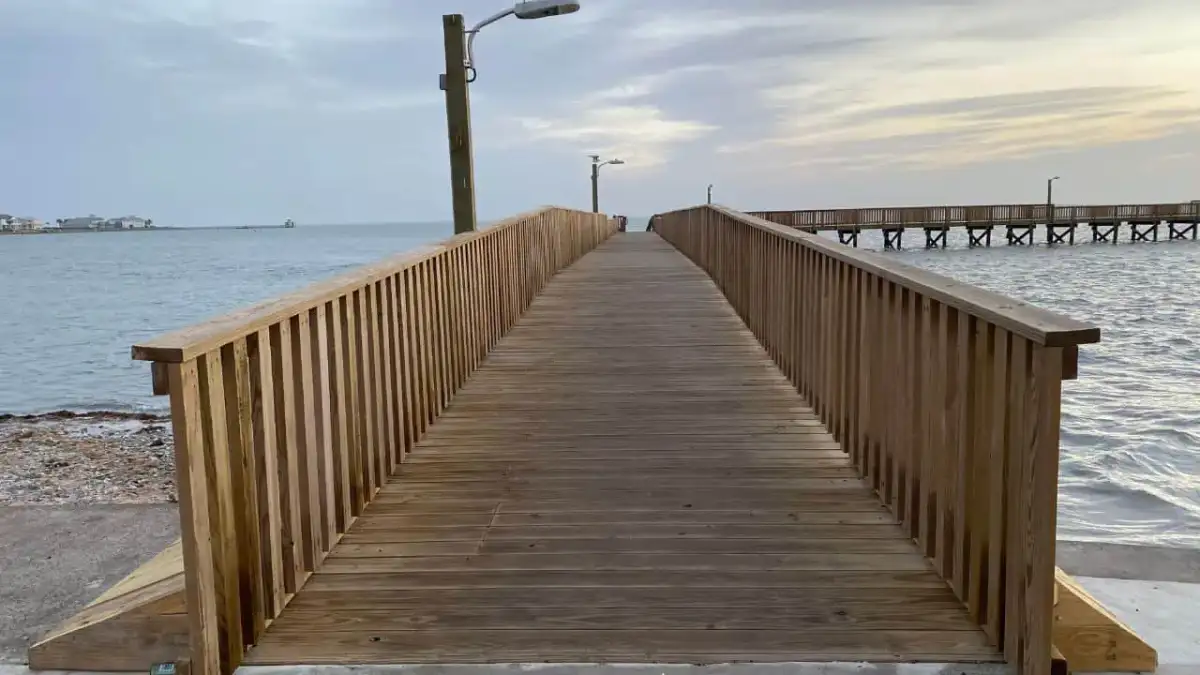
Goose Island State Park Texas protects 321.4 coastal acres along Aransas and Saint Charles bays in Rockport. Established in 1931 as one of the earliest Civilian Conservation Corps projects on the Gulf Coast, this sanctuary combines saltwater angling with shaded live oak campsites. Travelers visit to stand beneath an ancient coastal live oak, cast from a 1,620-foot pier, and spot rare coastal birds across tidal marshes.
Key takeaways
- Goose Island State Park encompasses 321.4 coastal acres on Aransas and Saint Charles bays, welcoming day-use visitors daily from 6:00 AM to 10:00 PM.
- General day-use admission is $5 for adults (ages 13 and older) and free for children 12 and under, with advance online reservations strongly recommended during peak coastal seasons.
- The park features a 1,620-foot lighted fishing pier where anglers can harvest redfish, spotted seatrout, and black drum without a Texas fishing license or saltwater stamp.
- Campers choose between 44 bayfront campsites with electric hookups ($25 per night), 57 wooded campsites under mature live oaks ($20 per night), and 25 walk-in tent sites ($10 per night).
- The Big Tree is located 1.5 miles north of the main campground on Lamar Peninsula, protecting a coastal live oak with a 35-foot trunk circumference and an estimated age exceeding 1,000 years.
Goose Island State Park at a Glance: Coastal Setting and 2026 Overview
The coastal refuge covers 321 acres situated on the Lamar Peninsula between Aransas and Saint Charles bays in Aransas County. Established in 1931, the grounds provide saltwater fishing, shaded live oak camping, world-class birding, and direct access to ancient coastal live oaks. The Texas coastal park serves as an essential base for exploring wildlife along the mid-coast region.
The park property splits into two distinct operational tracts separated by 1.5 miles of quiet county road. The primary southern parcel occupies the tip of the peninsula, housing the ranger station, boat ramp, lighted pier, and overnight campgrounds. The northern parcel safeguards the Big Tree, maintaining dedicated parking and interpretive panels in a quiet oak grove.
Travelers exploring things to do in Aransas County often choose Goose Island for its relaxed rhythm. Unlike barrier island destinations exposed to crashing surf, this bay preserve offers sheltered waters and wind-sculpted oak canopies. Civilian Conservation Corps Company 1801 built the original stone structures and roads during the 1930s, leaving a lasting architectural imprint across the grounds.
- Physical Address: 202 S Palmetto St, Rockport, TX 78382
- Total Acreage: 321.4 acres across mainland bayfront and isolated oak savannas
- Operating Schedule: Open 365 days a year from 6:00 AM to 10:00 PM
- Park Office Phone: (361) 729-2858
Hours, Admission Fees, and Day-Use Reservations
Reviewing the goose island state park entrance fee and daily gate schedule ensures a smooth arrival along Saint Charles Bay. Operating goose island state park hours run from 6:00 AM to 10:00 PM daily for general day-use visitors. The Texas Parks and Wildlife Department locks the main entrance gate at 10:00 PM to secure the grounds for overnight campers.
Adult admission costs $5 per day for guests 13 and older, while children 12 and under enter free. Cardholders presenting a valid Texas State Park Pass ($70 annually) receive unlimited free entry for themselves and all passengers in their vehicle. Official fee structures and pass exemptions are documented on the Texas Parks and Wildlife Goose Island Entrance Fees portal.
Advance day-use reservations are strongly recommended throughout the busy winter birding season and peak summer holiday weekends. The entrance station frequently hits operational vehicle capacity by 10:30 AM on Saturdays between Memorial Day and Labor Day. Booking online guarantees entry even when electronic highway signs flash that day passes are sold out.
| Admission Category | Cost | Operating Window | Reservation Requirements |
|---|---|---|---|
| Adult Day Pass (Ages 13+) | $5 per person | 6:00 AM to 10:00 PM | Recommended online in advance |
| Child Day Pass (Ages 0 to 12) | Free | 6:00 AM to 10:00 PM | Required reservation alongside adult pass |
| Texas State Park Pass | $70 per year | Valid for 12 months | Grants free entry to cardholder and vehicle |
| Registered Overnight Campers | Included with campsite fee | 24-hour access | Automated keypad gate code issued at check-in |
Campground Options: Bayfront Sites, Wooded Loops, and Walk-In Tents
Overnight guests will find diverse goose island state park campsites divided between exposed coastal shoreline and dense oak groves. For outdoor travelers, Goose Island State Park camping accommodates self-contained travel trailers, motorhomes, and tents across distinct loops. All camping loops provide access to modern restrooms equipped with hot showers and flush toilets.
The 44 bayfront campsites goose island offers line the edge of Aransas Bay on paved pads. These waterfront sites cost $25 per night and feature water hookups alongside 20, 30, and 50-amp electrical connections. Concrete shade shelters and sturdy picnic tables stand at every waterfront site to deflect intense coastal sun and prevailing southeast sea breezes.
Campers preferring shade and wind protection choose the 57 wooded campsites situated under live oaks for $20 nightly. These wooded pads include water and 30-amp electric hookups, accommodating smaller camper vans and family tents. Primitive campers can reserve one of 25 walk-in tent sites for $10 per night, carrying gear up to 150 yards from designated vehicle lots.
| Campsite Loop | Number of Sites | Nightly Rate | Utilities & Amenities | Best For |
|---|---|---|---|---|
| Bayfront Waterfront Loop | 44 sites | $25 per night | Water, 20/30/50-amp electric, shade shelter, grill | RVs and campers wanting open water views and gulf breezes |
| Wooded Live Oak Loop | 57 sites | $20 per night | Water, 30-amp electric, picnic table, mature live oak canopy | Tent and small RV campers seeking wind protection and shade |
| Walk-In Tent Area | 25 sites | $10 per night | Water nearby, picnic table, ground grill (walk up to 150 yards) | Primitive tent campers and budget travelers packing light |
| Youth Group Camping Area | 1 complex | $35 per night | Water, picnic tables, pavilion (capacity up to 64 people) | Scout troops and organized youth educational groups |
Current camping availability and site maps are maintained on the Texas Parks and Wildlife Goose Island Campsite Rates reservation page. Because this coastal preserve ranks among the top 10 best state parks in Texas for coastal birding, winter campsites often book up five months in advance.
Tip
Reserve bayfront sites 1 through 25 if you want unobstructed sunrise views over Saint Charles Bay, but pack extra tie-down stakes to secure your awning against relentless coastal wind.
The 1,620-Foot Fishing Pier and Saltwater Angling Regulations
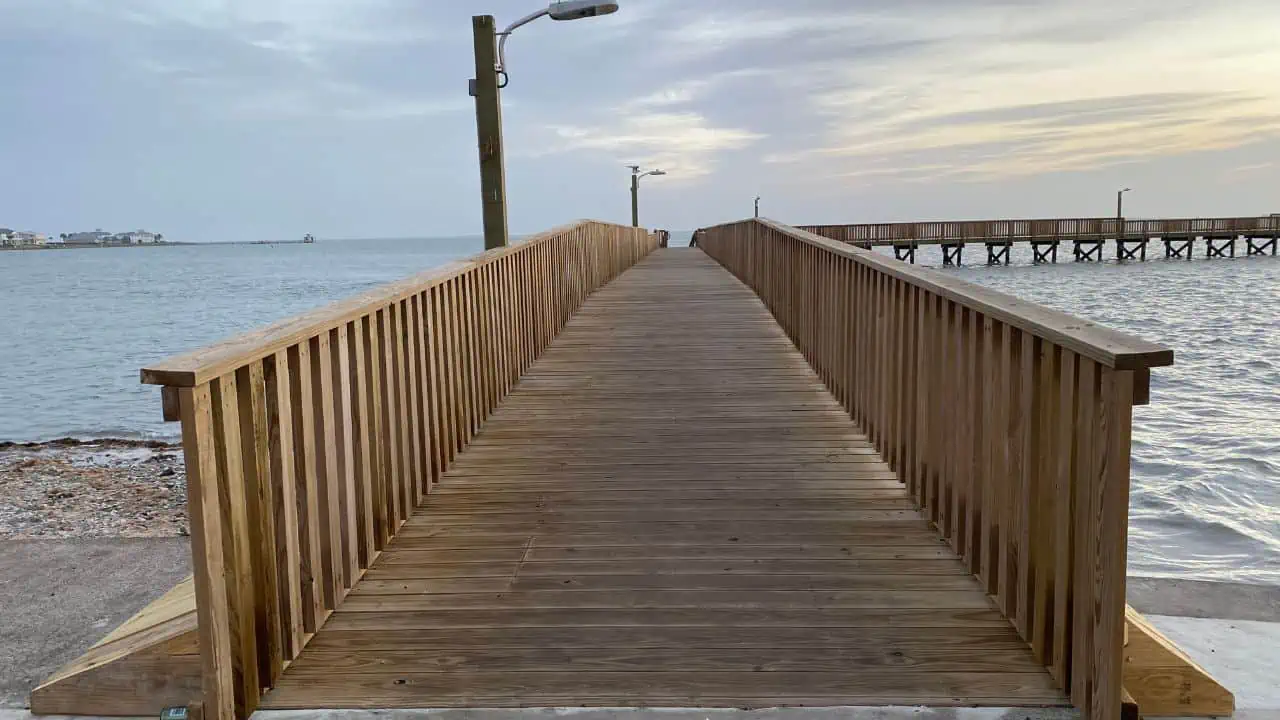
The goose island fishing pier extends 1,620 feet into Aransas Bay, making it the longest pier in the Texas state park system. Anglers flock to the lighted Goose Island State Park fishing pier to target red drum and speckled trout around illuminated pilings. The lighted structure features heavy timber planking, bright green nighttime game fish lights, and multiple shaded cleaning stations.
Taking advantage of free fishing in texas state parks, anglers can cast lines from the pier or shoreline without purchasing a state fishing license or saltwater endorsement. The program saves visiting families over $35 per angler in coastal endorsement fees. Anyone planning to venture beyond park boundaries by boat must review standard Texas fishing license rules to remain fully legal.
The park headquarters maintains a free Junior Ranger and tackle loaner program, checking out gear to young anglers through the Texas Parks and Wildlife Free Fishing in State Parks Program. Dead shrimp and cut mullet fished on bottom rigs produce consistent action around pier pilings.
Registered campers enjoy 24-hour access to the illuminated pier. This allows productive night fishing when predatory trout strike baitfish clustered beneath the green underwater lights.
- Pier Dimensions: 1,620 linear feet reaching deep water channels in Aransas Bay
- Lighting Infrastructure: Overhead mercury-vapor lamps and submerged green fish-attracting lights
- Target Species: Speckled trout, red drum, black drum, flounder, and sheepshead
- Cleaning Facilities: Dual fish-cleaning stations with running non-potable seawater and disposal chutes
Note
All Texas coastal anglers must comply with statewide bag limits, minimum lengths, and seasonal harvest restrictions. An exempt angler red drum tag is required if you harvest an oversized red drum measuring over 28 inches.
The Big Tree on Lamar Peninsula: Measurements and Hurricane History
The Goose Island State Park Big Tree is an ancient coastal live oak (Quercus virginiana) growing on the Lamar Peninsula. Located at 114 Big Tree Road approximately 1.5 miles north of the main park entrance, this living monument was named State Champion Coastal Live Oak in 1969. Botanists and park historians estimate its age at over 1,000 years, making it one of the oldest living trees in North America.
Official measurements recorded in the Texas Parks and Wildlife Goose Island Nature and Big Tree Archive document a trunk circumference of 35 feet 1.75 inches. The massive canopy reaches 44 feet high with a horizontal crown spread of 89 feet. Its low, gnarled limbs sweep down to touch the ground before curving skyward, creating a massive natural buttress that anchors the trunk against violent coastal gales.
The Big Tree has weathered immense coastal weather events, surviving an estimated 40 to 50 major tropical storms over ten centuries. When Category 4 Hurricane Harvey struck Rockport in August 2017 with 130 mph winds, the oak emerged with only minor limb loss.
A low wooden perimeter fence protects the shallow root zone from foot compaction today. Visitors can walk the encircling path to view the tree from every angle without damaging the root system.
Coastal Birding and Whooping Crane Habitats in Aransas County
Coastal birders rank Goose Island among the top destinations along the central section of the Great Texas Coastal Birding Trail. The combination of coastal oak mottes, brackish tidal lagoons, and expansive oyster mudflats attracts over 300 documented avian species. Birders easily spot roseate spoonbills, reddish egrets, brown pelicans, black skimmers, and long-billed curlews foraging along the bay edges.
The park is especially famous for wintering whooping cranes goose island hosts in surrounding shallow waters between mid-October and mid-April. Endangered whooping cranes (Grus americana) migrate 2,500 miles from Canada to winter in the bays surrounding Goose Island and the adjacent Aransas National Wildlife Refuge. Visitors frequently observe mated pairs probing the marsh grass for blue crabs and wolfberry fruit from the park shoreline.
Spring and autumn migrations bring waves of colorful neotropical warblers, tanagers, and buntings into the sheltered live oak canopy. During severe coastal weather fronts, tired songbirds drop into the woods by the hundreds to rest and feed on insects. The park store offers seasonal bird checklists, and rangers lead guided morning bird walks along the marsh trails every weekend from November through March.
- Peak Winter Season (November to March): Whooping cranes, redhead ducks, American white pelicans, and northern harriers
- Spring Migration (April to May): Scarlet tanagers, painted buntings, indigo buntings, and migratory wood warblers
- Year-Round Residents: Great blue herons, snowy egrets, brown pelicans, and laughing gulls
- Prime Viewing Locations: Pier shoreline, CCC bird hide, and the open marsh flats along Saint Charles Bay
Kayaking, Paddling Trails, and Water Safety Realities
Paddlers launching canoes and sea kayaks find outstanding access to shallow coastal waters right from the park boat basin. Following the goose island paddling trail route lets kayakers glide across calm shallows inaccessible to motorized bay boats. Kayakers often paddle north into Saint Charles Bay or navigate around Goose Island itself, watching leaping mullet and tailing redfish along the grassy shorelines.
Consulting the official goose island state park map helps paddlers identify safe navigation lanes and boat launch points. The park layout, documented on the Texas Parks and Wildlife Goose Island Park Map, provides a double-lane paved boat ramp alongside a low-bank kayak put-in near the pier base.
Kayakers must always monitor daily wind forecasts before heading out. Afternoon southeast breezes exceeding 15 knots can quickly generate steep, punishing bay chop across open water.
Submerged oyster reefs represent another serious navigational hazard for small watercraft. Razor-sharp oyster shells lie inches beneath the water surface at low tide and can easily gouge fiberglass hulls or tear inflatable kayaks. Staying within deeper sloughs, paddling on rising tides, and wearing sturdy neoprene wading boots protect both watercraft and feet during paddling excursions.
Tip
Launch your kayak at sunrise when wind speeds rarely exceed 5 knots and bay surfaces remain glassy; conditions deteriorate quickly by early afternoon when thermal sea breezes build.
Shoreline Realities: Why Swimming Is Prohibited at Goose Island
First-time coastal travelers frequently assume every seaside park offers sandy beaches for swimming and wading. At Goose Island State Park, however, recreational swimming is strictly prohibited along all shoreline boundaries. The physical composition of the coast makes water entry dangerous for adults, children, and pets alike.
The park shoreline consists entirely of reinforced concrete bulkheads, jagged oyster reefs, and thick coastal mudflats. Stepping into the water means sinking knee-deep into anaerobic mud while risking severe lacerations from razor-sharp oyster shells. For travelers who desire crashing waves and wide sandy beaches, consulting our Mustang Island State Park guide highlights barrier island parks built specifically for swimming.
Water safety in the park also requires awareness of local coastal wildlife. Bull sharks and stingrays frequent the murky bay shallows, while American alligators occasionally move through the brackish estuaries between the marsh and the bays. Enjoying the park means appreciating the waters from atop the 1,620-foot pier or from the comfort of a bayfront campsite rather than wading into the surf.
Nearby Coastal Day Trips: Rockport Beach, Fulton, and Mustang Island
The park serves as a convenient launchpad for exploring the maritime communities of Aransas County and the Coastal Bend. Located ten miles south along State Highway 35, the historic towns of Rockport and Fulton offer maritime heritage, fresh seafood restaurants, and protected harbor walks. Goose Island ranks among the most convenient state parks near Rockport TX for short weekend escapes.
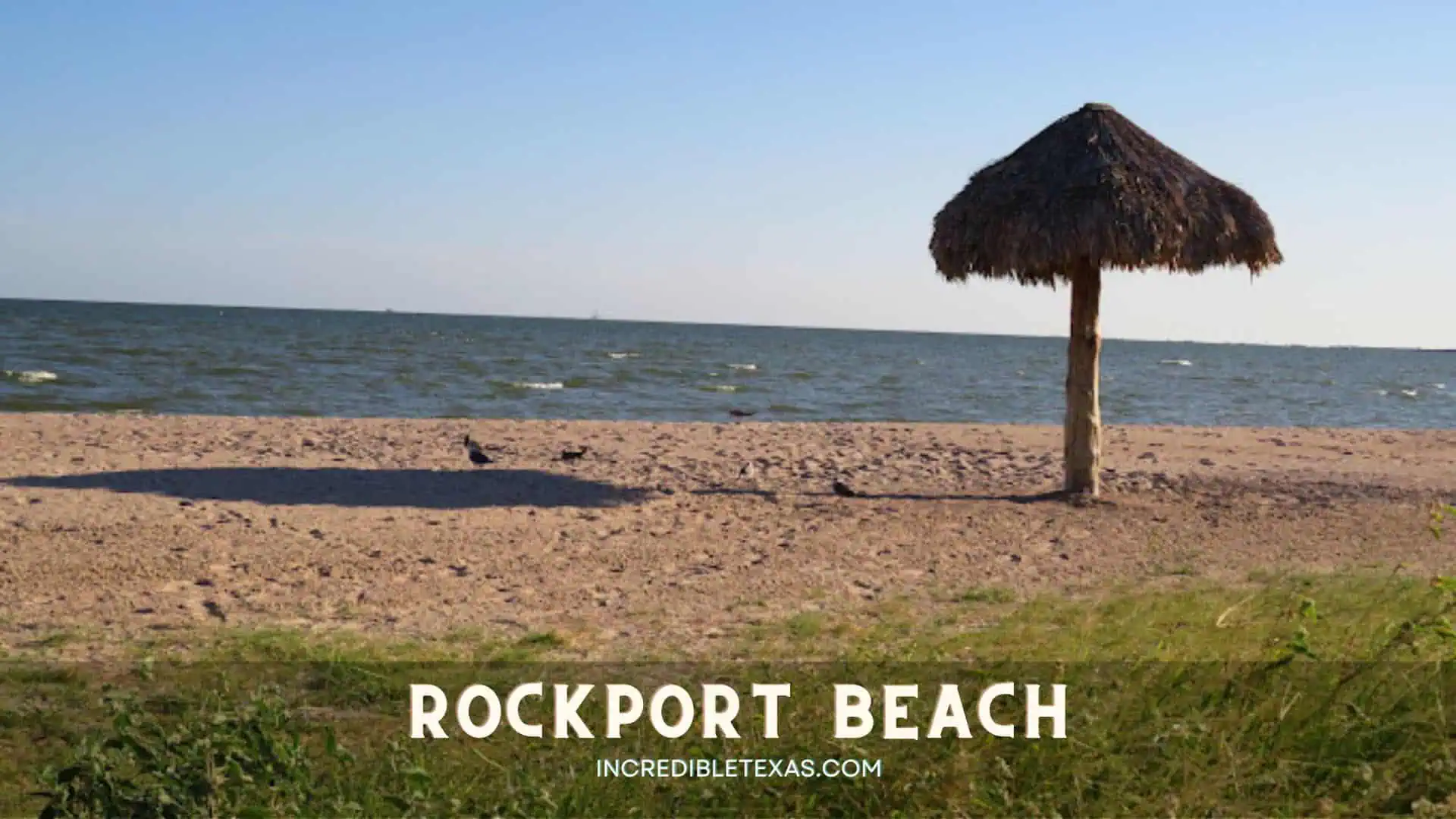
Visitors seeking sandy shorelines and clean swimming water should spend an afternoon at Rockport Beach. This Blue Wave certified beach features gentle shallow water, thatched palapa umbrellas, clean playgrounds, and volleyball courts along Aransas Bay. Day passes cost $10 per vehicle, making it an affordable excursion for families staying overnight at Goose Island campgrounds.
History enthusiasts can tour the Fulton Mansion State Historic Site, an opulent Second Empire Victorian estate constructed in the late 1870s. The nearby Rockport Center for the Arts and the Texas Maritime Museum offer indoor cultural experiences during hot summer afternoons. Travelers can also plan future explorations of the developing Powderhorn State Park visitor guide to the north or extend their coastal itinerary further south across wide Corpus Christi beaches on Mustang and Padre islands.
Frequently Asked Questions
What are the hours and entrance fees for Goose Island State Park?
The park opens daily from 6:00 AM to 10:00 PM for day-use visitors. Adult admission costs $5 per person, while children 12 years and under enter free.
Can you swim in the water at Goose Island?
Swimming is strictly prohibited along the park shoreline due to concrete bulkheads, submerged oyster reefs, and soft coastal mudflats. Travelers seeking sandy swimming beaches should visit Blue Wave certified Rockport Beach ten miles south.
How old is the Big Tree at Goose Island?
Botanists and state park historians estimate the Big Tree to be between 1,000 and 1,100 years old. The massive coastal live oak features a 35-foot trunk circumference and served as the Texas State Champion Live Oak from 1969 to 2003.
Do you need a fishing license to fish at Goose Island?
Visitors do not need a Texas fishing license or saltwater endorsement when fishing from the shoreline or the 1,620-foot pier. Standard state bag limits, minimum length restrictions, and harvest seasons still apply to all caught fish.
What types of camping sites are available at Goose Island?
The park provides 44 bayfront hookup campsites with water and electric service, 57 shaded wooded sites under live oaks, and 25 primitive walk-in tent sites. Nightly rates range from $10 for walk-in sites to $25 for waterfront locations.
While visiting the Rockport-Fulton coast, take time to tour the restored Victorian architecture at [Fulton Mansion State Historic Site](/fulton-mansion-state-historic-site/).
History travelers can continue inland to [Goliad State Park & Historic Site](/goliad-state-park-historic-site-texas/) to tour the restored Mission Espíritu Santo along the San Antonio River.