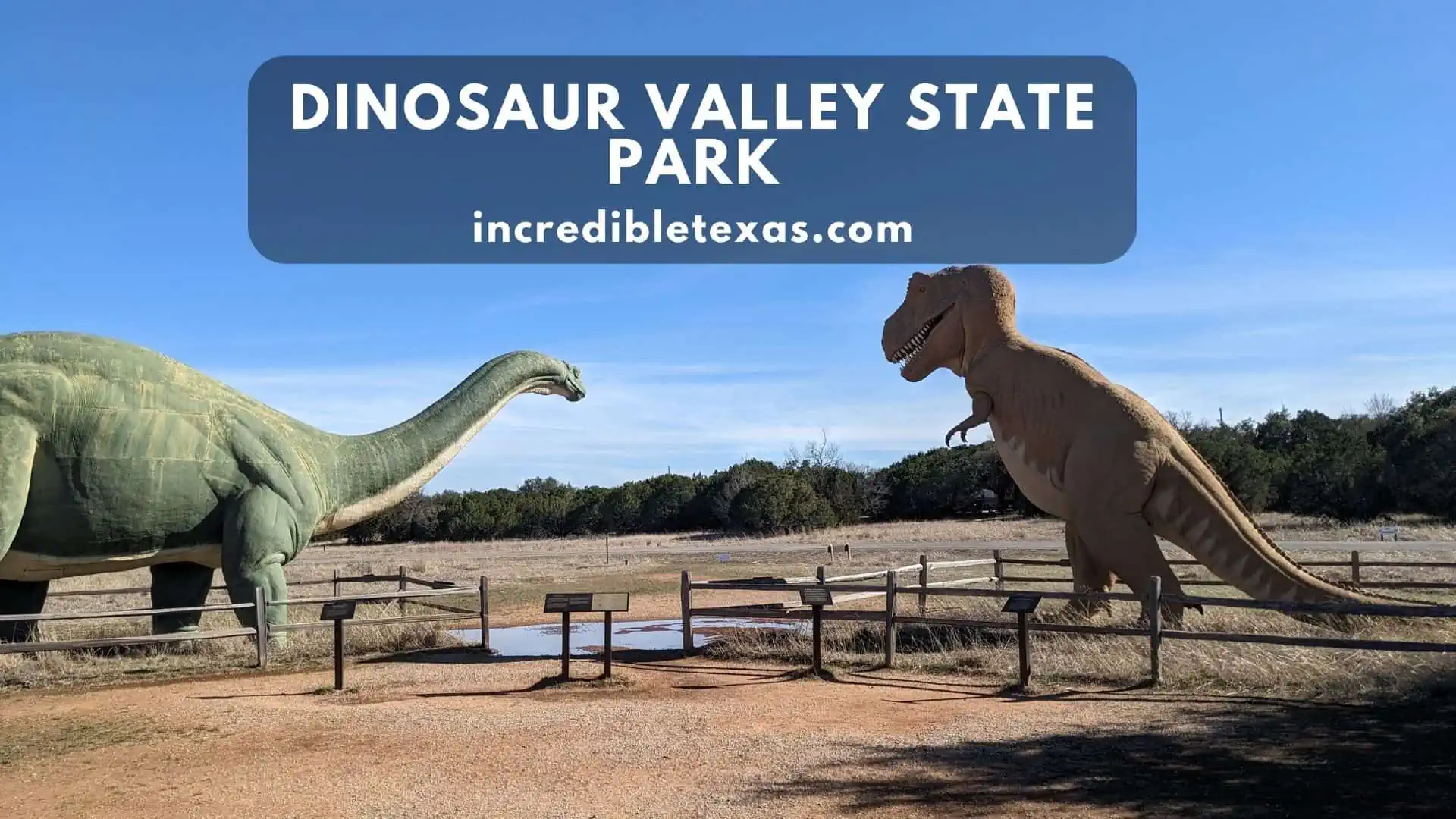
Dinosaur Valley State Park in Glen Rose preserves authentic 113-million-year-old dinosaur footprints embedded in the limestone bedrock of the Paluxy River. Located 55 miles southwest of Fort Worth and roughly 80 miles southwest of Dallas, this prehistoric landmark ranks among the best state parks in Texas. Often searched as dinosaur state park tx or dinosaur valley state park texas, this celebrated texas dinosaur state park allows visitors to inspect distinct trackways left by predatory theropods and massive sauropods, swim in spring-fed river pools, camp under dark skies, and explore miles of scenic trails.
Day-use admission costs $8 for adults (ages 13 and up), while children 12 and under enter free. Because the park protects active riverbed trackways, track visibility depends entirely on local rainfall and river discharge levels. Planning ahead ensures you secure day-use reservations before parking lots fill up and arrive equipped with the right footwear for slippery river ledges.
Dinosaur Valley State Park Address, Hours, and Tickets
Dinosaur Valley State Park is located at 1629 Park Road 59, Glen Rose, TX 76043 in Somervell County. Official dinosaur valley state park hours run from 6:00 AM to 10:00 PM daily, and purchasing dinosaur valley state park tickets costs $8 for adults ages 13 and older, while children 12 and under enter free of charge.
The park gate closes at 10:00 PM every night. Visitors without an overnight camping reservation cannot enter after closing. Holders of an annual Texas State Parks Pass receive free unlimited entrance for everyone in their passenger vehicle.
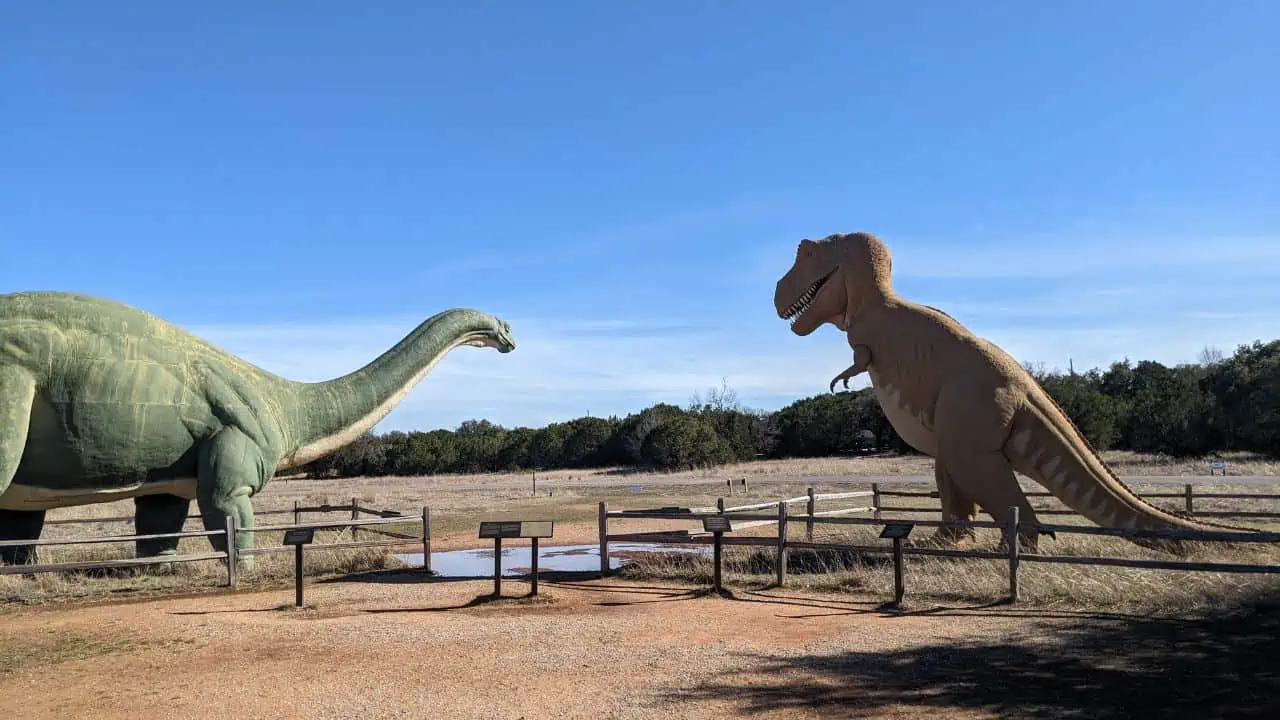
Day Pass Reservations and Peak Capacity Rules
When planning a trip to dinosaur valley state park in texas, day-use reservations should be purchased up to 30 days in advance through the Texas Parks and Wildlife reservation portal. The park frequently reaches maximum visitor capacity on spring weekends, holiday breaks, and sunny autumn days. When maximum capacity is reached, park rangers turn away vehicles without prior bookings at the entry gate on Park Road 59.
Park Headquarters Hours and Self-Pay Station
The park visitor center and headquarters open daily from 8:30 AM to 4:30 PM. The headquarters store stocks interpretive guides, official trail maps, junior ranger booklets, and packaged drinks. If you arrive for day use between 6:00 AM and 8:30 AM before the office opens, you must use the self-pay iron ranger station located in the headquarters foyer. Fill out the payment envelope with exact cash or check, deposit it into the secure drop slot, and display the receipt on your vehicle windshield.
Paluxy River Track Sites: At-A-Glance Comparison
Five primary track areas line the Paluxy River within Dinosaur Valley State Park, each showcasing distinct trackmaker footprints, access routes, and riverbed terrain. Before setting out from the parking lot, visitors should pick up a printed dinosaur valley state park map at the visitor center or save a digital copy on their phone:
| Track Site | Primary Track Types | River Crossing | Accessibility & Trail Distance | Best Viewing Conditions |
|---|---|---|---|---|
| Site 1: The Blue Hole | Acrocanthosaurus (3-toed theropod) | No (accessible from west bank) | 0.2 miles from main parking lot; gentle paved path to stone steps | Low to moderate river levels; clear water reveals submerged tracks |
| Site 2: The Main Track Site | Acrocanthosaurus & Sauroposeidon | Yes (rock hopping across Paluxy River) | 0.3 miles from parking lot; stone steps and river stone crossing | Low water flow (under 15 cfs); rangers sweep sand off tracks daily in summer |
| Site 3: The Ballroom | Hundreds of intersecting Sauroposeidon steps | Yes (steep riverbed crossing) | 0.8 miles via Paluxy River Trail; moderately rugged limestone banks | Late summer drought periods; afternoon raking light enhances footprint depth |
| Site 4: The Taylor Site | Theropod trackways with elongated metatarsal prints | Yes (cross river near bend) | 1.2 miles via River Trail; unpaved dirt path and slick stone ledges | Dry river conditions; tracks become muddy shallows during wet weather |
| Site 5: The Denio Site | Sauropod and theropod impressions | Yes (downstream crossing) | 1.5 miles via Denio Trail; natural dirt tread with uneven exposed roots | Prolonged dry spells; least crowded track location in the park |
[!IMPORTANT] Wet river limestone develops a transparent film of aquatic algae that acts like ice underfoot. Smooth-soled sneakers, flip-flops, and bare feet cause sudden falls. Wear rubber-soled water shoes or grippy amphibious hiking sandals when stepping across the riverbed.
The 113-Million-Year History of the Paluxy River Tracks
The story of Dinosaur Valley State Park began roughly 113 million years ago during the Early Cretaceous period. At that time, North Central Texas was a subtropical coastal zone bordering the Western Interior Seaway. The shoreline consisted of dense, calcium-carbonate-rich mud that captured every step of giant reptiles as they navigated tidal flats. Walking along the paluxy river dinosaur tracks provides a tangible connection to this ancient ecosystem.
According to Texas Parks and Wildlife paleontology records, seasonal high tides and gentle silt depositions layered fresh sediment over the footprints, sealing them before sunlight or storm waves could erode the outlines. Over millions of years, heat and geological compression turned the mud into dense Glen Rose limestone.
As the Paluxy River carved its modern channel through the limestone valley over the past several thousand years, flowing water stripped away younger rock layers. This ongoing process exposes ancient footprints while gradually wearing away tracks exposed directly to the river current.
The Discovery and Research of Roland T. Bird
Local Somervell County families were aware of giant prints in the riverbed as early as 1908, referring to them locally as giant bird tracks. In 1938, Roland T. Bird, a field paleontologist from the American Museum of Natural History in New York, traveled to Glen Rose and recognized the scientific significance of the site.
Bird supervised excavations that quarried full trackway segments directly from the riverbed. One celebrated section revealed a parallel chase sequence where a carnivorous theropod appeared to stalk a massive sauropod herbivore. Sections of these quarried slabs now reside in the American Museum of Natural History and the Texas Science & Natural History Museum in Austin, establishing the Paluxy River as one of the most studied trackway sites in the world.
Meet the Giants of Dinosaur Valley
The fossil tracks at Dinosaur Valley represent two distinct groups of dinosaurs that dominated Cretaceous Texas: towering theropod predators and colossal long-necked herbivores.
Acrocanthosaurus: The Apex Predator
Acrocanthosaurus (meaning high-spined lizard) was the apex carnivore of the Early Cretaceous coastal plain. Reaching 38 feet in length, standing nearly 20 feet tall, and weighing up to 6 tons, this formidable predator patrolled the mudflats in search of prey. Its distinctive three-toed tracks measure approximately 18 inches long and show pointed claw impressions at the tip of each digit.
Acrocanthosaurus walked on its toes with a digitigrade gait, similar to modern ostriches. In some sections of the park, fossilized metatarsal impressions reveal the heel and ankle bone resting in soft silt, providing clues to how the animal paused or distributed its weight in deep mud.
Sauroposeidon: The Earth-Shaker
The herbivorous trackmaker at Dinosaur Valley is Sauroposeidon proteles, designated as the official state dinosaur of Texas. Previously classified in early literature as Pleurocoelus, subsequent fossil discoveries near Glen Rose confirmed the massive sauropod as Sauroposeidon. This giant measured up to 100 feet in length and weighed roughly 50 to 60 tons.
Sauroposeidon tracks are massive, rounded bowl-shaped depressions that look like elephant footprints on a giant scale. Because of the animal's weight, the feet pressed deeply into the ancient substrate, creating rimmed mud displacements that remain visible in the rock today.
Detailed Guide to the Major Track Sites
Exploring the park's primary track sites requires planning around river levels and trail conditions. A printed track map from the park headquarters helps visitors identify specific footprints on the limestone river shelves.
Site 1: The Blue Hole
The Blue Hole is the most accessible track site in the park, situated a short walk down stone stairs from the main picnic area. The site features a deep natural river pool up to 20 feet deep flanked by broad limestone ledges. Clear Acrocanthosaurus three-toed tracks sit directly on the rock ledge near the water's edge, making this a favorite spot for photography.
Site 2: The Main Track Site
Located just upstream from the Blue Hole, the Main Track Site contains the highest concentration of distinct theropod and sauropod trackways in the park. Visitors cross stepping stones across the shallow river to reach a wide limestone shelf where multiple individual walking paths run parallel. Park interpretive rangers host educational talks here during spring and summer mornings, demonstrating how the trackways record stride length and animal velocity.
Site 3: The Ballroom
The Ballroom track site earned its name from the hundreds of crisscrossing sauropod footprints that cover the river shelf like a crowded dance floor. Unlike the single-file tracks at the Main Site, the Ballroom displays animals moving in multiple directions, offering fossil evidence of herd travel. The Ballroom sits 0.8 miles down the Paluxy River Trail and requires crossing exposed gravel bars and rock ledges.
Site 4: The Taylor Site
The Taylor Site gained historical fame due to elongated footprints that mid-20th-century observers mistook for human tracks alongside dinosaur prints. Geological and paleontological research confirmed these were theropod dinosaur prints where the dinosaur walked on its heels in thick mud, after which sediment washed into the toe marks. This site sits further along the river trail, offering quiet exploration away from the central parking lots.
Site 5: The Denio Site
The Denio Site is situated along the southern bend of the Paluxy River near the Denio Trail junction. This quiet site features weathered sauropod depressions on a broad limestone slab that only emerges during dry spells. Travelers who prefer solitary hikes will appreciate the lighter foot traffic here compared to the Blue Hole.
Dinosaur Valley State Park Cabins: What to Know Before Booking
Dinosaur Valley State Park does not have on-site rental cabins within park boundaries. Travelers researching cabins dinosaur valley state park options or dinosaur valley state park cabins should plan to reserve campsites or screened pavilions inside the park, or book private river cabins and vacation rentals located in Glen Rose, just 5 to 10 minutes outside the park gate.
Why the State Park Does Not Offer Enclosed Rental Cabins
Many travelers assume that every Texas state park maintains CCC-built stone or wooden cabins like those found at Caddo Lake or Bastrop State Park. However, Dinosaur Valley State Park was established in 1970 primarily as a paleontological conservation site and campground. The park provides 46 developed campsites, 15 primitive tent sites, and group picnic pavilions, but it does not have climate-controlled rental cabins. If you require private rooms with air conditioning and private bathrooms, you must reserve lodging outside the park gate.
Top Nearby Cabin Rentals in Glen Rose
For visitors who want the comfort of a cabin while spending days exploring the park, Glen Rose offers several private cabin options along the Paluxy River and scenic country roads:
- Country Woods Cabins: Located off Highway 67 less than 10 minutes from the park gate, offering secluded cedar cabins with full kitchens, porches, and private hot tubs.
- Inn on the River: A historic 22-room riverfront retreat on Barnard Street in downtown Glen Rose, offering peaceful grounds under ancient oaks along the Paluxy River.
- Live Oak Cabins: Family-friendly rustic cabins near the Squaw Creek reservoir with private fire pits and kitchenettes.
- Paluxy Riverfront Vacation Rentals: Multiple private cottages and riverfront bungalows available through booking platforms along County Road 2013 and Park Road 59.
To browse comprehensive lodging availability and seasonal rates, check the Explore Glen Rose visitors bureau before planning your weekend stay. Travelers comparing cabin stays across North Texas can also review our guide to state parks near Dallas and Fort Worth for alternate camping and cabin ideas.
Comprehensive Dinosaur Valley State Park Camping Guide
Overnight camping at Dinosaur Valley State Park provides access to quiet early morning river walks before day-use crowds arrive. Similar to camping at Palo Duro Canyon State Park, night skies in Somervell County offer excellent stargazing away from major metropolitan light pollution.
RV and Trailer Sites with Water and Electricity
The park features 46 standard campsites with 30-amp electrical hookups and city water connections for $26 per night (plus daily entrance fees). Each site includes a paved parking spur (maximum length 35 feet), an upright ground grill, a fire ring, a wooden picnic table, and a lantern post. Modern restrooms with hot showers and flush toilets sit within short walking distance of both camping loops. Sites fill rapidly for peak spring and autumn weekends, so reserve up to five months ahead on the TPWD reservation portal.
Primitive Walk-In and Hike-In Backcountry Camping
For a quieter tent experience, the park offers two primitive camping areas:
- Walk-In Sites (South Primitive Area): 8 designated walk-in sites located one-third to one-half mile from the trailhead parking lot. Nightly cost is $18. Sites include a fire ring and lantern hook, but have no water or electricity. Chemical composting toilets sit nearby.
- Hike-In Sites (North Primitive Area): 7 remote sites situated 1 to 2.5 miles across the Paluxy River along the Cedar Brake Outer Loop. Nightly cost is $16. Campers must carry all water, food, and supplies across the river on foot. These sites operate under strict Leave No Trace rules and are closed whenever the river is running high.
Screened Shelters and Group Pavilions
The park maintains two large group day-use pavilions and the Sauropod Group Camp (accommodating up to 40 people for $100 per night). While the park does not operate individual enclosed sleeping cabins, the group camp provides open grassy space, water connections, and nearby restroom access for scout troops, hiking clubs, and extended family gatherings.
Hiking and Mountain Biking: 20 Miles of Trails
Beyond the riverbed trackways, the network of dinosaur valley state park trails spans over 20 miles across limestone ridges, oak-juniper savannahs, and shaded riparian bottomlands. Hikers comparing regional trail systems can also explore Cleburne State Park hiking trails just 30 miles to the east.
Recommended Hiking Trails and Scenic Overlooks
- Cedar Brake Outer Loop (7.5 miles, Strenuous): The longest designated trail in the park, climbing steep limestone ridges and offering panoramic valley overlooks. Bring at least 2 liters of water per person.
- Rocky Ridge Trail (1.0 mile, Moderate): A shorter ridge trail that ascends quickly to stone overlooks above the river bend. Excellent for sunrise views.
- Paluxy River Trail (1.5 miles, Easy): A gentle, mostly flat trail running parallel to the river connecting the Blue Hole, Main Site, and Ballroom. Suitable for families with children.
- Overlook Trail (0.5 miles, Moderate): Climbs to a designated scenic pavilion overlooking the entire river valley and distant Cretaceous hills.
Mountain Biking on Technical Limestone Ledges
Dinosaur Valley is well known among North Texas mountain bikers for its rocky, technical terrain. Riders encounter steep ledge drops, loose limestone rock, and sharp switchbacks along the Billy Bunten Trail and Cedar Brake Loop. Riders should carry a spare tube, tire plugs, and a mini-pump, as sharp limestone flakes frequently puncture sidewalls. Trails are closed to bikes and equestrians immediately after heavy rainfall to prevent track damage.
Water Recreation: Swimming, Fishing, and Paddling
The Paluxy River offers a refreshing escape during hot Texas summers, with clear spring-fed water flowing over polished limestone bedrock.
Swimming at the Blue Hole and River Ledges
The Blue Hole is the park's primary natural swimming hole. Swimmers can plunge into water up to 20 feet deep or relax on the surrounding limestone shelves. Shallower gravel bars downstream provide safe splashing areas for young children. There are no lifeguards on duty anywhere in the park; all swimming is at your own risk. Keep non-swimmers in USCG-approved life jackets.
Bank Fishing and Kayak Paddling Tips
Under Texas state park regulations, visitors do not need a state fishing license to fish from the riverbank or wading shallows inside Dinosaur Valley State Park. Anglers catch largemouth bass, channel catfish, and sunfish in the deeper holes using live worms, spinners, or small crankbaits. Kayakers can launch personal paddle craft at the Blue Hole or river crossings during periods of adequate river flow, though low summer water levels may require carrying boats over shallow rock riffles.
Top Things to Do in Glen Rose Near the Park
The glen rose dinosaur valley area offers family-friendly companion destinations within minutes of the park boundary, making the town an ideal weekend basecamp.
Fossil Rim Wildlife Center
Located just three miles from the park on County Road 2008, the renowned 1,800-acre conservation center allows visitors to drive personal vehicles along a 7.2-mile scenic safari route. Guests observe and hand-feed giraffes, rhinos, zebras, and cheetahs roaming open pastures. For complete admission details, feeding guidelines, and booking tips, read our comprehensive Fossil Rim Wildlife Center visitor guide.
Dinosaur World Texas
Situated directly across Park Road 59 from the state park entrance, Dinosaur World features over 150 life-size dinosaur statues positioned along winding shaded woodland trails. The attraction includes an interactive fossil dig station, a themed playground, and an indoor animatronics museum, making it an entertaining stop for families with young children.
Big Rocks Park and Historic Downtown Glen Rose
Located in the heart of Glen Rose along the Paluxy River, Big Rocks Park offers free public access to massive river boulders, swimming shallows, and picnic tables. After swimming, walk into the historic Glen Rose courthouse square to explore local antique shops, ice cream parlors, and casual dining spots like the Riverhouse Grill and Pie Peddlers.
What to Pack for Your Dinosaur Valley Trip
Proper gear makes a major difference when navigating limestone riverbeds and sunny Hill Country trails:
- Grippy Water Shoes: Essential footwear for walking across slippery river algae to view tracks safely.
- Sturdy Trail Shoes: Required for the rocky terrain and elevation changes along the Cedar Brake Outer Loop.
- Polarized Sunglasses: Cuts surface glare on the water, allowing you to clearly see submerged dinosaur tracks.
- Hydration Supplies: Bring at least 1 gallon of water per person per day during summer trips. No water stations exist on backcountry trails.
- Sun Protection: The riverbed has zero shade. Pack broad-spectrum sunscreen, wide-brimmed hats, and lightweight UV rashguards.
- Offline Map: Mobile phone reception is weak inside the river valley; download digital maps or pick up a paper copy at headquarters.
Frequently Asked Questions About Dinosaur Valley State Park
Verified answers to common traveler inquiries based on park regulations and visitor feedback. Recent dinosaur valley state park reviews frequently highlight the importance of bringing proper water footwear and arriving before 9:00 AM on weekends to avoid crowds.
Are the dinosaur tracks always visible at Dinosaur Valley State Park?
No, track visibility depends entirely on Paluxy River water flow and clarity. During dry summer and autumn months, tracks are fully exposed on dry stone shelves, while heavy rains submerge the footprints under muddy water. Check current river conditions on the TPWD website before visiting.
Does Dinosaur Valley State Park have cabins on-site?
No, Dinosaur Valley State Park does not have rental cabins inside the park. The park offers 46 electric campsites, 15 primitive tent sites, and group pavilions. Visitors wanting cabins must reserve private riverfront cottages or lodges located in nearby Glen Rose.
Where is Dinosaur Valley State Park located?
Dinosaur Valley State Park is located at 1629 Park Road 59 in Glen Rose, Texas. The park sits in Somervell County, approximately 55 miles southwest of downtown Fort Worth and 80 miles southwest of Dallas, easily accessible via US Highway 67.
Can you bring dogs to Dinosaur Valley State Park?
Yes, dogs are welcome at Dinosaur Valley State Park but must remain on a physical leash no longer than 6 feet at all times. Pets are permitted on hiking trails, at campsites, and in the river, but they are not allowed inside park restrooms or headquarters.
Can you swim at Dinosaur Valley State Park?
Yes, swimming is allowed throughout the Paluxy River, with the Blue Hole serving as the deepest and most popular natural swimming area. There are no lifeguards on duty, so all swimming is at your own risk, and water shoes are strongly advised.
How much does it cost to get into Dinosaur Valley State Park?
Day-use admission costs $8 per day for adults ages 13 and older, while children 12 and under enter free. An annual Texas State Parks Pass covers entry fees for the cardholder and all passengers in their non-commercial vehicle.
How much time should you plan for a visit?
Plan at least 4 to 5 hours for a day trip to explore the primary track sites, swim at the Blue Hole, and hike a short trail. Families pairing the park with Fossil Rim Wildlife Center or camping overnight should plan a full two-day weekend itinerary.
Is Dinosaur Valley State Park accessible for strollers or wheelchairs?
Paved sidewalks connect the park headquarters, store, and nearby picnic areas. However, reaching the dinosaur tracks in the riverbed requires walking down stone steps and navigating uneven limestone boulders that are not accessible for standard wheelchairs or strollers.