
Covering 1,475 forested acres on the southern bluffs of Wright Patman Lake, Atlanta State Park gives anglers, campers, and hikers direct access to Northeast Texas pine woodlands and a 20,300-acre reservoir. Located 11 miles northwest of Atlanta in Cass County, the park features 58 developed campsites with hookups, two boat ramps, a sandy swimming beach, and 4.8 miles of shaded nature trails.
Key takeaways
- Atlanta State Park operates daily from 6:00 AM to 10:00 PM on Park Road 42 in Cass County, charging $3 per day for adults while children 12 and younger enter free.
- The park features 58 developed campsites across Knights Bluff and White Oak Ridge, offering 50-amp full hookups for $16 per night and water and electric sites for $14 per night.
- Wright Patman Lake spans 20,300 surface acres and permits free bank fishing without a state license inside state park boundaries, alongside two paved boat launch ramps.
- A 4.8-mile trail network winds through towering loblolly pine forest, highlighted by the 1.2-mile White Oak Ridge Trail and the scenic 0.7-mile Hickory Hollow Nature Trail.
- Park visitors without reservations must bring exact cash for late-arrival self-pay envelopes, as gate access closes promptly at 10:00 PM nightly.
What to Expect at Atlanta State Park
Atlanta State Park is a 1,475-acre state recreation area in Cass County on the southern shores of Wright Patman Lake. The park offers 58 campsites with water and electric hookups, two boat ramps, a sandy swimming beach, and 4.8 miles of shaded hiking trails.
Visitors travel here primarily for water recreation and peaceful pine woodland camping. Loblolly and shortleaf pines reach over 100 feet in height, casting deep shade across picnic grounds and campsites. As a standout Atlanta Texas state park destination, the property ranks among the most tranquil retreats featured in our guide to the best state parks in Texas.
Because the grounds occupy a blunt peninsula jutting into the reservoir, water views line multiple trail stretches and camping spurs. Gentle topography makes walking manageable for travelers of varying fitness levels.
At-A-Glance Park Overview
The following breakdown outlines core specifications and visitor infrastructure across the property.
| Feature | Park Specification | Visitor Details |
|---|---|---|
| Total Park Acreage | 1,475 acres | Piney Woods ecoregion along Wright Patman Lake |
| Developed Campsites | 58 total sites | 14 full hookups (50-amp), 44 water and electric |
| Total Hiking Mileage | 4.8 miles | 6 interconnected trails ranging from 0.3 to 1.2 miles |
| Reservoir Size | 20,300 surface acres | Federal impoundment managed by the U.S. Army Corps of Engineers |
| Water Recreation | Boating, paddling, fishing, swimming | 2 paved boat ramps, fish cleaning station, swim beach |
| Physical Address | 927 Park Road 42, Atlanta, TX 75551 | Situated 11 miles northwest of Atlanta off FM 96 and FM 1154 |
Atlanta State Park Hours and Admission Fees for 2026
This lakeside state park is open daily from 6:00 AM to 10:00 PM year-round, with adult day admission set at $3 per person while children 12 and younger enter free. Texas State Park Pass holders receive unlimited free entry for themselves and vehicle occupants.
Operating Hours and Gate Policies
The main entrance gate on Park Road 42 unlocks at 6:00 AM each morning and locks at 10:00 PM every night. Day-use visitors must exit the grounds prior to the 10:00 PM gate closing. The headquarters customer service counter operates daily from 8:30 AM to 4:30 PM for permit check-in, map pickup, and retail sales.
Campers arriving after 4:30 PM should proceed directly to their reserved site if they possess an advance booking confirmation. Visitors without a reservation must check the iron ranger kiosk at headquarters and deposit exact cash in a self-pay envelope.
Tip
Weekend day-use parking frequently reaches maximum capacity by 11:00 AM between Memorial Day and Labor Day. Reserving a day pass online through Texas Parks and Wildlife up to 30 days in advance guarantees entry during peak summer weekends.
Entrance Fees and Pass Discounts
The Atlanta State Park entrance fee remains exceptionally budget-friendly at $3 per day for adults aged 13 and older. Youth aged 12 and under enter at zero cost every day of the year.
Travelers who hold an active Texas State Parks Pass pay no entrance fees regardless of visit frequency. Verified rates and seasonal updates can be confirmed directly on the official Texas Parks and Wildlife Atlanta State Park Fees and Facilities Schedule.
Discounted entry credentials, including the Texas Parklands Passport, grant complimentary or half-price day access to qualifying seniors, disabled veterans, and active-duty military personnel.
Atlanta State Park Map and Facility Layout
The park spans a forested peninsula with three distinct recreation zones: the entrance headquarters, the lakefront day-use beach, and the residential camping loops. Travelers easily orient themselves along paved Park Road 42, which connects all trailheads, boat ramps, and bathhouses.
Studying the layout before arriving helps drivers guide towing rigs and boat trailers smoothly through wooded corridors. Visitors can download and review the official Texas Parks and Wildlife Atlanta State Park Facility Map PDF to identify designated dump stations and trailer turnarounds.

Campground Loops and Day-Use Layout
Upon entering the gate, Park Road 42 bisects the property from south to north. The headquarters sits immediately to the east of the primary entrance checkpoint. Continuing north leads directly to the Knights Bluff camping loop, where primary full hookup sites overlook the lake bluff.
Further north along the shoreline lies the day-use recreation area. This central hub features shaded picnic tables, charcoal cooking grills, a sand volleyball court, an open playing field, and the designated swimming beach.
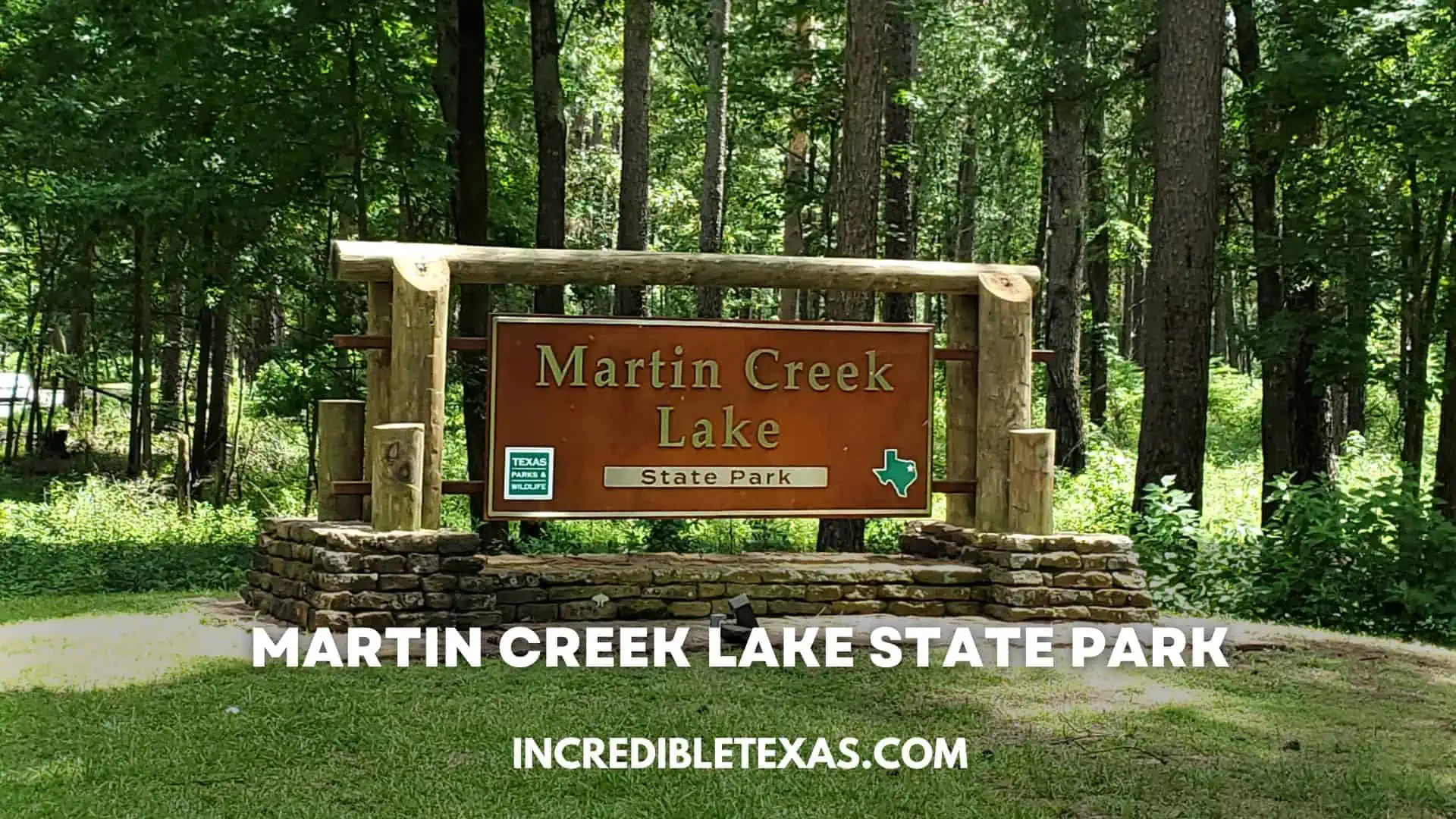
West of the main spine road sits the White Oak Ridge loop. This loop contains water and electric camping sites tucked among dense hardwoods. Anglers seeking similar quiet pine-forested lakefronts often pair their stay with a trip documented in our Martin Creek Lake State Park camping guide.
Boat Ramps and Lake Access Points
The park operates two separate concrete boat ramps to handle trailered watercraft without traffic jams. The main public boat launch sits adjacent to the central day-use zone, offering two launch lanes and a wide paved turnaround.
A second boat ramp serves the western camping sector near Wilkins Creek. Both ramp locations feature courtesy loading docks and designated vehicle-plus-trailer parking stalls.
Paved roads throughout the grounds feature a strictly enforced 20 MPH speed limit. Slow driving preserves campground quiet and protects white-tailed deer that regularly wander across roadways.
Atlanta State Park Trails: Hiking and Nature Walks
The park features six marked hiking and walking trails totaling 4.8 miles through hardwood and loblolly pine forest. The trail system accommodates hikers of all skill levels, ranging from the gentle 0.3-mile Terrace Trail to the 1.2-mile White Oak Ridge Trail.
Footpaths remain largely flat, cushioned by a natural carpet of pine needles that reduces joint impact during long walks. Shaded tree canopies keep trail temperatures tolerable even during humid East Texas summer afternoons.
Hikers searching for the best hiking trails near Wright Patman Lake should review the official Texas Parks and Wildlife Atlanta State Park Trails Map PDF before departure to evaluate route intersections and trail connectors.
| Trail Name | Distance | Difficulty | Route Highlights |
|---|---|---|---|
| White Oak Ridge Trail | 1.2 miles | Easy | Longest park path; winds through mature hardwoods and loblolly pines |
| Arrowhead Trail | 0.8 miles | Easy | Traverses gentle pine ridges near the central day-use area |
| Hickory Hollow Nature Trail | 0.7 miles | Moderate | Dense forest loop displaying vivid hickory foliage during autumn |
| Volksmarch Trail | 0.7 miles | Easy | Historic designated walking route through tall timber and forest meadows |
| Bobo’s Ferry Trail | 0.5 miles | Easy | Follows historic river ferry approach paths near lake shoreline |
| Terrace Trail | 0.3 miles | Easy | Short interpretive loop ideal for toddlers and mobility-limited visitors |
Featured Hiking Routes
The 1.2-mile White Oak Ridge Trail stands out as the longest woodland route in the park. Hikers pass massive white oaks, sweetgums, and loblolly pines that shelter woodpeckers and songbirds.
The 0.7-mile Hickory Hollow Nature Trail presents slightly rolling topography through a mixed deciduous grove. In late October and November, hickory and oak foliage transforms into bright golden and copper hues.
For a historic perspective, Bobo’s Ferry Trail runs 0.5 miles toward water access points once used by regional settlers crossing the Sulphur River valley. The route connects cleanly with the Arrowhead Trail, enabling hikers to assemble an extended 2.5-mile loop.
Trail Regulations and Accessibility Equipment
Bicycles can travel on all paved park roads and designated multi-use path connectors. However, unpaved natural surface trails remain reserved exclusively for foot traffic to prevent ruts and root erosion.
Hikers must pack out all trash, snack wrappers, and beverage bottles under Leave No Trace standards. Poison ivy grows along outer trail edges, making sturdy closed-toe footwear and socks advisable.
To support visitors with mobility challenges, staff provide an all-terrain motorized track wheelchair for guest use. Guests can borrow this specialized wheelchair free of charge by calling the park office in advance at (903) 796-6476.
Atlanta State Park Camping Guide: RV Sites and Tent Loops
The park offers 58 developed campsites split between the Knights Bluff and White Oak Ridge camping loops. Nightly camping fees run $16 for 50-amp full hookups and $14 for water and electric sites, both requiring advance booking through the TPWD online reservation system.
At $16 per night for full hookups alongside a $3 adult entrance fee, this campground delivers full-utility lakeside camping for under $20 total per night. That value makes the property an exceptional budget alternative to private RV parks across East Texas. Compared to other state parks in Northeast Texas, the lakeside sites provide outstanding value and open water access.
For travelers planning Atlanta State Park RV camping, Knights Bluff features level paved pads capable of handling motorhomes up to 50 feet. Campers wanting to explore other state-managed lakeside campgrounds in Northeast Texas can compare facilities with our Daingerfield State Park camping facilities guide located 35 miles southwest.
| Campsite Loop | Number of Sites | Utility Hookups | Nightly Base Fee | Maximum Pad Length | Best Suited For |
|---|---|---|---|---|---|
| Knights Bluff (Full Hookup) | 14 sites | 50-amp electric, water, sewer | $16.00 | Up to 50 feet | Large motorhomes and fifth-wheel trailers |
| Knights Bluff (Electric/Water) | 17 sites | 30/50-amp electric, water | $14.00 | Up to 45 feet | Travel trailers, camper vans, and tents |
| White Oak Ridge | 27 sites | 30-amp electric, water | $14.00 | Up to 40 feet | Tent campers and small pop-up trailers |
Knights Bluff and White Oak Ridge Campsites
The Knights Bluff camping loop contains 14 full-hookup RV sites equipped with 50-amp electric, municipal water, and dedicated sewer connections. Paved back-in parking spurs accommodate large recreational vehicles up to 50 feet in length.
Knights Bluff also features 17 sites providing water and electric service with convenient views overlooking the lake. Mature pine trees stand between campsite driveways, delivering natural privacy screens between neighboring camping parties.
The White Oak Ridge loop offers 27 water and electric sites located deeper inside the hardwood forest. These spots appeal strongly to traditional tent campers who value dense woodland cover and separation from heavy boat trailer traffic.
Campground Rules, Quiet Hours, and Facilities
All developed sites provide a waist-high barbecue grill, a ground campfire ring, an upright lantern post, and a heavy wooden picnic table. Centrally located bathhouses feature flush toilets and private hot showers cleaned daily by state park maintenance crews.
A sanitary RV dump station is situated along the main exit road and is free for registered overnight guests. Campers using water and electric sites can empty holding tanks quickly on their departure morning.
Park regulations limit each campsite to a maximum of eight occupants and two vehicles, including the camping trailer. Gathering firewood from park grounds is strictly illegal to protect forest detritus and soil health. Bundled firewood is sold at the headquarters store.
Strict quiet hours apply between 10:00 PM and 6:00 AM across all loops. Generators must remain switched off during quiet hours to preserve the natural nocturnal soundscape of owls, nightjars, and frogs.
Wright Patman Lake: Fishing, Boating, and Water Sports
Wright Patman Lake is a 20,300-acre reservoir managed by the U.S. Army Corps of Engineers and renowned for crappie, largemouth bass, and flathead catfish. The park provides direct water access via two paved boat launches, a fish cleaning station, and shoreline casting access. Among public access points on the water, this Wright Patman Lake state park sector offers the most comprehensive camping utilities.
The lake formed behind a massive earthen dam completed on the Sulphur River in 1956. Vast expanses of timber, submerged creek channels, and shallow weed flats create productive aquatic habitats for warm-water game fish.
Anglers should familiarize themselves with Texas fishing license requirements and costs before launching a boat on open reservoir waters.
Wright Patman Lake Fishing Regulations and Species
Under the state Free Fishing in State Parks initiative, visitors do not need a Texas fishing license to fish from the bank or courtesy docks within park boundaries. However, anyone casting from a boat out on Wright Patman Lake must possess a valid Texas freshwater fishing license and freshwater endorsement.
Crappie represent the most sought-after sport fish in the lake. Anglers target both black and white crappie around standing timber, brush piles, and drop-offs using live minnows or small jigs.
Largemouth bass fishing remains consistently strong throughout the spring spawning season. The lake holds an official record largemouth bass weighing 12.28 pounds caught in 2010. Extensive angling records and biological reports are documented in the Texas Parks and Wildlife Wright Patman Lake Angling Guide.
A covered fish cleaning station with running water and electric outlets sits near the main day-use boat ramp, allowing anglers to clean catches cleanly before heading back to camp.
Boating Access, Kayaking, and Swim Beach
Boaters launching from the main Atlanta State Park boat ramp enjoy dual concrete lanes and a courtesy boarding dock. The primary day-use ramp handles ski boats, pontoons, and performance bass boats with ease, while the Wilkins Creek ramp provides a protected launch during windy afternoons.
Paddlers in kayaks and canoes can explore sheltered inlets and coves where powerboats rarely venture. Morning outings reveal wading egrets, herons, and turtles basking along half-submerged logs.
The park maintains a designated swimming beach in the central day-use zone fronting Wright Patman Lake. The buoyed area offers a gently sloping sandy bottom suitable for wading. No lifeguards oversee the water, requiring parents to supervise children at all times.
Wildlife and Forest Ecology in the Piney Woods
The Piney Woods ecosystem within the park shelters white-tailed deer, armadillos, gray foxes, and over 150 species of resident and migratory birds. Towering loblolly pines, southern red oaks, and spring-blooming dogwoods frame the understory.
The park occupies an ecological transition zone where upland pine forests grade into bottomland hardwood swamps along the Sulphur River basin. This mix supports extraordinary biological diversity throughout the calendar year.
Piney Woods Birdwatching and Wildlife Habitats
Birders consider the surrounding woods one of the finest birdwatching outposts in Cass County. The mature pine forest provides prime nesting territory for brown-headed nuthatches, pine warblers, and pileated woodpeckers.
During winter, bald eagles hunt over Wright Patman Lake, perching on dead snags to spot surfacing fish. Flocks of migratory waterfowl, including mallards, wood ducks, and canvasbacks, seek shelter across quiet reservoir coves from November through February.
Mammals thrive in the protected boundary. White-tailed deer graze quietly on road shoulders during dawn and dusk. Campers frequently spot nine-banded armadillos foraging in leaf litter alongside raccoons, opossums, and eastern gray squirrels.
Native Flora and Seasonal Wildflowers
Loblolly pines and shortleaf pines form a towering forest canopy reaching 80 to 110 feet in height. Below the pine canopy, flowering dogwoods, eastern redbuds, and wild azaleas produce striking white and pink blossoms each April.
Sweetgum, post oak, and shagbark hickory trees dominate moist ravine bottoms and shoreline fringes. Their leaves turn brilliant shades of crimson, russet, and amber during autumn.
Wild blackberry brambles, American beautyberry, and greenbrier cover the forest floor, providing valuable winter forage for game birds and small mammals.
History of the Sulphur River Basin and Park Creation
The park sits on ancestral Caddo territory in the Sulphur River basin, where indigenous communities farmed and hunted for centuries. The modern park opened in 1954 after the state leased 1,475 acres following federal construction of the Wright Patman Dam.
Understanding the deep human history of the Sulphur River watershed enriches every visit to the bluffs and trails. Travelers captivated by East Texas water heritage can explore similar wetlands in our Caddo Lake State Park visitor guide.
Caddo Heritage and Regional Rail History
Centuries before European contact, the Caddo Nation established prosperous farming settlements along the fertile bottomlands of the Sulphur River. They hunted deer, cultivated maize and beans, and built substantial earthen mounds that dotted regional river valleys.
During the late nineteenth century, the Texas and Pacific Railway laid track through Cass County, establishing the town of Atlanta in 1872. Timber extraction and commercial agriculture expanded rapidly, converting vast pine tracts into lumber mills and family farmsteads.
Wright Patman Dam and State Park Establishment
Catastrophic flooding along the Sulphur and Red rivers prompted federal intervention during the mid-twentieth century. In 1946, Congress authorized construction of the Texarkana Dam, an 18,500-foot earthen barrier built by the military.
The dam achieved completion in 1956 and was officially renamed in 1973 to honor longtime U.S. Congressman Wright Patman. The reservoir project is managed today by the U.S. Army Corps of Engineers Wright Patman Lake Project Office.
In 1954, the state of Texas entered a long-term lease with the Department of the Army to manage 1,475 acres along the southern bluffs as Atlanta State Park. Today, the property protects a quiet stretch of the Piney Woods while offering sustainable recreation to thousands of annual visitors.
Frequently Asked Questions
Are there cabins available to rent at the park?
The park does not offer rental cabins, screened shelters, or permanent lodging units. Overnight visitors must bring their own tent, travel trailer, or motorhome to occupy one of the 58 developed campsites.
How much does it cost to camp at the park?
Full hookup RV campsites at Knights Bluff cost $16 per night, while water and electric sites cost $14 per night. Daily park admission of $3 per adult is charged separately unless guests hold a valid Texas State Parks Pass.
Do you need a fishing license to fish at the park?
Anglers fishing from the shoreline or courtesy docks within park boundaries do not need a Texas fishing license under the Free Fishing in State Parks program. Anyone operating or casting from a motorized boat or paddlecraft on Wright Patman Lake must possess a valid Texas freshwater fishing license.
Are dogs allowed on park grounds?
Dogs are welcome throughout campground loops and hiking trails but must remain restrained on a leash no longer than six feet at all times. Pets are prohibited inside park buildings and along the designated day-use swimming beach.
Can you swim in Wright Patman Lake at the park?
Visitors can swim at the designated sandy beach located in the central day-use area along Wright Patman Lake. Lifeguards are not stationed on the shoreline, so swimming is strictly at your own risk.