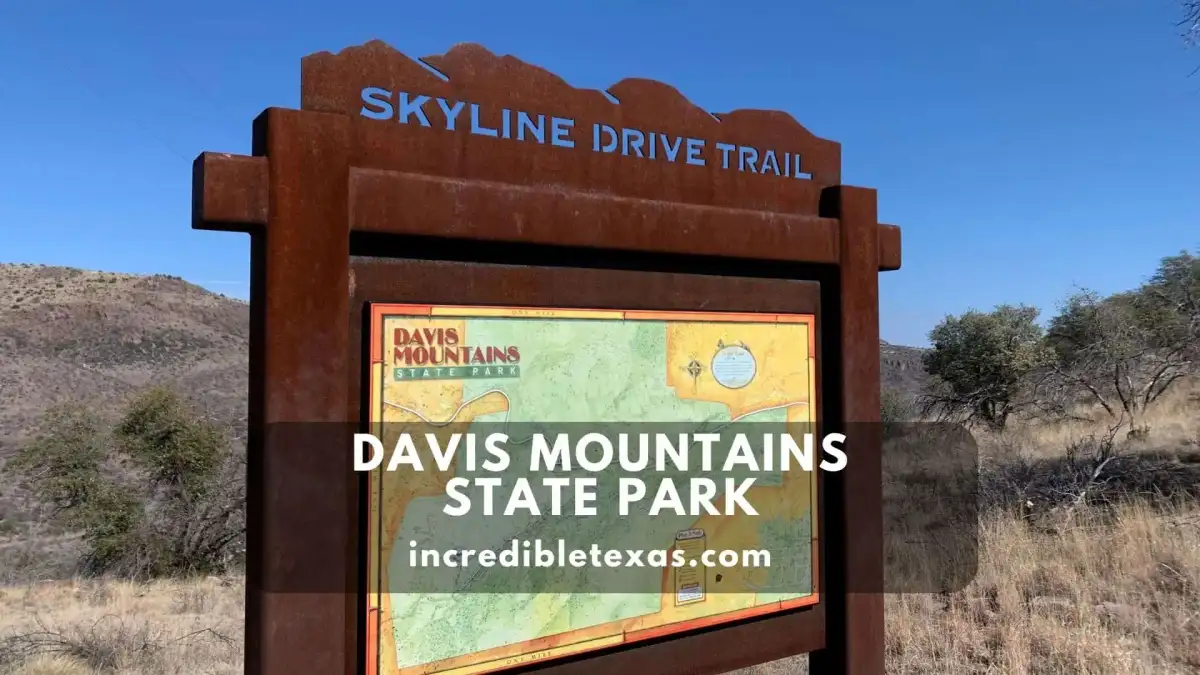
Davis Mountains State Park encompasses 2,709 rugged acres in Jeff Davis County, offering a high-elevation sky island retreat where pine-forested peaks rise between 5,000 and 6,000 feet above the Chihuahuan Desert. Located just 4 miles north of historic Fort Davis, the park provides an escape from summer desert heat alongside 16 miles of multi-use trails, scenic mountain roads, and Great Depression-era stone architecture.
Key takeaways
- Davis Mountains State Park spans 2,709 acres in Jeff Davis County, offering 16+ trail miles at 5,000 to 6,000 feet elevation.
- Adult day-use admission is $6 daily, while children 12 and under enter free, with reservations strongly recommended up to 30 days in advance via TPWD.
- The park features 93 campsites (including 26 full hookups) and the historic 39-room Indian Lodge, originally constructed by the Civilian Conservation Corps.
- The park sits inside the 15,000-square-mile Greater Big Bend International Dark Sky Reserve, just 16 miles from the University of Texas McDonald Observatory.
Davis Mountains State Park at a Glance
Davis Mountains State Park is a 2,709-acre high-desert sanctuary in Jeff Davis County featuring 16 miles of hiking trails, 93 developed campsites, and the historic Indian Lodge. High elevations keep the park roughly 10 to 15 degrees cooler than the surrounding desert lowlands throughout the summer.
Understanding Davis Mountains State Park fees and reservation requirements ensures a smooth arrival at this remote mountain sanctuary. Travelers mapping out extended outdoor journeys across the region often rank this mountain retreat among the best state parks in Texas for stargazing and cooler mountain weather. Because the park encompasses distinct camping loops, equestrian routes, and historic lodge rooms, planning ahead guarantees the best experience.
| Campground / Facility Area | Elevation | Site Types Available | Nightly Rate | Key Feature |
|---|---|---|---|---|
| Indian Lodge | 5,120 feet | 39 historic motel rooms | $150 to $260 | CCC adobe construction, guest pool, Black Bear Restaurant |
| Keesey Canyon Campground | 5,050 feet | 26 full hookup RV sites | $25 plus daily entry | 30-amp and 50-amp electricity, water, sewer, paved pads |
| Limpia Creek Campground | 5,020 feet | 34 water and electric sites | $20 plus daily entry | 30-amp electric, water, shade trees, hot shower access |
| Primitive Hike-In Sites | 5,500 feet | 6 backcountry tent sites | $10 plus daily entry | 4-mile hike-in, secluded ridge views, containerized fuel only |
| Limpia Canyon Equestrian | 4,950 feet | 6 primitive horse sites | $12 plus daily entry | Shared corral, non-potable horse trough, trail network access |
Park Hours, Entrance Fees, and Day-Use Passes
The park grounds open daily from 8:00 AM to 10:00 PM for day-use visitors, with headquarters open from 8:15 AM to 4:45 PM. Adult entrance fees are $6 per day, while children 12 and under enter free.
Understanding the fee schedule and ticketing rules helps ensure a smooth trip to Davis Mountains Texas. Reserving your day pass in advance prevents entry denials when parking areas fill during busy travel periods.
Daily Entry Fees and Texas State Parks Pass
According to the official Texas Parks and Wildlife Department Davis Mountains Fees and Facilities Portal, entry costs $6 per day for visitors ages 13 and older. Children 12 and under enjoy complimentary admission every day of the year.
Reviewing daily entrance costs helps travelers budget for day visits or multi-day camping trips. Purchasing Davis Mountains State Park tickets online ensures guaranteed entry during peak spring and fall weekends.
Holders of the Texas State Parks Pass receive free entry for themselves and all vehicle passengers. The annual $70 pass pays for itself quickly when combining visits to multiple West Texas state parks within a single calendar year.
- Adult entry (ages 13 and up): $6 per person daily.
- Children (ages 12 and under): Free entry.
- Texas State Parks Pass: Admits cardholder and accompanying guests without daily entry fees.
- Group entry rates: School-sponsored groups can arrange special educational rates directly through park headquarters.
Operating Hours and Arrival Protocols
Checking Davis Mountains State Park hours before departing is essential because gate entry operates from 8:00 AM to 10:00 PM. Registered overnight campers may enter after hours using the automated gate access code provided during check-in.
The front office operates daily from 8:15 AM to 4:45 PM to issue trail maps, collect fees, and answer visitor questions. Campers arriving after 4:45 PM should consult the self-pay kiosk and late arrival board posted outside the park headquarters.
Tip
The TPWD online reservation system opens day-pass sales up to 30 days in advance. Secure your Davis Mountains day use reservations early for spring break, Memorial Day, and autumn weekends.
Navigating the High Desert: Location and Maps
Davis Mountains State Park is located at 151 Park Road 3, Fort Davis, TX 79734, situated along State Highway 118 in West Texas. The park is approximately 25 miles northwest of Alpine and 35 miles north of Marfa.
Reaching this high-desert park requires driving through dramatic volcanic valleys and rolling desert grasslands. Travelers often combine their journey with a stop at the spring-fed waters at Balmorhea State Park located 30 miles to the north.
Driving Directions and Regional Gateways
Travelers arriving from Interstate 10 can exit at Balmorhea and head south on State Highway 17 into Fort Davis. From town, continue northwest along State Highway 118 for 4 miles to reach the main entrance of Fort Davis state park.
Visitors driving from El Paso take Interstate 10 east to Van Horn, then branch south along US Route 90 to Marfa before turning north on Highway 17. The final approach winds through pinyon-covered hills with immediate views of the historic CCC stone entry gates.
Offline Navigation and Connectivity Realities
Cellular coverage from major carriers is reliable near the park entrance but vanishes quickly inside canyon corridors. Relying on live navigation apps often leaves travelers stranded without functional turn-by-turn directions.
Download offline navigation high desert maps before departing Fort Davis or Alpine. Park headquarters provides printed topographical maps outlining trail gradients, campground loops, and emergency phone locations.
- Cell service Fort Davis TX: Cellular reception is strong in town, but drops to zero inside Keesey Canyon.
- Offline maps: Download Google Maps or topographical trail data prior to leaving Highway 118.
- Fuel availability: Fort Davis offers limited fuel stations; fill your gas tank in Alpine or Pecos before heading into the mountains.
Civilian Conservation Corps Heritage and Indian Lodge
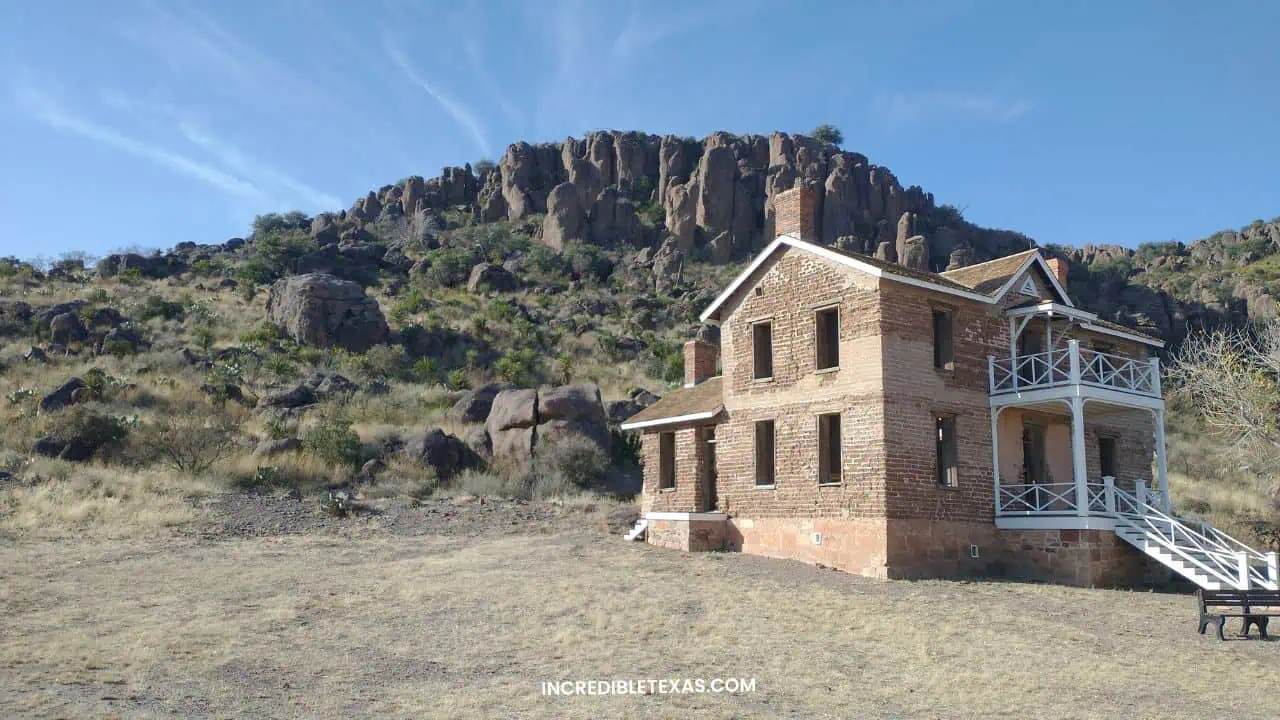
Civilian Conservation Corps Companies 879 and 881 built Davis Mountains State Park and Indian Lodge between 1933 and 1935 using native adobe and pine. The historic pueblo-style hotel features 39 guest rooms, adobe walls, and hand-crafted cedar furnishings.
The architectural craftsmanship displayed throughout the park represents one of the crowning achievements of the Great Depression public works era. According to the Texas Parks and Wildlife Department Indian Lodge Portal, CCC workers hand-molded thousands of adobe bricks on-site from native soil and water.
The Historic Indian Lodge Hotel
Indian Lodge Fort Davis stands as a historic lodging facility in the American Southwest. Built into the terraced slopes of Keesey Canyon, the multi-level complex feels like an authentic indigenous pueblo village.
Following a multi-million dollar structural restoration, the lodge features modern heating, upgraded plumbing, and restored artisan woodwork. Guests enjoy exclusive access to an outdoor swimming pool carved directly into the rocky hillside.
- Room count: 39 guest rooms including historic CCC suites and mid-century modern additions.
- Indian Lodge booking window: Rooms can be reserved up to 5 months in advance via the central TPWD reservation portal.
- Pet policy: Specific pet-friendly rooms are available upon request for travelers exploring Davis Mountains camping with dogs.
Black Bear Restaurant and Dining
The Indian Lodge Black Bear Restaurant provides full-service dining within the park boundaries. The restaurant serves hearty breakfast and lunch menus featuring Southwestern classics, hot coffee, and fresh salads.
Floor-to-ceiling windows look out onto the rugged mountain slopes and feeding stations where hummingbirds gather during warmer months. Operating hours can fluctuate seasonally, so checking with lodge staff upon arrival is recommended.
Top Things to Do in Davis Mountains State Park
Top activities at Davis Mountains State Park include driving the five-mile Skyline Drive, viewing rare birds at the Emory Oak blind, hiking mountain ridges, and observing dark night skies. Ranger programs offer guided geology and wildlife walks.
Whether your schedule allows a single afternoon or a multi-day camping retreat, the park offers outdoor recreation for all skill levels. The unique elevation produces clear air and cooler temperatures ideal for active exploration.
Scenic Skyline Drive and Overlooks
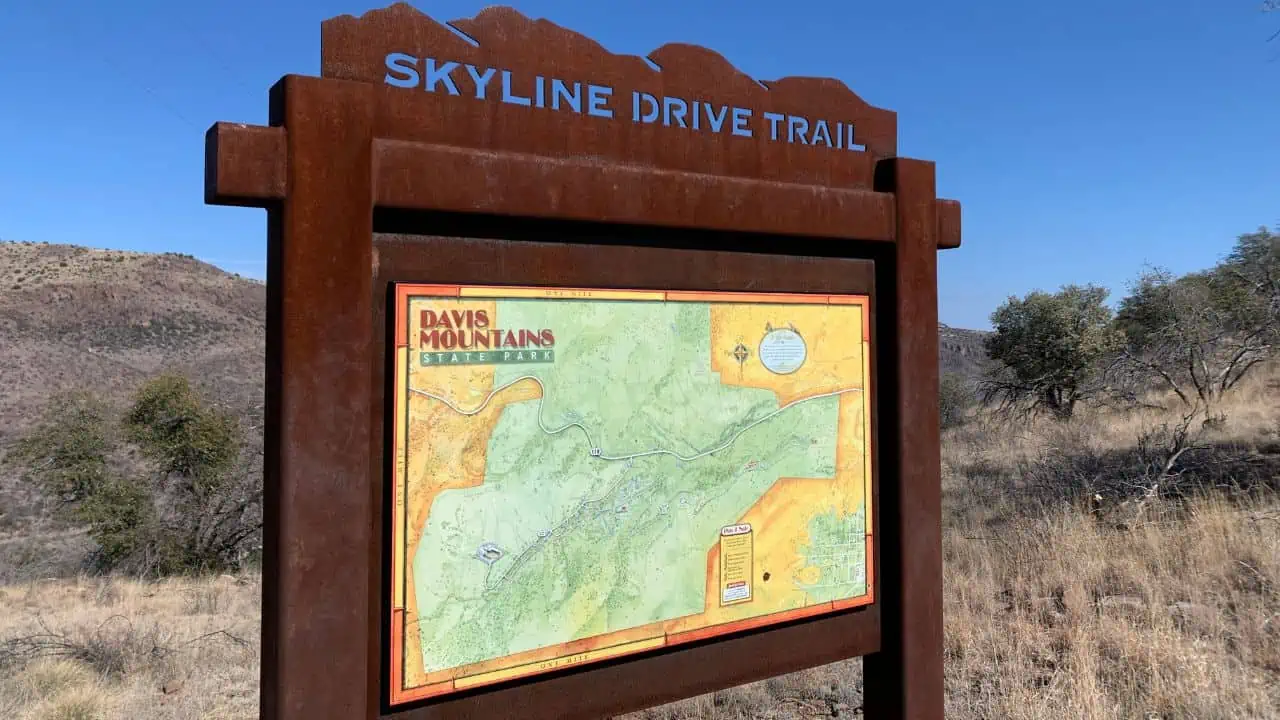
Skyline Drive Davis Mountains climbs more than 500 vertical feet along a narrow mountain ridge above Keesey Canyon. Built by CCC stone masons, this five-mile paved route ranks among the most scenic mountain roadways in Texas.
Multiple pull-offs allow drivers to step out and photograph distant landmarks like Mitre Peak and Blue Mountain. At the end of the road, the Skyline Drive scenic overlook features stone viewing shelters that capture sunset views across the desert horizon.
Note
Skyline Drive features steep 8% grades and tight hairpin turns. Motorhomes and travel trailers longer than 24 feet are prohibited from ascending beyond the lower picnic turnouts.
Emory Oak Wildlife Viewing Area
The Emory Oak Wildlife Viewing Area serves as a central hub for Davis Mountains bird watching enthusiasts. The facility features a comfortable enclosed wooden blind with viewing slots overlooking automated seed stations and running water tricklers.
Birders frequently log sightings of the elusive Montezuma quail, which visit the water features during early morning hours. Scrub-jays, acorn woodpeckers, and seasonal hummingbirds also feed regularly around the sheltered oak grove.
- Target species: Montezuma quail viewing, black-chinned hummingbirds, ladder-backed woodpeckers.
- Viewing blind features: Seated benches, shaded viewing windows, running water drip bath.
- Best timing: Early morning from 7:30 AM to 9:30 AM offers peak avian feeding activity.
Ranger Programs and Junior Ranger Badges
Park rangers host educational programs throughout the year covering mountain geology, dark-sky conservation, and wildlife tracking. These guided walks are free with regular park admission and provide informative context on high-desert survival.
Children visiting with family can pick up a free Junior Ranger activity journal at the headquarters desk. Completing the scavenger hunts and trail observations earns an official junior ranger badge and certificate.
Hiking Trails Guide: Canyons and Mountain Ridges
Davis Mountains State Park maintains more than 16 miles of marked trails ranging from scenic valley strolls to strenuous backcountry ridge loops. The trails connect directly to the Fort Davis National Historic Site via the scenic CCC Trail.
The network of Davis Mountains State Park trails spans more than 16 miles across volcanic ridges and canyon washes. Outdoor enthusiasts planning Davis Mountains hiking trips should prepare for rugged terrain and significant elevation changes.
Family-Friendly and Moderate Trails
The Limpia Creek Trail runs for 2.4 miles along the base of the canyon, offering gentle grades and shaded picnic turnouts beneath cottonwood trees. This trail is ideal for casual walkers, trail runners, and leashed dogs.
The historic CCC hiking trail spans 1.75 miles, ascending from the park floor to a scenic ridge overlooking Keesey Canyon. It continues down the southern slope to connect with the trail network of the adjacent Fort Davis National Historic Site.
- Limpia Creek Trail: 2.4 miles, flat canyon grade, excellent for family hikes Davis Mountains.
- Headquarters Trail: 0.3 miles, paved access from park office to the wildlife viewing blind.
- Old CCC Trail: 1.6 miles, moderate ridge climb following original 1930s worker routes.
Challenging Ridge Climbs and Primitive Loops
Hikers seeking a rigorous mountain workout can tackle the Sheep Pen Canyon Loop in the Limpia Canyon Primitive Area. This 5.6-mile circuit traverses high volcanic plateaus with dramatic drop-offs and expansive panoramic vistas.
The Indian Lodge Trail climbs steeply behind the hotel, rising over 300 vertical feet in less than one mile. The route joins the Skyline Drive ridge, allowing hikers to create customized loop adventures across the mountain crests.
- Sheep Pen Canyon Loop: 5.6 miles, strenuous rocky climb, remote wilderness exposure.
- Skyline Drive Trail: 4.5 miles, undulating ridge path with continuous scenic valley overlooks.
- Indian Lodge Trail: 1.5 miles, steep elevation gain connecting the lodge to the mountain summit.
Flora and Fauna of the High-Elevation Sky Island
Because the Davis Mountains rise thousands of feet above the Chihuahuan Desert, the range forms an isolated sky island supporting pinyon pines, alligator junipers, and Emory oaks. Wildlife includes mule deer, javelinas, mountain lions, and over 260 recorded bird species.
This cool ecological oasis supports vegetation communities that cannot survive in the hotter desert floor below. Visitors often compare this high-altitude flora to the woodland corridors found along the Big Bend National Park trail network in the nearby Chisos Mountains.
Sky Island Wildlife and Elusive Predators
Mule deer browse calmly throughout the Keesey Canyon camping loops, particularly during early morning and twilight hours. Small sounders of javelinas frequently forage along dry wash banks, rooting for succulent agave bulbs and prickly pear pads.
Elusive apex predators like mountain lions and black bears roam the rugged backcountry ridges. While human interactions remain rare, travelers should maintain situational awareness and store scented items safely.
- Commonly spotted mammals: Mule deer, collared peccaries (javelinas), rock squirrels, desert cottontails.
- Backcountry wildlife: Mountain lions, American black bears, gray foxes, ringtails.
- Birding highlights: Montezuma quail, acorn woodpeckers, black-crested titmice, phainopeplas.
High-Desert Botanical Diversity
The park features alligator juniper trees, identifiable by their deeply furrowed bark resembling thick reptile skin. These ancient trees share the rocky slopes with Mexican pinyon pines and Emory oaks.
Canyon washes feature fragrant mountain laurels, flowering agarita bushes, and blooming cholla cactus. Following late summer monsoon rains, yellow prairie sunflowers and purple sand verbena brighten the roadsides.
Camping and Overnight Lodging Facilities
Overnight accommodations at Davis Mountains State Park include 93 developed campsites, 6 primitive equestrian sites, backcountry campsites, and 39 lodge rooms. Standard campsites offer water hookups, 30-amp and 50-amp electricity, or full sewer connections.
Davis Mountains camping options cater to every style of traveler, from modern RV owners to wilderness backpackers. The campground layout provides clean restroom facilities with hot showers situated near each developed loop.
Campers comparing regional camping options often cross-reference these mountain sites with the campgrounds at Guadalupe River State Park for contrasting Hill Country and West Texas wilderness experiences.
Full Hookup RV and Developed Tent Sites
The Keesey Canyon camping loop offers 26 pull-through and back-in sites with RV camping full hookups. These popular spaces feature 30-amp and 50-amp electrical outlets, pressurized municipal water, and dedicated sewer drains.
Tent campers can choose between 34 water-and-electric sites or 33 water-only sites tucked into the limestone canyon walls. Every developed campsite includes a heavy-duty picnic table, a charcoal grill, and an elevated lantern pole.
- Full hookup RV sites: 26 sites, 30/50 amp electric, water, sewer, $25 per night.
- Water and electric sites: 34 sites, 30 amp electric, water, $20 per night.
- Water-only tent sites: 33 sites, potable water spigot, $15 per night.
- Shower facilities: Free hot showers and modern flush restrooms located within 200 yards of all loops.
Primitive and Equestrian Backcountry Sites
Backpackers who want total seclusion can hike 4 miles along the Sheep Pen Canyon Trail to reach 6 primitive campsites. These remote spots feature clearing pads for small tents and magnificent nighttime solitude under undisturbed dark skies.
Equestrian travelers can reserve 6 primitive horse sites in the Limpia Canyon area. The equestrian camp provides a shared parking loop for horse trailers, non-potable livestock watering troughs, and immediate access to 11 miles of bridle trails.
Campground Rules and Fire Regulations
Campground check-in begins at 2:00 PM, while check-out is strictly enforced at 12:00 PM to give maintenance staff time to service the grounds. Quiet hours run nightly from 10:00 PM to 6:00 AM.
Campfires are permitted only in designated metal fire rings when county burn bans are not active. Gathering firewood within the state park is strictly prohibited, so campers should purchase bundled wood in Fort Davis or from the host station.
Important
Jeff Davis County frequently enters burn bans due to extreme arid winds. During high fire danger periods, all open wood fires and charcoal grills are banned, requiring campers to cook exclusively on containerized gas stoves.
Stargazing in the Greater Big Bend Dark Sky Reserve
Davis Mountains State Park offers exceptional astronomical viewing conditions as part of the 15,000-square-mile Greater Big Bend International Dark Sky Reserve. Minimal light pollution and thin mountain air allow visitors to see constellations and planets with remarkable clarity.
Educational resources from the McDonald Observatory Dark Skies Educational Directory highlight how regional lighting ordinances maintain this protected astronomical corridor. Visitors can witness the glowing arc of the Milky Way spanning horizon to horizon on any moonless night.
Night Sky Viewing Within the Park
Davis Mountains stargazing requires no specialized optical equipment to enjoy memorable night sky views. Sitting outside your tent or lodge patio reveals thousands of pinpoint stars, distant nebulae, and passing satellites.
The stone pavilions along Skyline Drive provide elevated platforms above local valley ground lighting. Photographers frequently set up tripods along the overlooks for long-exposure astrophotography captures.
- Recommended gear: Red-lens headlamps, binoculars, reclining camp chairs, warm thermal outerwear.
- Lighting etiquette: Use exclusively red flashlights to preserve natural night vision for neighboring campers.
- Best calendar windows: Plan trips within five days of the new moon for the darkest astronomical skies.
McDonald Observatory Star Parties and Programs
Located just 16 miles northwest along Highway 118, the University of Texas McDonald Observatory Visitors Portal hosts world-renowned evening Star Parties. These ticketed programs offer guided constellation talks in an outdoor amphitheater followed by live telescope viewings.
Professional astronomers orient attendees toward Jupiter’s moons, Saturn’s rings, and glowing stellar nurseries. These evening programs represent one of the most rewarding stargazing trips for adults and families visiting West Texas.
- Location: 3640 Dark Sky Drive, Fort Davis, TX 79734 (16 miles from the state park).
- Program formats: Evening Star Parties, daytime telescope dome tours, solar viewing sessions.
- Ticketing requirement: Reservations are strictly required in advance; check our McDonald Observatory Star Party ticket guide for complete details on booking windows, pricing tiers, and red-light gear rules.
Regional Day Trips: Fort Davis, Alpine, and Marfa
Davis Mountains State Park serves as an ideal base for exploring the West Texas tri-city region, including Fort Davis, Alpine, and Marfa. Nearby highlights include Fort Davis National Historic Site, Sul Ross State University museums, and Marfa art galleries.
Staying several nights in the high desert allows travelers to experience both mountain recreation and distinctive regional culture. This loop ranks consistently among the best places to visit in Texas for scenic drives and historical discovery.
Fort Davis National Historic Site
Located 4 miles south of the park entrance, the National Park Service Fort Davis Historic Site Directory preserves an exceptionally intact 19th-century frontier cavalry post. Active from 1854 to 1891, the fort protected stagecoaches, emigrants, and freight wagons along the historic San Antonio to El Paso road.
Visitors can explore 24 restored stone and adobe buildings, including officer quarters, barracks, and the post hospital. A 1.75-mile hiking trail connects the state park directly to the national historic site grounds.
Alpine Cultural Attractions
Situated 25 miles southeast of the park, Alpine functions as the commercial and cultural center of the Big Bend region. The town features historic architecture, colorful outdoor murals, and local artisan coffee shops.
The Museum of the Big Bend on the Sul Ross State University campus exhibits pioneer artifacts, historical maps, and regional paleontology specimens. Alpine also provides grocery stores, pharmacies, and automotive repair shops.
Marfa Arts and Desert Minimalism
Located 35 miles southwest along Highway 17 and Highway 90, Marfa is known internationally for contemporary art foundations and minimalist architecture. The Chinati Foundation and Judd Foundation preserve monumental installations created by Donald Judd and his contemporaries.
Visitors gather east of town at dusk to watch for the mysterious Marfa Lights across the desert plain. Combining high-concept art galleries with mountain hikes creates a memorable West Texas road trip itinerary.
Frequently Asked Questions About Davis Mountains State Park
Common questions regarding Davis Mountains State Park address entrance fees, Indian Lodge reservations, dark sky visibility, and regional driving distances.
Is Indian Lodge open for reservations in 2026?
Indian Lodge is fully open and accepting overnight room reservations following its multi-million dollar structural restoration. Guests can book 39 historic pueblo-style rooms and dine at the on-site Black Bear Restaurant.
Can you see the Milky Way from the park?
The Milky Way is vividly visible to the naked eye on moonless nights from anywhere inside the park boundaries. High elevations and strict regional dark-sky ordinances ensure some of the clearest astronomical views in North America.
Are there black bears in the mountain canyons?
Black bears inhabit the higher ridges of the Davis Mountains and occasionally wander through remote backcountry canyons. Campers must secure all food, coolers, and scented toiletries inside hard-sided vehicles or approved bear-resistant storage boxes.
How far is the park from Big Bend National Park?
The park is located approximately 100 miles north of the Panther Junction Visitor Center in Big Bend National Park. Driving between the two parks takes about two hours along State Highway 118 and US Route 90.
Do you need advance reservations for McDonald Observatory Star Parties?
Advance online reservations are mandatory for evening Star Parties at the University of Texas McDonald Observatory. These popular astronomical programs sell out several weeks in advance, particularly during spring break and summer months.