Spanning 484 acres of protected Pineywoods along the edge of an ancient 25,400-acre cypress bayou, Caddo Lake State Park serves as the primary public gateway to Texas's only naturally formed lake of substantial scale. Travelers exploring Caddo Lake Texas find over 50 miles of marked water trails through towering bald cypress stands draped in Spanish moss, 1930s Civilian Conservation Corps stone cabins, and over 70 native fish species. Because its moss-draped cypress labyrinth feels more like a primordial swamp than standard Texas terrain, Caddo Lake is featured prominently on our list of places in Texas that don't look like Texas.
Key takeaways
- Caddo Lake State Park charges a daily entrance fee of $4 for adults 13 and older, while children 12 and under enter free.
- The park features 10 historic Civilian Conservation Corps cabins built in the 1930s, alongside 46 campsites ranging from $10 primitive water-only tent sites to $25 full hookup RV spots.
- Over 50 miles of designated Pineywoods paddling trails weave through Caddo Lake, with canoe rentals available directly at park headquarters for $12 per hour or $30 for a half day.
- Alligators inhabit the slow-moving bayous and backwaters year-round, requiring visitors to keep pets leashed and refrain from swimming in vegetated channels.
- No Texas fishing license is required when casting from the park bank or designated fishing pier on Saw Mill Pond.
| Metric / Feature | Caddo Lake State Park Specification |
|---|---|
| Physical Address | 245 Park Road 2, Karnack, TX 75661 (Harrison County) |
| Operating Hours | 8:15 AM to 4:45 PM (Headquarters); Gate open to 10:00 PM |
| Daily Entrance Fee | $4 per adult (13+); Free for children 12 and under |
| Overnight Cabins | 10 historic CCC cabins ($40 to $115 per night) |
| Campground Sites | 46 total campsites ($10 water-only to $25 full hookup) |
| Waterway Access | Saw Mill Pond boat ramp and headquarters canoe rentals |
| Paddling Network | Direct access to 10 official trails spanning 50+ miles |
| Fishing Rules | Free bank and pier fishing; no state fishing license required |
| Pet Regulations | Leashed pets permitted on trails; prohibited in cabins |
What to Expect at Caddo Lake State Park
Caddo Lake State Park protects 484 acres of upland pine forest and wetland bayous along Big Cypress Bayou in East Texas. The park serves as an accessible base for exploring an internationally recognized Ramsar wetland home to 400-year-old bald cypress trees.
Visitors encounter a landscape distinct from the rest of the state. Shallow sloughs, quiet boat lanes, and submerged cypress roots create a maze of aquatic pathways navigating the labyrinth of Caddo Lake bayou channels, which shelter river otters, beavers, and over 200 species of resident and migratory birds.
Unlike other Pineywoods state parks that feature open, deep-water reservoirs, this preserve centers on flooded bottomlands and slow-moving bayous. Ranked among the most historic Harrison County state parks, the property preserves both Great Depression architecture and prehistoric river ecosystems.
A Ramsar Wetland of International Significance
Designated in 1993 under the international Ramsar Convention on Wetlands, Caddo Lake protects one of the largest flooded bald cypress forests in the United States. The protected ecosystem spans more than 25,400 acres across Harrison and Marion counties in Texas and Caddo Parish in Louisiana.
According to the Texas Parks and Wildlife Caddo Lake Ecosystem and Nature Guide, the waters support over 70 fish species, including chain pickerel, paddlefish, and trophy largemouth bass. Travelers comparing diverse wetland habitats can review our regional guide to East Texas state parks and nature reserves for additional pine forest destinations.
Civilian Conservation Corps Architectural Heritage
Civilian Conservation Corps Company 889 developed the core park infrastructure between 1933 and 1937. Young enrollees harvested local timber, quarried native ironstone, and assembled rustic structures designed to blend into the East Texas landscape.
The original CCC recreation hall, park roads, and log-and-stone cabins remain fully functional today. These historic assets give the park an authentic early-twentieth-century character that modern developments cannot replicate.
How Much Does Caddo Lake State Park Cost? (Admission and Camping Fees)
Day-use admission to this state park costs $4 for adults 13 and older, with free entry for children 12 and under. Overnight campsites range from $10 for water-only tent pads to $25 for full hookup RV sites.
Entrance permits are required for all visitors entering park gates, regardless of whether they arrive for day paddling or an overnight campout. Daily vehicle permits can be purchased up to 30 days in advance through official state reservation channels.
Day-Use Entrance Rates and Park Passes
The standard Caddo Lake State Park entry fee is $4 per day for adults, giving full access to trails, boat ramps, and day-use picnic facilities. Children aged 12 and younger receive complimentary entry on every visit.
Frequent state park travelers can present a Texas State Park Pass ($70 annually) at the entrance booth to waive daily admission fees for everyone inside their non-commercial vehicle. Complete fee schedules are documented on the Texas Parks and Wildlife Caddo Lake Fees and Facilities Portal.
Tip
Day-use capacity frequently fills to 100% on spring weekends and holiday breaks; reserve entry permits online up to 30 days ahead to guarantee gate access.
Campground Loops and Hookup Tiers
When reserving Caddo Lake State Park camping sites, travelers can select between 46 improved spaces divided across four distinct camping loops. Each campsite provides a picnic table, an outdoor ground grill, and a designated fire ring.
| Campground Loop | Site Numbers | Hookups & Amenities | Nightly Fee | Max RV Length | Best Suited For |
|---|---|---|---|---|---|
| Mill Pond | Sites 1–8 | Water only, tent pads | $10 | Tents only (no RVs) | Primitive tent campers |
| Woodpecker Hollow | Sites 18–25 | 50-amp electric, water, sewer | $25 | Up to 40 feet | Large travel trailers and motorhomes |
| Armadillo Run | Sites 26–36 | 30-amp electric, water | $20 | Up to 35 feet | Pop-up campers and campervans |
| Squirrel Loop | Sites 37–45 | 30-amp electric, water | $20 | Up to 30 feet | Small trailers and family tent setups |
Campers who enjoy lakeside wooded environments can also check our guide to Daingerfield State Park camping and trails, located 45 minutes northwest in Morris County. Travelers heading north toward the Arkansas state line can discover the best things to do in Bowie County TX, including Wright Patman Lake recreation and Texarkana's historic downtown landmarks. Modern restrooms with hot showers are stationed within walking distance of all four campground loops.
Caddo Lake State Park Cabins and Historic Lodging
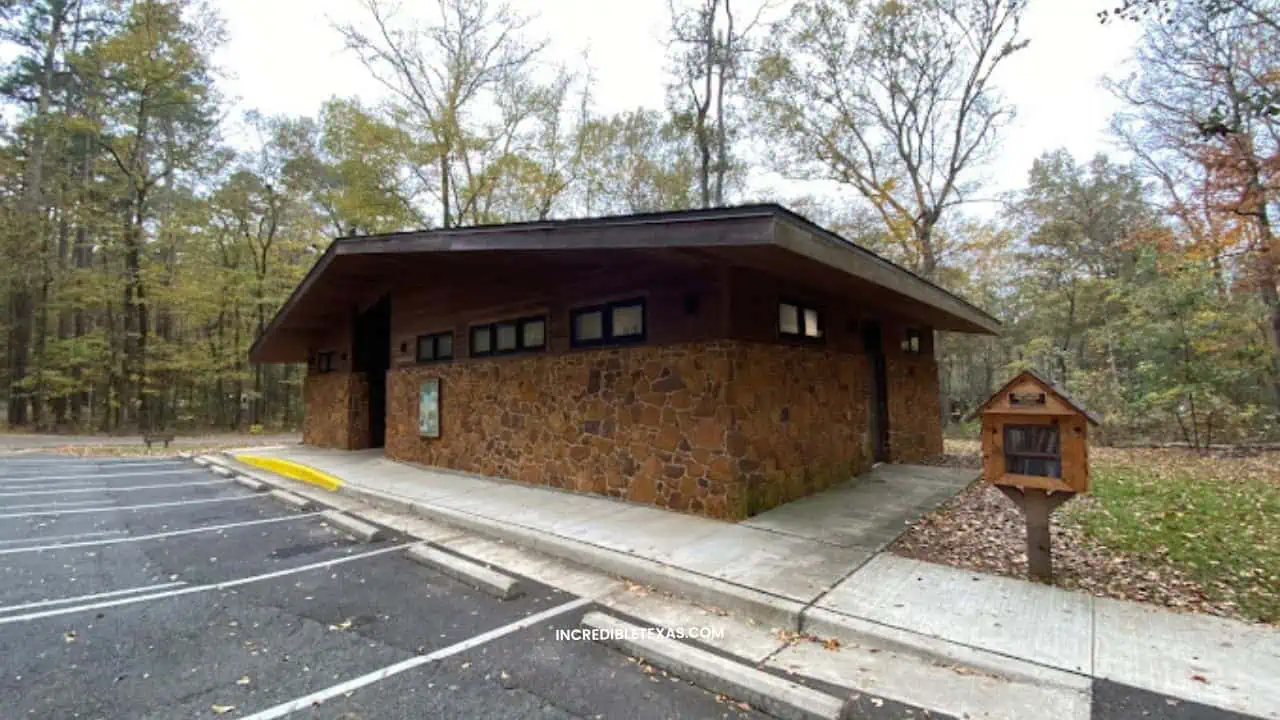
The park features 10 historic stone-and-timber cabins constructed during the Great Depression by Civilian Conservation Corps Company 889. Nine cabins offer modern bathrooms and kitchenettes from $95 to $115 nightly, while Cabin 10 provides rustic shelter for $40.
These cabins sit on wooded bluffs above Saw Mill Pond, offering quiet surroundings and direct walking access to trailheads. Every cabin includes air conditioning and heating units to ensure year-round comfort in East Texas weather.
Full-Service Cabins 1 Through 9
Cabins 1 through 9 provide furnished bedrooms, private bathrooms with showers, and compact kitchenettes. The kitchen areas include a sink, microwave, two-burner stovetop, mini-refrigerator, and drip coffee maker.
Two-person cabins rent for $95 per night, four-person units rent for $105, and six-person family cabins cost $115 nightly. Cabins 3 and 7 are fully ADA accessible with paved parking ramps and roll-in shower facilities.
Guests must supply their own bed linens, blankets, pillows, bath towels, and cooking cookware. To explore similar historic accommodations across the state, review our directory of Texas state parks with historic cabins.
Rustic Cabin 10 and Booking Regulations
Cabin 10 operates as a budget-friendly rustic unit priced at $40 per night. It features two twin-sized bunk beds, an interior table, and climate control, but does not contain indoor plumbing or a private bathroom.
Guests staying in Cabin 10 use the central restroom and shower building in the nearby Squirrel camping loop. Ground campfires and pets are strictly prohibited in the entire cabin lodging zone to safeguard the historic timber buildings.
Paddling Trails and Canoe Rentals on Big Cypress Bayou
The state park provides direct water access to 10 marked paddling trails totaling over 50 miles of waterways through Saw Mill Pond, Big Cypress Bayou, and opening wetlands. Canoe rentals operate from the park headquarters for $12 per hour or $30 for half days.
The park's shoreline on Saw Mill Pond serves as the safest launch point for paddlers of all skill levels. Calm, wind-sheltered waters allow families and novice kayakers to navigate through towering cypress trees without fighting strong river currents.
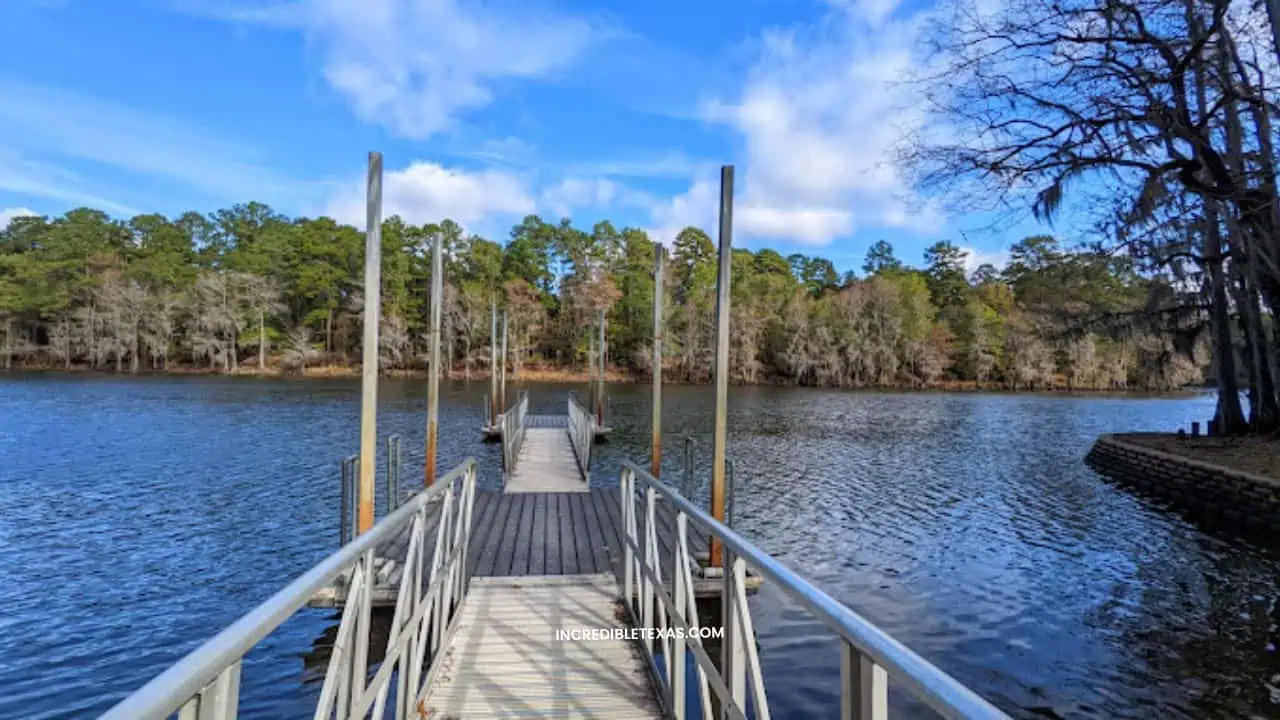
Saw Mill Pond and Hell's Half Acre Trail
Paddlers leaving the park boat slip enter Saw Mill Pond Caddo Lake before connecting to the broader bayou network. The 8.8-mile Hell's Half Acre trail and 3.8-mile Cathedral trail guide boaters past towering cypress knees and submerged logs.
Over 50 miles of official Caddo Lake paddling trails crisscross the flooded cypress forest, with each route marked by color-coded directional posts. Detailed water routes and launch sites are shown on the Texas Parks and Wildlife Caddo Lake Official Park Map PDF. Boaters interested in expansive open reservoirs can contrast this swamp environment with our Lake O' the Pines recreation guide.
Canoe and Kayak Rental Logistics
Arranging a Caddo Lake canoe rental at park headquarters costs $12 for one hour, $30 for four hours (half day), and $50 for full-day use. Rentals are handled on a first-come, first-served basis and include two paddles and state-approved life vests for all passengers.
For Big Cypress Bayou paddling trips, dense cypress foliage can degrade GPS signals in the sloughs, so boaters should always carry a physical waterproof trail map and compass. Paddlers should also keep watch for floating mats of giant salvinia that can drift across narrow side cuts in late summer.
Hiking Trails and Pineywoods Walking Paths
Park rangers maintain approximately 2.5 miles of dedicated hiking trails winding through mixed loblolly pine, sweetgum, and dogwood woods. The 0.7-mile Caddo Forest Trail and 0.7-mile Pine Ridge Loop offer easy family hikes with elevated wetland boardwalks.
Exploring Caddo Lake hiking trails allows visitors to view native flora without getting on the water. Nearby outdoor enthusiasts seeking warm-water winter fishing and forested loops can also check out our guide to Martin Creek Lake State Park, situated just south in Rusk County. All footpaths within the park boundaries remain reserved strictly for pedestrian use, while bicycles and motorized vehicles are prohibited to protect delicate forest soils.
| Trail Name | Distance | Difficulty Level | Terrain Highlights |
|---|---|---|---|
| Caddo Forest Trail | 0.7-mile loop | Easy | Historic CCC stone steps, wooden footbridges, swamp overlooks |
| Pine Ridge Loop | 0.7-mile loop | Easy to Moderate | Elevated pine ridge, mature loblolly pines, forest views |
| Pine Ridge Spur | 0.2 miles | Easy | Direct connection between Pine Ridge and Woodpecker Hollow |
| CCC Cut-Through | 0.2 miles | Easy | Short wooded link connecting the park road to forest trails |
Caddo Forest Nature Trail
The Caddo Forest Trail is the park's primary walking route for nature observation. The trail circles through dense hardwood bottomlands, crossing low-lying swamp fingers on wooden footbridges built by the CCC.
Numbered interpretive stations highlight native flora, including southern red oak, sweetgum, and flowering dogwood trees. Trail markers and route elevations can be reviewed in advance on the Texas Parks and Wildlife Caddo Lake Trails Map Guide.
Pine Ridge Trail and Scenic Overlooks
The Pine Ridge Trail climbs gently along a wooded bluff overlooking the park's central drainage basin. Elevated vantage points allow hikers to spot red-bellied woodpeckers, wood ducks, and migratory songbirds through the tree canopy.
During late spring, wild azaleas and dogwoods bloom along the ridgeline in white and pink blossoms. Autumn visitors can view turning sweetgum leaves and rust-colored bald cypress foliage along the upper rim.
Hours, Location, and Travel Logistics
Official Caddo Lake State Park hours run from 8:15 AM to 4:45 PM for customer service and headquarters registration, while the front entrance gate permits after-hours access for registered campers until 10:00 PM. The park is located at 245 Park Road 2 in Karnack, Texas, approximately 14 miles northeast of Marshall and 14 miles east of Jefferson.
Among Karnack TX state parks and public recreation grounds, the preserve provides convenient access to both historic East Texas communities and cross-border Louisiana destinations. Overnight campers arriving after 4:45 PM must call park headquarters before closing to receive late check-in combinations and gate instructions.
Driving Directions and Parking Capacity
Motorists traveling from Dallas take Interstate 20 East to Marshall, then follow State Highway 43 North to State Highway 2198 toward Karnack. The total drive from the Dallas-Fort Worth metroplex takes approximately two and a half hours across 165 miles.
Travelers exploring East Texas can pair their park stop with heritage tours in nearby communities featured in our guide to the best small towns in East Texas. Paved parking lots are situated near the headquarters, boat launch, and main trailheads.
Advance Reservations and Seasonal Timing
Day-use reservations open online 30 days in advance of the planned arrival date. Campsite and historic cabin bookings become available up to five months ahead on the TPWD reservation portal.
Spring and autumn provide the most favorable outdoor conditions. Summer visits bring high humidity and active insect populations, requiring generous application of mosquito repellent and lightweight sun clothing.
Fishing, Boating, and Alligator Safety Guidelines
Anglers visiting Caddo Lake can fish without a state fishing license from the park bank or fishing pier under Texas's Free Fishing in State Parks rule. Boaters must heed idle speed zones, and all visitors must respect resident alligators by keeping pets leashed.
The park's sheltered waters provide an ideal setting for shoreline anglers and small-craft boaters. Understanding local regulations ensures a safe, productive visit on this protected East Texas wetland.
Free Fishing Rules and Native Species
Anyone fishing from the park's bank or designated fishing pier on Saw Mill Pond does not need a Texas fishing license or freshwater stamp endorsement. Anglers boarding watercraft to fish open bayous beyond park waters must hold a standard valid state fishing license.
Target species include largemouth bass, white bass, crappie, bluegill, and channel catfish. Anglers find productive action casting plastic worms and crankbaits around submerged cypress trunks and lily pad beds.
Motorboat Access and Courtesy Dock
Launching from the Caddo Lake boat ramp on Saw Mill Pond provides direct water access to Big Cypress Bayou through a dedicated courtesy dock. The access channel carries a strict "no wake" idle-speed restriction to protect small paddle craft and shoreline vegetation.
Due to shallow waters and submerged cypress stumps, boaters should trim motors high and idle through marked boat roads. Large bass boats and deep-hull vessels should use wider commercial ramps outside the state park in Uncertain or Karnack.
Alligator Etiquette and Pet Safety
American alligators inhabit Caddo Lake year-round as native apex predators in the wetland food chain. Park regulations mandate that all domestic pets remain on leashes no longer than six feet at all times.
Visitors must maintain a minimum distance of 30 feet from alligators basking on mud banks or logs. Feeding, harassing, or throwing objects at alligators is strictly illegal under Texas law and creates hazardous behavior patterns.
Frequently Asked Questions
Why is Caddo Lake famous?
Caddo Lake is celebrated as the largest naturally formed freshwater lake in Texas and one of the most ecologically diverse wetlands in the southern United States. Its 25,400 acres feature massive flooded bald cypress groves draped in Spanish moss that earned international recognition under the 1993 Ramsar Convention.
Can you swim in Caddo Lake?
Swimming is permitted in designated open areas, but Texas Parks and Wildlife advises against it due to limited visibility and resident alligator populations. Most visitors focus their water activities on canoeing, kayaking, and boat tours rather than recreational swimming.
How much does it cost to enter Caddo Lake State Park?
Daily entrance costs $4 per person for adults aged 13 and older, while children 12 and younger enter free. Texas State Park Pass holders receive complimentary admission for everyone in their vehicle.
Can you rent canoes or kayaks at Caddo Lake?
Yes, visitors can rent canoes directly through the park headquarters for paddling on Saw Mill Pond and Big Cypress Bayou. Hourly rates begin at $12, with half-day rentals available for $30 including paddles and personal flotation devices.
Are there alligators in Caddo Lake?
Yes, American alligators are native apex predators living throughout the shallow bayous, sloughs, and wetlands of Caddo Lake. Park regulations require guests to keep pets on leashes under six feet and maintain at least 30 feet of distance from any wildlife.
What is the best time of year to visit Caddo Lake?
Spring from March through May and autumn from October through November offer the most comfortable temperatures and striking scenery. Autumn is especially popular because the bald cypress needles transform into rich rust-orange tones across the bayou.