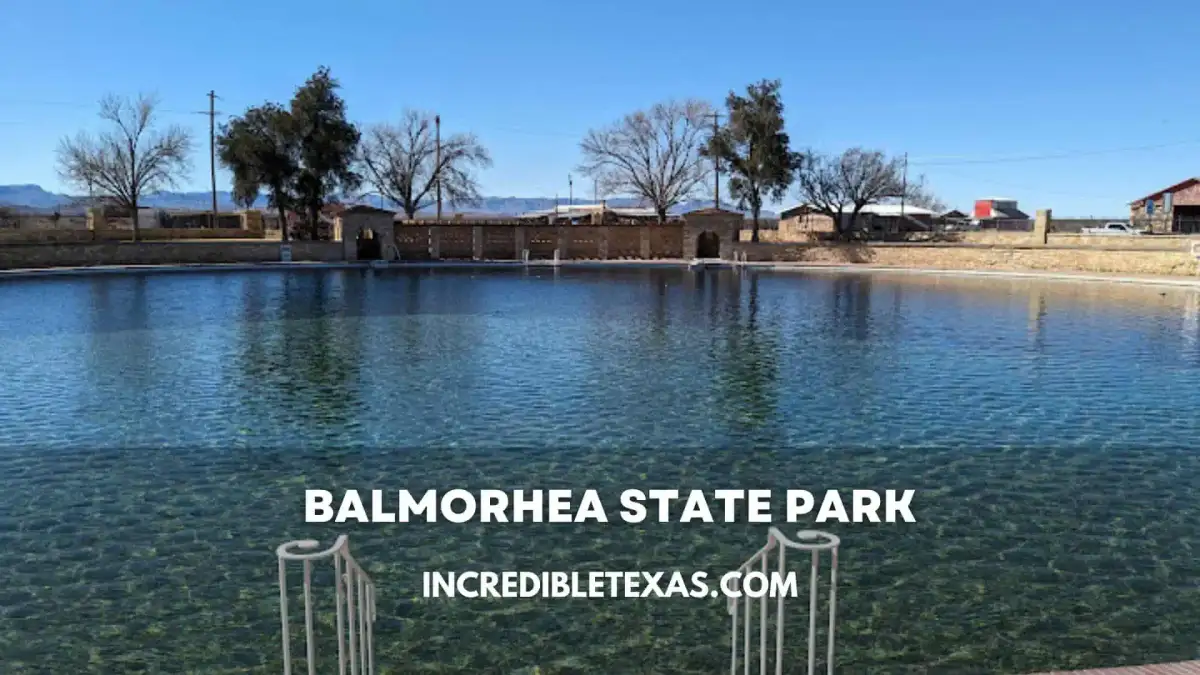
Balmorhea State Park centers on the world's largest spring-fed swimming pool, a 1.3-acre basin holding 3.5 million gallons of artesian water in the foothills of the Davis Mountains. Fed by San Solomon Springs, the pool maintains a steady water temperature between 72°F and 76°F throughout every season. It ranks among the top state parks in Texas for summer swimming, certified scuba diving, and dark-sky camping.
The standard balmorhea state park price for daily admission is $7 for adults ages 13 and older, while children 12 and under enter free. Because total daily capacity is capped at 650 visitors across morning and afternoon permit windows, planning ahead is critical. Reserving your day passes online before setting out ensures guaranteed gate entry.
Daily balmorhea state park hours run from 8:00 AM until 7:30 PM or sunset, whichever comes earlier. Note that the balmorhea state park pool cleaning schedule 2026 closes the aquatic facility from April 27 through May 1, with normal swimming operations resuming on Saturday, May 2.
Plan your visit
Verified
- Location
- 9207 TX-17, Toyahvale, TX
- Hours
- Daily 8am to 7:30pm or sunset, whichever is earlier
- Admission
- $7 adults, free for kids 12 and under
- Best time to go
- Weekdays in April, May, September, and October
At-a-Glance: Park Facilities and Rates
This desert oasis features diverse lodging options, from climate-controlled motel units to pull-through RV campsites. Review official permit fees through the Texas Parks and Wildlife Balmorhea Fees and Facilities Portal before booking your dates.
| Facility / Option | Capacity / Units | Nightly / Entry Rate | Key Amenities | Best For |
|---|---|---|---|---|
| San Solomon Courts (One-Bed) | 2 guests (5 units) | $135 / night | Queen bed, AC, mini-fridge, microwave, TV, private bath | Couples wanting historic comfort |
| San Solomon Courts (Two-Bed) | 4-6 guests (13 units) | $155 - $175 / night | Two double beds or trundle, kitchenettes in select units | Families and small dive groups |
| Electric Campsites (Back-In) | Up to 8 guests (site dependent) | $20 / night | 20/30/50 amp electric, water spigot, picnic table, grill | Tent campers and small travel trailers |
| Electric Campsites (Pull-Through) | Up to 8 guests | $30 / night | Full 50-amp electric, water, pull-through parking pads | Large motorhomes and fifth-wheels |
| Group Campsite | Up to 16 guests (1 site) | $35 / night | Shared picnic pavilion, water hookup, group fire ring | Organized youth clubs and scuba groups |
| Day-Use Pool Access | 650 guests daily cap | $7 adult (12 & under free) | 1.3-acre spring pool, diving boards, bathhouses, picnic grounds | Day-trippers, swimmers, and snorkelers |
Tip
Advance balmorhea state park tickets sell out weeks ahead for summer weekends. Overnight guests with reservations at the San Solomon Courts or campgrounds receive guaranteed pool access without booking separate day-use permits.
2026 Camping and Lodging Guide: Where to Stay
Balmorhea State Park camping allows guests to enjoy the peaceful desert basin after day-use crowds exit at sunset. The high desert night sky in Reeves County offers exceptional stargazing free from urban light pollution. You can secure campsites and lodge rooms up to five months in advance through the state park reservation portal.
Overnight visitors must pay park entry fees in addition to nightly lodging charges unless they hold an active Texas State Parks Pass. Lodging guests also submit a refundable $100 security deposit during check-in at the park headquarters.
San Solomon Springs Courts: Historic Balmorhea State Park Cabins
The San Solomon Springs Courts represent some of the most distinctive balmorhea state park cabins in West Texas. Built by the Civilian Conservation Corps in the 1930s, these 18 motel-style adobe units offer rustic exterior architecture paired with modern climate control.
Guests reading recent san solomon springs courts balmorhea reviews note that rooms feature updated linens, mini-fridges, microwaves, and flat-screen televisions. Rooms deliberately omit telephones, which encourages visitors to unwind in the quiet desert atmosphere.
Campsite Details and Amenities
The grounds provide 34 campsites arranged along paved loops near the restored desert wetland. Each campsite includes a picnic table, an outdoor grill, and direct access to shared modern bathhouses with hot showers.
- Back-In Campsites with Electricity ($20 per night): Includes water spigots and 20, 30, and 50-amp electric service for tents or modest trailers.
- Pull-Through Campsites ($30 per night): Designed specifically for larger RV rigs; tent camping is not permitted on these dedicated paved pull-through sites.
- Group Campsite ($35 per night): Accommodates gatherings up to 16 people with multiple picnic tables and open tent space.
- Cable Television Connections: Available at 15 specific sites for travelers wanting hookups during extended stays.
Travelers wanting higher elevation mountain terrain can pair their stay with Davis Mountains State Park, situated 30 miles south along State Highway 17.
Pet Policy and Park Rules
Pets are welcome across park campgrounds, picnic areas, and paved roadways when kept on a secure leash six feet or shorter. Dogs may not be left unattended at any campsite or tied to trees and shade shelters.
Pets are strictly prohibited inside the fenced swimming pool enclosure, inside San Solomon Courts rooms, and within all park buildings. These restrictions protect sensitive wildlife habitats and maintain water sanitation across the spring basin.
Nearby Lodging Alternatives
When park campsites and courts are fully booked, comfortable accommodations remain available in neighboring communities. Independent motels and modern RV parks operate within a short drive of the park gates.
- El Oso Flojo Lodge (Toyahvale): Located less than one mile from the park entrance, providing southwestern motel rooms and an on-site cafe.
- Cactus Motel (Balmorhea): A classic roadside motel four miles north along Business Interstate 10 with clean, budget-friendly rooms.
- Saddleback Mountain RV Park (Balmorhea): Features full 30/50-amp hookups, fast Wi-Fi, mountain panoramas, and private showers.
- Historic Fort Davis Hotels: Destinations like The Hotel Limpia and Mountainside Inn sit 35 minutes south in the scenic Davis Mountains.
- Pecos Commercial Hotels: National chain hotels, including Best Western and La Quinta Inn, operate 38 miles north along I-10.
How to Plan Your 2026 Trip: Best Time to Visit Balmorhea
Visiting Toyahvale requires thoughtful scheduling due to remote driving distances and regional weather swings. Understanding seasonal temperatures helps ensure a smooth, enjoyable trip to the Trans-Pecos.
Optimal Seasons and Weather
Spring (March through May) and autumn (September through November) offer the best time to visit balmorhea. During these months, afternoon highs hover in the comfortable 70s and 80s, creating an ideal balance with the constant 74°F spring water.
Summer brings afternoon temperatures routinely topping 100°F across the Chihuahuan Desert. While the cool water offers relief, guests must manage intense sun exposure and book tickets weeks in advance. Winter days remain mild with highs in the 60s, though night temperatures frequently drop below freezing.
What to Pack for Your Visit
Because the area has limited retail outlets, packing proper outdoor gear prevents unexpected complications during your outing.
- Rubber-Soled Water Shoes: The natural limestone pool floor has mossy sections and irregular steps that become slick without traction footwear.
- Snorkel Masks and Fins: The facility does not rent swim gear, and underwater visibility routinely exceeds 80 feet.
- Reef-Safe Mineral Sunscreen: Standard oxybenzone sunscreens can harm the endangered desert pupfish population that shares the pool.
- Shade Canopies and Camp Chairs: Grassy areas outside the pool fence fill quickly; pop-up shade shelters are permitted on open turf.
- Full Cooler with Ice and Water: There are no restaurants or snack bars inside park boundaries.
Balmorhea State Park Pool: Swimming and Snorkeling Guide
The historic swimming basin ranks as an engineering triumph of the New Deal era. Constructed in a circular U-shape around San Solomon Springs, the balmorhea spring fed pool holds over 3.5 million gallons of natural artesian water that circulates continuously into surrounding irrigation canals.
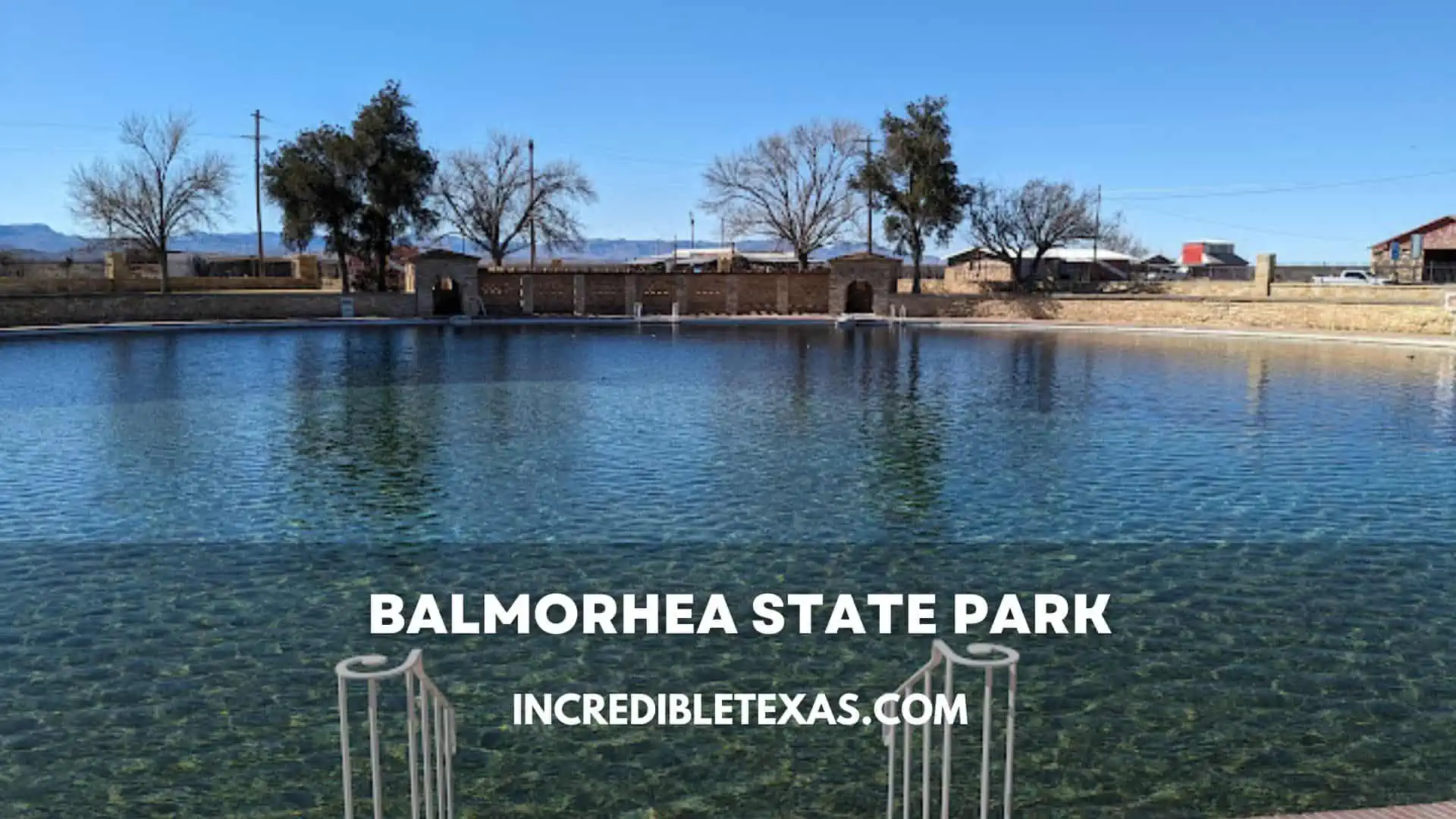
A shallow perimeter with concrete steps accommodates younger swimmers, while two diving boards anchor the deeper central channel. Swimmers can drift across open limestone ledges or explore aquatic plants swaying in the natural current.
A Living Ecosystem
Unlike chlorinated swimming facilities, the san solomon springs pool functions as a protected wild refuge. The crystal-clear artesian water provides critical habitat for two endangered species, the Comanche Springs pupfish and the Pecos gambusia.
Snorkelers frequently spot headwater catfish, tetras, softshell turtles, and schools of pupfish along the sunlit limestone walls. Park rules strictly prohibit catching, chasing, or feeding any wildlife inside the spring enclosure.
Scuba Diving in Balmorhea State Park
Certified scuba diving in balmorhea state park offers one of the most distinctive freshwater dive experiences in North America. Divers drop down to depths of 25 feet near the central artesian vents, where spring water bubbles through deep rock fissures.
All divers must pay a $5 daily dive fee, present a valid certification card, sign a liability waiver, and dive with a certified buddy. Review safety guidelines through the Texas Parks and Wildlife Swimming and Scuba Diving Guidelines before planning your checkout dive.
The facility does not operate an on-site dive shop or air compressor. Divers must bring all necessary tanks, regulators, and weights from outfitting shops in Midland, Odessa, or El Paso before arriving at the park. For other freshwater excursions, explore our guide to scuba diving destinations in Texas.
West Texas Road Trip: Things to Do Near Balmorhea State Park
Toyahvale serves as a scenic centerpiece for broader regional adventures. Travelers discover plenty of rewarding things to do near balmorhea state park that highlight the history and rugged scenery of the Trans-Pecos.
Head 35 minutes south along State Highway 17 into Fort Davis to tour the Fort Davis National Historic Site, an exceptionally preserved 19th-century frontier military post. Continue up Mount Locke to attend an evening Star Party at the University of Texas McDonald Observatory.
Further south, explore the art installations of Marfa before trekking toward the rugged desert canyons of Big Bend National Park. Travelers heading east along Interstate 20 can also detour to slide down the massive dunes at Monahans Sandhills State Park for a classic Permian Basin adventure.
Local Dining and Food Recommendations
Toyahvale is a quiet unincorporated community, so dining choices cluster in nearby balmorhea texas and neighboring Pecos. Visitors should plan meals and grocery stops ahead of time.
Cueva de Leon in Balmorhea serves hearty breakfast burritos, enchiladas, and homemade flour tortillas just four miles north of the park. For full grocery selections, stock up at United Supermarkets in Pecos before setting up camp.
Photography and Videography at the Park
With its deep turquoise water framed by the rust-colored Davis Mountains, the spring basin provides outstanding photographic opportunities. Morning light between 8:30 AM and 10:00 AM illuminates the pool basin with minimal surface glare.
Underwater camera rigs and waterproof action cams excel here due to horizontal visibility exceeding 80 feet. Unmanned aerial drones are prohibited in all Texas state parks without an official filming permit issued by the park superintendent.
Balmorhea State Park Map and Driving Directions
The park entrance at 9207 TX-17 in toyahvale tx sits four miles south of Interstate 10 Exit 206. Download the official Texas Parks and Wildlife Balmorhea Park Map PDF to navigate campsite loops, bathhouses, and cienega boardwalks.
From Interstate 10, take Exit 206 and travel south on State Highway 17 for four miles until reaching the park gate on your right. The grounds sit roughly 120 miles southwest of Midland-Odessa and 190 miles east of El Paso.
Wildlife Conservation: Protecting the San Solomon Ecosystem
This desert oasis is not merely a public swimming hole; it is a critical ecological sanctuary. In the 1990s, Texas Parks and Wildlife reconstructed a native desert cienega wetland to provide secure refuge for endangered aquatic species.
Visitors can walk along raised wooden boardwalks that wind through the cienega reeds. The viewing gazebo features an underwater window where visitors watch pupfish, turtles, and aquatic insects without disturbing the delicate marsh ecosystem.
The Geology of San Solomon Springs: A Desert Miracle
San Solomon Springs ranks as one of the largest artesian spring systems in the American Southwest. The springs pump an average of 22 to 28 million gallons of clear mineral water to the surface every day.
Detailed natural history documentation from the Texas Parks and Wildlife Balmorhea Nature and Springs Guide explains how constant subterranean water flows support the desert cienega and agricultural canals. Underground pressures push water upward along the Balmorhea fault zone from deep limestone fractures.
The Edwards-Trinity Plateau Aquifer
The primary water source feeding San Solomon Springs is the Edwards-Trinity Plateau aquifer system. Rain and mountain runoff in the Davis and Apache mountain ranges seep into permeable limestone layers deep underground.
As groundwater flows through subterranean rock conduits, it absorbs beneficial minerals while remaining filtered of surface sediment. This ancient geological journey gives the spring pool its remarkable horizontal clarity and reliable flow rate.
The CCC Legacy: Building an Oasis (1934-1941)
The infrastructure at the site stands as an enduring achievement of President Roosevelt's Civilian Conservation Corps. In 1934, young men from CCC Company 1856 arrived at Toyahvale to transform raw artesian springs into a public recreational oasis.
Over seven years, CCC workers quarried local limestone, molded thousands of sun-dried adobe bricks, and hand-carved heavy wooden vigas. Learn more about New Deal park projects through the Texas Parks and Wildlife Balmorhea History Archive. The craftsmanship makes this park one of the best places to visit in Texas for historic architecture enthusiasts.
Company 1856: The Men Behind the Pool
The enrollees of Company 1856 lived in structured barracks on-site while enduring intense West Texas summer heat and winter freezes. They excavated millions of cubic feet of earth to form the pool basin and built stone retaining canals that still channel water to Reeves County farms.
Historical accounts documented by the Texas State Historical Association Balmorhea History detail how the CCC transformed an arid desert settlement into an oasis that has welcomed generations of travelers.
People Also Ask: Balmorhea Visitor FAQ
Is Balmorhea State Park open in 2026?
Yes, the park is open daily year-round for day-use swimming and overnight camping. The spring pool closes for annual cleaning from April 27 through May 1, 2026, and reopens for regular swimming on May 2.
Day-use gates open each morning at 8:00 AM and close at 7:30 PM or sunset. Advance reservations remain required due to the park's 650-person daily visitor capacity limit.
How deep is the pool at Balmorhea?
The pool depth ranges from shallow wading areas of 2 to 3 feet up to a maximum depth of 25 feet near the central diving well and artesian spring vents. This depth accommodates casual waders, lap swimmers, and certified scuba divers.
Natural limestone ledges and submerged rock shelves create varying underwater contours. Swimmers should use caution around deeper zones where lifeguards are not on duty.
Can I bring my dog to the park?
Dogs are permitted on standard six-foot leashes throughout park campgrounds, picnic areas, and paved walking paths. However, pets are strictly banned inside the fenced swimming pool perimeter, inside San Solomon Courts rooms, and in park buildings.
Owners must clean up after their pets and never leave them unattended at campsites or inside hot vehicles. Bring plenty of fresh water for pets during desert summer excursions.
How to make Balmorhea State Park reservations?
You can make balmorhea state park reservations online through the Texas State Parks reservation system or by calling the customer service center at (512) 389-8900. Day-use passes are available up to 30 days in advance, while camping and lodging can be booked five months ahead.
Day-use tickets are issued for specific morning (8:00 AM) or afternoon (3:00 PM) arrival windows. Travelers cannot enter before their scheduled permit time slot.
What is the cost of park entry?
Daily entry costs $7 for adults ages 13 and older, while children 12 and under enter free. Scuba divers pay an additional $5 activity fee during check-in at headquarters.
Holders of the Texas State Parks Pass receive free entry for themselves and their car passengers. Campsite and lodging fees are charged separately from standard daily entrance permits.
Can you bring food and drinks into the pool area?
Visitors can bring food, ice chests, and non-alcoholic beverages into the pool grounds, but all glass containers and alcoholic beverages are strictly prohibited. Park staff inspect coolers at the pool gate entrance.
Cooking and portable charcoal or propane grills are not allowed within the fenced pool perimeter. Guests can use permanent grills and picnic tables located throughout the outer day-use grounds.
Are there lockers available at the pool?
No, the facility does not provide public lockers for personal gear. Visitors should store valuables locked out of sight inside their vehicles before heading to the pool.
Restrooms, outdoor rinse showers, and dressing rooms are available in the bathhouses adjacent to the pool deck. These facilities close 30 minutes before the main gate locks at sunset.
What are the scuba diving requirements at Balmorhea?
All scuba divers must hold a recognized certification card, pay the $5 dive fee, and sign a state park liability agreement before entering the water. Solitary diving is forbidden; all divers must use the buddy system.
Instructors conducting classes must have proof of liability insurance on file with park headquarters. Divers must bring all equipment and filled air cylinders, as the park offers no rental gear or air compressor service.
When is the best time to visit the springs?
The most comfortable time to visit is during April, May, September, and October when desert air temperatures remain in the pleasant 70s and 80s. Weekdays during these shoulder months feature smaller crowds and easy campsite availability.
While summer offers warm weather for swimming, intense desert heat and crowded weekend pool decks require early planning and sun protection. Winter visits offer peaceful solitude, though morning air temperatures can be chilly.
Final Thoughts on the Balmorhea Experience
Whether planning a summer road trip or an off-season diving retreat, balmorhea state park texas delivers an unforgettable aquatic experience in the high desert. Among all west texas state parks, this desert oasis stands out for its pure artesian water and rich history.
Much like hiking through Palo Duro Canyon State Park, visiting this balmorhea tx state park connects travelers to the natural character of the state. Reserve your day pass or campsite early, pack reef-safe sunscreen, and enjoy this historic desert sanctuary.