Phil Hardberger Park San Antonio is a signature 330-acre urban wildlife sanctuary on the city’s North Side. Divided across Wurzbach Parkway, the park is unified by the Robert L.B. Tobin Land Bridge, giving outdoor travelers miles of natural trails, dual fenced dog parks, and dedicated nature playscapes.
Key takeaways
- Phil Hardberger Park is free to enter and operates daily from sunrise to sunset.
- The park features the 150-foot-wide Robert L.B. Tobin Land Bridge and elevated Skywalk spanning Wurzbach Parkway.
- Two primary trailheads offer free parking: 8400 NW Military Highway (West) and 13203 Blanco Road (East).
- Reaching the Land Bridge requires a flat half-mile walk (one mile round trip) from either primary parking area.
- Leashed pets are welcome across all trails, with dedicated off-leash dog parks located on both the East and West sides.
Phil Hardberger Park San Antonio Quick Facts
Phil Hardberger Park San Antonio protects more than 300 acres of historic dairy farm terrain, oak savannahs, and restored native wetlands. It serves as one of the most distinctive destinations on our curated list of parks in San Antonio.
According to the official Phil Hardberger Park Conservancy Overview, the grounds represent the former Voelcker dairy farm dating back to the nineteenth century. Today, this municipal property balances public recreation with ecological preservation for regional wildlife.
| Facility / Amenity | Location Side | Trail Distance from Parking | Surface Type | Primary Highlights |
|---|---|---|---|---|
| Tobin Land Bridge | Central Park Spine | 0.5 miles from East or West lot | Compact crushed granite | 150-foot wildlife crossing & native plantings |
| Skywalk Trail | West of Land Bridge | 0.4 miles from West lot | Steel grating & wood canopy | 18-foot elevated treetop observation path |
| Urban Ecology Center | West (NW Military Hwy) | Adjacent to parking | Paved concrete & gardens | Educational exhibits, classrooms & restrooms |
| Salado Outdoor Classroom | East (Blanco Road) | Adjacent to parking | Decomposed granite & limestone | Shaded pavilion, native gardens & restrooms |
| Fenced Dog Parks | Both East & West sides | Less than 200 yards | Turf, mulch & agility obstacles | Dedicated small dog and large dog play zones |
The park’s unique layout requires guests to plan parking around their primary activity, whether hiking the perimeter loops or exploring the canopy boardwalk.
Is Phil Hardberger Park free to visit?
Phil Hardberger Park is 100% free to enter with no gate charges or day-use fees required. Both paved parking lots provide free parking stalls for cars, vans, and school buses.
Visitors can enjoy all picnic pavilions, dog parks, interpretive nature trails, and the Robert L.B. Tobin Land Bridge without purchasing tickets. Special weekend nature programs organized by the Conservancy are also typically free to the public.
What time does Phil Hardberger Park open?
The park opens every morning at sunrise and closes precisely at sunset year-round. Because opening and closing hours change with seasonal daylight hours, travelers should verify local sunset times before starting late afternoon hikes.
Park police strictly enforce the sunset closing rule. Vehicles left inside the entry gates after nightfall face parking citations or municipal towing fees.
Park Entrances, Parking Lots, and Which Side to Use
Phil Hardberger Park features two separate primary entrances separated by Wurzbach Parkway, alongside a third trailhead at Voelcker Lane. Driving between the two primary lots takes approximately seven minutes via major roadways.
The West Entrance sits at 8400 NW Military Highway, hosting the Urban Ecology Center, children’s play areas, and basketball courts. The East Entrance sits at 13203 Blanco Road, housing the Salado Outdoor Classroom and the paved Salado Creek Greenway connector. Unlike the rugged wilderness paths at Friedrich Wilderness Park, both Hardberger lots offer modern amenities and level surfaces.
Official updates from the Phil Hardberger Park Trip Planning Guide confirm that both lots fill quickly on fair-weather weekends between 10:00 AM and 2:00 PM. Arriving before 9:00 AM guarantees convenient parking stalls near the trailheads.
Which entrance should you use for the Land Bridge?
Visitors can reach the Land Bridge from either the NW Military Highway or Blanco Road parking lots with nearly identical walking distances. Both starting points require a gentle one-half-mile walk along flat, well-maintained paths.
Walking from the West Entrance leads visitors along the Savanna Loop and through the elevated Skywalk leading directly onto the bridge. Walking from the East Entrance guides visitors along the shaded Water Loop path.
Where should you park with kids, dogs or bikes?
Families with young children usually prefer the West Entrance on NW Military Highway because it offers immediate access to the Nature Play Area and shaded picnic tables. Dog owners can park comfortably on either side, as both entrances feature expansive, double-gated canine runs within short walking distance of the parking bays.
Cyclists should park at the East Entrance on Blanco Road to connect directly with the paved multi-use Salado Creek Greenway trail system. Bicycles can access the main park trails but must observe pedestrian courtesy rules.
Robert L.B. Tobin Land Bridge and Skywalk Experience
The Robert L.B. Tobin Land Bridge represents an engineering milestone in Texas wildlife conservation. Engineered as a living conservation corridor, the structure spans six lanes of Wurzbach Parkway to reconnect divided natural habitats.
Technical details from the official Tobin Land Bridge Guide note that the bridge measures 150 feet wide at its crest and 165 feet wide at its base. The structure supports deep soil beds, native shrubs, live oaks, and rain-catchment systems designed to sustain native animals, following habitat principles outlined by the Texas Parks and Wildlife Department Urban Wildlife Program.
Unlike standard concrete pedestrian overpasses, the Land Bridge provides quiet natural footing surrounded by dense green vegetation. For visitors seeking another tranquil water and stone landscape in the city, exploring the historic Japanese Tea Garden makes an excellent companion excursion.
How far is the Land Bridge from parking?
The walk to the Land Bridge measures slightly over one-half mile from either primary parking lot. A standard walk takes 15 to 20 minutes each way, meaning visitors should prepare for at least a one-mile round trip on foot.
Because the trail runs through open oak savannas with moderate midday sun exposure, visitors should carry filled water containers. Sturdy athletic shoes or supportive walking sandals perform well on the crushed granite paths.
Can you bike on the Phil Hardberger Park Land Bridge?
Cyclists are welcome to take their bikes to the Land Bridge, but city regulations require all riders to dismount and walk their bicycles across the structure. Walking bicycles protects other pedestrians and prevents startling wildlife moving through the corridor.
Bicycles, skateboards, roller skates, and motorized personal scooters are strictly prohibited on the elevated Skywalk. The Skywalk pathway is reserved exclusively for foot traffic to maintain safety among tree-canopy viewing platforms.
Phil Hardberger Park Trails, Shade, and Restroom Access
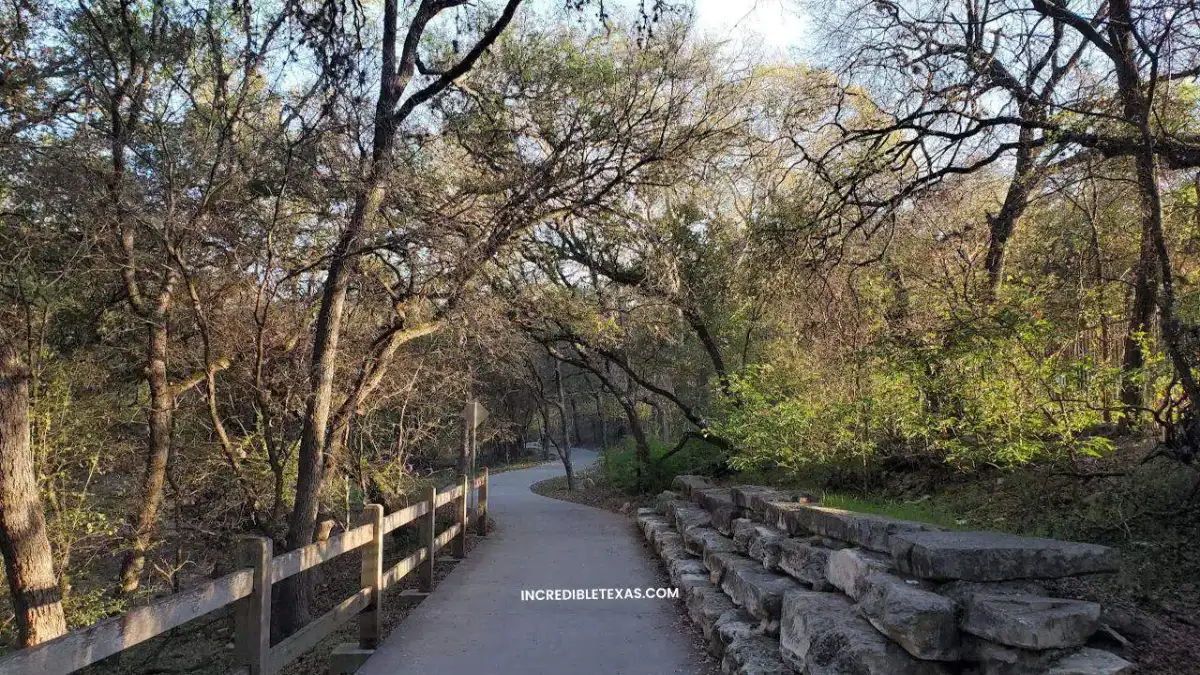
The park maintains approximately eight miles of interconnected hiking trails looping through mature post oak savannas, rock outcrops, and cedar elm woodlands. The trails feature gentle elevation grades suitable for all fitness levels.
The West Side offers the 1.4-mile Savannah Loop and the 0.8-mile Oak Loop, guiding hikers past wildflower meadows and restored wetlands. The East Side features the 1.0-mile Water Loop and the 0.8-mile Geology Trail, introducing visitors to limestone formations and shaded riparian pockets. While central city stops like Brackenridge Park feature paved urban walkways, Hardberger preserves native soil and gravel paths.
According to the official Park Amenities and Facilities Directory, visitors will find permanent indoor restrooms at the Urban Ecology Center and Salado Outdoor Classroom. Additional portable restrooms and hand sanitizer stations sit near the primary parking areas.
Which Phil Hardberger Park trail should you choose?
Travelers short on time should choose the Water Loop from the Blanco Road entrance or the Savanna Loop from the Military Highway entrance. Both short routes provide scenic nature walks that easily link to the Land Bridge.
Hikers seeking maximum exercise can string together the Oak Loop, Land Bridge, and Water Loop for a rewarding four-mile circuit. All primary junctions feature directional wooden signage and trail maps.
Does Phil Hardberger Park have restrooms?
Yes, Phil Hardberger Park offers clean, accessible restroom facilities at both major developed trailheads. Restrooms at the Urban Ecology Center and Salado Classroom feature running water, flushing toilets, and baby-changing stations.
Water bottle refill fountains are available adjacent to both main restroom buildings. Visitors should fill bottles before heading toward the interior trails, as drinking water stations do not exist out on the Land Bridge.
Dog Parks, Playgrounds, and Family Planning
Phil Hardberger Park ranks among the most dog-friendly public spaces in South Texas, offering dedicated off-leash enclosures on both the East and West sides. The 1.5-acre West Dog Park and 1.8-acre East Dog Park feature separate fenced areas for large and small canines.
Rules outlined in the Pets in the Park Guidelines require owners to maintain voice control and keep dogs on standard non-retractable six-foot leashes when outside the dog pens. While south San Antonio residents frequent the dog runs at Pearsall Park San Antonio TX, North Side dog lovers rely on Hardberger’s shaded groves.
Children can explore two distinct play zones: the traditional playground near Blanco Road and the Nature Play Area near NW Military Highway. The Nature Play Area features climbing logs, balance beams, and sand pits constructed from reclaimed cedar and fallen oak limbs.
Tip
Visit the dog parks during early morning hours in the summer; ground temperatures stay cooler, and canine play pools remain freshly filled.
Are dogs allowed at Phil Hardberger Park?
Yes, dogs are welcome throughout Phil Hardberger Park as long as they stay on a six-foot handheld leash. Off-leash freedom is permitted exclusively within the double-gated fences of the designated dog parks.
Owners must clean up after their pets immediately. Complimentary waste bag dispensers and trash receptacles sit at every trail intersection and parking entry gate.
Is Phil Hardberger Park good for kids?
Phil Hardberger Park is an exceptional park for children of all ages. Wide trails accommodate heavy-duty jogging strollers, and interactive education stations keep youngsters engaged along the paths.
The Skywalk boardwalk provides an exciting perspective 18 feet above the forest floor, allowing children to spot roosting songbirds and native wildlife. Shaded picnic pavilions make lunch breaks comfortable after a morning of exploration.
Frequently Asked Questions About Phil Hardberger Park
What are the hours for Phil Hardberger Park?
Phil Hardberger Park is open seven days a week from sunrise to sunset year-round. Gates close automatically when the sun sets, and unauthorized vehicles parked overnight are subject to municipal ticketing.
Is Phil Hardberger Park free to enter?
Yes, admission to Phil Hardberger Park is completely free for all visitors. Parking at both major lots on NW Military Highway and Blanco Road is also free.
Where do you park for the Land Bridge?
Visitors can access the Land Bridge from either the West Entrance at 8400 NW Military Highway or the East Entrance at 13203 Blanco Road. Both parking areas sit roughly one-half mile walking distance from the bridge.
Can dogs walk across the Land Bridge?
Yes, leashed dogs are permitted to walk with owners along the designated pedestrian side of the Robert L.B. Tobin Land Bridge. Dogs must remain on a standard non-retractable six-foot leash at all times.
What should you bring to Phil Hardberger Park?
Essential items include plenty of drinking water, comfortable walking shoes for crushed granite trails, sun protection, dog waste bags, and a mobile phone to access trail maps.