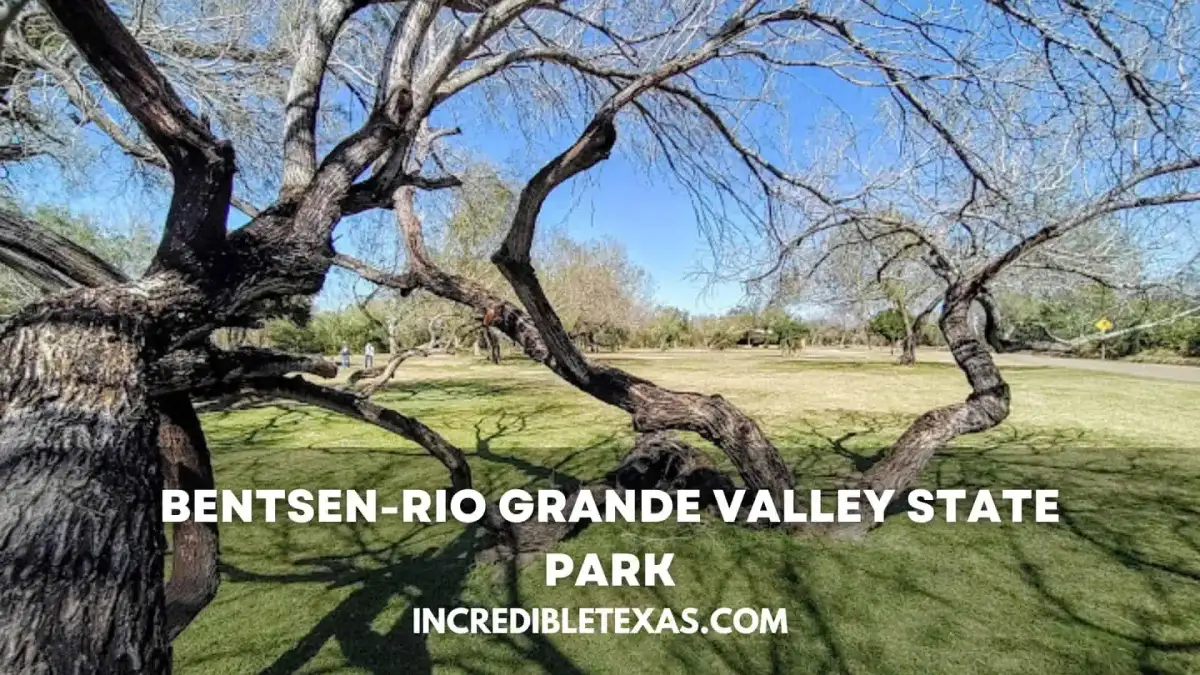
Bentsen-Rio Grande Valley State Park in Mission, Texas, serves as the operational headquarters of the World Birding Center. Spanning 797 protected acres along the United States and Mexico border, this vehicle-free ecological refuge shelters more than 360 documented bird species and 250 butterfly varieties. Nature enthusiasts rank it among the finest state parks in Texas for observing subtropical wildlife in old-growth riverside woodlands.
Key takeaways
- Bentsen State Park charges $5 daily admission for adults aged 13 and older, while children 12 and under enter free.
- Private vehicles are prohibited past the park headquarters to maintain a quiet sanctuary, supported by a free hourly shuttle tram and $5 daily bike rentals.
- The property anchors the nine-site regional birding network, providing critical habitat for South Texas specialty species like the Green Jay and Altamira Oriole.
- Five primitive walk-in tent campsites are available for $15 per night roughly three-quarters of a mile from parking, with no drive-in RV sites inside the gates.
- A two-story Hawk Observation Tower features a 210-foot wheelchair-accessible ramp offering panoramic canopy views across the Rio Grande corridor.
What to Expect at Bentsen-Rio Grande Valley State Park
Bentsen-Rio Grande Valley State Park is a 797-acre protected subtropical sanctuary in Mission, Texas, serving as the headquarters of the World Birding Center. The preserve protects rare riparian woodlands, resaca oxbow lakes, and thornscrub harboring more than 360 recorded bird species. It functions as an essential migratory rest stop where the Central and Mississippi flyways converge.
Historians and local naturalists sometimes refer to the preserve as Bentsen Rio Grande State Park, which was originally deeded to the state in 1944. Serving as the official World Birding Center headquarters, this preserve unites nine distinct wildlife sites spanning 120 miles. As documented in the eBird Bentsen-Rio Grande Valley Field Sightings Checklist, field observers regularly log rare Mexican strays that cross the river boundary into South Texas.
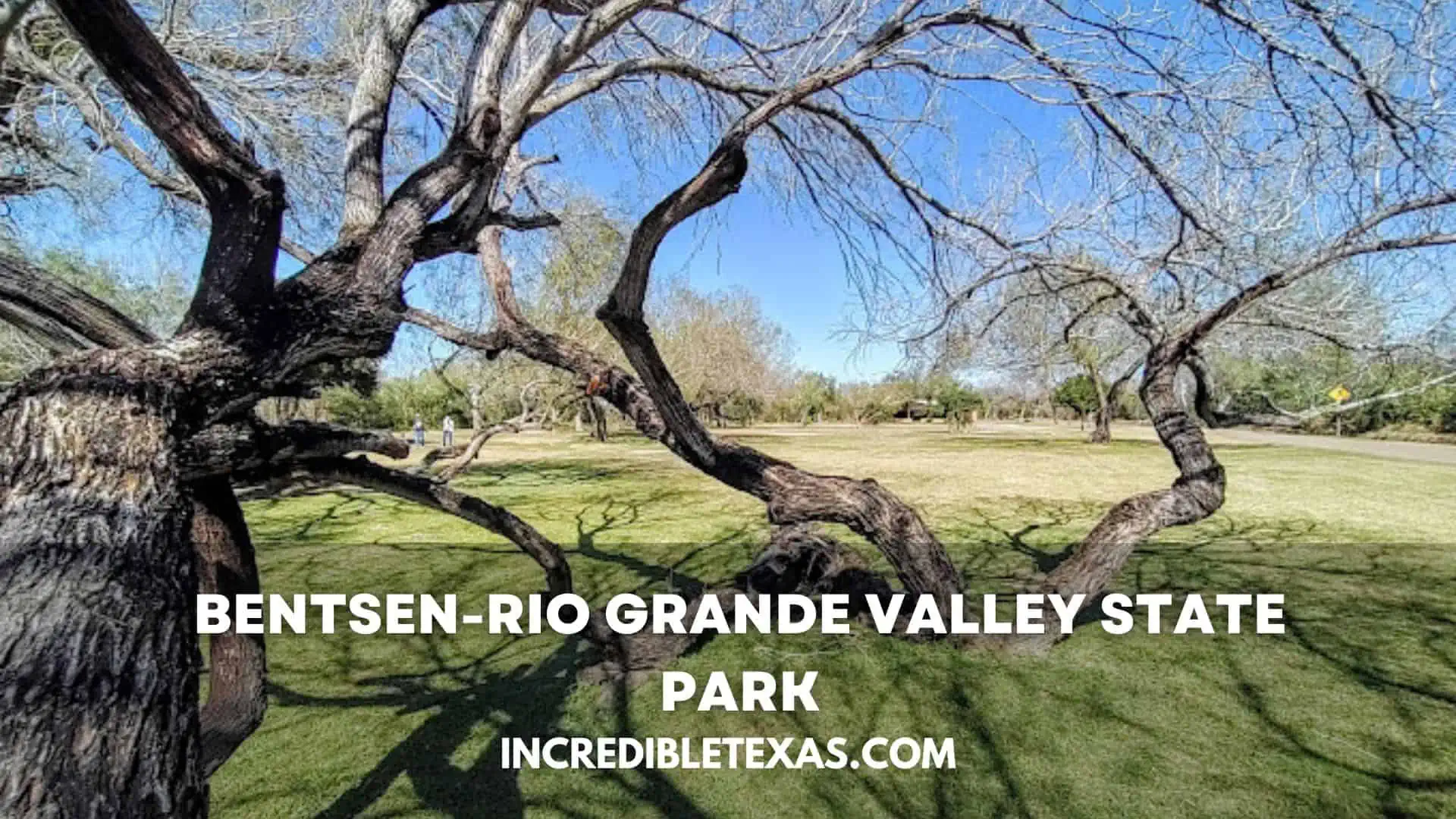
Because the sanctuary maintains active feeding stations near the entrance complex, birders often secure remarkable sightings within minutes of arrival. Photographers can set up tripods at shaded viewing blinds to watch Green Jays, Altamira Orioles, and Long-billed Thrashers feeding at close range. Among the top Rio Grande Valley birding parks, this location delivers unmatched barrier-free access for nature lovers.
Bentsen State Park Hours and Entrance Fees
The park grounds open daily from 7:00 AM to 10:00 PM, with the Visitor Center and park store operating from 8:00 AM to 4:30 PM. Under these consistent Bentsen Rio Grande Valley State Park hours, the property easily accommodates early birders and evening nightjar spotters alike.
The standard Bentsen State Park entrance fee is $5 per adult, while children 12 and under receive free entry. Self-pay fee stations remain available at the entrance parking lot for early morning or evening arrivals.
Entrance guidelines outlined in the Texas Parks and Wildlife Bentsen-Rio Grande Valley Fee Schedule specify that organized groups of 10 or more receive a discounted day-use rate of $3 per person with prior park notification. Travelers holding an annual Texas State Parks Pass receive unlimited free entry for their entire personal vehicle passenger group, making it an excellent investment when touring multiple famous landmarks in Texas.
- Park Grounds Hours: 7:00 AM to 10:00 PM daily throughout the year
- Visitor Center and Store: 8:00 AM to 4:30 PM daily (closed on major state holidays)
- Standard Adult Admission: $5 per person (ages 13 and older)
- Youth Admission: Free for children 12 years and under
- Annual State Parks Pass: $70, granting unlimited day access across all TPWD parks
Tip
Purchase or renew your Texas State Parks Pass at the headquarters desk before beginning your morning hike. The pass waives day-use entry fees at Bentsen and nearby parks such as Estero Llano Grande and Resaca de la Palma.
Car-Free Regulations, Free Tram Schedule, and Bike Rentals
The sanctuary operates a strict vehicle-free policy beyond the headquarters gate to eliminate engine noise and protect wildlife. Visitors travel the interior by walking, renting bicycles for $5 per day, or riding the complimentary open-air shuttle tram. All personal passenger cars, trucks, and motorcycles must remain in the designated visitor parking lot.
The free open-air shuttle tram provides scheduled transportation throughout the day, stopping at major trail junctions, photo blinds, and the Hawk Tower. Reviewing the Bentsen State Park tram schedule before heading out ensures smooth connections across the preserve.
During the peak winter birding season running from November through April, the tram departs hourly between 9:00 AM and 4:00 PM. During the warmer off-peak months from May through October, tram service operates Thursday through Sunday from 9:00 AM to 12:00 PM.
Visitors who prefer exploring on two wheels can rent single-speed cruiser bicycles at the park store for $5 per day. The preserve's flat, paved interior roadways total roughly 3.5 miles, providing smooth cycling routes under shaded ebony and hackberry trees. Bicycles are permitted on paved avenues and designated paths, but cyclists must dismount and park at trail racks before walking dirt footpaths.
Top Hiking Trails, Bird Blinds, and the Hawk Tower
The park offers 7 miles of hiking and biking paths connecting enclosed bird blinds, resaca viewpoints, and the signature two-story Hawk Observation Tower. The tower features a 210-foot ADA-accessible ramp that lifts birders above the tree canopy for seasonal raptor counts. Serious ornithologists consider Bentsen State Park birding among the finest field outings in North America.
According to the official Texas Parks and Wildlife Bentsen-Rio Grande Valley Trail Map, trail routes range from quick shaded strolls to longer wilderness loops along the river. Raptor counters gather at the Hawk Observation Tower Bentsen to document migrating broad-winged hawks, hook-billed kites, and zone-tailed hawks. Navigating Bentsen State Park trails is effortless thanks to smooth packed-gravel and paved surfaces:
- Rio Grande Trail (1.8 miles): A pedestrian-only pathway leading through dense river woodlands to scenic overlooks facing northern Mexico. Bicycles are prohibited on this path to preserve quiet foot travel.
- Resaca Vieja Trail (1.3 miles): A scenic dirt loop flanking an ancient oxbow lake channel, renowned for kingfishers, waders, and water turtles.
- Kiskadee Trail (0.3 miles): A short, accessible trail connecting tram stop two to enclosed photography blinds equipped with running water drip basins.
- Green Jay Trail (0.3 miles): A paved pathway linking the central trailhead to secluded feeding perches surrounded by native granjeno and mesquite brush.
Travelers exploring urban conservation networks in Hidalgo County can compare the preserve's river woods with the historic adobe estate and birding trails at Quinta Mazatlan in McAllen. Birders extending their route upriver toward Zapata County can pair this stop with the brushland trails and lakeshore birding at Falcon State Park.
Bentsen State Park vs. Santa Ana National Wildlife Refuge
Choosing between Bentsen State Park and Santa Ana National Wildlife Refuge depends on your preferred walking distance and viewing style. Bentsen provides paved surfaces, accessible tram rides, and concentrated feeder stations, while Santa Ana features 2,088 acres of wild old-growth thorn forest requiring extensive foot travel. Most birding travelers spending multiple days in Hidalgo County visit both sanctuaries to maximize species checklists.
As documented in the U.S. Fish and Wildlife Service Santa Ana Refuge Overview, Santa Ana protects extensive interior wetlands along the Rio Grande corridor without entrance fees. However, Santa Ana no longer operates daily tram tours, requiring guests to hike several miles on unpaved dirt trails. The comparison table below highlights key logistical differences to help plan your itinerary.
| Destination | Managing Agency | Size & Habitat | Entry Fee | Getting Around | Prime Experience |
|---|---|---|---|---|---|
| Bentsen-Rio Grande Valley State Park | Texas Parks & Wildlife (TPWD) | 797 acres; resacas & thornforest | $5 adults (13+); kids 12 & under free | Paved roads, free tram, $5 bike rentals | Feeder blinds, Hawk Tower, paved strolls |
| Santa Ana National Wildlife Refuge | U.S. Fish & Wildlife (USFWS) | 2,088 acres; old-growth thornscrub | Free entry (federal refuge) | Foot hiking only (dirt paths) | Wilderness trekking, canopy rope bridge |
Note
Bentsen is ideal for travelers seeking relaxed feeder watching, families with strollers, or visitors with limited walking endurance. Santa Ana appeals to hikers looking for deep forest tracts and backcountry birding away from structures.
South Texas Specialty Birds and Wildlife to Watch For
The sanctuary is globally renowned for South Texas specialties rarely spotted elsewhere in North America, including the Green Jay, Plain Chachalaca, Altamira Oriole, and Hook-billed Kite. More than 250 species of butterflies also flourish around the park's resacas. Bird watchers travel from around the world to record these unique species on their life lists.
The regional ecosystem supports animals adapted to subtropical scrub and riparian wetlands. Prominent species to watch for along the trails include:
- Green Jay: Striking tropical birds with bright green bodies, yellow underparts, and blue crowns, commonly seen feeding in noisy flocks near the headquarters.
- Plain Chachalaca: Large, pheasant-like birds that roost high in ebony trees, famous for their raucous chorus at sunrise and dusk.
- Altamira Oriole: The largest oriole species in North America, recognizable by its brilliant orange breast and long, hanging woven pouch nests.
- Hook-billed Kite: A secretive tropical raptor that feeds primarily on tree snails in dense hackberry and cedar elm groves.
- Butterflies: Showy species including the Malachite, Mexican Bluewing, and Blue Metalmark drawn to flowering mistflower and heliotrope patches.
Mammals also inhabit the brush, including javelinas, bobcats, coyotes, and nine-banded armadillos. Early morning visitors walking quietly along the Resaca Vieja Trail frequently spot Texas tortoises foraging in sunny clearings.
Bentsen State Park Camping and Nearby Accommodations
Overnight stays inside the preserve are limited to five primitive walk-in tent campsites priced at $15 per night, located roughly three-quarters of a mile from parking. Bentsen State Park camping delivers an unforgettable dawn chorus experience, but the park provides no cabins or RV hookup sites. Campers must carry all personal gear, drinking water, and sleeping equipment from the headquarters parking lot to the campsite pads.
Each walk-in campsite features a picnic table, lantern post, and ground fire ring. Modern restrooms with hot showers are situated approximately three-quarters of a mile away near the park headquarters. Campers must pack out all personal trash to prevent attracting wildlife into the tent loop.
Travelers requiring electrical hookups, motorhome pads, or solid roof accommodations will find excellent private alternatives immediately outside the park gates. Several commercial RV resorts along Bentsen Palm Drive cater specifically to winter birders, offering full hookups, heated swimming pools, and community clubhouses. Traditional hotel lodging is available less than 15 minutes away along Interstate 2 in Mission and McAllen.
Attractions to Pair with Your Bentsen State Park Visit
Located off FM 2062, Bentsen Rio Grande Valley State Park Mission TX sits just five miles south of downtown Mission. Travelers can easily explore neighboring conservation hubs, including the National Butterfly Center just minutes away, the historic La Lomita Chapel, and local cultural festivals. Pairing the morning birding window with nearby agricultural and wildlife attractions creates a rewarding South Texas itinerary.
Just one mile east along Bentsen Palm Drive, the National Butterfly Center Conservation Grounds protects 100 acres of dedicated botanical gardens and thornscrub. Visitors can walk peaceful outdoor gardens that host more than 200 wild butterfly species during peak autumn and spring blooms.
Culture enthusiasts visiting in late January can celebrate the annual Texas Citrus Fiesta in Mission, featuring the historic Parade of Oranges, community fairs, and orchard costume galas. Travelers extending their journey toward the Gulf Coast can also drive eastward to explore ancient ebony forests and oxbow lakes at Resaca de la Palma State Park in Brownsville.
Frequently Asked Questions About Bentsen State Park
Can you drive your personal vehicle into the park?
No, private vehicles are prohibited past the Visitor Center parking lot to protect wildlife and reduce noise across the preserve. Visitors explore the park on foot, rent bicycles from the park store for $5 per day, or ride the free park shuttle tram.
How much does daily admission cost?
Daily entrance costs $5 per adult aged 13 and older, while children 12 and under enter free of charge. Visitors with an active Texas State Parks Pass receive complimentary admission for themselves and their vehicle passengers.
What is the free tram shuttle schedule?
The free open-air tram operates every hour from 9:00 AM to 4:00 PM daily during the peak winter season from November through April. From May through October, the tram runs Thursday through Sunday from 9:00 AM to 12:00 PM.
Are dogs and pets allowed on the trails?
Leashed pets are permitted only on paved roads, in parking areas, and within the walk-in camping grounds. Pets are strictly prohibited on dirt trails, inside park buildings, and aboard the free shuttle tram to avoid disturbing native wildlife.
Are there cabins or RV campsites on the grounds?
No cabins or drive-in RV sites exist inside Bentsen-Rio Grande Valley State Park, which offers only five primitive walk-in tent campsites for $15 nightly. Travelers with RVs or those seeking rental cabins typically stay at neighboring commercial RV resorts along Bentsen Palm Drive or in nearby Mission hotels.