This comprehensive Powderhorn State Park visitor guide outlines current public access rules, ecological features, and long-range development plans. Situated along Matagorda Bay in Calhoun County, the preserve encompasses 2,253 acres of coastal prairie and bay frontage. While the park tract remains closed to daily visitor vehicles during ongoing infrastructure development, outdoor enthusiasts can still explore its perimeter waters and adjacent wilderness.
Key takeaways
- Powderhorn State Park spans 2,253 acres in Calhoun County and remains closed to general vehicular and walk-in visitors during baseline infrastructure construction targeting a 2029 opening.
- The adjacent 15,000-acre Powderhorn Wildlife Management Area allows restricted public access through Texas Parks and Wildlife Department drawn hunts and scheduled spring bird-watching tours.
- Anglers and sea kayakers can legally explore the shoreline right now via the 6.6-mile Powderhorn Paddling Trail starting from trailheads near Port O’Connor.
- Overwintering whooping cranes arrive between November and March, feeding on blue crabs across brackish wetlands and visible via spotting scopes from public county roads like FM 1289.
- Purchased in 2014 for $37.7 million through Deepwater Horizon oil spill restoration funds, the property stands as the largest dollar-value conservation land buy in Texas history.
| Management Unit | Acreage | Current Access Status | Permitted Activities | Primary Access Method |
|---|---|---|---|---|
| Powderhorn State Park | 2,253 acres | Closed for development (est. 2029) | Resource surveys, future park planning | Controlled agency access only |
| Powderhorn WMA | ~15,000 acres | Limited seasonal access | TPWD drawn hunts, scheduled bird tours | Annual hunting permits and drawn tags |
| Powderhorn Paddling Trail | 6.6 miles | Open year-round to public | Sea kayaking, wade fishing, waterfowl viewing | Port O’Connor public boat ramps |
| County Road Perimeter | N/A | Open public roadways | Roadside bird watching, landscape viewing | Public right-of-way along FM 1289 |
Current Opening Status and Development Timeline
Powderhorn State Park Texas is currently closed to the public for construction and habitat restoration, with an estimated opening targeted for roughly 2029. The Texas Parks and Wildlife Department is executing long-term utility, road, and conservation assessments across the 2,253-acre parcel before welcoming general recreational visitors.
Why the State Park Remains Closed
The gates of Powderhorn State Park remain locked because the site currently lacks paved access roads, municipal water lines, public wastewater systems, and electricity grids. State planners must complete rigorous hydrological, botanical, and archeological reviews before grading ground for visitor buildings.
Unlike redeveloped agricultural land, the property features undisturbed coastal sands and sensitive wetland hydrology. State biologists require comprehensive baseline surveys to ensure future visitor facilities do not disrupt natural drainage basins or critical wildlife zones.
Targeted Opening Milestones and Agency Updates
According to Texas Parks and Wildlife Department projections, the anticipated Powderhorn State Park opening date is targeted for roughly 2029. This extended horizon accounts for multi-phase utility construction, access highway improvements, park ranger headquarters, and coastal campgrounds.
Visitors seeking authoritative progress milestones can monitor the Texas Parks and Wildlife Department Powderhorn State Park Portal. The agency publishes development notices and planning updates on this dedicated status portal as engineering contracts reach completion.
Note
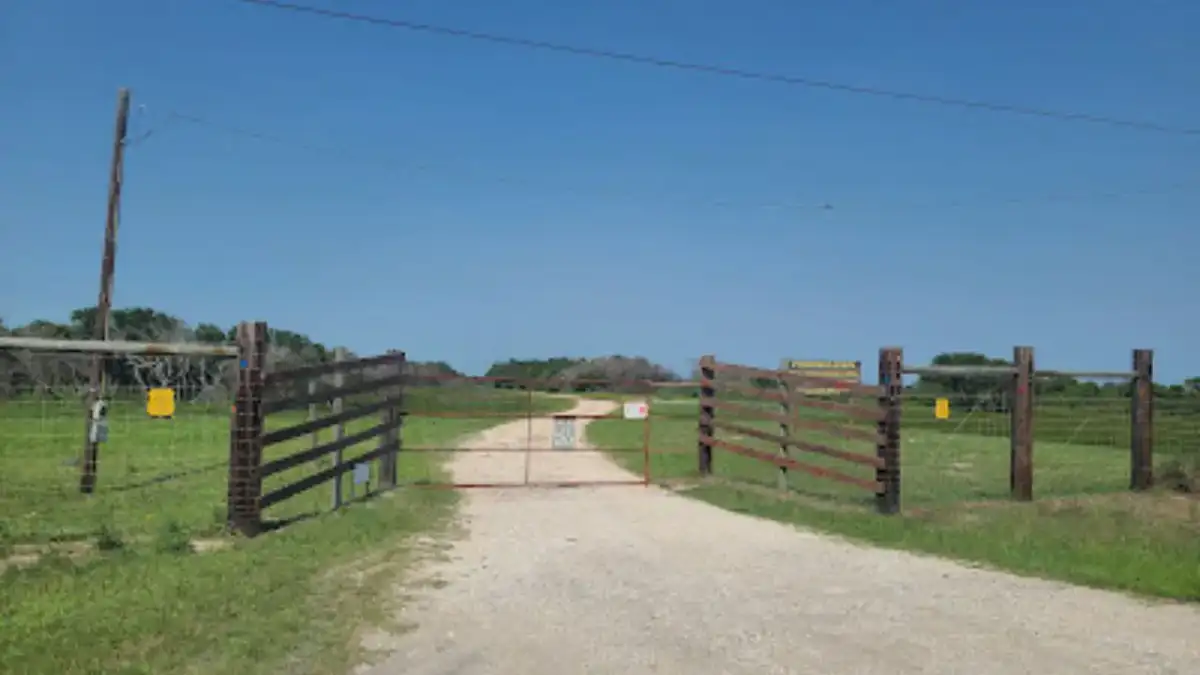
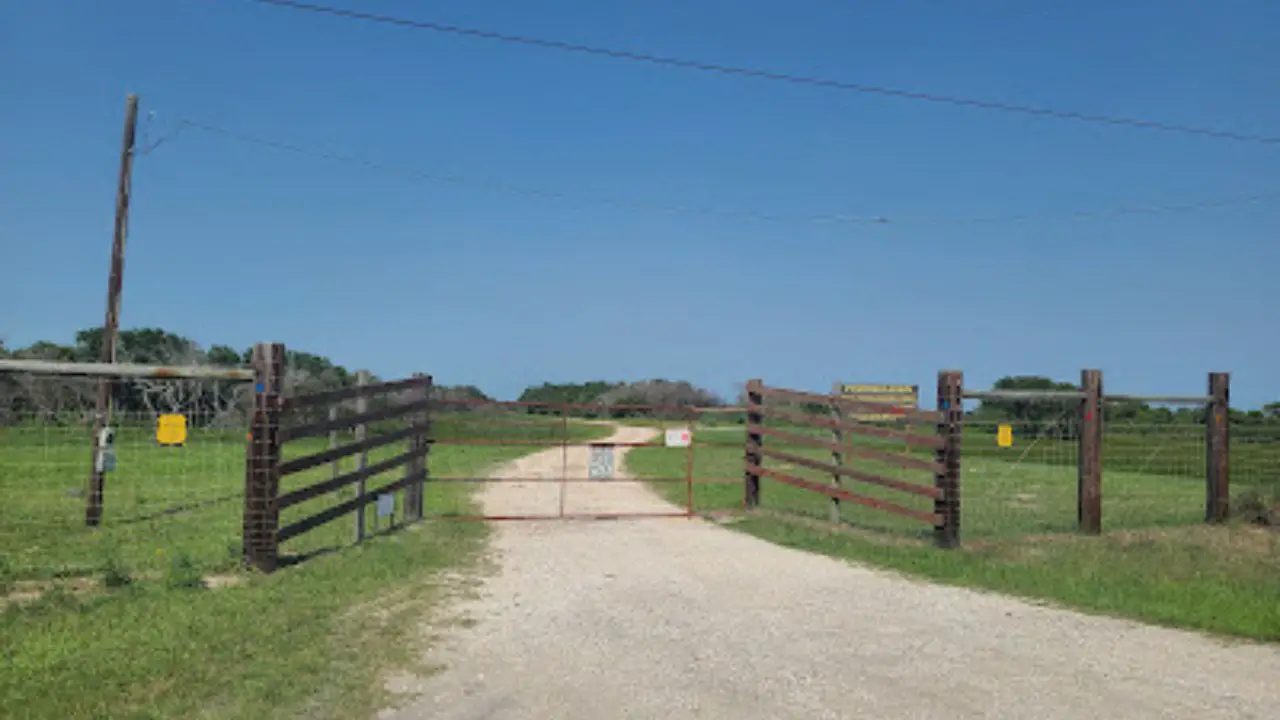
Physical park gates on FM 1289 are locked with monitored security. Game wardens actively patrol the boundary lines, and unauthorized entry onto the property is strictly prohibited under Texas natural resource laws.
Location and Geographic Setting in Calhoun County
Spanning the central coast, Powderhorn State Park Calhoun County occupies a strategic waterfront location northwest of Port O’Connor, fronting both Matagorda Bay and Powderhorn Lake. The property sits roughly 15 miles south of Port Lavaca along Farm to Market Road 1289.
Getting to Calhoun County and Port O'Connor
Travelers reaching the area drive south from Victoria along State Highway 185 through Seadrift before continuing toward Port O’Connor. The route passes working cattle ranches, coastal bayous, and commercial shrimping harbors before connecting with FM 1289 near the park perimeter.
Port O’Connor serves as the nearest full-service supply hub for fuel, ice, bait, and lodging. Visitors should fill vehicle tanks in Port O’Connor or Seadrift, as no commercial service stations operate along the immediate park perimeter.
Matagorda Bay and Powderhorn Lake Boundaries
The park property controls more than three miles of direct shoreline along Matagorda Bay and another two and a half miles along Powderhorn Lake. This positioning forms a biological interface where high-salinity bay water mingles with nutrient-rich freshwater inflow from coastal creeks.
The resulting estuarine marshlands serve as vital nurseries for juvenile Gulf marine life. Commercial and sport anglers prize the surrounding bay shallows for red drum, spotted seatrout, and southern flounder, providing an ideal venue for coastal day trips from the Texas State Aquarium in Corpus Christi up the coastline.
Coastal Ecology: Live Oak Mottes and Virgin Prairie
Powderhorn safeguards one of the last undisturbed coastal prairie complexes in North America, anchored by unique live oak mottes and freshwater pothole wetlands. These native plant communities support hundreds of resident and migratory bird species throughout the Gulf Coast flyway.
The Natural Architecture of Live Oak Mottes
Live oak mottes are dense, elevated groves of coastal live oaks that grow in distinctive clonal clusters across the flat prairie. Strong coastal winds and salty Gulf breezes shear the outer canopies, creating sloping natural windbreaks that protect interior understory trees.
These oak groves offer critical shelter for neotropical songbirds completing long-distance trans-Gulf migrations every spring. Similar historic tree canopies thrive nearby among the Goose Island State Park live oak groves along Aransas Bay.
Intact Coastal Tallgrass and Pothole Wetlands
Less than one percent of the historical coastal tallgrass prairie along the western Gulf remains in an unplowed condition. Powderhorn contains the largest single intact block of this rare habitat, dominated by big bluestem, little bluestem, and switchgrass with root systems extending six to eight feet deep.
Dozens of freshwater pothole depressions collect seasonal rainwater across the prairie floor. These shallow ephemeral pools provide vital hydration for resident mammals and support flourishing amphibian communities.
Whooping Crane Habitat and Winter Birding Routes
Powderhorn provides vital winter foraging habitat for the federally endangered whooping crane, which feeds on blue crabs and wolfberries from November through March. Birders can observe these five-foot-tall birds along property margins using high-powered optics.
Whooping Crane Migration and Coastal Foraging
The Aransas-Wood Buffalo whooping crane flock migrates 2,500 miles from northern Canada each autumn to spend the winter along the central Texas coast. Wildlife biologists from the International Crane Foundation Whooping Crane Field Guide monitor breeding pairs as they establish seasonal feeding territories across Calhoun County marshes.
The open brackish flats around Powderhorn Lake provide ideal foraging conditions for the cranes. Dedicated birders often combine this stop with Aransas National Wildlife Refuge birding tours across San Antonio Bay to observe pairs in multiple coastal habitats.
Perimeter Roadside Birding along FM 1289
The county road margins offer a prime vantage point for Port O’Connor coastal birding during the fall and spring migrations. Pulling fully off the travel lane onto broad grassy shoulders allows enthusiasts to set up sturdy tripods and spotting scopes safely.
Morning sunlight offers the clearest visibility across the prairie flats and marsh edges for observing Powderhorn Lake whooping cranes feeding in the shallows. Observers frequently record northern harriers, crested caracaras, white-tailed hawks, and sandhill cranes, with winter whooping cranes visible as bright white markers against dark cordgrass.
Tip
A spotting scope with 20x to 60x magnification is essential for identifying whooping cranes from FM 1289. Cranes frequently feed 400 to 800 yards out in the wetlands, well beyond the reach of standard 8x42 birding binoculars.
How to Access Powderhorn Today: Hunting and Paddling
Public entry onto the property is currently limited to Texas Parks and Wildlife Department drawn hunting permits and waterborne exploration via the Powderhorn Paddling Trail. Terrestrial drive-in visits and unguided walking tours remain strictly prohibited.
TPWD Drawn Hunt System at Powderhorn WMA
Outdoor enthusiasts can gain legitimate terrestrial access by winning a TPWD drawn hunt Powderhorn WMA tag during the annual permit lottery. Texas Parks and Wildlife offers drawn hunts for white-tailed deer, non-native sambar deer, and invasive feral hogs to maintain balanced ecological carrying capacities.
Prospective hunters must apply through the Texas Parks and Wildlife Powderhorn WMA Management Directory during the summer application window. Selected hunters attend mandatory on-site safety briefings at the WMA check station located at 10769 FM 1289.
Kayaking the 6.6-Mile Powderhorn Paddling Trail
Paddlers can explore the boundary waters of Powderhorn legally right now by launching kayaks, canoes, or paddleboards from Port O’Connor boat ramps. The designated 6.6-mile Powderhorn Paddling Trail loops along the protected bayside edge of the property, providing Matagorda Bay public access for non-motorized paddle craft.
Kayakers should consult local tidal charts and wind forecasts before launching onto the open waters of Matagorda Bay. Southeasterly winds exceeding 15 knots generate steep chop that can challenge inexperienced paddlers in open bay stretches.
Planned Facilities for the Future State Park
Future development at Powderhorn State Park will feature developed campsites, rustic cabins, a lighted fishing pier, and an educational visitor center. Every planned amenity is engineered with resilient coastal design to withstand severe Gulf weather events.
Campground, Cabin, and Dark Sky Amenities
State architectural plans outline a variety of overnight accommodations, including water-and-electric RV loops, walk-in tent sites, and screened group pavilions. Campsites will be positioned behind existing live oak windbreaks to protect campers from coastal wind gusts.
Park lighting will adhere to strict dark-sky design guidelines to prevent light pollution across the undeveloped coastal wetlands. Campers can anticipate exceptional stargazing over the Gulf horizon once the campgrounds open.
Waterfront Access, Fishing Piers, and Hike Trails
Anglers can anticipate a public fishing pier projecting into the deep oyster channels of Matagorda Bay, offering lighted night fishing for speckled trout. Kayak launch docks will also streamline entry onto the paddling trails, mirroring popular facilities found at Mustang Island State Park paddling trails.
A network of elevated boardwalks and decomposed granite footpaths will weave through the live oak mottes. Interpretive viewing blinds will provide photographers with unobtrusive vantage points over freshwater pothole marshes.
Conservation History: The Multi-Partner Acquisition
The creation of Powderhorn was made possible through a $37.7 million purchase of the historic Powderhorn Ranch Texas in 2014, making it the most valuable conservation land acquisition in state history. The transaction leveraged Deepwater Horizon oil spill penalties to permanently protect coastal wilderness.
Transforming Spill Penalty Funds into Conservation
Funding for the landmark acquisition was coordinated through the National Fish and Wildlife Foundation’s Gulf Environmental Benefit Fund, utilizing restorative penalty funds from the 2010 BP Deepwater Horizon oil spill. The total conservation investment exceeded $50 million, covering long-term habitat endowments and restoration operations.
The transaction shielded the ranchland from industrial development, commercial chemical terminals, and high-density subdivisions. The Texas Parks and Wildlife Foundation Powderhorn Ranch Project preserves this historic achievement as a benchmark for large-scale coastal land conservation.
Collaborative Stewardship: TPWD, TPWF, and The Nature Conservancy
The historic acquisition brought together three major conservation partners: Texas Parks and Wildlife Department, Texas Parks and Wildlife Foundation, and The Nature Conservancy. The Nature Conservancy continues to hold a permanent conservation easement over the ranch, ensuring the property’s natural resources remain shielded forever.
Following the initial acquisition, the state established the 15,000-acre Powderhorn Wildlife Management Area to prioritize habitat science and drawn hunting. The agency subsequently dedicated 2,253 waterfront acres for the future state park, establishing a lasting conservation balance.
Nearby Coastal State Parks and Travel Alternatives
While Powderhorn prepares for its public debut, travelers can enjoy established coastal recreation at several neighboring state parks and wildlife refuges. These destinations offer immediate camping, boating, and wildlife viewing opportunities across the central coast.
Goose Island and Mustang Island State Parks
Campers seeking immediate coastal getaways can head to Goose Island State Park in Rockport, which features waterfront RV camping, a 1,620-foot lighted fishing pier, and the famous Big Tree live oak. Further south, Mustang Island State Park near Port Aransas offers drive-on Gulf beach camping and marked paddling loops through tidal lagoons.
Both destinations feature fully operational ranger stations, hot showers, and organized interpretive activities. They rank among the best state parks in Texas for coastal family getaways.
Aransas National Wildlife Refuge and Regional Day Trips
Birders seeking guaranteed whooping crane encounters during the winter months can also schedule guided boat tours originating from Rockport and Fulton harbors. These commercial excursions cruise protected bay margins adjacent to the national wildlife refuge, providing close views of foraging crane families without disturbing sensitive shoreline vegetation.
Photographers frequently capture exceptional images of reddish egrets, roseate spoonbills, and American oystercatchers along the shoreline reefs. Combining multiple coastal stops creates a rewarding multi-day itinerary across Calhoun and Aransas counties.
Frequently Asked Questions
Is Powderhorn State Park open to the public?
Powderhorn State Park remains closed to general public admission while the Texas Parks and Wildlife Department completes foundational utility, road, and facility construction. Land access is restricted to official personnel, scheduled research groups, and hunters selected through the state drawn hunt system.
When is Powderhorn State Park expected to open?
Current state agency planning documents target an estimated public opening around 2029 following multi-phase infrastructure development. Official updates on milestone completions and public opening dates are posted directly on the Texas Parks and Wildlife Department website.
Can you camp at Powderhorn State Park right now?
Camping is strictly prohibited on both the state park tract and the Wildlife Management Area as no public campsites or utilities currently exist. Travelers seeking coastal camping should book developed sites at nearby Goose Island State Park or Mustang Island State Park.
Where is Powderhorn State Park located?
The property sits in Calhoun County along the central Texas coast, approximately 15 minutes northwest of Port O’Connor off FM 1289. It borders both the open saltwater of Matagorda Bay and the brackish waters of Powderhorn Lake.
How can visitors experience Powderhorn before it officially opens?
Paddlers can explore the park’s coastal boundary by launching onto the 6.6-mile Powderhorn Paddling Trail from public Port O’Connor launches. Birders can also view perimeter wildlife and wintering whooping cranes from road shoulders along FM 1289.