Stephen F. Austin State Park: Ultimate 2026 Visitor’s Guide to Camping, Trails & Fees
Located just 50 miles west of Houston along the historic Brazos River, Stephen F. Austin State Park serves as a premier 663-acre sanctuary for hikers, campers, and history enthusiasts seeking a tranquil Texas escape.
From weekend RV camping in the hardwood forests to day trips exploring the birthplace of Anglo-American colonization, the park offers a unique blend of natural beauty and profound historical significance. Stephen F. Austin State Park is often ranked among the top 10 best state parks in Texas for its historical value and accessible trails.
As of 2026, the park features over five miles of easy-rated hiking trails, 38 full hookup RV sites, and direct access to the San Felipe de Austin State Historic Site. According to the Texas Parks and Wildlife Department, this 473-acre site provides a diverse habitat of bottomland forest and ash swamps. Most visitors find the Stephen F. Austin State Park entrance fee 2026 rate of $5 for adults to be highly affordable, especially since children 12 and under enter for free.
This 2026 update provides essential details on Stephen F. Austin State Park camping, trail conditions, and Stephen F. Austin State Park day use reservations. Discover why this Austin County gem remains a favorite for Houstonians looking to trade city noise for the quiet rustle of bottomland pecans and the calls of Barred Owls.
Why Visit Stephen F. Austin State Park?
Recent Stephen F. Austin State Park reviews often highlight the park’s tranquil atmosphere and well-maintained trail system. As a living tribute to the “Father of Texas,” this site marks where Stephen F. Austin established his colonial headquarters in the 1820s.
The best time to visit Stephen F. Austin State Park is during the spring and fall when mild temperatures make for pleasant wildlife viewing and birdwatching. Proximity to the Brazos River adds a scenic backdrop to the easy-walking trails that wind through ancient moss-draped oaks and towering cottonwoods.
Stephen F. Austin State Park 2026 Hours and Entry Fees
Planning your visit requires understanding the latest operating schedules and fee structures implemented for the 2026 season. The park remains a popular weekend destination, often reaching capacity, so securing a day-use reservation through the Texas Parks and Wildlife Department (TPWD) website is highly recommended.
| Category | Details and 2026 Requirements |
|---|---|
| Park Gate Hours | Daily, 8:00 AM – 10:00 PM |
| Office Hours (Sat-Thu) | 8:30 AM – 4:30 PM |
| Office Hours (Friday) | 8:30 AM – 7:00 PM |
| Adult Entrance Fee (13+) | $5 Per Person, Daily |
| Child Entrance Fee (12 & Under) | Free |
| Texas State Parks Pass | $70 (Covers entrance for all passengers in one vehicle) |
Please note that the park office closes at noon on Thanksgiving Day and is fully closed on Christmas Day. However, the park gate remains open for those with existing camping reservations, ensuring you can enjoy a peaceful holiday in the Texas wild.
Comprehensive Camping and Lodging Guide
With a variety of sites ranging from primitive walk-in spots to full-service RV pads, Stephen F. Austin State Park camping options cater to every level of outdoor comfort. The park’s layout is designed to provide privacy, even during peak seasons, with most sites shaded by thick hardwood canopies.
RV and Tent Campsite Rates
The 2026 nightly rates for campsites remain consistent with previous seasons, offering some of the best value for camping near Houston. Each site type has specific occupancy limits and amenities to ensure a safe and enjoyable stay for all guests.
| Campsite Type | Nightly Rate | Max People | Key Amenities |
|---|---|---|---|
| Full Hookup (RV) | $30 | 8 | 30/50 Amp, Water, Sewer, Pull-through |
| Water-Only (Tent) | $20 | 8 | Water spigot, Picnic table, Fire ring |
| Primitive (Walk-in) | $15 | 8 | Secluded, Lantern post, Near restrooms |
| Group Camp 1 | $100 | 60 | Large open area, Central fire ring, Water |
Cabins and Screened Shelters
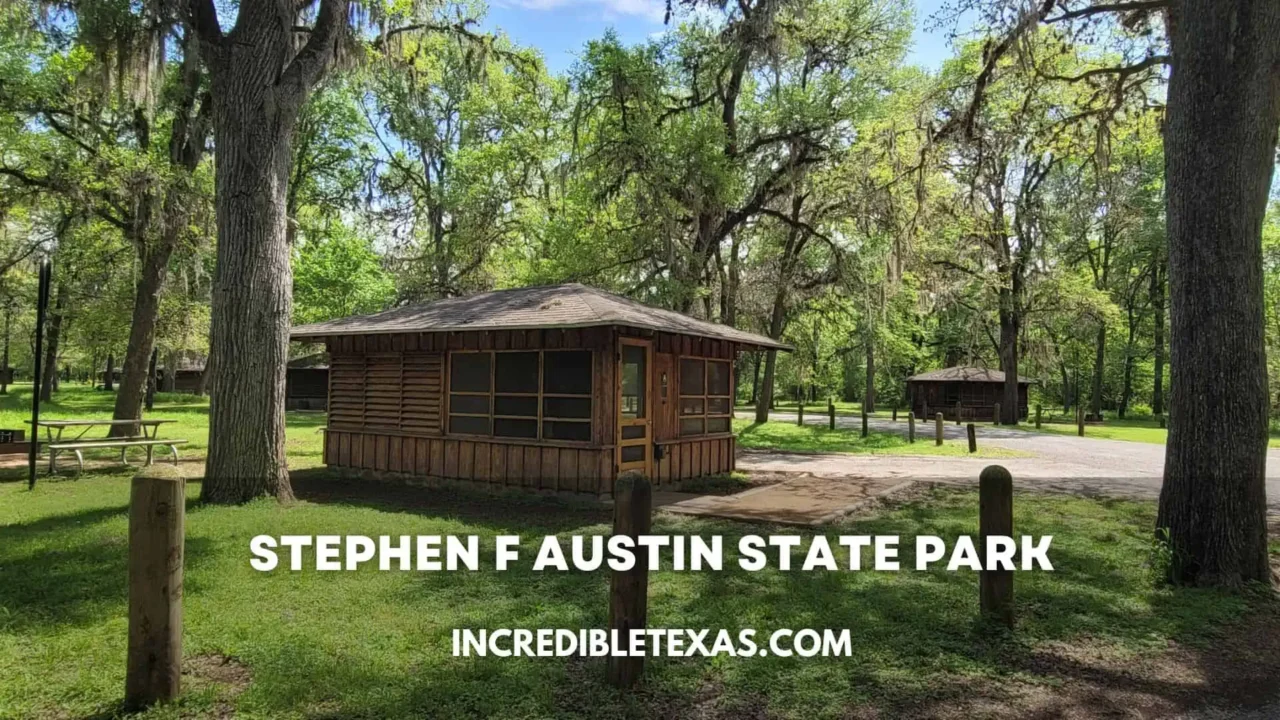
For those who prefer “glamping” or more structured lodging, the park offers a well-appointed cabin and several screened shelters. These options are ideal for families or visitors who want to experience the park without the need for a tent or RV.
The Stephen F. Austin State Park cabin is a two-bedroom unit that sleeps up to six people for $125 per night. It features a full kitchen, living area, and a private porch, though you must provide your own linens and toiletries.
Screened shelters are available for $30 per night and provide a bug-free environment with electricity and ceiling fans. These shelters do not have internal plumbing, but modern restrooms with hot showers are located a short walk away.
Stephen F. Austin State Park Trails: A Hiker’s Paradise
The system of hiking trails at Stephen F. Austin State Park is renowned for being accessible, with mostly flat terrain and significant shade coverage. These five miles of trails offer an intimate look at the Brazos River ecosystem, from the sandy riverbanks to the dense ironwood groves.
Referencing the official Stephen F. Austin State Park map at the headquarters can help you navigate the various loops and trailheads. Each path is clearly marked and provides distinct opportunities for birdwatching and photography in the bottomland forest.
Must-Hike Trails for 2026
- Ironwood Trail (1.0 Mile): This easy loop near the Nature Center takes about 50 minutes and features interpretive signs about the area’s flora.
- Brazos Bottom Trail (0.5 Miles): A short, 30-minute walk that provides the best views of the river and the massive cottonwoods that line the banks.
- Copperhead Trail (0.5 Miles): Despite the name, this is a safe and scenic 40-minute hike through a quiet, old-growth hardwood forest.
- Barred Owl Trail (0.7 Miles): Perfect for birdwatchers, this trail offers frequent sightings of owls and woodpeckers in the canopy.
- Pileated Trail (0.7 Miles): Connecting the amphitheater to the Nature Center, this trail is a favorite for those interested in natural history.
Before heading out, always check with the park headquarters for trail status updates. Trails are strictly closed during and after heavy rains to prevent erosion and protect the delicate bottomland soil.
Historical Context: The Cradle of Texas Liberty
To truly appreciate Stephen F. Austin State Park, one must understand the historical weight of the ground beneath their feet. In the early 1820s, Stephen F. Austin chose this strategic bend in the Brazos River as the administrative heart of his new colony, attracting the “Old 300” families from across the United States.
For nearly 15 years, San Felipe de Austin served as the second most important town in Texas after San Antonio, acting as the capital of Anglo-American colonization. Data from the Texas State Historical Association confirms that it was the social, economic, and political hub for Austin’s Colony from 1824 until its destruction in 1836. It was here that the Conventions of 1832 and 1833 were held, and the Consultation of 1835 laid the groundwork for the provisional government of the Republic of Texas.
The Burning of San Felipe and the Runaway Scrape
In March 1836, as Santa Anna’s army approached after the fall of the Alamo, the residents of San Felipe made a heart-wrenching decision. To prevent the town’s resources from falling into Mexican hands, they burned their homes and businesses to the ground before flee-ing eastward in what became known as the Runaway Scrape.
This “scorched earth” policy effectively ended San Felipe’s prominence, but it paved the way for the eventual victory at San Jacinto. Walking the park today, you are traversing the very site where these pioneers once lived, worked, and sacrificed everything for the dream of an independent Texas.
A Deep Dive into the Park’s Ecology
The Stephen F. Austin State Park trails offer a rare glimpse into the undisturbed bottomland hardwood forest of the Gulf Coastal Plain. This ecosystem is characterized by its seasonal flooding, which enriches the soil and supports a towering canopy of pecans, sycamores, and massive cottonwoods.
Unlike the arid landscapes of West Texas or the piney woods of the East, this region features lush, almost prehistoric-looking swamps. These wetlands are vital filters for the Brazos River and provide a specialized habitat for moisture-loving plants like dwarf palmettos and various ferns.
Wildlife You Might Encounter
White-tailed deer are the most visible residents, often seen in large groups near the day-use area at dawn. However, keen-eyed visitors should also look for nine-banded armadillos rooting through the leaf litter or the elusive bobcat prowling the quieter stretches of the Copperhead Trail.
Reptile enthusiasts will appreciate the various turtles basking on logs in the oxbow lakes and the non-venomous water snakes that inhabit the riverbanks. While venomous copperheads and cottonmouths are present, they generally avoid human contact unless disturbed, making the trails safe for mindful hikers.
Exhaustive Trail-by-Trail Guide
To help you plan your hiking itinerary, we have detailed every major trail within the park. Each path offers a different perspective on the park’s topography, from river views to dense interior forests.
Brazos Bottom Trail (0.5 Miles)
This easy, half-mile loop is the park’s most iconic path, taking you directly into the flood-prone bottomlands along the Brazos River. You will walk among massive, ancient trees and see the dramatic evidence of the river’s power in the silt deposits and carved-out banks.
Copperhead Trail (0.5 Miles)
Don’t let the name intimidate you; this trail is a serene journey through a dense hardwood forest that feels miles away from civilization. It is one of the best spots in the park for finding shaded relief on hot Texas afternoons, with a canopy that blocks out most direct sunlight.
Ironwood Trail (1.0 Mile)
As the longest single trail in the park, the Ironwood Trail is popular with both hikers and mountain bikers. It passes near Bullinger Creek and features several interpretive signs that help identify the “ironwood” (American Hornbeam) trees famous for their incredibly hard, muscular-looking bark.
Cottonwood Trail (0.7 Miles)
Connecting the main amphitheater to the bottomland forest, this trail is named for the towering Eastern Cottonwoods that shed their fluffy “cotton” seeds in the spring. It is a wide, easy-to-navigate path that is perfect for families with strollers or those who prefer a less rugged walking surface.
Opossum Loop (0.3 Miles)
This short loop explores an old bank of the Brazos River that has long since shifted course. It is a fascinating look at how the river reshapes the land over decades, leaving behind depressions that now support a different variety of plant life than the active riverbank.
Essential Packing List for 2026 Visitors
Preparation is key for staying comfortable in the changing Texas climate, regardless of your visit length. Below is a suggested list of items tailored specifically for the Stephen F. Austin State Park camping and hiking experience.
| Category | Recommended Items |
|---|---|
| Clothing | Lightweight long sleeves (for bugs), sturdy hiking boots, broad-brimmed hat. |
| Safety | High-DEET repellent, SPF 50+ sunscreen, basic first-aid kit, whistle. |
| Hydration | At least 1 liter of water per person for every hour of hiking. |
| Navigation | Physical park map (available at HQ), compass, portable power bank. |
| Camping | Firewood (must be bought locally), lanterns, sleeping pads for uneven ground. |
Photography and Wildlife Watching Tips
For those looking to capture the beauty of the Brazos River basin, the park provides endless subjects. The best time for photography is during the “golden hour”—the first and last hour of sunlight—when the moss on the oak trees glows and the river reflections are most vivid.
If you are birdwatching, head to the Ironwood Trail or the observation deck near the Nature Center. Move slowly and remain quiet; the Barred Owls are surprisingly well-camouflaged and often require a few minutes of still observation to spot among the branches.
Top Activities and Things to Do in 2026
Beyond hiking and camping, the park offers a variety of specialized activities that take advantage of its unique location on the Brazos River. These recreational opportunities provide a well-rounded outdoor experience for solo travelers and large groups alike.
Wildlife viewing is the hallmark of the park, especially in the early morning or late evening hours. White-tailed deer are frequently seen grazing near the campgrounds, and the park is a designated site on the Great Texas Coastal Birding Trail, making it a hotspot for migratory species.
Birding and Nature Observation
The Stephen F. Austin State Park trails are perfectly situated for birding, with a dense canopy that attracts Pileated Woodpeckers and Barred Owls year-round. Bring your binoculars to the observation blinds or participate in a ranger-led nature walk to learn more about the diverse avian population.
Fishing and Geocaching
While direct river access for swimming can be limited due to steep banks and currents, fishing along the Brazos remains a popular pastime. You do not need a fishing license to fish from the shore within a Texas State Park, allowing everyone to try their luck at catching catfish or bass.
Geocaching is another exciting way to explore the park’s hidden corners. Several “caches” are hidden throughout the trail system, providing a modern-day treasure hunt for kids and adults using the official Geocaching app.
Stephen F. Austin State Park 2026 Event Calendar
To make the most of your trip, consider aligning your visit with one of the park’s signature 2026 events. These programs are often free with park admission and provide deep insights into the local environment and history.
| Date | Event Name | Highlights |
|---|---|---|
| January 1, 2026 | First Day Hike | Guided 1.5-mile hike to ring in the new year. |
| February 21, 2026 | A Spider’s Tale | Interactive program on local arachnids and their roles. |
| March 14, 2026 | Burning of San Felipe | Historical talk on the 1836 evacuation and fires. |
| March 21, 2026 | San Felipe Shootout | 5k, 10k, and half-marathon trail racing event. |
| November 2026 | Legacy of Log Cabins | Educational session on colonial Austin-era architecture. |
Expert Tips for Your 2026 Visit
Seasoned visitors often share Stephen F. Austin State Park reviews that emphasize the importance of early preparation for the humid Texas climate. Because the park is located in a bottomland forest, humidity and insects can be significant factors depending on the month you choose to visit.
Monitoring the Stephen F. Austin State Park weather before your trip is essential, as heavy rains can lead to sudden trail closures or river flooding. Current data from the U.S. Geological Survey monitoring station at San Felipe tracks real-time flow and height of the Brazos River to help visitors assess ground safety. Checking the official park social media pages or the National Weather Service site will provide the most current updates on local conditions.
- Check the Weather: The Brazos River is prone to rapid water level changes. Visit the National Weather Service for the latest flood warnings before your arrival.
- Cell Service: Expect limited connectivity, especially for AT&T users. Download offline maps and park information before you leave Sealy or San Felipe.
- Bug Protection: Mosquitoes and gnats thrive in the upland swamps. Use a high-quality repellent and consider wearing long sleeves during dusk and dawn.
- Reservations: Always book your day-use or camping spot in advance via the Texas Parks and Wildlife official site.
Nearby Attractions to Explore
No trip to the area is complete without visiting the San Felipe de Austin State Historic Site. Managed by the Texas Historical Commission, this site features a state-of-the-art museum and reconstructed colonial buildings that tell the story of Texas’s early days.
If you have more time, consider taking a short drive to Brazos Bend State Park to see alligators. For those interested in unique geology, our guide to Longhorn Cavern State Park offers a different kind of Texas adventure just a few hours away.
You can also compare this experience with other riverfront destinations like Guadalupe River State Park. Austin County’s natural scenery provides a distinct contrast to the more arid regions found in Central Texas.
People Also Ask (FAQ)
What are the fees to enter Stephen F. Austin State Park?
The daily entrance fee for adults (13 years and older) is $5 per person. Children 12 years and under enter for free, making the park an affordable destination for families.
What are the operating hours for Stephen F. Austin State Park?
The park gate is open daily from 8:00 AM to 10:00 PM for all visitors. The park office typically operates from 8:30 AM to 4:30 PM, with extended hours until 7:00 PM on Fridays.
Do I need reservations to visit Stephen F. Austin State Park?
Reservations are highly recommended for both camping and day use because the park frequently reaches its maximum capacity. You can secure your spot online through the official Texas Parks and Wildlife reservation system.
What types of camping are available at Stephen F. Austin State Park?
The park offers a variety of options including full hookup RV sites, water-only tent sites, and primitive walk-in campsites. For those seeking more structure, screened shelters and a two-bedroom cabin are also available for nightly rental.
Are pets allowed at Stephen F. Austin State Park?
Yes, pets are welcome in the park but must be kept on a leash no longer than six feet at all times. Pets are not permitted inside any state park buildings, including the cabin and screened shelters.
Can I swim or boat in the Brazos River at the park?
Swimming and boating are not advised at this location due to swift currents and steep, unstable riverbanks. There are no designated swimming areas or boat ramps within the park boundaries.
Are there waterfront campsites at Stephen F. Austin State Park?
No, there are no waterfront campsites, and most sites do not offer a direct view of the Brazos River. The campgrounds are situated within the shaded hardwood forest for maximum privacy and protection from the elements.
Are generators allowed at Stephen F. Austin State Park?
The use of generators is strictly prohibited within the park to maintain a peaceful environment for all guests. Visitors requiring electricity should book one of the full hookup RV sites or screened shelters.
What historical significance does Stephen F. Austin State Park have?
The park is located near the original site of San Felipe de Austin, which served as the social and political capital of the first Anglo-American colony in Texas. It is widely considered the “Cradle of Texas Liberty” due to the pivotal conventions held there leading up to the Texas Revolution.
Are the hiking trails at Stephen F. Austin State Park difficult?
The five miles of trails are rated as easy and are mostly flat, making them suitable for hikers of all ages and skill levels. These multi-use paths wind through scenic bottomland forests and offer excellent opportunities for birdwatching.
Final Thoughts
From the haunting calls of the Barred Owl to the deep historical roots of the San Felipe colony, Stephen F. Austin State Park remains a cornerstone of the Texas park system. Its blend of easy trails, modern camping amenities, and proximity to major cities like Houston and San Antonio makes it an essential stop for any Lone Star State explorer.
Plan your visit today to walk the same riverbanks as the earliest Texas pioneers. For more travel inspiration, check out our guide to Inks Lake State Park to see another side of the beautiful Texas Hill Country.