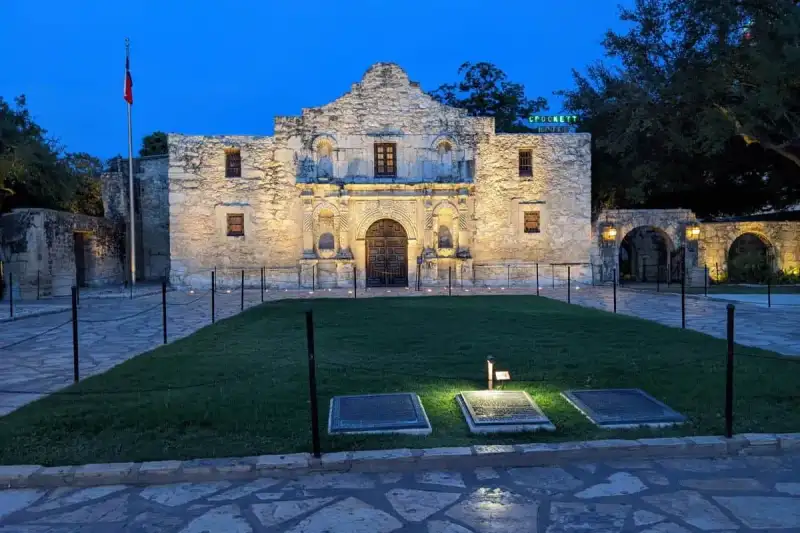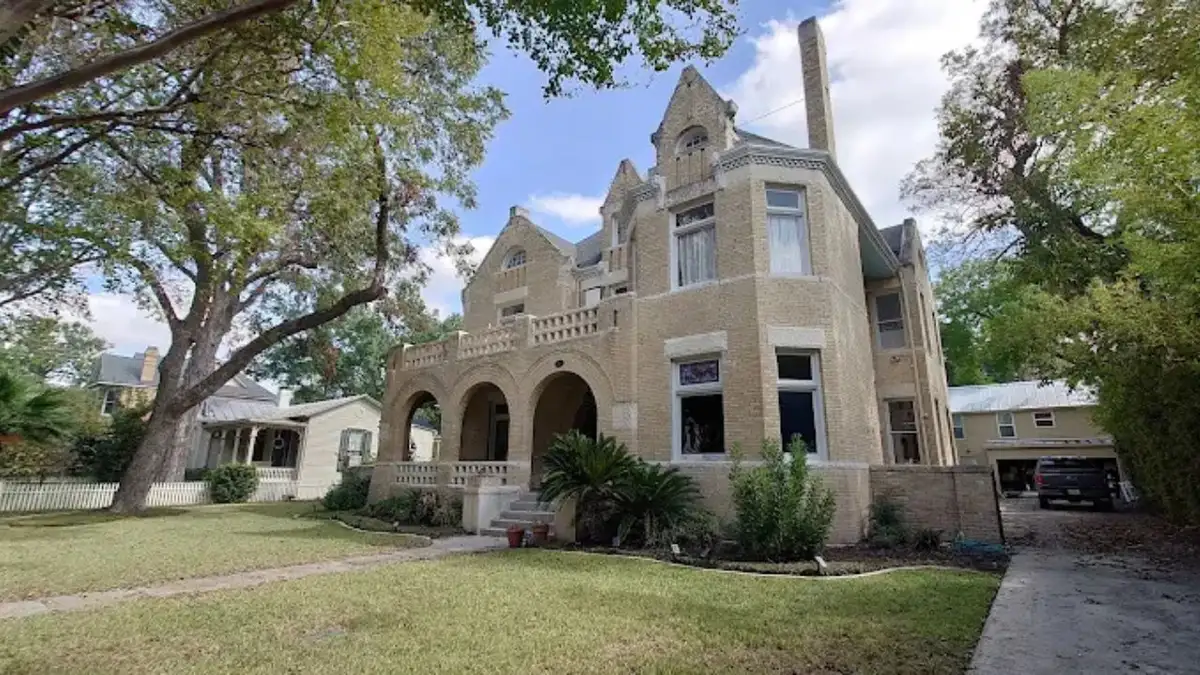
Lined with mature pecan trees, stone retaining walls, and wrought-iron gates, the King William Historic District San Antonio encompasses a 65-acre residential enclave south of downtown. As the oldest historic residential district in the city, the area contains Texas's most concentrated collection of restored 19th-century Victorian, Greek Revival, and Italianate estates.
When exploring King William San Antonio, visitors find a quiet contrast to the busy commercial blocks of the central River Walk. The neighborhood functions as an active, lived-in community where travelers can explore public sidewalks freely and connect directly to the river.
Key takeaways
- The King William Historic District encompasses 65 acres of preserved 19th-century residential architecture located roughly one mile south of downtown San Antonio.
- Most historic mansions in the neighborhood remain private residences, making Villa Finale Museum and Gardens the primary interior house tour open to ticketed visitors.
- The Guenther House at 205 East Guenther Street operates a historic milling museum and popular riverfront restaurant Wednesday through Sunday from 8:00 AM to 2:00 PM.
- The King William Association provides a free self-guided mobile walking tour app featuring 163 recorded architectural stops across the district.
- On-street parking meters are enforced Monday through Saturday from 8:00 AM to 6:00 PM, with free curbside parking after 6:00 PM and all day on Sundays.
Unlike commercial attractions with centralized ticket gates, King William functions as an active, lived-in historic community. Visitors can explore the public sidewalks freely, admire grand facades, and connect directly to the San Antonio River Walk via shaded riverbanks and pedestrian footbridges.
What to Expect in King William Historic District
The San Antonio King William District offers a quiet 65-acre walking environment highlighting 19th-century architecture. Walking through the King William neighborhood San Antonio reveals shaded sidewalks, historic markers, and scenic bridges just south of downtown.
State preservation archives document the unique standing of the neighborhood. According to the Texas Historical Commission King William Historic District Atlas Record, the district was listed on the National Register of Historic Places on January 20, 1972, under reference number 72001349. This landmark filing cemented King William as the very first National Register historic district designated in the state of Texas.
Walking the sidewalks feels distinctly different from visiting crowded tourist hubs. The district sits within walking distance of La Villita Historic Arts Village, yet maintains a residential atmosphere shaped by quiet residential blocks, private garden plots, and canopy-covered streets.
Architectural Styles and Notable Landmark Mansions
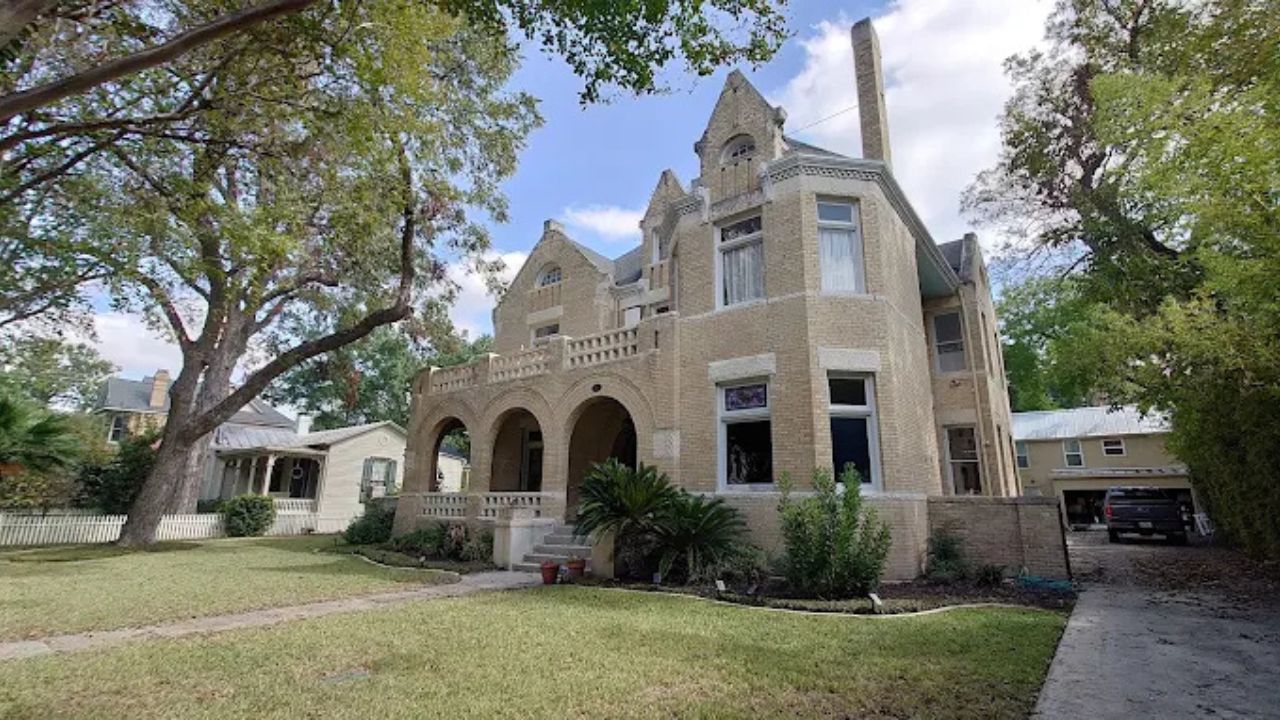
Distinctive King William architectural styles range from Greek Revival porticos and Italianate brackets to elaborate Victorian mansard rooflines. Walking down this wide corridor reveals limestone ashlar masonry, wraparound double galleries, and ornate cast-iron cresting crafted during the late 19th century.
Prominent residences include the 1876 Steves Homestead at 509 King William Street, designed by architect Alfred Giles with French Second Empire styling and a distinctive mansard roof. Nearby at 401 King William Street stands Villa Finale, an Italianate mansion constructed in 1876 that displays ornate classical cornices and expansive landscaped grounds.
Further along the route, the Kalteyer House and the Sartor House highlight how regional Texas limestone was paired with European craftsmanship. Ornate balustrades, fluted porch columns, and etched glass transoms reflect the substantial wealth generated by local merchants and civic leaders during the late 19th century.
German Settlement and Sauerkraut Bend Heritage
The land comprising King William originally served as irrigated farmland, known as the Labores de Abajo, supporting Mission San Antonio de Valero. Following the secularization of the missions in 1793, the acreage was divided into private parcels and eventually platted for residential development during the 1850s.
German immigrants arriving in Texas throughout the mid-19th century rapidly purchased lots along the horseshoe bend of the San Antonio River. Because of the heavy concentration of German millers, bankers, and wholesale grocers, locals nicknamed the enclave Sauerkraut Bend. King William Street itself was named in tribute to King Wilhelm I of Prussia.
Anti-German sentiment during World War I prompted municipal officials to temporarily rename the corridor Pershing Avenue in 1918. The historic name was formally restored in 1921, preserving the enduring cultural legacy of the families who built the neighborhood.
Historic Home Tours: Villa Finale and The Guenther House
While most King William homes open to the public are limited due to private ownership, Villa Finale Museum and Gardens and The Guenther House serve as the two primary interior landmarks welcoming guests. These properties allow visitors to explore historic decorative arts and milling heritage up close.
Planning ahead is essential because operating days and entry policies differ between the two properties. Including both stops provides a well-rounded cultural experience that ranks among the best things to do in San Antonio for architecture and history enthusiasts.
Touring Villa Finale Museum and Gardens
Villa Finale Museum and Gardens, located at 401 King William Street, is owned and operated by the National Trust for Historic Preservation. The property was the personal residence of preservationist Walter Nold Mathis, whose restoration efforts in the late 1960s sparked the revitalization of the entire King William neighborhood.
The interior houses an extraordinary collection of over 12,500 fine and decorative art objects assembled by Mathis, including European furniture, historic silver, porcelain, and Napoleonic memorabilia. Travelers checking Villa Finale tickets and hours will find admissions available on the Villa Finale Museum and Gardens Visitor Information portal, which confirms operating hours Tuesday through Saturday from 10:00 AM to 4:00 PM, with the last admission ticket sold at 3:30 PM.
Self-guided general admission tickets cost $12 for adults and $10 for seniors, military personnel, and students, while children under 5 enter free of charge. Guided tours are conducted on select Thursdays at 3:30 PM for $15 per person. Visitors purchase tickets on-site at the Mathis Gallery, located directly behind the main residence.
Visiting The Guenther House Restaurant and Museum
Located on East Guenther Street, The Guenther House San Antonio pairs historic milling museum exhibits with popular riverfront breakfast dining. Constructed in 1859 by mill founder Carl Hilmar Guenther, the limestone home originally anchored Pioneer Flour Mills, which continues industrial operations on adjacent property under the name C.H. Guenther and Son.
The property includes a historic museum displaying antique milling equipment, original family furnishings, and historic baking artifacts. Details and menus are available on The Guenther House Restaurant and Museum Portal, confirming restaurant hours Wednesday through Sunday from 8:00 AM to 2:00 PM.
The restaurant operates on a strictly first-come, first-served basis, serving buttermilk biscuits, waffles, and breakfast platters. Weekend wait times frequently reach 45 to 60 minutes between 9:30 AM and 12:30 PM. Arriving before 8:30 AM on weekend mornings minimizes waits and allows visitors to browse the museum gift shop before tables open.
Tip
Put your name on the host stand at The Guenther House early, then spend the 30-minute wait walking the river trail loop behind the mill grounds.
King William Historic District At-a-Glance Guide
This quick-reference comparison highlights the major public landmarks, museums, and parks within the King William Historic District. Use these operating parameters and admission details to structure your visit.
| Landmark / Stop | Street Address | Hours / Access | Admission / Cost | Best For |
|---|---|---|---|---|
| Villa Finale | 401 King William St | Tue–Sat: 10:00 AM – 4:00 PM | $12 Adults, $10 Seniors/Military | Decorative arts & interior architecture tours |
| The Guenther House | 205 E. Guenther St | Wed–Sun: 8:00 AM – 2:00 PM | Free museum entry; menu pricing | Historic breakfast dining & milling heritage |
| Steves Homestead | 509 King William St | Exterior viewing daily; grounds open | Free exterior viewing | Victorian mansard roof & exterior photography |
| King William Park | 131 King William St | Daily: 5:00 AM – 11:00 PM | Free public access | Shaded iron gazebo, resting bench, tour starting point |
| SARA Headquarters | 100 E. Guenther St | Mon–Fri: 8:00 AM – 5:00 PM | Free trail access | Paddling trail launch & Mission Reach connection |
Each stop highlights a different facet of neighborhood history. Combining a museum visit with outdoor park strolls keeps the itinerary varied and engaging.
Self-Guided Walking Tour Route and Map Strategy
Following a self-guided King William Historic District walking tour allows travelers to explore 19th-century streets at their own pace. Planning a King William walking tour begins best near King William Park, follows King William Street south toward East Guenther Street, and loops back along the San Antonio River.
The route provides level concrete sidewalks, making navigation straightforward for push strollers and wheelchairs. Travelers can easily combine this walking loop with surrounding San Antonio River Walk attractions by accessing pedestrian portals along Guenther Street.
Recommended 90-Minute Neighborhood Walking Loop
Begin your walking loop at King William Park, located at the intersection of King William Street and Turner Street. The park's Victorian iron bandstand, installed in 1892, provides shaded bench seating beneath mature oak trees.
From the park, walk southwest along King William Street, examining the ornate facades of Villa Finale at 401 King William and the Steves Homestead at 509 King William. Continue to East Guenther Street, where the path passes Pioneer Flour Mills and leads directly to The Guenther House.
From The Guenther House, cross the pedestrian walkway toward the San Antonio River Authority headquarters. Follow the paved riverfront path north along the King William River Walk, taking in shaded limestone banks and water views before returning to King William Park via Madison Street.
King William Association Mobile Audio Tour Stops
The King William Association curates official self-guided materials for architecture buffs seeking in-depth history. Detailed neighborhood brochures and audio links are available through the King William Association Self-Guided Walking Tours Directory.
Visitors can access the free STQRY mobile walking tour app directly on their smartphones without paying subscription fees. The application catalogues 163 distinct architectural stops throughout King William, providing historical photographs, architect biographies, and construction dates for individual homes.
Four downloadable PDF brochures also cover specific sub-areas: King William Street, Madison Street, Guenther Street, and South Alamo Street. Loading the digital audio tour before arriving ensures smooth navigation even if mobile cellular coverage dips beneath dense tree canopies.
Parking, Transit, and Neighborhood Etiquette
Navigating King William District parking requires careful attention to residential permit zones along side streets. Travelers should utilize commercial meters along South Alamo Street or municipal parking facilities to avoid residential towing.
The neighborhood is strictly monitored by municipal parking enforcement officers. Understanding local parking regulations prevents unexpected fines and keeps residential driveways unobstructed.
Metered Street Parking and Downtown Garages
Curbside metered parking is concentrated along South Alamo Street, South St. Mary's Street, and East César E. Chávez Boulevard. As outlined on the City of San Antonio SAPark Affordable Parking Portal, street meters are enforced Monday through Saturday from 8:00 AM to 6:00 PM, with free parking after 6:00 PM daily and all day Sunday.
For visitors spending several hours in the area, the city-operated St. Mary's Garage at 205 East Travis Street offers an affordable covered option. The garage charges a flat $5 rate on weeknights after 5:01 PM and all day Saturday and Sunday, with $15 special event rates during major civic festivals.
Additionally, the City of San Antonio operates the Downtown Thursday parking program, providing free parking at municipal garages from 5:00 PM to 2:00 AM every Thursday through the end of 2026. Rideshare drop-offs are best directed to King William Park or The Guenther House to avoid narrow residential streets.
Residential Etiquette and Exterior Photography
Because King William is an active residential neighborhood rather than an open-air museum, visitors must observe considerate street etiquette. Always remain on public sidewalks and avoid stepping onto private lawns, porches, or front stairs.
Exterior photography from the sidewalk is welcomed, but commercial photography shoots and drones require prior municipal permitting. Keep conversational noise low during morning hours, and ensure pet owners keep dogs leashed and clean up waste immediately.
Private gates and garden walls should never be touched or opened. Observing these basic courtesies preserves the peaceful atmosphere that neighborhood residents and visitors both value.
Dining and Southtown San Antonio Pairings
King William borders Southtown and the Blue Star Arts Complex, providing straightforward access to farm-to-table dining, local bakeries, craft breweries, and contemporary art galleries. Pairing an architectural morning walk with lunch on South Alamo Street creates a well-coordinated half-day itinerary.
Sampling local restaurants and craft breweries ranks high among popular things to do in Southtown San Antonio after an architectural morning stroll. Walking just two blocks from King William Street places visitors at the center of this active arts and dining district.
Top Restaurants and Cafes Near King William
South Alamo Street hosts a dense cluster of acclaimed independent restaurants and coffee shops. Rosario's Comida Mexica delivers regional Mexican specialties, fresh salsas, and rooftop skyline views just steps from the northern edge of the historic district.
For casual bakery bites and artisan sandwiches, head to Halcyon Southtown or grab espresso at Commonwealth Coffeehouse. Hot Joy offers bold pan-Asian dishes in an eccentric dining room, while Battalion serves handmade pasta inside a restored 1920s firehouse on South Alamo.
Exploring Southtown restaurants extends the culinary adventure with riverside patio dining, where local brewpubs serve house-crafted ales and burgers alongside contemporary sushi bars. For broader dining recommendations across town, explore our curated guide to the best restaurants in San Antonio.
Connecting to the San Antonio River Walk and Mission Reach
Connecting the San Antonio River Mission Reach King William corridor allows cyclists and walkers to travel from historic residential avenues straight down to Spanish colonial mission compounds. As detailed in the Texas Parks and Wildlife Mission Reach Paddling Trail Guide, the riverway extends south from Roosevelt Park and King William through 400 acres of restored riparian habitat.
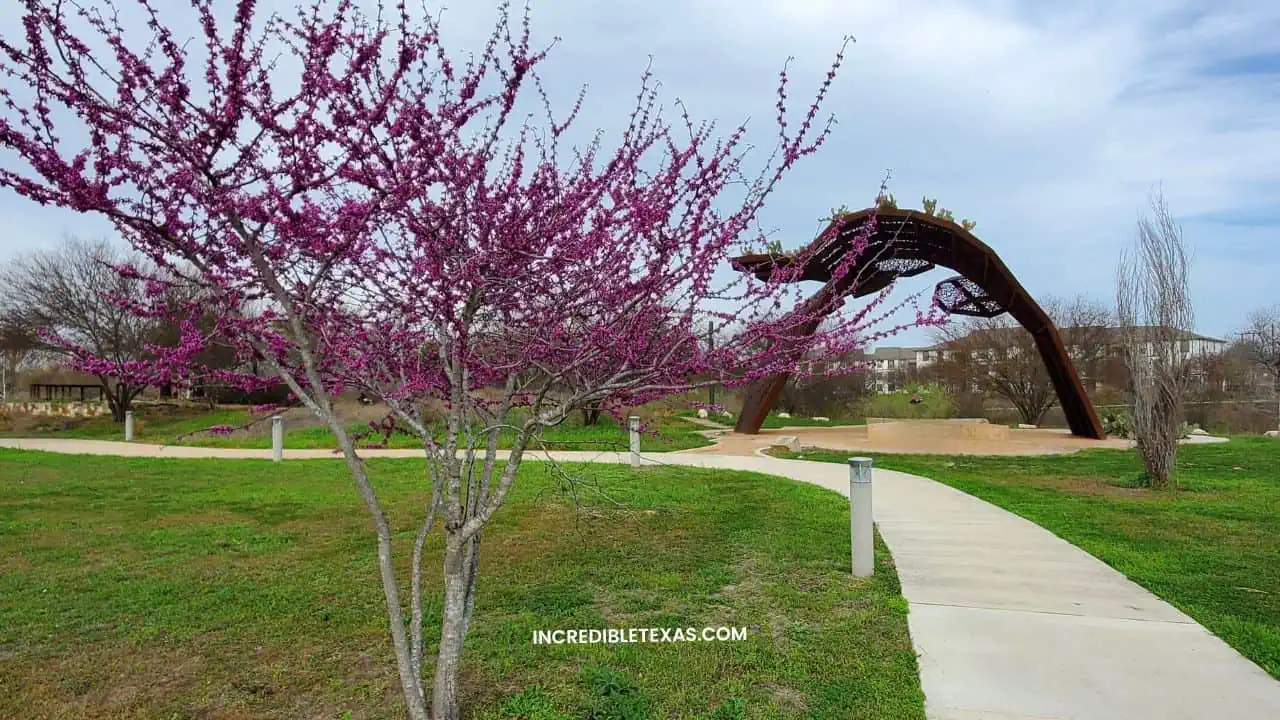
Paddlers can launch kayaks and stand-up paddleboards for a gentle, scenic paddle along tree-shaded riverbanks featuring engineered canoe chutes. Downstream, the 8-mile Mission Reach trail system features 16 miles of paved multi-use paths extending south to Mission Concepción, Mission San José, Mission San Juan, and Mission Espada.
Renting a B-Cycle electric bicycle at the South Alamo docking station enables visitors to ride comfortably from King William all the way through the UNESCO-designated missions. The trail stays completely separated from vehicle traffic, offering clean restrooms and water stations along the way.
King William Fair and Fiesta Week Logistics
The lively King William Fair Fiesta San Antonio celebration transforms the neighborhood on the final Saturday of April, welcoming upwards of 30,000 festivalgoers. Street closures, paid admission gates, and a 1.5-mile neighborhood parade replace the normal quiet atmosphere.
Travelers visiting San Antonio during late April should plan their timing deliberately. Checking the official Fiesta San Antonio schedule clarifies whether your travel dates coincide with this neighborhood festival.
Annual Fiesta Fair Schedule and Parade Details
First held in 1968, the King William Fair serves as the primary fundraiser for the King William Association. According to the King William Fair Official History and Guidelines, fair proceeds have generated more than $850,000 in community preservation grants, local arts funding, and student scholarships since 2001.
The event begins promptly at 9:00 AM with a spirited 1.5-mile neighborhood parade featuring eccentric floats, marching bands, costumed walking units, and community performers. Over 200 artisan craft booths, four live music stages, and five food courts span the historic blocks through 6:00 PM.
General admission wristbands cost $20 for adults, while children aged 11 and under enter free of charge. Festival tickets can be purchased online in advance or at designated neighborhood entrance gates on festival morning.
Event Day Street Closures and Transit Planning
On fair day, municipal authorities close the entire King William street grid to vehicle traffic starting before 6:00 AM. Curbside parking within the neighborhood perimeter is strictly banned, and unauthorized cars are actively towed.
Visitors should utilize VIA Metropolitan Transit's park-and-ride shuttles or ride bicycles directly to the gate bike corrals. Rideshare drop-off zones operate along South St. Mary's Street and East César E. Chávez Boulevard, providing an easy pedestrian walk to the admission stations.
Travelers seeking a peaceful architectural walking tour should intentionally avoid fair Saturday. Visiting on a quiet weekday morning before or after Fiesta week ensures unhurried sidewalk viewing and uninterrupted exterior photography.
Frequently Asked Questions
Is King William Historic District worth visiting?
King William Historic District is well worth visiting for travelers interested in 19th-century architecture, shaded residential walking routes, and historic San Antonio riverfront heritage. A self-guided walking loop takes roughly 60 to 90 minutes, with optional ticketed stops at Villa Finale and The Guenther House.
Can you tour the historic homes in King William?
Most homes in King William are private residences that remain closed to the general public. Villa Finale Museum and Gardens operates as the sole regular historic house museum open for ticketed interior walkthroughs.
How long does the King William walking tour take?
A standard self-guided walking tour through the central streets takes between 60 and 90 minutes at an unhurried pace. Visitors who add a seated meal at The Guenther House or a guided interior tour of Villa Finale should budget two to three hours total.
Where should visitors park when visiting King William?
Visitors can park at metered spaces along South Alamo Street or use the City of San Antonio St. Mary's Garage located at 205 East Travis Street. Curbside meters are free after 6:00 PM Monday through Saturday and free all day on Sundays.
When is the King William Fair held?
The King William Fair takes place annually on the final Saturday of Fiesta San Antonio, typically running from 9:00 AM to 6:00 PM. The event features a 1.5-mile neighborhood parade, artisan craft booths, and ticketed admission gates.