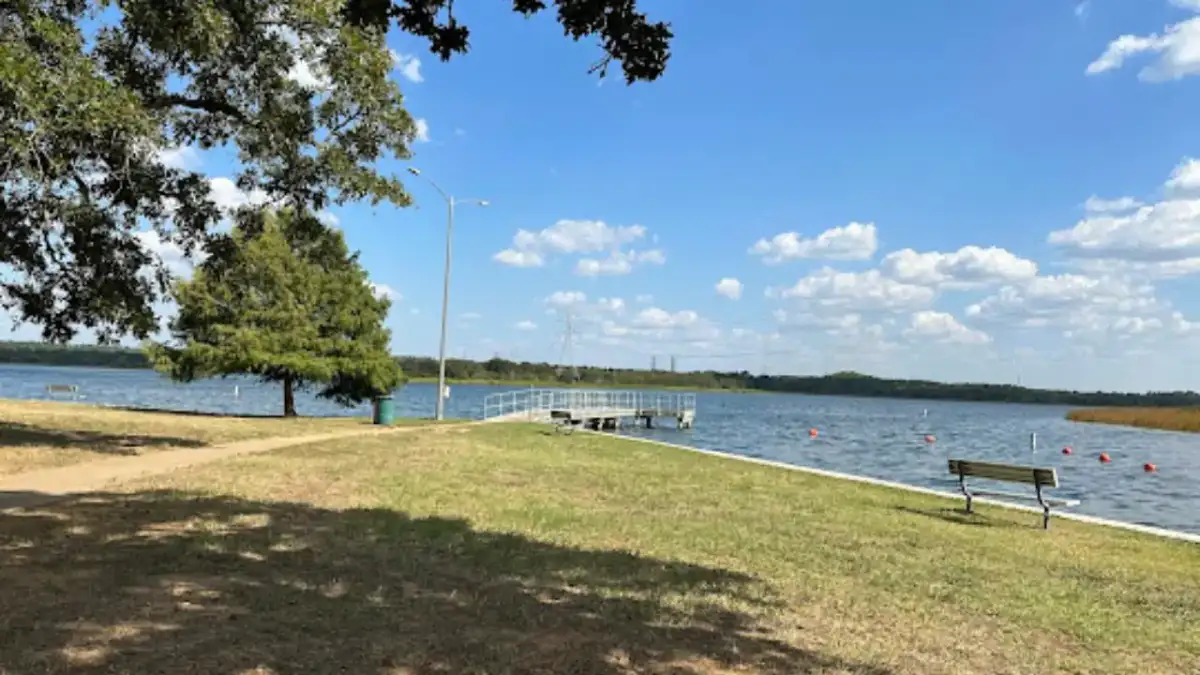
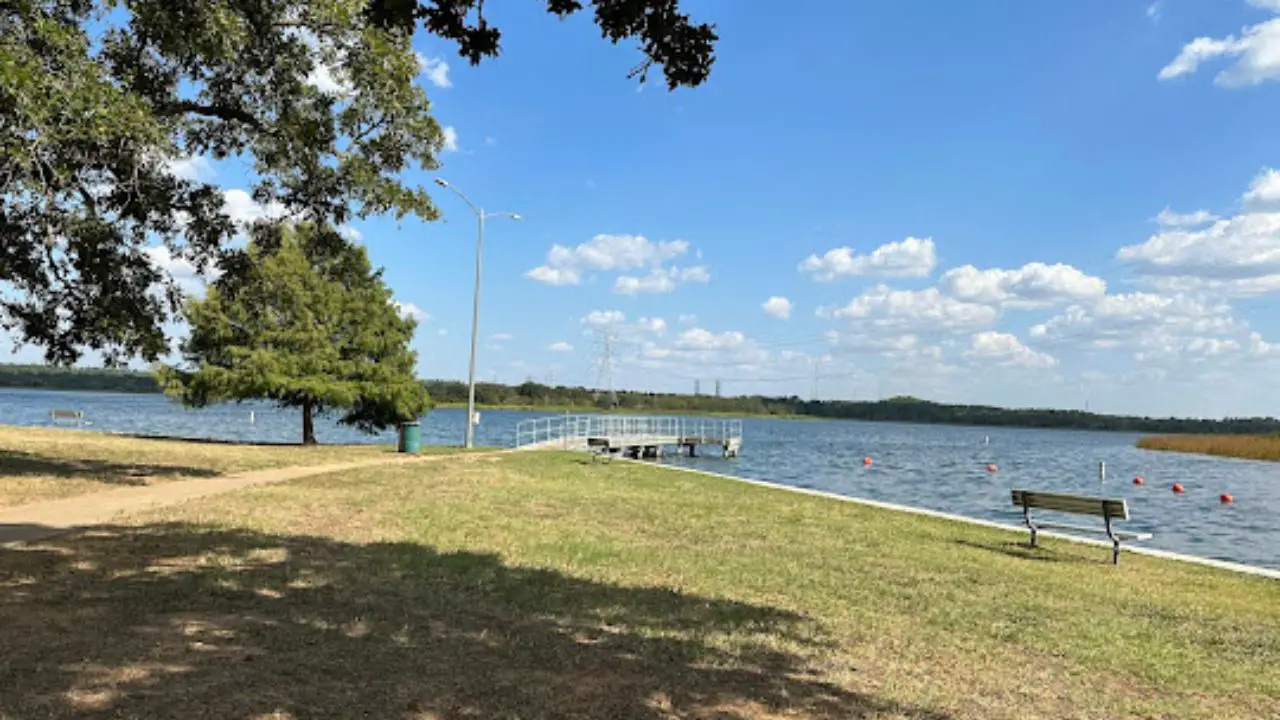
Lake Bastrop TX offers Central Texas travelers a pine-fringed freshwater getaway spanning 906 surface acres three miles northeast of downtown Bastrop. Managed by the Lower Colorado River Authority (LCRA), the reservoir preserves two distinct recreation areas along its shoreline.
Visitors can choose between North Shore Park and South Shore Park. Both Lake Bastrop parks provide concrete boat ramps, lighted fishing piers, designated swim areas, and versatile overnight camping within the fragrant loblolly pines of the Lost Pines ecoregion. Exploring the reservoir ranks among the top outdoor things to do in Bastrop TX for active travelers.
This Lake Bastrop Texas guide details current entrance fees, boat launch rules, bass fishing limits, watercraft rentals, and lodging selections. Travelers comparing nearby regional activities can consult our curated index of the best things to do in Bastrop County for historic downtown dining and river paddling ideas.
Key takeaways
- Lake Bastrop encompasses 906 surface acres in Bastrop County and maintains a stable water level fluctuating only 1 to 2 feet annually under LCRA management.
- Lake Bastrop North Shore Park features Airstream glamping trailers, safari tents, and kayak rentals off FM 1441, charging $5 day-use entry for adults with free admission for children 12 and under.
- Lake Bastrop South Shore Park provides rustic and deluxe cabins, full-hookup RV campsites, an 18-hole mini-golf course, and a lighted fishing pier off South Shore Road.
- The Lake Bastrop North-South Trailway spans 4.5 miles of single-track dirt and pine needles, connecting both LCRA parks for hikers and mountain bikers.
- Anglers at Lake Bastrop must hold a valid Texas freshwater fishing license and follow a strict 14-to-21-inch slot limit for largemouth bass.
What to Expect at Lake Bastrop and Park Locations
Lake Bastrop is a 906-acre recreational reservoir located three miles northeast of Bastrop in Central Texas, offering pine-fringed shorelines, clean swimming coves, two public boat ramps, and productive largemouth bass fishing managed by the Lower Colorado River Authority.
According to the Texas Parks and Wildlife Department Lake Bastrop Guide, the reservoir reaches a maximum depth of 60 feet and was impounded in 1964 along Spicer Creek. The lake was engineered primarily to provide cooling water for the Sim Gideon Generating Station, an active power facility operated by the LCRA.
Hydrologic data published by the Texas Water Development Board Bastrop Profile reveals that the impoundment maintains an exceptionally steady pool elevation. The water level rarely fluctuates more than 1 to 2 feet throughout the calendar year, even during summer heat.
Unlike larger flood-control reservoirs that drop dozens of feet during dry spells, this managed reservoir provides dependable year-round boating and shoreline casting. Such steady access ranks the basin among the most reliable best lakes in Texas.
The reservoir sits approximately 35 miles east of downtown Austin, making it a convenient destination for day trips and weekend escapes. Visitors reach the water via Highway 71 East, connecting to Highway 95 North before branching onto local farm-to-market access roads.
Lake Bastrop Entrance Fees, Passes, and Operating Hours
Day-use admission at Lake Bastrop costs $5 per adult (ages 13 and older), $2 for seniors 65 and older, military, and disabled guests, while children 12 and under enter free. Both parks open daily from sunrise to sunset.
The LCRA enforces identical entry fee schedules across both shoreline facilities:
- Adults (ages 13 to 64): $5 per person for single-day entry.
- Seniors (ages 65 and older): $2 per person.
- Children (ages 12 and younger): Free daily admission.
- Active Military and Veterans: $2 per person with valid identification.
- Annual LCRA Parks Pass: $115 per year, providing unlimited day-use access to all LCRA-managed recreation sites for up to two vehicles.
Day-use gates open at sunrise and close promptly at sunset. Registered overnight guests receive electronic gate codes enabling 24-hour entry and exit throughout their booked stay.
Tip
Day-use vehicle passes frequently sell out on sunny spring and autumn weekends. Reserve day passes online through the LCRA reservation portal up to 30 days in advance to guarantee vehicle parking before arriving at the gate.
Comparing Lake Bastrop North Shore vs. South Shore Parks
North Shore Park focuses on upscale glamping, Airstream suites, and quiet piney tent loops, whereas South Shore Park features rustic and deluxe cabins, full-hookup RV loops, mini-golf, and a dedicated meeting pavilion.
Choosing the proper park base shapes your overall visit. The table below outlines core facilities, addresses, and recreation options across both properties:
| Park Facility | Address / Location | Key Lodging Types | Signature Amenities | Best For |
|---|---|---|---|---|
| North Shore Park | 603 FM 1441, Bastrop, TX 78602 | Airstreams, Glamping Tents, RV Sites, Tent Pads | Boat ramp, kayak rentals, sand volleyball, swim beach | Glamping escapes, paddlers, couples |
| South Shore Park | 375 South Shore Rd, Bastrop, TX 78602 | Rustic Cabins, Deluxe Cabins, Full-Hookup RV Sites | Boat ramp, 18-hole mini-golf, group hall, fishing pier | Family reunions, RV campers, cabin stays |
North Shore Park Features
North Shore occupies the northern shoreline off FM 1441. The property preserves a wooded setting with towering pines sheltering shaded picnic sites, charcoal barbecue grills, and an open sand volleyball court.
According to the LCRA Lake Bastrop North Shore Park Facility Portal, the grounds feature custom-outfitted Airstream trailers and safari-style canvas glamping tents equipped with air conditioning, queen beds, and outdoor fire pits. The camp store stocks bagged ice, firewood bundles, and basic tackle supplies during peak seasons.
South Shore Park Features
South Shore sits along the southern rim off South Shore Road (County Road 352). This side serves as the primary family entertainment hub, featuring an 18-hole miniature golf course and a spacious group dining hall available for private event rentals.
The facility offers climate-controlled wooden cabins alongside pull-through RV sites with 30-amp and 50-amp electrical hookups. A paved day-use parking plaza connects directly to a lighted fishing pier and a buoyed shoreline swim beach.
Lake Bastrop Boat Ramps, Watercraft Rentals, and Swimming Rules
Boaters access the reservoir via two public one-lane concrete ramps located at North Shore Park and South Shore Park, with watercraft rentals including kayaks, canoes, and paddleboards available seasonally at both park camp stores.
The TPWD Public Boat Ramp Access Directory confirms that both ramps operate year-round and accommodate bass boats, ski boats, and pontoon craft. Launching a motorized vessel or trailered boat requires standard park day-use admission fees, but the LCRA assesses no separate boat launch surcharge.
- Lake Bastrop Boat Ramps: North Shore features a wide single-lane ramp with courtesy dock off FM 1441, while South Shore provides a protected cove launch ramp off South Shore Road.
- Speed Limits and Safety: Vessels must maintain a 5 mph no-wake speed within 50 feet of shorelines, swim areas, docks, and fishing piers.
- Watercraft Rentals: The camp stores rent single kayaks, tandem kayaks, canoes, and stand-up paddleboards by the hour or half-day, including Coast Guard-approved life vests and paddles.
Lake Bastrop swimming is permitted within designated buoyed areas at both parks. Lifeguards are not stationed along the shoreline, so swimmers enter at their own risk. Children should always wear personal flotation devices, and visitors should pack water shoes to navigate sandy clay lake beds safely.
Lake Bastrop Fishing: Bass Slot Limits, Catfish, and Pier Tips
The reservoir is renowned for trophy largemouth bass fishing regulated by a strict 14-to-21-inch slot limit, where bass between 14 and 21 inches must be released immediately, alongside thriving channel catfish and sunfish populations.
Because the lake functions as an industrial power-plant cooling reservoir, warm-water discharge historically created early spring spawning conditions. Anglers frequently land five-pound largemouth bass around submerged vegetation, hydrilla patches, and shoreline reed beds from January through April.
TPWD enforces specific harvest rules on the reservoir to preserve the trophy fishery:
- Largemouth Bass Slot Limit: 14 to 21 inches. Bass under 14 inches or 21 inches and longer may be retained. All bass between 14 and 21 inches must be immediately returned to the water.
- Daily Bag Limit: 5 black bass in total, with only 1 bass measuring 21 inches or greater allowed per day.
- Catfish Limits: 25 channel and blue catfish daily in combination, with a 12-inch minimum length requirement.
- License Requirement: A valid Texas freshwater fishing license with a freshwater endorsement is mandatory for all anglers aged 17 and older. Unlike state parks, LCRA reservoirs do not offer license-free fishing.
Bank fishermen without boats enjoy productive outings along the lighted T-head fishing piers at both parks. Night fishing on these piers often yields excellent channel catfish catches using cut shad, chicken liver, or prepared dough baits. Visiting Lake Bastrop fishing spots ranks high on regional bucket lists alongside the best fishing lakes in Texas.
Lake Bastrop Camping: Cabins, RV Sites, and Glamping Options
Camping at the reservoir ranges from primitive tent sites and 30/50-amp full-hookup RV pads to furnished Airstream trailers, safari glamping tents, and climate-controlled wooden cabins with lake views.
Reserving Lake Bastrop cabins provides a comfortable alternative to tent camping in summer heat. The LCRA South Shore Park Amenities Guide lists rustic and deluxe cabins equipped with heating, air conditioning, microwave ovens, mini-refrigerators, and exterior picnic tables. Deluxe units add private indoor bathrooms, while rustic cabin guests utilize modern centralized shower houses.
North Shore provides luxury glamping options for travelers seeking outdoor atmosphere with hotel comforts:
- Airstream Flying Cloud Suites: Vintage aluminum trailers featuring queen beds, kitchenettes, flat-screen monitors, private bathrooms, and shaded outdoor awnings.
- Safari Glamping Tents: Heavy canvas platform tents with wood flooring, queen pillow-top beds, air conditioning, and electrical outlets.
- Full-Hookup RV Sites: Level concrete pads providing water, sewer, and 30/50-amp electric hookups suitable for travel trailers and motorhomes up to 50 feet.
- Tent Camping Sites: Shaded soil pads featuring water spigots, fire rings, picnic tables, and lantern poles within walking distance of modern restrooms.
Overnight camping reservations include day-use park entry for up to two occupants per site. Travelers exploring Central Texas campgrounds can compare these piney retreats to the best places for camping in Austin for nearby state park and private campground alternatives.
Hiking and Biking the Lake Bastrop North-South Trailway
The Lake Bastrop North-South Trailway provides a 4.5-mile scenic connection between North Shore and South Shore parks, offering hikers, trail runners, and mountain bikers shaded single-track paths through the Lost Pines forest.
The trailway meanders across forested ridges, wooden footbridges, and gentle rolling terrain along the eastern edge of the reservoir. A complete out-and-back journey totals 9 miles, delivering moderate elevation changes suitable for intermediate trail runners and cross-country mountain cyclists.
- Trail Surface: Compacted dirt, crushed granite, and exposed sandstone roots lined with pine needles.
- Forest Canopy: Shaded beneath loblolly pines, post oaks, blackjack oaks, and eastern redcedars.
- Wildlife Viewing: White-tailed deer, gray foxes, pileated woodpeckers, and osprey are regularly sighted along the shoreline.
- Trail Regulations: Motorized vehicles and equestrian riders are prohibited. Dogs are welcome but must remain on a handheld leash no longer than six feet.
Hikers undertaking the one-way route can arrange a vehicle shuttle at the opposite park or plan an energetic 9-mile day hike. Exploring this quiet trail network stands out among rewarding things to do in Texas Hill Country and Central Texas state natural areas.
Frequently Asked Questions About Lake Bastrop
Find fast answers to common traveler questions regarding park hours, fishing licenses, swim beach rules, and facility comparisons.
Is Lake Bastrop open to the public?
Yes, public access is available daily from sunrise to sunset for day-use recreation through two LCRA-operated parks. Registered overnight campers have 24-hour gate access using electronic security codes provided at check-in.
Which park is better, North Shore or South Shore?
North Shore Park is ideal for glamping safari tents, retro Airstream stays, and quick kayak rentals off FM 1441. South Shore Park is better for travelers seeking air-conditioned wooden cabins, full-hookup RV sites, and family activities like mini-golf.
Can you swim in Lake Bastrop?
Yes, both North Shore and South Shore parks offer designated shoreline swim areas with buoyed boundaries. Swimmers enter at their own risk because lifeguards are not on duty, and wearing water shoes is recommended over the natural lake bed.
Do you need a fishing license to fish at the lake?
Yes, all anglers aged 17 and older must carry a valid Texas freshwater fishing license with an active freshwater endorsement. Because this is an LCRA recreation area rather than a Texas State Park, the state’s free fishing in state parks exemption does not apply.
How long is the trail between North Shore and South Shore?
The trailway measures 4.5 miles one way, or 9 miles for a complete out-and-back trek. The trail winds through loblolly pines and post oaks, accommodating both hikers and mountain bikers.