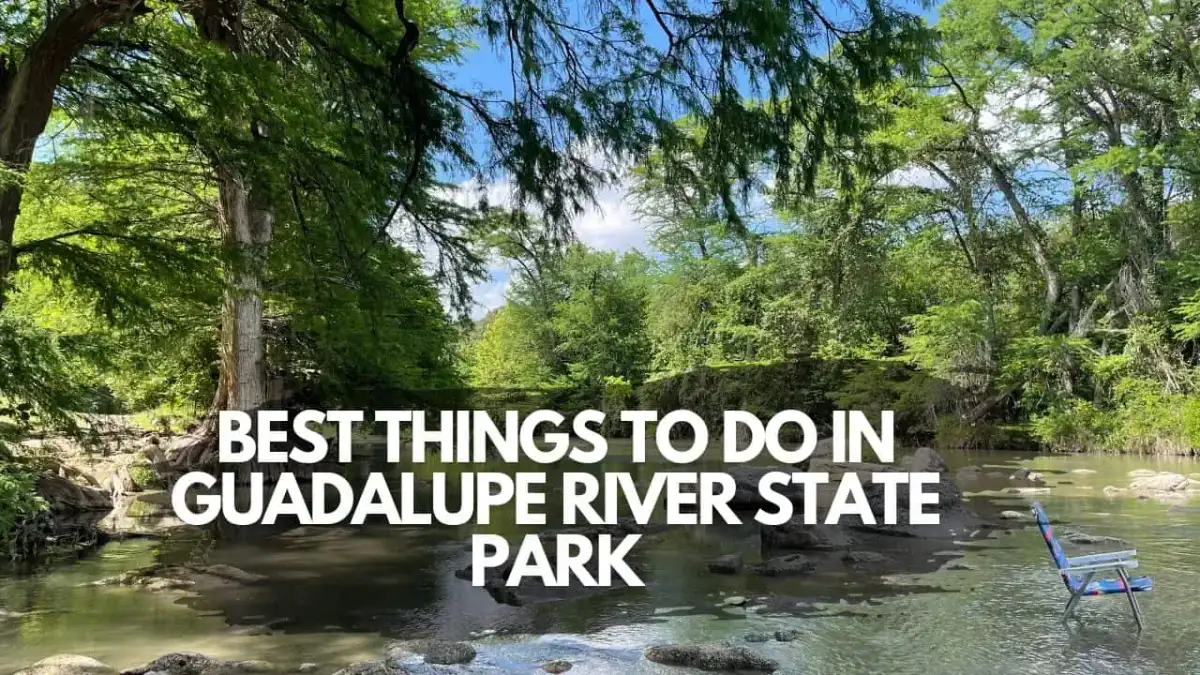
Guadalupe River State Park in Spring Branch preserves four miles of scenic river frontage along the limestone bluffs of the Texas Hill Country. Located 30 miles north of San Antonio, the park welcomes day swimmers, tubers, and campers with 85 improved campsites, 13 miles of hiking trails, and access to the protected Honey Creek corridor.
Adult day admission costs $7, and booking your entry pass up to 30 days in advance is essential to guarantee access during peak summer weekends. Whether planning an afternoon swim under towering bald cypress trees or a weekend tent escape, this guide provides verified logistics for a smooth trip.
Guadalupe River State Park Quick Facts 2026
Encompassing 1,938 acres across Comal and Kendall counties, Guadalupe River State Park Spring Branch sits at 3350 Park Road 31, Spring Branch, TX 78070. Travelers can reach the customer desk by phone at (830) 438-2656.
Day-use gates open daily from 8:00 AM to 10:00 PM. The headquarters office operates from 8:00 AM to 4:30 PM daily, extending to 6:30 PM Friday through Sunday between June and August.
Visitors should note that standard Guadalupe River State Park hours apply strictly to day visitors, while registered overnight campers receive a gate code for 24-hour access. During warm weekends, day-use parking lots regularly reach capacity before 10:00 AM.
2026 Entry Fees and Reservation Rules
Daily entrance fees cost $7 per adult (ages 13 and older), while children 12 and under enter free. Cardholders with an active Texas State Parks Pass receive complimentary admission for everyone arriving in their personal vehicle.
Securing your Guadalupe River State Park tickets online ahead of time is critical. Every visitor must obtain a Guadalupe River State Park day use pass through the reservation portal to guarantee entry during busy periods.
As one of the most accessible state parks near San Antonio, it provides a fast weekend escape for city residents. If you are comparing regional weekend trips, review our guide on camping near San Antonio, or consult the official Texas Parks and Wildlife Guadalupe River Entrance Fees and Camping Rates.
Tip
Peak summer day-use passes routinely sell out a week in advance for Saturdays and holiday weekends. Book your arrival slot the moment your travel dates are confirmed.
At-a-Glance Camping and Facility Comparison
The park provides 85 developed campsites, 9 walk-in sites, and primitive day access across two distinct sectors. The table below outlines current fees, hookups, and primary facilities for each zone.
| Area / Campground | Sites & Hookups | Nightly Rate / Fee | Key Facilities | Best For |
|---|---|---|---|---|
| Turkey Sink Loop | 37 sites (50-amp electric & water) | $24 / night | Restrooms with hot showers, picnic table, fire ring, lantern post | RVs, travel trailers, and family tent setups |
| Cedar Sage Loop | 48 sites (30-amp electric & water) | $20 / night | Restrooms with hot showers, shaded tent pads, grill | Standard pop-ups, van campers, and tent campers |
| Wagon Ford Walk-In | 9 sites (water only, 50-100 yd walk) | $15 / night | Nearby water spigot, tent pad, secluded wooded setting | Quiet tent campers seeking darker skies |
| Bauer Unit (North Bank) | Day use only (no overnight sites) | Included with day pass | Rugged multi-use trailheads; no water or restrooms | Mountain bikers and solitude-seeking day hikers |
| Honey Creek Preserve | Protected preserve (guided tours only) | Included with day pass | Naturalist-led 2-hour walking route; no pets | Birders, native plant enthusiasts, and families |
Navigating the Park: Guadalupe River State Park Maps
The property is geographically split by the river into two separate parcels: the developed Main Unit on the southern bank and the primitive northern parcel. There is no vehicle bridge connecting the two units inside park boundaries.
The Main Unit houses the headquarters, modern campgrounds, the Discovery Center, and the primary river swimming beach. Driving to the north parcel requires exiting onto external rural county roads and entering via Acker Road.
Trail enthusiasts can download the official Texas Parks and Wildlife Guadalupe River Park Map PDF to navigate trails and camping loops. A specialized Guadalupe River tubing map is also posted at the park headquarters to highlight safe takeout spots.
History of the Land: From Native Tribes to State Park
The upper Guadalupe River basin has sustained human communities for more than 10,000 years. Archaeological surveys show evidence of early Paleo-Indian hunter-gatherer camps taking advantage of constant freshwater springs and limestone overhangs.
In later centuries, the fertile river corridor served as traditional hunting territory for Comanche and Lipan Apache tribes. According to records maintained by the Texas State Historical Association Guadalupe River History, the waterway later supported German immigrant farmsteads and lime-burning operations during the mid-19th century.
The state acquired the initial acreage from private ranch owners in 1974, opening the land to the public in 1983. Today, preserved stone boundary fences and heritage pecan groves reflect that long ranching legacy.
Overnight Camping Guide and Campsite Options 2026
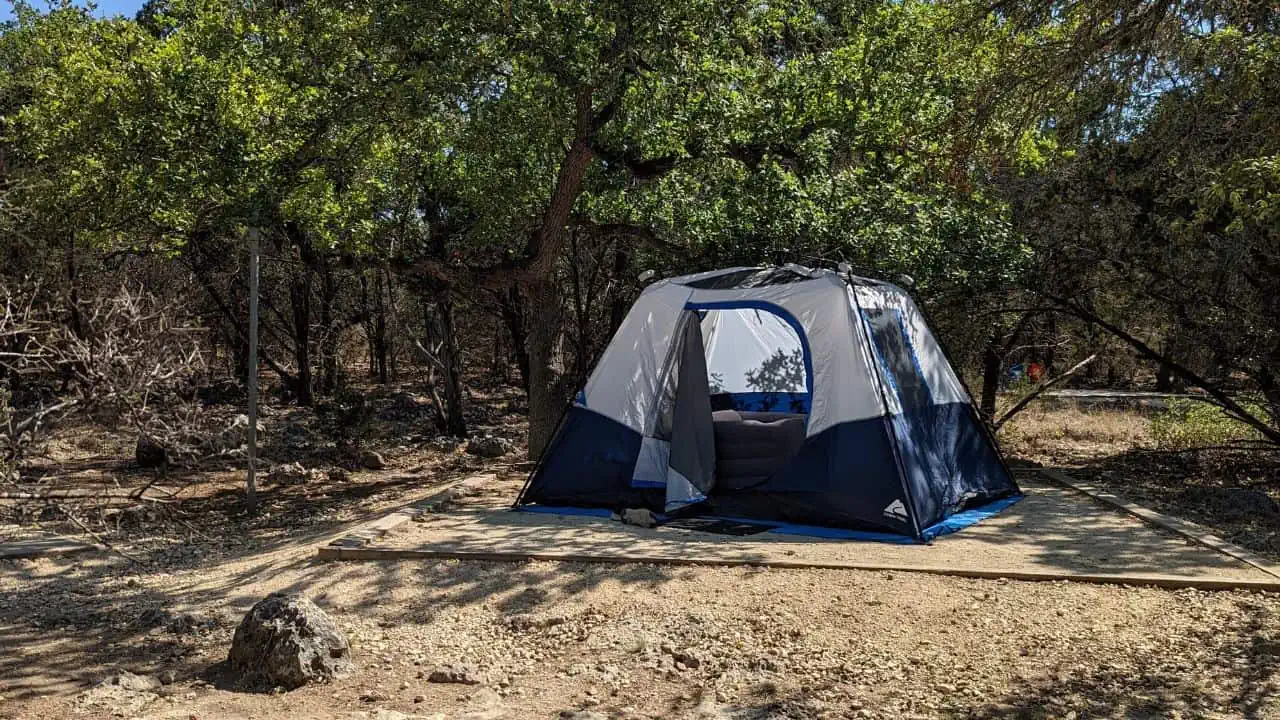
Securing Guadalupe River State Park camping reservations lets visitors experience the Hill Country after daytime crowds have departed. Campers can pick up a physical Guadalupe River State Park campsite map at the entry station to locate their assigned site.
The Turkey Sink camping loop features 37 sites with 50-amp electrical connections for $24 per night, ideal for larger RVs. The Cedar Sage loop provides 48 sites with 30-amp service for $20 per night, shaded by mature cedar elms and live oaks.
Travelers searching for Guadalupe River State Park cabins should note that this property provides campsites only. For roofed stone shelters and historic lodges, explore our curated list of Texas state parks with cabins.
Tip
Campers at Wagon Ford should bring a folding utility wagon. Carrying heavy coolers and tents across 100 yards of uneven crushed stone is much easier on wheels.
The Discovery Center: Fun for Kids and Junior Rangers
The Discovery Center serves as an educational hub for traveling families. Interactive exhibits display local river hydrology, karst limestone formations, and native wildlife specimens.
Children can request free activity booklets from staff to participate in the Discovery Center Junior Ranger program during their stay. The program challenges kids to observe animal tracks, identify native trees, and practice outdoor safety.
Families can also check out free scientific kits stocked with field guides, magnifying glasses, and birding binoculars. Weekend interpretive talks frequently cover venomous snake safety, dark-sky astronomy, and river invertebrate sampling.
Best Hiking and Biking Trails
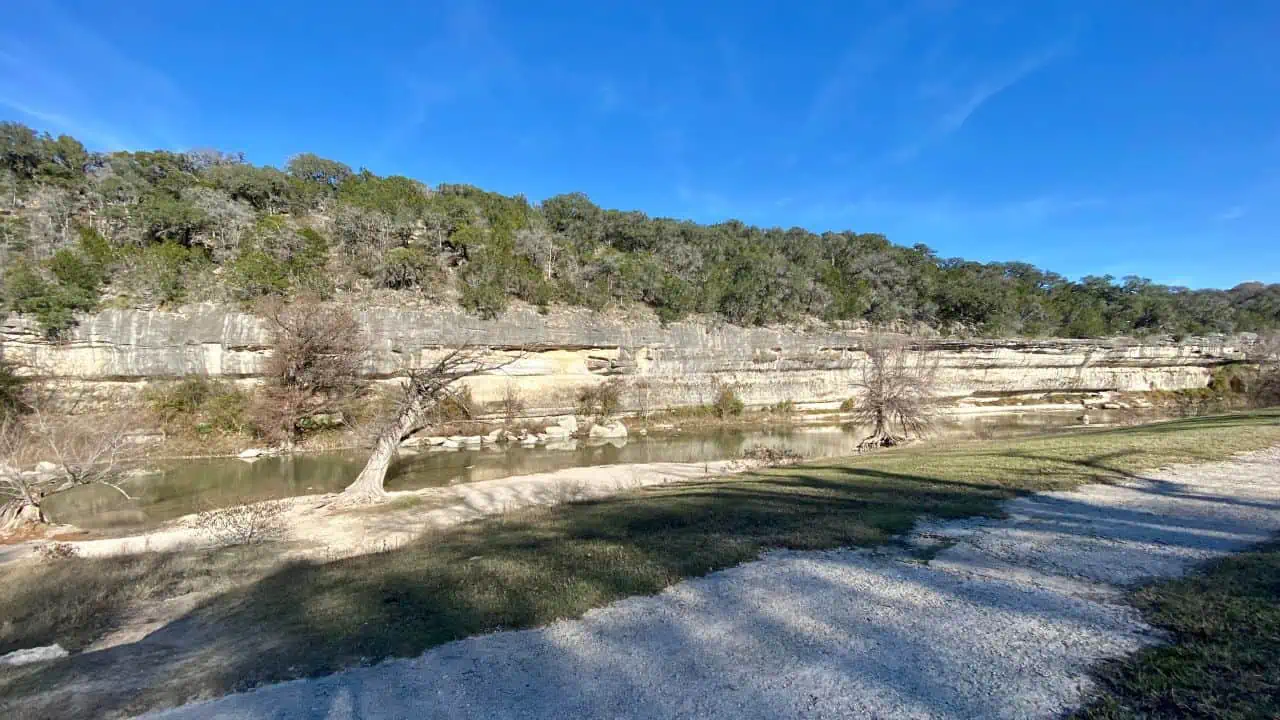
With 13 miles of marked paths, the park accommodates casual walkers, distance trail runners, and gravel cyclists. Trail routes range from flat riverside paths to steep limestone bluff climbs.
The 0.5-mile Bald Cypress Trail is the most popular walk in the park, tracing the water's edge under massive ancient trees. The River Overlook Trail spans 2.6 miles, providing panoramic vantage points across the river canyon.
Cyclists looking for technical challenges head to the Guadalupe River State Park Bauer Unit, where rocky singletrack loops test bike-handling skills. Spring trail visitors should hike the Prairie Trail, which fills with native wildflowers from late March through May.
River Activities: Tubing, Kayaking, and Swimming
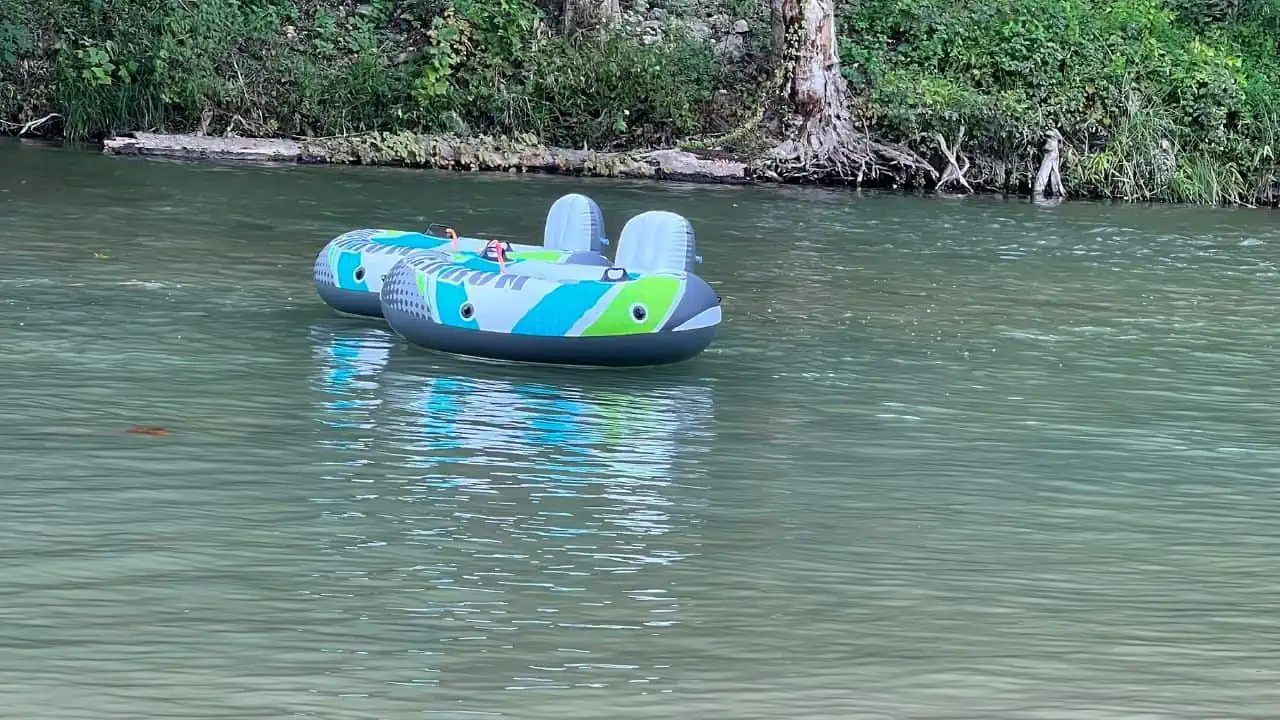
The river serves as the main draw of the park, attracting thousands of swimmers and floaters during hot Texas summers. Clear green water cascades over limestone ledges into deep, refreshing pools.
Recreational tubing conditions depend entirely on seasonal water discharge. Checking the Guadalupe River flow rate Spring Branch station ensures you arrive when floating conditions are pleasant. Reliable floating requires streamflow rates between 150 and 300 cubic feet per second (cfs), monitored directly at the USGS Guadalupe River at Spring Branch Streamflow Gauge 08167000.
When discharge drops below 100 cfs, tubers will find themselves walking across shallow gravel shoals. In contrast, river levels over 500 cfs create strong currents suited only for experienced paddlers, and flows exceeding 1,000 cfs trigger park water closures.
Paddlers can launch kayaks onto the 5-mile Guadalupe River State Park paddling trail to explore remote downstream bends. For a more consistent current during drought periods, consider checking our San Marcos River tubing trip guide for spring-fed alternatives. Travelers seeking calm lake water and open boat launches instead of river currents can head east to the Comal Park swim beach on Canyon Lake.
Flora of the Hill Country: Trees and Wildflowers
The botanical landscape shifts noticeably between the low river floodplains and the high limestone plateau. Riparian corridors feature enormous bald cypress trees whose submerged roots stabilize the rocky banks.
Upland terrain supports dense stands of Ashe juniper, plateau live oak, and Texas persimmon. In early spring, Texas mountain laurel shrubs produce purple flower clusters that give off an aroma reminiscent of grape soda.
Wildflower season transforms the park prairies into colorful carpets of blooms. Visitors can spot bluebonnets, Indian paintbrushes, and firewheels, which can also be tracked using our detailed Texas Bluebonnet Trails guide.
Fishing in the Guadalupe River
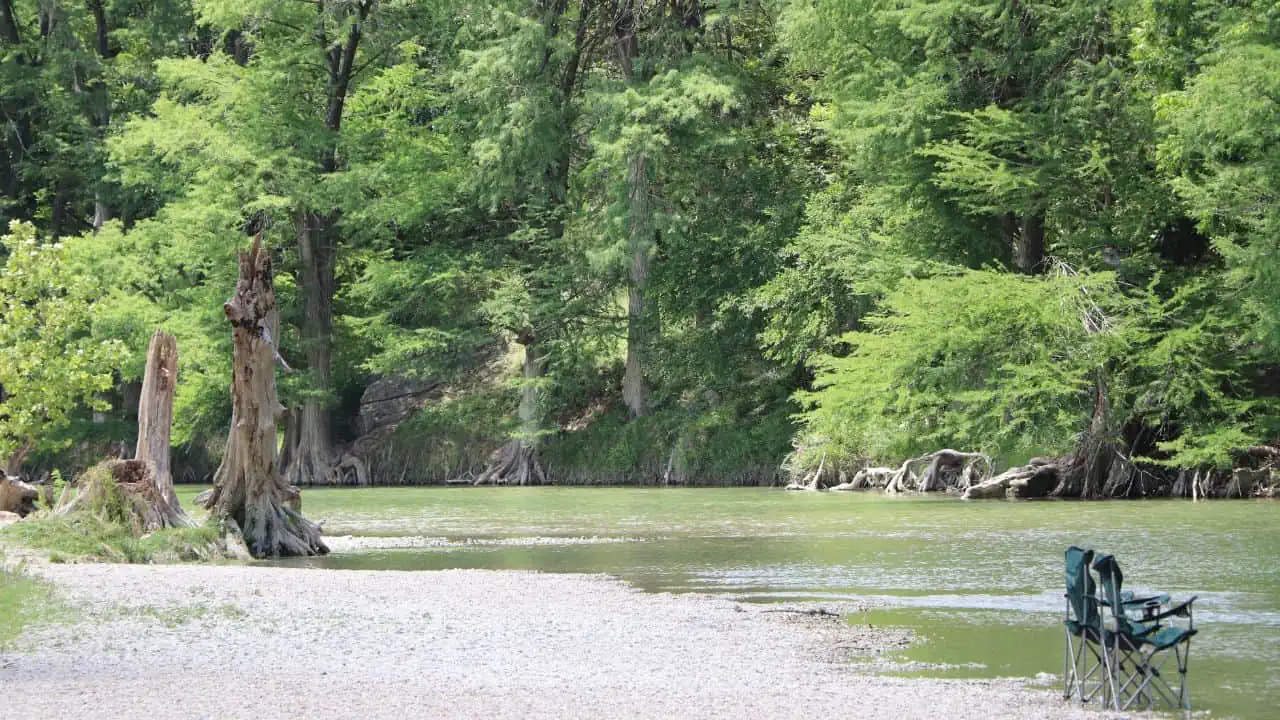
Anglers can fish four miles of river frontage for bass, channel catfish, and sunfish. Under Texas state law, you do not need a fishing license when casting from the bank or wading inside a Texas state park.
The river is famous for Guadalupe bass fishing, targeting the state fish of Texas as it thrives in rapid riffles around boulders. Fly anglers frequently use small poppers and nymph patterns to tempt these aggressive native fish.
During the cooler months from December through February, state wildlife biologists stock the river with rainbow trout. This seasonal stocking provides excellent winter sport for anglers using light tackle or fly rods.
Wildlife and Birding Opportunities
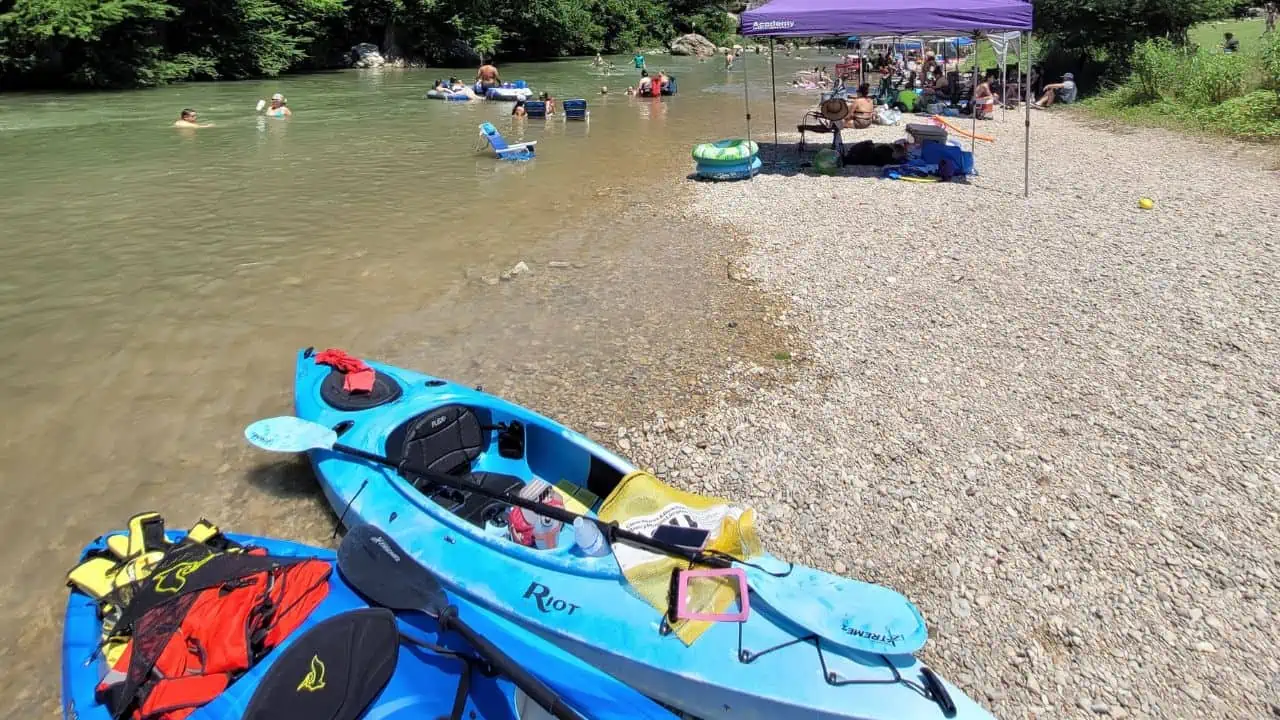
The park provides protected habitat for diverse Hill Country wildlife. White-tailed deer, armadillos, grey foxes, and raccoons roam the river flats and upland savannahs.
Birders travel here each spring to catch glimpses of the endangered Golden-cheeked Warbler. These small songbirds nest exclusively in mature juniper-oak woodlands found on protected ridges across the park.
Two dedicated birding blinds near the Cedar Sage camping area feature drip water baths and feeding stations. These blinds offer quiet vantage points to photograph painted buntings, green kingfishers, and cedar waxwings.
How Guadalupe River Compares to Other Parks
Among popular Hill Country state parks, choosing the right destination depends on individual priorities for social gatherings or quiet recreation. Compared to our Garner State Park visitor guide, this park offers a substantially calmer, less commercial atmosphere.
While Garner draws massive summer crowds for evening pavilion dances, this park focuses on natural river access and quiet starlit campsites. It also sits much closer to San Antonio, saving two hours of round-trip driving.
Nearby McKinney Falls State Park in Austin offers closer proximity to urban amenities. However, this park provides four times more river frontage and far more rugged backcountry hiking in its northern section. For travelers seeking even deeper solitude, spring-fed tubing, and Gold-tier dark sky stargazing further west, our South Llano River State Park visitor guide highlights a premier Kimble County alternative.
Honey Creek State Natural Area: Guided Preserve Access
Adjacent to the park sits Honey Creek State Natural Area, a 2,295-acre biological preserve. The property safeguards crystal-clear spring runs, rare dwarf palmetto stands, and fragile karst cave formations.
Public access to Honey Creek is permitted exclusively through guided interpretive walks led by trained master naturalists. Tours generally run on Saturday mornings at 9:00 AM, departing from the park center.
Advance reservations are mandatory because group sizes are restricted to minimize environmental impact. To secure your spot, review the official Texas Parks and Wildlife Honey Creek Guided Tour Guidelines before booking travel dates.
Important
Pets are strictly prohibited on Honey Creek guided tours to protect sensitive riparian habitats and nesting wildlife. Leave pets with a campsite companion or in secure boarding.
Photography Tips: Capturing the Hill Country
The park's limestone bluffs and clear currents create great opportunities for landscape and wildlife photographers. Early morning mist rising from the river provides atmospheric contrast against the dark green cypress canopy.
Head to the River Overlook Trail approximately 40 minutes before sunset. Late afternoon sunlight illuminates the vertical limestone cliffs across the water with warm amber tones.
When shooting near the river, always carry a waterproof dry bag to protect sensitive camera bodies. Keep a microfiber lens cloth handy, as limestone dust and morning humidity can quickly fog front lens elements.
Ultimate Packing Checklist for 2026
Proper preparation ensures you spend your trip relaxing rather than running out for forgotten supplies. Pack the following essentials for your Guadalupe River outing:
- Sturdy water shoes with heel straps: River rocks are slick and sharp; bare feet and flip-flops lead to painful cuts.
- Coast Guard-approved life jackets: Recommended for children and weak swimmers navigating unpredictable river currents.
- Heavy-duty plastic or soft cooler: Styrofoam coolers are illegal on the river; remember that ice melts fast in summer heat.
- Reef-safe sunscreen and wide-brim hat: Shaded river sections are limited; open gravel bars reflect strong solar radiation.
- Waterproof dry bags and phone pouches: Essential for keeping electronics and car key fobs safe while floating.
2026 Seasonal Visiting Tips
Each season creates a distinct atmosphere across the river basin. Spring (March through May) features mild temperatures, blooming wildflowers, and prime songbird migrations.
Summer (June through August) brings heavy day-use traffic and hot afternoon weather. Arriving at the gate by 8:30 AM guarantees easy parking and lets you claim shaded riverbanks before the midday rush.
Autumn (September through November) is ideal for camping and trail hiking. Bald cypress needles turn a rich rust-orange in November, creating striking reflections along calm river pools.
Winter (December through February) sees minimal crowds and brisk mornings. Crisp afternoons are ideal for mountain biking and casting for stocked rainbow trout.
Local Insider Tips: Hidden Gems of the Park
Locals who visit Guadalupe State Park frequently rely on several simple strategies to make the most of their visit. First, the riverbanks directly in front of the main parking lot are the most congested; walking 200 yards upstream leads to much quieter wading spots.
Second, cellular reception from major carriers drops dramatically once you descend into the river canyon. Always download offline trail maps and screenshot your TPWD reservation confirmation before leaving the highway.
Finally, consider packing your own shade canopy. Shaded gravel spots fill up rapidly, and a pop-up canopy staked firmly into the gravel bank makes a major comfort difference during midsummer afternoons.
Safety and Ethics: Leave No Trace in 2026
Visiting Guadalupe River State Park TX requires respecting clear rules designed to protect visitors and waterways. Glass containers and Styrofoam products are strictly prohibited on the river and riverbanks.
Public consumption or display of alcoholic beverages is illegal throughout all outdoor day-use zones. Alcoholic drinks are permitted only within the physical boundaries of your assigned campsite.
Pets must remain on a hand-held leash no longer than six feet at all times. Always pack out every piece of trash, including food wrappers, bottle caps, and fishing line.
Stay alert for rapidly rising river levels during Hill Country thunderstorms. If you notice river water turning muddy or sudden changes in current velocity, exit the riverbed immediately and move toward higher ground.
Exploring Nearby: Bulverde and Spring Branch
The gateway communities of Spring Branch and Bulverde sit five to ten minutes from the park entrance. Both towns offer convenient stops for fuel, tube rentals, bagged ice, and casual Hill Country dining.
Stop by local bakeries and smokehouses along Highway 46 to grab picnic supplies before entering the gate. For water recreation beyond the river, explore our guide to things to do in Canyon Lake, located just 20 minutes to the east.
Frequently Asked Questions
Does the park require reservations?
Yes, advance reservations are strongly recommended for both day use and camping. Day-use passes can be booked online through TPWD up to 30 days ahead, while overnight campsites open five months in advance.
Can you tube or swim in the park?
Yes, visitors can swim and tube along four miles of river frontage. Comfortable tubing requires river streamflows between 150 and 300 cfs; flow rates below 100 cfs require walking across shallow gravel bars.
What are the nightly camping rates?
Nightly campsite rates range from $15 for primitive walk-in sites at Wagon Ford to $20 for 30-amp electric sites in Cedar Sage and $24 for 50-amp sites in Turkey Sink, in addition to daily entrance fees.
Are there cabins available?
No, this state park does not offer rental cabins or screened shelters. Overnight visitors must bring their own tents, travel trailers, or RVs, or reserve private vacation rentals in nearby Spring Branch.
What is the Bauer Unit?
The Bauer Unit is a primitive 1,000-acre section on the north bank of the river accessed via Acker Road. It features rugged hike-and-bike trails but has no potable water, restrooms, or vehicle river access.
Do I need a fishing license?
No, you do not need a Texas fishing license when fishing from the riverbank or wading inside the state park boundaries. Standard state bag limits and length regulations still apply to all caught fish.
Are dogs allowed in the park and Honey Creek?
Dogs on a six-foot leash are welcome on main park trails and in campgrounds. However, pets are strictly prohibited inside park buildings and on guided interpretive walks through the Honey Creek State Natural Area.
Can you bring alcohol or coolers?
Coolers are permitted, but glass and Styrofoam are strictly banned on the river. Consuming alcoholic beverages in public day-use areas is illegal; alcohol is permitted only inside your registered campsite.
How far is the park from Austin and San Antonio?
The park is located approximately 30 miles north of downtown San Antonio (a 45-minute drive) and roughly 80 miles southwest of Austin (about a 1-hour and 30-minute drive) via Highway 281.