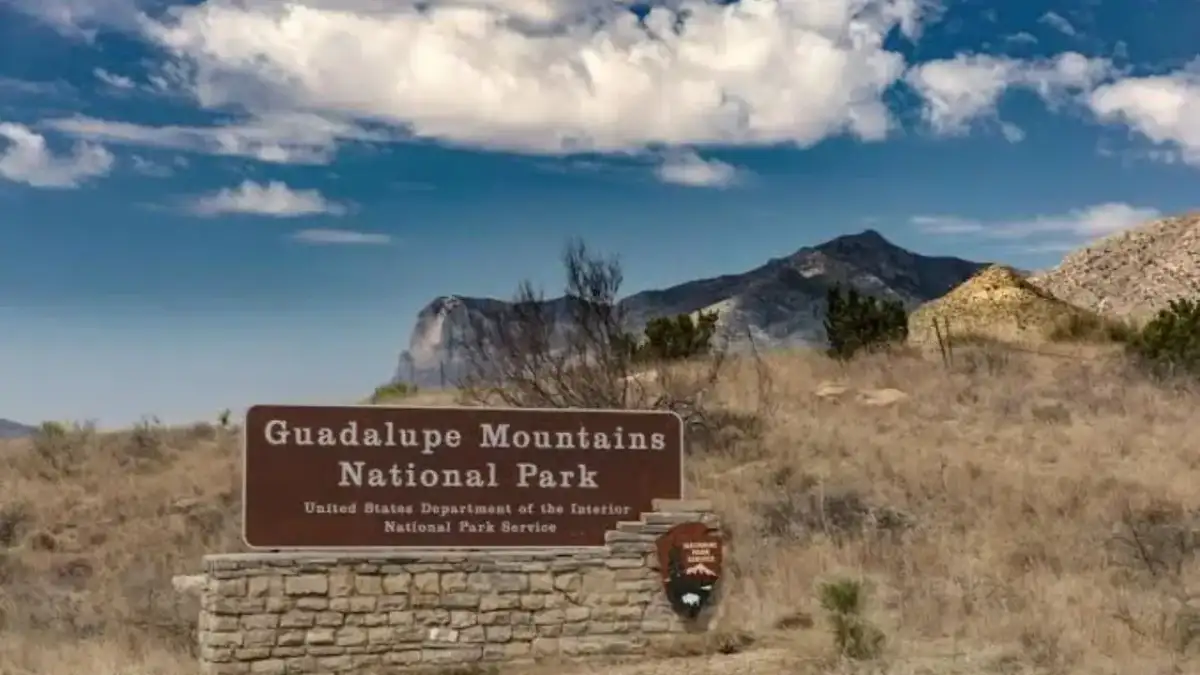
Often colloquially referred to by travelers as Guadalupe National Park, this federal reserve in far West Texas protects the four highest peaks in the state, over 80 miles of rugged mountain trails, and the world's most extensive fossil reef from the Permian Period. Successful visits require strict preparation because the park offers no concessions, no gasoline, no showers, and zero backcountry water sources.
Travelers comparing remote Texas wilderness journeys often pair this destination with our comprehensive Big Bend National Park visitor guide. While Big Bend sprawls across hundreds of river miles, the high country here stands out for sheer vertical relief, high-altitude pine forests, and challenging rocky ascents.
Key takeaways
- Guadalupe Mountains National Park preserves 86,367 acres in far West Texas, including Guadalupe Peak, the highest summit in Texas at 8,751 feet.
- Standard park entrance costs $10 per person for visitors 16 and older (valid for 7 consecutive days), and all federal America the Beautiful passes are accepted.
- Pine Springs and Dog Canyon campgrounds require advance reservations via Recreation.gov and operate strictly as dry camping with potable water but no showers or RV hookups.
- All wood and charcoal fires are strictly prohibited park-wide to prevent catastrophic wildfires in arid desert grasslands.
- Pets are permitted only in developed campgrounds, parking areas, and on two designated paved paths (The Pinery Trail and Pine Springs Campground connector), and remain prohibited on all hiking trails.
Quick Planning Overview for Guadalupe Mountains National Park
Guadalupe Mountains National Park is a rugged wilderness destination in West Texas centered around desert mountain hiking, geology, and primitive camping. Visitors should arrive self-sufficient with all water, fuel, and supplies, as the park offers no food concessions or lodging facilities.
Planning an expedition to Guadalupe Mountains National Park Texas requires establishing a base camp near Pine Springs Texas along Highway 62/180. The isolated park headquarters hosts the main visitor center, ranger information desks, and key trailheads.
The entire geological formation originated 260 to 270 million years ago as the Capitan Reef in an ancient sea. Today, this protected area in the Guadalupe Mountains Texas region spans 86,367 acres and features limestone cliffs rising above the desert basin.
Note
Guadalupe Peak reaches an elevation of 8,751 feet, rising more than 3,000 vertical feet above the desert basin to claim the title of highest point in Texas.
Best Time to Visit Guadalupe Mountains National Park
The best time to visit Guadalupe Mountains National Park is during the fall from October through November and spring from March through May when daytime temperatures stay between 60°F and 75°F. Summer brings dangerous desert heat exceeding 100°F, while winter produces high wind events with gusts over 70 mph.
Spring welcomes blooming desert cacti and mild temperatures, but spring travelers must prepare for sustained winds. Afternoon gusts frequently top 40 to 50 miles per hour across exposed ridges and open desert gaps.
Summer temperatures regularly soar into dangerous territory at lower elevations. Hikers attempting trails during summer must begin before sunrise and carry extra hydration salts to handle extreme moisture loss.
Winter brings cold nights dipping below freezing, occasional snowfall, and powerful Pacific cold fronts. High-elevation wind advisories can shut down high-country trails when gusts surpass 60 miles per hour, as outlined in the National Park Service Guadalupe Mountains Weather and High Wind Advisory.
When Do Fall Colors Peak in McKittrick Canyon?
Fall colors peak in McKittrick Canyon from late October through mid-November, when protected pockets of bigtooth maples, Texas madrones, and walnuts turn brilliant scarlet, orange, and gold against towering limestone walls.
Experiencing McKittrick Canyon fall colors presents a dramatic visual contrast compared to Central Texas foliage at Lost Maples State Natural Area. McKittrick Canyon operates strictly as a day-use zone from 8:00 AM to 5:00 PM Mountain Time, with the access gate locked promptly at 5:00 PM.
Guadalupe Mountains Hiking Trails: Routes and Trail Comparison
Guadalupe Mountains hiking trails span over 80 miles of maintained routes ranging from accessible nature walks to punishing backcountry ridge climbs. The park trail network divides between the Pine Springs hub, the day-use McKittrick Canyon basin, and the isolated Dog Canyon outpost on the northern rim.
Hikers must choose routes based on personal conditioning, daily wind forecasts, and available daylight. Trail conditions consist primarily of loose limestone rubble, steep switchbacks, and narrow exposed ledges, with full trail mileage details published in the National Park Service Guadalupe Mountains Trail Directory.
| Trail Name | Distance (Round Trip) | Difficulty | Elevation Gain | Best For |
|---|---|---|---|---|
| Guadalupe Peak Trail | 8.4 miles | Strenuous | 3,000 feet | Summiting the highest peak in Texas |
| Devil’s Hall Trail | 4.2 miles | Moderate | 550 feet | Canyon boulders and natural limestone staircase |
| McKittrick Canyon to Pratt Cabin | 4.8 miles | Moderate | 200 feet | Autumn foliage and canyon geology |
| Permian Reef Trail | 8.4 miles | Strenuous | 2,000 feet | Ancient marine fossils and geology stops |
| The Pinery Trail | 0.75 miles | Easy | 30 feet | Paved history walk and historic Butterfield ruins |
| Salt Basin Dunes | 3.0 miles | Easy to Moderate | 50 feet | Brilliant white gypsum sand exploration |
Hikers comparing rugged western summit treks also enjoy reviewing Franklin Mountains State Park El Paso TX. While Franklin Mountains provides urban mountain climbing near city dining, this national park delivers an authentic backcountry experience.
How Hard is the Guadalupe Peak Trail?
The Guadalupe Peak Trail is a strenuous 8.4-mile round-trip climb with 3,000 feet of rocky elevation gain that takes six to eight hours for average hikers to complete. Switchbacks begin immediately at the Pine Springs trailhead and climb through steep cliff faces before reaching a cliffside bridge and final summit pyramid.
Hikers encounter direct sun exposure, loose talus, and punishing wind gusts above 7,000 feet. Packing at least one full gallon of water, high-energy snacks, sturdy hiking boots, and trekking poles is essential for a safe round trip.
Devil's Hall and McKittrick Canyon Trail Highlights
Devil's Hall Trail offers a rewarding moderate hike originating directly behind the main parking area. After following a dry gravel wash, hikers navigate natural limestone ledges resembling a giant staircase before stepping into a narrow canyon corridor flanked by 100-foot vertical rock faces.
McKittrick Canyon Trail provides gentle grades through an oasis-like canyon ecosystem. Continuing past Pratt Cabin to the historic Grotto adds 2.0 miles round trip and rewards visitors with limestone caves, stone picnic tables, and flowing clear pools.
What Hike Should You Choose with Limited Time?
Visitors with two to three hours should hike Devil's Hall for dramatic canyon geology or walk the paved Pinery Trail to view Butterfield Stagecoach station ruins. Travelers with five hours should explore McKittrick Canyon up to Pratt Cabin for quiet canyon scenery without extreme mountain climbing.
Hikers with a full day should tackle the signature summit climb starting at first light. Starting early allows you to beat mid-day desert heat, conquer the strenuous lower switchbacks in cool shade, and enjoy the summit vista at 8,751 feet.
Camping and Backpacking in Guadalupe Mountains National Park
Guadalupe Mountains National Park camping centers around three developed locations: Pine Springs, Dog Canyon, and Frijole Horse Corral. All campsites function as dry campgrounds without showers, electric hookups, or water fill stations for RV tanks, as detailed in the National Park Service Guadalupe Mountains Campground Directory.
Pine Springs Campground provides 20 walk-in tent sites with level gravel pads and 13 paved RV spaces. Tent campers share communal utility sinks and flush toilets, but vehicles over 55 feet in total length are prohibited.
Dog Canyon Campground rests at 6,300 feet on the quiet northern boundary, sheltered by dense pinyon pine and juniper groves. This remote outpost features nine tent sites and four RV spaces, offering cooler summer temperatures but requiring a two-hour drive around the mountain range.
Campers seeking private cabins, full utility hookups, and swimming pools should explore the best state parks in Texas with cabins. Park overnight stays remain strictly oriented toward self-reliant tent and dry camper setups.
Do You Need Reservations for Guadalupe Mountains Camping?
Yes, all developed campsites in the park require advance reservations up to six months in advance through the Recreation.gov Pine Springs Campground Reservation System. Standard tent and RV sites cost $20 per night, and first-come, first-served walk-up sites are not available during peak travel seasons.
Backcountry wilderness camping requires a separate Wilderness Use Permit obtained online before your trip. Backpackers pay a $6 reservation fee plus $6 per person per night, and must pack out all personal trash and human waste where designated.
Park Entrance Fees, Passes, and Wilderness Permits
The standard Guadalupe Mountains entrance fee is $10 per person for all visitors aged 16 and older, which remains valid for seven consecutive days from purchase. Children 15 and younger enter free of charge, with complete pass regulations outlined on the National Park Service Guadalupe Mountains Entrance Fees and Passes Portal.
Holders of the America the Beautiful Interagency Pass, Senior Pass, or Military Pass receive free admission for the cardholder and up to three additional adults. Frequent visitors can also purchase an annual park pass for $35 at the visitor center.
Pine Springs Visitor Center accepts card payments from 8:00 AM to 4:00 PM daily. Visitors arriving before or after operating hours can purchase digital day-use passes using self-service kiosks located outside the entrance.
Essential Driving, Fuel, and Mountain Time Zone Logistics
The park sits in an isolated pocket of far West Texas on US Highway 62/180. The entrance gates lie 110 miles east of El Paso, 55 miles southwest of Carlsbad, New Mexico, and 65 miles north of Van Horn, Texas.
No gasoline, automotive repair stations, or grocery stores operate within 35 miles of Pine Springs. Travelers heading west from Central Texas often stop to refuel and explore things to do in Fort Stockton TX before continuing along Interstate 10 toward Van Horn.
The entire reserve operates on Mountain Time year-round. Travelers must note that mobile phones often bounce between Mountain Time and Central Time cell towers along Highway 62/180, creating clock errors that risk locking visitors inside the McKittrick Canyon gate past 5:00 PM. The park is also home to Guadalupe Peak at 8,751 feet, the highest point in Texas. Learn more about the state's extreme elevation contrasts and driving distances in our guide to mind-blowing Texas geography facts.
Potable water is available only at frontcountry trailheads and visitor centers. Backcountry hikers must carry at least one gallon of water per person per day, as natural canyon springs are non-potable and protected for native desert wildlife.
Park Regulations, Pet Policies, and Trail Safety
To protect fragile desert grasslands and native wildlife, park rangers enforce strict safety policies. Open wood and charcoal fires are prohibited park-wide; only contained propane or liquid-fuel camp stoves are allowed in developed areas.
Pets are restricted from all dirt hiking trails and the backcountry wilderness. Leashed dogs are permitted only in developed campgrounds, paved parking lots, the Pine Springs connector trail, and the short paved Pinery Trail.
Tip
Always check the local high-wind advisory before beginning high-country climbs. Sustained ridge winds above 50 mph can make narrow mountain ledges hazardous and create severe vehicle sway on Highway 62/180.
Nearby West Texas Road Trip Destinations
The park pairs naturally with other regional landmarks across West Texas and southeastern New Mexico. Carlsbad Caverns National Park sits just 35 miles northeast, allowing travelers to explore the subterranean limestone caverns of the very same ancient Capitan fossil reef.
Travelers heading east along Interstate 20 can experience the massive shifting white dunes of Monahans Sandhills State Park. The contrast between limestone summits and white sand dunes provides an unforgettable West Texas road trip.
El Paso lies two hours to the west, offering commercial air service, cultural museums, and historic mission trails. Van Horn serves as the closest Texas lodging hub, featuring vintage motels and dependable fuel stops for early morning park arrivals.
Frequently Asked Questions About Guadalupe Mountains National Park
What is the best month to visit Guadalupe Mountains National Park?
October and November provide ideal daytime temperatures in the 60s alongside vivid autumn foliage in McKittrick Canyon. Spring months from March to May also offer pleasant hiking weather, though afternoon wind gusts frequently reach 50 miles per hour.
How hard is the hike up Guadalupe Peak?
The Guadalupe Peak Trail is a strenuous 8.4-mile round-trip trek with 3,000 feet of rocky elevation gain that takes six to eight hours to finish. Hikers face steep limestone switchbacks, intense desert sun exposure, and high ridgetop wind gusts.
Do you need reservations to enter or camp at Guadalupe Mountains?
Reservations are not needed for general daytime park entry, but all developed camping at Pine Springs and Dog Canyon requires advance booking via Recreation.gov. Wilderness backpacking also mandates an advance backcountry permit reserved online.
Are dogs allowed on hiking trails in Guadalupe Mountains?
Dogs are prohibited on all park dirt hiking trails and in the backcountry to protect fragile desert ecosystems and wildlife. Leashed pets are only permitted in developed campgrounds, paved parking lots, the Pine Springs connector trail, and the short paved Pinery Trail.
Where is the nearest gas and grocery store to the park?
The nearest fuel and groceries sit approximately 35 miles north in Whites City, New Mexico, or 35 miles west in Dell City, Texas. The larger supply hubs of Carlsbad, New Mexico, and Van Horn, Texas, lie 55 and 65 miles away respectively.