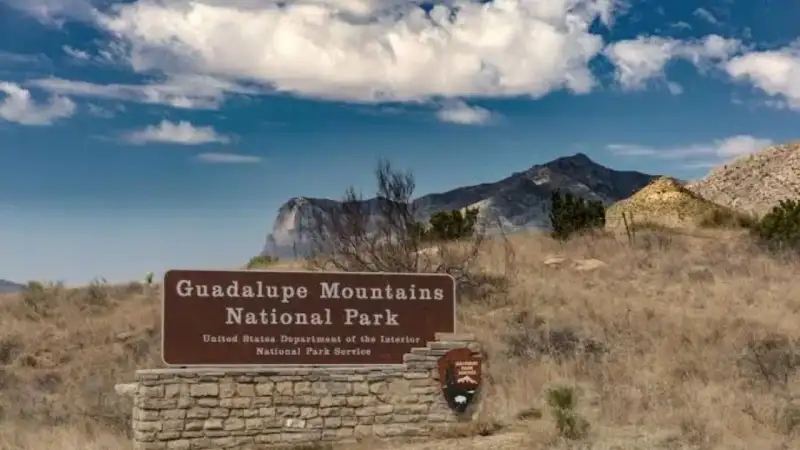
Stretching across 178 miles of open plains in the Texas Panhandle, the Mother Road preserves an authentic slice of mid-century Americana. While many motorists speed through on Interstate 40, slowing down to explore the best small towns on route 66 in texas rewards drivers with Art Deco architectural marvels, quirky roadside museums, and legendary hospitality.
Key takeaways
- The four essential small towns along Texas Route 66 are Shamrock, McLean, Vega, and Adrian, spanning 178 miles across the Panhandle.
- Shamrock anchors the eastern corridor near Oklahoma with the 1936 Art Deco Tower Station and U-Drop Inn Cafe.
- McLean preserves original red-brick roadways and the unique Devil’s Rope Museum documenting the history of barbed wire.
- Vega provides restored 1920s gas station relics and the oldest operating hardware business on the old highway.
- Adrian marks the official mathematical midpoint of Route 66, situated exactly 1,139 miles between Chicago and Los Angeles.
Planning your journey requires understanding which town provides the best dining, where to find operating museums, and how to schedule your photography stops. This guide details driving distances, operating hours, must-see landmarks, and local travel tips for all four historic Panhandle communities.
Best Small Towns on Route 66 in Texas at a Glance
The Texas section of the historic highway crosses seven counties, connecting rolling prairie farmlands east of Amarillo with the high desert mesas of the Llano Estacado. Each settlement preserves a distinct character shaped by early railroad development, petroleum booms, and twentieth-century tourism. Official highway preservation details are cataloged on the Texas Historical Commission Route 66 historic highway portal.
| Panhandle Town | Location Milestone | Primary Attraction | Recommended Visit Time |
|---|---|---|---|
| Shamrock | Mile 15 (East Panhandle) | 1936 U-Drop Inn & Conoco Tower Station | 45 to 60 minutes |
| McLean | Mile 47 (East Panhandle) | Devil’s Rope Museum & Vintage Phillips 66 | 60 to 90 minutes |
| Vega | Mile 142 (West Panhandle) | Magnolia Station & Roark’s Hardware | 30 to 45 minutes |
| Adrian | Mile 160 (West Panhandle) | Midpoint of Route 66 Sign & MidPoint Cafe | 45 to 60 minutes |
Drivers who want an expansive road trip itinerary covering both small towns and metropolitan attractions can consult our complete Route 66 Texas road trip guide before heading out. Breaking the drive into manageable segments allows plenty of time to explore offbeat roadside attractions.
Visiting all four communities in a single day is easily manageable if you pace your driving well. Morning stops east of Amarillo leave the afternoon open for western Panhandle landmarks and a classic slice of diner pie.
Driving Itinerary: Planning the Route from East to West
Most road trippers begin their Texas adventure crossing the Oklahoma state border heading west toward New Mexico. Traveling west mirrors the westward migration routes taken by Dust Bowl travelers and post-war vacationers along the highway. Federal highway history documented by the National Park Service Route 66 corridor overview highlights this classic transcontinental pathway.
The 178-mile drive takes approximately three hours of pure highway driving, but travelers should budget a full six to eight hours to appreciate the sights. Spending an hour in Shamrock, ninety minutes in McLean, and ninety minutes exploring Vega and Adrian creates an unhurried daily schedule.
Amarillo sits near the geographical center of the Texas alignment, providing an ideal midday stopping point for dining or overnight lodging. Travelers can consult our Route 66 Amarillo visitor guide to plan visits to the historic Sixth Street district and Cadillac Ranch.
If your schedule allows an extra overnight stay, exploring the best things to do in Amarillo lets you experience local museums and steakhouses without rushing. Splitting the drive across two days gives you more flexibility to catch evening neon illuminations.
Shamrock: Art Deco Architecture and the U-Drop Inn
Arriving in shamrock texas route 66 welcomes motorists to the eastern gateway of the Texas corridor. Founded in the late nineteenth century as a cattle-shipping hub, Shamrock expanded rapidly following oil discoveries in Wheeler County during the 1920s. Detailed community records preserved in the Texas State Historical Association Shamrock entry document its colorful pioneer roots.
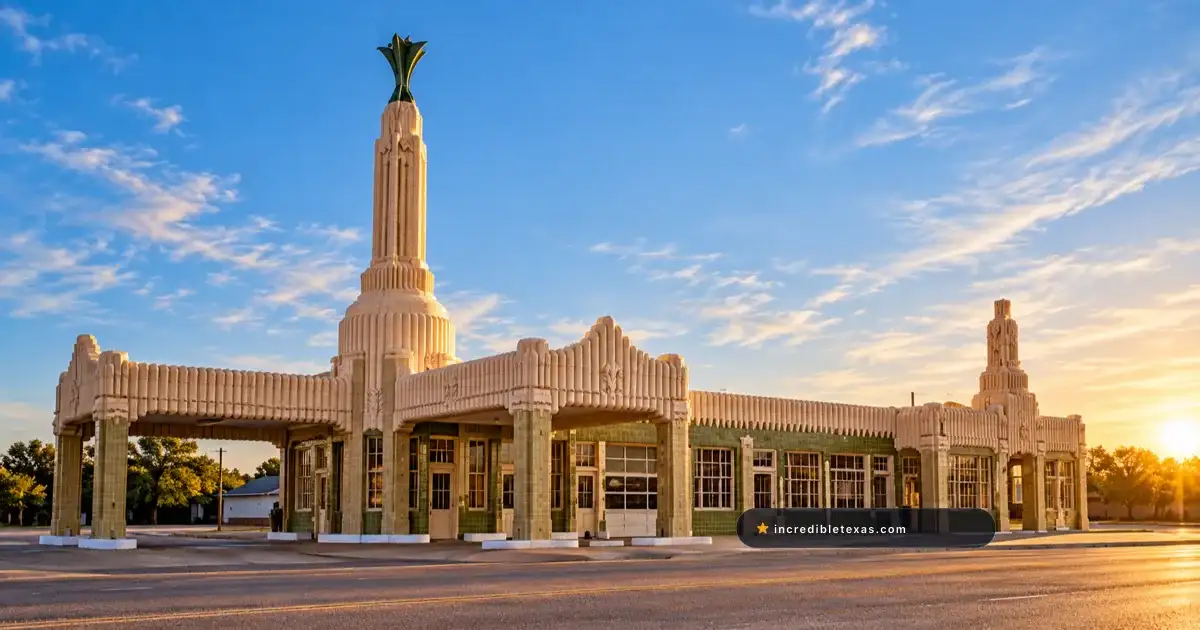
The town’s signature landmark is the 1936 Tower Station and U-Drop Inn Cafe, designed by J.C. Berry in the Art Deco style. Featuring pale green glazed brick and an eighty-foot obelisk spire, the building inspired Ramone’s Body Shop in the movie Cars.
Today, the beautifully restored complex houses the local chamber of commerce, a regional visitor center, and museum displays. Travelers can walk through original dining rooms and admire preserved architectural details.
Beyond the U-Drop Inn, Shamrock features a restored 1920s Magnolia service station on Main Street with vintage visible-cylinder fuel pumps. History buffs can also tour the Pioneer West Museum, housed inside the historic 1928 Reynolds Hotel, featuring pioneer farm equipment, dental surgery antiquities, and Native American artifacts.
Evening visitors should make time to view the U-Drop Inn after sundown, when its intricate exterior neon tubing glows brilliantly against the dark Panhandle sky. The building remains one of the most photographed neon subjects anywhere along the entire highway.
McLean: Devil’s Rope Museum and Historic Brick Streets
Continuing thirty-two miles westward brings motorists to mclean texas route 66 in Gray County. Once a thriving livestock shipping depot on the Rock Island line, McLean proudly retains its historic brick streets and unhurried small-town atmosphere. The town’s historical development and post-war preservation efforts are detailed in the Texas State Historical Association McLean history.
The primary attraction here is the Devil’s Rope and Texas Route 66 Museum, located in a former brassiere factory at 100 Kingsley Street. This fascinating collection houses over two thousand distinct barbed wire patents, wire-handling tools, and fencing equipment that transformed the open Western range. The facility also houses the Texas Route 66 Museum, displaying vintage road signs, porcelain gas pump plates, and highway artifacts.
Walking down the town’s original red-brick corridor reveals the restored 1929 Phillips 66 service station, the first cottage-style station built by Phillips in Texas. The charming steep-gabled structure features vintage enamel petroleum signs and classic fuel pumps.
McLean also preserves remnants of an extensive World War II prisoner-of-war camp that housed three thousand German soldiers between 1943 and 1945. Interpretive historical markers in town detail how the camp operated and its economic impact on local agriculture during wartime.
Vega: Magnolia Station, Roark’s Hardware, and Pioneer Roots
Traveling west past Amarillo into Oldham County leads drivers to vega texas route 66. Vega functions as the quiet county seat, preserving authentic nineteenth-century pioneer culture alongside classic mid-century roadside landmarks. The town’s flat horizon and broad avenues give motorists a true sense of Panhandle space.
A signature photo stop in Vega is the restored 1920s Magnolia Service Station, situated directly along the historic highway alignment. Beautifully rehabilitated with assistance from National Park Service cost-share preservation grants, the small stucco station features vintage pumps and historical interpretation panels. Just across the street stands Roark Hardware Store, celebrated as the oldest continuously operating hardware business on Route 66.
Visitors can also explore the Milburn-Price Culture Museum on Coke Street, which documents the ranching history of the legendary XIT and LS ranches. Interactive exhibits present vintage farm tractors, chuck wagons, and century-old cowboy gear from the open-range cattle era.
Travelers with extra afternoon hours can take an easy southern excursion down to the Palo Duro Canyon State Park guide to hike colorful canyon formations. Adding a canyon nature break provides an unforgettable contrast to flat Panhandle plains.
Adrian: Midpoint of Route 66 and MidPoint Cafe
The final featured stop along the Texas highway is adrian texas route 66, located just twenty miles east of the New Mexico border. Adrian holds a cherished position in American automotive lore as the geographical center of the entire highway. A prominent highway sign standing beside the roadway declares the distance: 1,139 miles to Chicago and 1,139 miles to Los Angeles.
This iconic road marker serves as the official route 66 texas midpoint, drawing travelers from around the world to photograph their vehicles straddling the painted white centerline. Directly across the asphalt sits the MidPoint Cafe, a famous roadside diner operating continuously since 1928 under various historical names.
The cafe is legendary for its homemade “ugly crust” fruit pies, hearty burgers, and extensive selection of highway memorabilia. Diners can enjoy a classic lunch while listening to vintage jukebox tunes and browsing autographed guestbooks signed by international road trippers. Note that the cafe operates seasonally from spring through autumn, so verifying current open days before visiting is essential.
After celebrating your midpoint milestone, road trippers continuing into the desert can consult our West Texas hidden attractions guide for scenic mountain passes and ghost towns. The westward horizon opens up into dramatic desert mesas as you cross into New Mexico.
Road Trip Logistics: Fuel, Food, Weather, and Timing
Driving the Panhandle requires sensible advance planning due to wide distances between populated settlements. While Interstate 40 runs parallel to historic alignments and provides modern service travel centers, older bypass business routes can have long stretches without open gas stations or convenience stores. Keeping your vehicle’s fuel tank above a quarter full eliminates unnecessary range anxiety.
Weather in the Panhandle changes quickly across all seasons. Spring brings severe thunderstorms and high winds, summer days can easily exceed ninety-five degrees Fahrenheit, and winter blizzards occasionally produce sudden highway closures. Checking regional forecasts and packing extra drinking water and seasonal jackets guarantees you stay prepared.
Timing your stops around daylight ensures optimal conditions for exterior architectural photography. Morning sun highlights the eastern facade of Shamrock’s U-Drop Inn, while afternoon golden hour provides dramatic lighting across Adrian’s open plains.
Most small-town museums and independent diners operate with limited volunteer staff and seasonal schedules. Calling ahead to confirm museum hours or checking official social media updates before departing saves unexpected disappointment at the door. Travelers fascinated by vanished settlements along this historic corridor can also explore our guide to Texas Panhandle ghost towns, which highlights preserved motel ruins and grain elevators in Glenrio, Jericho, and Conway.
Frequently Asked Questions About Texas Route 66 Small Towns
What are the best small towns on Route 66 in Texas?
The top four small towns to visit along Texas Route 66 are Shamrock, McLean, Vega, and Adrian. Each town offers distinct attractions, including Art Deco buildings in Shamrock, barbed wire history in McLean, vintage gas stations in Vega, and the midpoint marker in Adrian.
How much time is needed to visit Shamrock, McLean, Vega, and Adrian?
A quick driving tour focusing on roadside photo opportunities takes about half a day (four to five hours). To tour museums, enjoy lunch at a local cafe, and explore restored gas stations without rushing, budget a full day of seven to eight hours.
Is Adrian, Texas the exact midpoint of Route 66?
Yes, Adrian is the official mathematical midpoint of historic Route 66. It sits exactly 1,139 miles from the highway’s eastern starting point in Chicago, Illinois, and 1,139 miles from its western terminus in Santa Monica, California.
What are the top sights to see in Shamrock, Texas?
The must-see landmark in Shamrock is the 1936 Tower Station and U-Drop Inn Cafe. Additional worthwhile stops include the restored Magnolia Station, the Pioneer West Museum inside the historic Reynolds Hotel, and Water Tower Plaza.
Is the Devil’s Rope Museum in McLean open year-round?
The Devil’s Rope and Texas Route 66 Museum operates seasonally from March through November, welcoming visitors Tuesday through Saturday from 9:00 am to 4:00 pm. It typically closes for the winter season between December and late February.
Is it better to drive Route 66 east to west or west to east through Texas?
Driving east to west is the traditional route, aligning with the historic westward migration pattern toward California. This direction allows Shamrock to serve as your festive Texas entrance, while Adrian provides a satisfying milestone celebration halfway through your journey.