Fort Richardson State Park: Hours, Trails, Camping & History
Fort Richardson State Park combines frontier history and outdoor recreation in one North Texas stop. Visitors can walk restored 1860s buildings, hike 12 miles of park trails, follow the 9-mile Lost Creek Reservoir State Trailway, and end the day at North Park for swimming, fishing, or a kayak launch.
The park is at 228 State Park Road 61 in Jacksboro, and the current adult admission is $4 per day while children 12 and under enter free. Reservations matter here because the park often reaches capacity, especially in spring and fall.
Fort Richardson State Park at a Glance
If a North Texas park trip is already in motion, start with North Texas state parks. Fort Richardson sits just south of Jacksboro, and the park pairs easily with other lake-and-trail stops without turning the drive into a long haul.
The park opens daily, and the reservation advice is firm. The site often reaches capacity, so visitors should reserve camping or day-use entry before arrival if the dates matter.
The current adult admission is $4, and children 12 and under enter free. That keeps the visit affordable for a family day or a quick overnight stay.
| Quick fact | Current detail |
|---|---|
| Address | 228 State Park Road 61, Jacksboro, TX 76458 |
| Hours | Open daily |
| Adult entry | $4 per day |
| Child entry | Free for ages 12 and under |
| Main trail system | 12 miles for hikers, bikers, and horseback riders |
| Trailway | 9-mile Lost Creek Reservoir State Trailway |
| Busy season | Spring and fall |
| Nearby parks on the map | Possum Kingdom State Park, Lake Arrowhead State Park, Lake Mineral Wells State Park & Trailway |
The official park page and fee page are the two current references for day-use details. A sold-out day can change a Saturday loop, so current status matters before departure.
What to Do at Fort Richardson State Park
Fort Richardson State Park is not a one-activity park. Visitors can camp, hike, bike, fish, swim, paddle, geocache, and ride a horse without leaving the park boundary.
The grounds and buildings date to the 1860s, which gives the park a real historic core instead of a decorative replica. Several original buildings still stand, and the fort remains the center of the visit.
- Walk the restored fort buildings and learn the post arrangement on a self-guided tour.
- Join a ranger-led program for more context on soldiers and frontier life.
- Take a short hike on the easier trails if the schedule only allows an hour or two.
- Spend a longer block on the trailway for a point-to-point walk or bike ride.
- Use North Park for swimming, fishing, or a kayak launch.
- Book a cabin or campsite for an overnight stay instead of driving back the same day.
- Bring a horse for the trailway if a mounted ride is the goal.
- Search for geocaches if the group wants a more interactive park stop.
The fort is the park’s main attraction, but the rest of the property gives visitors reasons to stay longer. The park pairs that history with enough open space to make the trip feel active instead of museum-like.
A broader Texas parks roundup such as this one covers other North Texas park options with different trail and camping setups. The fort, trailway, and North Park work together, so the park feels like a full route rather than a single stop.
One practical detail matters here: the park is large enough to spread visitors across the fort, North Park, the campsite loops, and the trail system. That arrangement keeps the visit focused on a clear goal before arrival.
History stays near headquarters and the walking tour loop. Water belongs at North Park, and distance starts with the trailway and the full 12-mile trail network.
Fort Richardson State Park Trails, Trailway, and the Best Way to Explore
The trail system is one of the park’s defining features, and the official Trails Information page lists the routes for hikers, bikers, and horseback riders. The main park trails total 12 miles, while the Lost Creek Reservoir State Trailway adds a 9-mile one-way route that ends at North Park.
If two other North Texas trail-and-water stops would help with planning, look at Eisenhower State Park and Ray Roberts Lake State Park. Fort Richardson is different because the historic fort and the trail system sit in the same visit.
| Trail | Distance | Difficulty | What it feels like |
|---|---|---|---|
| Rumbling Spring Trail | 0.5 mi. | Moderate | A winding route to natural springs |
| Prickly Pear Trail | 1.3 mi. | Moderate | A prairie walk where wildlife sightings are common |
| Lost Creek Nature Trail | 0.5 mi. | Easy | A family-friendly loop that keeps the effort low |
| Kicking Bird Trail | 0.3 mi. | Easy | A short birder’s loop named for Kiowa chief Kicking Bird |
| Lost Creek Reservoir State Trailway | 9.0 mi. | Moderate | A scenic route for hiking, biking, and equestrian travel |
| Oak Ridge Trail | 0.4 mi. | Moderate | A short wooded loop between the trailhead and the reservoir shore |
The trailway deserves special attention because it is not just a connector path. It is 10 feet wide, built with a base material topped by screening material, and designed to handle multiple types of users.
The route runs beside Lost Creek and the shores of two lakes, so it works for a long walk, a relaxed bike ride, or a horseback outing that still feels scenic and varied. That combination also keeps the trailway from feeling like a simple side path between trailheads.
The trailway also makes the park a better fit for visitors who want structure. The route begins near the fort, follows the creek east, crosses the dam at Lost Creek Reservoir, and ends at North Park without needing to backtrack.
That one-way setup works especially well for point-to-point rides or for groups that want to split up and meet again later. It also helps visitors plan fuel, water, and shuttle logistics before the first mile begins.
Plan for heat and water even on a short route. The park recommends a quart of water per hour of activity, and that advice matters on the longer trailway or a sunny spring weekend.
A helmet belongs on a bike, and staying on the trail helps protect wildlife, footing, and sensitive habitat close to the edges. Visitors who like exact numbers will also appreciate that the trailway construction used a 10-foot width and a screened base, which gives the route a smooth feel.
The route choices also help match the day to the energy level. Kicking Bird Trail is short enough for an easy loop, while Rumbling Spring Trail and Prickly Pear Trail give moderate effort and more scenery.
If a full ride or hike is the goal, the 9-mile trailway is the centerpiece. It also has enough length to feel like a real outing without becoming a backcountry project.
The trailway has another layer of context: it opened in 1998 after a partnership that included TPWD, the city of Jacksboro, and Jack County. That history helps explain why the route feels so closely tied to the town and the park boundary.
According to TPWD’s trail page, the route also links specific points of interest such as Rumbling Spring, the Oak Ridge area, and the shoreline around Lost Creek Reservoir. That makes the trailway feel more like a connected historic landscape than a simple connector path.
Fort Richardson State Park Camping, Cabins, and Horse Sites
Overnight options are broad enough to make the park an easy weekend base, and the park’s campsites page and lodging page show the range clearly. Visitors can choose anything from a basic tent site to a cabin with hookups outside.
The decision usually comes down to the lowest-cost night, the easiest RV setup, or the shortest path to North Park and the trailway. Each option keeps the historic fort close enough to remain part of the trip, not just a backdrop.
| Stay option | Sites | Nightly rate | Best for |
|---|---|---|---|
| Full hookup campsites | 4 | $25 | RVs and tents in the West Camping Loop |
| Campsites with electricity | 19 | $22 | Campers who want power and a lower price |
| North Park campsites | 14 | $25 | Guests who want to stay near the swim beach and kayak launch |
| Horse sites | 5 | Check current reservation details | Riders who want trailway access |
| Cabins 1-8 | 8 | $45 | Visitors who want full hookups outside the cabin |
| Cabins 9-11 | 3 | $40 | Visitors who want 30-amp hookups outside the cabin |
The cabin details are worth knowing before booking. Cabins 1 through 8 do not have bathrooms, restrooms are nearby, and the sites have heating, air-conditioning, bunk beds, and full hookups outside.
Cabins 9 through 11 are similar but use 30-amp hookups outside instead of full hookups. In both cases, the nightly rate comes on top of the daily entrance fee, so the full cost is a little higher than the posted cabin price.
The campsite mix gives families and bigger groups real flexibility. A simple tent site with power keeps the cost lower than a cabin, while the cabins give more comfort and less setup time.
If horses are part of the trip, the five horse sites next to the trailway make the park especially practical. Riders can unload once and use the route system from there.
If another weekend base is on the list, Lake Tawakoni State Park offers another lake-centered Texas stay with camping and trail access. Fort Richardson stands out when the trip needs history in the middle of it, not just a place to sleep.
Reserve early if the date is fixed. The park’s capacity warnings are not there for decoration, and the North Park sites are especially appealing because they sit close to water and the trail end point.
If the trip depends on a specific cabin or campsite loop, treat the reservation as part of the plan rather than a nice extra. That is the difference between a smooth arrival and a scramble at the gate.
The North Park loop is 3 miles from the main park, and it often draws visitors who want a campsite with easy water access. That distance is short enough for a same-day move but far enough to feel like a separate little outpost.
The west camping loops hold the full hookup and electric sites, while the North Park area sits closer to the beach and the kayak launch. That split gives campers a clear choice between easier fort access and quicker water access.
Fort Richardson State Park Fishing, Swimming, and North Park
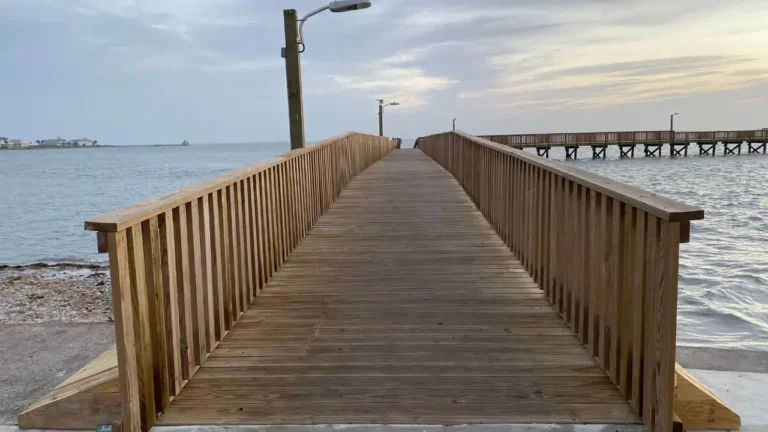
North Park is the easiest place to build a water-focused day around Fort Richardson State Park. It sits about 3 miles from the main unit on Lost Creek Reservoir and puts a swim beach, covered tables, water spigots, restrooms, a fishing pier, and a kayak launch in one compact spot.
That setup works well when a group wants different activities without splitting into separate destinations. It is also a good fit for a half-day stop because the beach, picnic space, and launch area sit close together.
- Fish from shore or a pier without a fishing license inside the state park.
- Use a kayak at North Park if fishing from a boat is the plan, but carry a fishing license for that setup.
- For another fishing spot close to the fort, head to Quarry Lake behind park headquarters.
- Expect bass, catfish, and winter trout in Quarry Lake.
- Plan for a sand beach instead of a deep-water swim area at North Park.
The water access is more practical than flashy, which keeps the area easy to use. North Park is close enough to the trailway end that visitors can hike or ride in, swim or fish for a while, and then settle into a campsite nearby.
Lake Tawakoni State Park is another North Texas option worth comparing before finalizing dates. Fort Richardson remains stronger when a historic fort and a water stop need to be part of the same itinerary.
North Park also helps when families are traveling with kids. The swim beach, shaded tables, and restrooms make the area easier to use for a half-day visit.
The kayak launch sits beside the swim beach and fishing pier. Since the park does not have lifeguards, the swim area should be treated as unsupervised and weather, wind, and fatigue should stay part of the check.
One small but useful detail is that the North Park campsites are limited to single-axle trailers or tents only. That rule matters if a larger RV or a setup with more turning room is part of the trip.
The benefit is that the area stays close to the shoreline and feels more like a lake outpost than a crowded campground. Visitors who want water access with a quieter footprint will notice that right away.
Fort Richardson State Park History and Tours
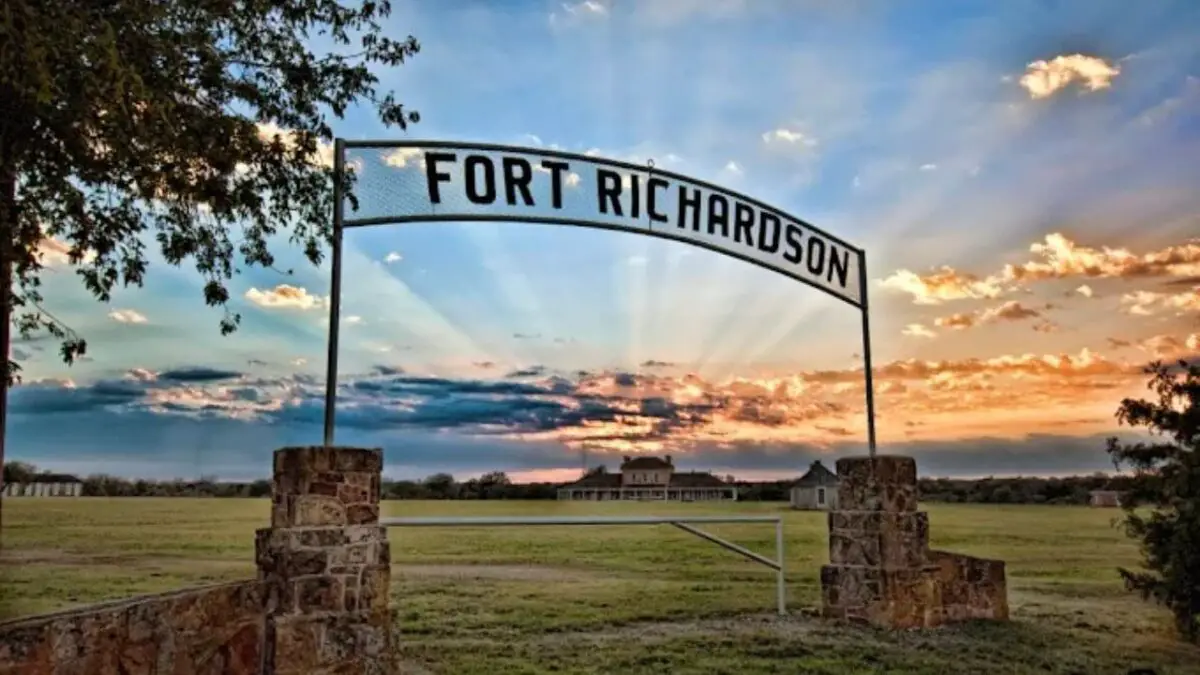
Fort Richardson is the reason the park exists, and the history is more than a label on the map. According to TPWD’s history page, the fort was established in 1867 to protect settlers on the Texas frontier, and several original buildings still stand today.
That gives visitors a real historic site to explore, not a reconstructed setting built only for appearances. The fort still feels tied to the land around it, which is part of its appeal.
Two specific details make the site feel more tangible. The commissary’s wooden section was enclosed in 1869 to store extra supplies, and the Chicago, Rock Island & Texas Railroad Depot was the first depot in Jacksboro.
The depot operated from 1898 until the 1970s, which adds another layer of time to the visit. Those details turn a simple walk through the grounds into a stop that feels grounded in the town’s history.
The restored hospital, commissary, and depot areas make the fort easy to read in pieces instead of as one vague historic block. That structure-by-structure experience helps visitors connect the buildings to the people who lived and worked there.
The current tour schedule is straightforward. Historic buildings are open Saturdays and Sundays from 10 AM to 4 PM for self-guided tours.
Guided tours run Tuesday through Friday at 10 AM and 2 PM. The weekday slots keep the visit compact, while the weekend window gives visitors more flexibility.
Tours are free with park admission, but the buildings are not climate controlled. In summer, the better move is to start early and carry water.
For families, the Junior Ranger options add another layer to the history stop. An Explorer Pack gives kids tools for exploring the park, and a free Junior Ranger Activity Journal can lead to a badge.
That keeps the fort from feeling like a passive museum walk. It also gives kids a reason to notice the buildings, walls, and artifacts rather than just passing through them.
The buildings are not climate controlled, so a morning start and a water bottle still matter during the warm months. Shade and short breaks help the history stop stay comfortable when the weather turns hot.
The Explorer Pack also gives the stop a simple activity focus for children. That keeps the history visit practical instead of purely observational.
Visitors who want to compare Fort Richardson with other Texas parks can use a broader Texas parks roundup. Fort Richardson still stands out because the fort, trailway, and North Park work together instead of feeling like separate attractions.
The combination also helps the park function as both an education stop and an outdoor weekend base. That is harder to find than a simple day-use park with one main feature.
FAQ About Fort Richardson State Park
Is Fort Richardson State Park open daily?
Yes. The park is open daily, and that makes it easy to slot into a weekday trip or a weekend loop.
The reservation warning still matters because the park often reaches capacity. A daily opening does not guarantee the exact camping or day-use setup without booking ahead.
If the schedule is flexible, spring and fall are the busiest seasons to watch. Early reservations help avoid a last-minute change in plans.
How much does it cost to enter Fort Richardson State Park?
Adult admission is $4 per day, and children 12 and under enter free. The fee is separate from camping or cabin rates, so overnight stays should budget for both the stay and the day-use entry.
The price is low enough that a family can use the park for a simple day trip without spending much on admission. A Texas State Parks Pass can make sense for repeat visitors because it covers entry at more than 80 state parks.
Is camping available at Fort Richardson State Park?
Yes, and the camping choices are broader than many visitors expect. Visitors can book full hookup campsites, electric campsites, North Park sites near the water, horse sites near the trailway, or cabins with outside hookups.
The range covers tent campers, RV travelers, and cabin stays. It also works for quick weekend trips and longer stays.
If the lowest nightly rate is the goal, the electric campsites are cheaper than the cabins. If more comfort matters, the cabins give heating, air-conditioning, and nearby restrooms while staying close to the historic site and trail network.
How long is the Lost Creek Reservoir State Trailway?
The Lost Creek Reservoir State Trailway is 9.0 miles long and runs one way between Fort Richardson State Park and North Park. Visitors can hike it, bike it, or ride it on horseback, and the route follows Lost Creek and the shores of two lakes for much of the distance.
That length is long enough to feel like a real outing, but not so long that a full-day endurance plan is required. Visitors who are just testing the park can start with one of the shorter loops like Lost Creek Nature Trail or Kicking Bird Trail and save the trailway for the next visit.
Is swimming available at Fort Richardson State Park?
Yes, swimming is available at North Park in Lake Jacksboro. The swim area includes a sand beach, covered tables, water spigots, and restrooms, which makes it the most convenient water stop in the park for families and mixed-age groups.
The park does not have lifeguards, so the swim area should be treated as unsupervised. Fishing and kayaking are available in the same place, which makes North Park a useful eastern endpoint for the trailway.