Lake Tawakoni State Park encompasses 376.3 scenic acres along five miles of wooded shoreline in Hunt County, roughly fifty miles east of downtown Dallas. Established on the southern arm of a 37,879-acre reservoir, this East Texas park delivers immediate access to open water, post oak savannas, and peaceful wetland coves near Wills Point.
Outdoor enthusiasts visit throughout the year to land record-setting catfish, camp under towering oaks, paddle protected shoreline waters, and hike gentle nature loops. This comprehensive guide covers day-use entrance fees, campground loop hookups, official fishing records, trail specifications, and seasonal trip planning.
Key takeaways
- Convenient Metro Access: Lake Tawakoni State Park spans 376.3 acres along five miles of shoreline near Wills Point, roughly 50 miles east of Dallas via Interstate 30 and State Highway 276.
- Affordable Admission: Day-use entry costs $5 per adult (ages 13 and older), children 12 and under enter free, and park gates operate daily from 6:00 AM to 10:00 PM.
- Spacious Campground Loops: 78 developed campsites across Spring Point and White Deer Reach provide fresh water, electricity, and 16 full-hookup sewer sites under shaded oak canopies.
- Catfish Capital of Texas: Anglers land giant blue, flathead, and channel catfish, enjoying free shoreline fishing within park boundaries without needing a state fishing license.
- Family Waterfront Amenities: Visitors have access to eight nature trails totaling 4.6 miles, a four-lane boat ramp, a buoyed swim beach, and automated kayak rentals.
Plan your visit
Verified
- Location
- 10822 FM 2475, Wills Point, TX 75169
- Hours
- Daily 6am to 10pm
- Admission
- $5 adults (13+), free for children 12 and under
- Best time to go
- Spring and autumn for camping and catfish angling
Park Overview: Entrance Fees, Daily Hours, and Visitor Guidelines
Lake Tawakoni State Park welcomes day visitors daily from 6:00 AM to 10:00 PM throughout every season. The park headquarters office operates from 8:15 AM to 4:30 PM, with a drive-thru contact window available until 4:45 PM for rapid camper check-in and map distribution.
Day-use entry permits and overnight campsite reservations should be secured online before departing. Reserving through the official Texas Parks and Wildlife Department Lake Tawakoni State Park Portal guarantees gate entry during busy spring weekends and holiday travel dates when park parking lots reach capacity.
Exploring this shoreline destination highlights why it ranks among the most popular state parks near Dallas and Fort Worth for an accessible outdoor retreat.
Daily Entry Fees and Texas State Park Passes
Standard day-use entry costs $5 per adult ages 13 and older. Children ages 12 and under receive complimentary admission every day of the week.
Visitors who explore Texas public lands frequently can use an annual Texas State Park Pass. The card waives daily entrance fees for the pass holder and all guests traveling inside the same non-commercial vehicle.
Day-use visitors must display their entry receipt on the vehicle dashboard while parked at trailheads, picnic lots, or the boat launch area.
Gate Hours, Office Schedule, and Late Arrival Protocol
Park gates lock promptly each evening at 10:00 PM to protect natural resources and ensure quiet hours for overnight campers. The electronic security gate reopens at 6:00 AM the following morning for early angling and boat launching.
Campers arriving after the headquarters office closes must contact park staff before 5:00 PM on their arrival date. Rangers provide late arrivals with an automated gate keypad code and instructions for retrieving site assignments from the self-pay kiosk.
Important
The automated entry gate locks securely at 10:00 PM. If your driving party expects to arrive after 5:00 PM, call the park headquarters at (903) 560-7123 before close of business to receive your late-entry gate code and check-in packet.
Park Map Navigation and Trailhead Orientation
Finding your way through the park grounds is simple because a single paved park road extends from the main entrance toward the lake. The route branches cleanly into the day-use swimming cove, the four-lane boat ramp, and the two overnight camping loops.
Visitors can download the official Lake Tawakoni State Park Map and Lake Tawakoni State Park Trail Map before leaving home. These documents clearly indicate restrooms, water stations, dumpster locations, and trail connections.
| Operational Specification | Detail or Requirement | Notes for Travelers |
|---|---|---|
| Physical Address | 10822 FM 2475, Wills Point, TX 75169 | Located in Hunt County |
| Gate Operating Hours | Daily 6:00 AM to 10:00 PM | Gates lock at 10:00 PM |
| Headquarters Hours | Daily 8:15 AM to 4:30 PM | Drive-thru open to 4:45 PM |
| Adult Day-Use Entry | $5 per person (ages 13+) | Free with Texas State Park Pass |
| Youth Admission | Free (ages 12 and under) | Valid on all days |
| Park Acreage | 376.3 acres along 5 miles of shore | Sabine River Basin |
| Excess Vehicle Fee | $3 per extra vehicle per night | Park in designated overflow stalls |
Campground Guide: Spring Point and White Deer Reach Loops
Lake Tawakoni State Park camping facilities encompass 78 developed campsites situated beneath mature post oak and cedar elm woodlands. The campground layout separates overnight visitors from daytime crowds, ensuring quiet evening hours with lake breezes.
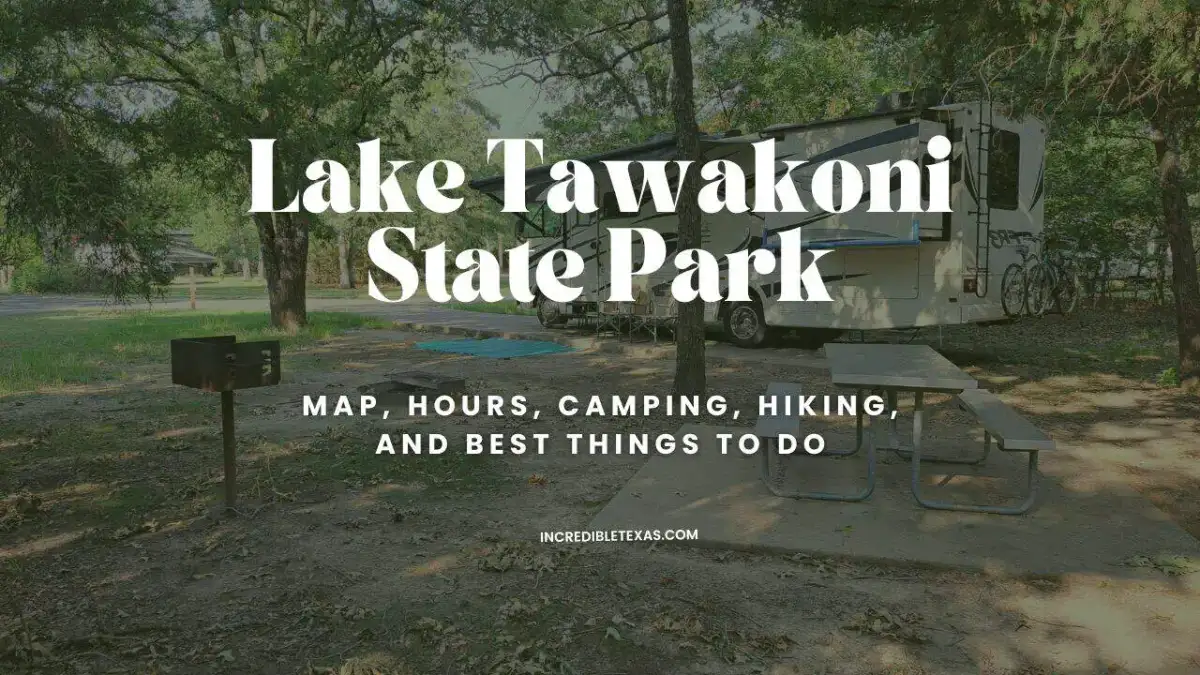
These shaded woodland spots rank among the most dependable camping destinations near Dallas for travel trailers, motorhomes, and tent campers. Each campsite provides a level driveway, a picnic table, an outdoor lantern post, a campfire ring with an adjustable cooking grate, and nearby water connections.
Restrooms equipped with hot showers and flush toilets are positioned within a short walk of every campsite circle. The park also maintains an accessible dump station near the main entrance for recreational vehicles.

Spring Point Camping Loop: Full Hookups and Waterfront Access
The Spring Point Camping Loop contains the most popular recreational vehicle sites in the park. This loop holds 16 full-hookup campsites (sites 47 through 51 and 68 through 78) equipped with fresh water, sewer connections, and electrical pedestals supporting both 30-amp and 50-amp power.
Full-hookup sites cost $24 per night plus standard daily entrance fees. During non-peak winter months from November through February, the park offers discounted monthly extended-stay rates for full-hookup guests.
The remaining sites in the Spring Point circle (sites 52 through 67) feature 30-amp and 50-amp electricity and water at $20 to $24 per night. Many Spring Point campsites overlook open reservoir coves and connect directly to shoreline nature paths.
White Deer Reach Loop: Shaded RV and Tent Sites
The White Deer Reach Camping Loop offers shaded campsites surrounded by dense oak canopies and native understory vegetation. These sites are equipped with 30-amp electrical service and fresh water spigots, accommodating both pop-up campers and family tents.
Campsites in White Deer Reach sit farther back from the main boat ramp traffic, making them well-suited for light sleepers and tent campers. Site 38 and several adjoining pads offer barrier-free wheelchair accessibility adjacent to paved restroom walkways.
Driveway lengths vary from 35 to 65 feet across the loop. Reviewing individual pad lengths on the reservation portal ensures adequate space for tow vehicles and larger travel trailers.
Campground Restrooms, Dump Stations, and Overflow Parking
Each camping loop features a centralized comfort station containing heated restrooms, private shower stalls, and outdoor water faucets. Park maintenance staff cleans these facilities daily, earning the park consistently positive reviews from overnight travelers.
Each reserved campsite permits a maximum of eight people and two personal vehicles (or one vehicle and one towed camper). Additional visitor vehicles must park in designated overflow stalls for an excess vehicle fee of $3 per night.
Tip
Campsites featuring 50-amp full hookups in the Spring Point loop often sell out three to five months in advance for spring weekends. Reserve early through the state park reservation portal, especially if traveling in a motorhome longer than 35 feet.
| Camping Loop | Site Numbers | Hookups Available | Electrical Amps | Nightly Rate | Pad Surface |
|---|---|---|---|---|---|
| Spring Point Full Hookups | 47–51, 68–78 | Water, Electric, Sewer | 30 & 50 Amp | $24 / night | Paved concrete |
| Spring Point Standard | 52–67 | Water, Electricity | 30 & 50 Amp | $20–$24 / night | Paved concrete |
| White Deer Reach | 1–46 | Water, Electricity | 30 Amp (some 50) | $20–$24 / night | Paved asphalt |
| Group Primitive Camp | G1 | Water nearby | None | Inquire at HQ | Natural grass |
Fishing the Catfish Capital of Texas: Tactics, Records, and Boat Launches
Anglers across the southern United States recognize Lake Tawakoni as the Catfish Capital of Texas. Designated with this honor by the Texas Legislature, the 37,879-acre impoundment supports fertile populations of blue catfish, channel catfish, and flatheads nurtured by vast gizzard shad populations.
The lake was created in 1960 following the construction of Iron Bridge Dam across the Sabine River. Today, the Sabine River Authority and state biologists manage the reservoir to maintain productive sportfishing across open flats, timbered creeks, and deep river channels.
Angling enthusiasts regularly compare Tawakoni with other recreational lakes in North Texas due to its combination of boat ramps, shoreline access, and consistent year-round bite.
Trophy Blue and Channel Catfish Techniques
Blue catfish represent the flagship sportfish at Lake Tawakoni. Anglers catch trophy specimens weighing over 40 pounds throughout the winter and early spring by drifting fresh cut gizzard shad or drum across windward flats and submerged creek ledges.
Channel catfish thrive in shallower timbered coves and rocky riprap along highway causeways. Fishing with prepared stink baits, sour grain, or punch bait near baited holes produces fast limits of two to four-pound fish during warmer summer months.
Flathead catfish inhabit deep underwater brush piles, submerged river channels, and foundation ruins. Landing a trophy flathead typically requires night fishing with live sunfish or waterdogs anchored near timber structure.
Striped Bass, White Bass, and Crappie Hotspots
Beyond catfish, Lake Tawakoni hosts exceptional populations of striped bass, hybrid stripers, and white bass. During warmer months, schools of stripers and sand bass push baitfish to the surface, creating explosive topwater feeding boils across open lake pools.
Anglers target surfacing schools by casting chrome spoons, inline spinners, and soft plastic flukes. In winter months, vertical jigging heavy slabs along 25 to 35-foot submerged humps produces steady hybrid striper limits.
Crappie anglers focus efforts on bridge pylons, public brush piles, and submerged timber in tributary arms like Candy Creek and the Sabine River channel. Submerged structures hold dense schools of black and white crappie reachable with live minnows and small chartreuse jigs.
Four-Lane Boat Ramp, Courtesy Docks, and Fish-Cleaning Stations
Lake Tawakoni State Park provides a four-lane concrete boat ramp sheltered inside a protected harbor cove. The ramp handles bass boats, pontoon cruisers, and deep-draft wakeboard craft with ease even during moderate wind conditions.
The marina area features illuminated boarding docks, paved trailer parking lanes, and a lighted fish-cleaning station equipped with running water and cutting tables. Anglers returning after dusk can clean their catch comfortably before returning to camp.
Boaters should monitor water depth meters when leaving the harbor because submerged tree stumps remain in unmarked shallow flats outside the dredged main channel.
Shoreline Angling and the Free Tackle Loaner Program
Texas state law waives the fishing license requirement for anyone casting lines from the bank, piers, or shoreline within Texas State Park boundaries. Families can introduce children to sportfishing along the park shore without purchasing individual licenses or stamps.
The park headquarters participates in the Texas Parks and Wildlife Tackle Loaner Program. Visitors can borrow fishing rods, reels, and basic tackle boxes free of charge for up to seven days.
Detailed biological reports and bag limits can be checked through the Texas Parks and Wildlife Lake Tawakoni Fisheries Report and Water Body Records. State bag limits and minimum length regulations remain strictly enforced within park borders.
| Fish Species | Water Body Record | Record Length | Angler & Details | Proven Bait or Tackle |
|---|---|---|---|---|
| Blue Catfish | 87.50 lbs | 52.50 in | Jody Jenkins (Feb 2014) | Fresh cut gizzard shad |
| Flathead Catfish | 88.00 lbs (Rod & Reel) | 55.00 in | Stephen R. Torres (Jun 2015) | Live sunfish or waterdog |
| Channel Catfish | 29.80 lbs (Rod & Reel) | 39.75 in | H. L. Thomas Jr. (Jan 2013) | Prepared punch bait / liver |
| Hybrid Striped Bass | 15.25 lbs | 28.00 in | Franklin H. Smith (May 1988) | Chrome spoon or live bait |
| Striped Bass | Certified Rod Record | 23.50 in | Richard Dennis Davis | Soft plastic fluke / shad |
Hiking and Nature Trails: Exploring East Texas Oak Woodlands
Lake Tawakoni State Park preserves approximately 4.6 miles of interconnected multi-use nature trails. The trail system winds through upland post oak savannas, pocket native grasslands, and low-lying shoreline wetlands bordering reservoir coves.
The terrain remains gentle and mostly flat, making the trail network accessible for young children, casual walkers, and cross-country runners. Trail surfaces consist of packed dirt, crushed granite, and grassy woodland lanes.
Hikers who enjoy gentle forested loops often compare these paths with the woodland trails at Cedar Hill State Park, although Lake Tawakoni offers a much quieter, less crowded trail experience.
Blackjack Trail and Farkleberry Loop
The Blackjack Trail forms the backbone of the park’s trail system. Measuring 1.5 miles in length, this moderate loop winds through mature stands of blackjack oak and post oak trees that have stood for more than fifty years.
White-tailed deer, gray foxes, and wild turkeys frequently browse along the Blackjack Trail corridor during dawn and dusk. Wooden benches installed at scenic clearings allow hikers to rest and watch for woodland songbirds.
The Farkleberry Trail connects with Blackjack to add a gentle half-mile loop. Named after the native farkleberry shrub (also known as sparkleberry), this path features flowering branches in spring and dark berries that feed winter birds.
Osage Orange and Red Oak Woodland Paths
The Osage Orange Trail spans 0.8 miles through hardwood bottoms featuring massive bois d’arc trees. During late summer and autumn, the trail floor is dotted with heavy, textured yellow-green Osage orange fruits.
Connecting directly to Osage Orange is the 0.4-mile Red Oak Trail. This short route features towering southern red oaks and cedar elms, delivering cool shade during warm summer afternoons.
Both trails feature broad, cleared corridors suitable for family strolls and beginner mountain biking. The trails return hikers directly to the central trailhead parking plaza.
Spring Point Shoreline Trails and Prairie Birding
The Spring Point trail complex includes three interconnected segments: Spring Point Trail (0.5 miles), Spring Point East Trail (0.4 miles), and the Spring Point Branch Trail (0.1 miles).
These shoreline paths skirt the open waters of the lake, leading hikers past sandy inlets where great blue herons, snowy egrets, and white pelicans feed in shallow water. A restored native pocket prairie along the path attracts migratory monarch butterflies each autumn.
Winter birding is exceptionally productive along Spring Point. Bald eagles regularly roost in tall dead snags along the shoreline while hunting waterfowl across the open reservoir pool.
The Famous 2007 Communal Spider Web Phenomenon
In August and September 2007, Lake Tawakoni State Park captured international scientific attention when a massive communal spider web blanketed hundreds of yards of trees and shrubs along the nature trails.
Biologists from Texas Parks and Wildlife and entomologists from Texas A&M University identified the primary weaver as Tetragnatha guatemalensis, a long-jawed orb-weaver species. Spurred by an extraordinary emergence of midges and mosquitoes from the reservoir, thousands of individual spiders cooperated to construct a continuous silk canopy.
The web eventually spanned over 200 yards of nature trails before autumn rains dismantled the structure. Today, visitors can read interpretive displays describing this rare entomological marvel near the park headquarters.
| Trail Name | Distance | Elevation & Difficulty | Surface Type | Key Trail Highlights |
|---|---|---|---|---|
| Blackjack Trail | 1.5 miles | Moderate (gentle roll) | Packed dirt & leaves | 50-year-old oak woods, deer sightings |
| Osage Orange Trail | 0.8 miles | Easy | Packed soil | Large bois d’arc trees, heavy canopy |
| Farkleberry Trail | 0.5 miles | Easy | Natural ground | Native shrubs, seasonal wildflowers |
| Spring Point Trail | 0.5 miles | Moderate | Crushed granite / dirt | Pocket prairie, shoreline birding |
| Red Oak Trail | 0.4 miles | Easy | Packed dirt | Southern red oaks, shaded benches |
| Spring Point East | 0.4 miles | Easy | Sandy soil | Open lake vistas, waterbird roosts |
| White Deer Trail | 0.4 miles | Easy | Grassy path | Connects campground to main trail hub |
| Spring Point Branch | 0.1 miles | Easy | Forest path | Short connector to Spring Point Loop |
Day-Use Waterfront: Swimming Beach, Kayaking, and Picnic Pavilions
Day visitors at Lake Tawakoni State Park enjoy well-developed waterfront recreation facilities situated along a sheltered lake cove. Grassy shorelines and mature shade trees provide an inviting setting for weekend family gatherings and waterfront barbecues.
The park offers recreational features comparable to the peaceful waterfront at Bonham State Park swimming beach and lake recreation, but with larger open-water boating access.
Restrooms, outdoor rinse showers, and paved parking lots sit within steps of the sand, allowing visitors to unpack picnic coolers and beach gear easily.
Protected Sandy Swimming Beach and Water Safety
The park maintains a dedicated sandy swimming beach inside a protected cove free from motorized boat wakes. Brightly colored marker buoys outline the swim zone, preventing motorboats and personal watercraft from entering the wading shallows.
The beach features a gently sloping sandy bottom suitable for wading children and casual swimmers. No lifeguards are stationed at the park, so all swimming is strictly at your own risk.
Parents should equip young children with properly fitted life jackets before entering the water. Lake bottom drop-offs can occur beyond the designated buoy line, so swimmers must stay inside marked boundaries.
Self-Service Kayak Rentals and Paddling Launch Points
Visitors who do not own paddling equipment can rent solo and tandem kayaks on-site through an automated self-service rental kiosk. The kiosk operates on a first-come, first-served basis and accepts standard credit cards.
Rental fees include the kayak, lightweight paddles, and certified personal flotation devices (PFDs) stored inside secure lockers. Paddlers can launch directly from the calm shoreline cove into sheltered inlets along the park perimeter.
Experienced sea kayakers and canoeists can explore miles of undeveloped shoreline. Always check wind forecasts before paddling onto open water, as south winds can generate steep chop across the main reservoir pool.
Picnic Areas, Day Pavilions, and Shoreline Gathering
Spacious picnic areas surround the swimming cove and day-use lawns. Each picnic cluster features a heavy-duty steel barbecue grill, a picnic table, and shade from spreading post oak trees.
Families can reserve a covered day-use pavilion through park headquarters for reunions and birthday celebrations. The pavilion accommodates up to 50 guests and includes multiple electrical outlets, picnic tables, and dedicated grill stations.
According to historical archives documented by the Texas State Historical Association Lake Tawakoni History, the reservoir was originally impounded to secure dependable industrial and municipal water for North Texas communities, while creating lasting open-space public recreation.
Warning
Pets are strictly prohibited in the designated swimming beach area to maintain sanitation and child safety. Across all other park areas, dogs must remain on a physical leash no longer than six feet. Glass beverage containers and the public display of alcoholic beverages are illegal throughout all state park grounds.
Regional Comparison: Lake Tawakoni vs Nearby Texas State Parks and Lakes
Choosing the ideal lake destination in Northeast Texas depends on your primary travel focus, whether that means trophy bass fishing, secluded hiking, or RV camping convenience. Lake Tawakoni excels at broad open-water boating and world-class catfish tournaments.
Travelers seeking expansive hiking and equestrian trails often look toward the Cooper Lake State Park camping and trail network forty miles to the north, which features quiet dual-unit shorelines and furnished cabins.
Anglers focused strictly on trophy largemouth bass frequently choose Lake Fork, while paddlers seeking no-wake water choose Purtis Creek State Park. Reviewing the strengths of each venue ensures your group selects the right park.
Lake Tawakoni vs Cooper Lake State Park
Lake Tawakoni State Park covers 376 acres with 78 campsites and five miles of shoreline trails, providing a compact, easy-to-navigate weekend destination. Its signature asset is world-class catfish and hybrid bass fishing backed by full-hookup sewer RV loops.
Cooper Lake State Park covers over 3,000 acres split between the Doctors Creek and South Sulphur units. Cooper Lake features 14 fully furnished waterfront cabins, an equestrian camping loop with corrals, and over 15 miles of multi-use trails, but lacks full sewer hookups at its RV sites.
Choose Lake Tawakoni for full sewer hookups and catfish tournaments. Choose Cooper Lake for furnished cabin rentals, horseback riding, and extensive backcountry hiking.
Lake Fork
Lake Fork sits thirty miles east of Lake Tawakoni and ranks among the top trophy largemouth bass fisheries in North America. Lake Fork does not host an official Texas State Park; instead, its shoreline is developed with private commercial marinas, RV resorts, and fishing guide lodges.
Lake Tawakoni offers a protected state park environment with budget-friendly $5 entry fees, quiet public nature trails, and uncrowded tent loops. Its fishery is dominated by catfish and striped bass rather than largemouth bass.
Anglers seeking guided trophy bass hunts will prefer Lake Fork’s private resorts. Families seeking quiet state park camping, hiking trails, and budget-friendly day use will find Lake Tawakoni far more accommodating.
Lake Tawakoni vs Purtis Creek State Park
Purtis Creek State Park sits thirty miles south near Eustace, Texas, centered around a small 355-acre reservoir. Purtis Creek enforces a strict no-wake boat policy and catch-and-release bass regulations, making it a peaceful sanctuary for canoes and kayaks.
Lake Tawakoni encompasses nearly 38,000 surface acres of unrestricted open water where powerboats, wakeboarders, and tournament anglers run at high speed. It accommodates much larger watercraft than Purtis Creek.
Choose Purtis Creek for quiet paddling without motorboat wakes and catch-and-release bass. Choose Lake Tawakoni for powerboating, open-water sailing, and harvesting limits of catfish.
| Park or Water Body | Surface Water Acreage | Primary Angling Appeal | Lodging Infrastructure | Watercraft Pace | Drive From Dallas |
|---|---|---|---|---|---|
| Lake Tawakoni State Park | 37,879 acres | Trophy blue & channel catfish, hybrid bass | 78 campsites (16 full sewer), group camp | Unrestricted powerboating & sailing | 50 miles (60 min) |
| Cooper Lake State Park | 17,998 acres | Crappie, largemouth bass, channel catfish | 14 furnished cabins, RV sites, equestrian loops | Unrestricted, multiple calm coves | 85 miles (90 min) |
| Lake Fork | 27,264 acres | Trophy largemouth bass (Texas Top 50 leader) | Private RV resorts, motels, fishing lodges | Navigable boat lanes (timber hazards) | 75 miles (80 min) |
| Purtis Creek State Park | 355 acres | Catch-and-release trophy bass, crappie | Water/electric sites, primitive walk-in tent sites | Strict no-wake lake (idle speed only) | 65 miles (70 min) |
Frequently Asked Questions About Lake Tawakoni State Park
What are the entrance fees and gate hours for Lake Tawakoni State Park?
Day-use admission costs $5 for adults ages 13 and older, while children 12 and under enter free of charge. The park gates open daily from 6:00 AM to 10:00 PM, and visitors arriving after 5:00 PM must contact headquarters in advance for late-entry gate codes.
What types of campsites and hookups are available at Lake Tawakoni State Park?
The park provides 78 developed campsites across the Spring Point and White Deer Reach loops equipped with water and electrical connections. Available sites include 16 full-hookup sites featuring 30-amp and 50-amp electricity alongside sewer hookups.
Do you need a fishing license to fish at Lake Tawakoni State Park?
No fishing license is required when casting from the shoreline, bank, or fishing piers within state park property boundaries. Anglers who venture into open reservoir waters aboard a boat must hold a valid Texas freshwater fishing license and follow statewide regulations.
Can you swim at Lake Tawakoni State Park and are dogs allowed at the beach?
Swimming is permitted at a designated sandy swimming cove equipped with protective marker buoys that keep motorized boats separated from swimmers. Dogs are welcomed on six-foot leashes throughout trails and campgrounds, but pets are strictly prohibited inside the designated swimming beach area.
How many miles of hiking trails are in Lake Tawakoni State Park?
The park features eight interconnected nature trails totaling approximately 4.6 miles through post oak woodlands, pocket prairies, and shoreline corridors. Routes range from the gentle 0.1-mile Spring Point Branch Trail to the 1.5-mile Blackjack Trail loop.
Why is Lake Tawakoni known as the Catfish Capital of Texas?
The Texas Legislature recognized Lake Tawakoni for its prolific populations of blue, channel, and flathead catfish nurtured by massive gizzard and threadfin shad schools. Anglers frequently land monster catfish here, including an 87.5-pound blue catfish rod-and-reel record.