Bonham State Park Map, Hours, Camping, Fishing and Trails
According to TPWD’s overview, Bonham State Park sits northeast of Dallas with a 65-acre lake, hilly trails, camping, fishing, paddling, and swimming in one compact Texas Parks and Wildlife Department park. The official overview shows a small park with a clear mix of day-use and overnight options, which makes it a straightforward choice for a simple North Texas escape.
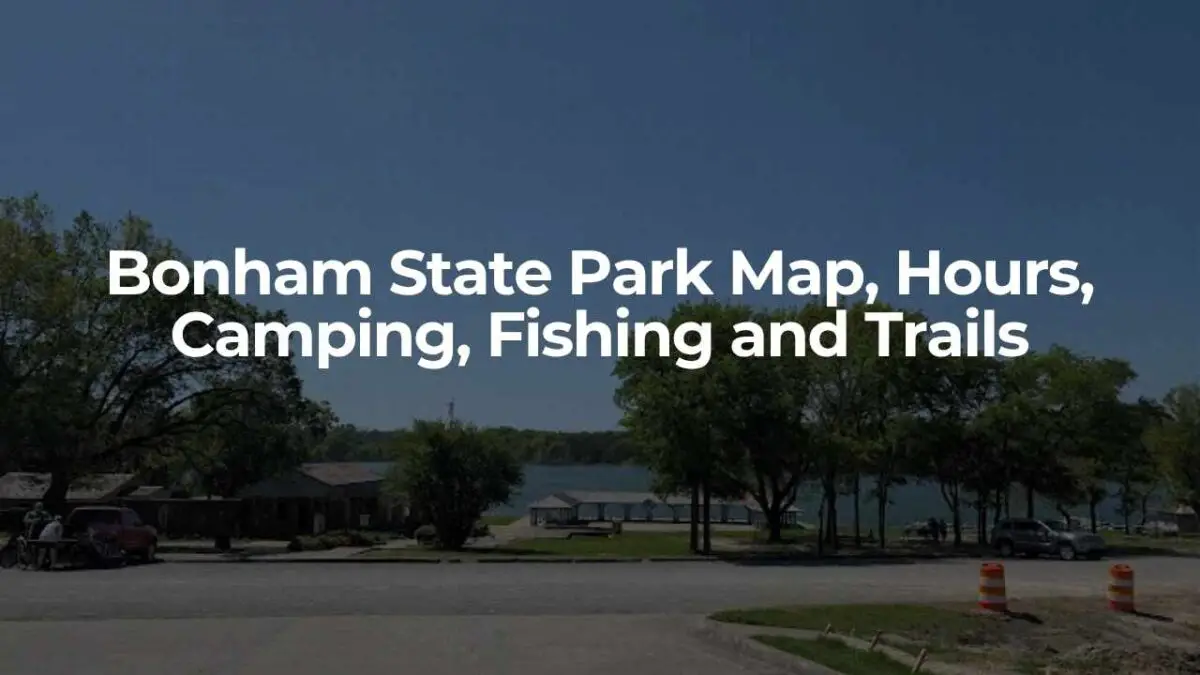
The park also gives visitors a mix of practical details that matter before a trip: daily hours, modest entrance fees, a reservation system, and trail and water activities that can all fit into one visit. Bonham State Park works well for a half-day outing, a full day around the lake, or an overnight stay with room for fishing gear, a kayak, or a small camping setup.
Check out: 15 Best State Parks Near Dallas and Fort Worth, TX
Quick Facts About Bonham State Park
| Quick Fact | Current Detail |
|---|---|
| Park name | Bonham State Park |
| Location | Northeast of Dallas in Bonham, Texas |
| Park size | 261 acres |
| Lake size | 65 acres |
| Trails | 8.75 miles |
| Daily hours | 6 a.m. to 10 p.m. |
| Office hours | 8:15 a.m. to 4:45 p.m. |
| Day-use fee | $4 per adult |
| Children 12 and under | Free |
| Texas State Parks Pass | $70 per year |
| Address | 1363 State Park 24, Bonham, TX 75418-9285 |
| Phone | (903) 583-5022 |
The park page currently flags active alerts, so a quick pre-trip check is worth the time before any long drive. Reservations are highly recommended for both camping and day use because the park often reaches capacity.
Visitors who are comparing North Texas lake parks can also look at Lake Tawakoni State Park and Eisenhower State Park. Both are useful comparison points for travelers who want a lake, trails, and camping in the same general region.
Bonham State Park Hours, Fees, Directions, and Reservations
Bonham State Park is open daily from 6 am to 10 pm. The office is open from 8:15 am to 4:45 pm, and the entrance fees page confirms the current adult day-use price of $4 with children 12 and under admitted free.
Reservations matter here because the park often fills up. TPWD recommends reserving both day-use passes and campsites in advance, and the park page says visitors can reserve online or through the customer service center before arriving.
| Entry Item | Current Detail | Planning Note |
|---|---|---|
| Adult day use | $4 | Per person age 13 and older |
| Child day use | Free | Age 12 and under |
| Texas State Parks Pass | $70 per year | Covers entry for the pass holder and guests under pass rules |
| Reservation advice | Highly recommended | Useful for day use and camping because the park often reaches capacity |
The map and directions page gives the clearest route into the park. TPWD directs visitors to follow State Highway 78 to FM 271, then continue southeast on Park Road 24 to the park entrance.
The park headquarters is at 1363 State Park 24 in Bonham, and the office phone is (903) 583-5022. The park also lists [email protected] for contact, which is useful when visitors need to confirm a same-day detail before leaving home.
- Visitors coming from farther away should check the park page before driving, especially if weather or special alerts could change access.
- Reservations are the safer choice for weekends, holiday periods, and spring days when the lake and trails draw heavier traffic.
- Visitors who want a similar lake-and-camping setup with slightly different trail mileage can compare Bonham with Purtis Creek State Park.
Camping at Bonham State Park
Bonham State Park keeps camping simple and manageable. TPWD says the park has 20 campsites ranging from full hookups to tent sites with water and electricity, plus a group camp, barracks with a group hall and kitchen, and a pavilion for daytime gatherings.
The campground layout fits visitors who want a small park feel without giving up the basics. Restrooms with showers sit across from headquarters, and the park store adds another convenient stop for small supplies and souvenirs.
| Camping Option | Sites / Capacity | Current Price | Notes |
|---|---|---|---|
| Full hookup campsites | 2 sites, 8 people per site | $26 per night | Water, sewer, electric, picnic table, fire ring, upright grill |
| Campsites with electricity | 12 sites, 8 people per site | $22 per night | Picnic table, fire ring, upright grill, water spigot, electric hookup |
| Tent sites with electricity | 7 sites, 8 people per site | $17 per night | Designed for tents, with water and electric service |
| Group camp | 6 sites, up to 50 people | $85 per night | Good fit for family groups or small retreats |
The larger group facilities matter for reunions, church groups, and clubs. TPWD lists barracks space for up to 94 people with a group hall and kitchen, plus a pavilion for day use up to 75 people, which makes the park more flexible than the small lake size might suggest.
Visitors comparing overnight options in this part of Texas can also check Atlanta State Park, which offers a different mix of lake, forest, and camping space. That comparison is useful when the trip depends more on campsite style than on a single destination.
- Visitors should reserve early for weekends because the park often reaches capacity.
- Campers who want a lower-key stay should keep an eye on the group camp and tent-electric sites first.
- Guests planning a larger gathering should confirm the barracks or pavilion rules directly with the park before booking.
Bonham State Park Trails, Hiking, and Biking
Bonham State Park offers 8.75 miles of trails for hikers and bikers, and the terrain is hilly enough to feel different from the flatter lake parks farther south. TPWD highlights the easy Lake Loop Trail and the more demanding Bois d’Arc Trail, along with the Gnarly Root Trail and Armadillo Trail.
The park’s trails information page adds useful context for planning a route. The trail system passes shaded woods, lake views, and several CCC-era features, so a short hike can still feel varied even though the park is compact.
| Trail | Distance | Difficulty | What it offers |
|---|---|---|---|
| Lake Loop Trail | 1.3 miles | Easy | Gentle walk with lake views and plant-life observations |
| Bois d’Arc Trail | 2.7 miles | Challenging | Longest route in the park and a stronger workout |
| Gnarly Root Trail | 1.3 miles | Moderate | Shorter loop with more texture and elevation change |
| Armadillo Trail | 1.5 miles | Moderate | Good middle-ground trail for a casual hike or bike ride |
TPWD’s trail notes point to the park’s CCC-era footbridge, old fireplaces, the pump house, and a wildflower field as recognizable stops along the way. Those details give the trail system more character than a basic lake loop usually provides.
Visitors should bring water, stay on marked routes, and check for trail conditions before heading out. TPWD’s trail guidance also reminds hikers to watch for burn closures and to plan for heat, which matters on the exposed sections and during warmer months.
- Short hikes work well here, but the steeper sections call for steady footing.
- Trail maps help because the park uses multiple loops with similar wooded scenery.
- Visitors who want a larger regional trail system can compare Bonham with Ray Roberts Lake State Park.
Bonham State Park Fishing, Paddling, and Swimming
Bonham Lake sits at the center of the park’s water activities. Visitors can fish from a pier, use the boat ramp, and paddle the lake with rented paddle boats, kayaks, or canoes from 8 am to 3 pm daily, weather permitting.
Fishing is easy to plan because the park allows visitors to borrow line and pole only, while bait still needs to come from the angler. The lake also has a 5-mph speed limit, which keeps boating and paddling low-key and predictable.
| Water Activity | Current Detail | Planning Note |
|---|---|---|
| Fishing | Fishing pier, boat ramp, borrow line and pole only | Bring bait and any other personal tackle |
| Paddling | Paddle boats, kayaks, and canoes for rent | Rentals run 8 a.m. to 3 p.m. daily, weather permitting |
| Boating | Boat ramp and 5-mph speed limit | Best suited to calm, low-speed use |
| Swimming | Listed as a park activity | Check current water conditions and safety guidance before entering the water |
Bonham Lake is the center of the water area. A paddle, lunch stop, and trail loop can all fit into one outing without a long transfer between places.
Visitors who prefer another nearby lake park with a different mix of water and camping features can compare Bonham with Lake Tawakoni State Park. That comparison makes sense for anglers and paddlers who want a bigger-water alternative without leaving North Texas.
Nature, History, and Wildlife at Bonham State Park
TPWD places Bonham State Park in a Blackland Prairie setting with wooded pockets, hilly ground, and a quiet lake edge. The park’s nature page emphasizes birdlife, native plants, and a landscape that feels more intimate than the larger reservoir parks in the same region.
The park’s history dates to the Civilian Conservation Corps, which developed the site during the Depression. TPWD says the park opened in 1936, and the CCC-built structures still help define the park’s look today.
| Feature | Why it matters | Where visitors notice it |
|---|---|---|
| CCC pump house | Shows the park’s historic construction era | Along the trail system |
| Footbridge | Connects the wooded trail route | Near the lake and trail loop |
| Fireplaces | Marks early park architecture | Scattered along the trail corridor |
| Wildflower field | Adds seasonal color and open space | Within the interpretive trail landscape |
The park also sits near the city of Bonham, where TPWD points visitors toward museums, restaurants, groceries, and historic connections to Sam Rayburn. The nearby history page gives the park a strong regional context without making the visit feel overly formal or museum-like.
Visitors who want more park history and a different east-of-Dallas landscape can also compare Bonham with similar Texas parks that lean into CCC heritage, such as the nearby outdoor stops found in the state-park system. The history at Bonham stays visible in the trail layout, the old structures, and the way the lake sits inside a compact, managed park setting.
- Birders should bring binoculars because the lake and wooded edges attract wildlife throughout the day.
- Spring visits often show the trail system at its most colorful.
- History-minded visitors can combine a short walk with a longer stop in Bonham town.
What to Know Before Arrival
Bonham State Park rewards simple planning. The current office hours, modest day-use fee, and the park’s tendency to reach capacity make early reservations sensible on busy weekends, especially when weather or holiday traffic can change the day.
The park’s climate notes also matter. TPWD lists average rainfall at 41.6 inches, a January average low of 31 degrees, and a July average high of 95 degrees, which means cool-weather visits can feel very different from midsummer trips.
The park overview and the trail notes both point visitors toward wildlife watching, trail walking, and lake access, so a compact plan usually works best. Visitors who build the day around one or two main activities tend to get the most out of the park without rushing from place to place, and the park store and headquarters also give visitors a quick stop for questions or small extras.
- Bring water, sun protection, and shoes that handle trail slopes.
- Check the park page for active alerts before starting the drive.
- Keep the official map handy for the route into the park and for the trail network.
- Reserve ahead if the visit lands on a weekend, holiday, or spring travel day.
Visitors who want a different overnight style with a similarly easy planning process can compare Bonham with Atlanta State Park. That comparison helps when the main decision comes down to campsite type, lake access, or travel route rather than to one single park feature, and a longer North Texas trip can stay simple either way.
Route changes and burn status can shift, so hikers should confirm conditions before heading out. The trail system is easiest to enjoy when visitors check the route details first.
Who Bonham State Park Fits Best
Bonham State Park fits day trips first because the fee is low, the hours are generous, and the lake, trails, and picnic areas sit inside one compact park boundary. Visitors can pair a morning trail loop with an afternoon at the water without building a complicated itinerary, and the short drive into town keeps basic supplies within reach.
Campers get a second advantage from the park’s size. The site list is small enough to feel manageable, but it still includes full hookups, electric sites, tent-friendly spots, and group lodging for larger gatherings.
Hikers and bikers get the most variety from the trail system because the routes are short, hilly, and distinct from one another. The Lake Loop Trail gives an easier walk, while the Bois d’Arc Trail asks for more time and effort.
Anglers and paddlers have a clear water focus as well. The pier, boat ramp, rentals, and speed limit keep the lake experience simple, and the weather-dependent rental window makes it easy to plan around a half-day on the water.
Group planners can use Bonham’s larger facilities for reunions and club outings. TPWD lists barracks space for up to 94 people with a group hall and kitchen, a group camp for up to 50 people, and a pavilion for day use up to 75 people, so different group sizes have several setup options.
History-focused visitors get a second layer from the CCC structures and the park’s 1936 opening date. A short walk can include the old trail features, then shift into a town stop in Bonham without turning the outing into a long drive.
Visitors who want a quieter lake visit can keep the day centered on fishing, paddling, or one trail loop and still see the main park features. The park layout makes that kind of short, focused visit easy to plan.
- Day-trip visitors can focus on one trail, the lake, and a picnic stop.
- Overnight visitors can choose between hookups, electric sites, and group lodging.
- Families can build a short outing around fishing, paddling, and a few easy trail stops.
- Large groups can use the barracks, group camp, or pavilion for gatherings.
A Simple Visit Plan to Bonham State Park
A simple Bonham day often starts with the lake view, the trail map, and a quick look at the current alerts on the park page. That first stop helps visitors decide whether the day should lean toward hiking, fishing, paddling, or a slower mix of all three.
Visitors with limited time can make the Lake Loop Trail the anchor of the trip, then use the lake edge or a picnic area for the rest of the visit. The route is short enough for a relaxed walk, but it still gives a clear sense of the park’s wooded and lakeside setting.
Visitors with more energy can combine one of the shorter trails with the Bois d’Arc Trail or a fishing stop at the pier. That combination covers the park’s main land and water features without forcing a long schedule or a packed itinerary.
Overnight visitors should decide on campsite type before arrival because the park’s small inventory makes the choice matter. Full hookups, electric sites, tent sites, and group lodging all support different trip styles, and each one needs a slightly different packing list.
- Trail shoes help on the hilly sections and the longer loops.
- Water matters on warm days because the park trail system gets direct sun in places.
- Fishing gear, bait, and a cooler make the lake stop easier to manage.
- Reservations reduce guesswork when the park is busy.
The office hours are helpful for last-minute questions because the park keeps a weekday and weekend contact window open from early morning to late afternoon. The park store also gives visitors a place to pick up small souvenirs or basic extras after the main activities are already set.
Bonham’s temperature range means morning starts can feel more comfortable on hot days, while cooler months make longer trail loops easier to manage. A short visit still covers the main park features, but a slower pace leaves more room for the lake, the trails, and the CCC-era landmarks.
Bonham State Park Frequently Asked Questions
How much does it cost to get into Bonham State Park?
Adult day use costs $4 per person, and children 12 and under enter free. TPWD also lists a Texas State Parks Pass at $70 per year for visitors who plan to make repeated trips.
What trails are at Bonham State Park?
The main signed trails are the 1.3-mile Lake Loop Trail, the 2.7-mile Bois d’Arc Trail, the 1.3-mile Gnarly Root Trail, and the 1.5-mile Armadillo Trail. TPWD describes the system as 8.75 total miles open to hikers and bikers.
Can visitors camp at Bonham State Park?
Yes. TPWD lists 20 campsites, a group camp, barracks with a group hall and kitchen, and a pavilion for day use, which cover both small family stays and larger group visits.
Can visitors rent kayaks at Bonham State Park?
The park rents paddle boats, kayaks, and canoes from 8 am to 3 pm daily, weather permitting. Visitors who want to paddle should check the conditions before arrival because the rentals depend on the weather.
Is Bonham State Park good for swimming?
Swimming is one of the park’s listed activities, and the lake setting makes it a natural part of a warm-weather visit. Current water conditions and safety guidance should be checked before entering the water, especially during periods of heat, storms, or changing lake conditions.
Final Thoughts
Bonham State Park offers a clear, easy-to-plan mix of day use, camping, trails, and lake time in northeast Texas. The park’s small size, affordable entry fee, and historic CCC footprint make it a useful choice for visitors who want a straightforward state-park trip without a lot of extra logistics.
The best visit usually starts with the official map, a reservation if the date is busy, and a simple plan built around one or two activities, while the park page stays useful for same-day alerts and closures. With that approach, Bonham State Park gives visitors enough variety for a full outing while still feeling calm and manageable.