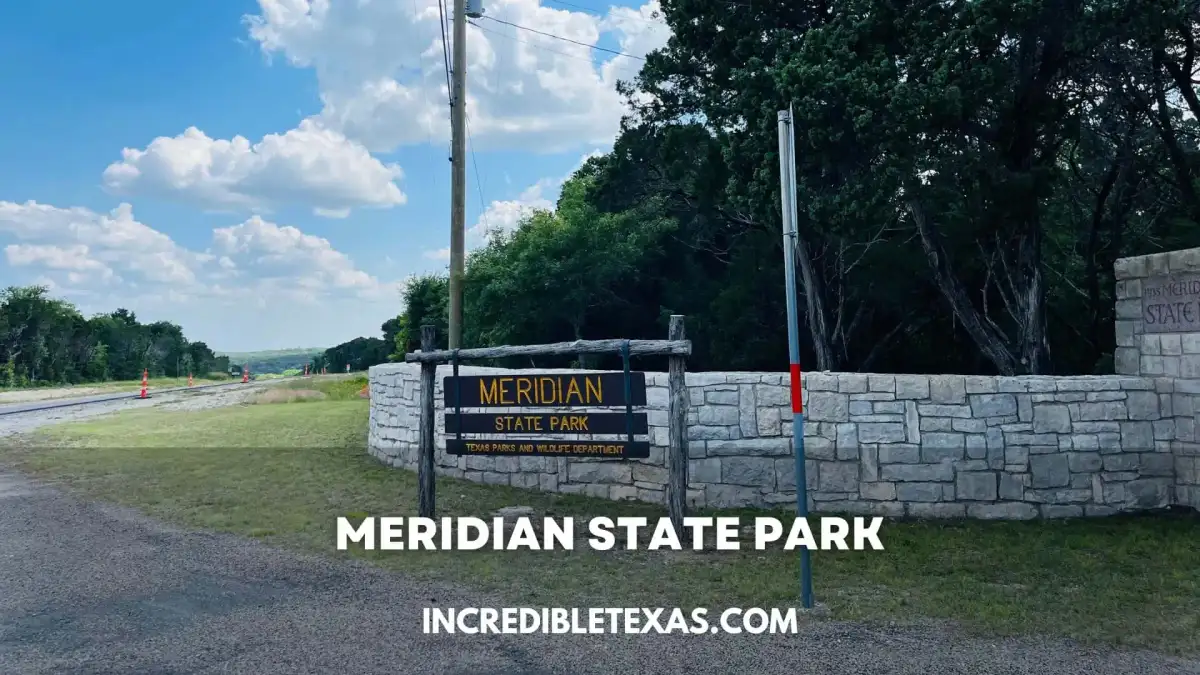
Meridian State Park serves as a peaceful gateway to the northern Texas Hill Country, blending Great Depression stone craft with calm lake recreation. Ranking consistently among notable top Texas state parks, the 505-acre sanctuary surrounds Lake Meridian with forested limestone bluffs and shaded shoreline campgrounds.
Key takeaways
- Meridian State Park is open daily from 8:00 AM to 10:00 PM for day-use visitors, with an entrance fee of $5 for adults and free admission for children 12 and under.
- The 72-acre Lake Meridian operates as a quiet no-wake body of water, offering kayak rentals, bank fishing without a state license, and a designated swimming beach.
- Historic limestone structures constructed by Civilian Conservation Corps Company 1827 in 1933 include the open-air Refectory, stone vehicle bridges, and the lake dam.
- Overnight accommodations feature full-hookup RV sites at Crosstimbers Campground, 15 lakeside screened shelters, and three rustic rental cabins.
- Over 5 miles of scenic hiking trails feature the 2.2-mile Bosque Hiking Trail loop around the lake with panoramic views from the limestone Bee Ledge overlook.
Meridian State Park Map, Hours, and Entrance Fees
Meridian State Park hours welcome day-use travelers daily from 8:00 AM to 10:00 PM, while registered overnight campers enjoy round-the-clock gate code entry. The park headquarters sits at 173 Main Park Road, roughly three miles southwest of downtown Meridian.
A detailed Meridian State Park map is distributed at the entrance station, outlining parking turnouts, boat ramps, and restrooms. Standard park entrance fees cost $5 per adult daily, while children 12 and under receive free admission.
Visitors holding an active Texas State Parks Pass receive free general entry for themselves and all passengers inside their personal vehicle. Detailed reservation alerts and day pass bookings are available through the TPWD State Park Portal.
Historic CCC Architecture and Refectory Heritage
The structural character of the grounds stems from the Great Depression era. Between July 1933 and 1934, Civilian Conservation Corps Company 1827, composed of World War I army veterans, built the original roadways, drainage culverts, and stone pavilions.
The CCC Refectory Meridian stands as the crowning achievement of this veteran labor force. Built from massive hand-shaped limestone blocks and heavy cedar roof timbers, the open-air pavilion overlooks the water from an elevated hillside terrace.
According to historical records documented by the Texas State Historical Association Handbook, the CCC camp transformed rocky cedar hills into a standout public park using National Park Service Rustic architectural principles. Today, the refectory, stone arched vehicle bridges, and lake dam rank among recognized famous landmarks in Texas.
Lake Meridian Recreation: Paddling, Fishing, and Swimming
Lake Meridian spans 72 surface acres behind a solid earthen and limestone dam. The entire water surface is strictly regulated as a no-wake zone, restricting motorcraft to electric trolling motors or manual paddle propulsion.
This regulation preserves calm, glass-smooth water conditions throughout morning and evening hours. Paddlers without their own gear can access self-service kayak rental kiosks stationed directly along the lakefront.
Anglers enjoy productive Lake Meridian fishing for largemouth bass, channel catfish, crappie, and bluegill. In cooler winter months, state fisheries biologists stock the water with hatchery-reared rainbow trout. Shoreline and pier fishing requires no state fishing license inside the park, making the dock ideal for casual anglers.
Swimmers can access a roped beach area situated adjacent to the day-use picnic groves. The lake features clear water over limestone silt, though visitors should pack water shoes to navigate pebbled shallows.
Camping, Screened Shelters, and Cabin Lodging
Overnight Meridian State Park camping options accommodate diverse travel styles, ranging from primitive tent sites to modern RV pads and historic roofed shelters. Camping loops stay shaded beneath dense groves of live oak, cedar elm, and Ashe juniper.
Crosstimbers Campground provides full-hookup sites featuring 30-amp and 50-amp electric connections, city water, and sewer drops. These back-in spots easily accommodate large motorhomes and travel trailers up to 50 feet in length.
Travelers looking for simple shelter can reserve one of 15 Meridian State Park screened shelters lining the shoreline.
For traditional roofing, three Meridian State Park cabins provide bunk beds, electric air conditioning, and outdoor picnic tables. Detailed campsite dimensions and reservation policies are cataloged on the TPWD Campsites and Facilities Guide.
| Lodging Type | Nightly Rate | Site Count | Utilities & Amenities Included | Recommended For |
|---|---|---|---|---|
| Crosstimbers Full Hookup | $25 per night | 8 sites | 50/30-amp electric, water, sewer, fire ring | RV road-trippers and travel trailers |
| Standard Electric & Water | $20 per night | 16 sites | 30-amp electric, city water hookup, picnic table | Pop-up campers and hybrid tent trailers |
| Water-Only Tent Sites | $15 per night | 9 sites | Potable water spigot nearby, lantern post, fire ring | Traditional backpackers and tent campers |
| Lakeside Screened Shelters | $30 per night | 15 shelters | Screened mesh walls, overhead roof, electric outlets | Families seeking insect-free lakefront stays |
| Rustic Historic Cabins | $65 per night | 3 cabins | AC unit, bunk beds, electricity, outdoor fire grill | Travelers wanting solid four-wall lodging |
Hiking Trails and Scenic Overlooks
The trail network covers five distinct footpaths crossing 5.5 total miles across rolling limestone topography. Exploring these Meridian State Park trails introduces hikers to the geological diversity separating the Grand Prairie from the Hill Country.
Trails stay well-marked with color-coded directional posts and interpretive mileage signs. Sturdy hiking shoes are strongly advised due to loose limestone rubble along ridge ascents.
Bosque Hiking Trail and Bee Ledge
The Bosque Hiking Trail Meridian circles Lake Meridian for 2.2 miles, serving as the park’s primary loop. The trail ascends stony bluffs along the western shoreline before crossing over the historic CCC stone spillway.
The trail’s scenic focal point is the Bee Ledge overlook, an exposed limestone cliff rising high above the water. From this panoramic vantage point, hikers look out across the entire lake basin and forested shoreline canopies.
Shinnery Ridge and Little Forest Junior Trail
The Shinnery Ridge Trail provides a moderate 1.5-mile loop along high upland plains dominated by shin oak and Ashe juniper. A paved 0.4-mile portion provides wheelchair and stroller accessibility, complete with an educational Story Book Stroll.
Branching off near the southern boundary, the Little Forest Junior Trail spans 0.8 miles. During spring, this rocky pathway displays dense carpets of Texas bluebonnets, pink evening primroses, and yellow prairie cone-flowers.
Birdwatching: Spotting the Golden-Cheeked Warbler
The park contains critical nesting habitat for the federally protected Golden-cheeked Warbler. These songbirds migrate from Central America each March to breed exclusively in Central Texas juniper woodlands.
Birders gather along the Bosque Hiking Trail and Shinnery Ridge loops between March and July to catch glimpses of yellow plumage and listen for distinctive buzzy mating songs. The park regularly schedules guided weekend bird walks during peak spring nesting activity.
In addition to rare warblers, birdwatchers routinely spot wild turkeys, northern cardinals, ladder-backed woodpeckers, and great blue herons stalking shallows along the no-wake lake coves.
Nearby Bosque County Attractions and Day Trips
Pairing a camping trip with surrounding historical sites enriches your weekend itinerary. The park’s central location connects travelers directly to scenic rural communities across the best things to do in Bosque County.
Bosque Museum and the Horn Shelter
Located eleven miles southeast in Clifton, the Bosque Museum houses one of North America’s most significant archaeological collections. Its permanent gallery displays artifacts recovered from the 11,700-year-old Horn Shelter burial site.
Discovered along the Brazos River, the burial contained an adult and child surrounded by ceremonial turtle shells, bone beads, and projectile points. Forensic reconstructions give visitors a rare glimpse into Paleo-American culture.
Clifton: Norwegian Heritage and Arts
Clifton holds the official legislative title of the Norwegian Capital of Texas. Nineteenth-century pioneer Cleng Peerson helped establish thriving Scandinavian farmsteads here that shaped regional folk culture.
The town features restored historic log structures, artisan craft galleries at the Bosque Arts Center, and farm-to-table dining. Travelers exploring Central Texas lake destinations can also branch east toward Lake Whitney or north toward prehistoric tracks in Glen Rose.
Seasonal Planning and Weather Guidelines
Spring and autumn offer optimal conditions for tent camping and hiking in Bosque County. March and April bring comfortable daytime temperatures averaging 72 degrees Fahrenheit alongside heavy wildflower blooms.
Summer afternoons frequently surpass 95 degrees, making early morning hikes and midday swimming essential for comfort. Kayaking during morning golden hour avoids intense afternoon solar exposure.
Winter visits provide quiet solitude and uncrowded campgrounds. With daytime temperatures often hovering in the upper 50s, winter creates crisp conditions for hiking and shore fishing for stocked trout.
Frequently Asked Questions About Meridian State Park
How do I get to the park?
The park entrance sits at 173 Main Park Road, Meridian, TX 76665 off State Highway 22 in Bosque County. Drivers can reach the grounds in roughly 50 minutes from Waco or two hours from the Dallas-Fort Worth metroplex.
Is a fishing license required on Lake Meridian?
Visitors do not need a state fishing license when angling from the shore or fishing piers inside state park boundaries. Standard Texas fishing regulations and licensing apply only if you operate watercraft into deeper open waters outside designated park shoreline zones.
Are dogs allowed on park trails?
Leashed pets are permitted across park hiking trails, day-use picnic areas, and campground tent sites. Pets must remain on a leash no longer than six feet and are prohibited inside cabins, screened shelters, and swimming beach zones.
What are the park entrance fees?
Day-use admission costs $5 per adult daily, while children 12 years of age and under enter for free. Holders of a valid Texas State Parks Pass receive complimentary entrance for everyone riding in their passenger vehicle.
Can you swim in Lake Meridian?
Swimming is allowed along a designated shoreline beach located near the main day-use picnic grounds. Because no lifeguards are stationed on duty, swimmers enter the water entirely at their own risk.
What makes the Refectory historic?
Civilian Conservation Corps Company 1827 built the stone structure between 1933 and 1934 using hand-quarried local limestone and native timbers. The building stands as an enduring example of National Park Service Rustic architectural design.
Essential Tips for Visiting Meridian State Park
Careful preparation ensures an enjoyable stay at this historic lakeside refuge. Reviewing current Meridian State Park entrance fees and reserving day-use permits weeks ahead on peak spring weekends prevents gate turnarounds.
Pack durable trail footwear with rugged tread, as loose limestone steps along Bee Ledge require stable foot placement. Carrying a reusable water bottle and sun protection keeps you energized across open ridge trails.
Paddling quiet morning coves and exploring Depression-era stone masonry make this destination one of the most rewarding state parks near Dallas-Fort Worth and Central Texas.