Blanco State Park: Map, Hours, Camping, Trails & Tips
Blanco State Park is a small Hill Country river park with a spring-fed stretch of the Blanco River, easy day-use planning, short trails, camping, and family-friendly water access. TPWD’s Blanco State Park page says passes must be reserved online or by phone before a visit, so the trip is simple to plan once the entry step is handled.
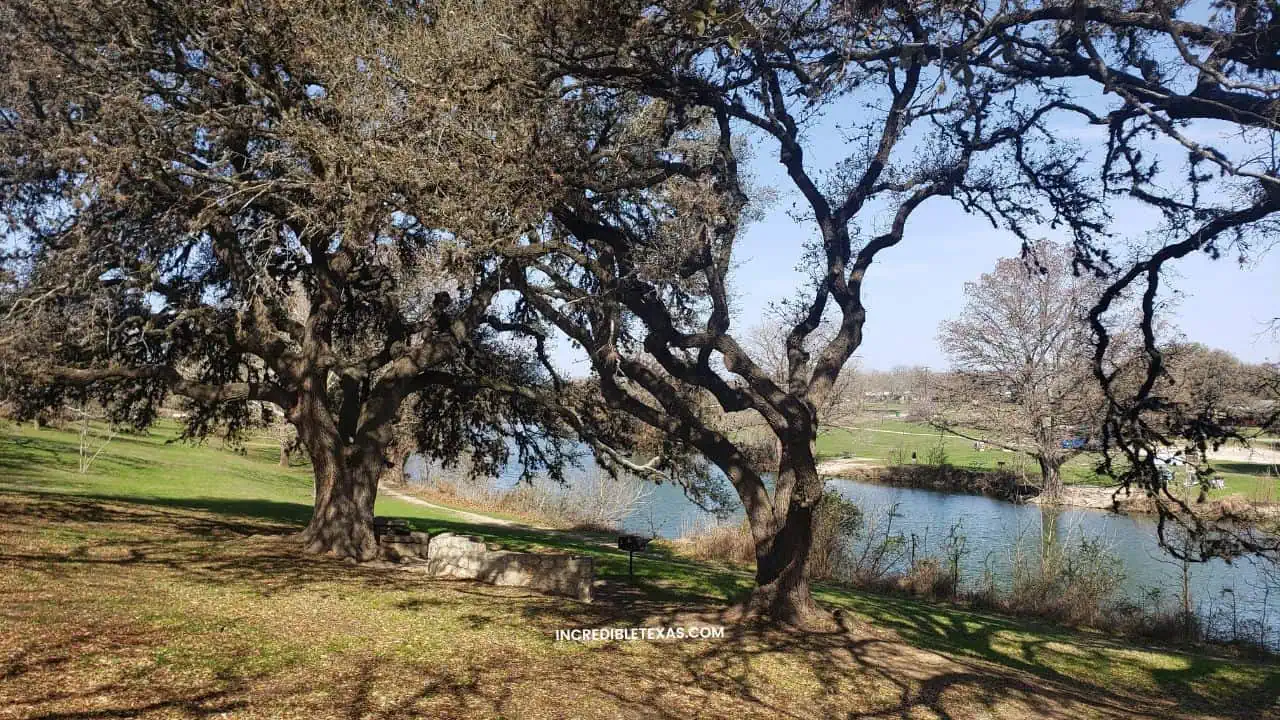
The park works well for travelers who want a compact swim stop, a low-key picnic, or an overnight base that still feels close to San Antonio and Austin. For a broader comparison, the park also fits naturally beside Top 10 Best State Parks in Texas when the plan needs a wider Hill Country shortlist.
According to TPWD, Blanco State Park is a one-mile river park with swimming, fishing, paddling, boating, camping, wildlife viewing, geocaching, a CCC-built picnic area, and a pavilion for group gatherings.
The park has a small footprint, strong water access, and enough facilities to work for both a day trip and a weekend stay.
| Quick fact | Blanco State Park |
|---|---|
| Official name | Blanco State Park |
| Location | 101 Park Road 23, Blanco, TX 78606 |
| Park size | 104.6 acres |
| River setting | One-mile stretch of the spring-fed Blanco River |
| Hours | Open daily |
| Day-use fee | $5 per adult; children 12 and under free |
| Reservation rule | Passes must be reserved online or by calling before arrival |
| Best known for | Swimming, fishing, paddling, camping, and easy Hill Country access |
| Current fire note | TPWD currently lists a burn ban; wood and charcoal fires are not allowed |
| Nearby state parks | LBJ State Park, Pedernales Falls State Park, Guadalupe River State Park, and Honey Creek State Natural Area |
Blanco State Park Map, Hours, Fees, and Reservations
TPWD places Blanco State Park on the south side of Blanco, about 40 miles north of San Antonio on U.S. Highway 281.
From Austin, the route runs west on US Highway 290 to US Highway 281, then south to Park Road 23.
The park sits at the corner of US 281 and the Blanco River, just south of the town square.
The park page lists the address as 101 Park Road 23, Blanco, TX 78606, and the park is open daily. TPWD also says visitors must reserve day passes online or by calling the customer service center before arriving, so a same-day walk-up visit is not the safest assumption.
That reservation step matters most on weekends, holidays, and warm-weather days when the river is the main draw.
The park fits well into a Hill Country weekend that also includes Fredericksburg, TX, because the drive is short enough for a relaxed two-stop route.
| Planning detail | Current Blanco State Park information |
|---|---|
| Hours | Open daily |
| Adult day-use fee | $5 per person age 13 and older |
| Child admission | Free for children 12 and under |
| Passes | Texas State Parks Pass costs $70 per year |
| Entry rule | Reserve passes online or by phone before visiting |
| Elevation | 1,350 feet |
| Climate snapshot | January average low 46 degrees; July average high 86 degrees; first freeze early November; last freeze late March |
TPWD’s map page also confirms the park headquarters location and the main contact number at (830) 833-4333. The same page links to the park map, trails map, and interactive trails map, which are the most useful downloads for a first visit.
Current fire restrictions are worth checking before any picnic or campsite meal plan. TPWD currently lists a burn ban, which means wood and charcoal fires are not allowed, while containerized fuel stoves are the safer cooking option.
Things to Do at Blanco State Park
Blanco State Park is built around a simple idea: keep the river easy to reach and let the rest of the day stay flexible. TPWD says visitors can swim, fish, paddle, boat, picnic, hike, camp, watch wildlife, and geocache, which makes the park useful for families, anglers, and travelers passing through the Hill Country.
The quickest way to understand the park is to think about it in two parts. The water side handles swimming and fishing, while the land side handles picnics, short walks, ranger programs, the park store, and longer stays at campsites or shelters.
- Swim along the river: TPWD says visitors can swim anywhere along the Blanco River, and small children often enjoy the shallow wading pool next to Falls Dam.
- Fish without a license from shore: Anglers can fish from shore within the park without a license, and TPWD stocks winter trout in the river.
- Paddle or boat: Canoes, kayaks, and boats are allowed, but only electric motors are permitted.
- Picnic at the CCC-built gathering spaces: The park’s picnic area and pavilion give group outings a clear place to gather near the water.
- Watch for wildlife: The park’s small footprint still supports birds, turtles, frogs, deer, and seasonal wildflowers.
- Borrow gear when available: HQ sometimes lends fishing rods and reels, which is helpful for a quick day-use stop.
The family side of the park is especially strong. TPWD offers ranger programs on the history and nature of the park, plus a Junior Ranger setup with an explorer pack and a free activity journal.
That makes the park a good fit for a short Hill Country outing that still feels complete. A nearby town stop can add lunch, shopping, or museums, and the broader travel context pairs well with things to do in Fredericksburg, TX when the route needs a second stop that is more town-focused than river-focused.
Visitors who prefer a simpler park day often finish with the river, a picnic, and a quick browse through the park store. TPWD says the store sells clothes, gifts, souvenirs, field guides, and other small trip helpers, which keeps the stop useful even when the plan is intentionally low-key.
Blanco State Park Camping, Screened Shelters, and Group Spaces
Blanco State Park has a compact but useful overnight setup. The current camping pages list full hookup sites, campsites with water and electricity, screened shelters overlooking the river, and group spaces for larger gatherings.
The park works best for travelers who want a quieter Hill Country stay without the scale of a bigger destination park. For a wider cabin comparison, best state parks in Texas with cabins is a natural companion read when the overnight trip needs a cabin rather than a campsite.
TPWD’s campsites page shows the main overnight choices and the current nightly rates. The screened shelters page and group sites pages add a few more options for tent camping, club events, family reunions, and small gatherings near the river.
| Stay option | People per site | Current rate | Best use |
|---|---|---|---|
| Full hookup campsites, premium 30/50-amp | 8 | $25 nightly | RV stays that need water, sewer, and stronger power |
| Full hookup campsites, 30-amp | 8 | $23 nightly | Standard RV camping close to the river |
| Campsites with electricity | 8 | $20 nightly | Lower-cost camping with water and electric service |
| Screened shelters | 8 | $30 nightly | Tent stays with a roof, fan, and easy access to the river |
| Picnic area | 50 | $20 daily | Small group gatherings at the Long Table |
| Pavilion with kitchen | 75 | $125 daily, or $75 non-peak | Reunions, club events, and larger group meals |
The pavilion is the biggest group space and TPWD calls it the Clubhouse.
The pavilion includes an indoor kitchen, ceiling fans, restrooms nearby, and a river view, along with a refundable cleaning deposit requirement.
Accessibility matters here too. TPWD says screened shelters 43 and 47 are ADA accessible, the pavilion has ADA parking spaces, and the campground loop includes a wheelchair-accessible restroom for overnight visitors.
Blanco gives visitors more flexibility than its size suggests.
Some visitors will treat it as a quick river stop, while others will use the park as a small but comfortable base for a Hill Country weekend.
Blanco State Park Trails, River Access, and Safety
Blanco State Park is not built around long-distance hiking, but the trail options still add variety to a river visit. TPWD’s trails information page highlights two short routes that show the river from a different angle and add a bit of history to the walk.
The setting matters just as much as the mileage. TPWD describes the trails as a way to see the park’s blue-green water, riparian habitat, and riverbank features that are easy to miss from the picnic area alone.
| Trail | Distance | Difficulty | What stands out |
|---|---|---|---|
| Pumphouse Trail | 0.3 mile round trip | Easy | A level interpretive walk with bird, turtle, and river views |
| Caswell Nature Trail | 0.8 mile round trip | Easy | A rocky riverside hike with a view of a Civilian Conservation Corps dam |
| CCC Dam point of interest | Short hike access | Easy to moderate depending on route | A historic structure that many visitors do not see from the main park road |
| The Falls | River access point | Easy access | One of the best spots for cooling off after a walk |
The Pumphouse Trail is the simplest choice for families. The trail is level, short, and interpretive, which makes it easy to fit into a swim day or a picnic stop without adding much planning pressure.
The Caswell Nature Trail is the stronger option for visitors who want a little more texture. TPWD says the trail follows a riverside forest and gives a close view of the CCC dam built in the 1930s, which adds a layer of park history to the walk.
Water safety still matters more than distance here. TPWD advises visitors to read the water safety tips, and the park alert page currently lists a burn ban, so any outing that includes cooking or a long stay should plan around containerized fuel instead of open flames.
That short-trail, high-water-access setup makes Blanco different from larger trail parks. Travelers who want a bigger hiking day can compare it with Garner State Park, which offers a much larger trail-and-river experience, while Blanco stays compact and easier to navigate in one visit.
Blanco State Park History, Wildlife, and Seasonal Planning
Blanco State Park has deep roots for such a small place. According to TPWD’s history page, the Blanco River drew Native Americans, Spanish travelers, and early settlers.
The river kept drawing people because the park springs provided water even when the river ran low.
TPWD also says the park was created in 1933 from land that ranchers donated or sold, and the park covers 104.6 acres. Blanco was one of the first four Texas parks to receive a Civilian Conservation Corps company, and Company 854 spent 11 months building bridges, dams, roads, picnic areas, and other structures.
That CCC work still shapes the park experience. The stone pavilion, the river stairs, the picnic structures, and the old dams give the park a human scale that fits well with a quiet river stop.
The nature page adds another layer. TPWD says trees such as Ashe juniper, pecan, and bald cypress line the hilly river terrain, and the park supports seasonal wildflowers, herons, turtles, bats, bass, catfish, sunfish, and winter rainbow trout.
Seasonally, the park is easy to read. The climate snapshot on the main page shows milder winter lows, a manageable summer high for a river park, and freeze dates that point to late fall and early spring transition periods.
The river itself is a major part of the story. TPWD says springs from the Trinity Aquifer feed the Blanco River, the river begins in northeast Kendall County, and the river’s name comes from its white limestone ledges and river bottom.
The water stays mostly shallow except above the low-water dams in the park.
That shallow, spring-fed river explains why Blanco feels so approachable. It is scenic without being complicated, and it gives visitors a strong Hill Country experience without the scale of a larger destination park.
Visitors who want a different overnight style can also compare Blanco’s river camping with the cabin-focused options in best state parks in Texas with cabins. That comparison helps separate a river campground weekend from a more sheltered cabin stay.
A bigger Hill Country circuit can also move toward other destination parks after Blanco. The easy takeaway is that Blanco works best as the park that starts the weekend, not the one that overloads it.
Where Blanco Fits in a Hill Country Loop
Blanco sits in one of the easiest Hill Country positions to use well. It is close enough to San Antonio for a half-day river stop and close enough to Austin for a straightforward overnight base, which keeps the park useful for travelers who want scenery without a long drive.
A route that includes Fredericksburg, TX and things to do in Fredericksburg, TX gives the day a town finish after the river. That pairing works when the morning belongs to water, the afternoon belongs to a meal or museum stop, and the evening stays easy.
Blanco also compares well with larger park days that need more time. Visitors who want a longer hiking day can move toward Garner State Park, while travelers who want a broader statewide shortlist can sort parks by trip style instead of only by name.
- River-first day: arrive early, swim, picnic, and leave before the midday heat peaks.
- Town-and-river day: pair the park with Fredericksburg for food, shopping, or museum time.
- Overnight loop: use Blanco for one night and another Hill Country park for a second outdoor day.
- Family version: keep the trail time short, add a wading stop, and finish with the park store.
The route question is really about pace. Blanco works best when the trip stays compact, and the surrounding Hill Country stops fill in the rest without forcing a packed schedule.
A one-night plan keeps the park easy to use because there is no need to stack too many separate activity blocks into the same day.
For day visitors, the cleanest pattern is to arrive early, swim or hike before lunch, and then leave the strongest heat window for town time or a slower drive.
For overnight visitors, the simplest version is one evening on the river, one morning trail walk, and a checkout that does not have to fight traffic.
- Best arrival window: early morning, before the river and picnic areas get busiest.
- Best afternoon use: a river swim, a shaded picnic, or a short trail loop.
- Best add-on: a town stop or another Hill Country park after the water time wraps up.
Reservations and an early start matter because the river areas feel calmer before lunch and the picnic spaces are easier to use before the afternoon crowd arrives.
A simple packing list helps the park day stay smooth: water shoes, a refillable bottle, sunscreen, a towel, a small cooler, and a clean change of clothes.
Group outings work best when the Long Table or pavilion is reserved first, then the rest of the day is built around the river instead of around a tight schedule.
A river park like Blanco also rewards small choices. A folding chair, a dry bag for phones, and a light lunch reduce friction on hot days when the river becomes the center of the plan.
Visitors who bring only a short list of gear can still stay comfortable because the park supplies the basics: water access, shade in key spots, short trails, and a clear place to picnic or gather.
That same simplicity is why the park is easy to pair with a second Hill Country stop. The first stop handles the water, and the second stop handles dinner, shopping, or a longer drive home.
Blanco is strongest when the plan stays flexible. The park does not need a complicated itinerary to feel like a complete Texas outing.
Check out: 35 Best Things to Do in Blanco County TX
Blanco State Park FAQ
Do visitors need a reservation to enter Blanco State Park?
Yes. TPWD says passes must be reserved online or by calling the customer service center before visiting.
That rule applies to day-use entry, so the safest plan is to secure the pass before leaving home.
Can visitors swim anywhere in the Blanco River at the park?
TPWD says visitors can swim anywhere along the river.
Small children often use the shallow wading pool next to Falls Dam, which is one of the simplest family-friendly water spots in the park.
Is a fishing license required at Blanco State Park?
No license is needed to fish from shore within the park. TPWD says anglers commonly catch largemouth bass, Guadalupe bass, channel catfish, sunfish, and winter-stocked rainbow trout.
What camping options are currently available?
The current camping pages list full hookup sites, campsites with electricity, and screened shelters overlooking the river. Group-use spaces are also available, including the Long Table picnic area and the Pavilion with Kitchen.
What is the best short trail for a first visit?
The Pumphouse Trail is the easiest first choice because it is short, level, and interpretive. The Caswell Nature Trail is the better pick for visitors who want a slightly longer riverside walk with a stronger historic view.
What is the best time of year to visit Blanco State Park?
Spring and fall usually offer the most comfortable weather for a river park like Blanco. TPWD’s climate snapshot suggests summer still works for swimming and short visits, but the mildest conditions arrive when temperatures stay closer to the river-friendly shoulder seasons.
Are wood or charcoal fires allowed right now?
No. TPWD currently lists a burn ban, so wood and charcoal fires are not allowed.
Containerized fuel stoves are the safer choice for cooking until the alert changes.
Final Thoughts
Blanco State Park is one of the easiest Hill Country parks to understand and use well. It offers a clear river setting, short trails, practical camping choices, and enough CCC history to make the visit feel rooted in Texas rather than just scenic.
The river setting keeps the park easy to repeat in different seasons.
For travelers who want a park day that stays small, affordable, and close to the water, Blanco is a strong choice. It is the kind of park that makes a good detour, a good picnic stop, and an even better low-stress overnight base.