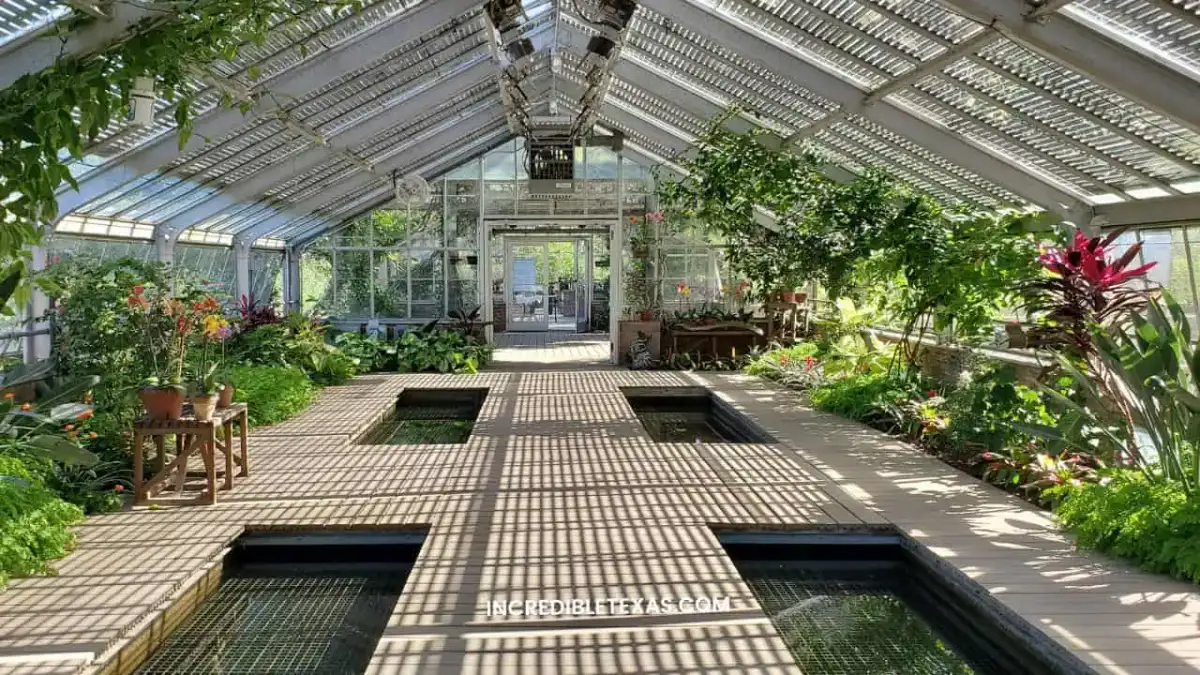
Shangri La Botanical Gardens TX encompasses 252 acres of formal botanical displays, cypress-tupelo wetlands, and environmental learning facilities at 2111 West Park Avenue in Orange, offering completely free general admission, free parking, and electric boat tours along scenic Adams Bayou.
Funded through the philanthropic legacy of the Nelda C. and H.J. Lutcher Stark Foundation, this nature center blends manicured horticultural beauty with wild Gulf Coast bayou habitat. Visitors explore paved garden paths, elevated wooden boardwalks, and tranquil bird-watching blinds.
Key takeaways
- Spans 252 acres along Adams Bayou, operating as Texas’s first commercial Platinum LEED-certified botanical center.
- General admission and on-site parking remain completely free of charge for all visitors year-round.
- Open Tuesday through Saturday from 9:00 AM to 5:00 PM; closed on Sundays and Mondays.
- Home to the 1,200-year-old Survivor Tree, an ancient bald cypress that withstood historic hurricanes and freezes.
- Features 45-minute guided electric pontoon boat excursions through surrounding tidal cypress wetlands.
| Area / Feature | Setting / Structure | Highlights & Attractions | Access & Operations |
|---|---|---|---|
| Formal Garden Rooms | 5 themed rooms & 4 courtyards | Azaleas, camellias, perennial borders, sculptures | Paved accessible paths, open daily |
| Cypress-Tupelo Swamp | Native wetland slough | 1,200-year-old Survivor Tree, Spanish moss | Elevated wooden boardwalks |
| Adams Bayou Outpost Tour | Navigable coastal bayou | 45-minute electric pontoon boat cruise | Register at ticket window on arrival |
| Ruby Lake Bird Blind | Shaded observation blind | Active colonial heronry, spoonbills, alligators | Open during regular garden hours |
| Nature Discovery Center | Platinum LEED green facility | Hands-on wildlife exhibits, education labs | Indoor air-conditioned center |
| The Great Lawn | Open grass courtyard | Seasonal festivals, scarecrow displays | Family gathering and picnic lawns |
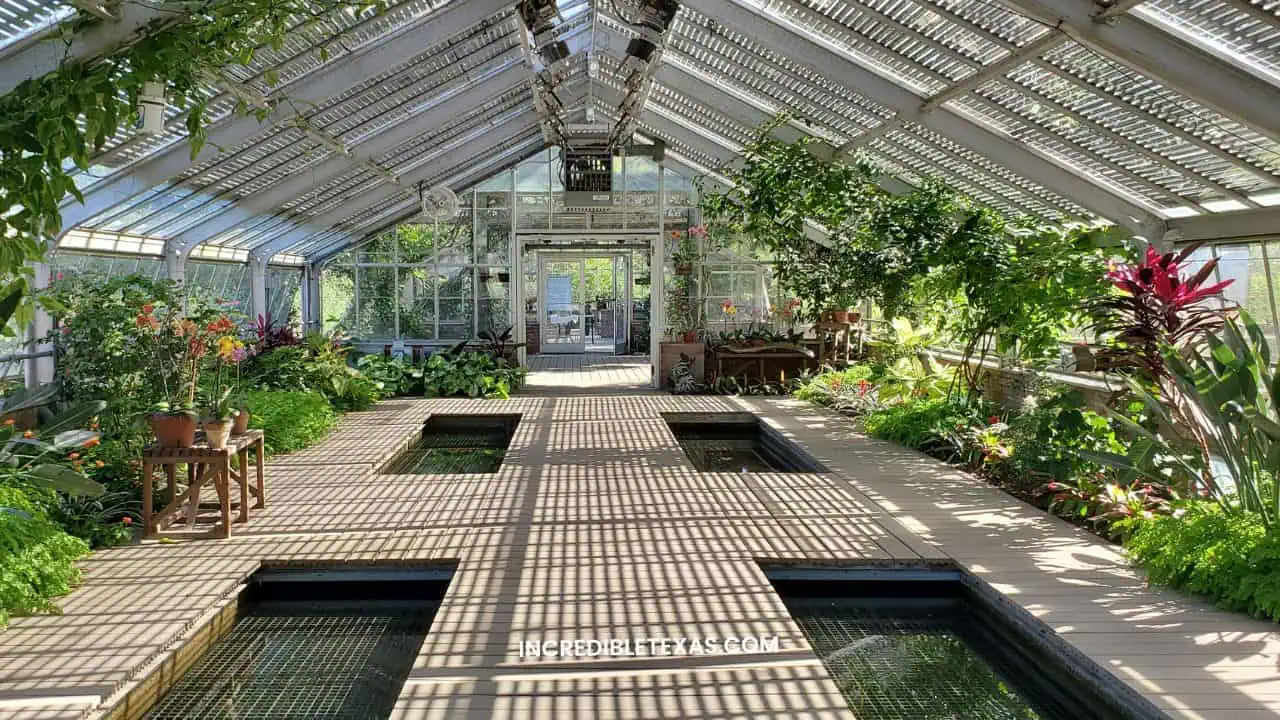
Shangri La Botanical Gardens TX at a Glance
Shangri La Botanical Gardens TX represents one of the most remarkable conservation achievements in the American South. Located in Orange along the Sabine River basin, the property sits two hours east of Houston and just five miles west of the Louisiana state border.
The site is divided between formal horticultural plots and untouched wetland wilderness. Visiting Shangri La Botanical Gardens Orange TX allows guests to observe native coastal biodiversity while strolling through artistic perennial displays.
Combining formal garden design with preserved coastal wetlands makes the property one of the top hidden gems in East Texas. Because the grounds encompass extensive outdoor boardwalks, packing comfortable walking shoes and seasonal insect repellent enhances your excursion.
Hours, Admission, Parking, and Visitor Schedules
The sanctuary operates on a schedule designed to protect resident wildlife while welcoming the public. According to Shangri La Botanical Gardens Official Visitor Information, general admission and on-site parking remain completely free to the public from Tuesday through Saturday.
Standard Shangri La Botanical Gardens hours run from 9:00 AM to 5:00 PM, with the final visitor entry granted at 4:30 PM. The facility remains completely closed on Sundays and Mondays for horticultural maintenance and landscape recovery.
Taking advantage of free Shangri La Botanical Gardens admission allows traveling families to enjoy a world-class cultural institution without budget constraints. Parking is conveniently located directly outside the modern orientation center at 2111 West Park Avenue.
Formal Garden Rooms, Sculptures, and Ephemeral Blooms
The formal gardens feature five distinct floral rooms and four sculpture spaces designed to stimulate the senses. Each outdoor room emphasizes specific landscaping principles, contrasting foliage textures, bright floral palettes, and natural fragrances.
Spring brings dramatic displays of flowering azaleas, Japanese camellias, and sweet-scented magnolias, echoing the original plantings established in the 1940s. Throughout the courtyards, stone fountains, bronze wildlife statues, and tranquil reflecting pools encourage quiet contemplation.
Horticulture enthusiasts who enjoy exploring coastal collections often compare these azalea rooms with the South Texas Botanical Gardens nature trails in Corpus Christi. Shaded benches placed along the perimeter provide restful viewpoints overlooking manicured perennial beds.
Cypress-Tupelo Swamp Boardwalks and the 1,200-Year-Old Survivor Tree
Beyond the manicured plots, elevated wooden boardwalks transport visitors into the primeval beauty of a freshwater cypress-tupelo swamp. Stately bald cypress trees rise from dark, tannin-stained waters, their knees protruding above the water to create intricate sculptural reflections.
As recorded in the Texas State Historical Association H.J. Lutcher Stark Biography, lumber industrialist Lutcher Stark began developing the botanical estate along Adams Bayou in the 1930s. He sought to preserve a living remnant of ancient Gulf Coast swampland that had escaped commercial timbering.
The undisputed monarch of the swamp is the Survivor Tree Orange TX, a colossal bald cypress estimated to be more than 1,200 years old. The ancient tree endured lightning strikes, destructive freezes, and the fierce winds of Hurricane Rita in 2005, demonstrating remarkable coastal botanical resilience.
Adams Bayou Electric Outpost Tours and Nature Center
To experience the bayou from water level, visitors can take an Adams Bayou boat tour aboard custom 30-foot electric pontoon craft. These quiet, emissions-free vessels glide silently across tidal channels, providing close encounters with turtles, herons, and basking American alligators.
During the 45-minute guided excursion, knowledgeable naturalists explain tidal estuarine biology and coastal flood control. The boat docks at an elevated wetland outpost where visitors can inspect water monitoring gear and study swamp ecology up close.
Back on shore, the Shangri La Nature Center provides interactive laboratory classrooms and hands-on discovery kiosks. Located roughly two hours east of the metropolitan area along Interstate 10, the gardens rank among the most scenic day trips from Houston for nature lovers.
Wildlife Photography, Bird Blinds, and Ruby Lake Rookery
Ruby Lake serves as an essential colonial waterbird rookery on the Upper Texas Coast. Each spring, hundreds of wading birds congregate on the lake’s protected islands to construct nests, court mates, and rear hatchlings.
Visitors observe this spectacular avian activity from an enclosed observation blind equipped with high-powered spotting scopes and angled viewing slats for camera lenses. The blind allows photographers to capture images of great egrets, snowy egrets, little blue herons, and roseate spoonbills without disturbing the colony.
The Texas Parks and Wildlife Gulf Coast Estuary Guide highlights Upper Coast tidal bayous and freshwater marshes as vital nesting zones for colonial wading birds. Birders mapping regional flyways frequently connect their Ruby Lake observations with Sea Rim State Park coastal marshes situated forty miles south on the Gulf of Mexico.
Stark Cultural Venues and Southeast Texas Itineraries
A trip to Shangri La connects naturally with the broader cultural properties managed by the Stark Foundation in downtown Orange. Just two miles from the gardens, visitors can tour the Stark Museum of Art, home to one of North America’s foremost collections of Western art, American Indian artifacts, and rare porcelain.
The nearby 1894 W.H. Stark House offers guided tours of a beautifully preserved three-story Queen Anne Victorian residence filled with original family furnishings. Cultural travelers can attend Broadway touring productions and symphony performances at the adjacent 1,500-seat Frances Ann Lutcher Theater for the Performing Arts.
Travelers touring the historic community of Orange often review our guide to the best small towns in East Texas to discover complementary heritage destinations. Combining botanical strolls with museum exhibits creates an enriching cultural getaway along the Texas-Louisiana border.
Frequently Asked Questions
Is Shangri La Botanical Gardens free to enter?
Yes, general admission to Shangri La Botanical Gardens and Nature Center is completely free for all guests year-round, courtesy of the Nelda C. and H.J. Lutcher Stark Foundation. On-site parking is also free.
What are the hours for Shangri La Botanical Gardens in Orange TX?
The botanical gardens operate Tuesday through Saturday from 9:00 AM to 5:00 PM, with the final entry permitted at 4:30 PM. The property remains closed to the public on Sundays and Mondays.
How old is the Survivor Tree at Shangri La?
The Survivor Tree is an ancient bald cypress estimated to be more than 1,200 years old. It has persevered through numerous natural disasters, including destructive lightning strikes, severe freezes, and Category 3 hurricane winds.
Are pets allowed inside the botanical gardens?
No, pets and emotional support animals are not permitted inside the gardens or nature trails to protect the fragile wetland habitat and nesting wildlife. Certified service animals trained to perform specific tasks are welcomed.