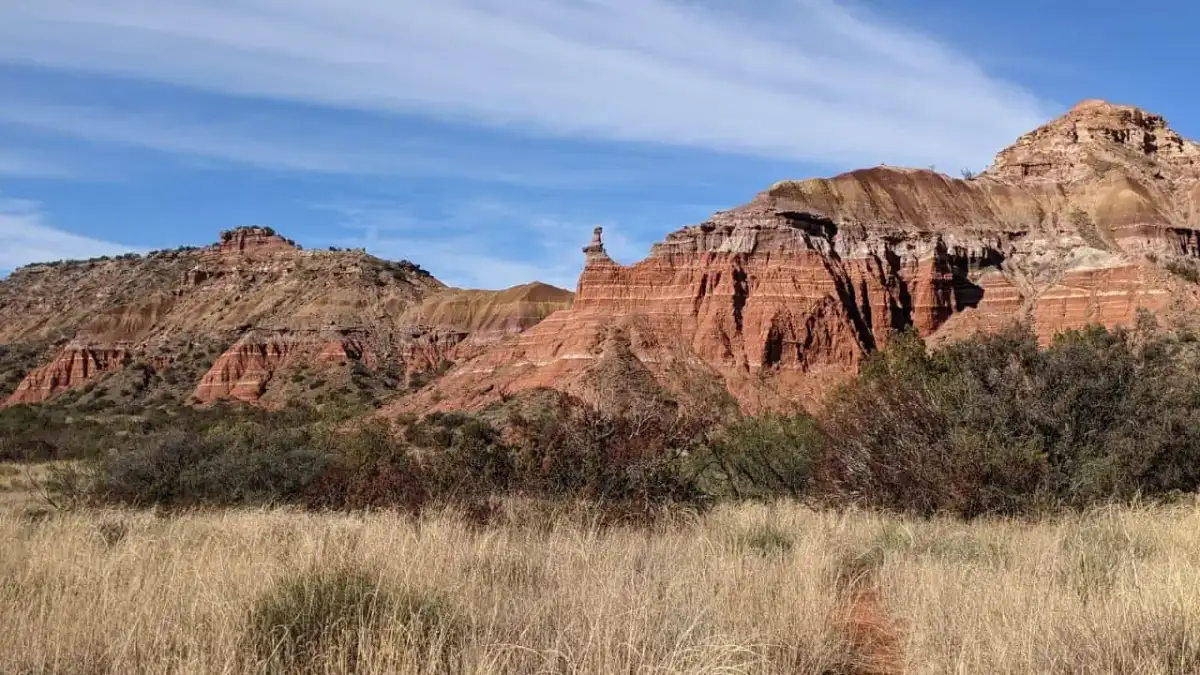
Palo Duro Canyon State Park, widely recognized as the "Grand Canyon of Texas," is the second-largest canyon system in the United States. Located in the Texas Panhandle approximately 25 miles southeast of Amarillo, this geological chasm extends roughly 120 miles in length and plunges up to 1,000 feet deep. The park encompasses over 29,000 acres of rugged badlands, offering travelers more than 30 miles of marked trails, historic stone cabins, developed campgrounds, and the renowned 300-foot Lighthouse rock formation. As one of the most visited natural landmarks in the Panhandle and one of the most famous landmarks in Texas, Palo Duro Canyon State Park Texas draws outdoor enthusiasts from across the nation.
Planning an overnight stay or day trip requires clear logistics. Daytime temperatures can surge beyond 105 degrees Fahrenheit in the summer, cellular reception disappears at the rim, and popular campsites book out months ahead. For travelers exploring the broader things to do in Amarillo TX, the park provides an immediate wilderness escape just a 30-minute drive southeast of the city. This complete field guide provides verified timings, entrance fees, trail metrics, cabin reservation advice, and canyon survival essentials.
At-a-Glance Guide to Palo Duro Canyon State Park
Palo Duro Canyon State Park spans 29,182 total acres in the Texas Panhandle, offering 30 miles of trails, historic CCC rim cabins, and full-hookup camping. The park is open daily from 7:00 AM to 9:00 PM, with day passes costing $8 for adults and free admission for children 12 and under.
Often referred to colloquially by locals simply as Palo Duro State Park, this protected natural preserve sits at 11450 Park Road 4, Canyon, TX 79015. Travelers visiting Palo Duro Canyon State Park Canyon TX should check primary specifications below to compare facilities with other top state parks in Texas:
| Detail | Information |
|---|---|
| Physical Address | 11450 Park Road 4, Canyon, TX 79015 |
| Nearest Metropolitan Hub | Amarillo (25 miles northwest); Canyon (12 miles west) |
| Park Gate Hours | 7:00 AM to 9:00 PM Daily (Campers with codes exit/enter until 10:00 PM) |
| Visitor Center Hours | 8:00 AM to 5:00 PM Daily |
| Daily Entrance Fee | $8 per adult (ages 13 and older); Children 12 and under are free |
| Annual Pass Acceptance | Texas State Parks Pass ($70) waives daily entrance for vehicle occupants |
| Canyon Dimensions | 120 miles long; average 6 miles wide (up to 20 miles); 800 to 1,000 feet deep |
| Trail Network | Over 30 miles of shared-use hiking, mountain biking, and equestrian paths |
| Campground Capacity | 115 developed campsites (electric/water), primitive backpack sites, and group camps |
| Overnight Cabins | 3 CCC Rim Cabins and 4 CCC Cow Camp Cabins on the canyon floor |
Best Time to Visit Palo Duro Canyon State Park
The best time to visit Palo Duro Canyon State Park is during spring (March to May) and autumn (September to November), when daytime temperatures average 60°F to 75°F. Summer days routinely top 100°F on the canyon floor, triggering safety closures on exposed trails like the Lighthouse Trail.
Because the canyon descends nearly 1,000 feet below the High Plains of the Llano Estacado, it creates an intense microclimate. Heat is trapped between the towering red sandstone walls. On sunny summer afternoons, temperatures on the canyon floor frequently run 10°F to 15°F hotter than at the visitor center along the rim.
| Season | Average Temperatures | Travel Advantages | Key Considerations |
|---|---|---|---|
| Spring (March to May) | 55°F to 80°F | Peak wildflower blooms, pleasant midday hiking, active bird migrations | Gusty Panhandle winds, heavy spring break crowds, early campground sellouts |
| Summer (June to August) | 72°F to 105°F+ | Long daylight hours, TEXAS Outdoor Musical performances at Pioneer Amphitheater | Dangerous canyon floor heat trap (110°F+), afternoon heat trail closures |
| Fall (September to November) | 50°F to 78°F | Optimal backpacking weather, golden cottonwood foliage, low humidity | Peak camping season requiring reservations up to 5 months in advance |
| Winter (December to February) | 25°F to 55°F | Sparse crowds, clear winter skies for stargazing, dusting of snow on red rock | Freezing nighttime temperatures, biting wind chills on the canyon rim |
During July and August, park rangers regularly issue heat advisories. When ground temperatures reach dangerous levels, staff initiate summer heat advisory trail closures from 11:00 AM through 5:00 PM on exposed singletrack routes. If you travel during the summer months, begin all hikes at first light and clear the trails before 10:00 AM.
Palo Duro Canyon State Park Hours, Entrance Fees, and Tickets
Palo Duro Canyon State Park is open daily from 7:00 AM to 9:00 PM, with the entrance gate remaining accessible until 10:00 PM for registered overnight campers. Day-use admission is $8 for adults ages 13 and older, while children 12 and younger enter free. Texas State Parks Pass holders receive free entry.
Purchasing advance Palo Duro Canyon State Park tickets online ensures guaranteed entry during high-volume weekends and holidays. Travelers can purchase day-use passes directly through the official Palo Duro Canyon State Park portal operated by the Texas Parks and Wildlife Department. Standard entry tickets cover access to all scenic driving loops, picnic zones, hiking trails, and historical landmarks within park borders.
Frequent park visitors can save substantial funds with an annual Texas State Parks Pass. Priced at $70 per year, this pass waives the daily entrance fee for the cardholder and all passengers in a single non-commercial vehicle across more than 80 state parks in Texas. If a family of four adults visits Palo Duro Canyon for a two-day weekend, the pass pays for nearly half its total value on that single trip.
Tip
Day-use visitors must vacate the park by 10:00 PM. Gate arms at the entrance lock automatically after operating hours; if you plan to arrive after 5:00 PM for late check-in, notify park dispatch in advance to obtain gate codes.
Palo Duro Canyon State Park Reservations: Day Pass and Campsite Rules
Reservations for Palo Duro Canyon State Park day passes open 30 days in advance, while overnight camping and cabin reservations open 5 months ahead through the Texas Parks and Wildlife reservation portal. Advance booking is strongly advised because the park frequently hits vehicle capacity by 10:00 AM on weekends.
Securing palo duro canyon state park camping reservations well ahead of your travel dates is critical during peak spring and autumn weekends. When the park reaches capacity, rangers turn away non-reserved vehicles at the entrance gate along Park Road 4. Booking online guarantees entry during your chosen morning or afternoon arrival window, even if the main highway displays capacity warning signs.
Key reservation policies include:
- Day Pass Booking Window: Up to 30 days before arrival date. Unused passes cannot be refunded within 48 hours of your entry slot.
- Camping and Lodging Window: Up to 5 months in advance for campsites and historic cabins. Weekend cabin reservations for October often sell out within minutes of release.
- Palo Duro Canyon State Park Map Navigation: Visitors can obtain a printed Palo Duro Canyon State Park map at the gatehouse or download topographic GPS routes prior to entering the canyon.
- Vehicle Limits: Campsite fees cover two standard vehicles per site. A nominal $5 per night fee applies to additional authorized vehicles.
- Check-in and Check-out Times: Campsite check-in begins at 2:00 PM, with check-out by 12:00 PM. Cabin check-in starts at 3:00 PM, with check-out by 11:00 AM.
Geological History of the Grand Canyon of Texas
Carved over millions of years by the Prairie Dog Town Fork of the Red River, Palo Duro Canyon reveals four distinct geological formations spanning 250 million years. These sedimentary layers range from the Permian Quartermaster Formation at the floor to the Ogallala caprock along the rim.
According to research published by the Texas State Historical Association, the canyon's name stems from the Spanish expression for "hard wood," referring to the durable Rocky Mountain juniper trees rooted in the rock crevices. The geologic record visible here is one of the most complete Triassic and Permian exposures in North America.
| Rock Formation | Geological Age | Visual Characteristics | Prominent Features |
|---|---|---|---|
| Quartermaster Formation | Permian (250 million years ago) | Distinct brick-red shale, claystone, and bright white satin spar gypsum veins | Canyon floor layers, mudstone flats, lower trail foundations |
| Tecovas Formation | Triassic (225 million years ago) | Muted yellow, purple, lavender, and gray soft shale and sandstone | Base of canyon cliffs, reptile fossil deposits, fragile slopes |
| Trujillo Formation | Triassic (205 million years ago) | Massive, erosion-resistant gray and brown sandstone and conglomerate rock | Prominent canyon ledges, mesa benches, cap of the Lighthouse formation |
| Ogallala Formation | Late Miocene / Pliocene (2 to 10 million years ago) | Tan sand, gravel, pink silt, and hard caliche caprock | Flat rim edges of the Llano Estacado plains, high overlooks |
The red coloration running through the Quartermaster Formation originates from iron oxide (rust) coating microscopic mineral grains within ancient coastal mudflats. Today, headward erosion continues to push the canyon westward at a rate of approximately one-sixteenth of an inch annually, carried along by seasonal storm surges along the Prairie Dog Town Fork.
Palo Duro Canyon State Park Camping and Campground Options
Palo Duro Canyon State Park offers 115 campsites across multiple loops, ranging from 20/30/50-amp full electric sites at $26 per night to primitive hike-in backpack sites at $12 per night. Modern loops like Juniper, Mesquite, and Hackberry provide hot showers, flush restrooms, water hookups, and shade shelters.
Every Palo Duro Canyon State Park campground loop provides convenient access to restrooms, water spigots, and scenic canyon wall views. Travelers comparing overnight destinations often weigh Palo Duro against camping at Dinosaur Valley State Park, yet the sheer depth and silence of the Palo Duro canyon floor create an unmatched Panhandle experience. All developed sites include heavy-duty metal fire rings, outdoor grills, and picnic tables.
| Campground Loop | Site Count | Utilities & Hookups | Nightly Fee | Nearby Amenities |
|---|---|---|---|---|
| Juniper Camp | 18 sites | Water and 30/50-amp electric | $26 | Restrooms with showers, lantern posts, shaded canopies |
| Mesquite Sagebrush Camp | 47 sites | Water and 30/50-amp electric | $26 | Modern bathhouses, dump station access, pull-through pads |
| Hackberry Camp | 32 sites | Water and 20/30-amp electric | $26 | Restrooms with hot showers, wooded perimeter sites |
| Cactus & Fortress Cliff | 18 sites | Water-only (tents and pop-ups) | $16 | Shade shelters, picnic tables, communal restrooms |
| Primitive Hike-in Areas | Dispersed | No water, no electricity, pack-in only | $12 | Hike-in distance of 0.5 to 1.5 miles; ground fires prohibited |
| Wolfberry Group Camp | 9 sites | Water and 30/50-amp electric | $250 | Private pavilion, dedicated shower facility, dining shelter |
Campground regulations maintain quiet hours from 10:00 PM to 6:00 AM daily. Generator operation is prohibited during these hours. Water collection stations and dump stations are located along the main loop near Mesquite Camp. If you book primitive hike-in sites, prepare to carry all necessary drinking water from the trailhead.
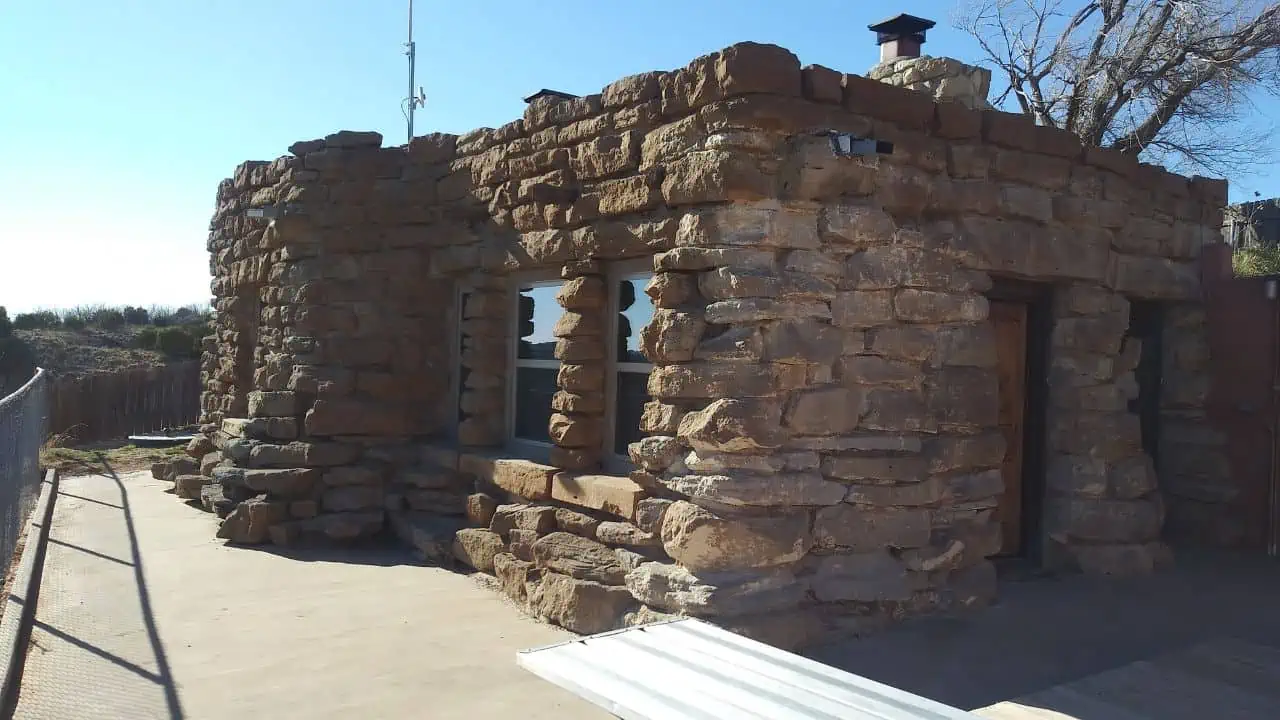
Palo Duro Canyon State Park Cabins: Rim Cabins vs. Cow Camp
Palo Duro Canyon features historic stone cabins built by the Civilian Conservation Corps, divided between dramatic Rim Cabins ($125 to $150 per night) and rustic floor-level Cow Camp Cabins ($60 per night). Rim cabins include private bathrooms and kitchenettes, while Cow Camp units use nearby communal bathhouses.
For travelers interested in staying in state parks in Texas with cabins, Palo Duro's rim structures deliver some of the finest vista panoramas in the American Southwest. Sorenson, Goodnight, and Lighthouse cabins cling directly to the cliff edge, providing unobstructed views across miles of colorful canyon strata.
| Cabin Name / Location | Capacity | Interior Amenities | Nightly Rate | Key Advantage |
|---|---|---|---|---|
| Sorenson Cabin (Rim) | Up to 4 guests | Full bathroom, shower, fireplace, microwave, small fridge, linens, A/C & heat | $150 | Direct cliff-edge positioning with expansive western sunset vistas |
| Goodnight Cabin (Rim) | Up to 4 guests | Full bathroom, shower, fireplace, microwave, small fridge, linens, A/C & heat | $125 | Private stone patio overlooking the upper canyon gorge |
| Lighthouse Cabin (Rim) | Up to 4 guests | Full bathroom, shower, fireplace, microwave, small fridge, linens, A/C & heat | $125 | Enclosed patio fence offering maximum privacy along the rim trail |
| Cow Camp Cabins #1, #3, #4 (Floor) | Up to 4 guests | Bunk beds, table, microwave, compact fridge, A/C & heat (no indoor plumbing) | $60 | Economical historic shelter situated close to canyon floor trailheads |
| Cow Camp Cabin #2 (Floor) | Up to 2 guests | Double bed, table, microwave, compact fridge, A/C & heat (ADA accessible) | $60 | Accessible parking pad and ramp entrance near communal restrooms |
A refundable $50 credit card security deposit is collected at check-in for all cabin rentals. To protect the integrity of these 1930s hand-hewn limestone structures, smoking, indoor cooking (beyond the provided microwave), and pets are strictly forbidden inside cabin interiors.
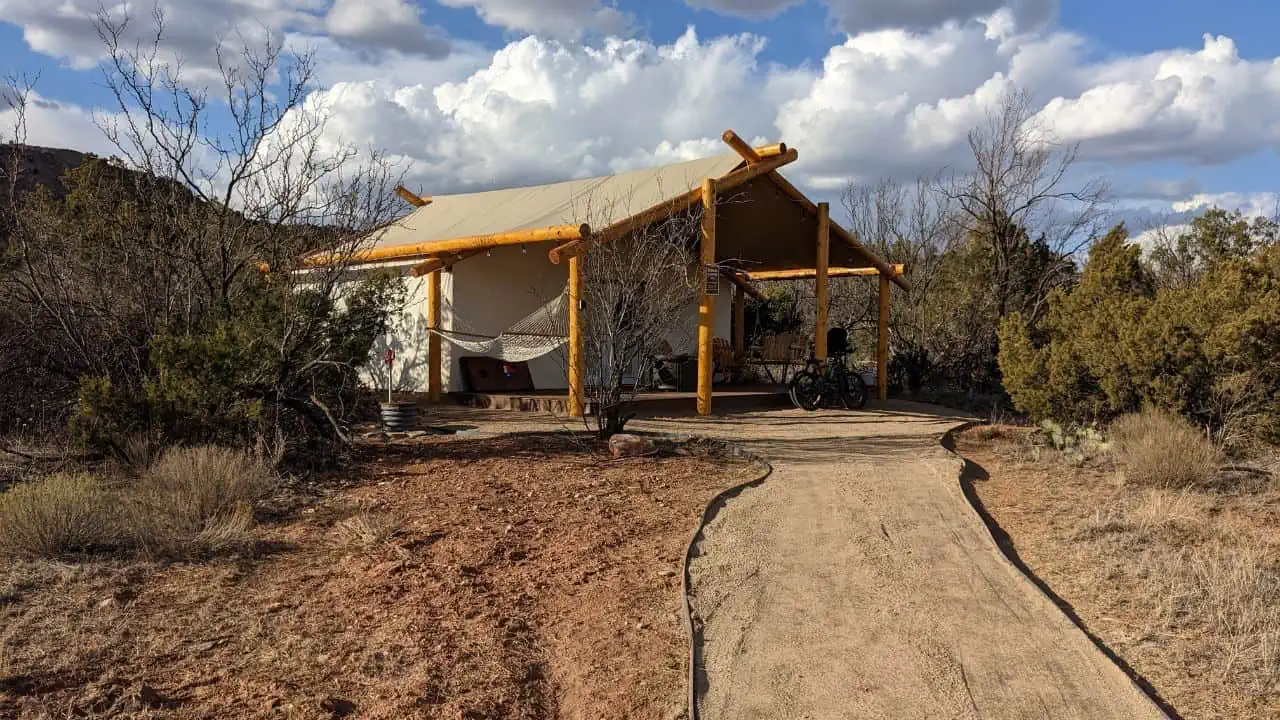
Palo Duro Canyon State Park Glamping Sites
Palo Duro Glamping provides luxury, fully furnished safari tents on the canyon floor near the Sagebrush camping loop. Tents include air conditioning, heating, luxury linens, covered porches, gas grills, coffee makers, and complimentary cruiser bicycles for exploring park roads.
For travelers seeking upscale comfort under canvas, glamping Palo Duro Canyon options provide air-conditioned luxury along the floor of the canyon. Operated privately under a state park concession contract, reservations must be booked directly through the official Palo Duro Glamping website rather than the TPWD state reservation engine. Nightly rates start around $299 depending on the season and site size.
Each glamping campsite includes dedicated outdoor Adirondack chairs, a propane fire table, personal hammocks, and shaded cedar decking. Guests use the state park's modern tile restrooms and hot showers situated within short walking distance across the loop.
History of the Civilian Conservation Corps (CCC) and the Canyon
Between 1933 and 1937, Civilian Conservation Corps Company 1827 carved Park Road 4 down 500 vertical feet into the canyon and constructed the park's iconic stone bridges, overlooks, and cabins. The park also encompasses historical grounds of the 1874 Battle of Palo Duro Canyon.
Prior to park establishment, Palo Duro Canyon served as a seasonal sanctuary for nomadic Southern Plains tribes, including the Comanche, Kiowa, and Cheyenne. On September 28, 1874, Colonel Ranald S. Mackenzie led the 4th U.S. Cavalry in a surprise dawn raid down the canyon walls, scattering tribal camps and capturing over 1,400 horses. As documented in the Handbook of Texas entry on the Battle of Palo Duro Canyon, this encounter proved to be the decisive military engagement of the Red River War, forcing indigenous nations onto reservation lands in Indian Territory.
During the Great Depression, the State of Texas acquired the canyon lands, and CCC recruits moved into temporary barracks on the rim. The young laborers blasted switchbacks through solid sandstone, chiseled native limestone blocks for the park headquarters and overlook pavilion, and laid stone drainage culverts that still carry mountain runoff safely underneath park roads today.
Best Palo Duro Canyon State Park Hiking Trails
Palo Duro Canyon features more than 30 miles of marked trails, led by the 5.7-mile round-trip Lighthouse Trail, the challenging CCC Trail climbing 500 vertical feet, and the scenic Rock Garden Trail. Hikers must carry at least one quart of water per mile and begin before 9:00 AM in warm weather.
Hikers looking to explore the Panhandle trail network will find similarities between Palo Duro and Caprock Canyons State Park & Trailway, though Palo Duro features more dramatic vertical drops and distinct geological pinnacles.
| Trail Name | Round-Trip Distance | Difficulty Rating | Elevation Change | Trail Character & Scenery |
|---|---|---|---|---|
| Lighthouse Trail | 5.7 miles | Moderate to Strenuous | +520 ft | Red clay flats leading to a steep scramble at the base of Lighthouse Peak |
| CCC Trail | 2.8 miles | Strenuous | +510 ft | Historic stone bridges, sharp switchbacks connecting the rim to canyon floor |
| Rock Garden Trail | 4.8 miles | Strenuous | +600 ft | Navigates a massive Triassic landslide field up to the Fortress Cliff rim |
| Givens, Spicer, Lowry (GSL) | 6.2 miles | Moderate | +340 ft | Flowing singletrack through badlands, popular with cross-country mountain bikers |
| Paseo Del Rio Trail | 2.0 miles | Easy | +40 ft | Shaded gravel path tracing the riverbank between Cow Camp and road bridges |
| Sunflower Trail | 2.4 miles | Easy | +60 ft | Level canyon floor stroll passing seasonal wildflowers and thick juniper groves |
| Upper Comanche Trail | 6.6 miles | Moderate to Difficult | +410 ft | Remote path skirting the western canyon bluffs, offering deep backcountry silence |
The Lighthouse Trail Palo Duro Canyon route is the park's primary hiking objective, drawing thousands of trail runners and hikers. The route follows a broad, unshaded red dirt path across desert shrub flats for approximately 2.6 miles. The final quarter-mile shifts dramatically, requiring hikers to scramble up loose gravel switchbacks and a sheer sandstone gully equipped with erosion ties. The reward at the summit is an up-close perspective of the freestanding 300-foot Lighthouse hoodoo.
Warning
The Lighthouse Trail has virtually zero natural shade. Park rangers recommend carrying at least one full gallon (128 ounces) of water per hiker during warm months. Never begin the return hike with an empty reservoir.
Flora and Fauna of the Canyon Ecosystem
Palo Duro Canyon serves as a biological refuge in the High Plains, supporting mule deer, Barbary sheep (aoudad), bobcats, and threatened Texas horned lizards. Over 150 species of birds frequent the canyon, including golden eagles, roadrunners, and painted buntings.
The microclimate produced by the river and high bluffs allows plant communities to thrive that cannot survive on the wind-swept plains above. Broad plains cottonwood trees line the Prairie Dog Town Fork of the Red River, turning fiery yellow during late October. Rocky Mountain junipers and redberry junipers anchor fragile clay slopes, preventing accelerated erosion during flash downpours.
When hiking near rock ledges, remain vigilant for western diamondback rattlesnakes sunning themselves during morning hours. Give all wildlife at least 25 yards of clearance. The park is also one of the remaining stable Panhandle habitats for the state-threatened Texas horned lizard, which feeds on native harvester ant colonies across sandy canyon benches.
Top Things to Do in Palo Duro Canyon State Park
Top activities in Palo Duro Canyon State Park include driving the 16-mile scenic route along Park Road 4, riding guided equestrian tours, biking multi-use singletrack trails, attending the summer TEXAS Outdoor Musical, and riding the Palo Duro Canyon Zip Line across the rim.
When compiling regional itineraries, visitors frequently link a weekend here with the best things to do in Canyon TX, creating a balanced mix of rugged wilderness and Panhandle culture. Essential activities include:
- The 16-Mile Park Road 4 Scenic Drive: This paved route drops from the rim visitor center, navigates hairpin turns, and winds past scenic canyon floor overlooks. Six low-water crossings bisect the road, offering direct access to picnic grounds and main trailheads.
- TEXAS Outdoor Musical: Staged Tuesday through Sunday evenings from early June to mid-August at the 1,600-seat Pioneer Amphitheater. The family performance depicts 19th-century Panhandle settlement with live horses, dancers, songs, and fire effects set against a towering 600-foot natural cliff backdrop.
- Guided Horseback Riding: Stables located inside the park and along the rim, such as Old West Stables and Palo Duro Creek Ranch, lead guided equestrian rides along historical timber trails and canyon washes.
- Mountain Biking on the GSL Trail: Palo Duro's singletrack network is celebrated across the southwest. The Givens, Spicer, Lowry route delivers berms, rocky drop-offs, and technical sandstone climbs suited for intermediate to experienced riders.
- Palo Duro Canyon Zip Line: Located near the park entrance on the rim, this commercial attraction lets adventurers soar across a quarter-mile canyon gap, offering aerial views of the canyon gorge.
- Panhandle-Plains Historical Museum: Situated just 12 miles west in Canyon, the Panhandle-Plains Historical Museum is the largest history museum in Texas. It houses extensive fossil collections, pioneer artifacts, and original art documenting Palo Duro's cultural heritage.
Photography Tips and Scenic Overlooks
Photographers achieve the best results at Palo Duro Canyon during golden hour when late afternoon sunlight saturates the red Permian sandstone and illuminates the Lighthouse hoodoo. The park's dark Panhandle skies also provide exceptional conditions for Milky Way astrophotography.
If you are planning a broader Panhandle itinerary that includes a Route 66 road trip through Amarillo, scheduling sunset in Palo Duro Canyon provides a memorable visual finale. Prime photo spots include:
- Canyon Rim Visitor Center Overlook: The stone terrace outside the visitor center offers an expansive wide-angle vista looking north up the canyon chasm. Early morning light highlights the contrasting layers of the Trujillo sandstone ledges.
- Fortress Cliff from the Floor: Position your camera near Mesquite Camp looking northeast toward the massive 400-foot vertical escarpment of Fortress Cliff just as the evening sun strikes the upper caprock.
- Lighthouse Peak at Sunset: To capture the Lighthouse glowing in deep crimson tones, plan to arrive at the base by 6:30 PM in spring or autumn. Carry a reliable headlamp with extra batteries for the 2.85-mile hike back to the parking lot in twilight.
- Night Sky Stargazing: Because Palo Duro sits miles away from intense municipal glare, the Milky Way core is vividly visible to the south-southeast from April through September. Use a fast wide-angle lens (f/2.8 or lower) at ISO 3200 with a 20-second exposure.
Essential Visitor Tips and Canyon Safety
Safety in Palo Duro Canyon requires bringing at least one gallon of water per hiker, downloading offline maps due to zero cell coverage, wearing rigid trail footwear, and monitoring weather radar for sudden flash floods at low-water river crossings along Park Road 4.
The desert canyon environment can turn hostile rapidly for unprepared travelers. For visitors combining backcountry cliff hiking with Panhandle boating and fishing, pair your route with our Lake Meredith Texas guide. Keep these practical ground realities in mind throughout your trip:
- Zero Cell Service Below the Rim: Mobile network coverage drops completely within half a mile of driving down Park Road 4. Download offline topographic maps on GPS apps and take screenshots of your digital park passes before leaving Canyon or Amarillo.
- Low-Water River Crossings: Park Road 4 crosses the Prairie Dog Town Fork of the Red River multiple times. Sudden thunderstorms miles upstream on the High Plains can trigger rapid flash floods across road crossings. Never drive into standing or rushing water across roadway dips.
- Trail Heat Dangers for Dogs: While leashed dogs are permitted on all outdoor park trails, red clay and sandstone surfaces routinely reach 130°F on summer afternoons, causing severe paw burns. If the ground is too hot to hold the back of your hand against for seven seconds, it is too hot for your dog's paws.
- Hydration Protocols: Carry at least one quart of electrolyte-enhanced water per person for every mile of planned trail travel. Do not rely on natural river water, which is heavily mineralized and carries livestock runoff.
- Footwear Selection: Sturdy hiking boots with reinforced toe caps and aggressive lugged soles are essential for navigating loose gravel on the CCC and Lighthouse switchbacks. Lightweight running shoes or open sandals frequently lead to ankle rolls and cactus spine punctures.
Frequently Asked Questions: Palo Duro Canyon State Park
Is Palo Duro Canyon bigger than the Grand Canyon?
No, Palo Duro Canyon is not bigger than the Grand Canyon in Arizona. While Palo Duro Canyon is the second-largest canyon system in the United States, spanning 120 miles long and up to 1,000 feet deep, Arizona's Grand Canyon stretches 277 miles long and over 6,000 feet deep.
Do you need reservations for Palo Duro Canyon State Park?
Yes, advance reservations are strongly recommended for day-use passes and required for overnight camping. Day passes can be booked up to 30 days ahead, while campsites and cabins open 5 months ahead. Peak spring and autumn weekends routinely sell out vehicle capacity before 10:00 AM.
How long is the Lighthouse Trail in Palo Duro Canyon?
The Lighthouse Trail is 5.7 miles round-trip (approximately 2.85 miles each way) and typically requires two to three hours of hiking time. The path remains mostly level until the final quarter-mile, which demands a steep scramble up loose rock to reach the iconic 300-foot Lighthouse hoodoo.
Can you drive through Palo Duro Canyon?
Yes, motorists can drive through the canyon along the paved 16-mile scenic drive on Park Road 4. The road winds down from the canyon rim to the floor, providing multiple pullouts, panoramic overlooks, picnic areas, and trailheads accessible to standard passenger cars and small recreational vehicles.
Are dogs allowed in Palo Duro Canyon State Park?
Yes, leashed dogs are welcome on all hiking trails and inside outdoor camping loops throughout Palo Duro Canyon State Park. Pets must remain on a leash no longer than six feet at all times and are prohibited inside park buildings, CCC cabins, and the Pioneer Amphitheater during performances.
How much does it cost to enter Palo Duro Canyon State Park?
Daily entrance costs $8 for adults ages 13 and older, while children 12 and under enter free. Travelers holding an annual Texas State Parks Pass receive complimentary admission for everyone in their passenger vehicle. Overnight camping and cabin lodging require additional nightly fees beyond the base daily entrance charge.
Can you visit Palo Duro Canyon in the summer?
Yes, you can visit Palo Duro Canyon during the summer, but outdoor activities must be planned around extreme midday heat. Floor temperatures routinely exceed 105°F, prompting mandatory trail closures between 11:00 AM and 5:00 PM. Hikers should finish by 10:00 AM and carry one gallon of water per person.
Can you see the Milky Way from Palo Duro Canyon?
Yes, Palo Duro Canyon offers outstanding stargazing and clear views of the Milky Way from late spring through early autumn. Due to low light pollution across the Texas Panhandle, the canyon rim overlooks and floor campgrounds provide dark sky conditions ideal for amateur astronomy and long-exposure astrophotography.