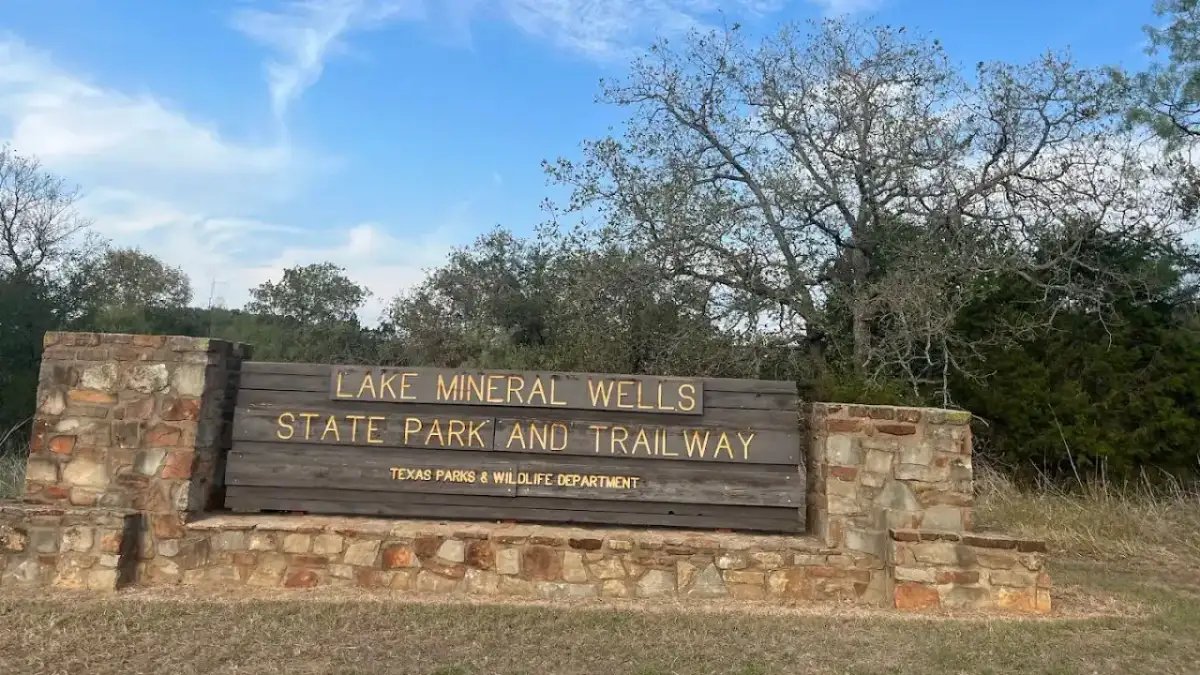
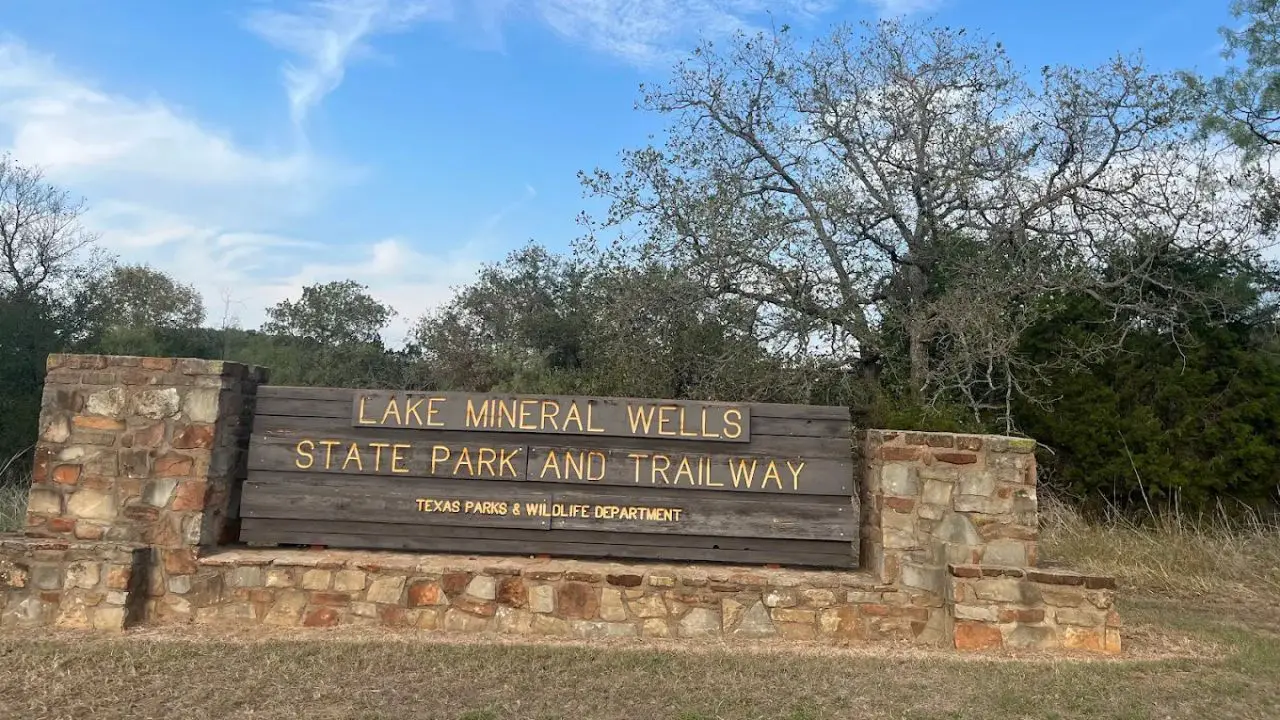
Lake Mineral Wells State Park spans 3,282.5 acres along Highway 180 in Parker and Palo Pinto counties, combining a quiet 640-acre reservoir with North Texas’s signature natural sandstone climbing bluffs. Known officially as Lake Mineral Wells State Park and Trailway, the property sits 45 miles west of Fort Worth. The preserve protects Cross Timbers woodlands, an expansive campground network, and a historic 20-mile rail-trail corridor.
Key takeaways
- Lake Mineral Wells State Park operates daily from 6 a.m. to 10 p.m. at 100 Park Road 71, charging $7 for adult day use while admitting youth ages 12 and under free.
- The grounds provide 106 developed electric campsites, 20 equestrian sites, 17 screened shelters at $36 nightly, and primitive hike-in sites accessed by a 2.5-mile trail.
- Penitentiary Hollow serves as the only designated natural rock climbing amphitheater in North Texas, requiring in-person check-in, signed liability waivers, and top-rope anchoring.
- The 20-mile crushed limestone Lake Mineral Wells State Trailway connects downtown Mineral Wells with Weatherford along an abandoned 1889 railroad right-of-way.
- Anglers can fish the 640-acre reservoir from shoreline banks and six public fishing piers without a Texas state fishing license under TPWD Free Fishing in State Parks rules.
Travelers looking for straightforward state park navigation like the setup described in the Lake Arrowhead State Park guide will appreciate the organized facilities and well-marked trail system here.
Hours, Entrance Fees, and Day Passes
Standard Lake Mineral Wells State Park hours run from 6 a.m. to 10 p.m. daily, with day entry priced at $7 for adults and free for children 12 and under. Visitors staying after 10 p.m. without a reserved campsite pay a $3 overnight activity fee for night fishing or stargazing.
According to official operating data from the Texas Parks and Wildlife Lake Mineral Wells Entrance Fees schedule, the Lake Mineral Wells State Park entrance fee is waived for holders of an annual Texas State Parks Pass. Park rangers distribute an official Lake Mineral Wells State Park map at the entrance station to guide motorists toward day-use trailheads.
Among north texas state parks, this facility stands out for combining water recreation and climbing on a single property. Because day passes frequently sell out on spring and autumn weekends, securing an online reservation up to 30 days before arrival ensures guaranteed gate access.
Camping Options and Overnight Amenities
Lake Mineral Wells camping encompasses 106 electric campsites, 20 equestrian sites, 17 screened shelters, and 11 primitive hike-in spots. Nightly rates range from $10 for backpacker wilderness clearings to $36 for Lake Mineral Wells screened shelters.
Campers can review reservation details on the Texas Parks and Wildlife Lake Mineral Wells Campsite Reservation Directory before booking. For travelers comparing historic lake park lodgings, the Lake Brownwood State Park visitor guide provides useful perspective on regional stone cabins and lakeside loops.
| Campsite Type | Nightly Fee | Hookups & Utilities | Site Count | Best For |
|---|---|---|---|---|
| 50-Amp Electric Sites | $26 | 50A electric, water, picnic table, fire ring | 47 | Travel trailers and large RVs |
| 30-Amp Electric Sites | $22 | 30A electric, water, table, lantern post | 59 | Pop-up campers and family tents |
| Screened Shelters | $36 | Electricity, roof cover, picnic table, water nearby | 17 | Weather-resistant shelter camping |
| Equestrian Campsites | $22 | Water, trailer parking, tie rails, corrals | 20 | Horseback riders and equestrian trailers |
| Primitive Hike-In Sites | $10 | Wilderness clearing, pack-in pack-out | 11 | Backpackers seeking backcountry solitude |
Which Campsite Type Should You Book for a Weekend Trip?
The 50-amp full electric sites in the Live Oak and Post Oak camping loops deliver the most reliable utilities for recreational vehicles and travel trailers. Sites 48 and 54 offer dedicated wheelchair accessibility with paved paths leading directly to modern bathhouses.
Tent campers wanting shade and quieter surroundings often prefer the water-only loops in the Plateau camping area. These sites keep tents separated from generator noise while remaining within a short walk of restrooms and potable water spigots.
Are the Screened Shelters Worth It in Summer and Fall?
Screened shelters provide solid wood framing, complete roof coverage, and exterior screen mesh that shields campers from insects for $36 per night. Each shelter includes interior electrical outlets and an outdoor picnic table.
Because the shelters lack air conditioning and heating units, shoulder seasons like March, April, October, and November offer the most pleasant sleeping temperatures. TPWD strictly prohibits pets inside the screened shelter units.
Hiking Trails and the 20-Mile Trailway
Lake Mineral Wells trails encompass 12.8 miles of internal hiking and biking paths alongside the regional rail corridor. The Lake Mineral Wells Trailway weatherford connection extends east across pastoral ranchland along a gentle railroad grade.
Hikers who enjoy scenic backcountry routes like those detailed in the Copper Breaks State Park trail guide will value the diverse terrain connecting sandstone ridges and open prairie.
Which Lake Mineral Wells Trail Should You Hike First?
The 0.8-mile Red Waterfront Trail provides the best introduction for first-time visitors seeking direct views of Penitentiary Hollow and shoreline bluffs. The path delivers dramatic sandstone vantage points without requiring strenuous elevation gains.
Hikers looking for wildlife watching and deeper tree cover should explore the Cross Timbers Green and Black trails. These winding paths weave through post oak woodlands and expose visitors to historic military structures dating back to Fort Wolters.
How the 20-Mile Trailway Connects Mineral Wells and Weatherford
According to the Texas Parks and Wildlife Lake Mineral Wells Trailway Guide, this linear corridor preserves 20 miles of the former Weatherford, Mineral Wells and Northwestern Railroad completed in 1889. The trail surface consists of compacted limestone dust that accommodates hybrid bicycles, trail runners, and horses.
Four primary trailheads provide water and parking access at downtown Mineral Wells, the state park main entrance, Garner, and the western outskirts of Weatherford. The route crosses 16 historic bridges, including an arched 500-foot equestrian bridge crossing over Highway 180.
Rock Climbing at Penitentiary Hollow
Penitentiary Hollow rock climbing offers the only designated natural rock climbing amphitheater in North Texas, featuring 20 to 40-foot sandstone bluffs. Climbers must register at headquarters, sign liability waivers, and set top-rope anchors using approved protective webbing.
The canyon contains more than 30 established climbing lines ranging from novice top-roping routes to challenging inverted cracks. Because the hollow sits directly along the canyon rim, spectators can observe climbers from railed overlook platforms above the rock floor.
What Makes Penitentiary Hollow Different from Other Texas Climbing Spots?
Penitentiary Hollow features natural Pennsylvanian-age sandstone fissures, whereas most central Texas climbing venues consist of slick Cretaceous limestone. The textured grit of the rock offers exceptional friction for climbing shoe rubber on vertical cracks and corners.
The enclosed box canyon creates a microclimate that stays notably cooler during crisp autumn mornings. However, summer afternoon temperatures can trap humidity against the stone walls, making early morning ascents advisable.
What Are the Lake Mineral Wells Climbing Rules Right Now?
State park regulations published in the Texas Parks and Wildlife Penitentiary Hollow Climbing Regulations require every climber and rappeller to check in at park headquarters before unloading gear. Participants must sign an annual liability waiver, and individuals under age 17 require a parent or legal guardian signature.
Solo climbing, free soloing, and bouldering without rope protection are strictly illegal inside the park. The climbing area closes promptly at sundown each evening, and rangers close the rock amphitheater during rainy weather to prevent accelerated sandstone erosion.
Important
Wet sandstone loses up to 50 percent of its structural integrity. Park staff immediately close Penitentiary Hollow after rainstorms, and climbing resumes only after the rock face has thoroughly dried.
Fishing, Boating, and Swimming on the 640-Acre Reservoir
Lake Mineral Wells fishing spans a 640-acre reservoir where non-motorized paddling, idle-speed boating, shoreline swimming, and license-free angling thrive. Six public piers and an active TPWD Tackle Loaner Program support shore-bound anglers targeting largemouth bass, catfish, and crappie.
Anglers comparing regional fishing lakes like the coastal waters described in the Lake Casa Blanca State Park guide will appreciate the calm waters created by strict motorized boat speed controls.
Can You Fish Without a License Here?
Anglers do not need a Texas fishing license or freshwater stamp when casting from shorelines, boat ramps, or fishing piers within state park boundaries. The park office participates in the TPWD Tackle Loaner Program, providing visitors with loaner rods, reels, and basic terminal tackle free of charge.
The lake yields healthy populations of channel catfish, flathead catfish, black crappie, and largemouth bass. Statewide bag and size limits remain strictly enforced by state game wardens even though licensing requirements are waived on park waters.
What Should You Know Before You Swim or Launch a Boat?
Watercraft operators must observe a mandatory idle-speed rule across the entire 640-acre lake surface. Water skiing, wakeboarding, and personal watercraft like jet skis are prohibited, ensuring safe and peaceful conditions for kayakers, canoers, and stand-up paddleboarders.
The park store rents single kayaks, tandem kayaks, canoes, and paddleboards by the hour during spring, summer, and autumn seasons. Swimmers can access a designated buoyed beach area near the main picnic loop, though no lifeguards patrol the shoreline.
The History Behind Lake Mineral Wells State Park
Lake Mineral Wells originated in 1922 as a municipal reservoir before the land served as military training grounds for Fort Wolters during World War II. Donated to TPWD in 1975, the park officially opened to the public in July 1981.
Centuries before European settlement, Comanche, Wichita, and Tonkawa tribes traveled through the Cross Timbers to hunt bison and gather native pecans. Settlers established cattle ranches along Rock Creek in the 1870s before discovering subterranean mineral springs.
How Did Mineral Wells Evolve into a Park Town?
In 1880, local landowner James Alvis Lynch drilled a shallow well that yielded mineral-rich water reported to cure digestive disorders and chronic rheumatism. Word of the mineral water spread rapidly, transforming the small settlement into a prominent health resort town by the turn of the century.
Luxury hotels like the Baker Hotel and Crazy Water Hotel attracted national figures, entertainers, and health-seekers seeking medicinal mineral baths. As the municipal demand for water expanded, city leaders dammed Rock Creek in 1922 to construct Lake Mineral Wells.
What Does the Trailway Tell You About Fort Wolters and the Old Railroad?
The Lake Mineral Wells State Trailway follows the historic rail corridor constructed by the Weatherford, Mineral Wells and Northwestern Railroad in 1889. During World War II, the rail line transported tens of thousands of infantry troops and aviation personnel to Fort Wolters, which served as a major basic training base.
Riders along the trailway can spot surviving concrete foundations, former water tank footings, and historic telegraph poles along the path. These surviving artifacts highlight how civilian railroad infrastructure supported wartime aviation logistics.
How to Plan Your Visit to the Park
Visiting the park requires booking day-use passes or campsites up to 30 days in advance through the TPWD reservation portal. Visitors should pack one quart of water per trail hour, sturdy hiking footwear, and sun protection.
Campers considering scenic weekend road trips will find complementary itineraries in the Lake Bob Sandlin State Park visitor guide, which highlights another memorable state park setting.
What Should You Pack for a Day on the Trail?
Hikers tackling the park trails or the 20-mile Trailway should carry at least one quart of drinking water per hour of physical activity. Sturdy footwear with deep rubber tread protects ankles from loose sandstone gravel and exposed post oak root networks.
Bicyclists riding the crushed limestone Trailway should wear safety helmets, bring a portable tire pump, and mount flashing safety lights for early morning rides. Sunscreen, wide-brimmed hats, and insect repellent are necessary supplies between May and September.
When Should You Book Camping or Day Use?
Day-use passes and prime weekend campsites often reach full reservation capacity three to four weeks in advance for spring and autumn visits. The TPWD online reservation system opens booking windows up to five months ahead for campsites and 30 days ahead for day passes.
Weekday visits from Tuesday through Thursday experience significantly lighter trail traffic and abundant open campsites. If planning a large gathering, the enclosed Group Hall with Kitchen and the Lone Star Amphitheater require advance coordination with park headquarters.
Frequently Asked Questions
Is the state park good for beginners?
The park accommodates beginner hikers and campers through gentle paved paths, shaded lakeside picnic groves, and accessible fishing piers. Families can test outdoor skills on short trails like the 0.8-mile Waterfront Trail before exploring longer primitive routes.
Do you need a fishing license to fish on the lake?
Visitors do not need a Texas fishing license when casting from the shoreline or six park piers under TPWD Free Fishing in State Parks regulations. Anglers must still respect daily bag and length limits for largemouth bass, catfish, and crappie.
Can you camp with horses in the park?
The facility maintains 20 designated equestrian campsites in the Cross Timbers area equipped with tie rails, water hookups, and trailer parking. Horse owners must present documentation of an official negative Coggins test completed within the past 12 months.
How long is the Lake Mineral Wells Trailway?
The Lake Mineral Wells State Trailway extends for 20 miles along a crushed limestone railbed between Mineral Wells and Weatherford. Four distinct public trailheads allow hikers, bicyclists, and horseback riders to complete shorter sectional trips.
Is Penitentiary Hollow open right now?
Penitentiary Hollow remains open for registered climbers during dry daylight hours, though park rangers close the rock face whenever rain makes sandstone slick and fragile. Climbers must always check in at the park visitor center to confirm daily wall status before unpacking gear.
Does the park have cabins?
The park does not offer full indoor cabins with plumbing. The grounds provide 17 enclosed screened shelters with electrical outlets, outdoor picnic tables, and nearby bathhouses for shelter camping.