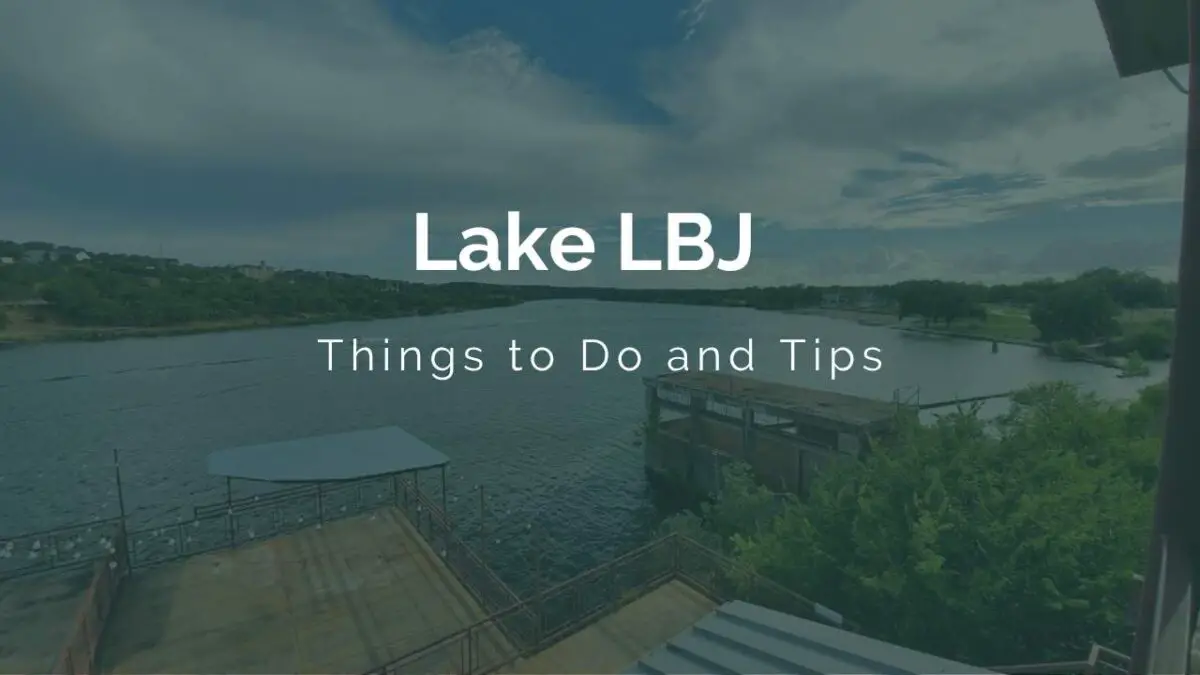
Lake LBJ TX Guide: Things to Do and Tips
Lake LBJ TX is a constant-level reservoir on the Colorado River in Burnet County, near Marble Falls, Kingsland, and Granite Shoals. It stretches 21.15 miles long, reaches 90 feet deep, and gives you a practical Hill Country base for boating, fishing, and a day-trip overnight stay.
If you are comparing Texas water trips, Texas lake ideas gives a broader starting point, and the official lake profile at Texas Parks and Wildlife lists the main fish species and lake characteristics.
The dam-and-lake data at LCRA shows a conservation pool elevation of 825 feet msl, and the lake stays at that level instead of swinging up and down like a storage reservoir. Surface-area figures differ slightly by source, so it is worth knowing that TPWD lists 6,449 acres while LCRA lists 6,432 acres.
For a land base, Inks Lake State Park sits nine miles west of Burnet at 3480 Park Road 4 West, Burnet, TX 78611. It is open daily from 6 am to 10 pm, day-use is $7 per adult, and reservations are recommended online or by phone before busy weekends.
Austin sits about 45 miles southeast of the lake area, so the trip fits neatly into a Central Texas weekend plan. The drive is short enough for a day trip and long enough that a park base still saves time once you arrive.
Lake LBJ is 45 miles northwest of Austin. The cleanest major-city distance to keep in mind is 45 miles northwest of Austin if you are planning from the city and want one lake base that still feels close to home.
Lake LBJ is 45 miles from Austin. The number is useful because it tells you how much time to budget before you even think about the ramp, the park gate, or the first meal stop in Burnet County.
| Quick Fact | Lake LBJ Detail |
|---|---|
| Location | Colorado River in Burnet County, near Marble Falls, Kingsland, and Granite Shoals |
| Length | 21.15 miles |
| Maximum depth | 90 feet |
| Water level | Constant level; conservation pool elevation of 825 feet msl |
| Fish | Largemouth bass, white bass, crappie, and catfish |
| State-park base | Inks Lake State Park, 3480 Park Road 4 West, Burnet, TX 78611 |
Lake LBJ TX at a Glance
Lake LBJ sits in the Highland Lakes chain and stays useful year-round because the water level stays steady. The constant level shapes almost everything visitors notice, from dock height to the feel of a boating day without a dramatic drawdown.
The reservoir is 21.15 miles long and has a maximum width of 10,800 feet. TPWD places it on the Colorado River in Burnet County near Marble Falls, Kingsland, and Granite Shoals, while the lake’s shoreline is highly developed with long runs of bulkhead and boat houses.
The constant level also keeps the lake easy to read from shore. Docks sit at a predictable height, water access stays familiar from one visit to the next, and the route across the lake changes more slowly than it does on storage reservoirs that swing hard with rainfall.
Austin sits about 45 miles southeast of the lake area, which makes Lake LBJ a realistic Central Texas getaway even when the whole weekend is not open. A short base in Marble Falls or Kingsland cuts the driving down further once you are already on the water.
The shoreline, towns, and day-use areas sit in the same stretch of the Hill Country, so a compact plan is practical. One morning on the water, one meal in town, and one short land stop before the drive home is enough to fill the day.
The compact layout also helps if you are coming back for a second trip. Once you know your launch point and one town base, the lake becomes easy to reuse without rebuilding the whole plan from scratch.
Once the route is set, you can repeat it without rebuilding the whole itinerary. Lake LBJ is easy to use as a return trip when you want the same water focus with a different restaurant or park stop.
- Location: Burnet County on the Colorado River.
- Water level: constant level at a conservation pool elevation of 825 feet msl.
- Length: 21.15 miles.
- Deep water: 90 feet at the maximum depth.
- Shoreline style: developed, with bulkheads, boat houses, and rocky sections near the dam.
Lake LBJ fits into the same broad conversation as other Texas lake getaways, but it behaves differently from reservoirs that swing up and down with drought and flood cycles. The steady level makes it easier to think in terms of routes, not just access points.
The shoreline is easier to read than a backcountry lake because so much of it is built up and visually stable. Docks sit at a predictable height, and the edge of the reservoir changes more slowly from one visit to the next.
Austin sits about 45 miles southeast of the lake area, which makes Lake LBJ a realistic Central Texas getaway even when the whole weekend is not open. A short base in Marble Falls or Kingsland cuts the driving down further once you are already on the water.
The same layout helps if you want to mix lake time with errands or meals. A single base in Burnet County gives you one place to return to after the lake instead of a string of separate stops across the Hill Country.
The lake keeps the same basic shape in spring, summer, and fall. Park and town stops can shift depending on how much time you have.
A practical first-time plan usually starts with a waterfront base, a boat ramp or marina, and one or two nearby towns for food and supplies. Marble Falls, Kingsland, Granite Shoals, and Horseshoe Bay all sit close enough to the water to keep the drive short once you arrive.
Boating and Swimming at Lake LBJ
Lake LBJ fits the same Austin-area lake trips crowd, but its constant level makes the water feel more predictable than most inland reservoirs. The lake is clear to slightly stained, and the developed shoreline gives you long stretches of familiar bulkhead, boathouse, and dock frontage.
Ramps, slips, and shoreline markers stay at a consistent elevation because the waterline stays steady. The lake supports a relaxed cruise, a paddle along the edge, or a swimming stop in a place that already sees steady water traffic.
The easiest first visit usually starts with a short route from a park or marina rather than a cross-lake run. If you want the least complicated day, keep the first outing close to your base, learn the access points, and save the wider cruise for a second trip.
TPWD also flags the reservoir for zebra mussels, so clean, drain, and dry boats, trailers, livewells, and bait buckets before moving to another water body. A short routine at the ramp protects the next lake and keeps gear ready for the following trip.
Inks Lake State Park’s busiest stretch runs through spring, summer, and fall, and the park recommends reservations for weekends, school breaks, and holidays. If a quieter launch matters, an early start gives you more breathing room before the midday traffic builds.
Swimmers should pick a legal access point and keep an eye on boat traffic, especially near docks and boat houses. A lake with this much shoreline activity rewards people who treat the access point as part of the plan instead of an afterthought.
Boat traffic feels easiest to manage near the developed shoreline, where ramps, docks, and marinas create obvious lanes. A conservative first lap keeps the day calm and gives you a better read on where the tighter turns and busier edges sit.
Kayaks and paddleboards also feel better when you stay close to a familiar launch point. Staying near one launch point leaves more energy for the water and less time spent correcting course or worrying about boat lanes.
If you want to swim, choose a sheltered stretch of shoreline and keep the boat lane in mind before you settle in. The lake is active enough that a small change in location can make the whole stop feel more relaxed.
If you want the simplest water day, pair one launch with one shoreline stop and one town stop. The lake gives you enough length for variety, but it still rewards a plan that stays compact.
Things to Do Around Lake LBJ
Water-first plans fit Lake LBJ best. Boating, paddling, tubing, and shoreline time all work across a 21.15-mile reservoir, and the wide footprint gives you enough room for a full day without repeating the same view over and over.
- Start with a boat launch or marina stop near your base town.
- Build in a lunch stop in Marble Falls, Kingsland, Granite Shoals, or Horseshoe Bay.
- Use a shoreline break for a swim, picnic, or slow paddle.
- Pair the water day with an inland stop in the Hill Country.
- Finish with a waterfront evening and a short drive back to your stay.
- A family day can begin with a lake launch, move to a town lunch, and end with an easy shoreline picnic.
- A boating day can stay simple if you choose one launch, one main channel run, and one dock-side stop.
- A mixed group can split time between the water and a Burnet County outing without losing the same base hotel.
- A short trip feels fuller when you keep the lake stop and the inland stop inside the same afternoon.
- A return visit can focus on the piece you skipped the first time, whether that is fishing, paddling, or a longer shoreline cruise.
The lake’s towns are close enough together that a lunch stop, a fuel stop, and a boat stop can all fit inside the same route, which saves time and keeps the day from turning into a long set of disconnected errands.
If the day needs a bigger land-side plan, Burnet County ideas gives you more food stops, hikes, and low-key outings that pair well with a lake base. The county setting matters because Lake LBJ sits in the middle of a region that works better as a loop than as a single-point visit.
The lake’s long shape and developed edges make it easy to split a visit into two parts: water first, then a town or park stop. A second look at the shoreline fits naturally if the weather stays good.
Families usually get the most out of the lake when they keep the route short and repeat one easy rhythm. A launch, a lunch stop, and a shoreline break often work better than trying to squeeze in too many separate destinations.
- A water-heavy day can start at a launch, move to a quiet dock stop, and end with a town meal.
- A family day can keep one adult on boat duty while the rest of the group sticks to a shoreline break.
- A low-key visit can focus on one town for food, one access point for the water, and one place to rest.
- A repeat visit can swap the launch for a different shoreline and still feel like a new trip.
- A short weekend can split the lake and the park so the day never feels overbooked.
Marble Falls, Kingsland, Granite Shoals, and Horseshoe Bay are the names that matter most when you are mapping a practical route around the reservoir. Those towns keep food, fuel, and lodging close to the water instead of turning the trip into a long cross-country drive.
The same proximity makes it easy to build a simple overnight plan. You can leave the lake, eat dinner in town, and still keep the next morning open for another water run or a park stop.
Marble Falls usually works as the easiest supply stop because it sits close to the lake edge and gives you groceries, fuel, and restaurants without a long detour. Kingsland and Horseshoe Bay are the other names that matter when you want to stay near the water rather than chase services across the county.
Fishing at Lake LBJ
Lake LBJ earns its fishing reputation because the main species list is broad and useful: largemouth bass, white bass, crappie, and catfish all show up here. The white crappie population stands out in the Highland Lakes chain, and the spring white bass run moves up the Llano River from February through May.
The shoreline gives anglers multiple looks in a single outing. TPWD describes a highly developed edge with miles of bulkhead and boat houses, rocky water near the dam, sandier water on the upper end, and a small power plant near Horseshoe Bay that concentrates forage and game fish in winter.
For a broader comparison point, Texas fishing lakes helps place Lake LBJ alongside the rest of the state, and the current fishery summary stays simple: bass, crappie, white bass, and catfish anchor the lake’s identity. The lake works especially well for anglers who want variety without giving up the convenience of nearby towns.
A simple fishing plan starts with bulkheads, boat houses, and creek edges, then shifts to main-lake points or winter holdover spots when conditions change. Because the shoreline is so developed, there is usually more structure than open water to cover in one day.
The same mix also suits mixed groups, since a bass angler and a crappie angler can work the lake in different ways without splitting up for long stretches. The flexibility matters most when one person wants an active fishing day and another wants a quieter shoreline plan.
- Largemouth bass anglers should start with bulkheads, boat houses, and rocky transitions near the dam.
- White bass anglers should watch the Llano River movement from February through May.
- Crappie anglers can work shoreline cover, docks, and other structured edges.
- Catfish anglers have both shoreline and deeper-water options across the reservoir.
The fishery stays useful because each species lines up with a different part of the lake. Bass anglers can work structure, crappie anglers can work cover, and catfish anglers can move between the shoreline and the deeper edges without changing lakes.
The mix matters most when you are choosing how to spend one morning block. A dock-heavy shoreline, a rocky edge, and a spring run can all fit into the same trip if you keep the route flexible.
- Bass anglers can start on docks and bulkheads before shifting toward rocky water near the dam.
- Crappie anglers can stay near structure and work the developed shoreline as the day changes.
- White bass anglers can watch the Llano River arm during the February-to-May run.
- Catfish anglers can split time between deeper water and the shoreline edges.
- Mixed groups can keep the same launch point and still fish in different ways.
If the day opens up in winter, the warm-water area near Horseshoe Bay is worth a look because it can pull forage and game fish into a smaller zone. Winter around that discharge can change a quiet day into a productive one without forcing a long move across the reservoir.
If you only have one half-day, start with bulkheads and boat houses, then finish on the rocky side near the dam. Two different looks at the same fishery keep the plan focused from start to finish.
The winter discharge near Horseshoe Bay gives the lake a second fishing season inside the same reservoir. When warmer water concentrates bait, the lake feels smaller in a good way because the fish are easier to locate without leaving Burnet County.
Where to Stay Near Lake LBJ
If cabin access matters, Texas state parks with cabins gives the broader cabin-oriented fallback, but Inks Lake State Park is the closest official base for a first Lake LBJ trip. The park address is 3480 Park Road 4 West, Burnet, TX 78611, about nine miles west of Burnet and about an hour northwest of Austin.
Day-use is $7 per adult and free for children 12 and under, and the park is open daily from 6 am to 10 pm. Reservations are recommended online or by phone before busy weekends.
The park store is open daily from 8:30 am to 5 pm, so there is a built-in place to check on basics before heading back to the water or trail. A steady schedule helps if you want to keep the stay inside one simple base instead of bouncing around for supplies.
- Campsites with electricity: $21 nightly plus the daily entrance fee.
- Campsites with water: $16 nightly plus the daily entrance fee.
- Primitive hike-in sites: $11 nightly plus the daily entrance fee.
Pets are allowed in most Texas state parks, but they cannot enter park buildings, and some cabin or primitive areas have tighter restrictions. A dog and a night inside the park call for checking the park rules before you book.
Spring through fall is the park’s busy season, so advance planning helps when you want a campsite instead of a last-minute hotel search. In the lake area, that usually means booking first and shaping the rest of the trip around the stay you secure.
- Choose Inks Lake State Park if you want a verified park base with trails and day-use access.
- Choose a lakefront resort or RV park if you want a dock, a cabin, or a longer stay.
- Choose a Burnet or Marble Falls hotel if you care more about restaurants and short drives than waterfront space.
The reservation line is worth using early because the park often reaches capacity for camping and day use. A confirmed base keeps the rest of the trip calm, especially if you are trying to line up both a lake morning and a park afternoon.
A lakefront resort or RV park can make more sense if your main goal is easy boat access and a dockside evening. Burnet and Marble Falls hotels work better when restaurants and short drives matter more than sitting on the shoreline.
The choice usually comes down to how much time you want to spend on the property versus on the water. A park base keeps the schedule simple, while a resort or hotel gives you more flexibility if meals and errands matter more than trail access.
If your goal is a longer stay, the lakefront options tend to work best when a dock matters more than trail access. If your goal is a shorter trip, a hotel in Burnet or Marble Falls keeps the logistics easy and still leaves the water close by.
Nearby Parks and Day Trips
Lake LBJ pairs naturally with Inks Lake State Park and Longhorn Cavern State Park. Inks Lake is a day-trip or weekend fit, has 9 miles of hiking trails, and stays open daily.
Longhorn Cavern at 6211 Park Road 4 S in Burnet is day-use only and closes on December 25. The cave stop works well when you want one water activity and one land activity without stretching the drive across the county.
Inks Lake also works as a softer second stop because the park includes a bird blind, a picnic pavilion, and trail mileage that is easy to fit into a half day. A softer second stop is useful if you want the trip to feel active without turning it into a full hiking commitment.
The 9-mile trail system, picnic pavilion, and bird blind make it easy to add a land break without losing the lake mood. A cave tour or short hike gives the day a second anchor and keeps the weekend from feeling like one long drive.
A useful route is simple: water in the morning, trails or a cave tour in the afternoon, and a short town stop in between. The result is a trip that stays inside the same Hill Country corridor instead of turning into a long drive between separate destinations.
The park alerts page for Inks Lake also recommends reservations for weekends, school breaks, and holidays, and pass inventory can disappear quickly on crowded dates. Checking that page before you leave is a small step that can save a long drive to a full lot.
If the day stays flexible, a lake morning and a state-park afternoon is usually enough to make the trip feel complete. The lake, the towns, and the parks are close enough together that a two-stop plan feels natural instead of rushed.
- Lake LBJ + Inks Lake State Park works for a water morning and trail afternoon.
- Lake LBJ + Longhorn Cavern works for a lake hour and a cave tour in the same day.
- Lake LBJ + a Burnet or Marble Falls meal stop keeps the route compact.
Lake LBJ works well as a short vacation base because you can keep the water focus, move inland for one activity, and still return to the same dock, cabin, or hotel before dark.
Inks Lake also adds a useful trail day because the park has 9 miles of hiking trails through shady forests and rocky hills. If you want a softer second stop than a cave tour, that trail system gives you a straightforward alternative.
Lake LBJ FAQ
Is Lake LBJ constant level?
Yes. Lake LBJ stays at a constant level with a conservation pool elevation of 825 feet msl, which is part of what makes it different from many other Texas reservoirs.
Can you swim in Lake LBJ?
Swimming is part of the normal lake experience, but the best plan is to use a legal access point and watch boat traffic. A shoreline that stays busy with docks, marinas, and homes is not the place to treat water safety casually.
How deep is Lake LBJ?
The maximum depth is 90 feet. The lake’s long shape means depth changes from one section to another, so the best fishing and boating spots can look different across a single trip.
What towns are on Lake LBJ?
Marble Falls, Kingsland, Granite Shoals, and Horseshoe Bay sit around the reservoir. Those names matter most when you want to choose a base, book a stay, or plan a meal close to the water.
What fish are in Lake LBJ?
Largemouth bass, white bass, crappie, and catfish are the main species. The spring white bass run and the strong white crappie population make the lake a reliable choice for anglers who want variety in one place.