Central Texas offers outstanding freshwater recreation, pairing clear limestone waters with diverse angling and camping options within 15 to 90 minutes of downtown Austin. Finding the best lakes near Austin tx for camping and fishing requires understanding water levels, boat ramp access, fishery characteristics, and park reservation rules.
Key takeaways
- Inks Lake State Park offers 197 campsites, 22 cabins, and license-free bank and pier fishing under Texas state park rules along a constant-level reservoir.
- Lake Travis provides more than 400 primitive and improved campsites at Pace Bend Park with deep-water access for largemouth bass, striped bass, and Guadalupe bass.
- Lake Georgetown features 26 miles of shoreline trails on the Good Water Loop, with $30 nightly Corps of Engineers campsites at Cedar Breaks and Jim Hogg parks.
- Lake Bastrop in the Lost Pines features LCRA cabins, RV hookups, and a strictly managed 14- to 21-inch slot length limit for trophy largemouth bass.
- Lake Austin offers rare lakefront camping directly inside city limits at Emma Long Metropolitan Park with 66 campsites and trophy bass waters.
Best Lakes Near Austin for Camping and Fishing At a Glance
Austin area lakes vary considerably in size, regulatory management, and overnight amenities. The table below compares drive times, surface acreage, camping styles, and primary sportfish species across top camping lakes central texas travelers frequent.
| Lake Destination | Drive From Austin | Surface Acres | Camping Options | Primary Sportfish | Top Park / Access Point |
|---|---|---|---|---|---|
| Inks Lake | 1 hr 15 min | 831 | 197 campsites, 22 cabins | Largemouth bass, catfish, sunfish | Inks Lake State Park |
| Lake Travis | 35-45 min | 18,929 | 400+ primitive, 20 RV sites | Striped bass, largemouth bass | Pace Bend Park |
| Lake Georgetown | 40 min | 1,297 | Developed tent and RV sites | Largemouth bass, white bass, catfish | Cedar Breaks & Jim Hogg Parks |
| Lake Buchanan | 1 hr 20 min | 22,333 | Waterfront RV sites, cabins | Striped bass, hybrid stripers | LCRA Black Rock Park |
| Lake Bastrop | 45 min | 906 | 18 cabins, tent, and RV sites | Trophy largemouth bass, catfish | LCRA North & South Shore Parks |
| Canyon Lake | 1 hr 10 min | 8,230 | Waterfront tent and RV sites | Striped bass, largemouth, catfish | Potters Creek & Cranes Mill Parks |
| Lake Austin | 20-30 min | 1,599 | 66 tent and utility RV sites | Trophy largemouth bass, sunfish | Emma Long Metropolitan Park |
| Lady Bird Lake | 5-10 min | 416 | Day use only (urban city park) | Catch-and-release bass, carp | Red Bud Isle & Festival Beach |
| Lake Marble Falls | 55 min | 611 | Day use (city park launches) | Largemouth bass, channel catfish | Johnson Park & Lakeside Park |
| Lake LBJ | 1 hr 10 min | 6,534 | Waterfront RV resorts, cabins | Crappie, white bass, largemouth | Sunset Point RV Resort |
For travelers planning a broader road trip, reviewing top places for camping in Austin helps compare city-adjacent parks with remote Hill Country alternatives.
1. Inks Lake State Park
Inks Lake State Park is widely regarded as one of the best lakes near Austin for combined camping and fishing. Spanning 831 surface acres on the Colorado River, the reservoir maintains a constant water level year-round, ensuring boat ramps and shorelines remain functional regardless of seasonal drought conditions.
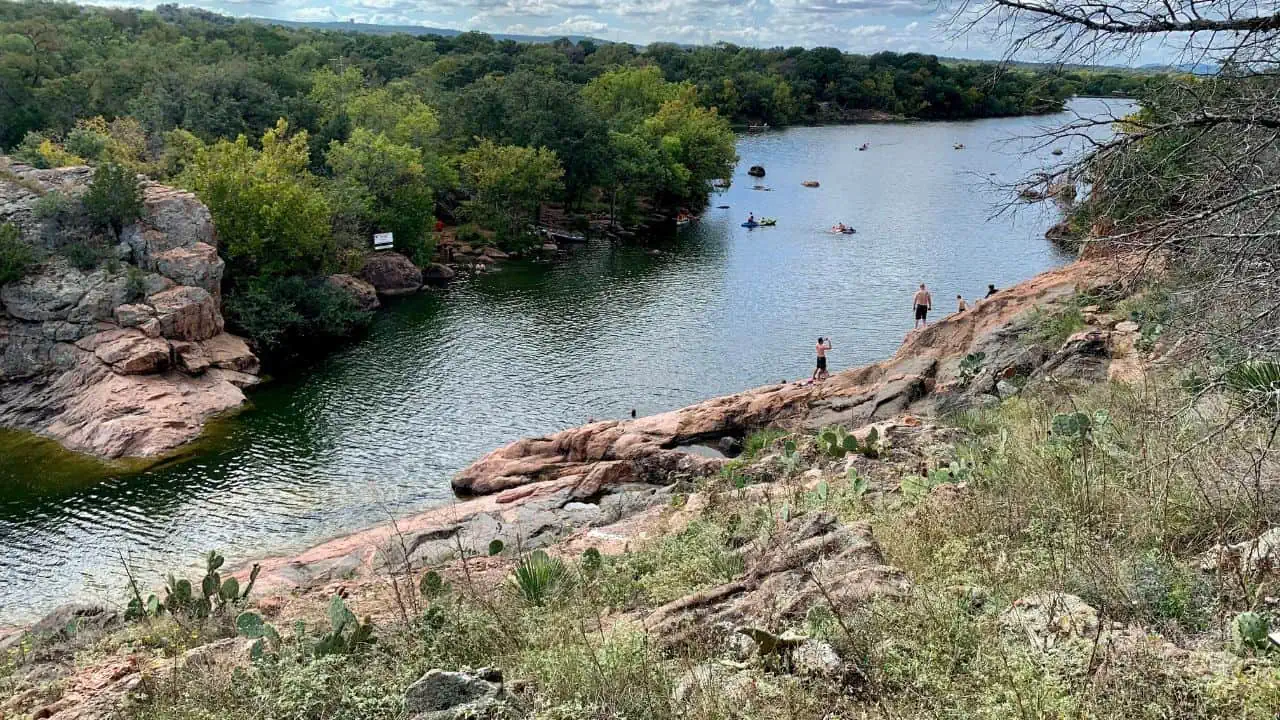
- Distance from Austin: 68 miles northwest (1 hour 15 minutes).
- Surface Area: 831 acres.
- Camping Inventory: 197 campsites and 22 climate-controlled mini-cabins.
- Primary Fish Species: Largemouth bass, Guadalupe bass, channel catfish, bluegill, and crappie.
- Signature Amenity: Two lighted fishing piers and a loaner tackle program at park headquarters.
Anglers benefit from an exceptional state park privilege: under Texas state park rules, no fishing license is required when casting from the shoreline or piers inside park boundaries. The park provides two lighted fishing piers with cleaning tables, making night fishing for crappie and channel catfish especially productive.
Reservations for Inks Lake state park camping fill several months in advance for weekend dates. Travelers seeking extra comfort can reserve Inks Lake cabins equipped with electricity and air conditioning.
Studying the official Inks Lake campsite map helps anglers target waterfront sites near Devil’s Waterhole and the main fishing piers. Visitors can check current campsite fees and book reservations directly through the Texas Parks and Wildlife Department Inks Lake State Park Portal. Anglers can also consult our Inks Lake State Park guide for hiking and paddling details.
2. Lake Travis (Pace Bend Park)
Lake Travis is the largest of the Highland Lakes near Austin, encompassing 18,929 acres with over 270 miles of shoreline. Known for its clear, deep waters and dramatic limestone cliffs, the reservoir offers exceptional boat angling for striped bass, white bass, and Guadalupe bass.
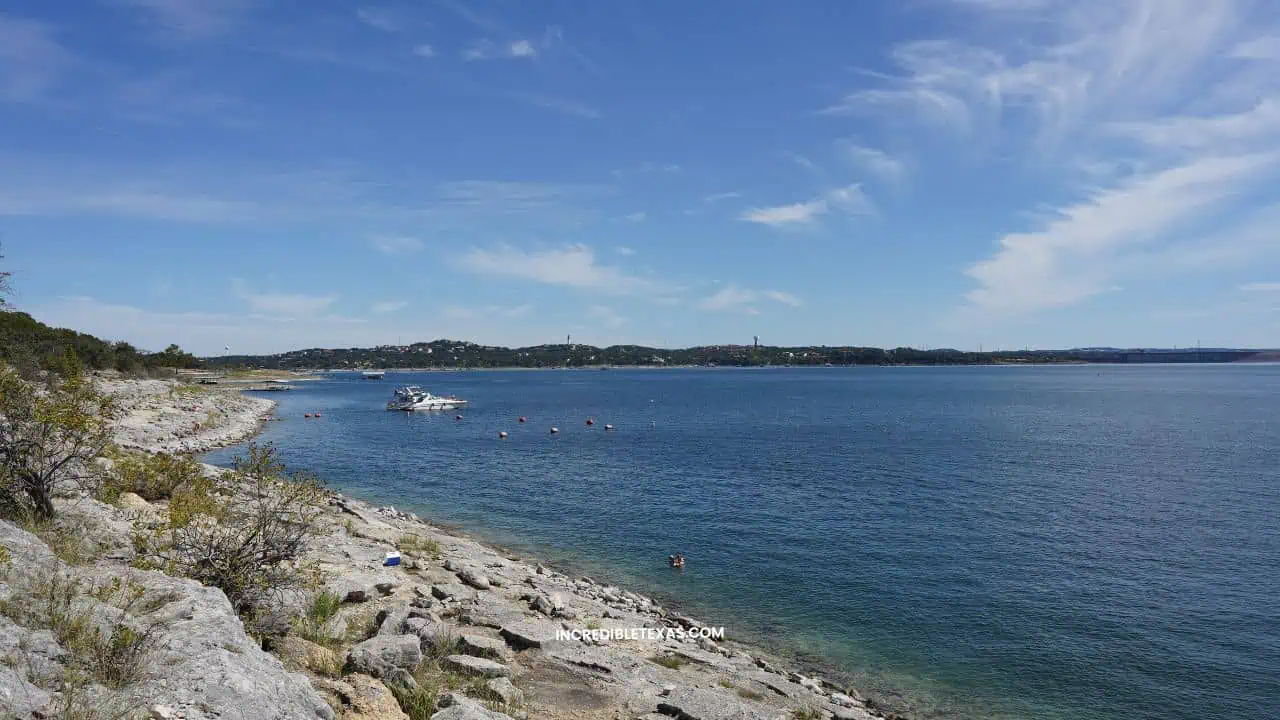
- Distance from Austin: 32 miles northwest to Pace Bend Park (45 minutes).
- Surface Area: 18,929 acres.
- Camping Inventory: Over 400 primitive shoreline campsites and 20 improved RV sites with water and electrical hookups.
- Primary Fish Species: Striped bass, largemouth bass, Guadalupe bass, white bass, and blue catfish.
- Signature Amenity: Nine miles of public shoreline access and multiple concrete boat ramps.
Pace Bend Park, managed by Travis County, provides the most extensive lake Travis camping opportunities on the reservoir. The western bluffs feature primitive tent sites overlooking open water, while the sheltered coves on the east side accommodate swimming and kayak launching.
Ground realities at Lake Travis require advance preparation. Travis County Parks operates entry booths on a cash-only payment basis, and vehicle towing trailers incur a separate daily fee. For park updates, ramp status, and rules, check the Travis County Parks Pace Bend Park Portal. Anglers exploring full access points can also review our detailed Lake Travis visitor guide.
3. Lake Georgetown (Cedar Breaks & Jim Hogg Parks)
Lake Georgetown is a 1,297-acre reservoir impounded by the U.S. Army Corps of Engineers along the North Fork of the San Gabriel River. Located 30 miles north of Austin, this quiet reservoir is framed by cedar-covered limestone hills and lacks private shoreline docks, preserving a natural, undeveloped aesthetic.
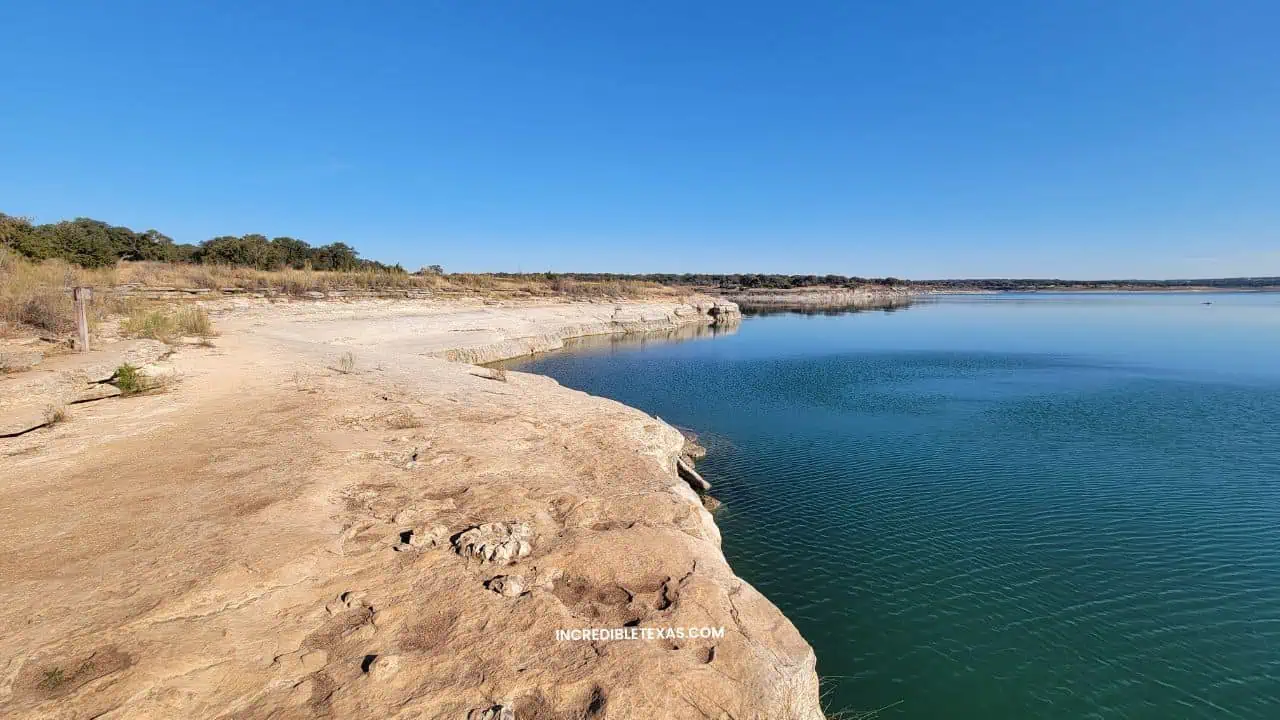
- Distance from Austin: 33 miles north (40 minutes).
- Surface Area: 1,297 acres.
- Camping Inventory: 64 developed campsites at Cedar Breaks Park and 148 sites at Jim Hogg Park, plus primitive hike-in camping at Tejas Camp.
- Primary Fish Species: Largemouth bass, smallmouth bass, white bass, channel catfish, and flathead catfish.
- Signature Amenity: Access to the 26-mile Good Water Loop national recreation trail encircling the entire lake.
Anglers find reliable fishing around submerged limestone ledges and creek channels. Lake Georgetown holds healthy populations of smallmouth bass alongside largemouth bass, which is uncommon for Central Texas reservoirs. Kayak anglers launch efficiently from Cedar Breaks or the Russell Park ramp.
Lake Georgetown camping combines convenience with rugged scenery. Both Cedar Breaks and Jim Hogg parks provide paved RV pads with water and electric hookups for $30 per night, alongside clean shower facilities. Reservations must be secured in advance through the Recreation.gov Lake Georgetown Cedar Breaks Campground Portal.
4. Lake Buchanan (Black Rock Park & Canyon of the Eagles)
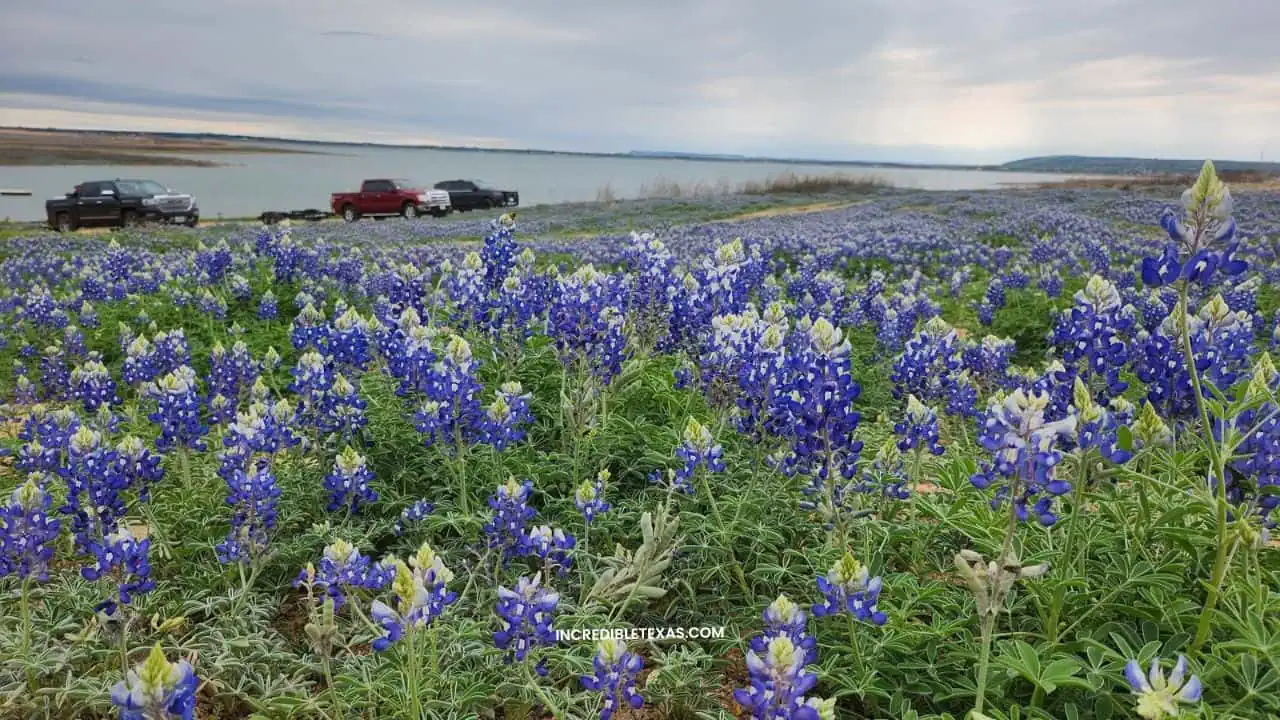
Lake Buchanan is the uppermost and largest reservoir in the Highland Lakes chain, covering 22,333 surface acres with 124 miles of shoreline. Built in 1937, this massive lake is celebrated for wide horizons, granite pebble beaches, and world-class striped bass fishing.
- Distance from Austin: 72 miles northwest (1 hour 20 minutes).
- Surface Area: 22,333 acres.
- Camping Inventory: Waterfront tent sites, 50-amp RV hookups, and 16 mini-cabins at Black Rock Park; upscale eco-lodging at Canyon of the Eagles.
- Primary Fish Species: Striped bass, hybrid striped bass, white bass, largemouth bass, and blue catfish.
- Signature Amenity: Granite pebble swimming beach and protected boat launch cove at Black Rock Park.
Lake Buchanan camping appeals to anglers seeking trophy stripers. Open-water charter guides target massive schools of striped bass along the river channel and submerged humps during spring and autumn. Bank anglers also catch flathead and channel catfish off rocky points at dusk.
Accommodations along the western shore include air-conditioned Lake Buchanan cabins and RV slips with water and sewer at Black Rock Park. For reservations and facility details, visit the Lower Colorado River Authority Black Rock Park Portal. You can explore complete lodging and marina choices in our Lake Buchanan camping and cabins guide.
5. Lake Bastrop (LCRA North and South Shore Parks)
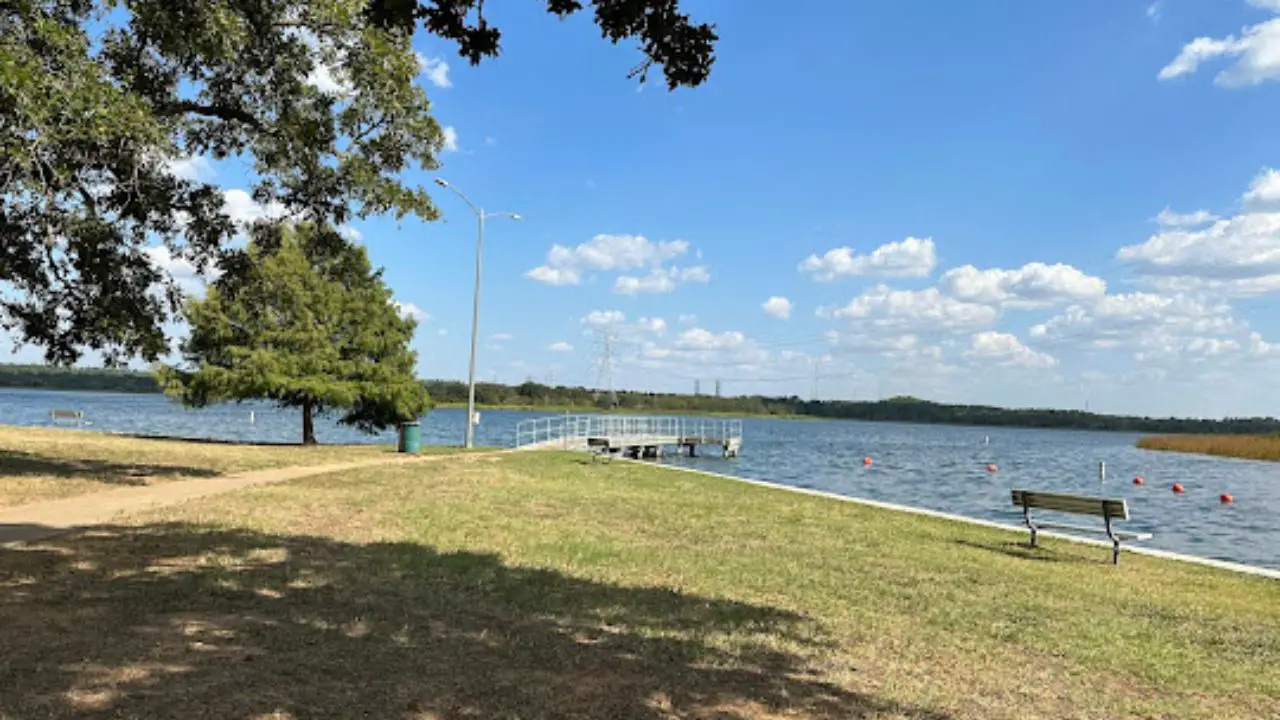
Lake Bastrop is a 906-acre reservoir situated 35 miles east of Austin in the Lost Pines forest. Operated by the Lower Colorado River Authority as a cooling reservoir, its stable warm waters and dense pine tree canopy create a unique setting distinct from western Hill Country lakes.
- Distance from Austin: 38 miles east (45 minutes).
- Surface Area: 906 acres.
- Camping Inventory: 18 rental cabins, shaded tent sites, and full-hookup RV sites divided between North Shore and South Shore parks.
- Primary Fish Species: Trophy largemouth bass, channel catfish, crappie, and sunfish.
- Signature Amenity: A 7-mile paved and dirt trail connecting North Shore Park and South Shore Park through the pine forest.
Lake Bastrop is celebrated among bass anglers for its exceptional catch rates. The lake is managed under a special 14- to 21-inch slot length limit, where keeping largemouth bass between those lengths is strictly unlawful. Anglers may harvest up to five bass daily, with only one fish permitted over 21 inches.
Both North Shore and South Shore parks offer lighted fishing piers, clean fish-cleaning stations, and well-maintained boat ramps. Shore anglers should consult the Texas Parks and Wildlife Department Freshwater Fishing Regulations for current bag limits. For complete site amenities and hiking details, check our Lake Bastrop park guide.
6. Canyon Lake (Potters Creek & Cranes Mill Parks)
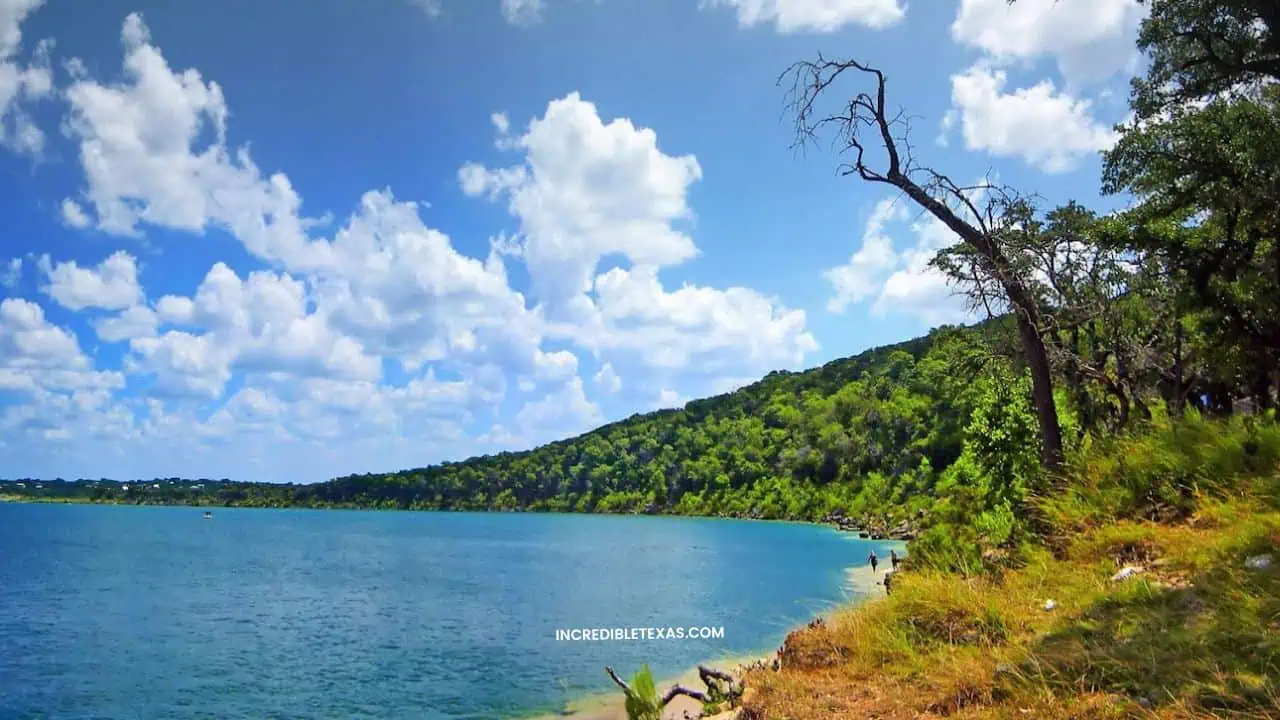
Canyon Lake sits roughly 50 miles south of Austin in the rolling hills of Comal County, covering 8,230 surface acres. Known for exceptionally clear turquoise water and steep limestone banks, this Army Corps of Engineers reservoir provides deep-water angling alongside scenic camping loops.
- Distance from Austin: 52 miles southwest (1 hour 10 minutes).
- Surface Area: 8,230 acres.
- Camping Inventory: Over 200 campsites across Potters Creek Park, Cranes Mill Park, and nearby county parks.
- Primary Fish Species: Striped bass, largemouth bass, smallmouth bass, and channel catfish.
- Signature Amenity: Year-round cold-water tailrace trout fishery directly below Canyon Dam on the Guadalupe River.
Anglers target largemouth and smallmouth bass around steep rock ledges, timbered coves, and submerged humps. During summer, night fishing under dock lights or down-rigging for stripers in deep water yields strong results. Fly anglers frequently pair a lake trip with trout fishing on the river below the dam.
Potters Creek Park on the northern shore provides screened shelters, tent sites, and waterfront RV spots with electric hookups. Boaters should note that Canyon Lake water levels fluctuate depending on regional rainfall, making it important to verify ramp closures before trailering boats. Learn more about local parks in our Canyon Lake camping and parks guide.
7. Lake Austin (Emma Long Metropolitan Park)
Lake Austin is a 1,599-acre Colorado River reservoir that winds for 20 miles from the base of Mansfield Dam down to Tom Miller Dam in central Austin. Despite flowing directly through the capital city, it ranks among the state’s most storied trophy largemouth bass fisheries, producing double-digit fish each spring.
- Distance from Austin: 14 miles west of downtown (25 minutes).
- Surface Area: 1,599 acres.
- Camping Inventory: 66 campsites (primitive and water/electric RV sites) at Emma Long Metropolitan Park.
- Primary Fish Species: Trophy largemouth bass, Guadalupe bass, sunfish, and blue catfish.
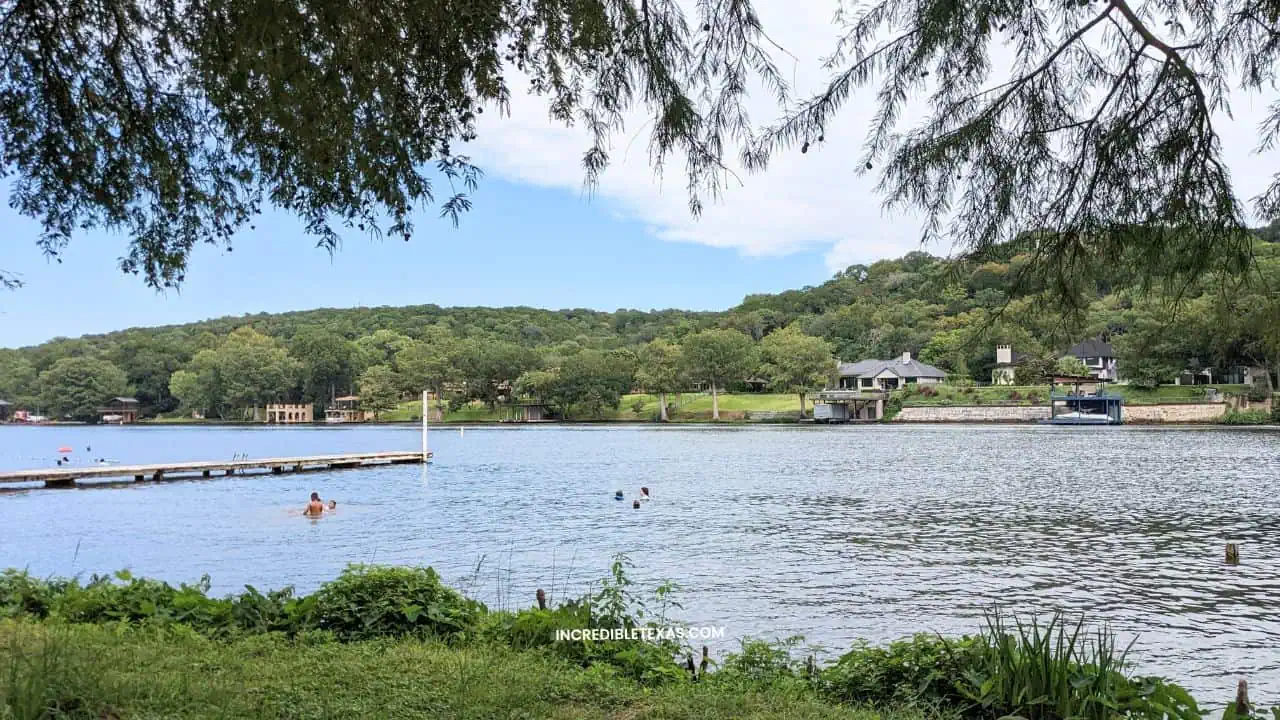
- Signature Amenity: One mile of sandy lakefront shoreline shaded by massive bald cypress and oak trees.
Emma Long Metropolitan Park represents the only public campground directly on Lake Austin waters. Anglers can pitch a tent steps from the water, launch watercraft from twin concrete ramps, and fish submerged vegetation beds in the morning mist.
Because Lake Austin experiences heavy pleasure-boat traffic during summer afternoons, serious anglers focus on dawn, dusk, and nighttime outings. Campers must book reservations online in advance through the City of Austin. For rules and reservation tips, consult our Emma Long Metropolitan Park camping guide.
8. Lady Bird Lake (Downtown Austin Urban Fishery)
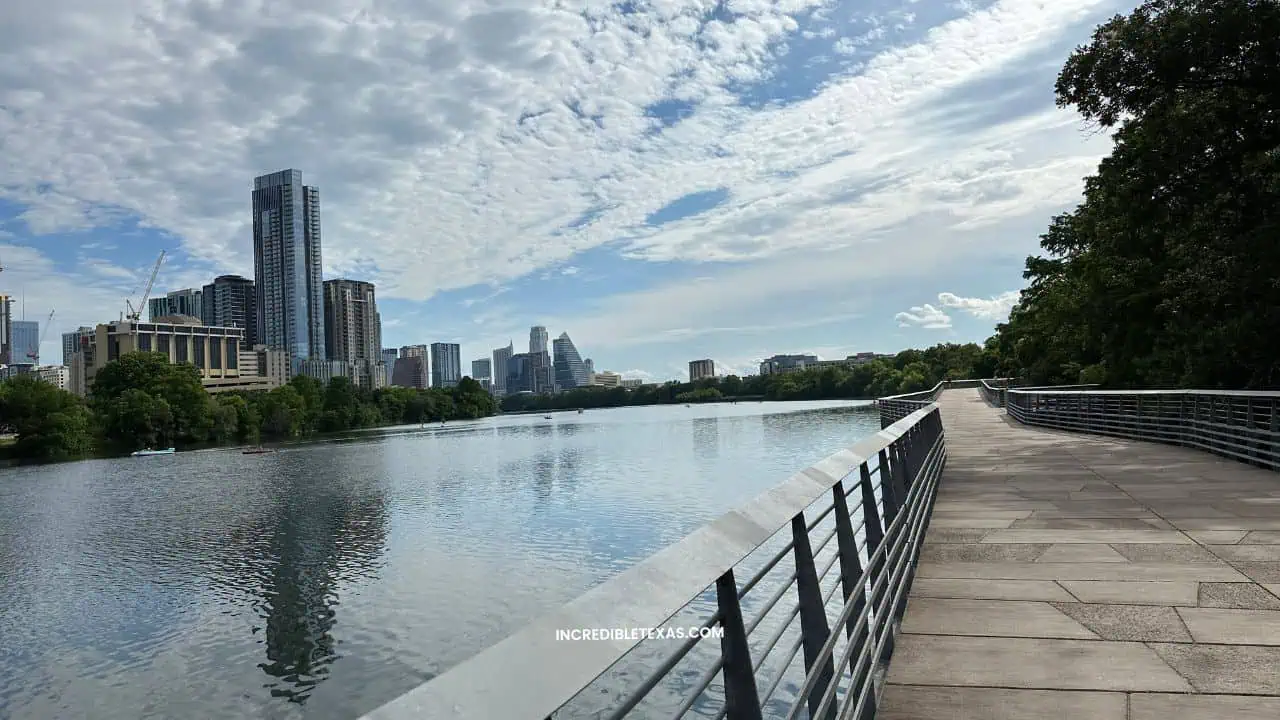
Lady Bird Lake, formerly Town Lake, is a 416-acre impoundment of the Colorado River positioned directly in the heart of downtown Austin. While overnight camping is not permitted along this urban city park, it stands out as one of the country’s finest metropolitan kayak fishing and paddling destinations.
- Distance from Austin: Located downtown (5 to 10 minutes).
- Surface Area: 416 acres.
- Camping Inventory: Day use only; no overnight camping permitted within city park limits.
- Primary Fish Species: Largemouth bass, common carp, smallmouth buffalo, and sunfish.
- Signature Amenity: Flanked by the 10-mile Ann and Roy Butler Hike-and-Bike Trail with skyline vistas.
A strict municipal ordinance bans gas-powered motorized craft, ensuring Lady Bird Lake remains completely wake-free for kayakers, paddleboarders, and canoe anglers. Fly fishermen from around the world visit to stalk trophy common carp on shallow flats, while bass anglers target sunken logs and bridge pilings.
Bank anglers access productive shorelines from Red Bud Isle, Auditorium Shores, and Festival Beach. All fishing on Lady Bird Lake is recommended as catch-and-release due to historical urban runoff. Visitors should combine a morning paddle session with an afternoon trip to nearby camping reservoirs.
9. Lake Marble Falls (Johnson Park & Lakefront Access)
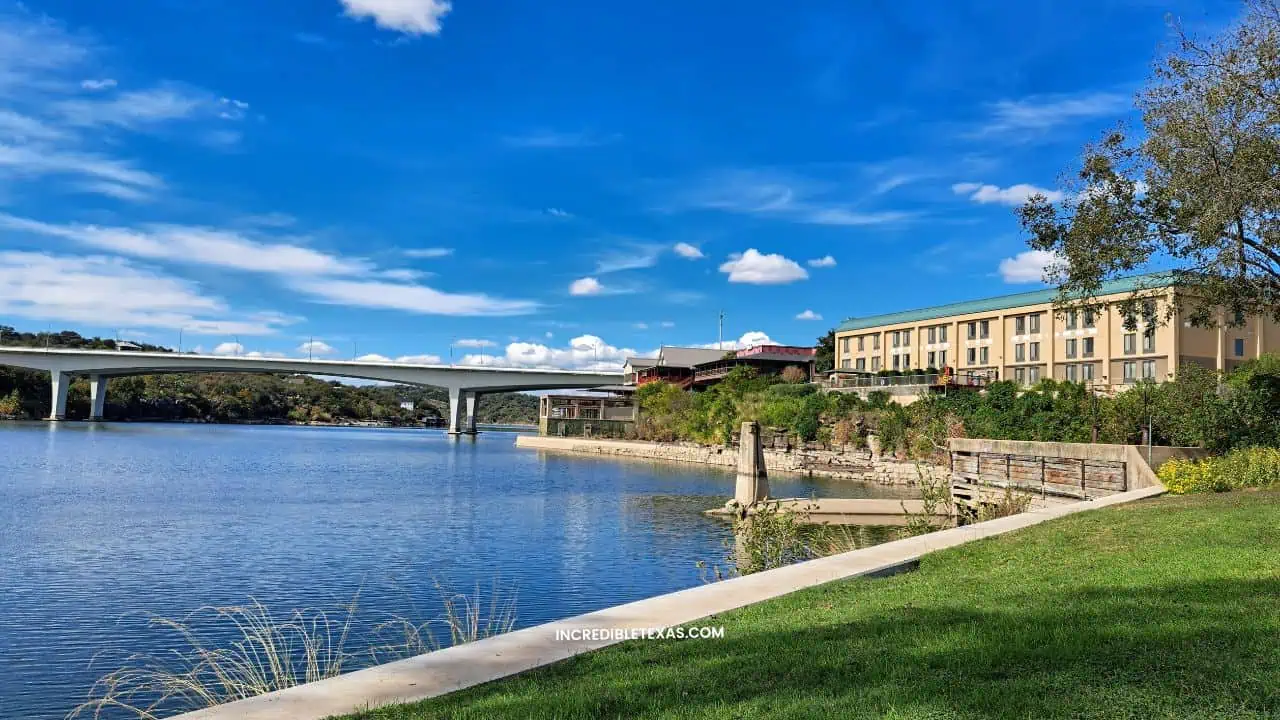
Lake Marble Falls is a 611-acre pass-through reservoir on the Colorado River, situated 50 miles northwest of Austin in the charming town of Marble Falls. Because the reservoir is smaller than its neighbors, it receives less boat traffic and offers a relaxed environment for kayak fishing and day outings.
- Distance from Austin: 48 miles northwest (55 minutes).
- Surface Area: 611 acres.
- Camping Inventory: Day use and local private RV parks; tent camping available nearby along the Highland Lakes.
- Primary Fish Species: Largemouth bass, channel catfish, white bass, and sunfish.
- Signature Amenity: Shaded riverfront parklands and public boat ramp access at Johnson Park on Backbone Creek.
Anglers find good success pitching jigs and soft plastics around boat docks, rock retaining walls, and riprap along the Highway 281 bridge. Catfish anglers target deeper holes near the dam using cut shad or prepared stink baits.
Johnson Park offers shaded picnic lawns, public restrooms, and a paved boat ramp that enters Backbone Creek. The ramp provides protected water for paddlecraft before entering the main reservoir basin. After a morning on the water, visitors often head into town for local dining.
10. Lake Lyndon B. Johnson (Lake LBJ)
Lake Lyndon B. Johnson, commonly called Lake LBJ, spans 6,534 surface acres across Burnet and Llano counties. Like Inks Lake, it is a constant-level reservoir operated by the LCRA, maintaining steady water lines that preserve waterfront docks and boat ramps throughout summer heatwaves.
- Distance from Austin: 58 miles northwest (1 hour 10 minutes).
- Surface Area: 6,534 acres.
- Camping Inventory: Waterfront RV resorts, rental cabins, and municipal park camping in Kingsland and Granite Shoals.
- Primary Fish Species: White bass, crappie, largemouth bass, and channel catfish.
- Signature Amenity: Countless lighted residential boathouses that create an unmatched night-fishing circuit for crappie.
Lake LBJ is famous among Central Texas crappie anglers for night fishing. Green submerged lights and overhead dock lamps draw baitfish, attracting schooling crappie and white bass after sunset. Trolling spoons along the Llano River arm also produces steady daytime limits.
Campers looking for waterfront RV hookups frequently stay at Sunset Point RV Resort, which provides 35 acres of shoreline amenities. Public boat ramps in Granite Shoals and Kingsland allow trailer boats to launch without fees. You can explore additional ramps and park rules in our Lake LBJ recreation guide.
Essential Central Texas Lake Regulations and Planning Tips
Central Texas lakes provide exceptional recreation, but navigating state regulations, seasonal droughts, and reservation systems is critical for a smooth outing. Anglers comparing statewide destinations can also review our guide to the best fishing lakes in Texas.
Anglers fishing public reservoirs outside Texas State Parks must carry a valid Texas freshwater fishing license with an active endorsement. Fishing from the bank or pier inside Inks Lake State Park is license-free, but boaters who venture beyond park waters must hold valid state permits.
Texas law requires all boaters to clean, drain, and dry boats, trailers, and personal gear before launching into different waterways. Zebra mussels have impacted multiple Highland Lakes, making decontamination mandatory to prevent spreading invasive species into uninfested reservoirs.
Campground reservations across state and county parks fill up to three months early for peak spring and autumn weekends. Campers should also verify county burn bans before arrival, as dry conditions frequently restrict campfire rings to covered propane stoves.
Frequently Asked Questions
Do you need a fishing license to fish at Inks Lake State Park?
You do not need a Texas fishing license when fishing from the shoreline or piers within Inks Lake State Park boundaries. Standard bag limits, length limits, and seasonal regulations still apply to all caught fish.
Can you camp directly on the water at Lake Travis?
Yes, Pace Bend Park features over 400 primitive campsites situated along nine miles of limestone cliffs and shoreline on Lake Travis. Sites operate on a first-come, first-served basis once day-use entry fees are paid in cash at the gate.
What is the difference between Lake Austin and Lady Bird Lake for boating?
Lake Austin permits motorized boats, personal watercraft, and waterskiing between Mansfield Dam and Tom Miller Dam with standard LCRA navigation rules. Lady Bird Lake prohibits gas-powered motorized craft entirely, restricting recreation to kayaks, canoes, paddleboards, and electric trolling motors.
Which lake near Austin has the best bank fishing?
Inks Lake State Park and Lake Bastrop offer the most productive bank fishing due to dedicated public piers, shoreline access trails, and fish-attracting structure. Inks Lake also waives the fishing license requirement for anyone casting directly from park shorelines.
Which lake near Austin maintains a constant water level during summer droughts?
Inks Lake, Lake LBJ, and Lake Austin operate as pass-through reservoirs with water levels held within one to two feet of normal pool year-round. This constant elevation ensures boat ramps and shoreline campsites remain accessible even during prolonged Central Texas dry spells.