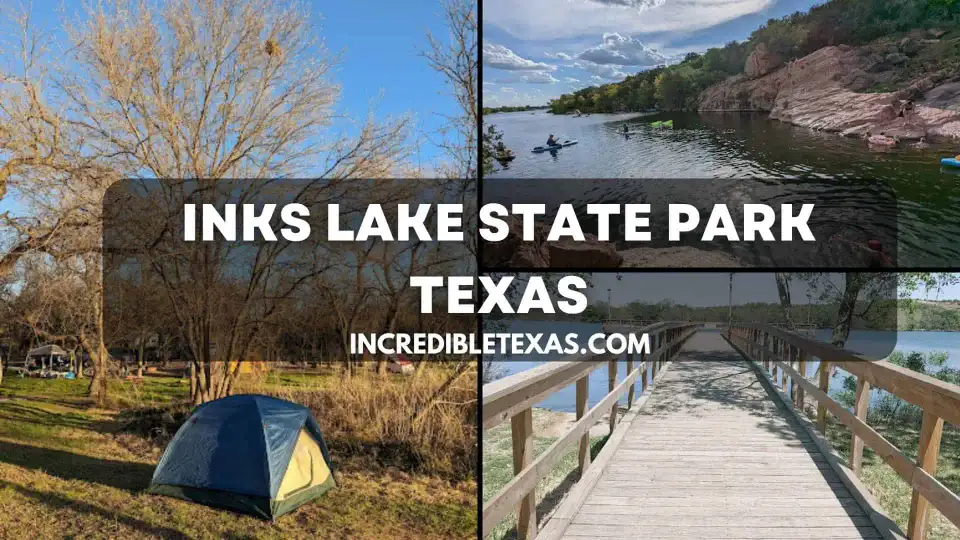
Inks Lake State Park covers 1,200 acres along the Colorado River in Burnet County, giving outdoor enthusiasts a reliable constant-level reservoir framed by ancient pink gneiss rock outcrops. The park sits nine miles west of Burnet, making it one of the most accessible Highland Lakes state park destinations for travelers driving from Austin or San Antonio.
Daily entrance fees cost $7 for adults, while children 12 and under enter free of charge. With 187 campsites, 22 climate-controlled cabins, nine miles of hiking trails, and the famous Devil's Waterhole swimming cove, Inks Lake offers reliable year-round recreation on the water.
Inks Lake State Park: 2026 Quick Information Guide
Inks Lake operates daily from 8:00 AM to 10:00 PM along Park Road 4 in Burnet County. Daily admission is $7 for visitors 13 and older, while children 12 and under enter free. The park features an 831-acre constant-level lake managed by the Lower Colorado River Authority, which ensures stable boating and swimming conditions throughout the year.
Before traveling to Inks Lake Texas, downloading an official Inks Lake State Park map helps drivers navigate the winding curves of Park Road 4 and locate specific camping loops. Reviewing an inks lake park map also clarifies boat launch facilities, lighted piers, and trail connections before you arrive at the front gates.
| Campsite / Lodging Type | Capacity & Specs | Hookups | Nightly Rate | Best Suited For |
|---|---|---|---|---|
| Primitive Backpack Sites | Up to 4 people per site | None (pack-in water) | $11 / night | Backcountry hikers seeking solitude |
| Water-Only Tent Sites | Up to 8 people, 2 tents | Potable water spigot | $17 / night | Traditional tent campers |
| Water & 30-Amp Electric | Up to 8 people, RV or tent | Water + 30-amp electric | $23 / night | Small travel trailers and camper vans |
| Water & 50-Amp Electric | Up to 8 people, RV or tent | Water + 50-amp electric | $27 / night | Large RVs and motorhomes |
| Limited-Use Mini-Cabins | Up to 4 people (bunk beds) | AC, heater, exterior power | $55 / night | Families seeking solid shelter |
[!TIP] Day-use entry permits regularly sell out by 9:30 AM on Saturdays from April through September. Reserving your day pass through the Texas State Parks reservation system up to 30 days in advance guarantees gate entry even during peak capacity hours.
Inks Lake State Park Camping Guide
Camping at Inks Lake includes 187 designated sites ranging from primitive backpack sites to 50-amp full electric RV pads. Nightly camping fees range from $11 to $27 in addition to the standard daily entrance permit. Reviewing an official official Texas Parks and Wildlife Department reservation system map before booking ensures you choose the right loop for your gear.
Consulting an official inks lake state park campsite map allows campers to compare pad lengths, tree shade density, and proximity to the water. Lakeside sites in loops 100 through 130 provide direct shoreline access, making them the most coveted spots for launching a personal kayak or canoe right from your camp.
In contrast, sites in the 200 and 300 loops have sparser cedar trees and face westward across open granite flats, which can feel considerably warmer during midsummer afternoons. If you plan an extended getaway, checking an inks lake camping map helps you pick sites with natural windbreaks and proximity to modern restroom facilities with hot showers.
Travelers comparing lakeside campground amenities across Texas Hill Country state parks can also review our Bastrop State Park camping guide, which features historic Civilian Conservation Corps cabins and pine forest campsites. Standard check-in time for Inks Lake camping is 2:00 PM, and checkout is strictly 12:00 PM.
Staying in Inks Lake Cabins
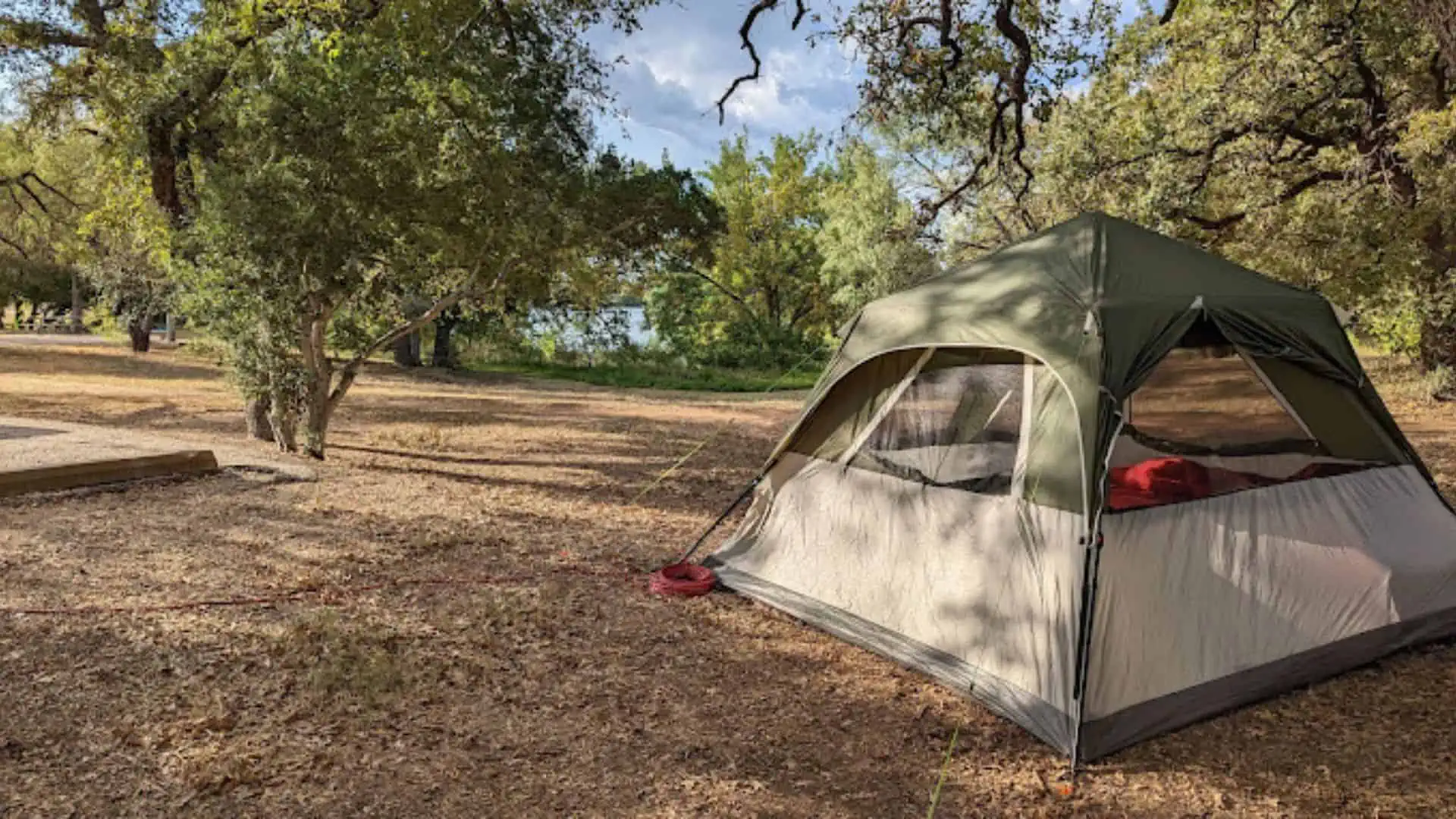
The 22 mini-cabins rent for $55 per night plus a $25 refundable cleaning deposit. Each cabin includes heating, air conditioning, two sets of single bunk beds sleeping four, an exterior picnic table, and an outdoor fire ring. These inks lake state park cabins provide an accessible balance between traditional tent camping and regional motel stays.
The park splits its lodging between Hillside Cabins and Lake Cabins. The Lake Cabins sit along a quiet inlet where guests can fish or watch herons from their covered front porch, while the Hillside Cabins rest on an elevated granite rise overlooking the western horizon.
While these inks lake state park cabin rentals provide essential climate control, they do not feature indoor plumbing, restrooms, or cooking appliances. Communal restrooms with flush toilets and warm showers sit within a 150-foot walk of each cabin cluster.
Guests booking inks lake cabin rentals must bring their own sheets, sleeping bags, and pillows. Cooking inside any of the inks lake cabins is strictly prohibited and results in immediate forfeiture of the $25 cleaning deposit, so all meal prep must take place on the outdoor grill. Pets are strictly prohibited in the cabin loop and inside the units.
Inks Lake Hiking Trails: 2026 Detailed Guide
The park features nine interconnecting trails covering nearly nine miles of rocky Hill Country terrain. Trails range from the easy 0.3-mile Devil's Waterhole Trail to the moderate 1.8-mile Pecan Flats loop. Hikers who enjoy rugged granite steps and river valley overlooks can compare these routes to Pedernales Falls State Park hiking routes further south along the Pedernales River.
Summer trail hiking requires planning around peak afternoon heat. Because much of the terrain crosses exposed pink gneiss rock without tree cover, surface temperatures on the open rock flats routinely exceed 110°F by 1:00 PM between June and August.
Pecan Flats Trail (1.8 Miles)
Pecan Flats Trail climbs 1.8 miles through mature pecan stands before ascending a rugged granite ridge toward the highest point in the park. The loop takes roughly 60 to 75 minutes at an easy walking pace, crossing loose limestone gravel and exposed metamorphic ledges.
At the top of the ridge, hikers earn panoramic sightlines extending north toward Buchanan Dam and the surrounding Hill Country ranchlands. The trail also passes a dedicated wildlife viewing station where birders routinely record scrub jays and painted buntings.
Woodland Trail (2.2 Miles)
Woodland Trail spans 2.2 miles through a dense canopy of Ashe juniper, Texas persimmon, and post oak on the eastern perimeter of the park. It provides the highest percentage of continuous trail shade in the park, making it the preferred summer morning route.
The trail connects smoothly with both the Pecan Flats Trail and the Lake Trail, allowing ambitious hikers to link multiple paths into a four-mile loop. White-tailed deer and wild turkeys frequently forage along the grassy clearings bordering this secluded corridor.
Valley Spring Creek Trail (0.9 Miles)
Valley Spring Creek Trail offers an easy 0.9-mile family walk that follows a seasonal creek drainage leading into Devil's Waterhole. The terrain remains relatively flat, navigating sandy creek beds, polished granite boulders, and quiet riparian groves.
Following spring thunderstorms, the creek produces gentle cascades and clear pooling eddies that flow over the pink bedrock. In April and May, dense stands of Texas bluebonnets and yellow coreopsis bloom along the creek embankments.
Devil's Waterhole: Swimming and Cliff Ledges
Devil's Waterhole is a protected swimming inlet at Inks Lake bordered by pink gneiss rock ledges rising up to 40 feet above the water. There are no lifeguards on duty, and all swimming and cliff jumping are undertaken entirely at personal risk. Water depth beneath the highest ledges averages 20 to 30 feet, though submerged boulders rest along the shallower perimeter edges.
The inlet sits roughly 0.2 miles from the Devil's Waterhole trailhead parking lot along a level dirt pathway. Visitors can also reach the swimming cove by paddling a kayak or stand-up paddleboard across from the main park day-use beach. Beyond swimming, the reservoir's submerged granite boulders and 60-foot depths make it one of the best places for scuba diving in Texas.
During summer weekends, the small gravel parking lot at the Devil's Waterhole trailhead routinely reaches full capacity by 10:00 AM. Late-arriving swimmers must park near the central park store and make a 0.75-mile walk along the Lake Trail to access the water.
[!TIP] Wear sturdy, thick-soled water shoes when visiting Devil’s Waterhole. The dark pink gneiss rock surfaces absorb intense solar radiation and can cause severe foot burns by early afternoon, while submerged rock shelves can be slippery with algae.
Inks Lake Fishing Report: 2026 Season Guide
Inks Lake offers year-round fishing for largemouth bass, channel catfish, white bass, and crappie across 831 surface acres of constant-level water. Anglers do not need a Texas fishing license when fishing from the park's banks or two lighted piers. According to the official TPWD Inks Lake fishing report, stable water levels keep fish holding predictably around rock ledges and sunken brush piles.
Spring and early summer fishing centers on largemouth bass around the rocky points and gravel flats near Devil's Waterhole. Anglers find steady action casting medium crankbaits, soft plastic lizards, and finesse jigs into five to twelve feet of water along the gneiss drop-offs.
Two lighted fishing piers (one situated on the south shore and another near the central campground) attract crappie and channel catfish during night hours. Live minnows and nightcrawlers fished under slip bobbers near the pier pilings produce consistent catches after dark.
Visitors who do not own tackle can take advantage of the park's free Tackle Loaner program at the main store. The store loans out spinning rods, reels, and terminal tackle boxes for adult and youth anglers during business hours.
Boaters must remember that zebra mussels inhabit Inks Lake. State law mandates that all boaters clean, drain, and completely dry their vessels and livewells before launching in any other Texas body of water to prevent ecological contamination.
Watercraft Rentals and Boating on Inks Lake
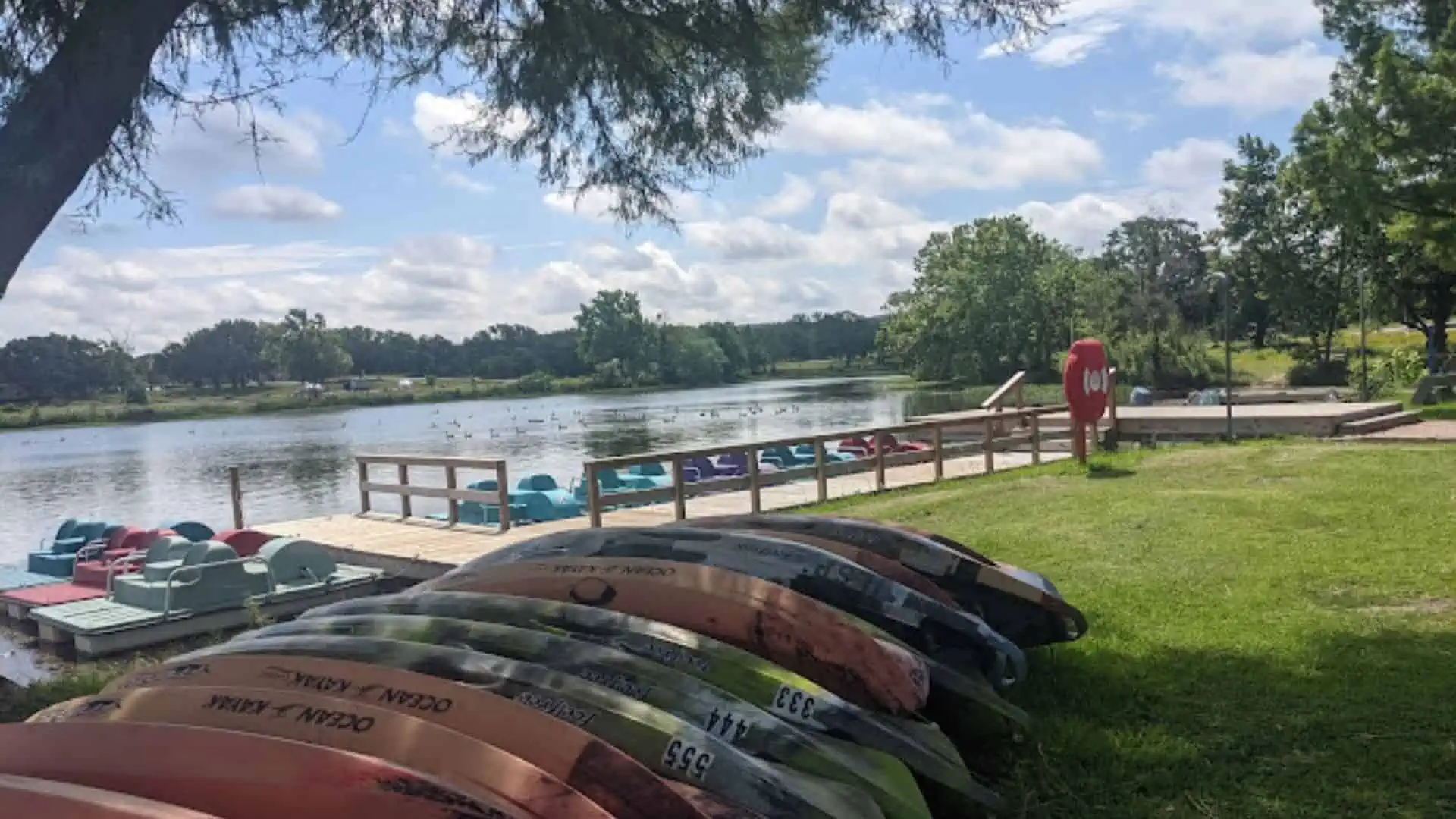
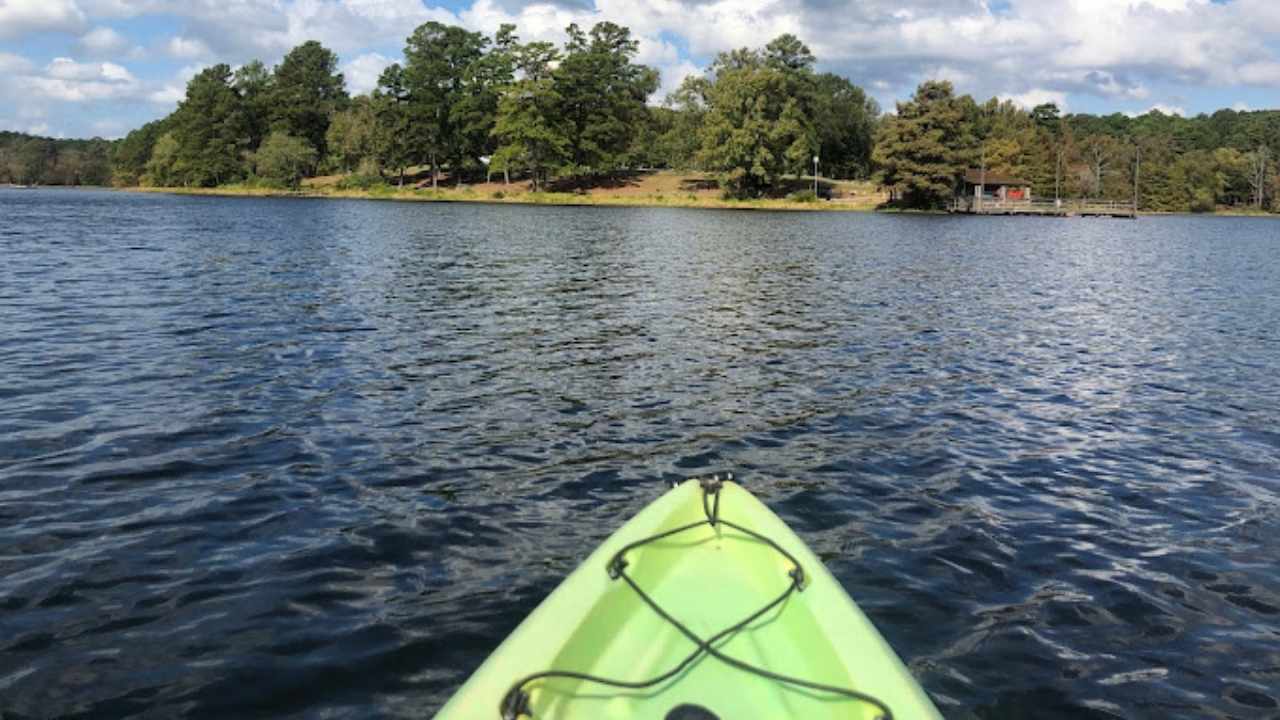
The park store rents single and tandem kayaks, canoes, stand-up paddleboards, and pedal boats daily from 8:30 AM to 3:00 PM with all craft due back by 4:00 PM. Rental rates run between $15 and $25 per hour, including life vests and paddles. These inks lake rentals allow campers to navigate the calm northern coves where motorized vessel wakes are restricted.
Because Inks Lake maintains a constant water elevation under Lower Colorado River Authority dam regulation, boaters never face muddy ramps or hazardous shoals caused by regional droughts. Powerboating, water skiing, and wakeboarding remain popular in the wider central basin between Inks Dam and the main park shoreline.
The park provides two concrete, double-lane boat launch ramps that remain open 24 hours a day for registered campers and day-use permit holders. Ample paved parking accommodates boat trailers, although staging lanes can back up on holiday weekends between 11:00 AM and 1:00 PM.
Wildlife and Birdwatching Guide
Over 200 bird species visit the park annually, including nesting golden-cheeked warblers and black-capped vireos during spring. A dedicated bird blind near Pecan Flats provides sheltered viewing of cedar waxwings, painted buntings, and hummingbirds. The stable lake shoreline and protected riparian zones create dependable habitats for both resident species and migratory waterfowl.
Winter brings seasonal loons, pied-billed grebes, and double-crested cormorants to the open waters of the lake. Osprey frequently perch atop tall dead cypress snags near the northern river channel, diving for gizzard shad and sunfish throughout the morning.
Mammals are common throughout the park loops and trail clearings. White-tailed deer roam through the campsites each evening, while ringtails, armadillos, and gray foxes patrol the rocky terrain after sundown. Storing food securely in hard-sided coolers inside your vehicle prevents curious raccoons from rummaging through campsites.
Photography Tips for Inks Lake
Landscape photographers find optimal light during the morning golden hour when low-angle sunlight strikes the pink Valley Spring gneiss along Devil's Waterhole. Calm early mornings produce mirror reflections across the protected coves. The warm hues of the granite contrast sharply against the deep blue water and green cedar ridges.
Using a circular polarizing filter cuts surface water glare and reveals the submerged rock ledges beneath the water. Photographers shooting the lake at sunset should set up along the Hillside Cabin ridge or the Pecan Flats overlook for wide-angle perspectives looking west toward Buchanan Dam.
Macro photographers will appreciate the miniature ecology thriving across the rock islands. Lichens, mosses, and blooming stonecrop fill narrow crevices in the metamorphic stone, presenting delicate textures and seasonal colors throughout the cooler months.
Highland Lakes Comparison: Inks Lake vs. Buchanan vs. LBJ
Inks Lake provides a quiet, paddle-friendly environment with constant water levels, unlike Lake Buchanan which fluctuates with regional drought or Lake LBJ which caters to heavy motorized wakeboarding and private docks. Understanding the character of each Highland Lake reservoir helps travelers select the best destination for their outdoor plans.
Lake Buchanan is the largest reservoir in the chain, spanning over 22,000 surface acres with broad open water and extensive sandy beaches. Our detailed Lake Buchanan camping and RV guide highlights fishing resorts and large public parks that fit offshore striped bass anglers.
Lake LBJ, positioned immediately downstream from Inks Lake, is heavily developed with luxury waterfront estates, private retaining walls, and rental villas. It offers high-energy boating and jet skiing, but lacks the secluded, undisturbed state park ambiance found across the public shores of Inks Lake.
Local Events and Festivals Near Burnet, TX
Burnet hosts the annual Burnet Bluebonnet Festival every second weekend of April, featuring live music, parades, and craft booths just nine miles east of Inks Lake. Nearby Llano hosts chuck wagon cook-offs and heritage festivals in autumn. Pairing a park camping trip with these small-town celebrations gives visitors a deeper taste of local Texas culture.
In early December, Burnet transforms its historic courthouse square into Main Street Bethlehem, an interactive outdoor reenactment that draws families from across Central Texas. Visiting the park during late autumn or winter allows campers to enjoy crisp evening campfire weather alongside regional holiday events.
Spring travelers also enjoy driving the scenic highway loops connecting Burnet, Kingsland, and Marble Falls. These roadway corridors feature dense wildflower blooms, roadside peach stands, and historic stone architecture dating back to the late nineteenth century.
Nearby Attractions in the Texas Hill Country
The park serves as a central base for exploring Longhorn Cavern State Park located six miles south along Park Road 4, as well as regional wineries and historic small towns. Adding these nearby destinations to your itinerary creates a well-rounded Hill Country weekend trip.
Visitors seeking underground exploration can book a walking tour through our Longhorn Cavern State Park cave tours guide. The cavern maintains a constant 68°F subterranean temperature year-round, making it a refreshing escape from midsummer heat.
Families traveling with children can also stop by the Falkenstein Castle grounds or explore the historic Hill Country Motorheads museum in nearby Burnet. Both stops take less than 20 minutes to reach from the park entrance gate.
2026 Logistical Guide: Packing and Planning Tips
Advance reservations for both day use and overnight camping are mandatory during spring and summer weekends through the Texas Parks and Wildlife online reservation system. Bookings open up to five months in advance for campsites and cabins. Planning ahead secures lakeside spots before high-demand dates sell out.
Studying an inks lake campsite map before booking secures the right loop for your RV or tent footprint. Because cell service can be spotty within low-lying hollows along the lake, saving the map to your phone prior to arrival prevents check-in confusion.
Completing your inks lake state park reservations several weeks in advance is essential for spring and autumn weekends. Travelers arriving at Inks Lake State Park Texas will find clear roadway signage directing campers to appropriate loops.
Essential gear checklist for your Inks Lake getaway:
- Sturdy hiking shoes with sticky rubber outsoles for granite slabs
- Thick-soled water shoes for Devil's Waterhole rocks
- Polarized sunglasses and broad-brim sun hats
- Hard-sided food coolers to deter campground raccoons
- A Texas State Parks Pass to waive daily adult entrance fees
For current park status, trail closures, and active burn bans, call the headquarters office directly at (512) 793-2223. Burn bans are common during dry summer months, during which open wood fires are prohibited, though charcoal grills and containerized camp stoves are generally permitted.
The History of Inks Lake and the Highland Lakes Chain
Inks Dam was constructed between 1936 and 1938 by the Lower Colorado River Authority to generate hydroelectric power and mitigate catastrophic flooding. Civilian Conservation Corps Company 854 developed park roads, stone culverts, and picnic areas before public opening in 1950. The lake honors Roy B. Inks, an original board member of the river authority and prominent Llano civic leader.
According to historical records from the Texas State Historical Association, the state acquired the initial 1,200 acres from private landowners and the LCRA in 1940. CCC enrollees used native limestone and pink granite to handcraft durable stone pavilions, low retaining walls, and curb boundaries that remain functional today.
Today, Inks Lake regularly ranks among the top 10 state parks in Texas for aquatic recreation. Its careful preservation balances public water use with the protection of delicate Hill Country flora and fauna.
The Geological Heart of Texas: Valley Spring Gneiss
The pink banded bedrock throughout Inks Lake consists of Valley Spring gneiss formed over 1.1 billion years ago during the Precambrian Grenville orogeny. Extreme subterranean heat and pressure recrystallized ancient sedimentary deposits into banded metamorphic stone. This ancient formation forms part of the broader Llano Uplift geologic dome.
Unlike standard granite, which displays a speckled crystalline grain, gneiss exhibits distinct alternating bands of pink feldspar, white quartz, and dark biotite mica. The metamorphic bands tilt and fold visibly along the wave-washed shorelines of the lake.
Geology enthusiasts interested in comparing Central Texas rock formations can visit the massive pink granite batholith at Enchanted Rock State Natural Area granite summit, located 45 miles to the southwest. Both sites highlight the deep roots of the ancient Llano Uplift rising above surrounding Cretaceous limestone plains.
Final Thoughts on Inks Lake
Inks Lake delivers dependable year-round recreation with stable water levels, reliable shaded camping loops, and geologic swimming holes. Pairing day hiking with watercraft rentals offers a complete Texas Hill Country itinerary. Swimmers enjoy the cool waters of Devil's Waterhole, while cabin guests catch sweeping western sunsets across the granite ridges.
Reserving your day passes or camping sites early ensures an organized trip to this popular Highland Lakes destination. Respect park guidelines, protect the fragile rock pool habitats, and enjoy your time exploring the natural waters of Burnet County.
FAQs on Inks Lake Texas
What town is near Inks Lake State Park?
For travelers heading to Inks Lake State Park Burnet TX, the park sits nine miles west of downtown Burnet along Park Road 4. Burnet provides convenient access to grocery stores, fuel, and dining within a 15-minute drive from the park entrance.
Kingsland and Marble Falls also lie within 15 to 20 miles to the south, giving travelers multiple nearby hubs for restocking camping supplies, renting specialty water sports gear, or booking off-park dining. Travelers planning a broader Hill Country itinerary can explore our guide to the best Marble Falls state parks for nearby trails and camping options.
Is Inks Lake safe to swim in?
Inks Lake is safe for swimming in designated coves, but visitors must recognize that no lifeguards are on duty anywhere in the park. Swimmers at Devil's Waterhole must watch for submerged boulders and always supervise young children around steep rock shelves.
Wearing water shoes protects feet from sharp granite edges and scorching afternoon rock temperatures. Life vests are strongly advised for all non-swimmers and children entering deep water areas.
What is Inks Lake known for?
Inks Lake is famous for its constant water level, Devil's Waterhole swimming cove, and ancient pink Valley Spring gneiss rock formations. It stands out among Texas state parks for offering year-round boating, lighted fishing piers, and lakeside camping loops.
The park also attracts birdwatchers seeking endangered golden-cheeked warblers and outdoor photographers looking to capture colorful rock reflections during sunrise and sunset hours.
How deep is Inks Lake?
Inks Lake reaches a maximum depth of approximately 60 feet near Inks Dam, with average lake depths ranging between 20 and 40 feet across the main body. The shallowest sections sit near the river inlet and along the sheltered gravel banks of Devil's Waterhole.
Because the Lower Colorado River Authority maintains Inks Lake as a pass-through reservoir between Buchanan Dam and Inks Dam, water depths remain remarkably stable throughout the entire year.
Can you bring dogs to Inks Lake?
Dogs are permitted on hiking trails and within tent or RV campsites, provided they stay on a hand-held leash no longer than six feet. Pets are strictly prohibited inside the mini-cabins, within the cabin loops, and inside park buildings.
Pet owners must always clean up waste and carry plenty of drinking water for their dogs on exposed granite trails where rock surface temperatures can burn sensitive paw pads.
Do you need a fishing license at Inks Lake?
You do not need a Texas fishing license when fishing from the shoreline or from either of the two lighted piers within park boundaries. This free fishing policy applies to all anglers under the Texas Parks and Wildlife Free Fishing in State Parks program.
If you fish from a motorized boat or kayak out on the open lake waters beyond the park shoreline, a valid Texas freshwater fishing license with an endorsement is required for all anglers 17 and older.
How far in advance can you book Inks Lake camping?
Campers can book campsites and mini-cabins up to five months in advance through the Texas Parks and Wildlife reservation portal. Day-use passes open for reservation up to 30 days prior to your arrival date.
Lakeside campsites and cabins for weekend dates from March through October routinely sell out within minutes of the five-month window opening, making early morning online booking essential for peak season dates.