Hueco Tanks State Park Guide: Hours, Tours & Pictographs
Hueco Tanks State Park is a desert park near El Paso where you go for rock art, guided tours, bouldering, hiking, birding, and a small campground instead of a casual roadside stop.
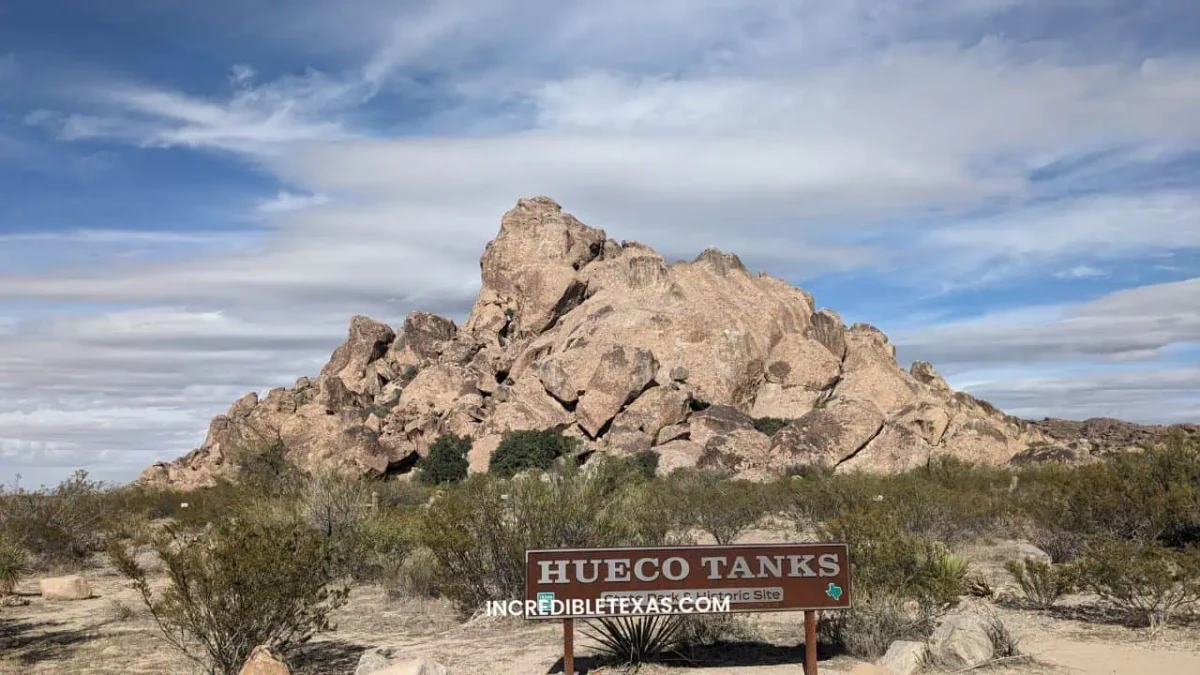
If you want the short answer, plan ahead, bring more water than you think you need, and decide before you arrive whether you want self-guided access or a guided visit. TPWD limits access to protect the site, so the park rewards visitors who treat the trip like a reservation-based outing.
Hueco Tanks State Park & Historic Site is best known for its ancient pictographs, rock basins, and climbing terrain. You can hike, bird-watch, camp, and join guided pictograph or climbing tours, but access is limited to protect fragile cultural resources.
That mix makes the park feel different from most El Paso-area stops. If you want a broader West Texas route after this visit, West Texas hidden gems is an easy way to keep the road trip going.
For a first visit, keep the plan simple: reserve early, follow the directions carefully, and choose your main focus before you pull into the park. If you treat Hueco Tanks like a casual picnic park, you will miss the part that makes it special.
Hueco Tanks State Park at a Glance
The park sits about 32 miles northeast of El Paso. TPWD says GPS may misdirect you, so the safest route is to follow U.S. Highway 62/180, turn north on Ranch Road 2775, and then continue on Hueco Tanks Road to the entrance.
That location matters because Hueco Tanks feels remote even though it is not far from the city. You get a desert landscape, historic rock art, and a reservation-driven park day without having to build a long backcountry trip.
If you want a second El Paso-area hike after this stop, Franklin Mountains State Park gives you a very different desert experience. Hueco Tanks is more about access control, rock art, and climbing, while Franklin Mountains is a more straightforward hiking park.
The best first-stop strategy is to check the hours, decide whether you need a tour, and pack for heat and rock travel before you leave the hotel or house. The park is at its best when you arrive ready to move slowly and pay attention.
| Quick fact | Current detail |
|---|---|
| Park name | Hueco Tanks State Park & Historic Site |
| Address | 6900 Hueco Tanks Road No. 1, El Paso, TX 79938 |
| Distance from El Paso | About 32 miles northeast |
| Hours | Open daily; October to April 8 a.m. to 6 p.m.; May to September Friday to Sunday 7 a.m. to 7 p.m. and Monday to Thursday 8 a.m. to 6 p.m. |
| Admission | Adult $7 daily; children 12 and under free |
| Reservations | Reserve by phone at (512) 389-8911; check availability online |
| Busy season | Winter and holiday weekends |
| Best use | Rock art, guided tours, hiking, birding, climbing, and camping |
TPWD also says the office closes a half hour before the park closes, so do not plan to arrive at the edge of the closing window and expect a relaxed check-in.
If you are fitting the park into a bigger city visit, El Paso family ideas can help you build the rest of the day around food, museums, or indoor time after the desert walk.
The simplest way to think about Hueco Tanks is this: the park is small enough to plan carefully, but rich enough that a good reservation pays off quickly. That is why the park page emphasizes access limits instead of just listing attractions.
What Hueco Tanks State Park Is Known For
Hueco Tanks is known first for its natural rock basins, called huecos, which collect water in a very dry part of the Chihuahuan Desert. That water helped wildlife and people survive here for thousands of years, and it still shapes the park experience today.
The second big draw is the rock art. TPWD says the site preserves over 2,000 historic pictographs, and the park history materials describe more than 200 identified mask-like figures, which is why the place feels more like an outdoor cultural archive than a simple hike.
The third draw is terrain. The granite-like rock, boulders, and mountain spurs make this a strong place for climbing, scrambling, and short hikes that feel much bigger than their mileage suggests.
Birding matters here too. TPWD lists more than 200 species of birds at the park, so the same habitat that supports rock art and climbing also supports a strong desert wildlife experience.
That is why Hueco Tanks fits in a West Texas road trip so well. If you want more ideas for the region after this visit, West Texas hidden gems helps you build a larger loop without repeating the same kind of stop.
The park also has a deeper human story than most first-time visitors expect. TPWD says people have been drawn to these sacred rocks for more than 10,000 years, and the site still carries meaning for several Native American communities today.
If you only remember three things about the park, make them this: water basins, rock art, and access rules. Those three features explain most of the park’s identity in a way a simple scenic label never could.
Hueco Tanks State Park Hours, Fees, Reservations, and Current Alerts
Hueco Tanks State Park is open daily, and the hours change by season. From October to April, the park is open from 8 a.m. to 6 p.m.; from May to September, it is open from 7 a.m. to 7 p.m. on Friday through Sunday and from 8 a.m. to 6 p.m. Monday through Thursday.
That schedule gives you a little flexibility, but not a lot of room to be casual at the end of the day. The office closes a half hour before the park closes, which means a late arrival can turn into a rushed arrival if you are not careful.
Adult admission is $7 per day, and children 12 and under are free. If you hold a Texas State Parks Pass, that can help with entry, but you still need to plan for any activity-specific costs or reservation rules the park requires.
Reservations matter here more than they do at many parks because Hueco Tanks often reaches capacity. TPWD says you can check availability online, but you must reserve by phone at (512) 389-8911 if you want to guarantee entry.
That point matters for both day use and camping. Winter and holiday weekends are the busiest periods, and the self-guided area also fills fast in the cooler months, so you should not treat a same-day plan as your best option.
The current alert is important too. TPWD has a water-shortage notice in place, says water is available at the campsites, and tells visitors to bring enough water for the visit. If you are hiking or climbing, that warning should shape how much water you pack.
Once you think of the park as a limited-access desert site instead of a regular city park, the logistics make more sense. Reserve early, keep your arrival window realistic, and do not assume you can improvise once you are already on the road.
| Logistics | Current detail |
|---|---|
| Hours | Open daily; Oct-Apr 8 a.m. to 6 p.m.; May-Sep Fri-Sun 7 a.m. to 7 p.m.; May-Sep Mon-Thu 8 a.m. to 6 p.m. |
| Admission | $7 adult daily; children 12 and under free |
| Reservations | Reserve by phone at (512) 389-8911; check availability online |
| Office timing | Closes a half hour before the park closes |
| Current alert | Water shortage; bring enough water |
| Busy season | Winter and holiday weekends |
If you are building a longer West Texas road trip, Balmorhea State Park is a smart contrast stop because it gives you a very different water-centered park after the desert visit.
The cleanest approach is to book early, check the alert page before you leave, and keep your day flexible enough that the park’s timing controls do not create stress at the gate.
Hueco Tanks State Park Self-Guided Access, Guided Tours, and Trail Rules
The self-guided area is limited to 70 people at a time, and TPWD says that limit is reached regularly from November through March and on weekends and holidays. If you want a self-guided visit, the safe move is to reserve early and show up with a clear plan.
You cannot reserve permits online. TPWD says each person needs a ReserveAmerica account, and the park asks you to call (512) 389-8911 to make the reservation, which is another reason the park feels more like a managed site than a free-flowing public trail network.
Guided access is the other side of the park experience. TPWD says guided tours run Wednesday through Sunday, and you should call (915) 857-1135 before your visit if you want a hiking, pictograph, birding, or climbing tour.
Some areas of the park can only be reached with a guide, including West Mountain, East Mountain, and East Spur. That rule is easy to overlook if you are used to parks where you can wander first and learn later.
The campground has its own access rule too. TPWD says you must have a guide to explore the rocks and trail around the campground, and you need to register daily at headquarters if you want to hike and climb in the self-guided area.
That makes the park feel structured, but the structure is part of the point. Hueco Tanks protects delicate cultural resources by limiting where you can go and how you move through the rock formations.
Trails here are hiking only, and pets are allowed in designated areas only. If you are used to bringing a dog to every trail stop, check those rules before you leave home so the visit does not turn into an awkward surprise at the gate.
Bring a camera, water, sunscreen, a hat, and shoes that can handle rock. TPWD also says to keep your hands free while scrambling, which is a good reminder that this park works best when you pack light and move carefully.
TPWD also says you should stay on trails, protect wildlife space, and avoid touching rock art or stepping in huecos. In a place this fragile, small habits matter more than they do on an ordinary nature walk.
If you want to combine the park with a more conventional hike later in the weekend, Franklin Mountains State Park gives you a good comparison point because it is easier to approach as a standard hiking park.
| Trail | Length | Type | Best use |
|---|---|---|---|
| North Mountain Trail | 0.7 mi single-direction | Easy | Short cliff views and a first climb-friendly route |
| Laguna Prieta Trail | 0.15 mi single-direction | Easy | Small canyon walk with desert willows and a seasonal pond |
| Nature Trail | 0.08 mi round trip | Easy | Quick look at a rock shelter and pictographs near the interpretive center |
| Pond Trail | 0.43 mi single-direction | Easy | Walk-through route with geology and historic pictographs |
| Site 17 Trail | 0.13 mi single-direction | Easy to moderate | Short scramble to a well-known pictograph site |
| Site 19 Trail | 0.03 mi single-direction | Easy | Very short side trip to a hidden shelter and pictographs |
| Picnic Area Trail | 0.25 mi single-direction | Easy | Pet-friendly walk to picnic sites among the rocks |
| Chain Trail | 0.14 mi single-direction | Moderate to strenuous | Short but steep climb with big views |
If you want the easiest route, start with Nature Trail or Laguna Prieta Trail and then decide whether you want more challenge. If you want the clearest pay-off for effort, Chain Trail and North Mountain Trail give you the bigger climb feel without a long mileage commitment.
The park’s trail system is small, but it is not shallow. A short route can still pass pictographs, seasonally wet canyons, cliff views, and historic shelter sites, so you do not need a long mileage total to feel like you saw a lot.
Pictographs, Petroglyphs, and the Park’s History
Rock art you can actually see
The rock art is the part of Hueco Tanks that stays with most visitors. TPWD says the site preserves over 2,000 historic pictographs, and the park history page describes more than 200 identified mask-like figures, which makes the place feel like an open-air archive.
The imagery spans a long time line. TPWD says the site has been meaningful for more than 10,000 years, and the designs connect to mystery, ceremony, conflict, travel, and changing ways of life in the region.
You do not need to be a rock art expert to feel the impact. Even a short stop at a site like Nature Trail, Site 17, or the interpretive center gives you a much stronger sense of place than a quick overlook ever could.
A living cultural site
Hueco Tanks is still meaningful to several Native American communities, including the Kiowa, Mescalero Apache, Comanche, Tigua, Ysleta del Sur Pueblo, and the people of Isleta del Norte Pueblo. That context matters because the park is not just old; it is still culturally active.
TPWD’s history materials also explain that the site’s natural basins helped people and wildlife survive in the desert. That is why the park feels like a meeting point of geology, water, and human use instead of a site with a single story to tell.
The Interpretive Center helps you read that story before you head out into the rocks. The trail guide notes the Escontrias ranch house was built in 1898, which adds a newer human layer to a place most visitors first think of as ancient.
Why preservation comes first
The rules at Hueco Tanks are strict because the resources are fragile. TPWD warns visitors not to touch pictographs or petroglyphs, not to make rubbings, and not to add marks to the walls, since even small contact can damage the rock art.
The campground rules reflect the same idea. TPWD does not allow charcoal or firewood in certain areas because ash can damage the images, which is why containerized camp stoves matter here more than they do at many other parks.
If this blend of archaeology and desert terrain interests you, Seminole Canyon State Park & Historic Site is a strong follow-up because it gives you another rock-art destination with a different landscape and access pattern.
When you visit Hueco Tanks well, you are not just seeing a park. You are moving through a site that TPWD treats as a protected cultural record, and that changes the whole tone of the visit in a good way.
Hueco Tanks State Park Camping, Birding, and Nearby El Paso Day Trips
The campground is small but useful. TPWD says Hueco Tanks has 20 campsites, restrooms, hot showers, and a dump station, which gives you a workable overnight base without turning the park into a large RV resort.
Camping options are simple: you get 50-amp water and electric sites or water-only sites. The reservation window is limited to three days, so you should plan around a short stay instead of expecting a long, flexible booking.
That three-day limit actually fits the park well. Hueco Tanks is the kind of place where a focused overnight or a two-night stay makes more sense than a long string of nights, especially if you are combining it with other El Paso plans.
Because of the current water-shortage alert, you should bring extra water even if you are camping. TPWD says water is available at the campsites, but the alert tells you not to assume the desert will be forgiving if you underpack.
Birding is a strong reason to arrive early. TPWD lists more than 200 bird species at the park, and the birding checklist at headquarters helps if you want a more structured wildlife morning instead of a casual glance at the brush.
The park also has 10 picnic sites with shade shelters in the self-guided area, so a day-use visit can still feel complete even if you do not camp. That gives you a simple way to combine a hike, lunch, and a short birding stop in the same visit.
If you want a second El Paso-area desert stop, Franklin Mountains State Park is the best nearby comparison because it gives you more hiking without the same access rules. For a family-focused city break, El Paso family ideas can help you round out the rest of the weekend.
If you are building a longer West Texas route, Balmorhea State Park is a logical next stop because it gives you a very different water-centered park after Hueco Tanks. The two parks pair well when you want contrast rather than repetition.
The key is to let Hueco Tanks be what it is: a compact desert park with deep history, active birdlife, and controlled access. That is enough for a strong day, and it is enough for a memorable overnight if you plan it right.
Hueco Tanks State Park FAQ
What is Hueco Tanks State Park known for?
Hueco Tanks is known for its rock basins, ancient pictographs, climbing terrain, and guided access rules. TPWD also highlights more than 200 bird species and a long human history that stretches back more than 10,000 years.
If you want the quickest mental shortcut, think of it as a desert cultural site first and a hiking park second.
Do you need reservations for Hueco Tanks State Park?
Yes, reservations are strongly recommended for both camping and day use because the park often reaches capacity. TPWD says you can check availability online, but you must reserve by phone at (512) 389-8911 if you want to secure a visit.
That matters even more in winter and on holiday weekends, when the self-guided area fills fast.
How much does Hueco Tanks State Park cost?
Adult admission is $7 per day, and children 12 and under are free. If you are comparing it with other day-trip options in West Texas, the entry cost is straightforward and easy to budget.
Any extra cost comes from the stay type or activity type you choose, not from a complicated entry system.
Can you visit Hueco Tanks State Park without a guide?
Yes, you can visit the self-guided area if you reserve ahead and the limit has not been reached. But some areas of the park require a guide, including West Mountain, East Mountain, and East Spur, so a fully free-form visit is not always possible.
For many visitors, the guided option is actually the better option because it unlocks more of the park’s story.
Can you camp at Hueco Tanks State Park?
Yes, and the campground has 20 campsites, hot showers, restrooms, and a dump station. TPWD also says camping reservations are limited to three days, so this is best as a focused short stay rather than a long base camp.
Because of the current water-shortage alert, bring enough water even if you are staying overnight.
What can you do at Hueco Tanks State Park?
You can hike, climb, bird-watch, picnic, camp, and join guided pictograph, hiking, climbing, or birding tours. You can also walk short trails such as Laguna Prieta Trail, Site 17 Trail, and Chain Trail if you want a compact visit with a lot of payoff.
The park works best when you pick just a few priorities instead of trying to do everything in a single rush.
When is the best time to visit Hueco Tanks State Park?
Cooler months are the easiest time to visit, but winter and holiday weekends are also the busiest. If you want a smoother day, aim for a weekday visit and reserve early so the self-guided area does not fill before you arrive.
Even in cooler weather, bring plenty of water because the desert alert is real and the trail experience is more exposed than many visitors expect.