Texas protects more than 640,000 acres of public land across 88 diverse properties managed by the Texas Parks and Wildlife Department. Finding the best state parks in Texas allows outdoor travelers to explore striking geological landmarks, crystal-clear spring rivers, subterranean limestone caves, and coastal bays.
From rugged backpacking routes and family swim beaches to full-hookup RV sites, the Texas state park system delivers exceptional outdoor recreation. Planning ahead ensures you experience the best Texas state parks during peak seasonal conditions.
This curated field guide reviews the top 10 state parks in Texas based on landscape diversity, campsite quality, trail networks, and historical significance. Each profile details verified admission fees, camping options, and essential ground advice.
Key Takeaways
- Palo Duro Canyon State Park protects the second-largest canyon in the United States, offering $8 daily admission and historic stone rim cabins built by the Civilian Conservation Corps.
- Garner State Park leads the state in overnight camping popularity, drawing over 450,000 visitors annually to float the spring-fed Frio River and gather for traditional jukebox patio dances.
- The Texas State Parks Pass costs $70 annually and provides 12 months of unlimited day-use entry to all 88 state parks for the pass holder and all passengers in their vehicle.
- Free fishing in state parks allows anglers to fish from shorelines, riverbanks, and illuminated piers without purchasing a state fishing license or stamp endorsement.
- Advance reservations are available online up to 30 days ahead for day-use passes and up to 5 months ahead for overnight campsites and cabins through the central state reservation system.
Texas State Parks at a Glance
Comparing the best state parks in Texas helps road trippers match regional geography with personal recreation preferences. The table below outlines admission costs, signature features, and ideal visitor profiles across all 10 featured destinations.
| State Park | Geographic Region | Day Entrance Fee | Signature Landscape & Feature | Best Suited For |
|---|---|---|---|---|
| Palo Duro Canyon | Texas Panhandle | $8 adults (free ages 12 & under) | 800-foot multi-hued canyon walls, Lighthouse Trail spire | Hikers, cabin campers, landscape photographers |
| Garner | Hill Country (Frio Canyon) | $8 adults (free ages 12 & under) | Spring-fed Frio River, Mount Baldy, CCC dance pavilion | Families, river tubers, summer campers |
| Dinosaur Valley | North Central Texas | $8 adults (free ages 12 & under) | 113-million-year-old riverbed dinosaur trackways | Families with children, amateur geologists, day hikers |
| Big Bend Ranch | West Texas Trans-Pecos | $5 adults (free ages 12 & under) | 311,000 acres of desert mountains, Rio Grande canyons | Backcountry backpackers, 4x4 overland drivers, stargazers |
| Pedernales Falls | Central Texas Hill Country | $6 adults (free ages 12 & under) | Cascading river over 300-million-year-old limestone shelves | Trail runners, fly anglers, bird watchers |
| Inks Lake | Highland Lakes (Central Texas) | $7 adults (free ages 12 & under) | Constant-level lake, pink granite bluffs, Devil's Waterhole | Kayakers, cliff jumpers, lakeside cabin campers |
| Caprock Canyons | Texas Panhandle | $5 adults (free ages 12 & under) | Red sandstone bluffs, roaming Texas State Bison Herd | Equestrians, long-distance trail hikers, wildlife spotters |
| Longhorn Cavern | Highland Lakes (Central Texas) | Park grounds free; tours from $24 | 65-degree river-formed underground cave, CCC stone depot | Cave explorers, summer heat escapes, geology students |
| McKinney Falls | Austin Metro | $6 adults (free ages 12 & under) | Upper and Lower Onion Creek waterfalls, 550-year-old cypress | Urban day-trippers, bouldering climbers, city campers |
| Goose Island | Gulf Coast (Rockport) | $5 adults (free ages 12 & under) | 1,620-foot lighted fishing pier, 1,000-year-old Big Tree live oak | Saltwater anglers, coastal birders, bayfront RV campers |
How Much Does Visiting Texas State Parks Cost?
Visiting state parks in Texas typically costs between $5 and $8 per adult for single-day entry, while children ages 12 and under enter completely free. Overnight camping fees range from $10 for primitive walk-in pads to $35 for full-hookup RV sites, charged in addition to daily entrance permits.
According to official operating figures from the Texas Parks and Wildlife Department Park Passes Portal, 88 state parks spanning over 640,000 protected acres host more than 10 million visitors each year. Frequent visitors can purchase an annual Texas State Parks Pass for $70, which provides unlimited day-use access to all state parks for 12 months for the pass holder and a carload of passengers.
Visitors exploring state parks near Dallas or planning marble falls state park camping discover that standard day admission fees quickly add up. Travelers researching balmorhea state park tickets or garner state park tickets find that a single vehicle pass pays for itself in just four to five park outings.
[!TIP] Under the TPWD Free Fishing in State Parks initiative, visitors never need a state fishing license or stamp endorsements when angling from shorelines or piers within park boundaries. Normal bag limits and fish length restrictions remain strictly enforced.
1. Palo Duro Canyon State Park: Panhandle Vistas and Canyon Cabins
Palo Duro Canyon State Park protects the second-largest canyon system in the United States, spanning roughly 120 miles long and plunging up to 1,000 feet deep through the Texas Panhandle. Situated just 25 miles south of Amarillo near Canyon, the park features multi-hued geological layers dating back more than 250 million years.
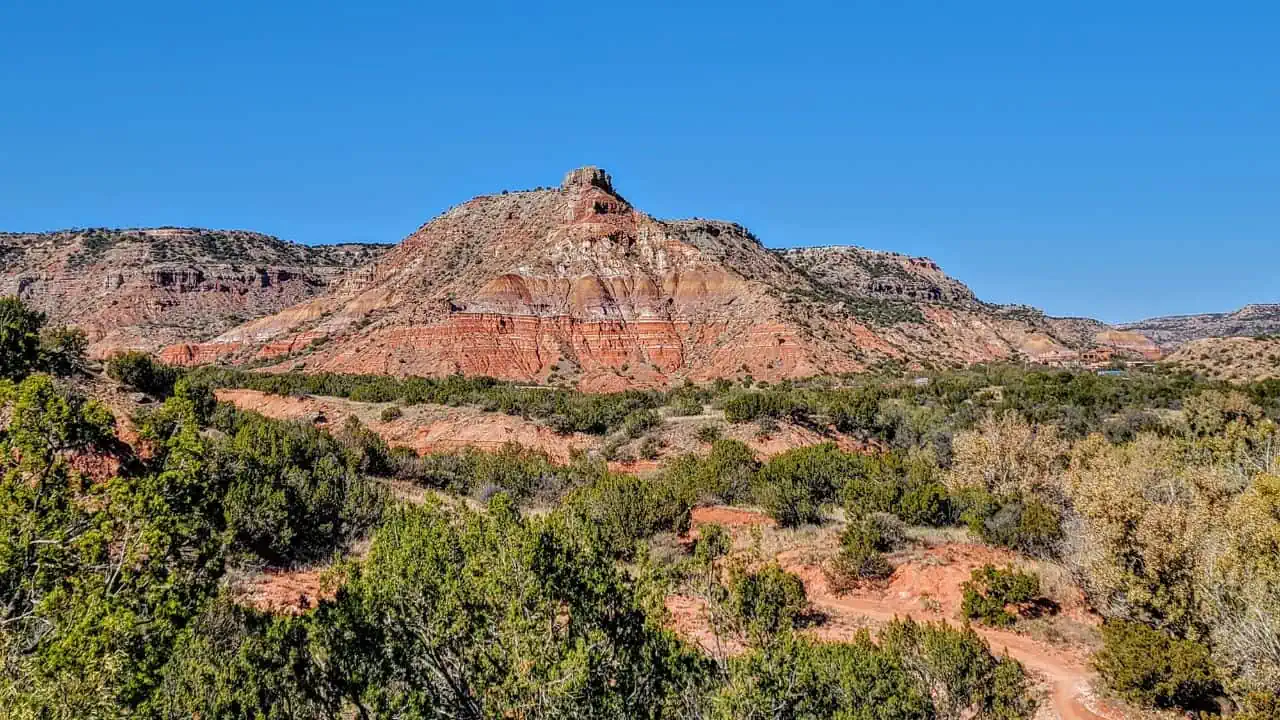
Hiking trails wind through red and orange sandstone layers of the Quartermaster and Tecovas formations. The park also hosts the famous outdoor musical TEXAS in its natural amphitheater during summer evenings.
Palo Duro Canyon Trail and Camping Highlights
The 5.8-mile round-trip Lighthouse Trail serves as the signature trek in Palo Duro Canyon, guiding hikers across sandy arroyos to an iconic 310-foot pedestal rock column. Palo Duro Canyon consistently ranks among the best state parks in texas for hiking thanks to the dramatic switchbacks on the Capitol Peak and Lighthouse routes.
Securing palo duro canyon state park camping reservations early is essential for staying in the historic Civilian Conservation Corps stone cabins perched on the canyon rim. Travelers can check current fees and cabin availability via the Texas Parks and Wildlife Palo Duro Canyon Fees and Facilities Portal before booking. Review our complete Palo Duro Canyon visitor guide for detailed trail elevations and booking tips.
- Physical address: 11450 Park Road 4, Canyon, TX 79015
- Daily entrance fee: $8 per adult; children 12 and under free
- Overnight accommodations: 115+ developed campsites, primitive equestrian sites, historic stone rim and floor cabins
- Signature attraction: The Lighthouse rock formation and panoramic canyon rim vistas
2. Garner State Park: Hill Country River Floats and Summer Dances
Garner State Park ranks as the single most popular destination for overnight camping in Texas, welcoming over 450,000 visitors annually along the spring-fed Frio River in Uvalde County. Its combination of clear, cool water, limestone bluffs, and nostalgic family traditions creates an unforgettable Hill Country getaway.
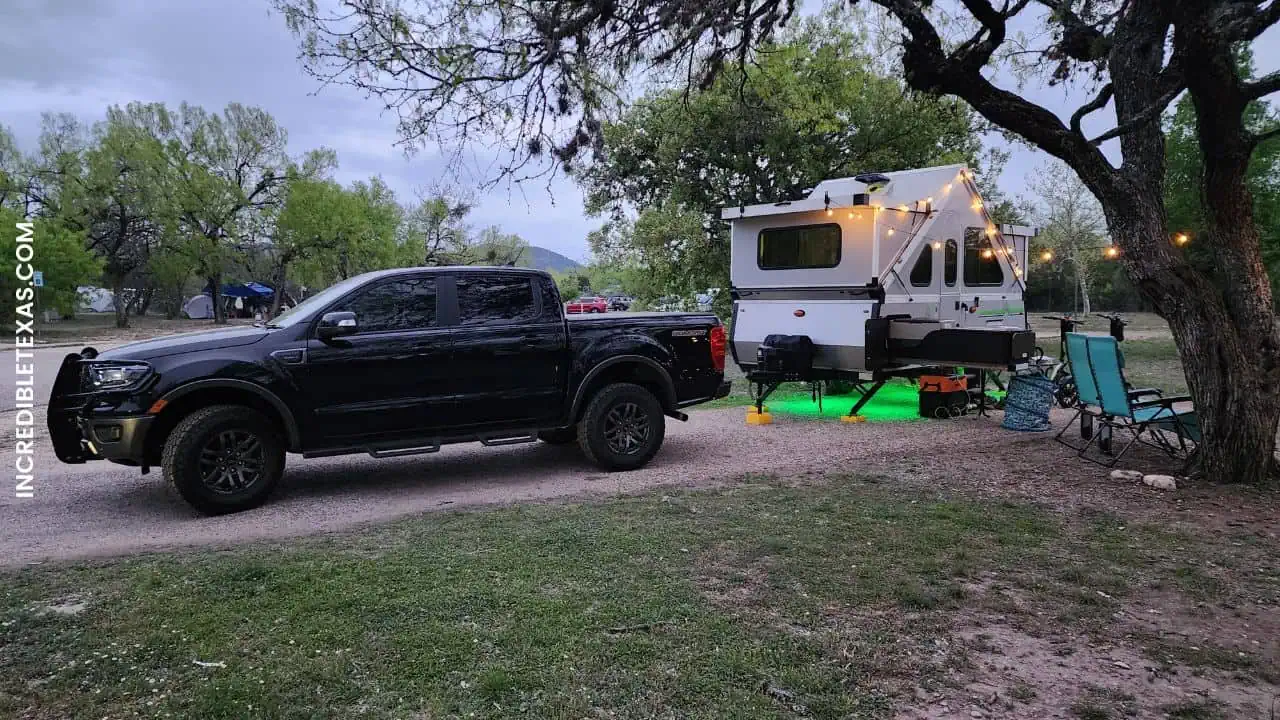
Generations of Texas families travel to Garner every summer to tube gentle river riffles by day and gather at the concession building patio for jukebox dances at night. The Frio River campgrounds stand out among the best state parks in texas for camping, offering shaded tent pads beneath bald cypress trees.
Garner State Park Camping and Frio River Logistics
Hikers at Garner can tackle the steep, rocky ascent up Mount Baldy for sweeping 360-degree views across the Frio Canyon. Shaded riverbank trails trace cypress groves where campers set up lawn chairs directly in the cool, flowing current.
Checking official garner state park hours and reviewing the Texas Parks and Wildlife Garner State Park Camping and Fee Guide is vital before traveling, as riverfront campsites book out five months in advance. The park offers over 340 campsites, 17 screened shelters, and historic stone cabins. Consult the published garner state park campsite map alongside our Garner State Park camping guide to secure prime sites near the river.
- Physical address: 234 RR 1050, Concan, TX 78838
- Daily entrance fee: $8 per adult; children 12 and under free
- Overnight accommodations: 340+ campsites (water-only, 30/50-amp electric), 17 screened shelters, CCC cabins
- Signature attraction: Summer Frio River tubing and evening outdoor jukebox dances
3. Dinosaur Valley State Park: Paluxy River Tracks and Family Trails
Dinosaur Valley State Park allows visitors to walk in authentic 113-million-year-old dinosaur footprints preserved in the limestone bedrock of the Paluxy River near Glen Rose. Located just 55 miles southwest of Fort Worth, this celebrated prehistoric landmark is one of the most accessible state parks in Texas for weekend family road trips.
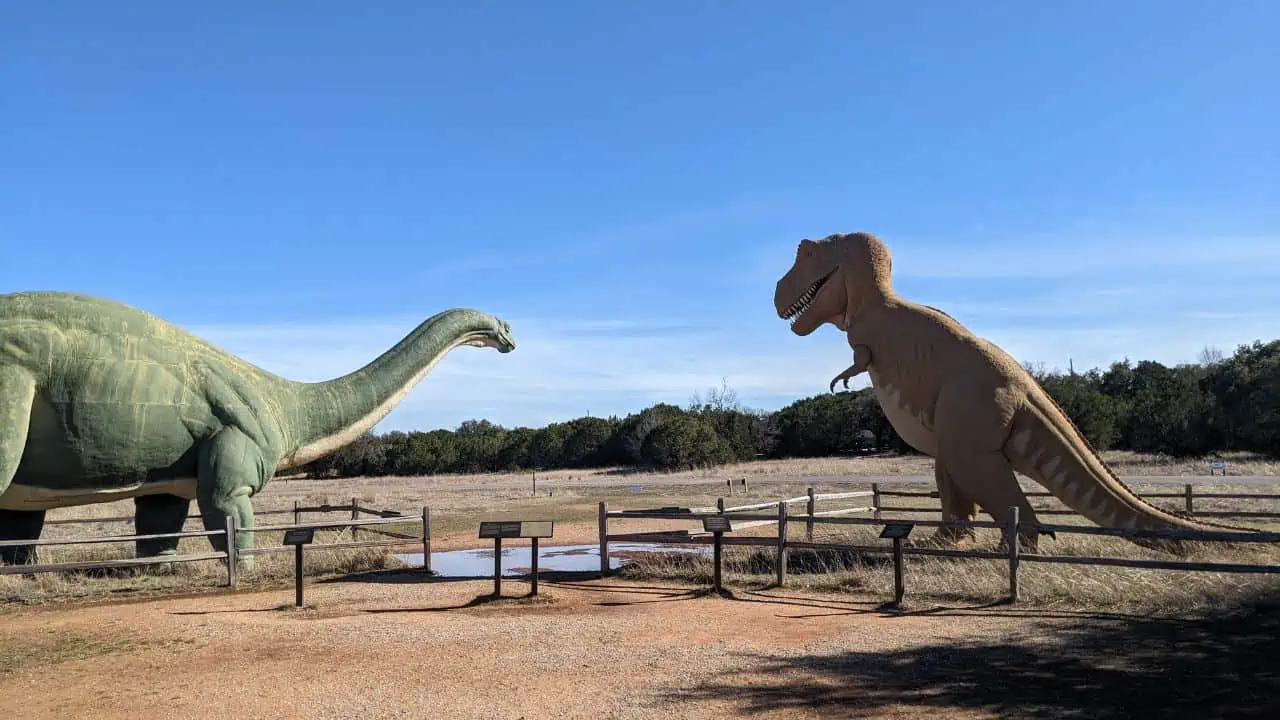
Families exploring north texas state parks will appreciate Dinosaur Valley's unique educational value. Prehistoric sauropods and carnivorous theropods left deep impressions in ancient coastal mudflats that later fossilized into durable limestone ledges.
Dinosaur Valley Track Viewing and River Camping
Travelers reading dinosaur valley state park reviews frequently note that track visibility depends heavily on seasonal water levels in the Paluxy River. Visiting during dry summer or autumn months provides the clearest views of the iconic Ball Room and Main Track sites.
Beyond fossil hunting, the park offers 17 miles of scenic multi-use trails, including the challenging Cedar Brake Outer Loop through scenic cedar ridges. The main campground provides 44 developed electric sites accommodating RVs up to 66 feet, alongside walk-in primitive areas. Check our Dinosaur Valley State Park guide for packing tips and seasonal river reports.
- Physical address: 1629 Park Road 59, Glen Rose, TX 76043
- Daily entrance fee: $8 per adult; children 12 and under free
- Overnight accommodations: 44 campsites with water and 30-amp electricity, 15 primitive walk-in campsites
- Signature attraction: Fossilized sauropod and theropod trackways in the Paluxy riverbed
4. Big Bend Ranch State Park: Rugged Desert Solitude and Dark Skies
Big Bend Ranch State Park encompasses roughly 311,000 acres of raw Chihuahuan Desert wilderness along the Rio Grande, earning it the reputation as "The Other Side of Nowhere." As the largest state park in Texas, this remote sanctuary delivers dramatic volcanic mountain peaks, deep canyons, and unmatched solitude.
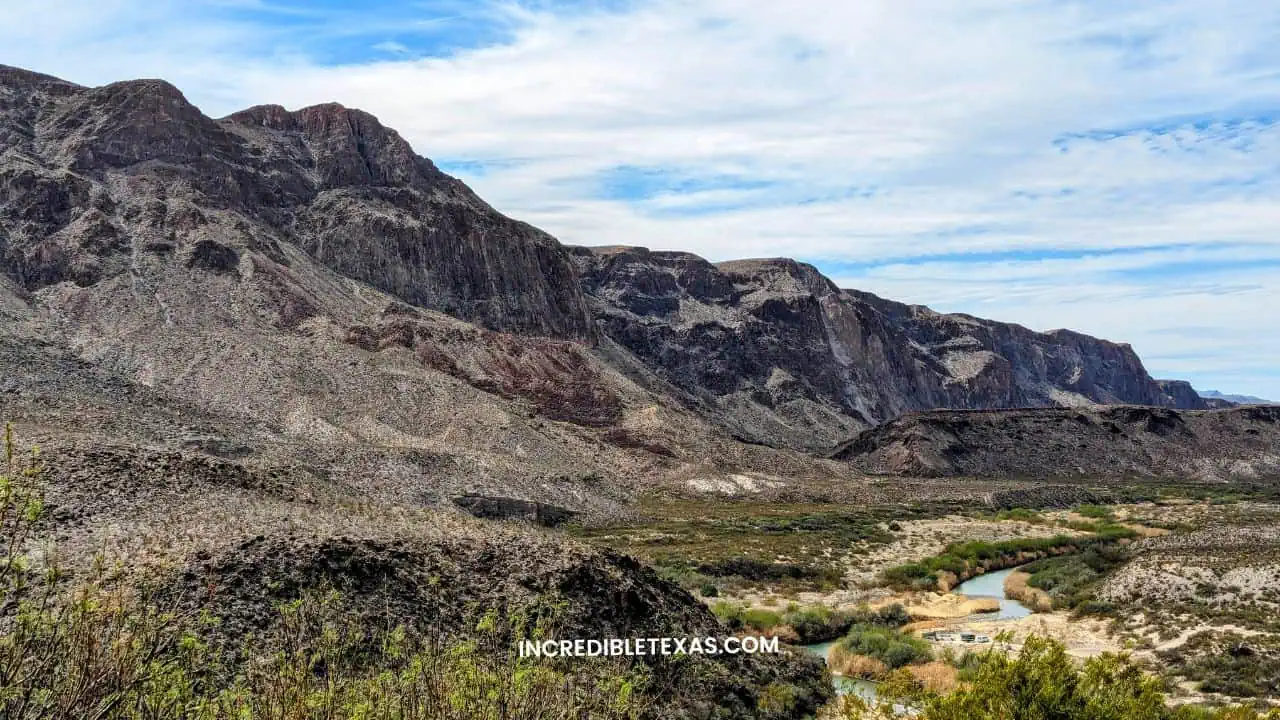
Designated as an International Dark Sky Park, Big Bend Ranch offers some of the clearest night-sky viewing in North America. Unlike its national park counterpart to the east, the state park features minimal paved infrastructure, providing an authentic off-grid adventure.
Big Bend Ranch Backcountry Routes and 4x4 Travel
Hikers can explore 238 miles of rugged multi-use trails, ranging from the short walk into Closed Canyon slot ravine to the demanding 19-mile Rancherias Loop. Mountain bikers consider the park an epic desert proving ground, with rocky singletrack spanning remote abandoned historic ranches.
Travelers navigating the interior need high-clearance four-wheel-drive vehicles to reach primitive drive-in campsites around Sauceda Headquarters. River access sites along FM 170 offer drive-up spots for camper vans and overland rigs. Explore our comprehensive guide to Big Bend Ranch State Park for route maps and desert safety essentials.
- Physical address: 1900 Sauceda Ranch Road, Marfa, TX 79843 (Interior HQ)
- Daily entrance fee: $5 per adult; children 12 and under free
- Overnight accommodations: Remote drive-in campsites, backcountry hike-in zones, historic Sauceda bunkhouse
- Signature attraction: International Dark Sky stargazing and remote Rio Grande canyon gorges
5. Pedernales Falls State Park: Cascading River Shelves and Hill Country Hikes
Pedernales Falls State Park centers on the energetic flow of the Pedernales River across massive slabs of tilted 300-million-year-old Marble Falls limestone in Blanco County. Located 40 miles west of Austin near Johnson City, this 5,212-acre park combines river scenery with rewarding trail networks.
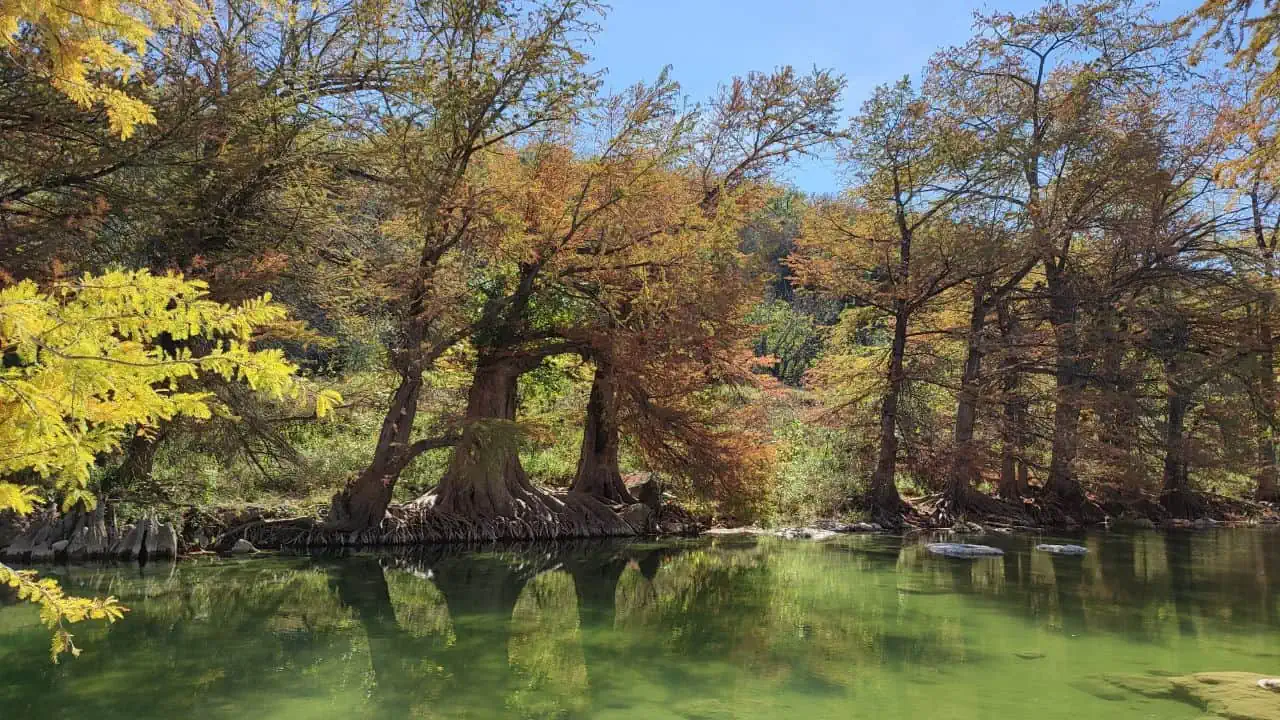
The main falls area presents a striking natural formation where river currents have carved deep channels and potholes into the limestone bedrock. While turbulent water makes swimming illegal in the falls cascade itself, tranquil swimming areas await just downstream.
Pedernales Falls River Safety and Campsite Amenities
Hikers can challenge themselves on the 5.5-mile Wolf Mountain Trail, winding past scenic Hill Country ridges to Jones Spring and small canyon pools. Bird watchers frequently spot endangered golden-cheeked warblers in the park's dense juniper-oak woodlands during spring nesting months.
The park campground features 69 sites equipped with 30-amp electricity and water, accommodating travel trailers and motorhomes up to 64 feet. Backcountry campers can backpack into a designated two-mile primitive camping area along the bluffs. Review our Pedernales Falls State Park guide for seasonal trail advice and weekend day-pass planning.
- Physical address: 2585 Park Road 6026, Johnson City, TX 78636
- Daily entrance fee: $6 per adult; children 12 and under free
- Overnight accommodations: 69 campsites with electricity and water, primitive hike-in camping area
- Signature attraction: Carved limestone cascades and the panoramic Wolf Mountain Trail
6. Inks Lake State Park: Constant-Level Water Fun and Granite Boulders
Inks Lake State Park sits along a protected constant-level reservoir on the Colorado River chain in the Central Texas Hill Country near Burnet. Because the water level remains unaffected by regional droughts, Inks Lake represents one of the most reliable water-recreation hubs in the state park system.
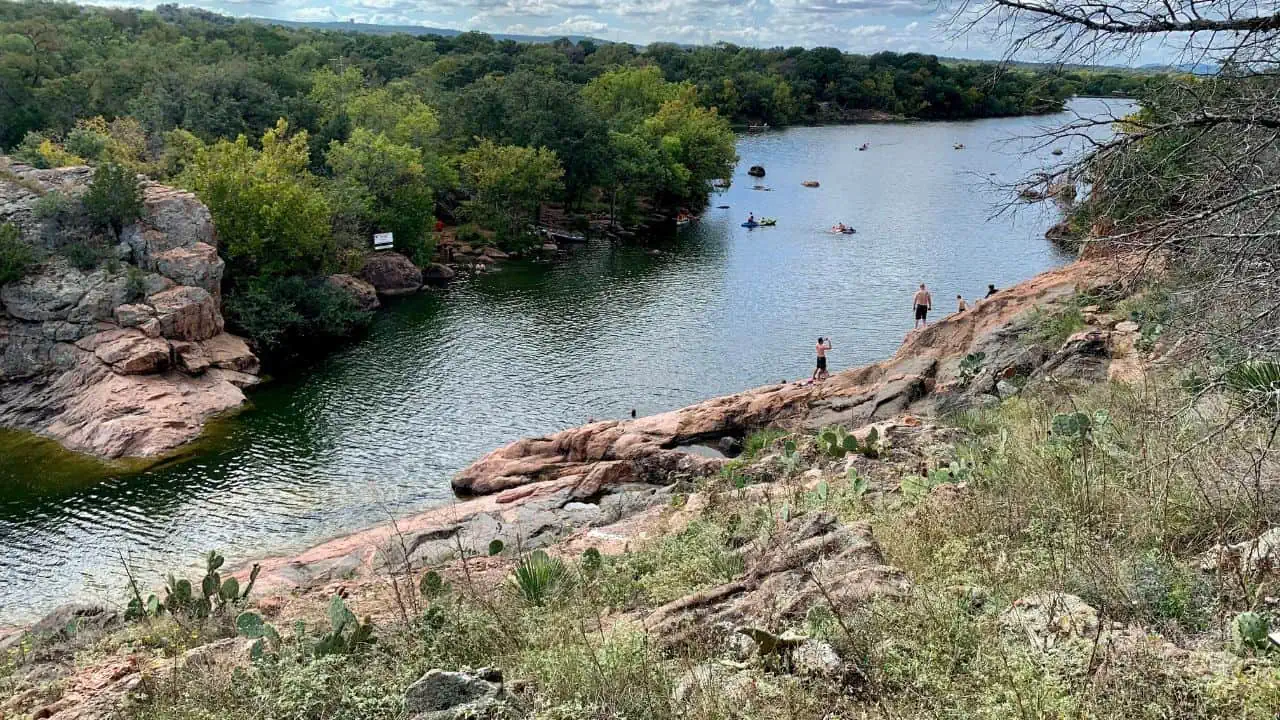
Surrounded by gleaming pink granite gneiss rock outcroppings and wildflowers, the park draws paddleboarders, kayakers, and swimmers all year. The famous Devil's Waterhole cove offers dramatic rock bluffs where adventurous swimmers cliff-jump into deep, refreshing water.
Inks Lake Cabin Rentals and Night Fishing Piers
Outdoor enthusiasts comparing state parks near marble falls tx often select Inks Lake for its 9 miles of forested footpaths and excellent lakeside camping. Highland Lakes travelers regard Inks Lake as one of the best state parks in texas for rv camping due to its 71-foot pull-through sites and lakeside electric hookups.
The park campground offers 197 campsites, including water-only tent sites, electric RV hookups supporting rigs up to 71 feet, and 22 air-conditioned mini-cabins set along the water. Two lighted fishing piers allow anglers to target largemouth bass and catfish after sunset. Read our Inks Lake State Park visitor guide for cabin reservation tips and paddle craft rental schedules.
- Physical address: 3630 Park Road 4 West, Burnet, TX 78611
- Daily entrance fee: $7 per adult; children 12 and under free
- Overnight accommodations: 197 campsites (primitive, water-only, 30/50-amp electric), 22 lakeside mini-cabins
- Signature attraction: Cliff swimming at Devil's Waterhole and constant-level boating
7. Caprock Canyons State Park: Red Rock Trails and the State Bison Herd
Caprock Canyons State Park protects over 15,000 acres of rugged red sandstone badlands along the Caprock Escarpment in the Texas Panhandle. Located near Quitaque, this wild park serves as the permanent home to the Official Texas State Bison Herd, descendants of five calves rescued by Charles Goodnight in 1878.
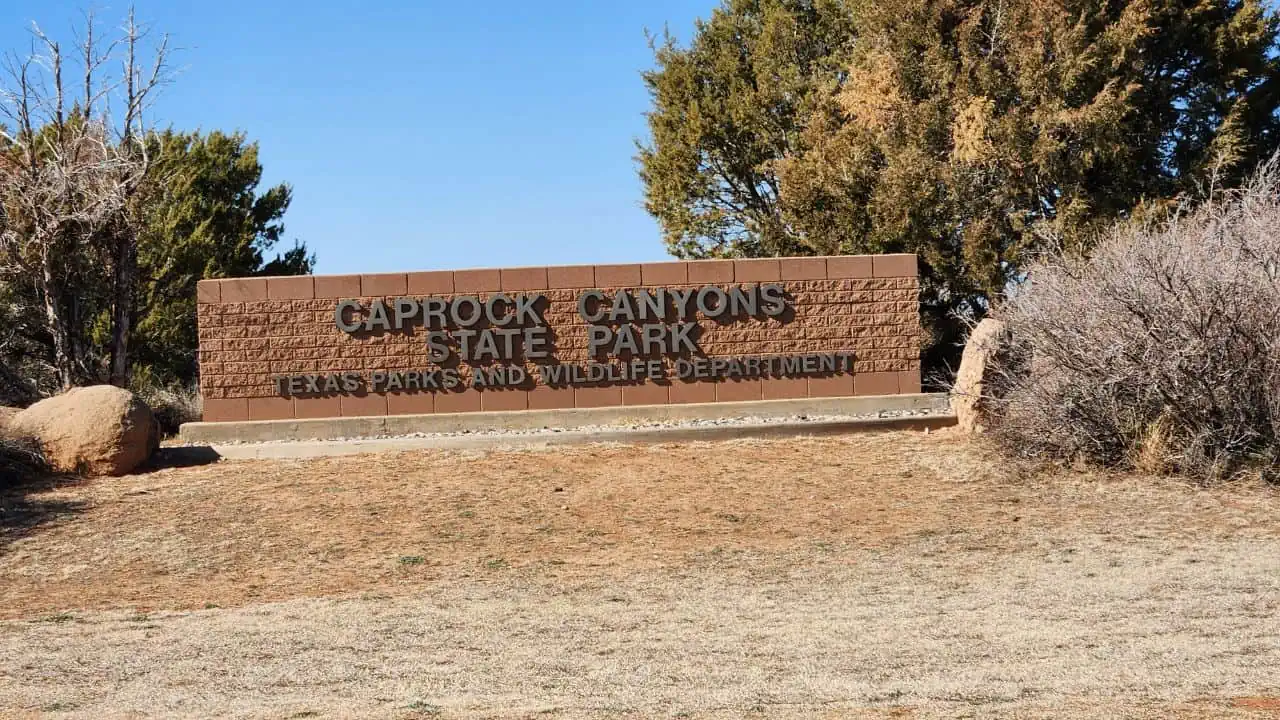
Today, more than 300 free-roaming bison graze across the park's plains and canyon floors. Visitors frequently observe these majestic animals crossing park access roads and grazing adjacent to designated camping loops.
Caprock Canyons Trailway and Bison Safety Rules
Caprock Canyons provides over 90 miles of multi-use trails when combined with the Caprock Canyons Trailway, an abandoned railway corridor that passes through the historic Clarity Tunnel. During summer evenings, thousands of Mexican free-tailed bats emerge from the tunnel in a dramatic spiral flight.
Camping options at Honey Flat include 35 developed campsites with 30-amp and 50-amp electric hookups, equestrian sites with corrals, and remote primitive hike-in zones. Campers should always maintain a safe distance of at least 50 yards from roaming bison. Check our Caprock Canyons State Park guide for trail elevation profiles and bat-flight viewing logistics.
- Physical address: 850 Caprock Canyon Park Road, Quitaque, TX 79255
- Daily entrance fee: $5 per adult; children 12 and under free
- Overnight accommodations: 35 electric campsites, equestrian campsites with corrals, primitive hike-in campsites
- Signature attraction: Roaming Texas State Bison Herd and the Clarity Tunnel Trailway
8. Longhorn Cavern State Park: Underground River Formations and Scenic Walks
Longhorn Cavern State Park offers a unique underground experience in Burnet County, showcasing a rare limestone cave formed entirely by the carving action of an underground river. Because cave temperatures remain a steady 65 degrees Fahrenheit year-round, it offers a reliable, cool retreat from summer heat.
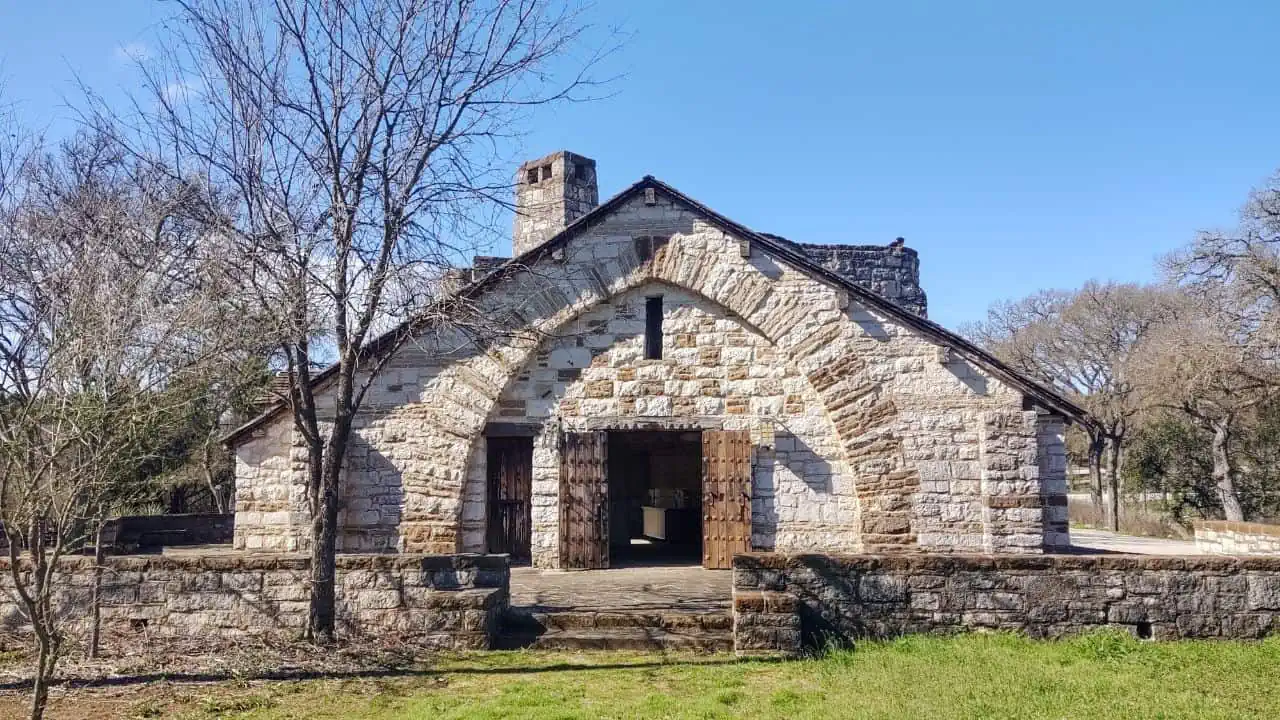
The cave holds a fascinating human history, having served as a prehistoric Indian shelter, a Confederate gunpowder cache, an outlaw hideout, and even a 1920s underground dance hall. Meticulous limestone structures built by the CCC frame the park's surface grounds.
Longhorn Cavern Tour Guidelines and Surface Grounds
Entry to surface park grounds and picnic areas is free, but accessing the subterranean chambers requires booking a ticketed guided tour. The 90-minute walking tour travels 1.1 miles through illuminated rooms, including the Hall of Marble and the Queen's Throne.
According to the Longhorn Cavern State Park Official Walking Tour Guide, walking tour rates start at $24.00 for adults (ages 12+) and $17.00 for children (ages 4 to 11). While the park is day-use only with no campsites, spacious paved parking lots accommodate large RVs and tour coaches. Review our Longhorn Cavern tour guide for tour departure times and nearby camping options.
- Physical address: 6211 Park Road 4 S, Burnet, TX 78611
- Daily entrance fee: Park grounds free; guided walking cave tours from $24.00
- Overnight accommodations: Day-use only; camping available 6 miles away at Inks Lake State Park
- Signature attraction: Constant 65°F subterranean river cave tours and historic CCC architecture
9. McKinney Falls State Park: Urban Waterfalls and Cypress Creek Hikes
McKinney Falls State Park offers a peaceful natural oasis located just 13 miles southeast of downtown Austin along the winding course of Onion Creek. This urban state park preserves rolling limestone terrain, cascading waterfalls, and thick forests of cedar, oak, and pecan trees.
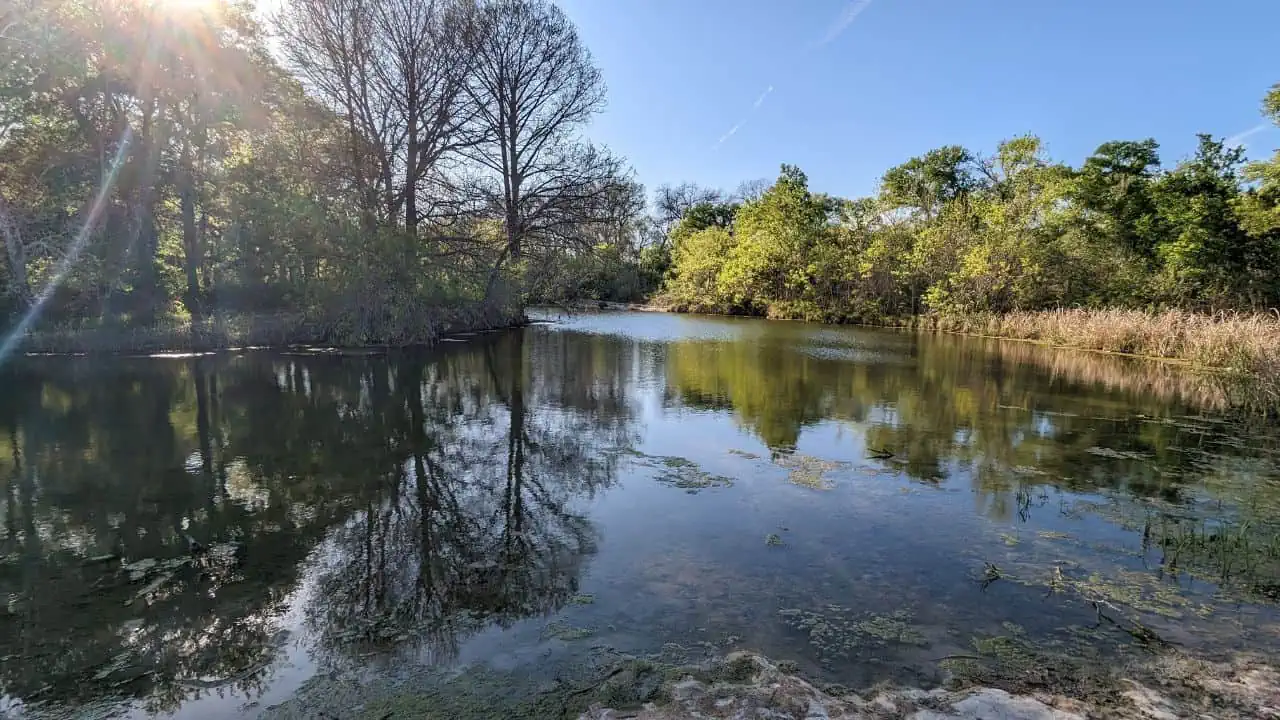
The park is home to "Old Baldy," an immense bald cypress tree estimated to be over 550 years old that stands over 100 feet tall along the creek banks. Historic ruins of Thomas McKinney's 1850s stone homestead and horse trainer cabin add compelling historical texture to trail walks.
McKinney Falls Cabin Rentals and Bouldering Access
Visitors can hike nearly 9 miles of trails, including the paved 2.8-mile Onion Creek Hike and Bike Trail and the scenic Rock Shelter Trail. When creek levels are normal, swimmers cool off in deep pools beneath both the Upper Falls and Lower Falls limestone ledges.
Campers can choose from 81 developed campsites with water and 30-amp electricity that accommodate large RVs up to 115 feet. The park also features six newly renovated, air-conditioned camper cabins equipped with bunk beds and outdoor fire rings. Check our McKinney Falls State Park guide for swimming conditions and urban camping logistics.
- Physical address: 5808 McKinney Falls Parkway, Austin, TX 78744
- Daily entrance fee: $6 per adult; children 12 and under free
- Overnight accommodations: 81 campsites with water and 30-amp electricity, 6 newly renovated cabins
- Signature attraction: Upper and Lower Onion Creek waterfalls and Old Baldy cypress tree
10. Goose Island State Park: Coastal Marshlands and the Historic Big Tree
Goose Island State Park borders the tranquil saltwater shallows of Aransas and St. Charles bays near Rockport on the Texas Gulf Coast. This coastal park is celebrated for saltwater bay fishing, outstanding migratory birding, and its ancient live oak grove.
The park's most famous landmark is "The Big Tree," a coastal live oak tree with a trunk circumference exceeding 35 feet and an estimated age of over 1,000 years. The ancient giant has survived dozens of major hurricanes over centuries of coastal history.
Goose Island Bayfront RV Camping and Pier Fishing
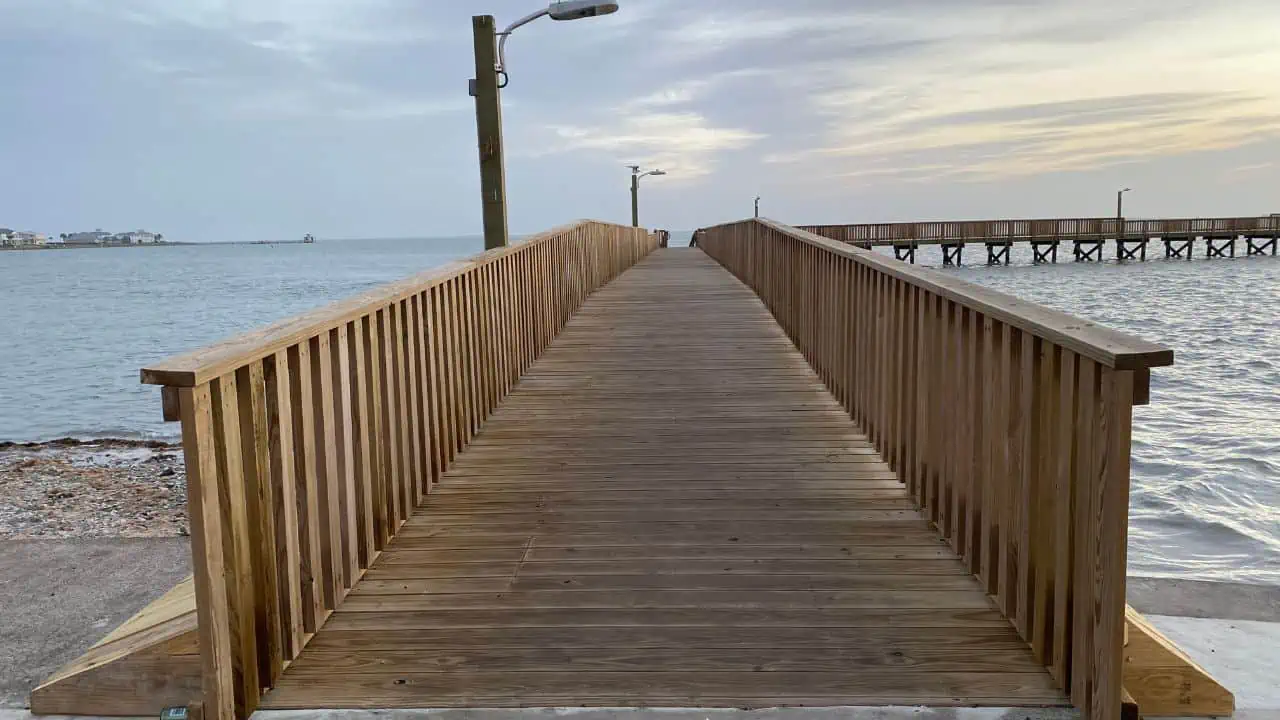
Anglers at Goose Island enjoy around-the-clock action along a 1,620-foot lighted pier stretching deep into Aransas Bay. Catches regularly include red drum, speckled trout, black drum, and flounder, with a lighted fish cleaning station located near the pier entrance.
The campground offers 44 bayfront campsites with full hookups (water, 30/50-amp electric, and sewer) situated right along the shoreline, alongside 57 shaded sites under the oak canopy. Birders routinely spot whooping cranes, roseate spoonbills, and reddish egrets feeding in adjacent marshlands. Review our Goose Island State Park visitor guide for seasonal fishing tips and coastal camping details.
- Physical address: 202 S Palmetto Street, Rockport, TX 78382
- Daily entrance fee: $5 per adult; children 12 and under free
- Overnight accommodations: 44 bayfront sites with water/electric/sewer, 57 shaded oak campsites
- Signature attraction: 1,620-foot lighted fishing pier and the 1,000-year-old Big Tree live oak
How to Book Texas State Park Camping Reservations and Cabins
Booking overnight stays across the state park system requires utilizing the central online portal or telephone reservation desk. Day-use vehicle passes open 30 days ahead of your arrival date, while overnight campsites, screened shelters, and cabins open 5 months in advance.
According to booking policies outlined on the Texas Parks and Wildlife Online Reservation Portal, reservations open rolling daily at 8:00 AM Central Time. High-demand summer weekends at Garner, Inks Lake, and Palo Duro Canyon frequently sell out within minutes of release.
Finding a texas state park with cabins is a top priority for families who prefer solid walls over tent canvas. The department maintains texas state parks cabins across multiple ecoregions, including historic stone shelters and newly built bunkhouses. Travelers can explore our curated directory of Texas state parks with cabins to compare nightly rates and floor plans.
Reserving your permit months in advance ensures you experience the top state parks in texas during prime outdoor weather. For travelers planning trips into the Pineywoods, explore our regional guide to the best East Texas state parks and nature reserves for spring-fed lakes, paddling trails, and deep pine forest campgrounds.
Practical Field Advice and Safety Rules for Texas State Parks
Practicing smart outdoor safety in Texas state parks requires preparing for extreme weather swings, carrying sufficient drinking water, and respecting local park regulations. Texas summer temperatures routinely exceed 100 degrees Fahrenheit, making early morning recreation essential.
Hikers must carry a minimum of one gallon of water per person per day when exploring canyon and desert trails. Flash flooding poses a serious hazard in Hill Country river basins; always obey automated siren warnings and evacuate low-water crossings immediately during rainstorms.
Pets are welcome in almost all Texas state parks, though specific wildlife sanctuaries like Bentsen-Rio Grande Valley State Park prohibit pets on dirt trails to protect ground-nesting birds. State law requires that dogs remain on a secure leash no longer than six feet at all times. Pets are prohibited inside public buildings, historic structures, screened shelters, and designated swim zones to safeguard delicate ecosystems and visitor safety.
Frequently Asked Questions About Texas State Parks
Do you need reservations for Texas state parks?
Advance day-use reservations are strongly recommended across the TPWD network and are required at high-demand destinations during peak weekends. Visitors can reserve daily entry passes up to 30 days ahead online through the central park reservation portal.
Can you fish without a license in state parks?
Anglers do not need a state fishing license or stamp endorsements when casting from shorelines, lighted piers, or boat ramps within any TPWD park property. Daily bag limits and minimum fish length rules established by the Texas Parks and Wildlife Department still apply.
Are dogs allowed in state park campgrounds?
Dogs are permitted across nearly all department properties provided they remain on a secure leash no longer than six feet at all times. Pets are prohibited inside public buildings, historic structures, screened shelters, and designated swimming zones.
What is the most visited state park in Texas?
Garner State Park ranks as the most visited destination for overnight camping in Texas, welcoming more than 450,000 annual guests along the Frio River. Ray Roberts Lake near the Dallas-Fort Worth metroplex frequently records the highest total day-use numbers statewide.
How much does a Texas State Parks Pass cost?
The annual parks pass costs $70 and provides 12 months of unlimited free day-use entry to 88 state parks for the pass holder and all passengers in their personal vehicle. A secondary pass for another adult living at the same residential address can be purchased in person for $25.