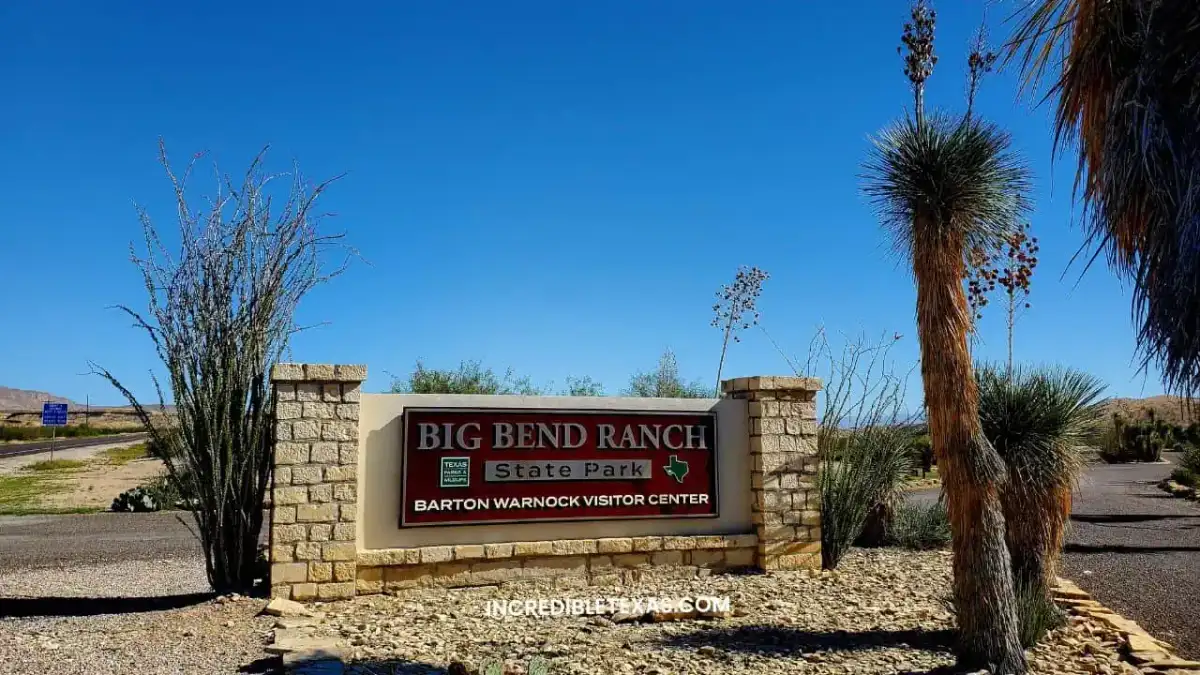
Big Bend Ranch State Park Texas protects over 311,000 acres of rugged Chihuahuan Desert canyon country along the Rio Grande. Frequently referred to by travelers simply as Big Bend State Park, this sprawling public preserve offers solitude, dramatic volcanic geology, and unpaved desert expanse.
Known locally as the Other Side of Big Bend, the park provides an untamed alternative to its heavily visited national park neighbor. The most popular things to do in Big Bend Ranch State Park include hiking remote desert canyons, riding acclaimed mountain bike loops, paddling the Rio Grande, and camping under Bortle Class 1 night skies.
Key takeaways
- Big Bend Ranch State Park spans over 311,000 acres and 238 trail miles in West Texas, charging a $5 daily entrance fee per person (free for children 12 and under).
- Closed Canyon and the Hoodoos Trail along paved FM 170 provide accessible day hikes and are among the few dog-friendly trails in the park system.
- Reaching Sauceda Ranch Headquarters requires driving 27 miles down an unpaved interior gravel road, making high-clearance vehicles essential for backcountry exploration.
- Camping permits range from $10 nightly for primitive hike-in spots to $12 to $16 nightly for drive-in campsites, while the historic Sauceda Bunkhouse offers indoor beds for $35 per person.
- The Fresno-Sauceda Loop in Big Bend Ranch State Park is the only route in Texas designated as an IMBA Epic mountain biking trail.
What to Expect at Big Bend Ranch State Park
Big Bend Ranch encompasses 311,000 acres of rugged desert terrain, steep volcanic plateaus, and deep river canyons along the Mexican border. The property features over 238 miles of multi-use trails, primitive backcountry roads, and historical ranching settlements dating back over a century.
Unlike traditional parks with paved loops and manicured facilities, this preserve demands self-reliance. Visitors must bring their own water, food, fuel, and repair tools, as there are no grocery stores or service stations inside the grounds.
Desert Wilderness and Volcanic Geology
The landscape of the park was forged by millions of years of intense volcanic activity, tectonic faulting, and water erosion. The massive volcanic formation known as the Solitario Big Bend Ranch centerpiece spans nearly ten miles across and resembles a giant crater from space.
Surrounding the Solitario are eroded tuff cliffs, basalt lava flows, and deep gravel washes lined with ocotillo, lechuguilla, and giant dagger yuccas. Wildlife thrives across these desert flats, including desert bighorn sheep, javelinas, mountain lions, roadrunners, and over 300 resident and migratory bird species.
Cultural Heritage and Historic Mining
Human habitation in this region stretches back more than 10,000 years, documented through ancient rock art and stone shelters left by Indigenous peoples across Fresno Canyon. Spanish explorers traversed the river corridor during the 18th century, followed by Mexican and Anglo ranchers in the late 1800s.
During the early 20th century, miners extracted cinnabar ore to produce liquid mercury at operations like the Whit-Roy and Mariposa mines. Remnants of old ranch complexes, stone corrals, adobe ruins, and processing machinery remain visible throughout the park, offering a window into the survival strategies of early frontier settlers.
Quick Comparison: Big Bend Ranch State Park Highlights
The table below outlines key destination zones within the park, detailing primary access corridors, road conditions, and recommended activities.
| Zone or Attraction | Access Road | Activity Type | Vehicle Requirement | Key Feature |
|---|---|---|---|---|
| Closed Canyon Trail | FM 170 (Paved) | Day Hiking | Standard Sedan | 1.4-mile narrow slot canyon walk |
| Hoodoos & River Trail | FM 170 (Paved) | Day Hiking / Scenery | Standard Sedan | Balanced mushroom rocks & Rio Grande access |
| Sauceda Headquarters | Main Park Road (Gravel) | Lodging / History | High-Clearance Recommended | Historic bunkhouse, bike rentals & ranger station |
| Fresno-Sauceda Loop | Interior Backcountry | Mountain Biking | 4WD to Trailheads | 50-mile IMBA Epic backcountry loop |
| Colorado Canyon | River Road / River Launches | Paddling & Rafting | High-Clearance for Ramps | Class II and III whitewater rapids |
| The Big Hill Overlook | FM 170 (Paved) | Scenic Driving / Views | Standard Sedan | Steepest highway grade in Texas with canyon vistas |
| Solitario Overlook | Main Park Road (Interior) | Hiking / Overlook | High-Clearance 4WD | 10-mile collapsed volcanic laccolith crater |
Big Bend Ranch State Park vs Big Bend National Park: Which Should You Visit?
Evaluating Big Bend Ranch State Park vs Big Bend National Park helps travelers determine which destination best aligns with their gear and vehicle capabilities. The state park delivers rugged solitude, dog-friendly river trails, and 238 miles of multi-use bike routes across 311,000 primitive acres.
In contrast, neighboring Big Bend National Park provides paved highways, full-service visitor centers, developed campgrounds, and a mountain lodge across 800,000 acres. According to the Texas Parks and Wildlife Department, the state park protects over 311,000 acres and 238 trail miles, yet welcomes only about 40,000 visitors annually compared to over 500,000 at the national park.
While the national park charges $30 per vehicle for entry as detailed by the National Park Service Big Bend National Park Fees and Passes, the state preserve charges a modest $5 daily fee per adult. Mountain biking is strictly prohibited on singletrack trails in the national park, whereas this state preserve welcomes mountain bikes across nearly its entire 238-mile trail network.
Pets are barred from all hiking trails in Big Bend National Park to protect desert fauna. By comparison, the state park permits leashed dogs on all designated day-use trails along the FM 170 corridor, making it the preferred choice for travelers with four-legged companions.
Tip
Travelers planning a complete West Texas itinerary can review our Big Bend National Park visitor guide to combine the developed highlights of the national park with the remote backcountry solitude of the state park.
Best Hiking and Mountain Biking Trails
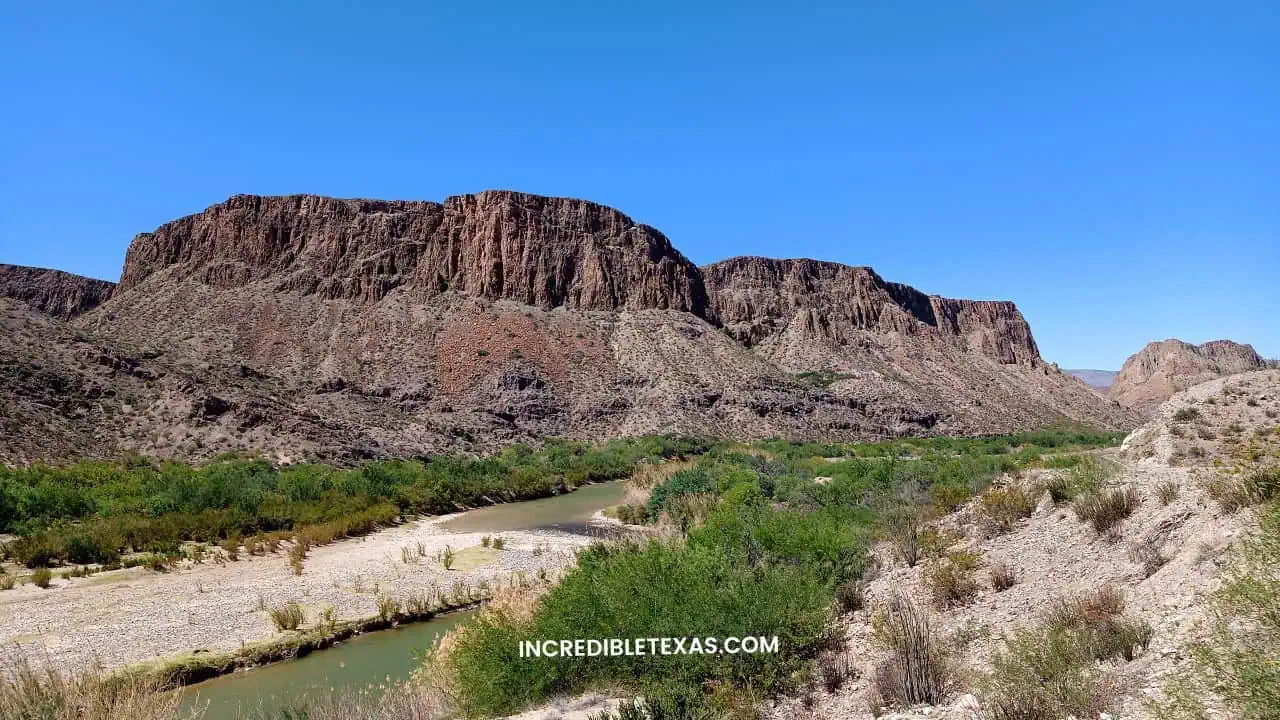
The best trails in the park range from accessible slot canyon strolls along FM 170 to demanding multi-day bikepacking circuits through the volcanic interior. Navigating Big Bend Ranch State Park hiking trails requires sturdy boots and ample hydration, as rocky arroyos and desert sun challenge even experienced hikers.
Hikers and cyclists should download digital routes and reference official trail maps from the Texas Parks and Wildlife Department Big Bend Ranch Trail Maps before departing. Summer heat routinely reaches dangerous levels above 105 degrees Fahrenheit, so trail exploration should always be scheduled for the cooler months between October and April.
Closed Canyon Trail
The Closed Canyon Trail Big Bend visitors encounter off the highway follows a dry gravel streambed into a narrow, shaded slot canyon. Located directly off paved FM 170 roughly 22 miles east of Presidio, this 1.4-mile round-trip route passes between towering vertical cliffs of volcanic rock.
As hikers venture deeper, canyon walls narrow to just a few feet apart, blocking direct sunlight and keeping temperatures noticeably cooler than the exposed desert above. The hike terminates roughly 0.7 miles in at a steep, slick rock pour-off that drops down toward the Rio Grande; casual hikers should turn around at this point rather than attempting an unsafe climb.
- Trailhead Location: Paved pullout along FM 170 (mile marker 19)
- Distance: 1.4 miles round-trip
- Difficulty: Moderate (uneven gravel footing and minor rock scrambling)
- Dog Policy: Leashed dogs permitted
- Key Feature: Cool, narrow slot canyon passage between 150-foot vertical walls
Hoodoos and River Trail
Exploring the Hoodoos Trail Big Bend Ranch maintains along the river corridor reveals bizarre balanced rocks and direct river access. This 1.1-mile loop is located along FM 170, approximately 16 miles west of Lajitas, winding among unusual mushroom-shaped rock spires formed by wind and water eroding volcanic ash.
The path descends gently from the gravel parking area past dramatic rock formations down to the rocky banks of the Rio Grande. Interpretive signs along the route explain the sedimentary geology, and shaded picnic pavilions at the trailhead provide comfortable rest spots overlooking the river.
- Trailhead Location: FM 170 day-use area with river access
- Distance: 1.1 miles loop
- Difficulty: Easy
- Dog Policy: Leashed dogs permitted
- Key Feature: Eerie balanced rock pillars and direct gravel beach access to the Rio Grande
Contrabando Multi-Use Trail System
The Contrabando Multi-Use Trail System encompasses over 25 miles of interconnected singletrack and doubletrack trails on the eastern edge of the park. The main trailhead sits right off FM 170 near the historic Contrabando movie set, offering ample parking and interpretive trail kiosks.
Hikers, trail runners, and cross-country mountain bikers navigate gentle climbs and rolling desert washes toward the historic Crawford-Smith ranch house ruins. Spring blooms bring bursts of color across this sector, with golden yellow desert marigolds, purple sage, and scarlet strawberry cactus blossoms dotting the hillsides.
- Trailhead Location: East end of FM 170 near Lajitas
- Distance: 25+ miles of modular trail loops
- Difficulty: Easy to Difficult depending on chosen loop
- Dog Policy: Day-use portions within 1/4 mile of roads allow leashed pets
- Key Feature: Historic adobe ruins, abandoned cinnabar mine shafts, and fast-flowing singletrack
Fresno-Sauceda Loop (IMBA Epic)
The Fresno-Sauceda Loop is an elite 50-mile backcountry mountain bike route designated as an Epic ride by the International Mountain Bicycling Association. It remains the only trail route in Texas to earn this prestigious wilderness cycling recognition.
Riders tackle brutal rocky ascents, loose scree descents, and sandy arroyo crossings that connect Sauceda Ranch Headquarters with the Fresno Canyon corridor. This trail is strictly recommended for experienced, self-sufficient endurance cyclists equipped with tubeless tire sealant, heavy-duty sidewalls, satellite emergency devices, and spare parts.
- Trailhead Location: Sauceda Ranch Headquarters or Barton Warnock Visitor Center
- Distance: 50 to 59 miles depending on route extensions
- Difficulty: Extremely Strenuous (technical singletrack and remote backcountry)
- Riding Time: 8 to 12 hours for elite riders, or 2 to 3 days as a bikepacking tour
- Key Feature: Solitario volcanic rim vistas, Spanish historic ruins, and total wilderness isolation
Rio Grande River Activities and Float Trips
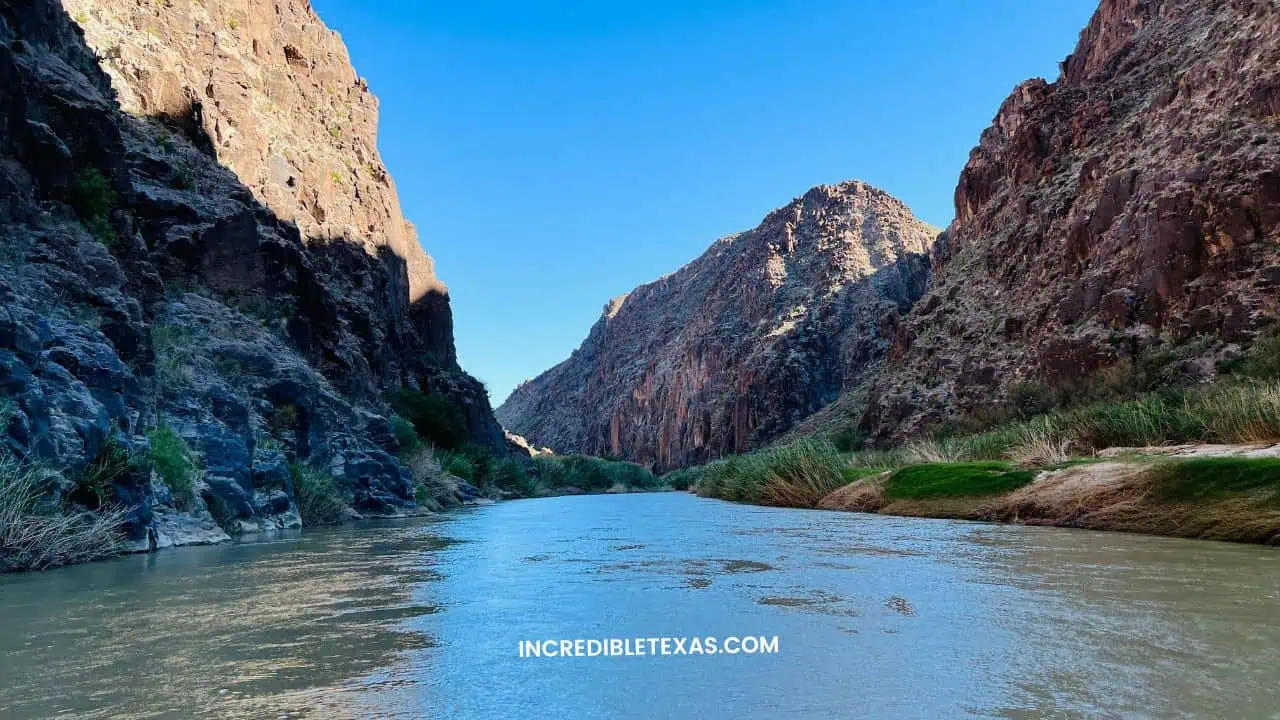
The Rio Grande forms the southern boundary of the property, carving dramatic canyon passages through remote desert peaks. River trips provide a cool respite from arid desert hiking, allowing paddlers to experience volcanic rock corridors from water level.
River water levels fluctuate significantly based on seasonal monsoon rains and upstream dam releases from the Rio Conchos in Mexico. Before launching any watercraft, visitors must check current river flow rates measured in cubic feet per second at park visitor centers.
Paddling Colorado Canyon and Dark Canyon
Colorado Canyon is the most popular whitewater float trip in the park, featuring dark volcanic basalt cliffs that rise hundreds of feet above the green river current. This section contains spirited Class II and III rapids, including Panther Rapid and the Chutes, providing thrilling whitewater action for experienced kayakers and guided rafts.
Dark Canyon offers a calmer, family-friendly float trip downstream through narrower, shaded rock corridors. Arranging Rio Grande rafting Big Bend Ranch trips allows paddlers to experience Class II and III whitewater through volcanic corridors, often starting at Madera Canyon and ending at the Hoodoos launch.
Local River Outfitters and Rentals
Independent river running requires personal boats, personal flotation devices, river permits, and two-vehicle shuttle logistics. For visitors without specialized gear, experienced professional outfitters based in nearby Terlingua and Lajitas provide guided river trips, kayak rentals, and shuttle services.
- Far Flung Outdoor Center: Based in Terlingua; provides guided multi-day raft trips, inflatable kayak rentals, and vehicle shuttle logistics along FM 170.
- Big Bend Boating and Hiking Company: Specializes in personalized small-group river runs through Colorado Canyon and interpretive geology floats.
- Desert Sports: Offers mountain bike rentals, paddle gear, and guided backcountry combination tours.
Rio Grande Fishing Regulations
Anglers can fish the Rio Grande for channel catfish, flathead catfish, and largemouth bass from riverbanks or non-motorized boats. Because the international border runs down the center channel of the river, anglers must hold a valid Texas fishing license, which is not included in the standard state park entrance fee.
State fishing regulations govern harvest limits and legal equipment along the river. Catch-and-release practices are strongly encouraged to maintain native aquatic ecosystems, and anglers must avoid entering Mexican territory on the southern riverbank.
Scenic Drives and Overlooks Along River Road (FM 170)
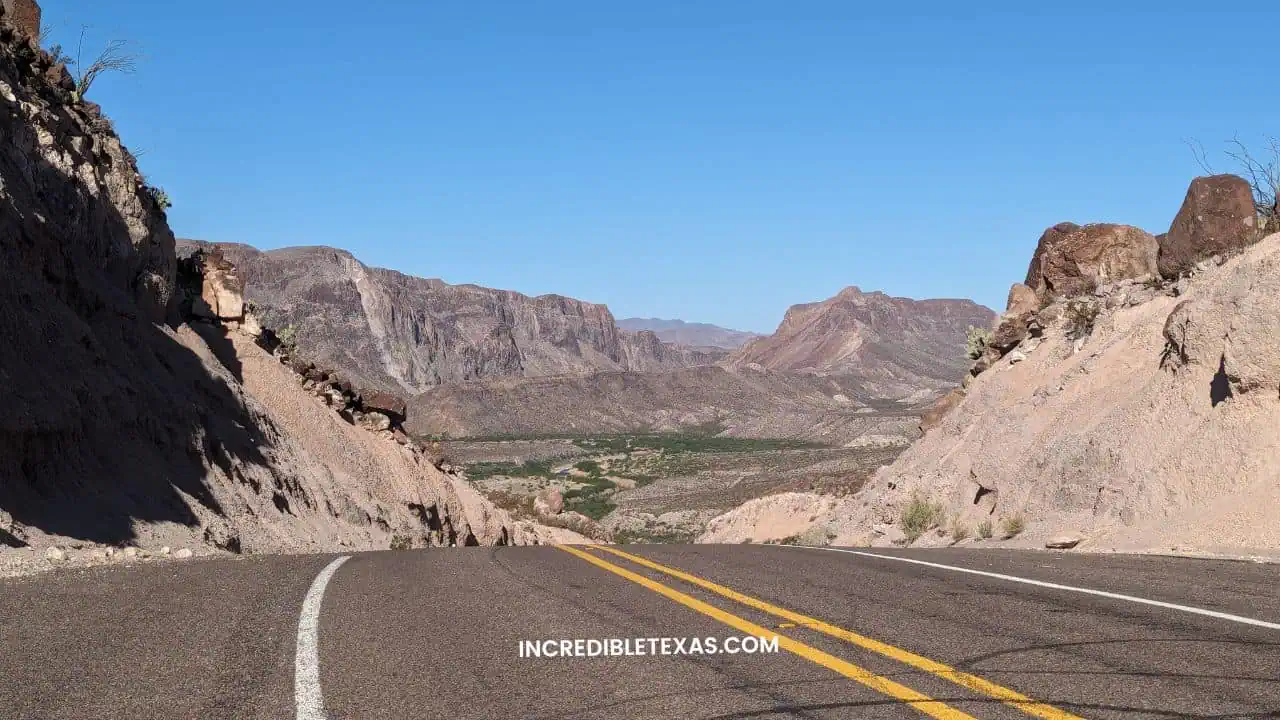
Traveling along the River Road FM 170 Texas highway delivers some of the most dramatic mountain scenery in North America. Officially designated as FM 170, this 50-mile paved highway connects Lajitas on the east with Presidio on the west.
The highway mirrors every bend of the Rio Grande, climbing over steep mountain crests and dropping into dramatic arroyos. Driving the entire stretch without stops takes approximately 90 minutes, but travelers should allow at least three to four hours to explore roadside hiking trails, picnic pullouts, and historical markers.
The Big Hill on El Camino del Rio
The Big Hill is the highest point along FM 170 and the steepest public highway grade in Texas, featuring steep 15-percent slopes with tight mountain switchbacks. Large recreational vehicles and travel trailers should proceed with extreme caution and downshift transmissions when descending.
At the summit pullout, visitors enjoy sweeping panoramic views across the Rio Grande into the jagged mountain ranges of Chihuahua, Mexico. Sunrise and golden hour light cast dramatic purple and amber hues across the canyon walls, creating outstanding conditions for landscape photography.
La Cuesta Overlook
La Cuesta Overlook is situated near the western edge of the park boundary, elevated above the river floodplain. The vista looks east toward the Contrabando dome formations and south across broad agricultural fields along the Mexican riverbank.
The viewpoint offers paved parking, informative interpretive placards, and stone benches. It serves as an ideal rest stop to scan river cottonwood groves for migrating raptors and water birds resting along the flyway.
Contrabando Movie Set and Historic District
The Contrabando historic area features a collection of weathered adobe buildings constructed originally in 1985 for the western film Uphill All the Way. Over the subsequent decades, the movie set hosted major Hollywood productions, including Streets of Laredo and Dead Man’s Walk.
Although several riverside adobe buildings suffered flood damage from historic river crests, the site remains an evocative historic landmark along FM 170. Visitors can explore the preserved casitas, read interpretive history signs, and photograph the desert backdrop framed by traditional vigas and rough-sawn timbers.
Tip
Travelers exploring the Big Bend region can browse our curated roundup of West Texas hidden gems to discover nearby ghost towns, art outposts, and remote desert hot springs.
Camping, Sauceda Bunkhouse Lodging, and Permits
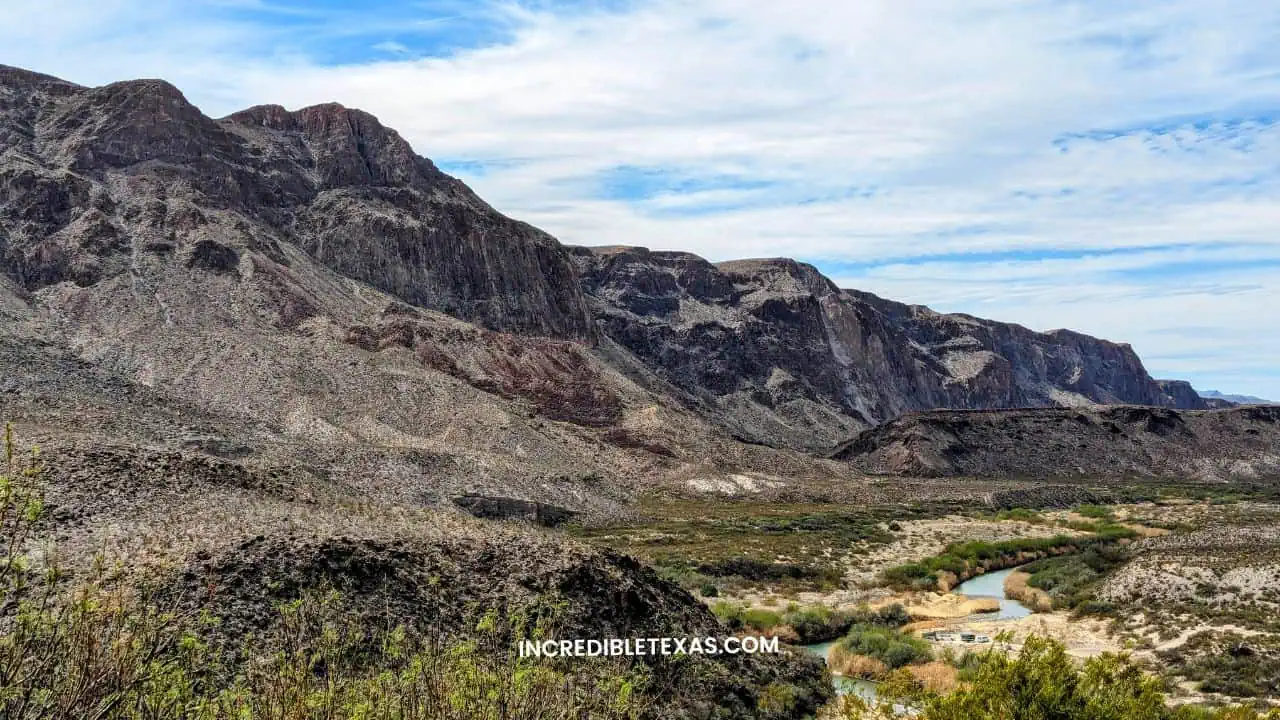
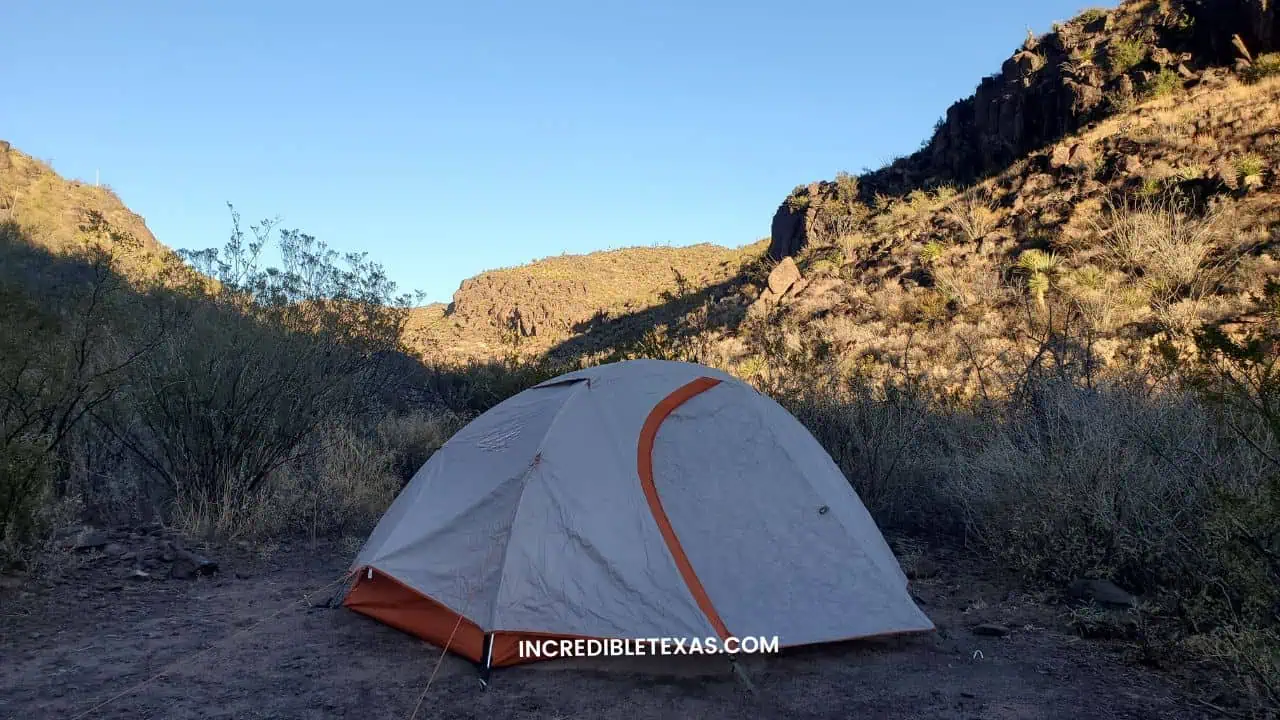
Options for Big Bend Ranch State Park camping range from drive-in ramadas and backcountry tent zones to the rustic indoor Sauceda Bunkhouse. Camping in this preserve provides an authentic desert wilderness experience far removed from commercial campgrounds.
Camping reservations and permits are strictly managed by the state park system. Campers should reserve permits in advance through the Texas Parks and Wildlife Department Big Bend Ranch Fees and Facilities portal or register upon arrival at park visitor centers.
Sauceda Ranch Headquarters and Bunkhouse
Sauceda Ranch Headquarters sits 27 miles into the park interior, operating as the administrative and lodging center of the property. The historic complex includes a visitor contact station, ice sales, topographic map sales, mountain bike rentals, and coin-operated hot showers.
The Sauceda Bunkhouse offers rustic communal lodging for individual travelers and outdoor clubs for $35 per person per night. The facility includes separate male and female sleeping quarters with sturdy twin bunks, shared indoor restrooms, and a commercial kitchen equipped with stoves, refrigerators, and dining tables.
- Lodging Type: Communal indoor bunkhouse
- Cost: $35 per person per night
- Amenities: Commercial kitchen, shared bathrooms, hot showers, heating, and cooling
- Requirements: Guests must supply their own bedding, sleeping bags, towels, and food supplies
Primitive Drive-In and Backcountry Campsites
The park maintains over 70 designated primitive drive-in campsites scattered along interior gravel corridors and river access roads. These drive-in spots cost $12 to $16 nightly and feature a shade ramada, picnic table, and metal fire ring.
Backcountry hike-in camping costs $10 nightly for backpackers who carry their gear into remote zones like the Solitario interior or Fresno Canyon. Campers must set up tents within designated boundaries and obtain permits before heading into backcountry trails.
Tip
If you enjoy remote wilderness getaways, explore our comprehensive guide to the best Texas state parks for camping to compare campsite amenities, cabin rentals, and reservation tips across the state.
Waste Disposal and Pack-It-Out Regulations
The preserve operates under strict Leave No Trace environmental protection protocols. Because desert soil lacks the moisture and biological microbes required to decompose waste, campers must haul out all personal trash and human waste.
Campers staying at primitive sites without composting toilets must carry a portable toilet system or waste-containment bags (WAG bags). Portable waste bags and personal toilet systems can be purchased directly at park visitor centers before entering the backcountry. Gathering natural firewood is strictly prohibited; campers must bring commercial firewood or use containerized gas camp stoves.
Stargazing in an International Dark Sky Park
Big Bend Ranch State Park earned designation as an International Dark Sky Park in 2017 from DarkSky International. Located hundreds of miles from metropolitan light pollution, the park protects dark Bortle Class 1 night skies that reveal thousands of stars, passing satellites, and bright meteors.
On moonless nights, the Milky Way arches brightly across the sky from horizon to horizon, casting visible shadows onto the desert floor. Astrophotographers travel from across the globe to capture long-exposure celestial images against jagged volcanic rock silhouettes.
Top Stargazing Locations
While virtually every square mile of the preserve delivers exceptional darkness, several accessible viewing locations stand out for their unobstructed horizons:
- Sauceda Airstrip: This level gravel airstrip at park headquarters provides an unimpeded 360-degree panoramic view of the night sky, making it the top spot for setting up telescopes and tracking mounts.
- The Big Hill Overlook: Located along FM 170, this elevated pullout offers sweeping horizon lines looking south over the Rio Grande into dark Mexican wilderness.
- West Contrabando Trailhead: Offers convenient paved access from FM 170 for night photographers capturing foreground images of desert yucca and historic adobe ruins.
Astrophotography and Night Sky Etiquette
Protecting night vision requires all visitors to follow strict lighting etiquette throughout the park. Campers and observers should use red-filtered flashlights or headlamps, as white light takes up to thirty minutes for human eyes to recover night vision.
Vehicle headlights should be kept on low beam or switched off when parking near active observing areas. External camper lights and bright lantern beams must be extinguished after 10:00 PM to ensure neighbors and photographers enjoy undisturbed dark sky observation.
Tip
For more exceptional night sky destinations across the state, read our Guadalupe Mountains National Park wilderness guide to plan high-elevation mountain stargazing and desert camping trips.
Essential Logistics, Vehicle Requirements, and Desert Safety
Exploring this remote desert landscape successfully requires thorough advance preparation, proper vehicle selection, and strict adherence to safety rules. The park is vast and largely devoid of municipal services, making self-sufficiency the first priority of every visitor.
Medical facilities, commercial towing, and fuel pumps are located hours away in Alpine or Fort Stockton. Travelers should treat a visit to the park interior like a self-contained expedition.
Park Visitor Centers and Permits
Understanding Big Bend Ranch State Park fees is straightforward, with a modest $5 daily entry fee per adult. All day-use visitors and overnight campers must check in at an official park contact station to pay entrance fees, obtain camping permits, and receive trail updates. Visitor centers operate daily from 8:00 AM to 4:30 PM:
- Barton Warnock Visitor Center (East Entrance): Located on FM 170 just east of Lajitas. Features an extensive desert botanical garden, interpretive museum exhibits, bookshop, and permit sales desk.
- Fort Leaton State Historic Site (West Entrance): Located on FM 170 near Presidio. Managed in partnership with the Texas Parks and Wildlife Department Fort Leaton State Historic Site, this restored 1848 fortified adobe trading post issues state park permits and trail maps.
- Sauceda Ranger Station (Interior): Located 27 miles down Main Park Road. Issues backcountry permits, sells ice and maps, and coordinates emergency response services.
Vehicle Clearance and Interior Road Guidelines
Road conditions dictate where visitors can travel within the park. The 50 miles of FM 170 are smoothly paved and suitable for any vehicle, including sedans, minivans, and motorcycles.
Reaching Sauceda Headquarters requires driving Main Park Road, an unpaved 27-mile gravel route with washboard sections, loose rocks, and occasional shallow creek crossings. While carefully driven sedans can reach Sauceda during dry weather, high-clearance crossovers, SUVs, or trucks are strongly recommended to prevent undercarriage damage.
Backcountry roads branching past Sauceda into the Solitario or Fresno Canyon require high-clearance four-wheel-drive vehicles equipped with low-range transfer cases and heavy-ply tires. All-wheel-drive passenger vehicles and low-clearance crossovers cannot navigate these steep, boulder-strewn routes.
Desert Water and Heat Safety Protocols
Dehydration and heat exhaustion are the primary hazards facing desert travelers. Park rangers recommend carrying a minimum of one gallon of water per person per day during cool winter months, and two gallons per person daily during summer periods.
Natural water sources such as springs and tinajas are unreliable and must be reserved for desert wildlife. Visitors must carry all personal drinking water in sturdy containers inside their vehicles. Cellular phone coverage is non-existent throughout the interior, so travelers should carry a satellite communication device, a full-size spare tire, tire repair kit, jumper cables, and extra engine coolant.
Tip
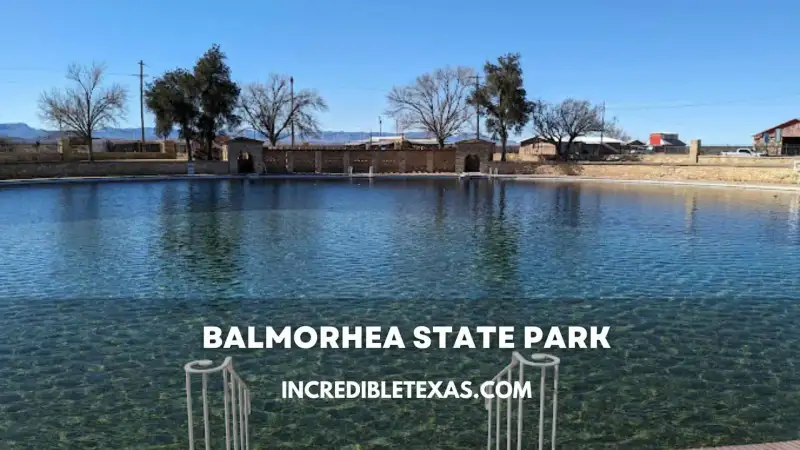
After hiking the arid desert trails of West Texas, cool off at the world’s largest spring-fed swimming pool by reviewing our visitor guide to Balmorhea State Park spring pool.
Frequently Asked Questions
Is Big Bend Ranch State Park worth visiting?
Big Bend Ranch is worth visiting for travelers seeking remote desert solitude, slot canyon hiking, rugged 4WD exploration, and world-class mountain biking along the Rio Grande. It provides a wilder, uncrowded alternative to the national park with over 238 miles of backcountry trails.
What is the difference between Big Bend Ranch State Park and Big Bend National Park?
Big Bend National Park features paved scenic highways, developed visitor centers, mountain lodges, and over 800,000 acres with heavy annual crowds. In comparison, the adjacent state park covers 311,000 primitive acres with minimal pavement, unpaved backcountry roads, and rustic facilities tailored to self-reliant adventurers.
Do you need a four-wheel-drive vehicle for Big Bend Ranch?
Standard passenger cars can easily access trailheads along paved FM 170, including Closed Canyon and the Hoodoos. High-clearance vehicles are strongly recommended for the 27-mile gravel road to Sauceda Headquarters, while true 4WD is mandatory for interior four-wheel-drive trails.
Are dogs allowed on hiking trails in Big Bend Ranch State Park?
Dogs on leashes are permitted on day-use trails along the FM 170 corridor, including the Closed Canyon and Hoodoos trails, as well as within 1/4 mile of designated campsites. Pets are strictly prohibited on all backcountry trails in the park interior to protect desert wildlife.
How much does it cost to enter and camp at the park?
Daily entrance costs $5 per person for adults aged 13 and older, while children 12 and under enter free. Camping fees run $10 nightly for primitive hike-in spots, $12 to $16 nightly for drive-in campsites, and $35 per person nightly for the Sauceda Bunkhouse.