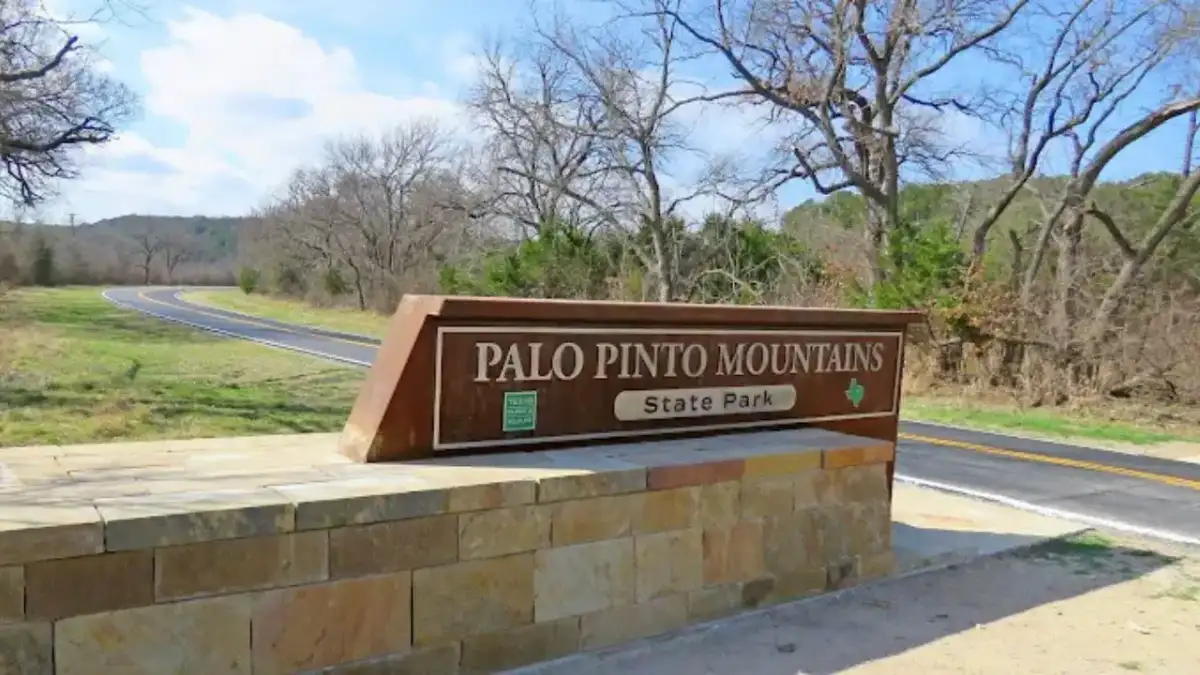
Palo Pinto Mountains State Park spans 4,871 acres of rugged canyon country near Strawn, Texas, marking the first new state park in North Texas in 25 years. Anchored by the 90-acre Tucker Lake, this park provides outdoor travelers with 16 miles of multiuse trails, modern RV campgrounds, equestrian sites, and quiet paddling waters just 75 miles west of Fort Worth.
Key takeaways
- Palo Pinto Mountains State Park spans 4,871 acres near Strawn, open daily from 8:00 AM to 10:00 PM.
- Daily adult entrance fees cost $7, with free admission for children aged 12 and younger.
- Tucker Lake permits non-motorized paddling (kayaks, canoes, paddleboards) and free fishing without a state license; swimming is prohibited.
- More than 16 miles of trails accommodate hikers, trail runners, mountain bikers, horseback riders, and users of loaner all-terrain trackchairs.
- Campgrounds include full water-and-electric RV pads, equestrian sites with corrals, and primitive walk-in backcountry camps.
Park Overview: Entrance Fees, Hours, and Day-Pass Reservations
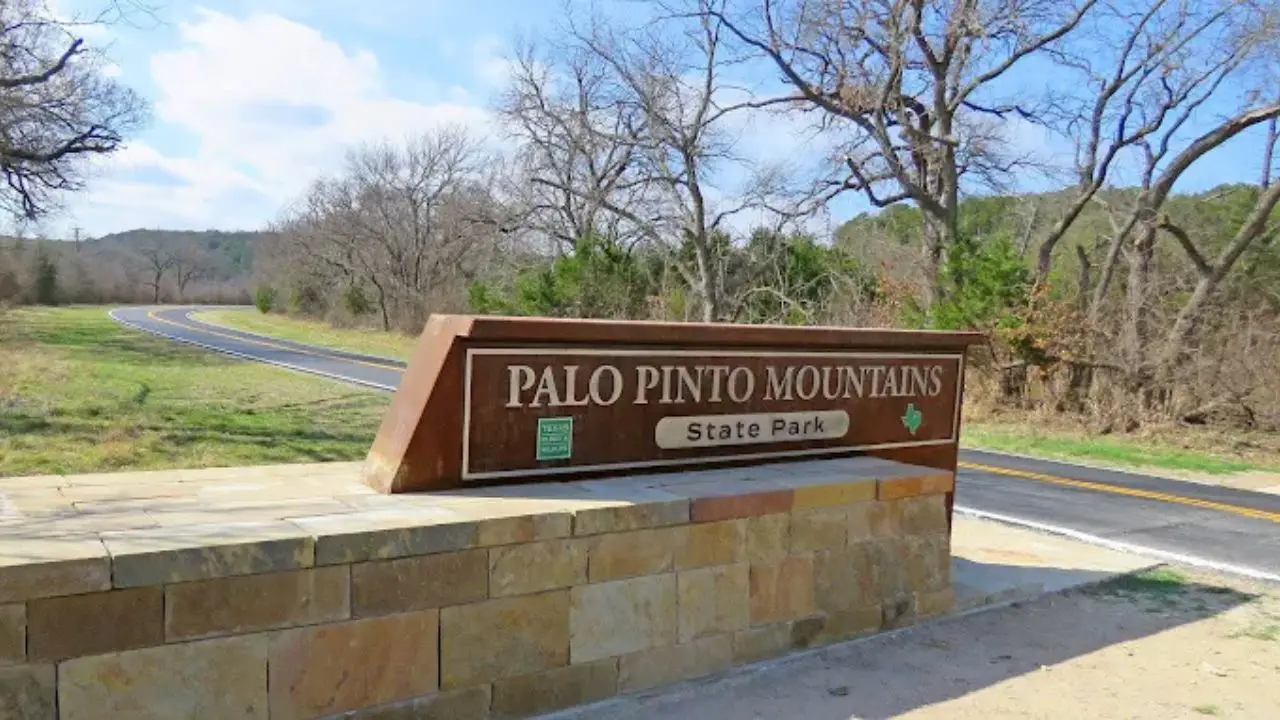
Palo Pinto Mountains State Park operates under the stewardship of the Texas Parks and Wildlife Department Palo Pinto Mountains Guide. The park protects dramatic limestone ridges, deep ravines, and hardwood forests in the Western Cross Timbers ecological region.
Much like reserving day-use permits at Lake Casa Blanca State Park, purchasing advance passes online is essential during holiday weekends. High visitor demand frequently fills day quotas early.
| Facility / Area | Specs / Dimensions | Access Requirements | Fees | Best Activities |
|---|---|---|---|---|
| Tucker Lake | 90-acre impoundment | Non-motorized vessels only; ADA launch | Included with park entry | Kayaking, canoeing, bank angling |
| Multiuse Trail Network | 16 miles total | Hikers, bikers, equestrians | Included with park entry | Ridge hiking, mountain biking, trail rides |
| RV Campgrounds | Concrete pads with 30/50A electric & water | Advance booking recommended | Nightly camp fee + day entry | Family RV camping and trailer trips |
| Equestrian Camp | Oversized trailer spurs with corrals | Negative Coggins documentation | Nightly camp fee + day entry | Horseback pack trips and trail riding |
| Backcountry Camps | Walk-in primitive sites | Multi-mile hike-in; pack-in water | Nightly camp fee + day entry | Backpacking and dark sky stargazing |
Private philanthropy and conservation partnerships funded by the Texas Parks and Wildlife Foundation financed key infrastructure, including the modern park headquarters and accessible visitor paths.
How much is admission to Palo Pinto Mountains State Park?
Standard adult day passes cost $7 per person for visitors aged 13 and older. Children aged 12 and younger receive complimentary admission year-round.
Holders of the Texas State Parks Pass enter without paying the daily fee. The annual pass covers everyone traveling inside the pass holder’s personal vehicle.
How do you book advance day passes and camping permits?
Travelers should reserve entry passes through the official Texas State Parks Reservation Portal. Day-use permits and overnight campsites can be booked up to five months in advance.
Visitors must download or print reservation confirmations before traveling. Mobile cellular service drops significantly along secondary ranch highways approaching Strawn.
Park Location, Driving Directions, and Geography
Palo Pinto Mountains State Park sits along the border of Palo Pinto and Stephens counties, approximately four miles north of the city of Strawn. Its position places wilderness scenery within an easy drive of the Dallas-Fort Worth metro area.
Travelers comparing regional terrain with the wooded lakeside trails at Lake Brownwood State Park will discover steeper ridgelines and rocky bluffs here. Elevations inside the park climb to 1,400 feet above sea level.
How do you get to Palo Pinto Mountains State Park from DFW?
From downtown Fort Worth, drive west on Interstate 20 for approximately 70 miles toward Abilene. Take Exit 361 for Texas State Highway 16 and FM 2372 at Strawn.
Head north through Strawn onto FM 2372 for four miles until reaching the park headquarters. The entire drive from the western edge of the metroplex takes about 75 minutes under normal highway conditions.
What is the landscape of the Western Cross Timbers like?
The Western Cross Timbers region features dense post oak, blackjack oak, and cedar elm woodlands interspersed with tallgrass prairie openings. Limestone outcrops and rocky ravines carve dramatic contours through the landscape.
Deep drainages feed into Russell Creek and Tucker Lake, creating fertile micro-climates that support diverse Texas wildlife. Wild turkeys, white-tailed deer, and foxes frequently forage near park roadsides.
Hiking and Multiuse Trails Across 4,871 Acres
The park maintains 16 miles of interconnected multiuse trails designed to accommodate various activity levels. Crushed stone paths near the headquarters provide easy walking, while backcountry singletrack delivers rocky climbs for experienced hikers.
Trail conditions resemble the rugged escarpments found at Copper Breaks State Park, demanding supportive footwear and extra drinking water. Directional signs mark major trail intersections.
The property also provides nesting territory for rare avian species documented in the TPWD Golden-Cheeked Warbler Conservation Profile. Birders visit during spring breeding months to spot these songbirds in mature Ashe juniper stands.
Which trails are best for hiking, trail running, and mountain biking?
Casual walkers should follow the lakeside nature loop bordering Tucker Lake for gentle elevation grades and open water vistas. Families with young children find this trail approachable and close to parking facilities.
Experienced hikers and mountain bikers prefer the ridge trails climbing the surrounding peaks. These routes feature steep switchbacks, loose limestone, and expansive views across the Cross Timbers valley.
What equestrian amenities and horse trails does the park provide?
Equestrian riders can access designated multiuse bridle paths with wide clearances and natural dirt footing. Trailheads feature dedicated trailer parking zones, mounting blocks, and tie-out posts.
Riders must present proof of a negative Coggins test completed within the past 12 months before unloading livestock. Watering stations and wash racks are available at the equestrian staging camp.
How do the loaner all-terrain trackchairs work for visitors?
The park offers battery-powered, all-terrain trackchairs designed for visitors with mobility impairments. These tracked wheelchairs easily navigate loose gravel, tree roots, and steep grades that standard wheelchairs cannot manage.
Visitors can reserve trackchairs in advance through the park office at no additional cost. Staff members provide operating orientations to ensure safe backcountry exploration.
Tucker Lake Boating, Fishing, and Water Recreation
Tucker Lake is a 90-acre freshwater reservoir situated in the heart of the park. The impoundment provides a quiet venue for low-impact water recreation surrounded by wooded hillsides.
Unlike larger reservoirs like Lake Bob Sandlin State Park, Tucker Lake enforces a strict non-motorized watercraft policy. The absence of motorboat wakes protects shoreline habitats and maintains a quiet atmosphere for paddlers.
Tip
Launch kayaks early in the morning; summer winds across Tucker Lake typically pick up by midday, making return paddling more strenuous.
Can you kayak, canoe, or paddleboard on Tucker Lake?
Yes, visitors may paddle kayaks, canoes, and stand-up paddleboards across Tucker Lake. An ADA-compliant kayak launch with boarding rollers facilitates smooth entries into the water.
Gasoline and electric outboard motors are prohibited on the lake. Paddlers must carry Coast Guard-approved personal flotation devices for all occupants on board.
Is swimming allowed in Tucker Lake?
Swimming is strictly prohibited in Tucker Lake to ensure visitor safety and preserve water clarity. The lake bed contains submerged timber, rocky drop-offs, and deep vegetation that create hazards for swimmers.
Park rangers actively enforce the no-swimming policy. Shaded shoreline picnic pavilions offer comfortable spots to cool off without entering the water.
What fish species can you catch at Tucker Lake?
Anglers targeting Tucker Lake encounter healthy populations of largemouth bass, channel catfish, and bluegill. Submerged rock structures and brush piles create productive habitats along the shoreline.
Under the Texas State Parks free fishing program, anglers do not need a state fishing license when casting from park banks or docks. Catch limits and bag limits remain subject to state conservation rules.
Camping Options: RV Hookups, Equestrian Sites, and Backcountry
Overnight accommodations at Palo Pinto Mountains State Park cater to a broad spectrum of campers. The grounds provide clean restrooms, hot shower houses, and secure utility connections.
Travelers touring North Texas historic sites such as Fort Richardson State Park can use Palo Pinto as a modern base camp. Nighttime skies at the park offer outstanding stargazing free from urban light pollution.
What amenities are included with water and electric RV campsites?
Developed RV sites include 30-amp and 50-amp electrical pedestals, pressurized municipal water hookups, picnic tables, and in-ground campfire rings with cooking grates. Level concrete parking pads easily accommodate large fifth wheels and motorhomes.
A centrally located sanitary dump station serves campers upon departure. Restroom facilities with private showers sit within easy walking distance of each camping loop.
How do you access the hike-in primitive backcountry campsites?
Backpackers can hike into secluded primitive campsites situated several miles along the trail system. These walk-in sites provide natural tent clearings, fire rings, and wilderness solitude away from developed roads.
Campers must pack in all drinking water, food, and emergency supplies. Ground campfires may be restricted during seasonal burn bans, making portable backpacking stoves mandatory gear.
Frequently Asked Questions About Palo Pinto Mountains State Park
Is Palo Pinto Mountains State Park open to the public?
Yes, Palo Pinto Mountains State Park opened to the public for daily use and camping. Day-use visitors may enter the park between 8:00 AM and 10:00 PM.
Where is Palo Pinto Mountains State Park located?
The park is located near Strawn, Texas, approximately 75 miles west of Fort Worth in Palo Pinto and Stephens counties, easily reached via Interstate 20 and FM 2372.
How big is Palo Pinto Mountains State Park?
The park spans 4,871 acres of protected hills, canyons, and oak woodlands, surrounding the central 90-acre Tucker Lake reservoir.
Does the park offer RV hookups?
Yes, developed campgrounds feature full water and 30/50-amp electric hookup sites with concrete pads designed to accommodate large travel trailers and motorhomes.
Do you need a fishing license to fish at Tucker Lake?
No fishing license is required when fishing from the shoreline or from non-motorized boats on Tucker Lake, under Texas State Parks free fishing in parks regulations.