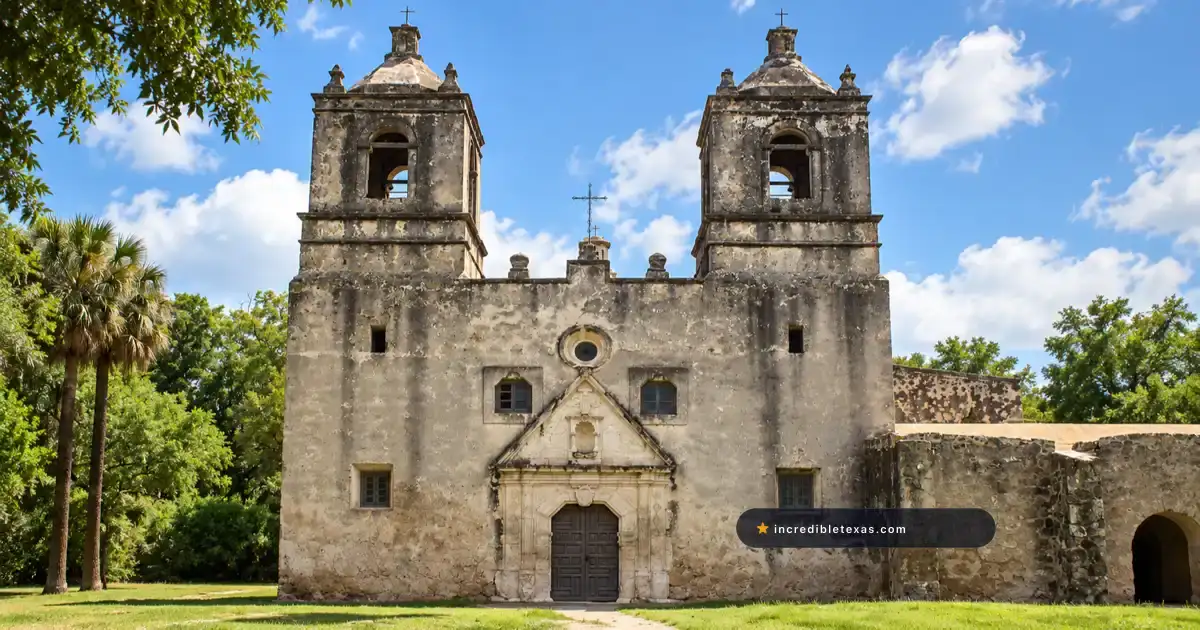
Mission Concepcion in San Antonio TX stands three miles south of downtown as the oldest unrestored stone church in the United States. Dedicated in 1755 and inscribed as a UNESCO World Heritage Site, this active Catholic parish preserves original 18th-century Spanish colonial frescoes, remarkable solar alignments, and deep Texas revolutionary history.
This comprehensive guide covers everything travelers need to plan an engaging visit, from weekend worship hours to architectural highlights and walking logistics.
Key takeaways
- Mission Concepcion San Antonio offers free admission and free public parking daily from 9:00 AM to 5:00 PM as part of San Antonio Missions National Historical Park.
- Dedicated in 1755, the sanctuary is recognized as the oldest unrestored stone church in the United States, having never collapsed or required full structural rebuilding.
- The interior convento and library preserve authentic 18th-century Spanish colonial frescoes, including the famous Eye of God ceiling mural painted with natural mineral pigments.
- A rare double solar illumination occurs annually on August 15 and in late April, projecting dual beams of sunlight across the sanctuary altar and the image of the Virgin Mary.
- The mission remains an active Catholic parish under the Archdiocese of San Antonio, offering weekly Sunday Masses at 10:00 AM (bilingual) and 12:00 PM (English).
Mission Concepción at a Glance: Oldest Unrestored Stone Church
Mission Nuestra Señora de la Purísima Concepción de Acuña is one of five Spanish colonial missions established along the San Antonio River basin during the 18th century. Unlike other regional landmarks that suffered catastrophic roof collapses or required 20th-century reconstruction, this church looks virtually identical to the day friars dedicated it in 1755.
The site is located at 807 Mission Road in south San Antonio, positioned along the landscaped San Antonio River corridor. Official preservation credentials and historical park boundaries are detailed through the NPS World Heritage Site San Antonio Missions Profile.
Touring this sanctuary offers an essential cultural experience when exploring things to do in San Antonio. Travelers can walk along the church perimeter, examine surviving convento arches, and step into an authentic colonial interior.
| Feature / Area | Historical Date | Current Function | Public Access | Notable Detail |
|---|---|---|---|---|
| Main Church Sanctuary | Dedicated in 1755 | Active Catholic church | Daily 9:00 AM–5:00 PM | Cruciform nave under a 50-foot stone dome |
| Convento & Cloister | Completed c. 1750 | Museum & historical display | Included with free park entry | Contains surviving 18th-century wall frescoes |
| Twin Bell Towers | Constructed 1731–1755 | Architectural facade | Visible from exterior grounds | Carved quarry stone with Moorish geometric cutouts |
| Quarry Site | Active 1730s–1750s | Interpretive trail stop | Self-guided grounds walk | Source of soft tufa limestone used for the church |
| Mission Reach Trail | Modern parkway | Paved pedestrian/bike route | Open 24/7 daylight hours | Connects 8 miles of historic river parkway |
Historical Origins and the 1835 Battle of Concepción
The community was originally founded in 1711 in East Texas before Spanish authorities relocated the settlement westward to the San Antonio valley in 1731. The complex provided sanctuary for Coahuiltecan hunter-gatherers seeking protection from hostile nomadic raiders and European diseases.
In addition to its religious mission, the property witnessed crucial military combat that shaped the Battle of Concepcion history. On October 28, 1835, the grounds served as the battlefield for the opening major engagement of the Texas Revolution.
A scouting detachment of 90 Texians, commanded by James Bowie and James Fannin, found themselves surrounded by 400 Mexican troops in heavy morning fog. Official battle dispatches and casualty figures are archived through the Texas State Historical Association Battle of Concepcion Record.
Taking defensive positions in a horseshoe bend of the river, Texian riflemen utilized superior long-range marksmanship to repel three cavalry charges and capture a Mexican cannon. This victory provided crucial momentum leading to the famous siege of the Alamo in San Antonio.
Architecture, Spanish Colonial Baroque Style, and Preservation
The sanctuary represents an exceptional example of Spanish Colonial Baroque architecture. Built over two decades, the church features massive four-foot-thick walls constructed from porous local tufa limestone resting directly on solid rock foundations.
The design utilizes a classic Latin cross floor plan crowned by a 50-foot dome. Unlike modern framed buildings, the vaulted ceilings and dome were constructed entirely of cut stone blocks joined with lime mortar.
To maintain self-sufficiency, indigenous laborers dug acequias to irrigate community bean, corn, and squash fields. The engineering behind these gravity-fed canals is documented in the NPS San Antonio Missions Acequia History archive.
Visitors who appreciate stone carving should also plan an excursion to see the sculpted Rose Window at Mission San José in San Antonio. While San José highlights ornate decorative stone carvings, Concepción emphasizes structural geometry as the oldest unrestored stone church America preserves from the Spanish colonial period.
Surviving 18th-Century Frescoes and the Eye of God
Among the historic San Antonio missions Mission Concepcion holds the rarest collection of surviving colonial artwork. During the 18th century, both the exterior walls and interior chambers were covered in vivid plaster murals painted with red, yellow, and blue mineral pigments.
While exterior facade colors faded from centuries of weather exposure, protected interior rooms retain authentic Mission Concepcion frescoes. In the convento library and father president’s office, visitors can still admire painted floral borders, crosses, and chevron motifs.
The most famous painting is the Eye of God fresco adorning the ceiling of the convento. The mural depicts an all-seeing eye surrounded by radiant light rays, with facial features bearing a distinctive mustache and goatee.
Historians believe indigenous artists blended European Catholic iconography with local stylistic elements, creating a unique visual record of colonial exchange. Today, National Park Service conservators maintain precise climate control to prevent humidity from eroding these historic pigments.
Witnessing the Biannual Double Solar Illumination Event
Twice each year, astronomical geometry produces the famous double solar illumination Mission Concepcion event inside the sanctuary.
Franciscan builders intentionally calculated the building’s alignment with seasonal sun paths. On August 15, the Feast of the Assumption of Mary, sunlight passes through the circular oculus window above the front entrance at approximately 6:30 PM.
Simultaneously, a second sunbeam enters through an aperture in the high drum of the central dome. One shaft of light illuminates a painting of the Virgin Mary, while the other strikes the exact center of the altar floor.
A secondary solar alignment occurs around late April, offering photographers and pilgrims two yearly windows to view this spectacle. The alignment served as a powerful visual teaching tool during colonial Masses, illustrating divine radiance to indigenous worshippers.
Mass Schedules, Active Parish Life, and Visitor Guidelines
Unlike decommissioned historical monuments, this property continues to operate as an active parish community under the Archdiocese of San Antonio.
Checking Mission Concepcion mass times allows travelers to plan an inspiring visit during weekend worship. The parish conducts bilingual Sunday Mass at 10:00 AM, combining English and Spanish liturgy, followed by an English Sunday Mass at 12:00 PM.
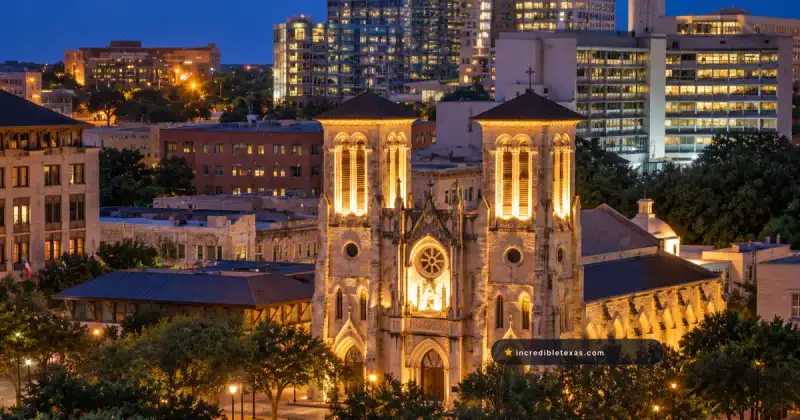
Worshipers and history lovers can compare this mission’s spiritual heritage with the gothic beauty of downtown’s historic San Fernando Cathedral. Arriving at least 15 minutes before Mass is recommended, as seating fills quickly.
Visitors touring outside of service times are welcome to step inside the church nave to pray, reflect, or admire the architecture. Flash photography and loud conversations are prohibited inside the sanctuary to maintain a respectful atmosphere.
Visitor Logistics: Hours, Parking, and Mission Reach Trail
Reviewing Mission Concepcion hours and admission ensures an easy arrival for families and solo travelers. The national historical park grounds open daily from 9:00 AM to 5:00 PM, maintaining standard operating hours throughout the year.
Admission to the church, grounds, and ranger programs is completely free. Dedicated paved parking is available on-site at no cost, with accessible spaces located adjacent to the visitor contact station. Official park regulations and alerts are provided on the National Park Service Mission Concepcion Portal.
National Park Service rangers conduct complimentary 45-minute walking tours daily at 10:00 AM, meeting near the visitor center. Self-guided explorers can download the official NPS mobile app to access interactive audio narration.
The mission connects directly to the Mission Reach river trail, an 8-mile paved hike-and-bike path that links all four historical park missions along the San Antonio River. B-Cycle automated rental stations are available along the trail for travelers touring on two wheels.
After exploring the mission grounds, visitors can continue north along Broadway to study regional Texas natural history and frontier heritage at the Witte Museum in San Antonio.
Frequently Asked Questions About Mission Concepción
What is Mission Concepción famous for?
Mission Concepción is famous as the oldest unrestored stone church in the United States, having stood intact since its dedication in 1755. It is also celebrated for its surviving colonial frescoes, rare double solar illumination, and its role as the site of the 1835 Battle of Concepción.
Is Mission Concepción still an active church?
Yes, Mission Concepción is an active Catholic parish operating under the Archdiocese of San Antonio. It conducts regular Sunday worship services, including a bilingual Mass at 10:00 AM and an English Mass at 12:00 PM.
How much does it cost to visit Mission Concepción?
Admission to Mission Concepción and the surrounding national historical park grounds is completely free of charge. On-site vehicle parking and ranger-guided walking tours are also provided at no cost to the public.
Can you see original frescoes at Mission Concepción?
Visitors can view original 18th-century Spanish colonial frescoes preserved within the convento rooms, library, and nave. The most famous surviving painting is the ‘Eye of God’ ceiling fresco, created using natural mineral pigments and goat milk binder.
When does the double solar illumination occur?
The double solar illumination takes place annually on August 15 (Feast of the Assumption) and around late April. At approximately 6:30 PM, sunlight streams through the facade oculus and dome windows to illuminate both the altar and a painting of the Virgin Mary.
How far is Mission Concepción from the Alamo?
Mission Concepción is located approximately three miles south of the Alamo and downtown San Antonio. Visitors can reach the site in less than ten minutes by car or via a scenic 20-minute bicycle ride along the paved Mission Reach river trail.