Lake Mineral Wells State Park Guide: Trails, Camping & Climbing
At Lake Mineral Wells State Park, you move from a 640-acre lake to Penitentiary Hollow’s sandstone walls in minutes, then out onto a 20-mile Trailway that still follows the old railroad route.
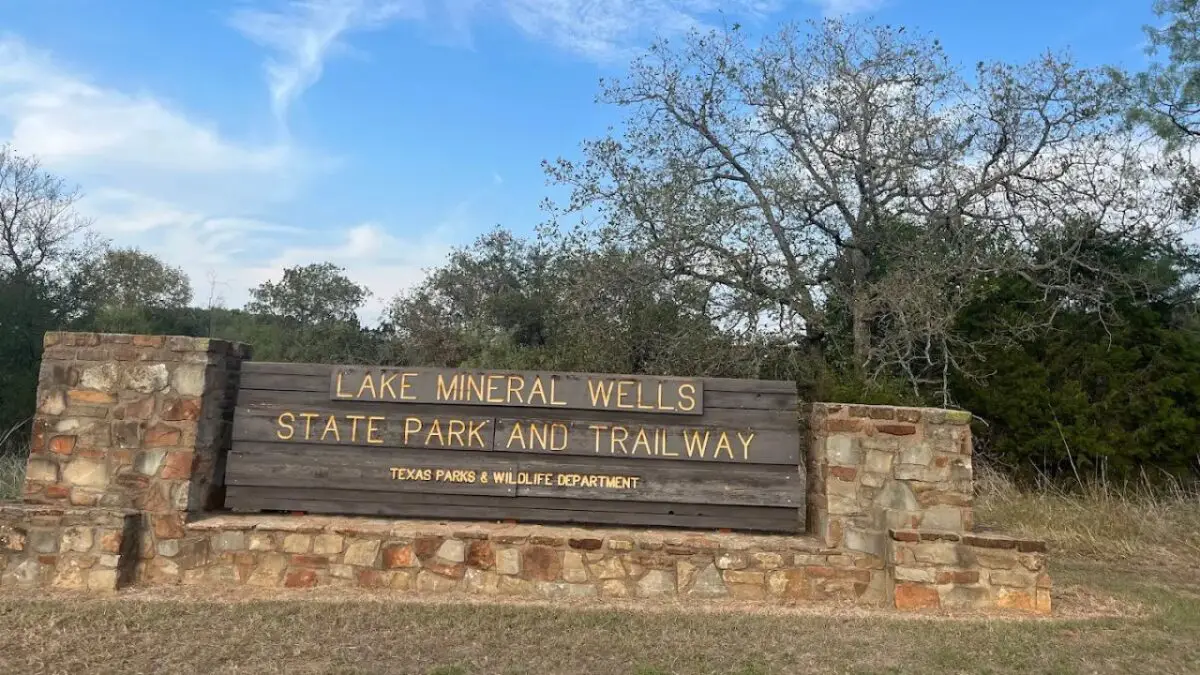
TPWD’s map page places the park at 100 Park Road 71 in Mineral Wells, four miles east of Mineral Wells or 14 miles west of Weatherford on Highway 180, and the same page lists the park at 3,282.5 acres. It opens daily from 6 a.m. to 10 p.m., and adult entry is $7.
At the time of writing, TPWD’s current park notice says the rock-climbing area, primitive camping, and Cross Timber Trails are closed while the Trailway remains open. If you like the easy, reservation-friendly setup at Lake Arrowhead State Park, you’ll recognize the appeal here too.
Lake Mineral Wells State Park hours, fees and current status
TPWD’s map page places the Lake Mineral Wells State Park at 100 Park Road 71 in Mineral Wells, four miles east of Mineral Wells or 14 miles west of Weatherford on Highway 180. The same page lists the park at 3,282.5 acres, which helps explain why the lake, trailway, camping loops, and climbing area all feel spread out in a good way.
TPWD’s entrance-fees page shows daily entry at $7 for adults 13 and older and free entry for children 12 and under. The same page says the Texas State Parks Pass is $70 per year, which matters if you plan to make more than one trip into north Texas state parks this year.
| Quick fact | Current value | Source |
|---|---|---|
| Park address | 100 Park Road 71, Mineral Wells, TX 76067 | TPWD map page |
| Park size | 3,282.5 acres | TPWD history page |
| Hours | Open daily, 6 a.m. to 10 p.m. | TPWD map page |
| Adult entry | $7 | TPWD entrance-fees page |
| Child entry | Free for age 12 and under | TPWD entrance-fees page |
| Busy season | Mid-March through mid-November | TPWD map page |
| Current notice | Rock climbing area, primitive camping, and Cross Timber Trails closed; Trailway open | TPWD map page |
| Pass option | Texas State Parks Pass: $70 per year | TPWD entrance-fees page |
Current alert: TPWD’s March 11, 2026 park notice says the rock-climbing area is closed, primitive camping is closed, and Cross Timber Trails are closed. The Trailway is open, so you can still plan a hike or ride if those closures affect your trip.
If you want to stay later than 10 p.m. without a campsite, TPWD charges a $3 overnight activity fee per person for fishing, stargazing, and other late visits. Decide early whether you want a day trip, a campsite, or a late-night outing before you drive out.
Lake Mineral Wells State Park camping options
You can sleep here in RV sites, water-only tent sites, screened shelters, equestrian sites, primitive hike-in sites, or one of the park’s larger group spaces, and Lake Brownwood State Park gives you a useful comparison for historic Texas park lodging. TPWD’s campsites page, screened-shelters page, and group-facilities page give you the full lineup.
| Overnight option | Sites / capacity | Nightly rate | Best fit |
|---|---|---|---|
| 50-amp campsites | 47 sites | $30 | Large RVs and campers who want hookups |
| 30-amp campsites | 30 sites | $24 | Smaller RVs and utility-conscious setups |
| Water campsites | 11 sites | $16 | Tents, vans, and lighter car-camping rigs |
| Equestrian water sites | 20 sites | $16 | Horse camping with pull-off parking |
| Screened shelters | 15 shelters | $36 | Groups that want a roof, electricity, and less setup |
| Primitive hike-in sites | Hike-in area | $10 | Backpackers who do not mind the walk |
The Live Oak, Plateau, Post Oak, and Cross Timbers camping areas each solve a different problem, so your best choice depends on how much comfort you want versus how close you want to feel to the lake or trail system. If you are driving a bigger rig, the 50-amp sites make the most sense, while the water-only sites are the better call if you want a simpler tent weekend.
Which campsite type should you book for a weekend trip?
Book the 50-amp sites if you want the most convenient RV setup, because TPWD lists 47 of them and notes that Sites 48 and 54 are wheelchair accessible. The 30-amp and water-only sites work better when you want to stay close to the basics without paying for more hookup than you will use.
The equestrian sites are the most specialized choice, because TPWD allows non-equestrian tent camping and small trailers of 20 feet or less there too. That flexibility matters if your group mixes riders and non-riders, or if you want one campsite type that does not force everyone into a rigid campground loop.
Are the screened shelters worth it in summer?
The screened shelters are worth it when you want more comfort than tent camping but less commitment than an RV site, because TPWD lists electricity, nearby water, restrooms, and showers for $36 nightly. They also give you a better buffer from heat and bugs than a standard tent, which makes them an easy recommendation for shoulder-season stays.
You cannot bring pets into the shelters, so they are best when your group values a simple roof and a hard floor more than total flexibility. If you want a bigger shared space, this park gives you a different experience from other historic lake lodges, but the 75-person Group Hall with Kitchen and the Lone Star Amphitheater still make it useful for reunions and clubs.
Lake Mineral Wells State Park trails and Trailway
TPWD’s trails-info page lists more than 11 miles of park trails, and the Trailway page adds a 20-mile corridor between Mineral Wells and Weatherford. That combination gives you a short shoreline walk, a harder Cross Timbers hike, or a full rail-trail outing without leaving the same park system.
| Trail | Distance | Time | Difficulty | What you see |
|---|---|---|---|---|
| Red Waterfront Trail | 0.8 mi | 45 min | Moderate | Penitentiary Hollow and the lake edge |
| Blue Waterfront Trail | 1.5 mi | 1 hr | Moderate | The western edge, shelters, and camping loops |
| Primitive Camping Trail | 2.0 mi | 1.5 hrs | Moderate | Steep, rocky Cross Timbers forest |
| Cross Timbers Black Trail | 2.3 mi | 2 hrs | Easy | Lost Lake wetlands and old Fort Wolters buildings |
| Cross Timbers Green Trail | 1.5 mi | 1 hr | Easy | Grassland savanna and changing plant communities |
| Cross Timbers Yellow Trail | 1.6 mi | 1.25 hrs | Easy | An old paved military road |
| Cross Timbers Maroon Trail | 2.2 mi | 1.75 hrs | Moderate | A ridge overlook and valley drop |
| Trailway Spur | 0.6 mi | 30 min | Moderate | Connection to the larger Trailway network |
The trail mix here is unusually practical, because you do not have to commit to a long hike just to get a worthwhile view. You can stay close to the lake on the waterfront trails, head into the Cross Timbers when you want shade and texture, or ride the Trailway when your goal is distance rather than elevation.
Which Lake Mineral Wells trail should you hike first?
Start with the Red Waterfront Trail if you want the fastest route to Penitentiary Hollow, because the 0.8-mile path gives you a direct look at the park’s most dramatic rock feature. If you want a calmer first walk, the Blue Waterfront Trail keeps you near the camping loops and lake edge without asking for much more time.
The Cross Timbers Black and Green trails are the easiest choices when you want low effort and a better chance of spotting wildlife or Fort Wolters remnants. If you only have an hour, the Red Trail gives you the most efficient “park in miniature” experience.
How the 20-mile Trailway connects Mineral Wells and Weatherford
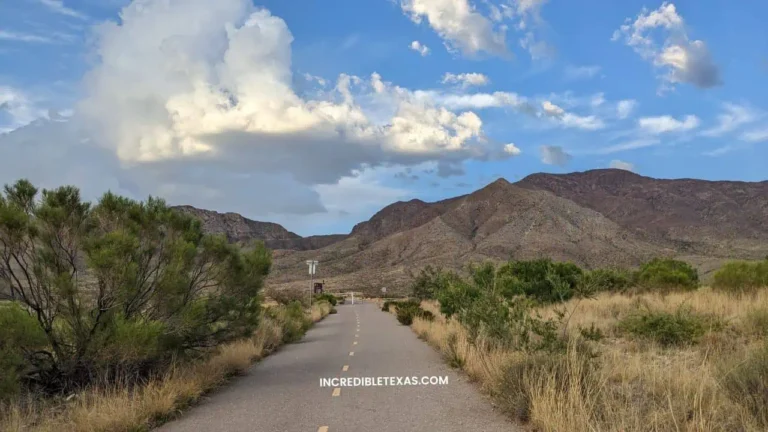
The Trailway follows the former Weatherford, Mineral Wells & Northwestern Railroad, so your walk or ride traces the route that once moved people and freight through the western Cross Timbers.
If you want another trail-centered Texas state park for later, Copper Breaks State Park makes a solid next stop. TPWD’s trailway page breaks the route into segments and notes 5.8 miles from downtown Mineral Wells to the state park, 3.1 miles from the park to Garner, and 10.9 miles from Garner to Weatherford.
The grades stay gentle enough for a relaxed ride, but the corridor still has enough history to keep the trip interesting if you like old transportation routes.
Rock climbing at Penitentiary Hollow
Penitentiary Hollow is one of the few natural rock-climbing venues in North Texas, and its sandstone walls give you a real outdoor climbing experience instead of a simulated one. TPWD’s rock-climbing page says the routes are map-based, the climbing area closes at sundown, and the hollow is the only place where climbing and rappelling are allowed.
Current alert: The climbing area is closed on the current park notice, so you should call headquarters before you pack ropes, shoes, and belay gear.
The closure matters because Penitentiary Hollow is also the park’s most rule-heavy experience, which makes it a better destination when you want to plan ahead instead of improvising. If you arrive without checking the notice, you may get the hike but miss the climb.
What makes Penitentiary Hollow different from other Texas climbing spots?
You climb here inside a sandstone amphitheater that TPWD calls one of the few natural climbing venues in North Texas. That means the setting feels more like a geologic feature with climbing lines than a park wall with added bolts.
The hollow also sits close enough to the rest of the park that you can combine a climbing day with a short waterfront trail, which keeps the outing efficient. If you like that kind of compact adventure, the route map and the Red Waterfront Trail give you a strong pairing.
What are the Lake Mineral Wells climbing rules right now?
TPWD says all climbers and rappellers must register at park headquarters, sign a liability release each visit, and be at least 17 unless a parent or legal guardian is present or written permission is provided. The same page says only approved guide services can lead groups here, and the park does not allow free climbing, soloing, or bouldering.
TPWD also closes the area at sundown and under wet conditions, which means weather can change your plan even when the route map looks perfect. You should treat Penitentiary Hollow as a scheduled activity, not a spontaneous stop, and keep the park phone number handy before you leave home.
Fishing, boating and swimming at Lake Mineral Wells State Park
You can fish from shore, one of the six piers scattered around the lake, or a boat, and TPWD says you do not need a fishing license inside the park. The main park page also says the lake covers 640 acres and supports catfish, crappie, sunfish, bluegill, and largemouth bass.
If you want a different shoreline comparison later, Lake Casa Blanca State Park gives you another no-license lake option with a different city setting.
Boating is straightforward here, because the park has a boat ramp and the park store can rent canoes, kayaks, and paddle boards. TPWD also says no skiing, tubing, or jet skis are allowed, which keeps the water calmer than many North Texas reservoirs.
Can you fish without a license here?
Yes, you can fish without a license when you stay within the park boundary and cast from shore or a pier. TPWD also runs a Tackle Loaner Program, so you can borrow rods, reels, and tackle boxes if you want to travel light or introduce someone to fishing without buying gear first.
The six piers make that easy to turn into a one-stop plan, because you can park, walk, cast, and break for lunch without needing a boat. If you want the simplest first try, the piers are the most forgiving place to begin.
What should you know before you swim or launch a boat?
The lake has a boat ramp and a relaxed recreational feel, but you still need to respect the fact that TPWD does not station lifeguards at the swimming area. That makes the shoreline better for confident swimmers and families that are willing to watch the water closely.
If you plan to stay late for a swim, fish, or stargazing session, build the $3 overnight activity fee into your plan unless you already have a campsite. That small detail is easy to miss, but it matters when you are deciding whether a long evening makes sense.
The history behind Lake Mineral Wells State Park
The park’s story starts with Rock Creek, ranching, and Mineral Wells’ famous mineral-water boom, and TPWD’s history page lays out that backstory clearly. James Alvis Lynch drilled a well in 1880, the water developed a reputation for healing, and Mineral Wells grew into a health resort long before the land became a state park.
The lake itself was finished in 1922, Fort Wolters changed the surrounding area during World War II, and the land was eventually donated to Texas Parks and Wildlife in 1975. The park then opened on July 1, 1981, which gives the site a newer public-recreation identity wrapped around a much older regional story.
How did Mineral Wells become a park town?
The town’s identity grew from the belief that the local well water could heal people, and that reputation drew visitors from far beyond Palo Pinto County. Once people started coming for the water, the city built more infrastructure around that demand, and the area never fully lost its wellness-centered character.
That is why the park still feels connected to downtown Mineral Wells rather than separated from it, especially when you pair a trail visit with a walk through the resort-town district. The history gives the park a stronger sense of place than a simple lake stop usually gets.
What does the Trailway tell you about Fort Wolters and the old railroad?
The Trailway follows the old railroad corridor that once served western development, so your ride follows the same broad shape that shaped the local economy. TPWD also notes former Fort Wolters influence along the route, which helps explain why you still see military-era clues alongside the rail-trail scenery.
If you like the historic park atmosphere at Lake Brownwood State Park, this side of Mineral Wells gives you a different but equally strong blend of outdoor use and historical context. The main difference is that you get a rail corridor and a climbing hollow here instead of CCC cabins and a reservoir-side lodge.
How to plan your visit to Lake Mineral Wells State Park
Spring and fall give you the friendliest weather, because TPWD lists April and May as the wettest months and says the first freeze usually arrives in mid-November. July averages a 98-degree high, so the exposed trailway and lake shore demand a lot more water and shade planning than the cooler months do.
You can reduce the friction by reserving day use or camping online, then deciding whether you want to build the trip around the lake, the trailway, the climbing hollow, or all three, and Lake Bob Sandlin State Park gives you another lake-and-camping option for a future weekend. That is the easiest way to avoid arriving during a capacity day and having to improvise a backup plan.
What should you pack for a day on the trail?
Bring a quart of water per hour of trail activity, plus sunscreen, insect repellent, and hiking shoes that handle rough ground. TPWD also recommends a helmet for biking, telling someone where you are going, and staying on marked trails because sun, wildlife, and uneven terrain all show up here.
If you plan to climb, add your route map, your release paperwork, and a weather check before you leave home. Wet conditions can close Penitentiary Hollow even when the rest of the park is still usable.
When should you book camping or day use?
Book early for spring break, holiday weekends, and anything in the mid-March through mid-November busy season, because TPWD says the park often reaches capacity. If you want a later evening without a campsite, remember the $3 overnight activity fee, and if you need a larger shared space, the Group Hall with Kitchen and Lone Star Amphitheater both need separate reservations.
If you are deciding between a couple of parks, the choice usually comes down to what matters most on this trip: hiking, climbing, lake access, or a combination of all three. Lake Mineral Wells works best when you arrive with a clear plan instead of trying to do everything at once, and Lake Bob Sandlin State Park gives you another lake-and-camping option for a future weekend.
Frequently Asked Questions About Lake Mineral Wells State Park
Is Lake Mineral Wells State Park good for beginners?
Yes, it is a good beginner park because you can choose easier paths like the Cross Timbers Green Trail, the Cross Timbers Black Trail, or shorter Trailway segments without committing to a long hike. The screened shelters and shore fishing also make it easier to plan a low-stress first visit.
If you want another beginner-friendly lake-and-trail comparison later, Lake Colorado City State Park gives you a simpler West Texas version of that day-trip formula.
Do you need a fishing license at Lake Mineral Wells State Park?
No, you do not need a fishing license when you fish from the shore or a pier inside the park. TPWD also lends rods, reels, and tackle boxes, so you can show up with very little gear and still spend a full afternoon fishing.
Can you camp with horses at Lake Mineral Wells State Park?
Yes, TPWD lists 20 equestrian water sites in the Cross Timbers Camping Area. You need a negative Coggins test less than 12 months old, and TPWD says you should use a string line instead of tying horses to trees or shrubs.
How long is the Lake Mineral Wells Trailway?
The Trailway is 20 miles long and connects Mineral Wells with Weatherford along the old railroad corridor. TPWD also breaks out shorter segments, so you can choose a short out-and-back instead of committing to the full distance.
Is Penitentiary Hollow open right now?
At the time of writing, TPWD’s current park notice says the climbing area is closed. Because closures can change with weather and safety conditions, you should check the park notice or call headquarters before you drive out with climbing gear.
Does Lake Mineral Wells State Park have cabins?
No cabins are listed on the current TPWD facilities pages for this park. Instead, you get screened shelters, RV sites, water sites, equestrian sites, primitive hike-in sites, and larger gathering spaces like the Group Hall with Kitchen and the Lone Star Amphitheater.