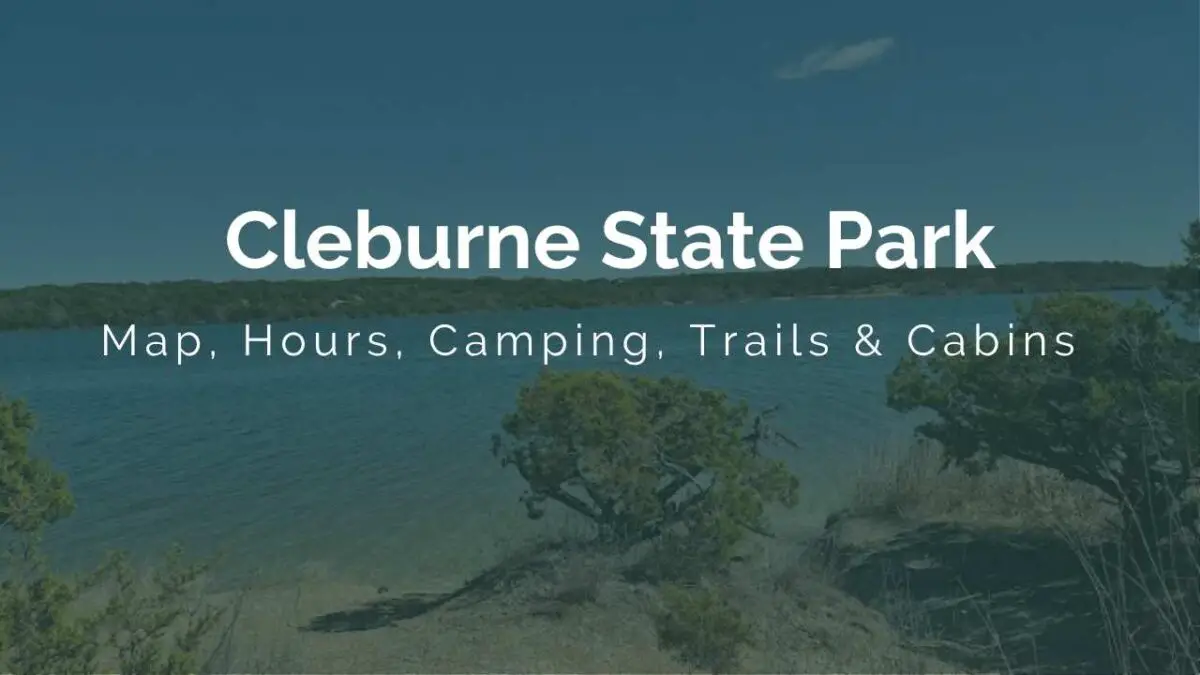
Cleburne State Park: Map, Hours, Camping, Trails & Cabins
Cleburne State Park is a spring-fed Cedar Lake park southwest of Fort Worth that works well for day-use trips, camping, cabins, trail time, and easy water access. Travelers comparing it with the wider best state parks near Dallas and Fort Worth will find a park that is close enough for a quick escape but large enough for a full weekend.
TPWD’s official park pages place Cleburne State Park at 5800 Park Road 21, list daily hours from 7 a.m. to 10 p.m., and set the adult day-use fee at $6.
The park often reaches capacity, so reservations matter for both camping and day use, especially in the busy spring and summer season.
For visitors building a North Texas outdoor shortlist, Cleburne fits neatly beside the broader top 10 best state parks in Texas roundup because it delivers the core state-park mix in a compact, easy-to-use setting.
| Quick fact | Cleburne State Park |
|---|---|
| Official name | Cleburne State Park |
| Address | 5800 Park Road 21, Cleburne, TX 76033 |
| County | Johnson County |
| Park size | 528 acres |
| Lake size | 116 acres |
| Hours | Open daily, 7 a.m. to 10 p.m. |
| Adult entry | $6 per person |
| Child entry | Free for ages 12 and under |
| Texas State Parks Pass | $70 per year |
| Best known for | Cedar Lake, trails, fishing, cabins, screened shelters, and CCC-built features |
| Current fire note | Burn ban in effect; wood and charcoal fires are not allowed |
| Reservation note | TPWD highly recommends reservations for day use and camping |
Cleburne State Park quick facts for planning a visit
Cleburne State Park Map, Hours, Fees, and Reservations
The official TPWD map page places Cleburne State Park about 10 miles southwest of Cleburne, with access from Highway 67 South and Park Road 21. That route keeps the park straightforward for drivers coming from Fort Worth, Dallas, or the surrounding Johnson County area.
TPWD lists the park address as 5800 Park Road 21, Cleburne, TX 76033, and the park headquarters phone number is (817) 645-4215.
Cleburne State Park open hours are 7 AM to 10 PM daily and the park often reaches capacity. Reservations are the safest way to handle both day-use and overnight plans.
TPWD’s entrance fees page confirms the $6 adult entry fee, free admission for children 12 and under, and the $70 Texas State Parks Pass.
The park is also under a burn ban right now. TPWD’s park alert page says no open, ash-producing fires are allowed, including wood or charcoal, and propane-style containerized fuel stoves are permitted for cooking only.
Spring and summer are the busiest seasons.
Weekday mornings and late afternoons usually leave more room for short lake walks and trail loops.
| Planning detail | Current information | Why it matters |
|---|---|---|
| Open hours | Daily, 7 a.m. to 10 p.m. | Useful for early trail starts and evening lake visits |
| Adult entrance fee | $6 | Simple daily pricing for quick visits |
| Child entrance fee | Free for ages 12 and under | Makes family visits more affordable |
| Reservation advice | Highly recommended | Helps avoid capacity issues on busy days |
| Burn ban | Wood and charcoal fires are not allowed | Changes picnic and campsite cooking plans |
| Busy season | Spring and summer | Best to book earlier for weekend visits |
Cleburne State Park logistics from TPWD
Cleburne State Park often reaches capacity, and weekday mornings or late afternoons usually leave more room for short lake walks and trail loops.
What to Do on Cedar Lake
Cedar Lake is the heart of Cleburne State Park. TPWD describes it as a clear, spring-fed 116-acre lake with swimming, fishing, canoeing, kayaking, boating, and no-wake access, which gives the park a strong water-first identity without the crowds of a larger reservoir park.
The park also has a boat ramp and a covered fishing pier with ADA parking.
Anglers can fish from the ADA-accessible covered pier, and TPWD says no fishing license is required inside the park.
The official lake page lists largemouth bass, channel catfish, crappie, and sunfish as the main species.
Travelers comparing the lake experience with other Texas water destinations can use the best lakes in Texas guide.
The pier habitat structure was funded by a TPWD State Parks Grant in 2016, and the Waco Inland Fisheries District helped assemble habitat around it.
TPWD says the park has a boat ramp, allows no-wake boating, and does not allow personal watercraft such as jet skis. The Cedar Lodge day-use area also has a self-service kiosk that rents single kayaks, double kayaks, and paddle boards, which means visitors can still get on the water without hauling their own gear.
The accessibility page adds one more practical detail: the fishing pier has ADA parking and a wheelchair-accessible ramp from the parking lot. Cedar Lodge restrooms and the day-use area restrooms are the most wheelchair-friendly in the park, which helps the lake area work for a wider range of visitors.
| Water activity | Official status | Planning note |
|---|---|---|
| Fishing | Allowed without a license inside the park | Covered fishing pier is ADA accessible |
| Swimming | Allowed | Cedar Lake Beach is the main swim area |
| Canoeing and kayaking | Allowed | Single and double kayaks are available from the kiosk |
| Paddle boarding | Allowed | Rental boards are available from the same kiosk |
| Motor boating | No-wake only | Keep speeds low and avoid wake |
| Personal watercraft | Not allowed | Jet skis are not permitted on the lake |
Cedar Lake water rules and activity options
The lake also shapes the pace of the park. A short swim, a pier session, or a slow paddle can stand on its own.
Longer visits usually fold in a hike or a campsite check-in later in the day.
Travelers who want a river-and-cliffs benchmark for comparison can also look at Dinosaur Valley State Park camping cabins, which offers a very different kind of water-focused Texas park day.
Trails, Biking, and CCC Landmarks
TPWD says Cleburne State Park has nearly 13 miles of trails, and the terrain ranges from easy to strenuous. The trails move through cedar brakes, limestone hills, and shoreline views, so the park can support a casual family walk or a more demanding bike loop.
The official trails information page lists the Camp Creek Loop, Fossil Ridge Trail, White-tail Hollow Trail, Spillway Trail, Coyote Run Nature Trail, Limestone Ridge Trail, Inner Loop Trail, and several short fishing trails.
TPWD also offers an interactive trails map and a downloadable PDF map for route planning.
Mountain bikers get a six-mile loop with downhills, smooth flats, and wooded sections. Hikers get shorter loops that can be combined into a longer day, while the fishing trails create quick access points along Cedar Lake for bank anglers who want to stay close to the water.
The best-known landmark is the hand-carved CCC spillway, which the park highlights as a three-tiered limestone feature.
Spring rains can make the spillway look almost waterfall-like, and the Spillway Trail is the best route for that view.
TPWD’s calendar page uses the Spillway Trail for ranger-led history hikes that end at the CCC spillway and return to the trailhead.
Visitors comparing the trail character with another family-friendly state park can use Dinosaur Valley State Park camping cabins as a North Texas benchmark. Cleburne is less famous, but it is just as useful for a straightforward trail day with water nearby.
| Trail | Distance | Difficulty | Best use |
|---|---|---|---|
| Camp Creek Loop | 1.1 miles round trip | Moderate | Short hike with CCC bridge views |
| Fossil Ridge Trail | 2.5 miles one-way | Challenging | Longer hike or bike route with ups and downs |
| White-tail Hollow Trail | 1.9 miles round trip | Easy | Scenic woods and dam views |
| Spillway Trail | 0.7 miles one-way | Moderate | Best route to the CCC spillway |
| Coyote Run Nature Trail | 1.1 miles one-way | Moderate | Lake views and trail connections |
| Limestone Ridge Trail | 1.7 miles one-way | Challenging | Technical terrain and switchbacks |
| Crappie Cove Fishing Trail | 0.3 miles one-way | Easy | Fast bank access for anglers |
| Perch Point Fishing Trail | 0.1 miles one-way | Easy | Quick shoreline fishing access |
| Sandy Flats Fishing Trail | 0.2 miles one-way | Easy | Shade, shoreline, and beach access |
| Bluecat Bottoms Fishing Trail | 0.2 miles one-way | Easy | Deeper water access for catfish and crappie |
Key Cleburne State Park trail options from TPWD
Trail conditions matter more here than raw mileage. TPWD tells hikers to bring water, wear appropriate shoes, and use caution on the rocky sections, which is practical advice for a park where even short routes can feel exposed in summer heat.
The trails also connect directly to the park’s history. The Camp Creek Bridge, the Park Road 21 overlook, and the spillway all reflect CCC work from the 1930s, so the trail day doubles as a quiet look at one of the state’s classic New Deal-era parks.
Cleburne State Park Camping, Cabins, Screened Shelters, and Group Stays
Cleburne State Park is strong on overnight options. TPWD says all campsites have water and electricity, some sites include sewer hookups, and the park also offers screened shelters, cabins, a group hall, group barracks, and a youth group primitive area.
Visitors comparing cabin stays across the state can use best state parks in Texas with cabins as a broader planning tool. Cleburne’s cabin setup is especially practical because the units are small, close to restrooms, and easy to combine with a lake day.
The cabin page lists three cabins at $60 nightly plus daily entrance fee. Each cabin sleeps up to eight people, has air conditioning, heat, electricity, a picnic table, a fire ring, and a water spigot, and includes two sets of bunk beds with mattresses.
TPWD also sets a 6 percent tax, a $50 deposit at check-in, no pets, no smoking, and no tents. Bathrooms with showers sit nearby, bed linens are not provided, and Friday through Sunday stays require a two-night minimum.
The screened shelters are a lower-cost option at $30 nightly plus entrance fee. TPWD lists six screened shelters for up to eight people each, with water, electricity, fire rings, picnic tables, and restrooms nearby, which gives the park a flexible middle ground between campsites and cabins.
According to the lodging page, Cedar Lodge, also called the Group Hall with Kitchen, rents for $200 daily and works well for day-use gatherings.
The Group Barracks with Dining Hall costs $450 nightly, and the youth group primitive area costs $42 daily.
Those group spaces make the park useful for reunions, club trips, church outings, scout groups, and family weekends that need more than a single campsite. The setup also means visitors can match the park to the trip instead of forcing the trip to fit one style of lodging.
The youth group primitive area sits beside the lake and gives larger groups a simpler overnight setup than the cabins or screened shelters.
Cabin guests and screened-shelter guests stay near the park’s restrooms with showers, which keeps the overnight setup compact.
The cabins, screened shelters, and group spaces all sit close to Cedar Lake and the main day-use areas.
| Stay option | Capacity | Current rate | Key notes |
|---|---|---|---|
| Campsites with water and electricity | 8 people per site | Rates vary by site | All campsites have water and electricity; some also have sewer hookups |
| Cabins | 8 people per cabin | $60 nightly | Two-night minimum on Fri-Sun; no pets, no smoking, no tents |
| Screened shelters | 8 people per shelter | $30 nightly | Water, electricity, fire ring, and restrooms nearby |
| Cedar Lodge group hall | 48 people | $200 daily | Day-use only, kitchen included, vacate by 10 p.m. |
| Group barracks with dining hall | 48 people | $450 nightly | Overnight group facility with kitchen and meeting space |
| Youth group primitive area | 56 people | $42 daily | Primitive site bordered by the lake |
Cleburne State Park lodging and group-use options
For a cabin-oriented weekend, the park works best when the plan stays simple: one lake day, one trail day, and one meal at the cabin or group hall. That pace keeps the visit comfortable without missing the park’s best pieces.
Travelers who want a broader weekend shape can compare the park with the best state parks in Texas with cabins guide before choosing between Cleburne, a longer Hill Country trip, or a bigger East Texas stay.
Cleburne State Park Nature, Wildlife, and CCC History
Cleburne State Park still reflects the landscape that drew people to the area long before the CCC arrived. TPWD’s history page says the land attracted Native American foragers for thousands of years, and later settlers used the area around Kimball and the Brazos River crossing as a place to move cattle and rest along the Chisholm Trail.
The modern park took shape in the 1930s when Civilian Conservation Corps Company 3804 built the dam, park road, water tower, entry portals, outdoor fireplaces, and the three-level masonry spillway. The same work left the park with a lake, a bridge, and a road system that still defines the visitor experience.
The same CCC crew also built the park road, water tower, entry portals, and outdoor fireplaces.
The dam and spillway remain the park’s most visible CCC features around Cedar Lake.
The overview page also highlights a quiet wildlife mix. White-tailed deer, birds, and other common Texas species show up in the day-use areas, and the trails page calls out bur oaks, Virginia creeper, cedar brakes, and limestone hills as part of the park’s plant and landscape character.
That combination of water, woods, and open limestone gives the park a very different feel from many bigger reservoir parks. It is not trying to be a huge destination lake; it is trying to give visitors a focused park experience with enough depth to make a return visit worthwhile.
TPWD’s calendar page for the “All About Cleburne State Park Hike” shows how the park interprets itself in practice. The ranger-led hike follows the Spillway Trail to the CCC Spillway and back, which matches the park’s identity as a place where nature and park history sit side by side.
The fish and water management pages add another layer. The lake page describes a no-wake fishery with vegetation, submerged laydowns, and a pier habitat structure, which explains why bank fishing, paddling, and quiet boating remain the park’s strongest water uses.
Visitors who want a different kind of park benchmark can compare Cleburne with Dinosaur Valley State Park camping cabins. Dinosaur Valley is better known for tracks, while Cleburne leans into the lake, the CCC legacy, and the easy North Texas access.
Accessibility, Packing Tips, and Best Time to Go
Cleburne State Park handles accessibility better than many older parks of similar size. TPWD says the fishing pier has ADA parking and a wheelchair-accessible ramp, Cedar Lodge and the day-use restrooms are the most wheelchair-friendly restrooms in the park, and the Group Camp Barracks and Bunkhouse also have accessible routes and restrooms.
The park also has several drive-up points that help visitors who prefer to reduce trail walking. Camp Creek Day Use Area, Camp Creek Bridge, and the Park Road 21 overlook can all be reached by car, which creates a flexible visit even when the main goal is a short outing.
The accessibility page also notes that ADA parking sits close to Cedar Lodge near Cedar Lake Beach, even though the beach itself has no direct paved path.
Visitors planning trail days can still download the map or use the interactive trails map before arriving.
Summer heat raises the value of shaded mileage, and the July average high reaches the upper 90s.
The current burn ban makes packing choices even simpler. Propane-style cooking gear is the safer option for picnic or cabin meals.
The park store still sells ice, charcoal, firewood, ice cream, and souvenirs, but the burn ban controls what can actually be used in the park.
The best time to go is usually spring or early summer if the goal is full use of the lake and trails, or a weekday in fall if the goal is a quieter campsite.
Summer still works well for swimming, but the heat and capacity pressure rise quickly on weekends.
Travelers who are still comparing lodging styles can move from Cleburne to best lakes in Texas or back to best state parks near Dallas and Fort Worth to decide whether the next trip should lean more lake, more trail, or more cabin.
Cleburne State Park Frequently Asked Questions
How much is Cleburne State Park?
TPWD lists the adult day-use fee at $6 per person, with free entry for children 12 and under. A Texas State Parks Pass costs $70 per year and can cover park entry under the normal pass rules.
Do visitors need reservations for Cleburne State Park?
Yes, reservations are strongly recommended for both camping and day use because the park often reaches capacity. TPWD says advance reservations are the safest way to guarantee entry on busy days.
Can visitors fish at Cleburne State Park without a license?
Yes. TPWD says a fishing license is not required inside the park, and the ADA-accessible fishing pier gives bank anglers a straightforward place to try Cedar Lake.
The official lake page lists largemouth bass, channel catfish, crappie, and sunfish as the main species.
Are cabins available at Cleburne State Park?
Yes. TPWD lists three cabins at $60 nightly, each sleeping up to eight people.
The cabins have air conditioning, heat, electricity, a picnic table, a fire ring, and nearby restrooms with showers, but they do not allow pets, smoking, or tents.
Can visitors use jet skis on Cedar Lake?
No. TPWD allows no-wake boating on Cedar Lake but does not allow personal watercraft such as jet skis.
What trails matter most at Cleburne State Park?
The Spillway Trail leads to the CCC spillway, while Camp Creek Loop, White-tail Hollow Trail, and Fossil Ridge Trail cover easy to challenging terrain.
Short shoreline trails give fishermen fast access to Cedar Lake.
Cleburne State Park works best when the visit stays simple: one lake stop, one trail stop, and one overnight plan that matches the pace of the trip. That combination is why the park remains one of the more practical North Texas state park choices for families, anglers, and short-weekend travelers.