Aransas National Wildlife Refuge: What to See and Do
Aransas National Wildlife Refuge is a major wildlife destination on the Texas coast because you can drive a 16-mile auto loop, walk short marsh and bayfront trails, and time your visit around the winter return of endangered whooping cranes. If you want a simple answer, the refuge works best for a half-day or full-day visit focused on birding, wildlife watching, and slow scenic driving near Austwell.
You are not coming for rides or heavily developed park amenities. You are coming for more than 115,000 acres of marsh, prairie, oak cover, and bay shoreline that protect the last wild flock of whooping cranes and attract more than 400 bird species through the year.
You can plan the day around a sunrise-to-sunset auto tour, a visitor center open daily from 9:00 am to 4:00 pm for registration and orientation, and short stops like the Observation Tower, Rail Trail, Heron Flats Trail, and fishing pier. If you arrive with cash for entry, water, binoculars, and realistic expectations, the visit is straightforward.
A first visit usually works best as a two- to four-hour outing, especially if you want time for both driving and short walks. You can start at the visitor center or kiosk, take the auto loop slowly, stop at the tower and one or two trails, and still leave enough room later in the day for another Coastal Bend stop.
If you are traveling with a mixed group, the refuge is easier to enjoy when you decide on the first stop before you arrive. Pick the tower, the pier, or one short trail as the main goal, then let the auto loop connect the day instead of treating every stop like a separate chore.
Give yourself a little slack in the schedule if you want better sightings. The refuge rewards patient stops, and a spare half-hour often matters more than one extra road mile.
What Aransas National Wildlife Refuge Is Known For
Aransas National Wildlife Refuge is best known as the wintering home of the last wild flock of endangered whooping cranes. The refuge was established in 1937, and that conservation role still shapes what you see on a visit: long open marsh, shallow bay habitat, and public access designed around wildlife first.
The refuge’s official overview describes a place that now encompasses more than 115,000 acres along the Texas Gulf Coast. That scale matters when you arrive, because the landscape feels wide, flat, windy, and largely undeveloped instead of curated like a city nature center.
Birders pay attention to Aransas NWR because it sits along the central flyway and has 405 documented species. Even if you do not keep a life list, you can still appreciate how quickly the habitat shifts from bay edge to tidal flat to freshwater slough, which is why the refuge supports both famous cranes and everyday sightings like pelicans, egrets, and hawks.
If whooping cranes are your main target, plan around late October through mid-April, when they typically winter here. Spring and fall are also the premier seasons for overall birding, so you do not need peak summer weather to get a strong wildlife day.
Most first-time visitors remember the refuge for its rhythm more than any single stop. You spend long stretches scanning open country, then suddenly reach a tower, a slough full of birds, or a trail where spotting scopes point across the flats toward birds you would miss from the road.
The public mainland unit is only part of the refuge story. Aransas also includes the Matagorda Island Unit, a 56,683-acre natural area with no public means of access, which is a useful reminder that conservation drives management here more than convenience or broad recreation access.
Where Aransas National Wildlife Refuge Is and How to Get There
You will find the main entrance at 1 Wildlife Circle in Austwell, Texas 77950. The refuge’s posted GPS coordinates for the entrance are 28.313449, -96.804022, which is worth loading before you leave because the last part of the drive runs through quiet farm and ranch country.
From the south, the signed route uses Highway 35 North, FM 774, and FM 2040. From the north, you come through Tivoli and Austwell before joining FM 774 and turning onto FM 2040 for the final stretch to the entrance.
The refuge sits in the Coastal Bend, so you can treat it as a destination on its own or pair it with other things to do in Aransas County if you want a fuller regional day. The drive feels remote in a good way, with fewer signs of commercial development once you turn inland toward the marshes.
Corpus Christi is about 50 miles from the refuge, which makes the drive a realistic half-day leg if you are starting from the city. That distance is close enough for a morning wildlife stop and far enough that you should leave room for a slower return on rural roads.
Port Aransas sits farther south along the island side of the coast, so it works better as a separate stop than a same-day detour. If you want a livelier coastal contrast after the refuge, these Port Aransas things to do are easier to plan as an overnight or next-day add-on.
You should plan for a wildlife-focused outing rather than a beach stop. San Antonio Bay is part of the scenery, but the public visit area is built around refuge roads, observation points, short trails, and a fishing pier instead of swimming access or resort-style shoreline amenities.
If you want the calmest pace, arrive early enough to use the full daylight window instead of rushing the loop late in the afternoon. The route becomes one-way at the Observation Tower, so it helps to think of the visit as a sequence of overlooks and short walks rather than a place where you double back often.
Once you reach the entrance, the layout gets simpler than the approach road makes it seem. You sign in, get your map, continue past the visitor center toward the auto tour and trails, and use short pull-offs or trailheads instead of navigating a big network of developed recreation zones.
Weather can change the feel of the drive quickly because the roads run through open country. A clear morning gives you long views across the marsh, while wind or low clouds can make the same landscape feel more dramatic and much better for bird movement.
Aransas National Wildlife Refuge Hours, Fees, and Visitor Rules You Need to Know
Current visitor information lists the Visitor Center as open daily from 9:00 am to 4:00 pm for registration and orientation, with federal-holiday closures. The auto tour and trails are open every day from sunrise to sunset, which gives you a longer outdoor window than the staffed building hours.
You can still start your visit when the center is closed. A wooden kiosk stands on the right just past the first road inside the main gate, and that is where you pay your fee or register your pass and pick up a map outside staffed hours.
Entry is cash only, which is easy to miss if you are used to tap-to-pay park gates. The current fee is $3 for one adult in a vehicle, $5 for two or more adults in a vehicle, and free for anyone 18 or younger.
If you are arriving with a tour, van group, or school outing, the posted commercial rate is $25 for vehicles carrying up to 20 people and $50 for vehicles carrying 21 or more. That pricing is specific enough that you should not guess at group costs before you go.
You need to register daily and pay the fee every visit, and the refuge enforces its closing time closely. Gates close and lock 30 minutes after sunset, and the road speed limit is 25 miles per hour, so a late start can squeeze the day more than you expect.
Only street-legal vehicles are allowed on designated refuge roads. If you bring a bike, you can ride only on the auto tour loop, and if you want to walk, you need to stay on marked trails, boardwalks, and walkways.
Pets are allowed only under close control on a short leash, and they should stay out of the water because alligators and venomous snakes are present. Public camping is not allowed anywhere on the refuge, and the official pages do not list a reservations platform or online booking step for ordinary day visits [UNVERIFIED].
You should also plan on a low-service day outdoors rather than a park with lots of conveniences. Public restrooms remain available outside the Visitor Center after hours, but trash receptacles are not provided, so anything you bring in needs to leave with you.
Picnicking is allowed only in designated areas, and only propane grills are allowed. Charcoal, open fires, fireworks, and drones are prohibited, so you should pack for a quiet day outdoors rather than a beach-style cookout or gadget-heavy outing.
Hunting is allowed only in designated refuge areas during designated seasons, and a permit is required. That detail may not affect a standard wildlife drive, but it matters if you are planning a specialized visit or assuming that every road and unit stays open for the same uses year-round.
Best Things to Do at Aransas National Wildlife Refuge
Most visitors should start with the 16-mile paved auto tour loop because it gives you the fastest overview of the refuge’s habitats. The road is easy to follow, the pace is slow, and the one-way segment at the Observation Tower turns the drive into a simple circuit rather than a confusing maze of side roads.
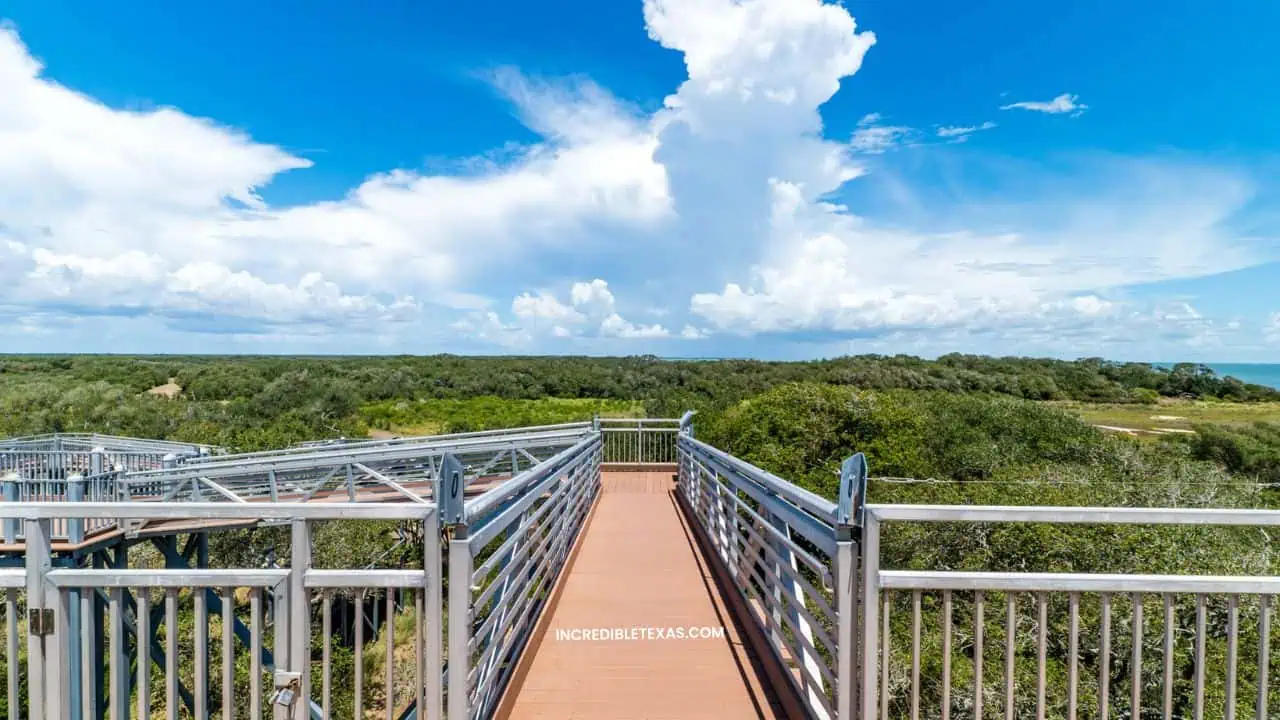
The Observation Tower is worth a stop even if you usually skip platforms and overlooks. It gives you a higher angle over the marsh and savannah, which helps you pick up movement from deer, javelina, hawks, and waterbirds that can disappear into the grasses from ground level.
If you want the current trail lineup before you arrive, the refuge’s official trails page is the cleanest place to check the map and stop names. That page is also useful once you are on site, because a few of the short walks look similar until you see the habitat each one targets.
The Rail Trail is a good first walk when you want quick payoff without a long hike. It runs about 0.5 miles beside Tomas Slough, where reeds, marsh birds, and alligators often hold your attention almost immediately.
Heron Flats Trail is the refuge walk that usually feels most immersive. At about 1.22 miles one way, it takes you across freshwater sloughs, shell ridges, and tidal flats, and the two observation platforms with spotting scopes give you a real chance to slow down and scan instead of just passing through.
Songbird Loop Trail is much shorter at about 0.14 miles, so it works well when the wind is strong or your group does not want another long stop. You trade open-marsh views for a brief wooded stretch that can be productive during migration.
You can also break up the drive at the fishing pier, which is open year-round on San Antonio Bay. Fishing from the bank is not permitted in the public area, but the pier and boardwalk support saltwater fishing, wildlife watching, and even a chance to spot dolphins or sting rays in the water below.
Anglers are limited to two rods each on the pier, and wade fishing access is allowed from the fishing pier and boardwalk area year-round. That rod limit matters if your group wants to fish and linger at the pier instead of making the stop a quick photo break.
If you only have two hours, the simplest plan is the auto loop, the Observation Tower, and one walk such as Rail Trail or Heron Flats. With four hours, you can add a slower bayfront stop at the fishing pier, spend more time on platforms, and still avoid turning the day into a rush.
If you want your refuge day to end with more open sand and surf, save Mustang Island State Park for the second half of the trip or for the following day. The contrast works well because the refuge is quiet and wildlife-first, while the island experience is more about shoreline time and open beach space.
If you are building the trip around birding season, leave one open block in the schedule instead of packing the day edge to edge. The refuge rewards patience, and a spare hour can turn into a better tower stop, a longer trail walk, or a more relaxed meal afterward.
If birding is your main goal, it is usually smarter to spend longer at two or three stops than to jump out at every pull-off. A quiet ten minutes on a platform can produce more sightings than another mile of quick driving.
Wildlife You Can See at Aransas National Wildlife Refuge
Wildlife is the whole point of the visit, and birds dominate the experience. The refuge’s birding page notes 405 documented species, which gives you a sense of how much variety can show up even on a short drive-and-walk itinerary.
Whooping cranes are the headline species, but timing matters. Your best window is usually late October through mid-April, and you improve your odds further when you move slowly, stop at platforms, and spend time scanning marsh edges instead of treating the refuge like a simple scenic drive.
Outside crane season, you can still build a satisfying trip around herons, egrets, roseate spoonbills, pelicans, hawks, shorebirds, and migrating songbirds. Spring and fall stand out because the refuge lies on a major migration route, so new birds can cycle through quickly with weather and wind.
Mammals and reptiles add variety between bird stops. The auto loop and tower area can reward you with deer, javelina, bobcat, and the occasional rattlesnake crossing the road, while Tomas Slough and other freshwater pockets can turn a quiet stop into an alligator sighting.
Heron Flats is a practical place to watch carefully because its platforms already have spotting scopes and the surrounding flats hold feeding birds. Rail Trail is stronger for marsh-edge activity, especially if you want to listen as much as look and give the reeds a few patient minutes.
You should treat every wildlife sighting as a reason to slow down rather than move closer. Keeping pets leashed, staying on boardwalks, and leaving the water alone is not just a rulebook issue; it is the safest way to share habitat with alligators, snakes, and birds that need space.
The refuge keeps producing sightings because the habitat mix is unusually broad for one public drive. Bay waters, tidal flats, brackish marsh, freshwater sloughs, and oak cover all sit close together, so you can keep seeing different species even when you only visit a handful of stops.
The refuge’s species diversity makes more sense once you picture the habitat sequence instead of a single marsh. Saltwater bay edges, brackish marsh, freshwater pockets, upland prairie, and live-oak cover all sit close enough together that different birds and animals can use different niches within the same drive.
You can also use the visit to notice how the refuge changes with season. Low winter light, spring migration, and summer heat each alter what you notice, so the same loop can feel completely different on repeat trips.
You will often get the cleanest viewing when you stop, let the landscape settle, and scan with binoculars instead of moving constantly. Wind, glare, and distance can hide birds in plain sight, so a slower pace usually gives you a better chance of finding cranes, spoonbills, or raptors.
Nearby Stops to Add to Your Coastal Bend Trip
You can keep the day centered on the refuge, but the surrounding coast makes it easy to turn the outing into a longer Coastal Bend trip. The smartest add-ons are places that give you a different mood after the marshes, such as town walks, beach time, or a second wildlife stop instead of another long scenic drive.
If you want a city base with restaurants, museums, and easier hotel choices, browse these Corpus Christi day trip ideas before you choose where to stay. That approach works well when the refuge is only one piece of a larger weekend on the coast.
A wildlife morning and a beach afternoon also fit together surprisingly well on this stretch of Texas coast. If your group wants sand after the refuge roads, these Corpus Christi beaches give you the clearest next step without forcing the whole trip into one style.
Port Aransas makes sense when you want a livelier finish with cafes, shopping, and island energy after the refuge’s quieter landscape. It is a strong choice when you want a sunset stop, a seafood meal, or an overnight extension with more activity after a wildlife-focused morning.
You do not need to stack every stop into one ambitious loop. The refuge rewards patience, so it is often better to pair it with one other anchor, then save beaches or town time for the next morning instead of cutting the wildlife viewing short.
That pacing is especially useful in crane season, when you may want to give the marsh platforms more time and keep the rest of the day flexible. In warmer months, you can shift the refuge earlier, then move toward the coast once the heat makes slow wildlife watching less comfortable.
Your overnight base changes the feel of the trip. Austwell keeps you closest to the refuge gate, while Port Aransas and Corpus Christi give you more food, lodging, and post-refuge options if the wildlife outing is only one part of the weekend.
If you are staying overnight, Corpus Christi gives you the most flexible base because it adds meals, groceries, and easier hotel availability after the refuge closes. That matters if you want a sunrise start without spending the evening in a very small town with limited choices.
Port Aransas works best when you want a more energetic coastal night, while Austwell keeps you closest to the gate for an early next morning return. Pick the base that matches your pace instead of trying to maximize every mile.
For many visitors, the cleanest plan is one major wildlife stop and one easy second stop, not a marathon of sites. That approach keeps the refuge visit calm, leaves room for better birding light, and makes the drive feel manageable instead of packed.
Aransas National Wildlife Refuge FAQ
These quick answers cover the questions most people ask before they commit to the drive. If your plans depend on a seasonal program, hunt, or special access detail, it is still smart to confirm that one point directly before you leave.
What is Aransas National Wildlife Refuge known for?
Aransas National Wildlife Refuge is known for protecting the wintering grounds of the last wild flock of endangered whooping cranes. You also get a 16-mile auto tour, short trails, bay overlooks, and access to a major birding landscape on the Texas Gulf Coast.
How many acres is Aransas National Wildlife Refuge?
The refuge now encompasses more than 115,000 acres along the Texas Gulf Coast. That acreage helps explain why a visit feels spacious and undeveloped, with large stretches of marsh, prairie, oak habitat, and bay shoreline between the main public stops.
How much does it cost to enter Aransas National Wildlife Refuge?
General day-use entry is cash only and currently costs $3 for one adult in a vehicle or $5 for two or more adults in a vehicle. Anyone 18 or younger enters free, and commercial vehicle pricing starts at $25 for groups.
When is the best time to see whooping cranes at Aransas National Wildlife Refuge?
Late October through mid-April is typically the strongest window for whooping cranes at Aransas.
If you want overall birding rather than only cranes, spring and fall are the premier seasons because migration adds many more species to the daily viewing mix.
Can you drive through Aransas National Wildlife Refuge?
Yes. The public visit experience is built around a 16-mile paved auto tour loop that is open daily from sunrise to sunset, and the route becomes one-way at the Observation Tower.
You can stop for trails, platforms, and the fishing pier. You should treat the drive as slow wildlife watching rather than a pass-through road.