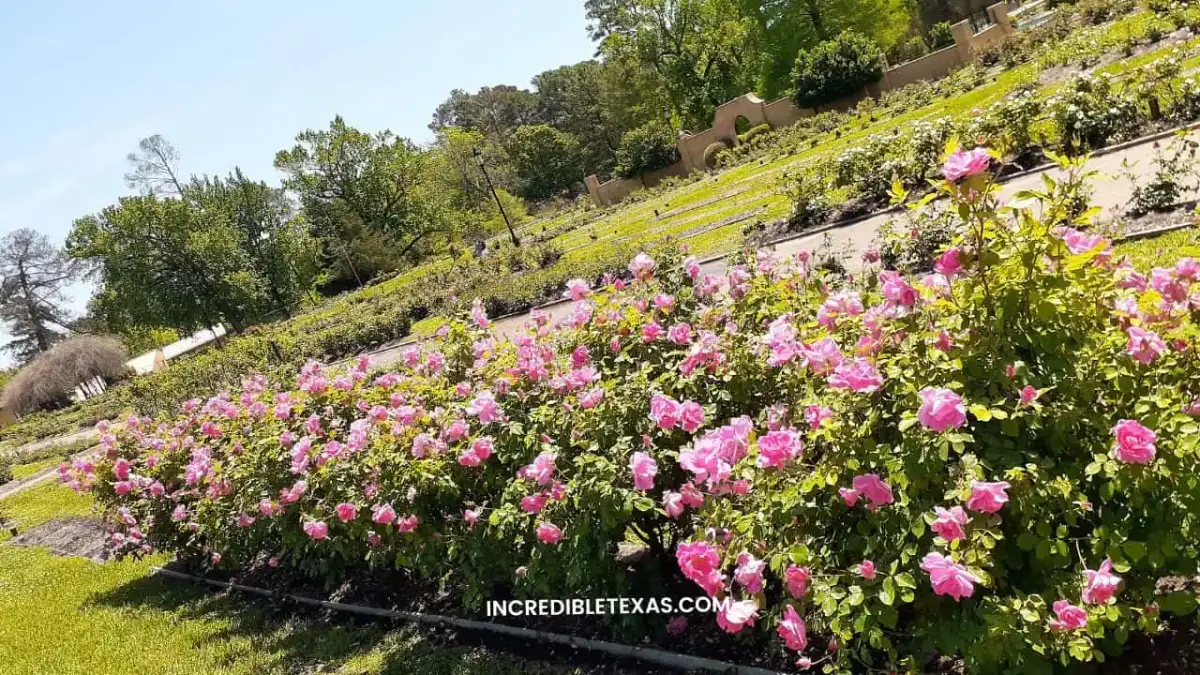
The Tyler Municipal Rose Garden spans 14 manicured acres off Rose Park Drive in Tyler, Texas. It features over 38,000 rose bushes representing more than 300 distinctive varieties across 600 planted beds. Developed in 1952, this public botanical landmark opens daily from sunrise to sunset with free general admission to its outdoor pathways.
Key takeaways
- Tyler Municipal Rose Garden covers 14 acres off Rose Park Drive, displaying over 38,000 rose bushes across 600 beds with free outdoor admission daily from sunrise to sunset.
- Peak bloom seasons arrive twice a year, delivering dense floral displays during mid-to-late May and throughout the entire month of October.
- The Texas Rose Festival takes place annually during the third weekend of October, bringing coronation ceremonies, parades, and the Queen’s Tea directly into the garden grounds.
- The on-site Tyler Rose Museum inside the Rose Garden Center charges $3.50 for adult admission to view handcrafted festival gowns and historical archives.
- Paved concrete pathways provide ADA accessibility throughout the terraced tiers, with dedicated free parking available in two paved lots along Rose Park Drive.
Plan your visit
Verified
- Location
- 420 Rose Park Dr, Tyler, TX 75702
- Hours
- Daily sunrise to sunset (grounds); Center Mon-Sat 8am-5pm, Sun 1-5pm
- Admission
- Free grounds admission; $3.50 museum entry
- Best time to go
- Mid-to-late May and mid-to-late October
Tyler Rose Garden at a Glance
The grounds serve as the horticultural showpiece of East Texas. Spanning 14 acres with over 38,000 rose bushes across 600 beds and 300 cultivars, this famous Tyler TX rose garden represents the largest public collection of roses in the United States, welcoming over 100,000 visitors annually with zero admission fee.
According to the Visit Tyler Rose Garden Directory, the complex remains open year-round for self-guided strolls, botanical photography, and seasonal events.
The municipal property combines sprawling outdoor rose tiers with an air-conditioned civic building and specialty exhibits. Travelers can easily combine a floral walking tour with other best things to do in Tyler, establishing the destination as a dependable anchor for an East Texas weekend getaway.
| Garden Zone / Attraction | Primary Display | Peak Blooming Months | Admission Fee | Accessibility & Access |
|---|---|---|---|---|
| Main Rose Terraces | 300+ Hybrid teas, floribundas, grandifloras | Mid-May & October | Free | Wide paved walkways, ADA ramps |
| Heritage Rose Garden | Antique roses cultivated before 1867 | April to June | Free | Level paved path access |
| Idea Garden | Native Texas perennials & pollinator plants | May to September | Free | Flagstone & paved borders |
| Camellia & Daylily Collection | Shade-tolerant winter & summer perennials | Dec to Feb (Camellias) | Free | Shaded outer perimeter trail |
| Tyler Rose Museum | Historical coronation gowns & festival archive | Year-round (Indoor) | $3.50 Adults, $2 Kids | Ground-level indoor facility |
What Are the Tyler Rose Garden Hours and Admission Fees?
The outdoor grounds of the municipal complex are open daily from sunrise to sunset with free public admission year-round. The indoor visitor center operates Monday through Friday from 8:00 AM to 5:00 PM, Saturday from 9:00 AM to 5:00 PM, and Sunday from 1:00 PM to 5:00 PM.
According to regulations posted by the City of Tyler Parks and Recreation Department, exterior garden gates are locked promptly at dusk. Visitors arriving for late-afternoon golden hour photography should park in the primary building lot to avoid being gated in after dark.
Regarding Tyler rose garden admission costs, access to the exterior grounds remains 100% complimentary. Visitors who want to tour the museum exhibits inside the central building purchase tickets at the information desk. Regular adult admission is $3.50, tickets for seniors are $3.00, and children ages 11 and under enter for $2.00.
Tip
Arrive between 8:30 AM and 10:00 AM on weekdays to experience the rose beds with minimal foot traffic. Morning humidity preserves petal freshness and fragrance before midday heat sets in.
What Can Visitors See Across the 14-Acre Grounds?
Visitors encounter formal terraced beds, tranquil reflection pools, the Heritage Rose Garden, and test plots certified by Earth-Kind research. Over 300 rose varieties range from hybrid teas and floribundas to antique climbing roses and miniature shrubs.
Agricultural researchers with the Texas A&M AgriLife Extension Smith County Horticulture Program collaborate with municipal groundskeepers to evaluate rose hardiness against black spot disease and intense summer heat. Informational QR codes mounted on select bed markers allow guests to scan and review cultivation requirements for individual cultivars using their mobile phones.

Formal Terraced Rose Beds and Water Features
The central axis of the landscape descends through multiple symmetrical terraces bordered by low brick walls. Water fountains, reflection pools, and manicured turf grass separate dense plantings of modern floribunda, grandiflora, and hybrid tea roses.
Arbors covered in climbing varieties frame the northern walkways. These structures offer shaded benches where visitors can sit and observe symmetrical views of the entire 14-acre property.
The Heritage Rose Garden and Antique Cultivars
The Heritage Rose section preserves antique rose varieties that existed prior to the development of the first hybrid tea rose in 1867. These heritage specimens include resilient China roses, noisettes, and damasks that thrive in East Texas clay soils.
Unlike modern hybrid teas that require regular pruning, antique roses often grow into sprawling bushes with remarkable natural disease resistance. Travelers exploring hidden gems across East Texas frequently stop here to study historic cultivars that survived around early Texas homesteads.
The Idea Garden and Seasonal Specialty Collections
Maintained in partnership with local Master Gardeners, the Idea Garden displays home-scale landscaping concepts. It incorporates drought-tolerant native perennials, ornamental grasses, and pollinator attractors alongside roses.
Nearby perimeter trails contain dedicated collections of Japanese camellias, which produce rich pink and white blooms from December through February. Extensive daylily beds take over during mid-summer after the initial spring rose flush subsides.
Tyler Rose Garden Center and Tyler Rose Museum Exhibits
The central civic building houses climate-controlled meeting halls alongside the dedicated Tyler Rose Museum. This museum displays elaborate coronation gowns adorned with hand-sewn beads, historic photographs, and archival records from the Texas Rose Festival dating back to 1933.
Each year, festival artisans craft velvet ceremonial trains and gowns weighing up to 75 pounds for festival royalty. The museum rotates its collection of these royal coronation garments, allowing visitors to inspect intricate seed-pearl embroidery, rhinestones, and delicate fabrics up close.
Interactive kiosks document Tyler's agricultural transition during the early 20th century. After the devastating peach blight of the 1900s, local farmers discovered that East Texas sandy loam soil provided ideal growing conditions for commercial rose bushes, sparking an industry that produced over half of the nation's commercial rose rootstocks.
When Is the Best Time to Visit Tyler Rose Garden for Blooms?
The optimal bloom windows at Tyler Rose Garden occur from mid-to-late May for early spring flushes and across the entire month of October for vigorous autumn color. Summer visits feature sporadic blossoms between maintenance pruning cycles under warm East Texas sun.
Understanding Tyler rose garden bloom times helps travelers plan around weather and fragrance. Spring temperatures bring fresh green foliage and soft pastel flowers across hybrid tea beds. The autumn bloom window in October often produces deeper petal colors because cooler overnight temperatures enhance anthocyanin pigmentation in the blooms.
Visitors planning regional road trips between spring wildflower blooms and autumn foliage can compare seasonal timings in our guide to East Texas nature reserves and state parks. The outdoor grounds remain accessible in winter, though rose bushes are cut back severely during February maintenance pruning.
Note
During February, city horticulturists prune all 38,000 rose bushes down to bare canes to stimulate healthy spring growth. The outdoor beds remain stark until new shoots emerge in late March.
Texas Rose Festival Traditions and Seasonal Events
The Texas Rose Festival takes place annually during the third weekend of October, celebrating Tyler's historic commercial nursery industry. Signature traditions include the Queen's Coronation, a colorful downtown floral parade, and the Queen's Tea hosted right inside the rose garden.
The Texas Rose Festival Association organizes this three-day civic celebration, which dates back to October 1933. During festival weekend, the Queen's Tea gathers festival participants and public visitors on the manicured garden lawns among peak October rose blooms.
The festival parade winds through downtown Tyler, featuring elaborately decorated floral floats covered with thousands of fresh cut roses. The outdoor grounds remain open to the general public during festival weekend, though parking lots fill completely before 10:00 AM.
Practical Planning: Parking, Walking Paths, and Pet Rules
Planning a comfortable excursion requires supportive walking shoes for wide paved paths, sun protection for open plazas, and attention to sunset gate schedules. To navigate easily, travelers following Tyler rose garden directions should head directly toward 420 Rose Park Drive, where free public parking lots flank the main facility.
Summer days in East Texas frequently exceed 95 degrees Fahrenheit by early afternoon. Because the terraced rose beds provide limited tree canopy, visitors should bring water bottles, wide-brimmed hats, and sunscreen for midday strolls.
Accessibility and Walking Path Layout
The municipal property features paved concrete walkways that wind gently between all terraced levels. Ramps connect the central plaza with upper and lower terraces, making the entire outdoor facility accessible for wheelchairs, strollers, and walkers.
Benches made of stone and iron stand at regular intervals along shaded outer borders. Restroom facilities are located inside the main Tyler Rose Garden Center building during standard operating hours.
Photography Regulations and Commercial Permits
Personal amateur photography using smartphones or handheld cameras is welcomed throughout the garden without any fees or advance reservations. Visitors frequently capture close-up flower portraits, family snapshots, and architectural compositions.
Professional portrait photographers scheduling family sessions, prom portraits, or bridal shoots must review commercial photography guidelines through the city parks office. Commercial equipment such as freestanding lighting umbrellas, tripods blocking walkways, or costume changes must not impede public movement along the pathways.
Leashed Pet Rules and Park Etiquette
Pets on standard leashes up to six feet long are permitted along outdoor garden pathways. Pet handlers must clean up after their animals and keep pets out of flowerbeds to protect delicate roots and irrigation lines.
Animals are strictly prohibited inside the indoor Tyler Rose Garden Center and Tyler Rose Museum, with the exception of certified service animals. Bicycles, skateboards, and rollerblades are not allowed on the pedestrian walking paths.
Nearby Tyler Attractions Worth Pairing With the Garden
Travelers can easily combine a morning at the Tyler Rose Garden with other top municipal attractions located within 15 minutes of the garden complex. Natural pairings include the Caldwell Zoo, Tyler State Park pine forests, and historic downtown barbecue joints.
Located just three miles northwest of the rose complex, the Caldwell Zoo wildlife exhibits encompass 85 shaded acres featuring African elephants, giraffes, and cheetahs. The zoo provides an engaging family stop that pairs naturally with a morning garden walk.
Outdoor enthusiasts seeking longer hiking trails can drive 15 minutes north along Park Road 16 to reach Tyler State Park. As noted in the Texas Parks and Wildlife Tyler State Park Directory, the 985-acre park surrounds a 64-acre spring-fed lake ringed by 13 miles of shaded hiking and biking trails.
Frequently Asked Questions
Is the municipal rose garden free to visit?
Admission to the entire 14-acre outdoor botanical grounds is completely free year-round. A nominal fee of $3.50 for adults and $2.00 for children applies only if you tour the indoor Tyler Rose Museum.
When is the best time of year to visit for peak blooms?
The two primary bloom peaks occur from mid-to-late May for spring roses and throughout October for autumn blossoms. October also features the historic Texas Rose Festival with special ceremonies held directly on the garden grounds.
How long does a visit to the grounds take?
Most visitors spend between 45 minutes and two hours exploring the terraced rose beds, fountain plazas, and camellia collections. Adding a tour of the indoor museum and gift shop extends the visit to approximately two and a half hours.
Are pets allowed inside the outdoor park?
Leashed pets are permitted along the paved walking pathways of the outdoor garden, provided handlers pick up all waste immediately. Animals are not allowed inside the indoor Rose Garden Center or museum facilities, with the exception of trained service dogs.
Where do visitors park for the rose complex?
Free designated public parking is available in two large paved lots located off Rose Park Drive adjacent to the main garden center. These spaces fill quickly during the third weekend of October during the Texas Rose Festival.