Witte Museum San Antonio TX: Hours, Tickets, Parking, and Tips
Witte Museum San Antonio TX is one of the easiest major museums to plan in the city because it combines dinosaurs, Texas wildlife, South Texas history, and rotating exhibitions with clear visitor logistics. Current visitor details list adult admission at $17, free parking for visitors, and a Tuesday free-admission window for Bexar County residents.
The museum sits in Brackenridge Park at 3801 Broadway and gives visitors a practical indoor stop when the weather is hot, rainy, or simply too busy for a longer outdoor day. A first visit usually fits into two to three hours, which makes the Witte easy to pair with a broader San Antonio itinerary or a shorter museum-focused outing.
| Quick Fact | Current Detail |
|---|---|
| Official name | The Witte Museum |
| Address | 3801 Broadway, San Antonio, TX 78209 |
| Setting | Brackenridge Park on the San Antonio River corridor |
| Hours | Monday 10 a.m. to 5 p.m.; Tuesday 10 a.m. to 6 p.m.; Wednesday through Saturday 10 a.m. to 5 p.m.; Sunday noon to 5 p.m. |
| Admission | Adults $17; seniors 65+ $16; teens 13 to 18 $16; children 4 to 12 $11; children 3 and under free; members free |
| Free Tuesday | Bexar County residents get free general admission Tuesday from 3 p.m. to 6 p.m. with advance reservation and proof of residency |
| Parking | Always free for visitors in the Brackenridge Park Parking Garage |
| General admission includes | Permanent galleries and traveling exhibitions |
| Special exhibition note | Some special exhibitions require an added surcharge |
| Best for | Dinosaurs, Texas wildlife, family visits, and a central San Antonio museum day |
Witte Museum San Antonio Hours, Tickets, Parking, And Entry Rules
The Witte Museum keeps its operating details simple enough for advance planning. Most visitors only need the current hours, the admission price, and the parking rule to know whether the stop fits the day’s schedule.
| Planning Item | Current Detail |
|---|---|
| Monday | 10 a.m. to 5 p.m. |
| Tuesday | 10 a.m. to 6 p.m. |
| Wednesday through Saturday | 10 a.m. to 5 p.m. |
| Sunday | Noon to 5 p.m. |
| Members-only hour | Sunday from 11 a.m. to noon |
| Adults | $17 |
| Seniors 65 and older | $16 |
| Teens 13 to 18 | $16 |
| Children 4 to 12 | $11 |
| Children 3 and under | Free |
| Members | Free general admission |
| Holiday closures | New Year’s Day, Easter, the third Monday in October, Thanksgiving Day, Christmas Eve, and Christmas Day |
Parking is one of the museum’s biggest conveniences. The museum’s visitor details page says parking is always free in the Brackenridge Park Parking Garage on Avenue B, just south of the museum, and accessible parking and drop-offs are available on Gunn Drive North Lot north of the museum.
The garage access also keeps the visit straightforward for travelers arriving from downtown or from other parts of central San Antonio. The museum is on VIA Metropolitan Transit bus routes 9 and 14, which gives visitors another option when they prefer not to drive.
The garage sits close enough to the entrance that visitors can move from parking to the galleries without much backtracking. That makes the first few minutes of the visit feel simple even on busier weekends.
The entry rules are just as clear. Children under 12 must be accompanied by an adult at all times, and photography is permitted and encouraged but flash, tripods, and monopods are not allowed.
Food and drinks are restricted to the Tremblay Cafe area and picnic tables outside the galleries.
Service animals are allowed, pets are not, and shoes are required on campus.
Closed-toed shoes are required for Mount Witte and the H-E-B Buddy Skycycle exhibits.
Travelers looking for a pricing shortcut can also check San Antonio CityPASS, which currently advertises savings of up to 38 percent on Witte admission plus three other San Antonio attractions. The museum also participates in Museums for All and offers a lower admission option for eligible families receiving SNAP or WIC benefits.
Why The Witte Museum Belongs On A San Antonio Itinerary
According to the museum’s history page, the campus sits between the San Antonio River and Broadway and centers Texas Deep Time. The Brackenridge Park Conservancy describes the Witte as a historic site in the park.
Families come for the dinosaurs and wildlife, and history fans come for the heritage galleries. Travelers who want a compact city stop use the Witte between lunch, park time, and the rest of the day.
The museum also works well inside a wider city plan. A traveler comparing broader routes can place it beside the best things to do in San Antonio guide or build it into a longer Bexar County itinerary.
Brackenridge Park adds another layer of context. The Brackenridge Park Conservancy describes the Witte as a historic site in the park, and the museum’s own grounds tie the indoor galleries to the river, trees, and older civic landscape around Broadway.
That setting matters because the Witte is not a stand-alone building on a blank lot. It is part of a larger cultural corridor that connects museum visitors to San Antonio’s park system, historic structures, and walkable attractions in the same part of the city.
Early arrivals also get a calmer first look at the campus. The walk from the garage to the entrance is short, and the river-side setting gives the approach a quieter feel than a typical city museum parking lot.
What To See Inside The Witte Museum
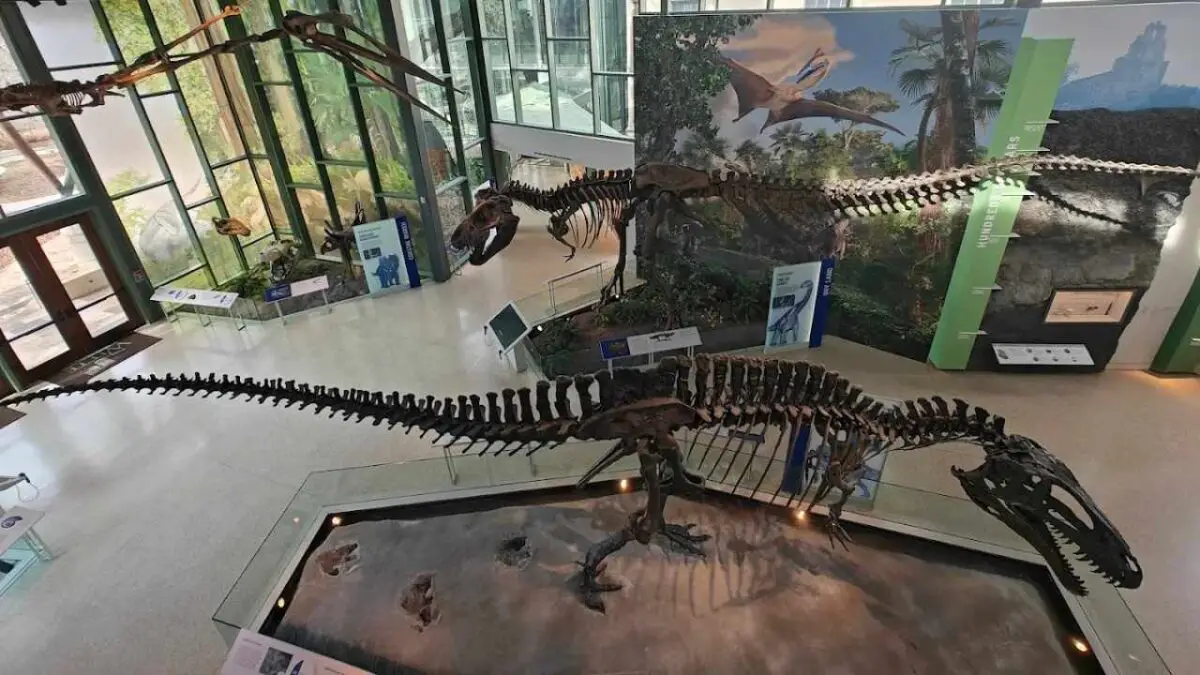
The Witte’s permanent galleries are the main reason many visitors choose it over other San Antonio museums. The museum’s exhibitions page highlights a strong mix of dinosaurs, Texas wildlife, archeology, South Texas history, and behind-the-scenes collections work, so the visit can feel broad without becoming scattered.
| Permanent Gallery | What Visitors See | Included In Entry |
|---|---|---|
| Naylor Family Dinosaur Gallery | Texas deep-time fossils, Cretaceous creatures, Acrocanthosaurus, Tylosaurus, Protostega, and other prehistoric giants | Yes |
| McLean Family Texas Wild Gallery | More than 150 Texas animals, habitat dioramas, and species from the Rio Grande Valley to the Panhandle Plains | Yes |
| Kittie West Nelson Ferguson People of the Pecos Gallery | Lower Pecos Canyonlands history, daily life, rock art, and artifacts from people who lived in the region for more than 9,000 years | Yes |
| Robert J. & Helen C. Kleberg South Texas Heritage Center | Texas history, San Antonio’s main plaza, cattle culture, frontier life, and rotating art displays | Yes |
| B. Naylor Morton Research and Collections Center | Visible storage and a larger sampling of the museum’s collection, which reaches far beyond the items on public view | Yes |
| H-E-B Lantern | Valero Great Hall | Gates/Elliott Families Orientation Theater | An orientation space that introduces the museum’s Deep Time story before visitors move into the galleries | Yes |
The museum’s strongest opening experience is the dinosaur gallery. The official gallery page says visitors step into a Cretaceous world more than 110 million years old and face Acrocanthosaurus inside the same gallery.
The Texas Wild gallery shifts the emphasis from fossils to living ecosystems. It presents habitats from across the state and gives visitors an easy way to see how Texas wildlife changes from region to region without leaving San Antonio.
The People of the Pecos gallery adds a deeper cultural layer. The exhibit focuses on the Lower Pecos Canyonlands, rock art, seasonal movement, and the tools and materials used by the region’s earliest residents, which makes it one of the museum’s most distinctive stops.
The South Texas Heritage Center keeps the story closer to modern San Antonio. It moves from downtown trade and cattle routes to broader South Texas history, and it pairs naturally with the museum’s Texas art and regional heritage focus.
The museum also connects history to daily life through the research and collections center. That space shows how much of the Witte’s work happens beyond the main exhibition floor, and it gives visitors a glimpse of the larger collection that supports the galleries around it.
Permanent galleries that make the strongest first impression
The Witte’s permanent galleries are broad, but they are also specific enough that first-time visitors can choose an order that fits their interests. Dinosaur fans usually start with the Naylor Family gallery, wildlife-focused visitors usually pause in Texas Wild, and history-oriented travelers often move quickly toward the Pecos or South Texas galleries.
That flexibility helps the museum feel manageable. A visitor does not need to absorb the whole campus in one pass, because each gallery stands on its own while still contributing to the same larger Texas story.
The museum’s history also adds weight to the galleries. The Witte began in the 1920s, grew through major expansions, and now presents a campus that blends education, conservation, and regional history into one visit.
Special exhibitions that change the visit
The Witte’s special exhibitions rotate, so the experience can change from one season to the next. The current exhibitions page highlights titles such as Unseen Oceans, The Steves Family: Building San Antonio, Texas Ceramics: From Land to Hand, and Fiesta Makes a Splash.
Unseen Oceans is a particularly strong example of the museum’s current approach because it brings ocean science and technology into the same building as Texas history and wildlife. It is a special exhibition, which means it requires an additional ticket beyond general admission.
The Steves Family exhibit adds a local civic-history layer by tracing how one family helped shape San Antonio. That kind of exhibit gives repeat visitors a fresh reason to come back even after they have seen the core galleries.
Readers who enjoy a broader view of Texas culture can also pair the museum with Texas traditions, food, music, festivals, and heritage to connect the museum’s exhibits to the larger story of the state.
Witte Museum San Antonio Coupons and Passes
The Witte is already priced below many large-city museums, but several discounts make it even easier to fit into a family trip or a longer local day. The best choice depends on residency, membership, and whether the visit is part of a bundled attraction plan.
| Savings Option | Who It Helps | Practical Detail |
|---|---|---|
| Bexar County Free Tuesday | Local residents | Free general admission Tuesday from 3 p.m. to 6 p.m. with a reservation and proof of residency |
| Members and Member Plus | Returning visitors | Free general admission, plus a Sunday members-only hour from 11 a.m. to noon |
| CityPASS | Visitors planning several attractions | Bundles the Witte with three more San Antonio attractions and advertises savings of up to 38 percent |
| Museums for All | Eligible families receiving SNAP or WIC benefits | $3 general admission and 50 percent off special exhibition tickets for up to four people per card |
| ASTC reciprocal membership | Travelers with qualifying museum memberships | Participating museum members can receive free general admission at the admissions desk for eligible visitors |
The free Tuesday window is the most useful option for locals because it creates a low-cost way to see a rotating exhibit or revisit a favorite gallery. The reservation requirement matters, so the free slot works best when the trip is planned in advance rather than handled as a spontaneous stop.
CityPASS makes the most sense for travelers already planning a cluster of San Antonio attractions. When the Witte is one stop in a larger sightseeing run, the bundle can be more efficient than buying each admission separately.
Membership and reciprocal programs matter most for repeat visitors. The museum’s membership FAQ says qualifying museum members from the ASTC Passport Program can receive reciprocal admission at the admissions desk, which is a useful detail for anyone road-tripping through multiple science or history museums.
How Long To Spend And Who The Museum Suits Best
A first visit to the Witte Museum usually works best as a two- to three-hour stop. That estimate fits the size of the campus, the number of included galleries, and the fact that the museum can be experienced either quickly or in a more detailed, exhibit-by-exhibit way.
Families with school-age children get strong value from the dinosaur gallery, Texas Wild gallery, and orientation theater. Grandparents and mixed-age groups can move through the same galleries at a flexible pace.
Travelers who care most about history tend to slow down in the South Texas Heritage Center and People of the Pecos gallery. Visitors who want science and natural history usually spend longer in the dinosaur and wildlife spaces, especially if a special exhibition is included.
Visitors building a food-and-culture day can tie the museum to the broader ideas in Bexar County’s main attractions or extend the route into an overnight plan with places to camp near San Antonio.
That keeps the museum from feeling isolated and makes it easier to turn one stop into a full trip.
The museum also makes sense on hot days when an outdoor itinerary starts to feel too ambitious. In those cases, the Witte can replace a longer walking plan rather than add to it, which keeps the day comfortable and still gives the trip a strong sense of place.
Nearby Stops In Brackenridge Park And Central San Antonio
The Witte’s location is one of its biggest practical advantages. Because the museum sits inside Brackenridge Park, the visit can extend into nearby green space, the zoo area, and other attractions without forcing a major drive or a complicated parking change.
Visitors who want a short scenic add-on can walk or drive a few minutes to the Japanese Tea Garden San Antonio TX. That pairing keeps the day in the same park corridor and works especially well for travelers who like a mix of gardens, history, and museum time.
The Brackenridge Park Conservancy page reinforces the site’s historic identity, and the museum’s own history page shows how closely the campus is tied to the river landscape. That context makes the Witte feel like part of a larger San Antonio story rather than a single isolated attraction.
Central San Antonio also makes it easy to keep the route compact. Travelers who are planning a downtown-to-park day can use the museum as a middle stop between the River Walk, Broadway, and other nearby cultural institutions.
That flexibility matters for weekend planning. A museum visit can lead into lunch, park time, or a second attraction without turning the schedule into a marathon, which is useful for families and visitors who prefer a slower pace.
Witte Museum San Antonio Accessibility, Food, Photos, And First-Visit Tips
The Witte Museum is built to handle a wide range of visitors, but the small rules matter. Knowing them ahead of time keeps the visit smooth and helps avoid avoidable backtracking at the admissions desk or inside the galleries.
| Visitor Need | Current Detail |
|---|---|
| Wheelchairs | Complimentary non-motorized wheelchairs are available with an ID at the Walker Admissions Desk |
| Accessible parking | Gunn Drive North Lot drop-offs and accessible spaces sit north of the museum |
| Transit | VIA routes 9 and 14 serve the museum |
| Food and drinks | Available for purchase in the Tremblay Cafe, but not allowed in the galleries |
| Photos | Permitted and encouraged, but flash, tripods, and monopods are not allowed |
| Pets | Not allowed; service animals are allowed |
| Clothing | Shoes are required on campus; closed-toed shoes are required for Mt. Witte and H-E-B Buddy Skycycle |
| Families with children | Children under 12 must be with an adult at all times |
The museum’s accessibility setup is helpful because the campus includes both indoor and outdoor areas. A visitor can enter with a wheelchair, park in the accessible lot, and still move through the main galleries without treating the visit as a special accommodation day.
The museum has a café, but food and drinks are not allowed in the galleries. Picnic tables outside the galleries give visitors a place to pause for a snack or lunch between exhibits.
Photography is one of the easiest parts of the visit to misunderstand. Casual photos are allowed, but tripods and monopods are not, so visitors planning a more formal photo session should keep the camera setup simple.
First-time visitors usually do best with one clear goal: dinosaurs, wildlife, history, or a special exhibit. The campus is rich enough that trying to see everything at once can feel rushed, while a focused visit keeps the trip comfortable and memorable.
The museum’s visitor details page is the best place to check if the trip depends on a special exhibit, a Tuesday discount, or a holiday weekend. The changing details are all in one place once a visit date is set.
Witte Museum San Antonio FAQ
Is The Witte Museum Worth Visiting?
Yes. The Witte Museum San Antonio is one of the strongest all-around museum stops in San Antonio because it combines dinosaurs, wildlife, Texas history, and changing exhibitions in one campus that is easy to reach and simple to park at.
How Much Are Tickets At The Witte Museum?
Current general admission is $17 for adults, $16 for seniors 65 and older, $16 for teens 13 to 18, and $11 for children 4 to 12. Children 3 and under are free, and members receive free general admission.
Is Parking Free At The Witte Museum San Antonio?
The museum says parking is always free for visitors in the Brackenridge Park Parking Garage on Avenue B. Accessible parking and drop-offs are available in the Gunn Drive North Lot north of the museum.
What Is Free Tuesday At The Witte Museum?
Free Tuesday is a weekly admission benefit for Bexar County residents. The museum offers free general admission from 3 pm to 6 pm on Tuesdays, but capacity is limited and advance reservation plus proof of residency are required.
What Does General Admission Include?
General admission includes the permanent galleries and traveling exhibitions. Some special exhibitions require an additional ticket, so visitors planning to see a specific temporary show should check the current exhibitions page before arrival.
Can Visitors Bring Food Or Pets?
Visitors can buy food and drinks at the Tremblay Cafe and use picnic tables outside the galleries. Pets are not allowed on campus, although service animals are permitted.
The Witte Museum gives San Antonio visitors a reliable mix of clear logistics and strong exhibits. It is easy to reach, easy to park at, and substantial enough to hold a morning or afternoon without feeling overbuilt.