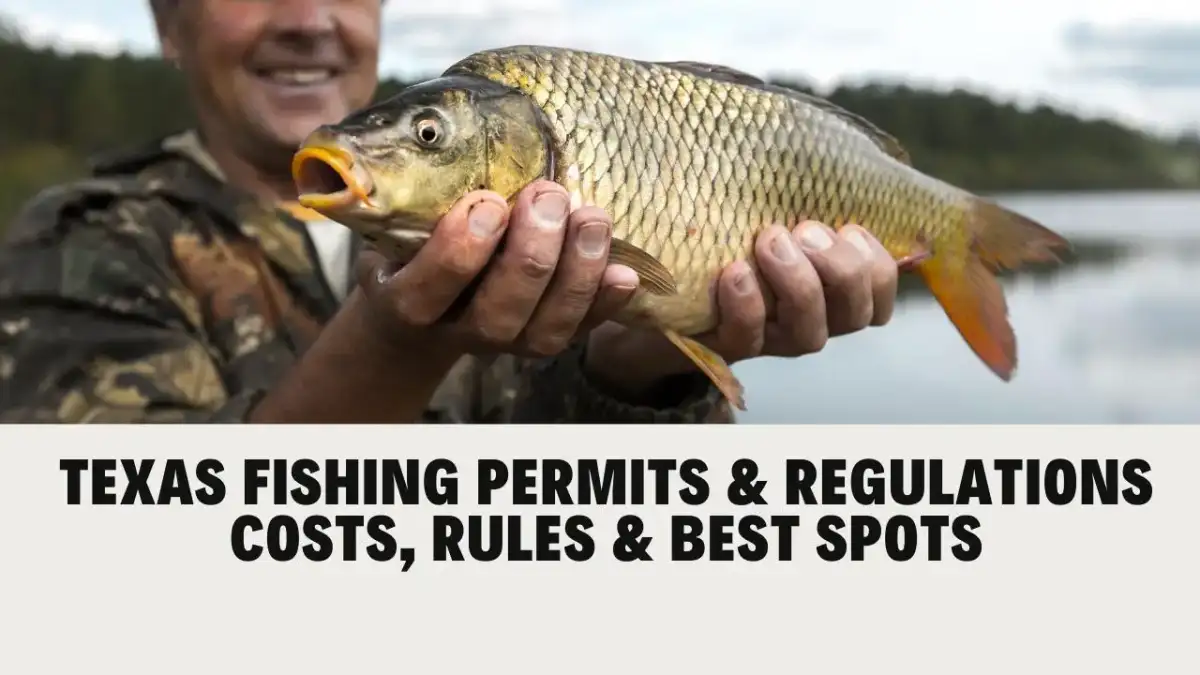
A Texas fishing license is legally required for anyone 17 years of age or older fishing in public freshwater or saltwater across Texas. For the 2026 season, resident annual licenses set by the Texas Parks and Wildlife Department (TPWD) cost $30 for freshwater, $35 for saltwater, and $40 for an all-water package. Non-resident annual packages cost $58 for freshwater, $63 for saltwater, and $68 for all-water. Licenses are valid from purchase through August 31, 2026. Anglers under 17, anyone fishing from the bank or pier inside a Texas State Park, and landowners on enclosed private waters are completely exempt.
The standard license year runs September 1 through August 31 annually. Understanding which package matches your planned fishing trip prevents unexpected citations on the water.
| License Package | Resident Fee | Non-Resident Fee | Senior Resident (65+) | Water Coverage | Valid Period |
|---|---|---|---|---|---|
| Freshwater Package | $30 | $58 | $12 | Lakes, rivers, reservoirs | Through August 31 |
| Saltwater Package | $35 | $63 | $17 | Coastal bays, Gulf waters (includes red drum tag) | Through August 31 |
| All-Water Package | $40 | $68 | $22 | All Texas public fresh and salt waters | Through August 31 |
| One-Day All-Water Pass | $11 | $16 | $11 | All public waters statewide | Single calendar day |
| Year-From-Purchase | $47 | N/A | N/A | All public waters statewide | 365 days from purchase |
| Lake Texoma License | $12 | $12 | $12 | Entire Lake Texoma (Texas and Oklahoma sides) | Through December 31 |
| Youth Under 17 | Free | Free | Free | All Texas public waters | Year-round |
| Texas State Park Shoreline | Free | Free | Free | Inside state park boundaries only | Year-round |
Who Needs a Texas Fishing License in 2026
Texas fishing license requirements apply to any person 17 years of age or older fishing in public waters, including inland lakes, flowing rivers, coastal bays, and offshore Gulf Coast waters. The Texas fishing regulations 2026 season runs September 1 through August 31 annually.
A freshwater endorsement is required for inland fishing, while a saltwater endorsement is mandatory for coastal bays and Gulf waters. A Texas all-water fishing license bundles both endorsements and represents the most practical option for anglers who fish across diverse waterways throughout the year.
See also our guide to the best fishing lakes in Texas to plan your upcoming trip across the state.
Complete Texas Fishing License Exemptions List
Texas fishing license exemptions provide clear legal pathways for select demographics and specific properties to fish public and private waters without purchasing a permit.
| Exemption Category | Eligibility Criteria | Eligible Waters | Required Documentation |
|---|---|---|---|
| Youth Anglers | Anyone under 17 years old (residents and non-residents) | All Texas public waters statewide | None |
| Senior Residents | Texas residents born before January 1, 1931 | All Texas public waters statewide | Valid Texas ID showing birth date |
| Texas State Park Visitors | Shoreline, bank, or pier fishing inside state park boundaries | Designated state park boundaries only | Paid state park day-use entry permit |
| Private Property Waters | Enclosed ponds, stock tanks, and lakes entirely on private land | Non-navigable enclosed private waters | Landowner permission |
| Texas Free Fishing Day | All anglers (residents and non-residents) on first Saturday in June | All Texas public waters | None (June 6, 2026) |
| Medically Supervised Therapy | Anglers with intellectual disabilities in approved therapy groups | All Texas public waters | Formal medical or program documentation |
| Oklahoma & Louisiana Seniors | Residents of OK or LA aged 65+ holding valid home-state license | Shared border waters and public Texas waters | Valid OK or LA senior fishing license |
Texas Fishing License Age and Residency Rules
The baseline Texas fishing license age requirement begins on an angler's 17th birthday. Anyone younger than 17 can fish without a license or endorsement across all Texas public waters. To qualify for Texas resident pricing, an individual must have maintained continuous domicile within Texas for at least six consecutive months immediately preceding the date of application.
Non-resident anglers include anyone living outside Texas or individuals residing in the state for fewer than six months. Proof of residency is validated using a valid Texas driver license or state identification card during purchase.
New: Texas Fishing License REAL ID Requirement (August 1, 2026)
Starting August 1, 2026, TPWD requires proof of residency when purchasing a Texas resident fishing license. Most Texas residents only need to present an unexpired driver license or personal ID card.
Residents of the following 19 states and the District of Columbia must present a REAL ID-compliant driver license or ID, or a standard ID plus a secondary document such as a U.S. passport, military ID, or birth certificate:
Affected states: California, Colorado, Connecticut, Delaware, Hawaii, Illinois, Massachusetts, Maryland, Minnesota, Nevada, New Jersey, New Mexico, New York, Oregon, Rhode Island, Utah, Vermont, Virginia, and Washington, plus the District of Columbia.
International visitors purchasing a non-resident license must present a valid foreign passport. This REAL ID requirement applies to purchases starting August 1, 2026, and does not affect previous seasons.
Types of Texas Fishing Permits
According to TPWD, Texas fishing permits are sold as integrated packages that combine a base license with specific freshwater or saltwater endorsements. Selecting the appropriate permit depends on residency status, target waterways, and special eligibility.
Anglers planning saltwater adventures along the upper coast can also explore guided Galveston fishing charters for offshore snapper, mahi-mahi, and kingfish runs.
1. Resident vs. Non-Resident Fishing Licenses
Texas residents who have lived in the state for at least six months qualify for resident pricing. Visitors from other states must purchase a Texas non resident fishing license, which carries a higher fee across all package types.
- Resident: Must have lived in Texas for at least six continuous months or meet TPWD military residency criteria.
- Non-Resident: Out-of-state visitors require a non-resident permit for all public waterways.
- Age Exemption: Anyone under 17 is exempt from the license requirement, regardless of residency.
2. Freshwater, Saltwater & All-Water Licenses
- Texas Freshwater Fishing License: Covers fishing in inland public lakes, rivers, creeks, and reservoirs across Texas.
- Texas Saltwater Fishing License: Covers coastal bays and open Gulf waters, and includes one red drum tag for an oversized redfish.
- All-Water Package: Combines freshwater and saltwater endorsements into a single credential for statewide angling versatility.
Annual licenses are valid from the date of purchase through August 31, 2026. A five dollar administrative fee applies to all online and telephone transactions.
3. One-Day & Short-Term Licenses
The One-Day All-Water License is available for residents ($11) and non-residents ($16), covering all public Texas waters for a single calendar day. Multiple consecutive one-day licenses can be purchased in advance for weekend trips.
4. Digital Fishing Licenses (2025–2026 Update)
TPWD offers a fully Texas digital fishing license option for recreational anglers. Digital credentials are purchased online at txfgsales.com and stored directly on smartphones via the Texas Hunt & Fish app.
Anglers choosing digital credentials do not receive physical paper tags. The Texas Hunt and Fish app is required to record digital tags in the field for species such as oversized red drum and trophy spotted seatrout.
5. Year-From-Purchase License (Residents Only)
The Year-From-Purchase All-Water License remains valid for 365 days from the date of purchase rather than expiring on August 31. It costs $47 and is restricted to Texas residents only.
6. Senior Citizen Fishing Licenses
Texas residents 65 and older qualify for a discounted Texas senior fishing license. The senior freshwater package costs $12, saltwater costs $17, and the senior all-water package runs $22 annually.
- Full Exemption: Texas residents born before January 1, 1931, are completely exempt from all fishing license requirements.
- Border State Reciprocity: Louisiana and Oklahoma residents aged 65 and older can fish in Texas without a license if they hold a valid home-state senior license.
7. Military & Disabled Veteran Licenses
- Active Duty Military License: Free for active duty Texas residents on official leave or stationed in Texas. Anglers must present military ID in person at licensed retailers or TPWD offices.
- Disabled Veteran Super Combo License: Free for military veterans with at least a 50% VA disability rating or service-connected limb loss, available to qualifying residents and non-residents.
8. Disability Licenses
- Legally Blind Residents: A Special Resident All-Water License is available for $7.
- Intellectual Disability Exemption: Anglers participating in medically approved fishing therapy programs are exempt from license requirements with valid program records.
9. Special Permits & Combination Packages
- Lake Texoma License ($12): Authorizes fishing across the entire Texas-Oklahoma border lake without needing separate licenses from both states, valid through December 31.
- Super Combo Package ($68, residents only): Integrates freshwater and saltwater fishing permits with all five state hunting stamps, providing maximum value for sports enthusiasts.
10. Lifetime Resident Fishing License
Texas offers a Lifetime Resident Fishing License for anglers seeking to avoid annual renewals. The lifetime fishing license costs $1,000 for fishing only, or $1,800 for the Lifetime Super Combo combining hunting and fishing privileges.
Lifetime licenses are limited to verified Texas residents with at least six months of continuous residency. Applications must be completed in person at TPWD Law Enforcement offices or the TPWD Austin headquarters.
- Annual Tags Included: Lifetime license holders must still secure annual tags for trophy trout and red drum, but tags are issued at zero cost.
- Upgrade Eligibility: Anglers who hold a lifetime fishing license can upgrade to the Lifetime Super Combo at any time for $800.
- Mobile App Syncing: Once issued by TPWD headquarters, lifetime credentials sync seamlessly within the Texas Hunt & Fish mobile application.
Texas Non-Resident Fishing License & Border Water Reciprocity
A Texas non resident fishing license is legally required for visiting anglers from other states casting into Texas public waters. Non-resident annual packages cost $58 for freshwater, $63 for saltwater, or $68 for all-water coverage.
Non-resident anglers taking single-day excursions can buy a one-day all-water permit for $16 per calendar day, avoiding annual commitment while staying fully compliant with state wildlife laws.
Texas-Louisiana Border Water Reciprocity
Texas and Louisiana maintain an official reciprocal fishing agreement covering contiguous border waters. Anglers who hold a valid resident fishing license from either state may fish shared border waters without an out-of-state license.
Border waters governed by this agreement include Toledo Bend Reservoir, Caddo Lake, the Sabine River, and Sabine Lake. Anglers must carry their valid home-state license on the boat or bank at all times.
Texas-Oklahoma Senior Exemptions
Oklahoma residents who are 65 years of age or older and hold a valid Oklahoma senior fishing license are exempt from the Texas non-resident license mandate. Louisiana seniors 65 and older holding valid home-state recreational licenses enjoy identical reciprocal privileges.
These senior reciprocity exemptions apply specifically to Oklahoma and Louisiana residents aged 65 and older. Anglers of any age from other states must purchase a valid Texas non-resident fishing license.
Lake Texoma Special License
The Lake Texoma License ($12) covers fishing on all waters of Lake Texoma, spanning both the Texas and Oklahoma sectors of the reservoir. The permit remains valid through December 31 of the purchase year.
Anglers venturing beyond Lake Texoma waters into other reservoirs or rivers in either state must hold the respective state fishing license. The Lake Texoma permit is valid exclusively on Lake Texoma.
Texas Fishing License Costs for 2026
Texas fishing license cost figures are established by the Texas Parks and Wildlife Commission. An annual license valid through August 31 covers the complete season, while a five dollar administrative fee applies to orders placed by phone or online.
2026 Texas Fishing License Fee Table
The table below summarizes official TPWD recreational fishing license fees for the 2026 season:
| License / Permit Package | Resident Cost | Non-Resident Cost | Senior Cost (65+) | Endorsements Included |
|---|---|---|---|---|
| Freshwater Package | $30 | $58 | $12 | Freshwater endorsement ($5 value) |
| Saltwater Package | $35 | $63 | $17 | Saltwater endorsement & Red Drum Tag |
| All-Water Package | $40 | $68 | $22 | Both freshwater and saltwater endorsements |
| One-Day All-Water Pass | $11 | $16 | $11 | All-water endorsement for 1 calendar day |
| Year-From-Purchase All-Water | $47 | N/A | N/A | All-water endorsement for 365 days |
| Lake Texoma Border License | $12 | $12 | $12 | Valid on Lake Texoma only through Dec 31 |
| Resident Super Combo (Hunt + Fish) | $68 | N/A | $32 (Senior) | All-water fishing + all 5 hunting stamps |
| Disabled Veteran Super Combo | Free | Free | Free | All hunting and all-water fishing stamps |
| Active Duty Military License | Free | N/A | N/A | All-water fishing for Texas residents on leave |
| Lifetime Resident Fishing License | $1,000 | N/A | N/A | All-water fishing for life (Austin or LE office) |
| Lifetime Resident Super Combo | $1,800 | N/A | N/A | Hunting and all-water fishing for life |
Key License Notes
- All annual fishing packages automatically bundle the required freshwater or saltwater endorsement into the package price.
- Saltwater packages include one red drum tag for an oversized redfish measuring 28 inches or longer.
- All Texas fishing license sales are non-refundable, and fees are not pro-rated for mid-season purchases.
- Harvesting turtles, frogs, or salamanders requires a Texas hunting license rather than a fishing permit.
Where & How to Buy a Texas Fishing License
Anglers wondering where to buy a Texas fishing license have several convenient channels: online, by phone, or in person across more than 1,800 retail locations statewide. How much is a fishing license in Texas depends on your residency and selected water package, ranging from $11 for a single-day pass to $40 for an annual resident all-water credential.
The most convenient option is to buy Texas fishing license online through the official TPWD license sales portal, which delivers an immediate printable temporary permit and digital license barcode.
1. Buy Online
Anglers can purchase a Texas fishing license online at txfgsales.com. Checkout allows selecting either a physical paper license delivered by mail or an instant digital credential stored in the Texas Hunt & Fish app. A five dollar administrative fee applies to all online transactions.
2. Buy by Phone
Licenses can be ordered by calling TPWD Customer Support at (800) 895-4248, Monday through Friday between 8:00 AM and 5:00 PM CST. Telephone purchases incur a five dollar administrative fee, and phone agents provide an immediate confirmation number that serves as valid field proof.
3. Buy in Person
More than 1,800 authorized commercial retailers issue licenses across Texas, including Academy Sports + Outdoors, Bass Pro Shops, Cabela's, Walmart, and local bait shops. Anglers must present a valid government-issued photo ID. Military and disabled veteran licenses must be obtained in person.
4. Carrying Proof of License
Texas law requires anglers to possess valid proof of their fishing license while on public waters. Acceptable verification methods include a signed physical paper license, a clear digital photograph of the license on a smartphone, or an active digital license displayed in the Texas Hunt & Fish app.
How to Use the Texas Hunt & Fish App
The Texas Hunt and Fish app serves as TPWD's official mobile platform for managing licenses, presenting digital credentials in the field, and recording mandatory game harvests. The application is available for free download on both iOS and Android mobile platforms.
Displaying a Digital License in the Field
After completing an online digital license purchase at txfgsales.com, credentials populate automatically under the "My Licenses" tab. The app generates a verifiable barcode and QR code that TPWD game wardens scan during watercraft and shoreline inspections.
Anglers should open the app while connected to Wi-Fi or cellular service prior to entering remote rural lakes. Once downloaded, digital credentials remain cached locally on the device for reliable offline inspection without cellular reception.
Harvest Reporting Through the App
The Texas Hunt & Fish app simplifies mandatory harvest reporting. Anglers taking alligator gar must record their harvest within 24 hours of landing the fish under the "Report a Harvest" menu.
Digital license holders also execute trophy tags for oversized red drum and spotted seatrout through the app. Tapping "Tag a Fish" assigns an electronic tag confirmation, eliminating the requirement for paper tags.
Outdoor Annual App: Offline Regulation Lookups
The Outdoor Annual app operates as a dedicated regulation reference tool providing full offline access to statewide bag limits, length limits, and county-specific rules. Anglers can search regulations by target species or waterway name without active cell coverage.
TPWD advises downloading both mobile apps before fishing trips: the Texas Hunt & Fish app handles license display and harvest reporting, while the Outdoor Annual app provides immediate regulation lookups.
Texas Fishing Regulations 2025–2026
All Texas fishing rules and seasons are published in the official TPWD Outdoor Annual, establishing baseline legal requirements through August 31, 2026. These rules establish daily bag limits, minimum lengths, seasonal protections, and legal tackle for both inland reservoirs and coastal waters.
Bag & Size Limits: Freshwater Species
Texas fishing regulations mandate strict limits on common freshwater game fish to preserve balanced aquatic ecosystems. Anglers should consult the complete TPWD freshwater fishing limits guide for special lake slot boundaries, seasonal white bass runs, and river regulations.
| Freshwater Species | Daily Bag Limit | Minimum Length | Possession Limit | Special Notes |
|---|---|---|---|---|
| Largemouth Bass | 5 (black bass combined) | 14 inches | 10 fish | Special lake slot limits apply (e.g. Lake Fork) |
| Smallmouth & Spotted Bass | 5 (black bass combined) | No min (spotted) / 14” (smallmouth) | 10 fish | Combined with largemouth in daily 5-fish bag |
| Channel & Blue Catfish | 25 (combined) | No minimum length | 50 fish | Only 10 fish may be 20 inches or longer |
| Flathead Catfish | 5 fish | 18 inches | 10 fish | Legal to harvest via rod, trotline, or jugline |
| White & Black Crappie | 25 (combined) | 10 inches | 50 fish | Must leave intact until ashore |
| Striped & Hybrid Bass | 5 (combined) | 18 inches | 10 fish | Lake Texoma has special striper regulations |
| Rainbow Trout | 5 fish | No minimum length | 10 fish | Winter stocked fishery across Texas state parks |
| Alligator Gar | 1 fish | No length limit | 2 fish | Mandatory reporting within 24 hours via mobile app |
Texas Bass Fishing Regulations by Lake: 2025-2026
While statewide largemouth bass regulations establish a standard 5-fish daily bag and 14-inch minimum length, several top-tier Texas reservoirs enforce special slot limits to support trophy fisheries. Anglers must release all bass falling within protected slot boundaries immediately upon catching them.
| Lake / Reservoir | Location | Daily Bag Limit | Length / Slot Limit Regulation | Trophy Exception Rule |
|---|---|---|---|---|
| Lake Fork | Wood & Rains Counties | 5 largemouth bass | 16-to-24 inch protected slot (all must be released) | 1 bass over 24 inches allowed per day |
| Sam Rayburn Reservoir | Jasper & Angelina Counties | 5 largemouth bass | 14-inch minimum length | Statewide black bass regulations |
| Toledo Bend Reservoir | Sabine & Newton Counties | 8 black bass combined | 14-inch minimum length | Shared border reciprocity with Louisiana |
| O.H. Ivie Reservoir | Concho & Runnels Counties | 5 largemouth bass | 14-inch minimum length | Famous ShareLunker producer over 13 lbs |
| Lake Conroe | Montgomery & Walker Counties | 5 largemouth bass | 16-inch minimum length | Stricter than statewide 14-inch default |
Bag & Size Limits: Saltwater Species
Coastal anglers must comply with freshwater and saltwater bag limits established by TPWD coastal fisheries biologists to sustain inshore stocks. Length limits and tagging restrictions apply strictly across bays and Gulf beaches.
| Saltwater Species | Daily Bag Limit | Length Limits / Slot | Tagging Requirements |
|---|---|---|---|
| Red Drum (Redfish) | 3 fish | 20 to 28 inches | 1 fish over 28” allowed with Red Drum Tag; bonus tag for 2nd |
| Spotted Seatrout (Speckled Trout) | 3 fish | 15 to 20 inches | 1 fish over 28” allowed per license year with trophy tag |
| Southern Flounder | 5 fish | 15-inch minimum | Season closure November 1 through December 14 (bag limit 0) |
| Black Drum | 5 fish | 14 to 30 inches | 1 fish over 52 inches allowed with special permit |
| Sheepshead | 5 fish | 15-inch minimum | No maximum length limit |
| Red Snapper (State Waters) | 4 fish | 15-inch minimum | Open year-round within 9 nautical miles of coast |
The red drum slot limit of 20 to 28 inches protects juvenile fish while allowing retention of quality table fare. Anglers may retain one oversized fish over 28 inches by affixing an official tag. Similarly, updated spotted seatrout regulations enforce a 15-to-20 inch slot to help coastal populations rebound following severe winter freeze events.
Seasonal Closures & Special Rules
- Southern Flounder Spawning Closure: Harvest is prohibited statewide from November 1 through December 14. During this window, the daily bag limit is zero for all recreational methods, including gigs and rod-and-reel tackle.
- Federal Reef Fish Seasons: Offshore seasons for red snapper, greater amberjack, and select grouper species in federal waters beyond 9 nautical miles operate on strict quota windows set by NOAA Fisheries.
- Rainbow Trout Stocking: TPWD stocks hatchery rainbow trout in community lakes and state parks December through February, providing seasonal cold-water angling.
- Barotrauma Mitigation Requirement: A reef fish descending device or venting tool is legally required on board all vessels targeting reef fish in Texas state and federal Gulf waters.
Legal Fishing Methods
- Rod and Reel: The primary legal method for all game fish species across public waters.
- Bowfishing and Gigs: Permitted exclusively for nongame species including gar, carp, and tilapia; prohibited for largemouth bass, catfish, and other designated game fish.
- Trotlines and Juglines: Legal for channel, blue, and flathead catfish in freshwater reservoirs, subject to strict gear labeling laws.
- Snagging and Foul Hooking: Strictly prohibited; all fish taken on hook and line must be hooked in the mouth.
- Game Fish as Bait: Using crappie, largemouth bass, or other regulated game fish as live or cut bait is illegal under Texas law.
- Explosives, Toxins, or Firearms: Completely banned for harvesting aquatic life in all public waterways.
Texas Fishing Gear Rules & Bait Regulations
Texas fishing gear rules ensure ethical harvest standards while protecting native aquatic habitats from over-exploitation and invasive organisms. Anglers must follow restrictions on device counts, hook densities, and bait transportation.
Before heading out on coastal waters, anglers can pick up fresh live shrimp, croaker, and terminal tackle at local bait shops in Galveston.
How Many Fishing Rods Can an Angler Use in Texas?
Texas imposes no statewide limit on the number of fishing rods an angler can use simultaneously in freshwater. However, anglers must not exceed a total limit of 100 hooks across all fishing devices combined. Saltwater regulations place gear-specific limits on certain reef species.
In municipal community fishing lakes, local ordinances may restrict anglers to two poles simultaneously. Anglers should review signs posted at park ramps before casting multiple lines.
Trotline and Jugline Rules
The state outlines clear trotline and jugline rules for inland catfish anglers. Each individual trotline is restricted to a maximum of 50 hooks, and must be anchored with gear tags indicating the owner's legal name, customer ID, and deployment date.
Trotlines and free-floating juglines must be checked and serviced at least once every 24 hours. Abandoned or untagged lines are considered contraband and will be seized by TPWD game wardens.
Live Bait and Invasive Species Rules
Anglers using live bait must comply with clean drain dry boat rules designed to prevent the overland spread of invasive zebra mussels and giant salvinia across Texas river basins.
- Clean, Drain, and Dry Mandate: Boaters must drain all water from boats, motors, livewells, and bait buckets before leaving any freshwater reservoir or river access point.
- Live Shad Transport: Gizzard and threadfin shad may be collected and used as live bait only on the specific water body where they were captured. Transporting live shad away from a water body is unlawful.
- Commercial Live Minnows: Minnows purchased from licensed bait retailers may be transported in commercial containers with fresh well or tap water, provided anglers keep receipts showing purchase origin.
- Exotic Species Transport: Possession or transport of zebra mussels, hydrilla, or giant salvinia is a Class C misdemeanor under the Texas Parks and Wildlife Code.
Important Texas Fishing Regulations to Remember
- Individual Catch Limits: Daily bag limits belong strictly to individual anglers. Pooling catches across boat passengers to mask excess limits for one angler is a legal violation.
- Fish Cleaning Restrictions: All fish landed in Texas public waters must remain in whole condition with head and tail fins attached until arriving at the mainland shore, allowing game wardens to verify size limits.
- Possession Limits: The legal possession limit is twice the daily bag limit for most species, applying to fish held at home, camp, or inside coolers.
- Alligator Gar Reporting: Any alligator gar harvested in public freshwaters (excluding Falcon International Reservoir) must be reported to TPWD within 24 hours via mobile app or online.
Free Fishing Opportunities in Texas
Texas law provides several designated avenues where residents and out-of-state travelers can fish without purchasing a license. These exemptions encourage outdoor recreation for families and newcomers.
Coastal anglers frequently take advantage of free shoreline casting at Sea Rim State Park, where marsh boardwalks and Gulf surf allow license-free saltwater angling within park limits.
1. Free Fishing Day: June 6, 2026
TPWD hosts Texas free fishing day on the first Saturday of June every year. On Saturday, June 6, 2026, any person may fish any public body of water in Texas without purchasing a license or endorsement.
- Open to all residents and non-residents with zero license fees.
- All standard bag limits, minimum lengths, and gear regulations remain in full legal effect.
2. License-Free Fishing in Texas State Parks
Under TPWD's "Free Fishing in State Parks" initiative, visitors do not need a Texas state park fishing license to fish from the bank, pier, or shoreline inside more than 70 designated state parks year-round.
This exemption applies exclusively within official state park boundaries. Anglers who board a boat and motor beyond park water boundaries into open public reservoirs require a valid Texas fishing license immediately.

3. Youth Under 17
Youth under 17 can fish all public Texas fresh and salt waters without a license or endorsement year-round. While accompanying adults need licenses unless fishing in a state park, children keep their full personal daily bag limit.
4. Fishing on Private Property
A fishing license is not required to fish entirely enclosed ponds, lakes, or stock tanks situated on private real estate. If the water body connects to a navigable public stream or river, state licensing mandates apply.
5. Community Fishing Events
TPWD coordinates neighborhood youth derbies, family clinics, and winter trout stockings where license rules are temporarily waived for registered participants. Loaner rods and tackle are frequently provided on site.
Best Fishing Locations in Texas
Texas features world-renowned fishing destinations spanning pine-rimmed reservoirs, clear Hill Country rivers, and hypersaline coastal lagoons that draw anglers from across the globe.
Professional Lake Fork fishing guides operate on the reservoir to help visiting anglers locate deep brush piles, timber channels, and grass lines.
Best Freshwater Fishing Spots
1. Lake Fork (East Texas): Situated 80 miles east of Dallas, Lake Fork holds the Texas state record largemouth bass (18.18 lbs) and accounts for more than half of the top 50 biggest bass ever caught in the state. Anglers must observe the strict 16-to-24 inch protected slot limit.
2. Sam Rayburn Reservoir (East Texas): Covering 114,000 surface acres, Sam Rayburn is the largest reservoir contained entirely within Texas borders. Renowned for heavyweight bass tournaments, it also yields massive winter and spring crappie catches around submerged timber.
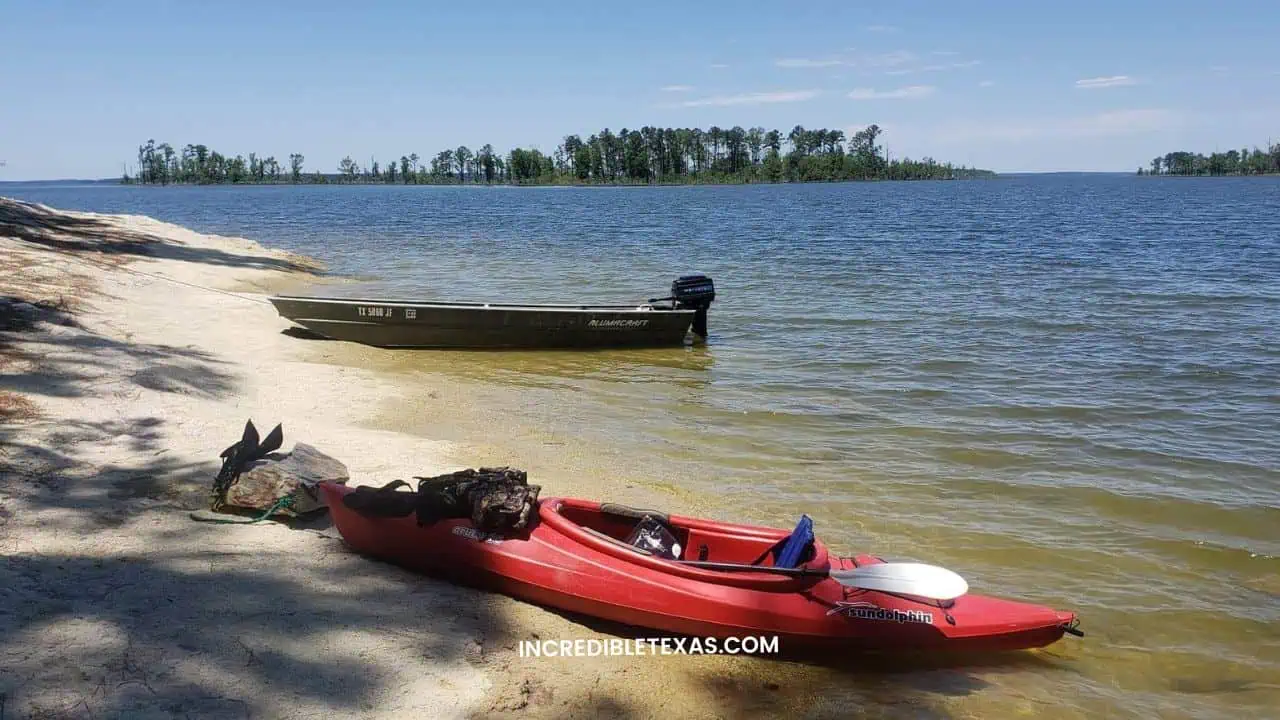
3. Toledo Bend Reservoir (Texas-Louisiana Border): Spanning 185,000 acres along the Sabine River basin, Toledo Bend ranks among America's greatest bass and crappie fisheries. Anglers holding either a Texas or Louisiana resident license can fish the shared border waters freely.
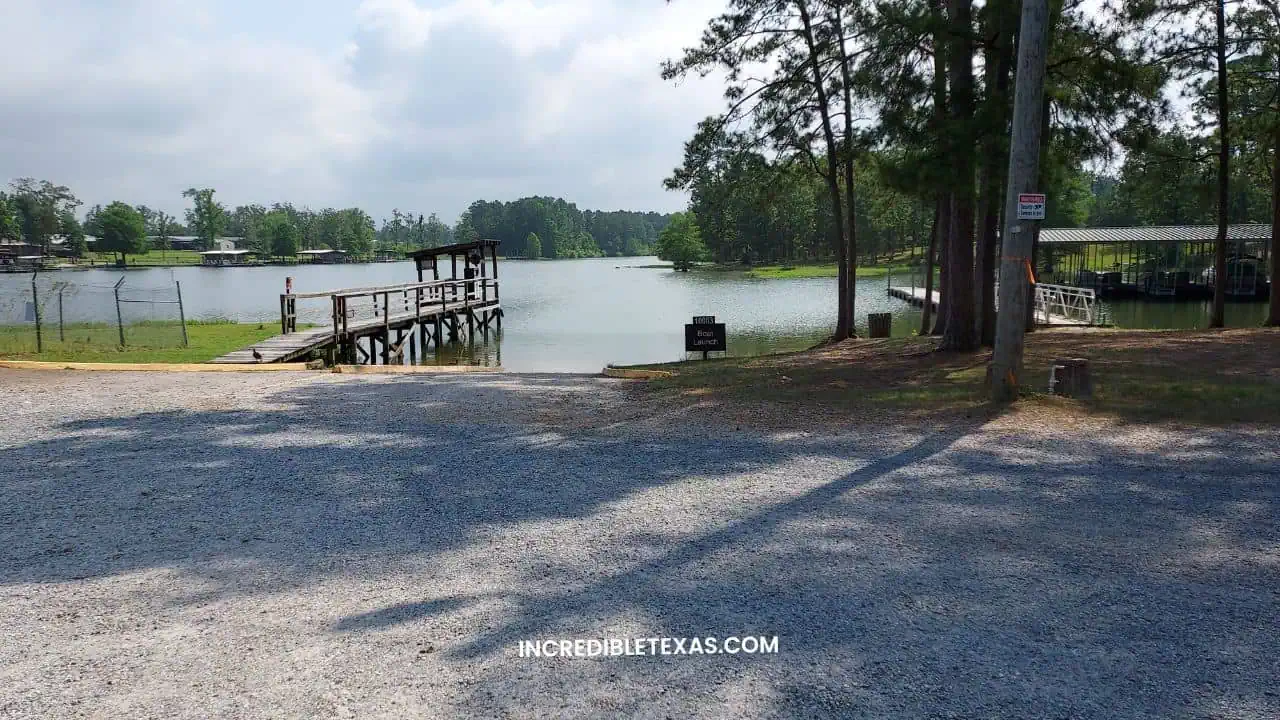
4. South Llano River State Park (Junction): Located in the western Texas Hill Country, this spring-fed river corridor offers wade fishing for native Guadalupe bass, sunfish, and stocked winter rainbow trout with license-free park access.
Best Saltwater Fishing Spots
5. Lower Laguna Madre (South Texas Coast): Stretching between Port Mansfield and South Padre Island, this shallow lagoon features miles of crystal flats ideal for sight-casting to schooling redfish and trophy spotted seatrout.
6. Galveston Bay Complex (Upper Coast): Comprising East Bay, Trinity Bay, and West Bay, Galveston provides inshore wading, jetty fishing, and pier casting for speckled trout, redfish, and seasonal flounder.
7. Port Aransas (Middle Coast): Known as the "Fishing Capital of Texas," Port Aransas grants access to fertile inshore channels, the Mustang Island surf, and deep-water oil rigs holding snapper and tuna.
Renewing or Replacing a Texas Fishing License
Annual Texas fishing licenses expire on August 31 each season. Online renewals open in mid-August at txfgsales.com, permitting anglers to secure permits ahead of the September 1 opener.
Anglers using the Texas Hunt & Fish mobile app can renew credentials directly inside the app interface. Replacement paper licenses for lost credentials can be reprinted at any authorized retailer for a five dollar replacement fee, while digital app licenses remain accessible on mobile devices at no additional charge.
Penalties for Fishing Without a License & Other Violations
Under the Texas Parks and Wildlife Code, fishing without a license is categorized as a Class C misdemeanor, carrying fine assessments between $25 and $500 plus court costs. Wardens may also seize fish taken unlawfully and issue citations for uncarried identification.
More severe infractions, such as exceeding daily bag limits or commercializing wild fish, result in Class B or Class A misdemeanors carrying fines up to $4,000 and jail sentences up to one year.
Violation Fine Summary
| Violation Class | Typical Offenses | Criminal Fine Range | Jail Sentence | Civil Restitution & Collateral |
|---|---|---|---|---|
| Class C Misdemeanor | Fishing without license, failure to carry ID, failure to drain livewell | $25 to $500 | None | Court costs, citation on record |
| Class B Misdemeanor | Exceeding daily bag limits, possessing illegal gear, repeat Class C violations | $200 to $2,000 | Up to 180 days | Mandatory replacement restitution for wildlife |
| Class A Misdemeanor | Selling game fish commercially without permit, taking threatened species | $500 to $4,000 | Up to 1 year | Equipment forfeiture (rods, reels, boats) |
| State Jail Felony | Commercial poaching, hunting or fishing while privileges revoked | $1,500 to $10,000 | 180 days to 2 years | Up to 5-year revocation of all Texas licenses |
In addition to criminal court fines, TPWD levies civil restitution fees for the ecological replacement value of every fish unlawfully caught or possessed, which can total hundreds or thousands of dollars.
Reporting Fishing Violations in Texas
TPWD game wardens enforce state conservation statutes across all public waterways, reservoirs, and Gulf waters. Anglers observing illegal gill netting, bag limit poaching, or waste of game fish can report infractions immediately.
Reports can also be filed securely through the online Operation Game Thief portal, helping protect state fish populations from unlawful exploitation.
Operation Game Thief
Operation Game Thief is TPWD's dedicated 24-hour anonymous reporting system. Concerned anglers can call 1-800-792-GAME (4263) or send a text starting with "IPOACH" to submit anonymous tips regarding fish and wildlife crimes. Informants whose tips result in citations or arrests may qualify for cash rewards up to $1,000.
License Suspension and Equipment Forfeiture
Repeat conservation offenders face suspension or total revocation of all Texas hunting and fishing privileges for up to five years. Convicted violators are entered into the Interstate Wildlife Violator Compact, which bars license purchases across 48 participating member states.
Texas game wardens possess statutory authority to seize boats, trailers, tackle, and ice chests used in the commission of Class A misdemeanors or felony wildlife crimes.
Texas Fishing License Frequently Asked Questions
How much does a Texas fishing license cost in 2026?
A Texas fishing license for residents in 2026 costs $30 for freshwater, $35 for saltwater, and $40 for all-water coverage. Non-residents pay $58 for freshwater, $63 for saltwater, and $68 for all-water. Texas resident seniors aged 65 and older pay discounted rates between $12 and $22.
One-day all-water passes cost $11 for residents and $16 for non-residents. Online and telephone purchases include a non-refundable five dollar administrative fee.
Do children need a fishing license in Texas?
Children under 17 years old do not need a fishing license in Texas, whether they are Texas residents or out-of-state visitors. They may fish all public waters across the state without an endorsement or permit, though standard daily bag and length limits apply to their catch.
Adults assisting children on the water still require their own valid license unless the entire group is fishing inside an official Texas State Park or participating on Free Fishing Day.
When is Texas Free Fishing Day in 2026?
Texas Free Fishing Day occurs on Saturday, June 6, 2026, which is the first Saturday in June. On this day, any person may fish public fresh and salt waters without a license or endorsement, while bag, size, and gear regulations remain strictly enforced.
Both Texas residents and visiting non-resident anglers can fish without purchasing a license on this annual designated date.
Can anglers fish in Texas State Parks without a license?
Yes, anglers can fish in Texas State Parks without a fishing license year-round when fishing from a bank, pier, or shoreline within park boundaries. Standard park day-use entry fees apply, and anglers launching watercraft onto public lakes outside park waters require a valid license.
This exemption applies specifically within designated state park boundaries and does not extend to city or county municipal parks.
What is the penalty for fishing without a license in Texas?
Fishing without a license in Texas is a Class C misdemeanor that carries a fine of $25 to $500 plus mandatory court costs. Repeat convictions or taking protected fish escalate to Class B or A misdemeanors, carrying fines up to $4,000, jail time, and civil wildlife restitution.
Anglers who held an active license at the time of citation can often present valid documentation to the local justice court to obtain a dismissal.
Where can a Texas fishing license be purchased?
Anglers can purchase a Texas fishing license online at txfgsales.com, over the phone by calling (800) 895-4248, or in person at more than 1,800 licensed retailers across Texas including Academy Sports, Bass Pro Shops, Walmart, and local marinas.
Digital licenses can be stored and displayed directly within the free Texas Hunt & Fish mobile app.
Is a digital fishing license valid in Texas?
Yes, a digital fishing license is fully valid in Texas when purchased online and displayed through the official Texas Hunt & Fish mobile app. Anglers must keep the app synced and device charged, and tag oversized red drum digitally through the app.
Physical paper tags are not mailed to digital license buyers, making mobile app harvest tagging mandatory in the field.
Can a Louisiana or Oklahoma angler fish in Texas without a license?
Louisiana and Oklahoma residents aged 65 or older who hold a valid senior fishing license in their home state can fish in Texas public waters without purchasing a Texas license. Anglers of any age may fish shared border waters like Toledo Bend using their home-state permit.
Anglers from other states or younger visiting anglers must purchase a standard Texas non-resident fishing license.
Is there a lifetime fishing license in Texas?
Yes, Texas offers a Lifetime Resident Fishing License for $1,000, as well as a Lifetime Super Combo license for $1,800. These lifetime packages are available to Texas residents only and must be purchased directly through TPWD Law Enforcement offices or the Austin headquarters.
Holders receive free annual tags for species like red drum and trophy speckled trout for life.
How many fishing rods can an angler use at once in Texas?
Texas does not limit the number of rod-and-reel setups an individual angler may fish at once in freshwater public waters. Anglers must stay within the statutory limit of 100 total hooks across all devices and remain in immediate proximity to their fishing lines.
Certain community lakes enforce local two-pole restrictions, so checking posted municipal park regulations is advised.
What ID is required to buy a Texas fishing license in 2026?
Texas residents need an unexpired state driver license or state identification card to purchase a resident fishing license. Non-residents must present valid government photo identification, while international visitors must present a valid passport at authorized licensing retailers.
Starting August 1, 2026, residents of 19 designated states and the District of Columbia must present REAL ID credentials to establish residency discounts.
What is Operation Game Thief in Texas?
Operation Game Thief is TPWD's wildlife crime-stoppers hotline that accepts anonymous tips on poaching, unlicensed fishing, and bag limit violations across Texas. Callers to 1-800-792-GAME (4263) or texters to IPOACH can receive cash rewards up to $1,000 for tips resulting in arrest.
The program operates 24 hours a day and protects state freshwater and saltwater fishery resources.