National Cowgirl Museum and Hall of Fame: Fort Worth Guide
National Cowgirl Museum and Hall of Fame in Fort Worth gives you a concentrated look at women who shaped the American West through ranching, rodeo, art, performance, and leadership. If you want a museum stop that feels tied to Fort Worth’s identity, this belongs near the top of your list.
The museum is in the middle of an expansion, so the visit can change from season to season. The current home page notes that the second floor is closed during construction, while the Hermes scarf collection remains on view, so checking the live visitor page before you leave is a smart move.
If you are planning a bigger day in the city, this museum works best as one anchor in a compact Fort Worth route. The Cultural District, the Stockyards, and downtown all fit naturally around it, which makes the stop easy to fold into a half-day or full-day plan.
If this is your first visit, start with the current visitor page and give the Hall of Fame galleries the most time. That is the easiest way to get a clear read on the museum without trying to cover every display at once.
What Is the National Cowgirl Museum and Hall of Fame?
The National Cowgirl Museum and Hall of Fame is a Fort Worth museum built around a simple idea: the story of the West is bigger than the men who get the most attention. Its mission centers women who worked, rode, performed, created, led, and persisted in ways that changed American life.
The museum centers trailblazing women of the American West, and that focus gives the place a clear point of view. You do not have to guess whether the exhibits will feel generic or interchangeable.
Its main museum site emphasizes the Hall of Fame, the collections, and the gallery experience together, which is useful if you want one institution to explain the people, objects, and stories in the same visit. You get a museum that feels rooted in history, but still hands-on enough to keep your attention.
The subject matter is broader than cowgirls on horseback. The museum also brings in ranchers, performers, artists, and public figures, so you can see how Western identity stretches across work, art, and everyday life.
The galleries make the people behind the stories easy to follow, even if you are new to Fort Worth. You do not need to arrive as a rodeo expert or a Western-history buff.
The museum gives you a clear picture of how women helped shape the American West. The result feels grounded in Fort Worth rather than generic.
- The Hall of Fame honors women whose names are tied to Western history.
- The collections include artifacts, clothing, saddles, papers, and photographs.
- The galleries lean into interactive storytelling instead of static labels alone.
- The museum gives you a Fort Worth stop that is both educational and easy to navigate.
The museum uses a focused Western lens and a mix of objects, stories, and displays to explain the region. That structure keeps the visit easy to follow even if you are new to the subject.
Why It Belongs on Your Fort Worth Itinerary
The National Cowgirl Museum works well if you want a Fort Worth experience that feels local instead of copied from another city. You can pair it with other stops and keep the day moving without forcing you to cross town over and over.
If you are building a broad trip, start with best things to do in Fort Worth and place the museum inside the route rather than treating it as a standalone detour. The pairing keeps your day practical and helps you match the museum with the kind of food, walking, and sightseeing you actually want.
The museum also sits in the Fort Worth Cultural District, which makes it a good fit when you want an indoor stop near other major attractions. You can keep the pace slow and still cover a lot of ground because the area is already built for culture, art, and easy access.
Coming from Dallas or another North Texas city is simple enough for a day trip. Fort Worth sits roughly 30 miles west of downtown Dallas, so you can reach the museum without committing to a long drive or a complicated overnight plan.
The museum is also a strong option when you want something meaningful that does not demand an all-day commitment. You can spend a few focused hours here, then move on to lunch, shopping, or another museum without feeling like you wasted the morning.
The museum keeps the visit manageable even if you are fitting it between other Fort Worth plans. It is not trying to be a giant destination campus.
That is exactly why it works for a day trip. You get a clear cultural stop, a strong local identity, and enough flexibility to add one more Fort Worth highlight without turning the whole plan into a marathon.
If you are planning your first visit, keep the rest of the day simple. One museum stop, one meal stop, and one extra Fort Worth highlight usually gives you the best balance of energy and time.
National Cowgirl Museum Hours, Tickets, and Parking
The current plan-your-visit page is the best place to check live hours and ticket details before you go.
Museum hours are Tuesday through Saturday from 10 a.m. to 5 p.m., Sunday from noon to 5 p.m., and Monday is closed.
Admission is straightforward. Adults are $10, seniors 65 and older are $7, military members and first responders with ID are $7, children ages 4 to 12 are $4, and children 3 and under are free with a full-price paid admission.
The museum also offers a Cowgirl Family Special for two adults and up to four children ages 4 to 12 at $28. If you are planning a family stop, that rate can make the visit easier to budget.
Parking details can shift, especially during construction and events, so use the live visitor page the day you go. The current rate card shows $6 for 120 minutes or less, $12 for more than 120 minutes, and $15 for more than 180 minutes, with free parking for members by voucher when available.
Tickets may be purchased at the museum, and group visits need a little more planning. The visitor page says groups should reserve about two weeks ahead, which is a useful detail if you are coming with friends, a club, or a school group.
Photography is friendly for casual use, but the policy has limits. Handheld photos and video are allowed for personal use, while tripods, monopods, selfie sticks, and flash photography are not allowed, so you can still capture the visit without turning the galleries into a production set.
Accessibility is handled with care. The museum allows wheelchairs and other mobility aids, manual wheelchairs are available upon request, and a drop-off zone is available in front of the building during expansion construction.
The current FAQ does not publish a general pet policy, so call ahead if you need to bring an animal. Holiday closings can include New Year’s Day, Easter, Juneteenth, Independence Day, Memorial Day, Thanksgiving, Christmas Eve, and Christmas Day, and inclement weather can affect the schedule too.
If you are deciding whether to buy tickets in advance or just show up, the good news is that the visit is not hard to plan. The museum website and front desk handle the core visitor flow, which keeps the process simple when you want to spend your energy on the galleries instead of the logistics.
One practical tip: if you are visiting during a holiday week or around a large Fort Worth event, give yourself more buffer time for parking and entry. The museum sits in a busy district, so a little extra planning can save you from cutting the visit short.
- Address: 1720 Gendy Street, Fort Worth, TX 76107.
- Hours: Tuesday through Saturday, 10 a.m. to 5 p.m.; Sunday, noon to 5 p.m.; closed Monday.
- Admission: Adults $10; seniors 65+ $7; military and first responders $7; children 4 to 12 $4; children 3 and under free.
- Reservations: Tickets can be purchased at the museum, and groups should reserve about two weeks ahead.
- Parking: Use the live visitor page before you go because rates can change during construction and event periods.
- Pet policy: No general pet policy is posted, so call ahead if you need anything beyond a service-animal setup.
If you want a second official source for hours, admissions, and group details, the museum’s contact page keeps the same core visitor information in one place. The live pages are worth checking close to your visit because expansion work can affect the experience.
For more planning context, the museum’s Fort Worth Stockyards article is a useful next read if you want to keep the Western theme going after your museum stop. The article gives you a natural second stop without making the day feel overbuilt.
What You’ll See Inside the National Cowgirl Museum
The Hall of Fame is the heart of the museum, and it gives the place its strongest reason to exist. More than 200 women have been honored since 1975, and the names span categories such as pathfinder, rancher, performer, and artist.
Hall of Fame stories that feel personal
The value here is not only in the names on the wall. You get a sense of how each honoree shaped the West, which makes the museum work even if you do not arrive with a deep background in rodeo or Western history.
The official Hall of Fame page is useful if you want to preview the honorees before you go. You can pick out a few stories to follow once you are inside, instead of trying to absorb everything at once.
Galleries that mix objects, media, and movement
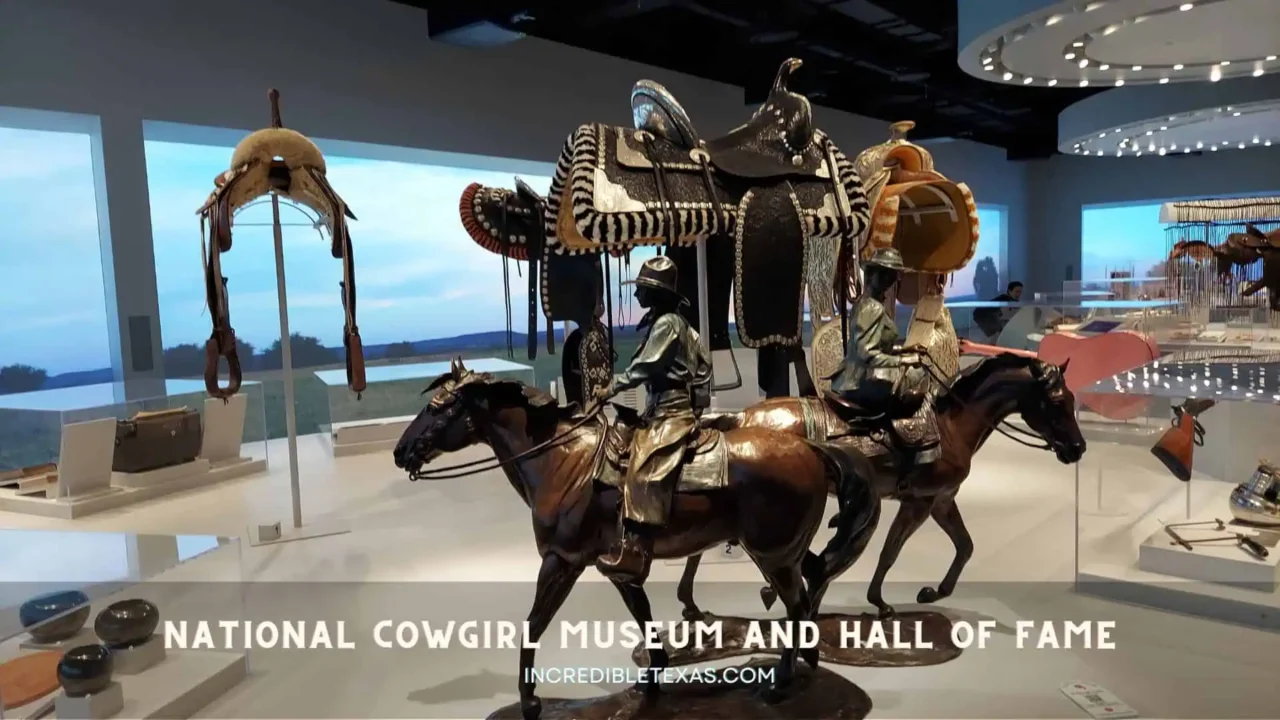
The National Cowgirl Museum’s collections include more than 4,000 artifacts, plus photographs, papers, clothing, spurs, and saddles tied to Western women and their work. AAA’s attraction notes also point to rotunda glass murals, an 8-minute theater presentation, and electronic yearbooks, which gives you a good sense of how layered the visit can feel.
That mix matters because it keeps the museum from feeling flat. You are not just reading labels; you are moving through galleries that use light, video, sound, and object displays to build a fuller picture of each story.
Expect details such as the Spirit Trail rotunda, the wall of names, and galleries that show how cowgirls also shaped entertainment, ranching, and daily life. The result is a museum that rewards slow browsing, especially if you like places where the building itself helps tell the story.
You may also notice how the museum keeps the stories personal instead of abstract. A saddle, a portrait, a costume, or a set of papers can say more than a long paragraph, and the museum uses those details well.
That approach helps because the subject can be broad. By mixing artifacts with names and narrative structure, the museum lets you connect the dots between Western work, public image, and the women who changed both.
Interactive spaces and the current expansion
The National Cowgirl Museum’s current homepage shows the second floor is closed during expansion, while the Hermes scarf collection remains on view. Your visit still has a clear draw even while construction is underway, but it is wise to check the live site before you make a special trip for one specific room.
If you like hands-on exhibits, the museum’s history gives you plenty to watch for on future visits. The Western Design Room and the Bucking Bronc Room are both part of the museum’s broader identity, and the expansion is meant to deepen that kind of experience rather than strip it away.
What you should expect right now is a museum that still tells a strong story, even if part of the building is in transition. Go for the honorees and the current galleries, and treat anything else as a bonus.
If you are bringing kids or a mixed-age group, that is good news. The interactive pieces give younger guests something to notice, while the Hall of Fame content still gives adults a reason to slow down and read.
How Long to Spend and Best Time to Visit National Cowgirl Museum
If you want the short answer, plan on about 60 to 90 minutes for a quick visit. You will have enough time to see the main galleries, read a meaningful number of labels, and still leave with a clear sense of what the museum is about.
If you want a slower visit, set aside two to three hours. That longer window gives you time to follow the Hall of Fame stories, explore the interactive exhibits, and pause for photos without feeling rushed.
The best time of day is usually midmorning or early afternoon, especially if you want a calmer gallery experience. Late arrivals can feel rushed, and the museum is more rewarding when you can stop for the details instead of sprinting to the exit.
Weather is worth thinking about too. The museum follows the Fort Worth Independent School District’s closure and delayed-opening schedule during inclement weather, so a stormy day can change the plan faster than you expect.
If you are driving from Dallas, the trip is easy enough to treat as a half-day outing. Fort Worth is roughly 30 miles west of downtown Dallas, so you can keep the whole plan compact without giving up a meaningful museum stop.
The simplest way to avoid stress is to pair the museum with one other nearby stop and leave room for lunch. A single museum plus one nearby walk or meal usually feels better than cramming in three or four places and turning the day into a checklist.
If you want the smoothest route, arrive shortly after opening, spend your time in the museum while your energy is highest, and then use the rest of the day for the district or downtown. That pace gives you the best chance to enjoy the details without checking your watch every five minutes.
Nearby Fort Worth Stops to Pair With Your Visit
The museum makes the most sense when you use it as part of a Fort Worth cluster. Use it as your Western-history anchor and build the rest of the day around it.
Go from cowgirls to cowtown history
If you want to keep the Western theme going, head next to the Fort Worth Stockyards. The museum gives you the history, and the Stockyards add the atmosphere, so the two stops reinforce each other instead of repeating the same material.
This is the easiest add-on if you want live cattle-trail energy, Western architecture, and a walkable district after your museum time. It is the most obvious choice when your day is built around Fort Worth’s heritage identity.
Add downtown walking and dinner
If you want food, shops, or an evening stroll, slide over to Sundance Square. Sundance Square gives you a cleaner transition from museum time to a downtown meal, and it works especially well if you do not want to end the day in another ticketed attraction.
Sundance Square is the better choice when your trip leans more social than educational. You can finish your museum visit, relax over a meal, and still keep your Fort Worth day feeling full without adding too much driving.
Turn it into a family museum day
If you want a kid-friendly museum loop, the Fort Worth Zoo is the easiest outdoor complement. It gives you a completely different energy from the Cowgirl Museum, which helps if you want to balance history with animals and open-air time.
For a second indoor anchor, the Perot Museum is a strong add-on if your trip leans toward science and hands-on learning. You would not do both in the same rushed hour, but either one can make the day feel bigger if you are building a full DFW itinerary.
The Cultural District itself also works well as a museum crawl. The National Cowgirl Museum is within walking distance of the Will Rogers Memorial Center, the Museum of Science and History, the Amon Carter Museum, the Kimbell Art Museum, and the Modern Art Museum of Fort Worth, so you can stack your day without a long drive between stops.
The best way to use this museum is to let it start the route, then choose one companion stop that matches your pace. A single good pairing usually beats a crowded schedule every time.
If you want parking help for the district itself, the City of Fort Worth keeps a Cultural District parking map that can make the route simpler before you leave. It is useful when you want to compare garages, walking distance, and event-day access in one place.
If you want a very simple itinerary, make the museum your first stop, grab lunch nearby, then choose either the Stockyards or Sundance Square for the second half of the day. The route stays tidy and gives you a clear finish line instead of an open-ended wander.
For an even more flexible day, treat the museum as the indoor anchor and use the rest of the district for weather backup. That is especially helpful in summer, when you may want air conditioning, short walks, and a plan that still feels good if the heat rises faster than expected.
If you want a second nearby museum instead of a restaurant stop, use the Perot Museum as your next anchor and save the bigger walking district for another day. It works well when you want one more hands-on experience before heading home.
By the time you leave, you should have a better sense of why Fort Worth leans into Western identity so confidently. The museum makes that idea concrete, and it does so in a way that feels approachable instead of formal.
National Cowgirl Museum FAQ
What is the National Cowgirl Museum and Hall of Fame?
It is a Fort Worth museum that honors women of the American West and the many ways they shaped ranching, rodeo, art, performance, and daily life. The museum also includes a Hall of Fame, artifact displays, and interactive galleries, so you get both context and a hands-on experience.
How much are tickets to the National Cowgirl Museum?
Current admission is $10 for adults, $7 for seniors 65 and older, $7 for military members and first responders with ID, and $4 for children ages 4 to 12. Children 3 and under are free with a full-price paid admission, and the Cowgirl Family Special is $28 for two adults and up to four children ages 4 to 12.
How long does it take to visit the National Cowgirl Museum?
A quick visit usually takes 60 to 90 minutes, while a slower visit can take two to three hours. If you like reading labels, following the Hall of Fame stories, and trying the interactive spaces, you will be happier with the longer window.
What is inside the National Cowgirl Museum and Hall of Fame?
You will find Hall of Fame stories, more than 4,000 artifacts, photographs, clothing, saddles, and media-driven exhibits that explain the lives of Western women. The museum also uses its rotunda and gallery design to make the visit feel more immersive than a simple wall-text tour.
Is the National Cowgirl Museum good for kids?
Yes, especially if your kids like interactive exhibits, visuals, and a museum that is not too large to manage in one stop. The bronc-themed experiences, hands-on design spaces, and clear story lines make it easier for younger guests to stay engaged than in a more traditional gallery-only museum.
Where is the National Cowgirl Museum located?
The museum is at 1720 Gendy Street in Fort Worth, Texas, inside the Cultural District. It sits close to several other major Fort Worth attractions, which is why it works so well as part of a larger day plan.