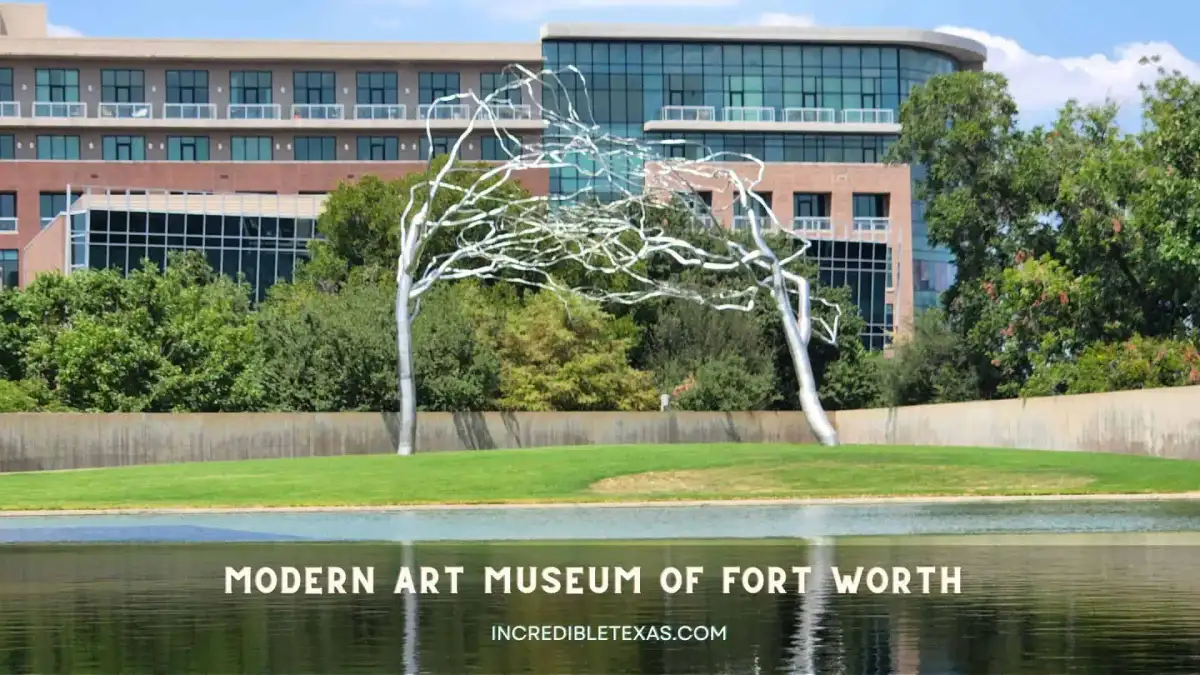
The Modern Art Museum of Fort Worth houses nearly 3,000 post-World War II masterworks within five light-filled pavilions. Located in the central cultural corridor of Fort Worth, the institution combines internationally recognized contemporary exhibits with striking Japanese architectural design.
Key takeaways
- The institution opens Tuesday through Sunday at 10:00 AM, offering extended evening hours until 8:00 PM on Fridays.
- General admission costs $16 for adults, while visitors under 18 enter free every day of the week.
- Every Friday features completely free admission for all guests, and all Sunday tickets are automatically half-price.
- Free on-site parking is provided in the surface lot off Darnell Street, with overflow weekend parking at the UNT Health Science Center.
- The 53,000-square-foot facility features five massive glass-and-concrete pavilions cantilevered over a tranquil 1.5-acre reflecting pond.
What the Modern Art Museum of Fort Worth Is Known For
The Modern Art Museum of Fort Worth is recognized as Texas’s oldest art museum, chartered in 1892. Rather than presenting a general historical survey, the institution focuses exclusively on post-1945 international art, encompassing major movements from Abstract Expressionism to contemporary new media.
The museum building itself stands as a major cultural destination. Positioned at 3200 Darnell Street, the campus balances monumental concrete walls with floating glass facades that bring exterior water reflections into interior galleries.
Travelers organizing a broader day trip from Dallas can easily explore the entire permanent collection in two to three hours. The manageable gallery footprint allows guests to appreciate major works without experiencing museum fatigue.
Operating Hours, Ticket Prices, and Free Admission Days
Standard Modern Art Museum of Fort Worth hours run Tuesday through Sunday from 10:00 AM to 5:00 PM, with extended Friday hours until 8:00 PM. The galleries remain closed on Mondays as well as major national holidays like Thanksgiving and Christmas.
Purchasing Modern Art Museum of Fort Worth tickets can be completed online in advance or at the main admission desk upon arrival. Visitors taking advantage of free Friday admission can enter all permanent galleries and rotating exhibitions without paying entrance fees.
| Admission Tier | Standard Price | Friday Free Day | Half-Price Sunday | Eligibility Details |
|---|---|---|---|---|
| Adults (Ages 18+) | $16.00 | Free ($0) | $8.00 | Standard adult admission ticket |
| Seniors (Ages 60+) | $12.00 | Free ($0) | $6.00 | Valid photo identification required |
| Military & First Responders | $12.00 | Free ($0) | $6.00 | Active duty or retired badge/ID |
| Students | $10.00 | Free ($0) | $5.00 | Valid college or university school ID |
| Youth (Under 18) | Free ($0) | Free ($0) | Free ($0) | Children and teens enter free daily |
Online ticket reservations and updated seasonal holiday schedules can be reviewed on the Modern Art Museum Official Hours and Admission Portal.
Free Parking and Transportation Directions
Securing Modern Art Museum parking is straightforward thanks to complimentary dedicated surface parking. The primary lot sits directly adjacent to the main entrance off Darnell Street and provides designated accessible spaces near the doors.
On busy Friday evenings and weekends, guests can take advantage of free overflow parking in the UNT Health Science Center garage located across Clifton Street. Additional paid spaces operate nearby at the Will Rogers Memorial Center facility.
Drivers arriving from Interstate 30 should exit University Drive north, continue past the Botanic Garden, and turn west onto Lancaster Avenue toward Darnell Street. Detailed transit routes and campus accessibility maps are outlined in the Modern Art Museum Parking and Directions Guide.
Tadao Ando Architecture and Pavilion Design
The current museum facility opened in December 2002, designed by acclaimed Japanese architect Tadao Ando. The campus spans 53,000 square feet of gallery space across five concrete pavilions cantilevered over a calm 1.5-acre reflecting pond.
Tadao Ando architecture emphasizes pure geometric forms, unadorned structural concrete, and massive sheets of transparent glass. The Y-shaped concrete support columns mirror those of classical temples while grounding the pavilions in industrial strength.
Each reflecting pond pavilion appears to float weightlessly above the water basin, especially when viewed from outdoor viewing terraces. Travelers interested in sculptural Texas structures should also compare this modernist installation with the concrete landscape of the Fort Worth Water Gardens downtown.
Permanent Collection Highlights and Special Exhibitions
The museum’s permanent contemporary art collection encompasses approximately 3,000 paintings, sculptures, photographs, and video installations. Landmark holdings include seminal works by Mark Rothko, Jackson Pollock, Andy Warhol, Philip Guston, and Anselm Kiefer.
Natural light filters through clerestory windows, illuminating large-scale sculptural pieces designed specifically for high-ceilinged galleries. Curators rotate permanent collection displays regularly, providing fresh perspectives for repeat visitors.
While the encyclopedic collections at the Dallas Museum of Art cover thousands of years of human history, this Fort Worth museum focuses with sharp curatorial rigor on the post-1945 era. Major traveling retrospectives occupy ground-floor pavilions throughout spring and autumn seasons.
Visitor Policies, Bag Checks, and Photography Rules
Handheld personal photography without flash is permitted throughout permanent collection galleries. The museum prohibits tripods, monopods, selfie sticks, and flash equipment to protect delicate canvas surfaces and ensure clear pathways for fellow patrons.
Large backpacks, umbrellas, and bags measuring over 15 by 15 by 5 inches must be stored in complimentary lockers near coat check. Guests are asked to maintain a two-foot distance from all wall-hung artworks and sculptural displays.
Strollers pushed by adults are welcome on all gallery floors, with elevator access serving upper exhibition corridors. Visitors looking for a relaxing dining break can enjoy seasonal lakefront dishes at Café Modern dining, situated within the central pavilion overlooking the pond.
Tip
Visit on the first Sunday of the month at 2:00 PM for the museum’s complimentary docent-led family architecture tour, which explores how Tadao Ando engineered the building’s massive concrete columns.
Planning a Fort Worth Cultural District Itinerary
The museum anchors the nationally acclaimed Fort Worth Cultural District, which features five world-class museums within easy walking distance. The official Texas Commission on the Arts Cultural District Directory recognizes the neighborhood for its high concentration of acclaimed cultural architecture.
Directly across Darnell Street sits the Kimbell Art Museum, designed by Louis Kahn and Renzo Piano, allowing travelers to experience three Pritzker Prize-winning buildings in a single afternoon. Additional surrounding stops include the Amon Carter Museum of American Art and the Fort Worth Museum of Science and History.
Visitors can combine a morning gallery tour with other popular things to do in Fort Worth, such as afternoon shopping in Sundance Square or evening dining in the Stockyards. For regional neighborhood maps and transit details, consult the Visit Fort Worth Cultural District Guide.
Frequently Asked Questions
What are the daily operating hours for the museum?
The museum opens Tuesday through Sunday from 10:00 AM to 5:00 PM, with extended evening hours until 8:00 PM on Fridays. The galleries are closed to the public on Mondays and major holidays.
How much does general admission cost?
Adult admission costs $16, seniors, military members, and first responders pay $12, and students pay $10. Admission is free for children under 18 every day, free for all visitors on Fridays, and half-price on Sundays.
Is parking free on-site?
Free parking is available in the museum surface lot directly off Darnell Street. Free overflow parking is also open in the adjacent UNT Health Science Center garage on Friday evenings and weekends.
Who designed the pavilion building?
Pritzker Prize-winning Japanese architect Tadao Ando designed the museum building, which opened to the public in December 2002. The structure features five soaring glass-and-concrete pavilions positioned over an expansive 1.5-acre reflecting pond.
Can visitors take photographs inside the galleries?
Still photography for personal, noncommercial use is permitted throughout permanent collection galleries without flash. Tripods, selfie sticks, flash equipment, and commercial portrait sessions are strictly prohibited indoors.