Lost Maples State Natural Area: Map, Hours, Camping, Trails, and Fall Foliage
Lost Maples State Natural Area sits five miles north of Vanderpool on Ranch Road 187. Lost Maples State Natural Area fees include a $6 adult day-use charge, children 12 and under enter free, and fall weekends can reach capacity fast.
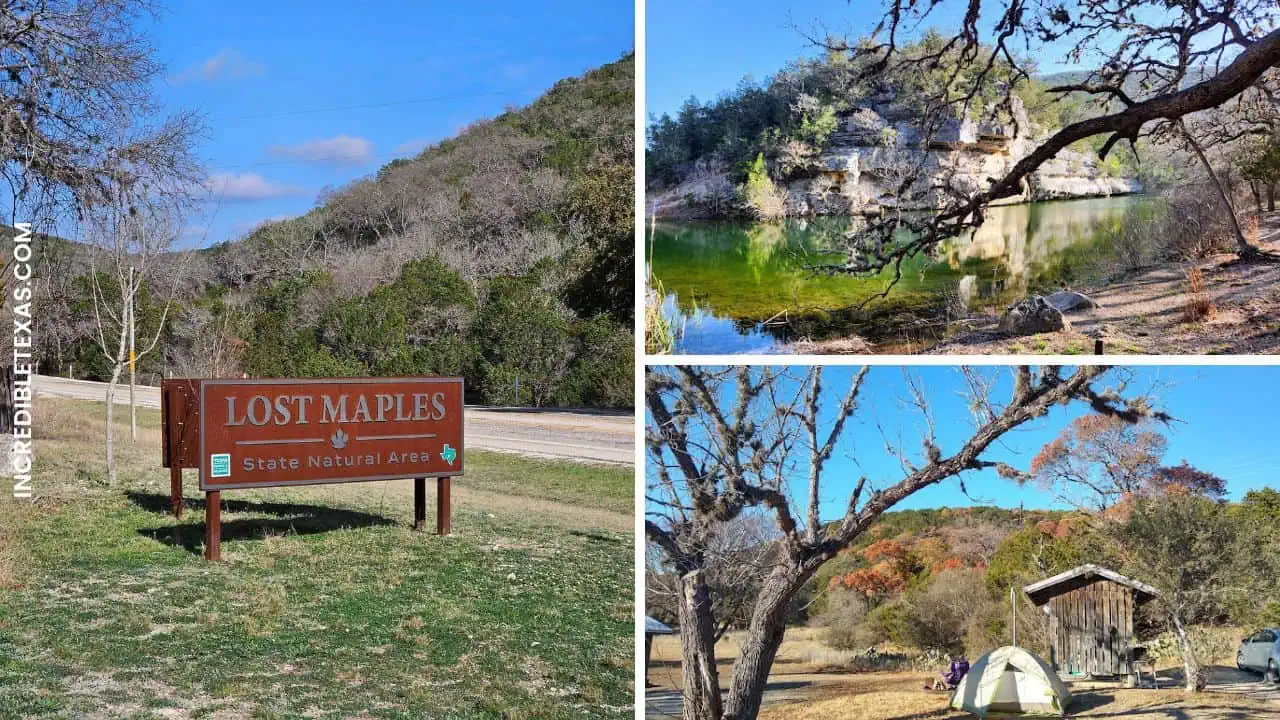
Lost Maples State Natural Area hours are 8:30 AM to 4:30 PM daily, so early arrivals have the best chance of finishing the short trails before the lot fills. That timing matters most in fall, when reservation windows and parking limits shape the visit.
The park is known for bigtooth maples, the Sabinal River, and rugged Hill Country trails, but the visitor experience also includes camping, birding, geocaching, and stargazing. For a broader Hill Country plan, the Frio River Texas guide and the Garner State Park guide pair naturally with a Lost Maples stop.
Lost Maples State Natural Area at a Glance
| Quick fact | Current visitor detail |
|---|---|
| Park address | 37221 F.M. 187, Vanderpool, TX 78885 |
| Location | Five miles north of Vanderpool on Ranch Road 187 |
| Hours | Open daily, 8:30 a.m. to 4:30 p.m. |
| Day-use fee | $6 for adults age 13 and older; free for children 12 and under |
| Busy season | October through November and March through May |
| Best foliage window | Last two weeks of October through the first two weeks of November, weather permitting |
| Trail mileage | More than 10 miles of hiking trails |
| Cell service | Not available inside the natural area |
| Camping | 28 electric sites and 50 primitive hike-in sites |
| Elevation | Roughly 1,800 to 2,250 feet |
| Nearby park pairings | Garner State Park, Hill Country State Natural Area, and other Hill Country stops |
According to TPWD, the park protects steep limestone canyons, springs, plateau grasslands, wooded slopes, and clear streams.
The bigtooth maple stand is the main fall draw, but the park also stays active with birds, wildlife, and cooler shaded pockets along the river and canyon walls. TPWD says the foliage turn depends on weather, so the best color window can shift slightly from year to year.
Texas Parks and Wildlife Department describes the Uvalde bigtooth maple stand as the source of the park’s autumn color, and the same habitat supports white-tailed deer, bobcats, armadillos, and javelinas.
Getting There and Park Basics
TPWD’s Lost Maples map page is the clearest source for the park address, directions, and current entry information. It also confirms that reservations can be made online or by phone, which matters most when fall weekends start selling out.
The drive from San Antonio is about two hours northwest, and TPWD notes that the park is often crowded in the fall. Lost Maples State Natural Area directions from Vanderpool are straightforward because Ranch Road 187 leads directly to the park.
The surrounding area is small, but the park sits within reach of Utopia, Bandera, and the larger Hill Country travel corridor. Visitors often pair Lost Maples with a river stop or a second state park on the same weekend.
- The park is five miles north of Vanderpool on Ranch Road 187, so the final approach is direct once Vanderpool is reached.
- TPWD lists the headquarters at 37221 F.M. 187, Vanderpool, TX 78885, which is the best address for navigation apps.
- Reservations are especially important during the fall foliage season because capacity closes can happen when parking fills.
- Cell service is not available inside the natural area, so a downloaded map or printed backup is the safest arrival plan.
Travelers building a Hill Country route often compare the park with the South Llano River State Park guide for another spring-fed camping option. A different kind of canyon-and-water trip appears in the Pedernales Falls State Park guide.
Lost Maples State Natural Area History and Landscape
Lost Maples State Natural Area is one of the clearest examples of a Hill Country natural area that still feels remote. According to TPWD, the park holds rugged limestone canyons, shaded slopes, springs, and clear streams that cut through the Edwards Plateau landscape.
The famous maple stand is a small part of a larger ecosystem rather than a standalone attraction. TPWD identifies Uvalde bigtooth maples as the species that gives the park its autumn color, and the trees are paired with sycamores, walnuts, oaks, and other native species across the canyons.
Birdlife is part of the park’s identity throughout the year. TPWD notes black-capped vireos and golden-cheeked warblers in spring and early summer, along with year-round sightings that can include green kingfishers, deer, bobcats, armadillos, and javelinas.
The landscape matters because it shapes everything visitors do in the park. Steep slopes, shaded groves, and creek crossings create a setting that feels more like a backcountry stay than a simple roadside stop.
Lost Maples State Natural Area Camping and Overnight Stays
TPWD’s campsite page lists two main overnight options: campsites with electricity and primitive hike-in campsites. The electric sites are the easier choice for standard camping gear, while the primitive sites suit backpackers who want a quieter overnight stay.
| Campsite type | Sites | People per site | Nightly rate | Key details |
|---|---|---|---|---|
| Campsites with electricity | 28 | 8 | $20, plus daily entrance fee | Water hookup, 30 amp hookup, picnic table, fire ring, shade shelter, back-in RV parking, restrooms with showers nearby, quiet hours from 10 p.m. to 6 a.m. |
| Primitive campsites | 50 | 6 | $10, plus daily entrance fee | Hike-in only, backpacking equipment suggested, sites are not assigned, Area C is closed to camping, and Leave No Trace principles apply. |
TPWD lists a weekly rate of $120 for electric sites from December through February.
Lost Maples primitive camping rules are stricter than the electric campground rules. TPWD says only containerized cooking is allowed there, no charcoal is permitted, and campfires belong only in designated rings within the water-and-electric camping area.
- Primitive sites are hike-in only, so visitors should pack as though the campsite is a backpacking destination.
- Pets are allowed on leash, and waste should be carried out and disposed of responsibly.
- Trash should be packed out, because the natural area protects sensitive natural and cultural resources.
- Visitors who want easier vehicle access should book one of the electric sites instead of a primitive site.
- Quiet hours run from 10 p.m. to 6 a.m., which helps the campground stay calm during busy weekends.
Travelers comparing spring-fed camping options often also look at the Frio River Texas guide for a different Hill Country river weekend. A similar overnight-and-trail rhythm appears in the Garner State Park guide.
Lost Maples State Natural Area Trails, Wildlife, and Park Etiquette
TPWD’s trails information page says Lost Maples State Natural Area hiking trails allow biking only for the first mile from the trailhead, after which they become hiking-only routes.
The same page adds that the park holds more than 10 miles of trails, including a route that follows the top of a 2,200-foot cliff.
Trail conditions are part of the experience at Lost Maples, not a side note. TPWD says the terrain is steep, rugged, and rocky in many places, with loose rock, steep steps, and creek crossings that call for steady footwear and enough water for the length of the hike.
| Trail | Distance | Time | Difficulty | What it offers |
|---|---|---|---|---|
| Maple Trail | 0.4 mi. | 20 min. | Easy | A short route through a stand of remarkable bigtooth maple trees. |
| East-West Trail | 1.0 mi. | 45 min. | Easy | A shaded river-tributary walk with a simple option for extending the route. |
| East Trail | 3.1 mi. | 3 hrs. | Challenging | A rocky climb along the Sabinal River with maples, bald cypress, sycamore, and scenic views. |
| West Trail | 3.6 mi. | 3.5 hrs. | Challenging | A steep, quiet hike with springs, solitude, and the shaded Mystic Canyon area. |
| West Loop Trail | 2.9 mi. round trip | 1.5 hrs. | Moderate | A detour into a shady Ashe juniper grove off the West Trail. |
Monkey Rock, the Grotto, the Scenic Overlook, and the Pond Day-use Area are clear landmarks on the trail network.
- Monkey Rock is a limestone outcrop with plants growing from the cliff walls.
- The Grotto offers a cooler, quieter setting where moisture supports maidenhair ferns and other plants.
- The Scenic Overlook gives a view of the Sabinal River valley below.
- The Pond Day-use Area works well for a picnic or a shore-fishing break.
- Visitors should carry roughly a quart of water per hour of trail time, which is the amount TPWD recommends.
- Closed-toe hiking shoes help on the loose rock and uneven steps that appear on steeper routes.
- Phones and GPS units are useful backups, but TPWD says a connection should not be expected.
- Hiking stays safer when the route is chosen with the current weather and trail condition in mind.
- Wildlife should be observed from the trail without feeding or approaching animals.
Visitors who prefer a different river-and-rock setting often compare Lost Maples with the Pedernales Falls State Park guide on longer Hill Country trail days.
Lost Maples State Natural Area Things To Do Beyond Hiking
TPWD says the Lost Maples State Natural Area supports hiking, photography, fishing, birdwatching, camping, backpacking, stargazing, and geocaching.
Fishing is especially simple here because TPWD says no fishing license is required inside a Texas state park or natural area when fishing from shore or pier. The Pond Day-use Area and the Sabinal River are the most obvious places to build that part of the visit.
- Birding works well in spring and early summer, when black-capped vireos and golden-cheeked warblers nest in the park.
- Photography gets the best color in fall, but the canyons, springs, and wooded slopes photograph well in every season.
- Geocaching adds a puzzle-style layer to a day that already includes hiking and wildlife viewing.
- Stargazing is a good fit because TPWD rates Lost Maples as a Bortle 3 dark-sky site.
- Picnicking at the day-use areas gives non-hikers a full park day without needing a long trail plan.
The park’s quieter rhythm also makes it a good match for travelers who want a slower Hill Country stop instead of a crowded river weekend. For a different kind of water-centered outing, the Inks Lake State Park guide is a different Hill Country water stop.
Nearby Stops and Side Trips
Lost Maples State Natural Area fits naturally into a broader Hill Country loop because Vanderpool, Utopia, and Bandera are all close enough for supplies, meals, or a second overnight stop. Garner State Park and Inks Lake State Park are common comparison stops for visitors who want a different style of water-and-trail day.
The same weekend can stay centered on Lost Maples or include one river stop and one lake stop. That structure works well when the visit depends on foliage timing, a campground reservation, or a quick change in weather.
- Vanderpool is the easiest place for a final supply run before entering the park.
- Utopia and Bandera are useful for meals, fuel, and a slower pace after the trails.
- Garner State Park adds a Frio River option to a Hill Country itinerary.
- Inks Lake State Park offers a lake-and-camping contrast for visitors who want a different water setting.
How to Visit Lost Maples State Natural Area
How to visit Lost Maples State Natural Area usually comes down to the pass, the trail map, and the time of day. A simple plan keeps the trip focused on the best trail for the weather and the amount of daylight available.
- Reserve a pass before a fall weekend visit, because busy dates can fill quickly.
- Open the Lost Maples State Natural Area trail map before choosing between the Maple Trail, East-West Trail, East Trail, or West Trail.
- Carry enough water for a full trail day, since TPWD recommends roughly one quart per hour of activity.
- Finish the visit with a stop at the Scenic Overlook or Pond Day-use Area if a shorter day fits the schedule better.
Lost Maples State Natural Area hiking trails reward a slower pace, especially when the route includes the steeper east and west-side climbs. A trail-first visit works best when the park is treated as a day of steady walking, wildlife viewing, and planned rest breaks rather than a rushed checklist.
Lost Maples State Natural Area Accessibility and Park Limits
TPWD’s accessibility page says the Headquarters and Interpretive Center building, the attached restrooms, a designated picnic site, and the restrooms with showers in the drive-up campsite area are wheelchair accessible.
The campsites themselves do not meet ADA requirements, so Lost Maples State Natural Area accessibility is strongest around the headquarters and day-use areas rather than the trail network.
The trails page adds an important limit for trip planning: most trails are unsuitable for mobility aids and strollers. TPWD also says the terrain is steep and rugged, with loose rocks and steep steps, so a conservative route choice is the safest plan for visitors with mobility concerns.
- Conditions can change quickly, so park staff should be contacted before a visit when accessibility details matter.
- Trail routes should be chosen with the day’s footing and climb level in mind, not just the trail name.
- Cell service should not be relied on for navigation, emergency planning, or live updates.
- Visitors with accessibility needs may find the day-use and headquarters areas easier to use than the trail network.
The park keeps a light footprint because it protects a fragile ecosystem rather than a fully developed recreation complex. Amenities are limited compared with larger recreation parks, but the site still offers a strong mix of scenic, educational, and camping options.
Lost Maples State Natural Area Packing and Practical Tips
A Lost Maples day works best when the pack is simple and practical. The combination of heat, rocky footing, and limited cell service makes preparation more important than bringing extra gear that will stay unused.
- Carry at least one quart of water per hour of hiking time.
- Use closed-toe shoes with traction for the rocky slopes and creek crossings.
- Pack sunscreen, insect repellent, and a hat for exposed sections of trail.
- Bring a downloaded map or a printed map because phone service is not dependable.
- Keep food sealed and trash packed out to protect wildlife and campground cleanliness.
- Add binoculars for birds and a camera for the fall colors and canyon views.
- Bring a light jacket for cooler mornings and shaded canyon sections.
Visitors planning a fall day should reserve early, arrive on a weekday when possible, and keep a second activity in mind in case the park reaches capacity.
Best Time to Visit Lost Maples State Natural Area
According to TPWD’s nature page, Lost Maples State Natural Area fall foliage usually changes during the last two weeks of October through the first two weeks of November, depending on weather. The park’s foliage report page says updates are posted weekly through November, and weekend passes can sell out quickly during the peak window.
TPWD also says October and November are the busiest months, with March through May as another busy stretch. Weekday visits are the safest bet for anyone hoping to avoid a full lot, because the park has space for only 250 cars.
- Fall works best for leaf color, but weather determines the exact peak window.
- Spring works well for wildflowers, bird activity, and lighter crowd levels.
- Winter offers a quieter trail experience for visitors who want the park without the peak-season rush.
- Weekend fall visits should include an online day-pass reservation before leaving home.
- Visitors wanting a different Hill Country setting can compare the seasonal planning at Inks Lake State Park.
TPWD’s foliage report page notes that the park often closes when lots fill. A weekday arrival and an early start help avoid the busiest periods.
Lost Maples State Natural Area Frequently Asked Questions
Where is Lost Maples State Natural Area located?
The park is five miles north of Vanderpool on Ranch Road 187, and TPWD lists the address as 37221 FM 187, Vanderpool, TX 78885.
The park is about two hours northwest of San Antonio.
How much does it cost to enter Lost Maples State Natural Area?
The adult day-use fee is $6, and children 12 and under enter free. TPWD notes that entrance fees can change, so the reservation page should be checked before the trip.
How many campsites are available?
TPWD lists 28 campsites with electricity and 50 primitive hike-in campsites. Electric sites are easier for standard vehicle camping, while primitive sites suit backpackers who want a quieter overnight stay.
Which trails are best for a short visit?
The Maple Trail and East-West Trail are the shortest official options, and both work well for visitors with only a limited amount of time. The Scenic Overlook and Pond Day-use Area are also good goals when the plan favors a short, defined route.
When is the best time to see fall colors at Lost Maples State Natural Area?
TPWD says the foliage usually changes during the last two weeks of October through the first two weeks of November, depending on weather. The official foliage report page is updated weekly through November and is the best place to check color progress before a visit.
Is cell service available in the park?
No. TPWD says cell service is not available inside the natural area, so route planning, maps, and reservation details should be handled before arrival.
Are the trails good for strollers or mobility aids?
Most trails are unsuitable for mobility aids and strollers because the terrain is steep, rocky, and uneven. The headquarters and certain day-use areas are more accessible than the trail network, so visitors with mobility concerns should check current conditions first.
What animals can visitors see at Lost Maples?
TPWD lists black-capped vireos, golden-cheeked warblers, green kingfishers, white-tailed deer, bobcats, armadillos, and javelinas on the property. Birdwatching stays productive because the park supports year-round species.
What should visitors do if the park reaches capacity?
Book early, arrive on a weekday when possible, and keep a backup destination ready because fall weekends can sell out fast. TPWD says the park has space for only 250 cars.
What are the Lost Maples primitive camping rules?
Primitive sites are hike-in only, Area C is closed to camping, and TPWD allows only containerized cooking in those areas. Visitors should pack out trash and treat the site like a backpacking camp rather than a standard drive-up site.
How do visitors get directions from Vanderpool?
Lost Maples State Natural Area directions from Vanderpool are simple: Ranch Road 187 runs north from town to the park entrance. The route is short enough that a downloaded map is usually enough for the final approach.