Lake Granbury TX Guide: Swimming, Fishing, Camping & Access
According to TPWD, Lake Granbury TX is the Brazos River reservoir that anchors downtown Granbury, and it works as a fishing lake, swimming stop, camping base, and easy North Texas day trip. TPWD places Lake Granbury on the Brazos River in downtown Granbury, off US 377 and about 33 miles southwest of Fort Worth, with striped bass, white bass, catfish, crappie, largemouth bass, and sunfish among the main species.
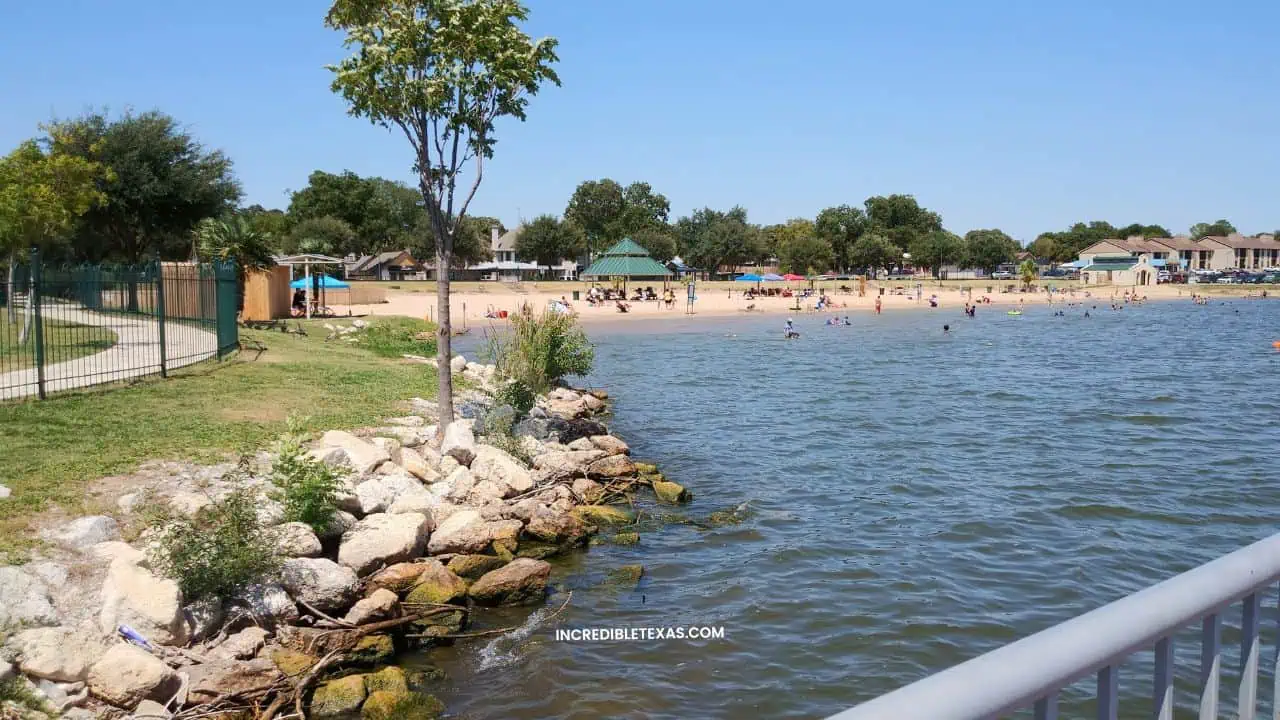
The Brazos River Authority says Lake Granbury has five public use areas, and four of those parks offer primitive camping. The city also manages the Lake Granbury swim area near downtown, which gives the reservoir a mixed setup for anglers, boaters, and beach visitors.
According to TPWD, the reservoir was impounded in 1969 and has boat houses and piers as the dominant structure. That structure pattern is one reason shoreline planning matters more here than on lakes with broad open banks.
Visitors comparing it with other Texas fishing destinations can start with the site’s best fishing lakes in Texas roundup, then narrow back to Granbury when the plan needs a reservoir with city access instead of a remote lake road.
| Quick fact | Lake Granbury TX detail |
|---|---|
| Official name | Lake Granbury |
| Location | On the Brazos River in downtown Granbury, off US 377, 33 miles southwest of Fort Worth |
| Surface area | 8,310 acres |
| Maximum depth | 75 feet |
| Shoreline | 121 miles |
| Controlling authority | Brazos River Authority |
| Main access pattern | Five public access facilities plus City Beach Park near downtown |
| Best known for | Striped bass, crappie, catfish, and city-centered lake access |
| Planning note | TPWD says golden algae blooms can occur, so current conditions matter before a fishing trip |
What Lake Granbury TX Is
Lake Granbury is a working reservoir with a clear visitor identity. It sits on the Brazos River in the middle of the city, so the lake feels more connected to downtown Granbury than many Texas reservoirs that sit out by themselves on rural roads.
That city-centered setting changes the experience. Visitors can move from a boat ramp or fishing pier to a meal, a walk near the square, or a swim stop without turning the day into a long drive between separate destinations.
TPWD’s Lake Granbury page lists the reservoir at 8,310 acres with a 75-foot maximum depth and a 1969 impoundment date. The same page identifies largemouth bass, striped bass and white bass, channel and flathead catfish, white crappie, and sunfish as the predominant species.
The lake also has a very practical structure for visitors who care about shore access. BRA’s shoreline system is built around five public use areas, and TPWD notes that the dominant structure in the reservoir is boat houses and piers rather than large expanses of open bank fishing.
That setup helps explain why Lake Granbury works for multiple trip styles at once. Anglers can focus on species and structure, swimmers can use the downtown beach area, and weekend visitors can build a simple itinerary around the shoreline instead of a complicated lake circuit.
For visitors coming from the metro area, the lake also belongs in the same planning lane as best things to do in Fort Worth. Fort Worth sits close enough to make Lake Granbury a realistic half-day or full-day water plan, not a special-occasion road trip.
The official TPWD lake page is here: TPWD Lake Granbury.
Best Ways To Reach and Use Lake Granbury
Lake Granbury is easiest to use when the access point matches the plan. TPWD’s access page lays out five public access facilities, and each one suits a different kind of visit, from a launch-and-fish morning to a picnic-heavy day on the water.
The public-access spread matters because the shoreline is not managed as a single park. Visitors can choose a west-side ramp, an east-shore ramp, a downtown swim-and-launch point, or a dam-area fishing stop depending on where the day starts.
Thorp Spring and Hunter Park both offer no-fee year-round access. Rough Creek adds a day-use window from 6 am to 10 pm.
Lake Granbury also stays easy to map because each access point serves a different part of the shoreline. The west side, east shore, downtown edge, and dam area each support a different kind of trip without forcing the visitor into a single gate or ticket line.
| Access point | What it offers | Best fit |
|---|---|---|
| Thorp Spring Park | Boat ramp, courtesy dock, accessible restrooms and parking, overnight camping, 2 picnic tables with grills, free year-round | Simple west-side launch and no-fee camping |
| Hunter Park | Boat ramp, courtesy dock, accessible fishing pier, restrooms, accessible parking, overnight camping, 18 picnic tables, 17 grills, free year-round | Fishing, family picnics, and shoreline camping |
| Granbury City Park | Boat ramp, swimming area, free year-round, and accessible fishing pier at Hewlett Park across East Pearl Street | Downtown access and mixed swim-fish use |
| Rough Creek Park | Boat ramp, courtesy dock, accessible fishing pier, 23 picnic tables and grills, day-use hours 6 a.m. to 10 p.m., free year-round | Day-use boating and picnics |
| DeCordova Bend Park | Boat ramp, courtesy dock, accessible fishing pier, designated swimming area, overnight camping, free year-round | Fishing, swimming, and campground-style stays |
TPWD says Thorp Spring, Hunter Park, City Park, Rough Creek, and De Cordova Bend are the main access nodes. The same access page shows that each one is open all year, and the boat-ramp notes make it clear that Granbury can support both trailers and casual day use.
Boaters should still check current conditions before towing a rig, because lake levels and ramp availability can change. TPWD’s live fishing report and the BRA access page are the two fastest official sources for that pre-launch check.
Visitors comparing Granbury with another North Texas lake day can also use top 10 best state parks in Texas as a planning contrast. Granbury is more urban and more access-driven, while state-park trips usually feel more contained.
The official access page is here: TPWD Lake Granbury access.
Swimming at Granbury City Beach
Granbury City Beach is the clearest downtown swim stop on Lake Granbury. The city’s parks master plan describes City Beach Park as one of the few public access points for swimmers on the lake, which gives it a more specific role than a generic shoreline park.
The beach area also sits close to Hewlett Park, where the city lists a public fishing pier and parking across East Pearl Street. That nearby pairing makes the downtown shore useful for mixed-use visits where one person wants the water and another wants a pier or a picnic stop.
Granbury’s park regulations say city parks open daily from 5 am to 11 pm. The same rules prohibit alcohol, glass containers, fires outside designated areas, hunting, firearms, and pets at City Beach Park.
The same rules keep City Beach day-use only and prohibit overnight camping. Visitors who want a simple beach afternoon can plan around that format without expecting late-night access or camp-style amenities.
Granbury’s Parks and Recreation page also identifies City Beach Park as part of the city’s active recreation system, and the city’s tourism materials keep it tied to Lake Granbury’s winter and summer event calendar. The beach therefore functions as both a swim stop and a recognizable Granbury landmark.
Hewlett Park across East Pearl Street adds a public fishing pier and parking, so the downtown shore can support both a swim break and a fishing stop in the same visit. That nearby pairing keeps the beach area useful even when the lake plan is not focused on swimming alone.
The official park rules are here: Granbury Park Regulations.
Fishing at Lake Granbury
Fishing is one of the main reasons Lake Granbury stays on Texas lake lists. TPWD calls out largemouth bass, striped bass and white bass, catfish, white crappie, and sunfish as the key species, and the reservoir’s boat-houses-and-piers structure gives anglers plenty of places to work.
TPWD says striped bass fishing can be very good on the long, sinuous reservoir, with the mid-lower lake often the best stretch. The agency also notes that downrigging jigs and crankbaits or drifting live shad can be effective, while largemouth bass often hold around docks and piers.
The current fishing report gives a more time-sensitive picture.
On February 25, 2026, TPWD reported Lake Granbury at full pool.
Crappie were good to excellent in many parts of the lake, which made them one of the strongest current bets.
Striped bass were slow to fair from the dam to near DeCordova subdivision, and catfish were good on cut bait on the upper ends. That split matters because the same reservoir can reward different tactics on the same day.
| Species | Current or official TPWD note | Where to focus |
|---|---|---|
| Striped bass | Can be very good; current report says slow to fair on jigs and live shad | Mid-lower lake, dam stretch, and deeper water |
| White bass | Listed as a main species; current report noted slower catches | Spring river sections and moving water |
| Largemouth bass | Official angling opportunity is good; current report said fair to good | Docks, piers, creek entrances, and back of creeks |
| Catfish | Official angling opportunity is good; current report said good on cut bait | Upper ends and shallow flats near structure |
| Crappie | Official angling opportunity is good; current report said good to excellent | Hunter Park, creek cover, docks, and brush |
| Sunfish | Official angling opportunity is good | Docks and shallow cover in early summer |
TPWD also warns that golden algae blooms can occur in the reservoir and can affect fish. That makes the weekly report worth checking even for short trips, especially when a warm-weather outing depends on a specific species.
The reservoir’s structure also makes gear selection easier. TPWD says boat houses and piers dominate the lake, and anglers can use GPS with a fish finder to locate habitat structures that TPWD and local partners have installed.
Shore anglers usually get the clearest results near documented access points, while boat anglers can cover the deeper water and dock lines more quickly. The main targets are docks, piers, and creek mouths, with deeper water useful for striped bass runs.
The same structure helps keep the fishery readable across seasons. When the lake is moving between warm and cool periods, the boat houses, piers, and creek mouths still give anglers a defined set of targets instead of a blank shoreline.
Visitors comparing fishing-first lakes across Texas can use Dinosaur Valley State Park camping cabins as a different outdoor benchmark when the goal shifts from reservoir fishing to a tighter park stay. Granbury leans more toward lake-wide access than a single-park format.
The current fishing report is here: TPWD Granbury fishing report.
Lake Granbury Camping, Boating, and Public Use Areas
Lake Granbury is strong for people who want to launch a boat, eat by the water, or stay overnight near the shoreline. BRA says the reservoir has five public use areas, and four of them offer primitive camping, which gives the lake more overnight flexibility than a beach-only stop.
That same public-use system keeps the lake practical for trailers and small-group trips. Several access points have boat ramps, courtesy docks, fishing piers, picnic tables, grills, accessible parking, and restrooms, so a visitor does not have to choose between fishing access and basic convenience.
Hunter Park has 18 picnic tables and 17 cooking grills, Rough Creek has 23 picnic tables and cooking grills, and DeCordova Bend has 21 picnic tables, 22 cooking grills, and a designated swimming area. Those counts are useful because they show the lake was set up for lingering, not just launching and leaving.
Thorp Spring and Hunter Park are the easiest overnight starts for visitors who want primitive camping with a ramp nearby. DeCordova Bend is the best fit for a lake day that needs camping and swimming in the same stop.
| Public use area | What makes it useful | Trip style |
|---|---|---|
| Thorp Spring | West-side ramp, courtesy dock, camping, restrooms, accessible parking | Quiet launch and primitive camping |
| Hunter Park | East-shore ramp, fishing pier, courtesy dock, camping, picnic tables, grills | Fishing-plus-picnic day or overnight |
| City Park | Downtown ramp and swim access, plus Hewlett Park fishing pier nearby | City-centered lake stop |
| Rough Creek | Day-use ramp, fishing pier, picnic tables, grills, 6 a.m. to 10 p.m. hours | Short day trip with easy access |
| DeCordova Bend | Ramp, fishing pier, designated swimming area, camping, tailrace access | Mixed-use water day with an overnight option |
All five public use areas are open year-round and do not require a fee. BRA also notes that each site has a different combination of parking, picnic, and shoreline facilities, so the right stop depends on whether the day is about launching, fishing, or lingering.
DeCordova Bend is the most useful public-use area for visitors who want both a designated swim zone and a campsite in one place. Hunter Park is the strongest all-around fishing and camping choice because of its pier, courtesy dock, and picnic inventory.
Visitors who want a more managed overnight format can compare the lake with Dinosaur Valley State Park camping cabins. Lake Granbury is less centralized, but it gives more shoreline variety and more direct city access.
The BRA public-use page is here: Lake Granbury public use areas.
Nearby Day Trips and Similar Texas Lakes
Lake Granbury combines water access with a real town at the edge of the lake. The shoreline meets downtown Granbury, which separates it from reservoirs that sit farther from town centers.
For travelers building a bigger Texas route, Granbury also pairs naturally with the site’s 23 best places to visit in Texas list. That broader roundup helps place the lake inside a longer road trip rather than a stand-alone stop.
The most obvious nearby contrast is Fort Worth. Lake Granbury sits close enough to the metro area that a visitor can combine a city meal, a lake stop, and a downtown Granbury walk without overextending the drive.
Lake Granbury combines swim access, fishing access, and camping in one shoreline system. Visitors who want a more contained state-park atmosphere usually need a different destination because Granbury is a reservoir-centered city lake rather than a single managed park.
That layout is useful for readers who care about trip shape more than a single attraction. Granbury works when the day should feel like a lake day with a downtown finish, not a park day with a lake in the background.
For a broader state-park comparison, the site’s top 10 best state parks in Texas roundup shows how Lake Granbury differs from a more structured park visit.
Lake Granbury is also a stronger fit than a generic beach stop for visitors who want actual fishing infrastructure. The ramps, piers, and camping areas keep the lake useful after the initial swim or picnic is over.
Downtown Granbury adds another layer of value because the lake day can spill into the square, local restaurants, or a second shoreline stop without a major detour. That makes the reservoir easy to use for couples, families, and small groups that want a simple itinerary.
Visitors who want the same trip shape on a different Texas lake can compare the shoreline-first setup here with more park-centered destinations. Granbury is the better fit when easy access and town proximity matter more than a pure wilderness feel.
Lake Granbury FAQ
Can visitors swim in Lake Granbury?
Yes. The city’s official materials identify City Beach Park as one of the few public access points for swimmers on Lake Granbury.
The BRA access page also lists a designated swimming area at DeCordova Bend Park. That gives visitors two clearly identified swim options, one downtown and one in the public-use park system.
What fish are in Lake Granbury?
TPWD lists largemouth bass, striped bass and white bass, channel and flathead catfish, white crappie, and sunfish as the main species.
The current report also shows crappie, catfish, and mixed bass action across different parts of the lake. Anglers can switch between those species on the same day without changing destinations.
Where are the best public access points on Lake Granbury?
Hunter Park is the strongest all-around fishing access point, City Park is the best downtown access point, Thorp Spring is a simple west-side launch, Rough Creek is a useful day-use stop, and DeCordova Bend works well for fishing, swimming, and camping in one place.
Those five access points give the reservoir a very readable shoreline map. Visitors can pick a ramp or pier based on the trip goal rather than spending time searching for the only usable entrance.
Can visitors camp at Lake Granbury?
Yes. BRA says four of the five public use areas offer primitive camping, and both Hunter Park and DeCordova Bend Park list overnight camping among their amenities.
Thorp Spring also offers camping with a boat ramp and courtesy dock. That gives visitors several ways to sleep near the lake without moving far from the shoreline in the morning.
Is Granbury City Beach free?
City Beach Park is a city-managed public access area, and Granbury’s park rules page shows that city parks are open daily from 5:00 a.m. to 11:00 p.m.
The park regulations page also says City Beach does not allow overnight camping, alcohol, glass containers, or pets. The park therefore functions as a daytime waterfront stop rather than a full overnight beach destination.
When is the best time to fish Lake Granbury?
TPWD’s current report is the best starting point because the lake can change quickly with weather, algae, and water movement.
As of February 25, 2026, the strongest reports were for crappie near Hunter Park and catfish on the upper ends. Striped bass were slower to fair from the dam to Decordova subdivision.
Lake Granbury is at its best when the plan matches the access point. Visitors who want swimming should use City Beach or DeCordova Bend, anglers should use the current report and pier notes, and campers should choose one of the public use areas that already has the right setup.
The combination of a downtown shoreline, free public use areas, and current fishing information makes the reservoir easy to plan in layers. A visitor can treat it as a quick beach stop, a striped-bass trip, or a primitive-camping weekend without changing lakes.