Corpus Christi Museum of Science and History: Hours, Tickets
The Corpus Christi Museum of Science and History is a waterfront museum in Corpus Christi’s SEA District that mixes local history, shipwreck archaeology, geology, and hands-on science. Families, school groups, and first-time visitors can build a downtown day around one stop.
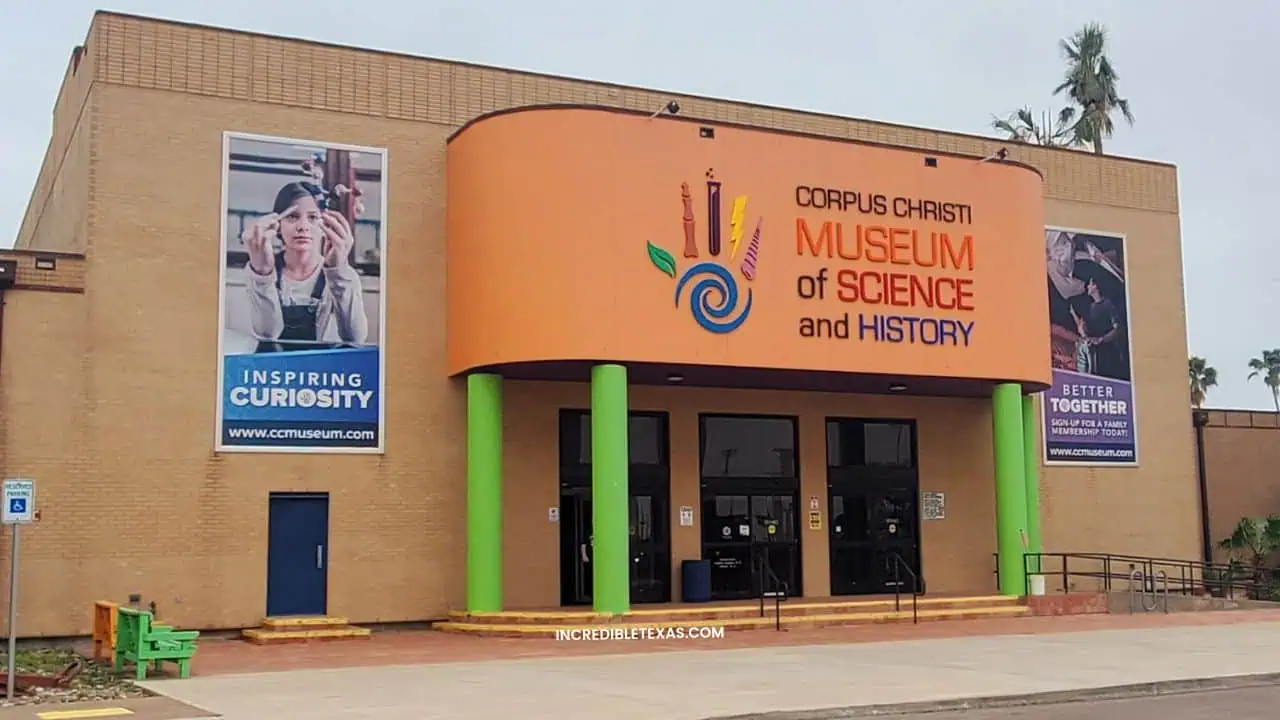
The museum opened in 1957, sits in a nearly 100,000-square-foot facility, and serves more than 100,000 visitors. Its collection depth is part of the appeal, but the practical side matters too: you get a museum that is close to downtown, easy to reach by car, and broad enough to keep different ages interested for a few hours.
If you are stitching together a bigger Corpus Christi plan, pair the museum with our things to do in Corpus Christi guide and the nearby Corpus Christi beaches roundup. That combination works well when you want history in the morning and a waterfront or beach stop later in the day.
Corpus Christi Museum of Science and History at a Glance
The museum is a strong fit if you want one stop that covers South Texas history, a few major science themes, and enough tactile exhibits to keep kids engaged. The museum also describes itself as a welcoming and accessible space, and its public mission centers on science, history, and innovation in the Corpus Christi and Coastal Bend region.
The museum is not just a room of cases and labels. It sits under the Harbor Bridge, minutes from downtown, and the public spaces lean into local identity with the La Belle, Shipwreck!, Nuecestown, and Corpus Christi History galleries.
You can use the museum as a standalone visit or as the anchor for a larger city day. The mix of local history, shipwrecks, and science keeps the visit from feeling repetitive, even if you stay for several galleries in a row.
The museum’s about page adds a few useful context points: the institution was established in 1957, the collection lives in a large waterfront campus, and the museum’s stated goal is to connect visitors with the region’s science and history story. That is a good clue that the visit works best when you slow down enough to read a few labels instead of rushing through the building.
That broad mix also helps when you are visiting with different ages in the same car. One person can focus on shipwreck history, another can linger in the science center, and a third can move quickly through the local history rooms without the visit feeling disjointed.
If you are bringing mixed ages, this is the kind of place where people can split attention without splitting up. You can linger in one gallery and still reconnect easily because the museum layout and exhibit mix stay straightforward.
Corpus Christi Museum of Science and History: Hours, Tickets, and Parking
The museum’s visit page keeps the current logistics simple. Adults and teens are $15, most children ages 3 to 12 are $11, children 2 and under are free, several discount categories are set at $11 or lower, and free parking is on Chaparral Street in the lot directly in front of the entrance or across the street in the adjacent lot.
| Detail | Current information |
|---|---|
| Address | 1900 N Chaparral St., Corpus Christi, TX 78401 |
| Hours | Monday closed; Tuesday through Sunday, 10 a.m. to 5 p.m. |
| Summer hours | Memorial Day through Labor Day: Monday closed; Tuesday through Sunday, 10 a.m. to 6 p.m. |
| General admission | Adults 18 to 64: $15; teens 13 to 17: $15; children 3 to 12: $11; children 2 and under: free |
| Discounted admission | Museums for All pricing is available with SNAP EBT and photo ID, with adult tickets at $3 and child tickets at $1 |
| Parking | Free parking in front of the museum and in the adjacent lot across the street |
| Group trips | Ten or more people, with advanced scheduling required |
General admission tickets expire one year after purchase, so the museum is not trying to push you into a same-day decision. If you plan to visit with a group, school class, or club, call ahead at 361-826-4667 and schedule in advance so you are not trying to manage check-in at the door.
The parking setup is especially convenient for a downtown museum stop because you do not need to build extra parking time into your visit. If you are arriving in summer, the extra hour of evening access can make the visit feel easier to fit around lunch, a beach stop, or a later dinner downtown.
What You Will See Inside the Corpus Christi Museum of Science and History
The museum’s exhibits page shows why the building is more than a general local-history stop. The museum says it holds hundreds of thousands of artifacts and historically significant items, and the galleries span ecology, paleontology, shipwreck archaeology, coastal history, and hands-on science for kids.
The exhibit mix also works for mixed-age groups because every room gives you a different entry point. Adults can linger on local-history details, while younger visitors can stay busy with wildlife displays, ship timbers, and the interactive science zone.
| Gallery | What to look for | Why it matters |
|---|---|---|
| Ecology Hall | Shells from around the world, local weather, and wildlife displays | Good first stop if you want an easy, visual introduction to the museum |
| Corpus Christi History | Dr. Arthur Spohn’s office, the Nueces Hotel sign, and the growth of the port | Helps you connect downtown Corpus Christi to the city’s larger story |
| Geology Hall | Rocks, gems, minerals, and a model Southwestern refinery | Strong for visitors who like earth science and industrial history |
| H-E-B Science Center | Interactive chemistry, music, and biology elements, plus a planetarium and outdoor playground | The most kid-friendly hands-on zone on the current exhibit list |
| Kenedy Gallery | Objects tied to the historic Kenedy family home and rotating programs | Useful when you want a broader Coastal Bend heritage stop |
| The La Belle | The La Salle expedition story and shipwreck artifacts from Matagorda Bay | One of the museum’s signature history galleries |
| McGregor Gallery | Historic Corpus Christi photography and camera technology | Shows how the city grew through the lens of one photographer |
| Nuecestown | Post-Civil War Coastal Bend life brought to life with museum collections and live actors | Gives you an immersive local-history detour |
| Paleontology Hall | Mosasaur and Megalodon teeth, petrified wood, and space debris | Good for visitors who want a science-heavy stop |
| Shipwreck! | The San Esteban and Espíritu Santo story, with ship timber, silver, and gold | Best gallery for Texas maritime history fans |
| Xeriscape Garden | Water-saving landscape ideas and South Texas plants | Free to the public and easy to combine with a quick outdoor break |
If you only have time to focus on a few spaces, start with The La Belle, Shipwreck!, and the H-E-B Science Center. That trio gives you the museum’s strongest mix of maritime history, regional story, and hands-on learning without asking you to treat the visit like a full-day marathon.
The shipwreck galleries are especially memorable because the museum does not present them as isolated artifacts. Instead, the stories connect the Spanish wrecks off Padre Island, the La Salle expedition, local indigenous communities, and the larger arc of Texas coastal history into one continuous narrative.
How Long to Spend and the Best Time to Visit
A weekday morning is the cleanest option because the museum opens at 10 and stays closed on Monday. In summer, the museum stays open until 6 from Memorial Day through Labor Day, which helps if your day already includes downtown errands or a beach stop.
The museum works well as a rainy-day stop because the main experience is indoors, but the current exhibit mix still gives you a reason to slow down instead of treating it like a quick walk-through. A slower pace makes the labels more rewarding, especially in The La Belle, Shipwreck!, Corpus Christi History, and H-E-B Science Center.
If you want the most comfortable first visit, aim for an early arrival and decide in advance which galleries matter most to you. That approach keeps your day flexible, and it gives you enough room to handle tickets, parking, and a few unplanned detours without feeling rushed.
The summer hours matter more than they first look because they change how easily you can pair the museum with other plans. When the museum stays open until 6 p.m., you can leave yourself a little extra time for a waterfront dinner, a short downtown wander, or a slower museum exit without watching the clock.
Tips for Families, School Groups, and First-Time Visitors
The museum is built for a broad audience, but families will get the most out of the H-E-B Science Center because it is set up for children ages 3 and up and adds a planetarium and outdoor playground to the hands-on floor. That mix helps the museum feel less like a passive walkthrough and more like a place where kids can burn off some attention while learning something concrete.
If you are choosing between Texas museums for future trips, the Perot Museum and the Witte Museum are useful comparison stops. Those museums offer a similar blend of science, history, and family-friendly learning, so they are good reference points when you want to decide whether Corpus Christi belongs on your short list.
School groups and large parties need advance scheduling, and the museum says group trips are for 10 or more people. That is helpful because it keeps the logistics organized before you arrive, and it makes the museum a safer choice for classes, scout groups, and family reunions that want a structured outing instead of improvising at the door.
The museum’s events page is worth checking before you go because it is where the museum posts seasonal programs, special days, and family-friendly happenings. If you are planning around a school holiday or weekend visit, that calendar can help you decide whether to go on a quieter day or build around a special event.
The public pages describe the museum as welcoming and accessible, but they do not spell out every practical accessibility detail in a simple checklist [UNVERIFIED]. If you need specific information about elevators, stroller routing, sensory accommodations, or restroom access, call 361-826-4667 before you go so you do not have to guess once you arrive.
A public photography rule is not clearly posted on the museum’s main visitor pages [UNVERIFIED]. Ask staff before you use flash, a tripod, or commercial equipment so you do not run into surprises.
Nearby Things to Do After Your Visit
The Corpus Christi Museum of Science and History’s location under the Harbor Bridge puts you in a practical spot for a larger Corpus Christi outing. If you want to stay downtown, you can keep the day moving with a waterfront lunch, the bayfront, or another museum stop, and you can use the museum as the historical core of the itinerary.
If your goal is a bigger city loop, the museum pairs naturally with Mustang Island and the coast. You can use Mustang Island State Park when you want to add beach time or camping after your indoor stop, and the museum’s downtown location makes it easy to move from exhibits to open water without a long reset.
Corpus Christi also works well when you treat the museum as one piece of a broader day trip. The harbor-front setting, the free parking, and the central location mean you can keep your schedule flexible, which is useful if you are traveling with kids, older relatives, or visitors who want a mix of indoor and outdoor stops.
A museum stop also gives you a reliable fallback if the weather turns windy or hot. You can keep the day moving with indoor time first, then decide later whether you want a bayfront walk, beach time, or dinner downtown.
That kind of flexibility matters on a Corpus Christi weekend because you can keep the plan intact even if the weather shifts. You do not have to overbook the day to make the museum feel worth the stop.
That is especially useful if you are balancing museum time with kids, meals, and a beach stop. A simple plan usually works better than a packed itinerary.
For a longer planning list, keep a Corpus Christi weekend plan handy when you want to mix museums, the bayfront, and the beach. That approach makes the museum stop part of a larger coastal itinerary instead of a stand-alone errand.
Corpus Christi Museum of Science and History FAQ
How much are tickets at Corpus Christi Museum of Science and History?
General admission is $15 for adults ages 18 to 64 and $15 for teens ages 13 to 17. Children ages 3 to 12 are $11, children 2 and under are free, seniors 60 and older are $11, and military veterans, teachers, Museum members, and Purple Heart recipients have reduced or free admission depending on the category.
If you qualify for Museums for All, adult and teen tickets are $3 and child tickets are $1 when you present an EBT card and valid photo ID in person. That discount is one of the easiest ways to lower the cost if you are planning a family visit on a tighter budget.
What are the Corpus Christi Museum of Science and History museum hours?
Standard hours are Tuesday through Sunday from 10 to 5, and the museum is closed on Monday. Summer hours run from Memorial Day through Labor Day, when the museum stays open Tuesday through Sunday until 6 and remains closed on Monday.
Is parking free at the Corpus Christi Museum of Science and History museum?
Free parking is available on Chaparral Street in the lot directly in front of the museum entrance or across the street in the adjacent lot. Parking is easy because you can arrive, park, and walk in without a separate downtown search.
How long does it take to go through the Corpus Christi Museum of Science and History museum?
A slower visit works best if you want to read labels, stop in the science center, and spend time in The La Belle or the Shipwreck exhibit. If you only want a quick look, you can focus on a few signature rooms, but most first-time visitors will enjoy the place more if they leave enough time to explore instead of rushing straight through.
What exhibits are inside Corpus Christi Museum of Science and History?
Current public exhibit pages highlight Ecology Hall, Corpus Christi History, Geology Hall, H-E-B Science Center, Kenedy Gallery, The La Belle, McGregor Gallery, Nuecestown, Paleontology Hall, Shipwreck!, and Xeriscape Garden. That mix gives you a coastal history core, a shipwreck story, and enough hands-on science to keep kids engaged.
Is Corpus Christi Museum of Science and History good for kids?
Yes, especially if your child likes interactive exhibits. The H-E-B Science Center is built for children ages 3 and up, and it adds chemistry, music, biology, a planetarium, and an outdoor playground to the museum experience.
If your family prefers less structured stops, the museum still works because the galleries have enough visual variety to keep younger visitors moving. The free parking, central location, and current admission structure make it an easy family outing instead of a complicated one.