Big Spring State Park Map, Hours, Trails & Tips
Big Spring State Park is a free day-use park in Big Spring, Texas, built around Scenic Mountain and its 200-foot bluff. TPWD says the park is open daily from 8 AM to sunset, covers 382 acres, and gives visitors a straightforward West Texas outing with short trails, a paved scenic drive, and wide views across the plains.
The park works well for travelers who want a quick scenic stop, a picnic break, or an easy trail walk without committing to an overnight stay. Big Spring State Park also fits naturally into a broader West Texas road trip, especially when the plan includes Top 10 Best State Parks in Texas as a comparison guide for bigger park choices.
According to TPWD’s Big Spring State Park page, the main features are the Scenic Mountain drive, the hike-and-bike trail, the nature trail, the group pavilion, and the interpretive material tied to the area’s long history. The current planning picture is simple: this is a free, scenic, low-lift park visit that rewards early or late light more than a long midday stop.
| Quick fact | Big Spring State Park |
|---|---|
| Official name | Big Spring State Park |
| Location | No. 1 Scenic Drive, Big Spring, TX 79720 |
| County | Howard County |
| Acreage | 382 acres |
| Elevation | 2,810 feet |
| Hours | Open daily, 8 AM to sunset |
| Entrance fee | Free |
| Main draw | Scenic Mountain bluff views, paved drive, short trails, and picnic space |
| Best for | Sunrise and sunset views, short hikes, scenic drives, picnics, and easy West Texas planning |
| Nearest state park | Lake Colorado City State Park |
| Current alert notes | Burn ban, construction notice, and a city water notice are posted by TPWD as of April 3, 2026 |
Big Spring State Park Hours, Fees, Address, and Current Alerts
TPWD lists Big Spring State Park as open daily from 8 AM to sunset, and the entrance fee is free.
The park’s address is No. 1 Scenic Drive in Big Spring, and the main phone number is (432) 263-4931.
The current park alert page is worth checking before arrival, especially for anyone planning to use the pavilion or cook on site. As of April 3, 2026, TPWD lists a burn ban, a construction notice, and a city water notice connected to the park’s water supply.
According to TPWD’s Big Spring State Park alert page, wood and charcoal fires are not allowed under the burn ban, although containerized fuel stoves such as propane stoves are allowed for cooking. The same alert page also says pavilion electricity is shut off because of construction, and visitors should expect noise and occasional construction traffic on park roads.
That alert page also notes a city water notice tied to the City of Big Spring supply. Anyone planning a longer picnic or a group gathering should check the alert page again before leaving home, because the situation can change faster than the main park overview page.
| Planning detail | Current information | Why it matters |
|---|---|---|
| Open hours | Daily, 8 a.m. to sunset | Simple schedule for day trips and evening views |
| Admission | Free | No entrance fee is required for a regular visit |
| Address | No. 1 Scenic Drive, Big Spring, TX 79720 | Useful for GPS navigation and rideshare pickup |
| Phone | (432) 263-4931 | Best contact for current conditions and pavilion questions |
| Burn ban | Wood and charcoal fires are not allowed | Affects picnic and cooking plans |
| Construction notice | Pavilion electricity is shut off | Makes the pavilion less useful for powered gatherings |
| Water notice | City water alert is posted by TPWD | Useful for longer visits and group planning |
Big Spring State Park is free and day-use only.
Travelers who want overnight lodging can use Best State Parks in Texas with Cabins to compare state parks that offer cabins.
The practical takeaway is straightforward. Big Spring State Park does not ask for a reservation just to walk in, but the current alert page still matters because the burn ban and the pavilion construction can affect the kind of visit the day supports.
Big Spring State Park at a Glance
Big Spring State Park is a classic West Texas overlook park. The landscape is compact, but the view is broad, and the park’s Scenic Mountain setting gives it a much larger feel than the acreage suggests.
Visitors usually come here for the paved mountain drive, a quiet picnic, a short walk, or a quick scenic break on a West Texas route. That makes the park especially useful for families, road-trippers, and anyone who wants a low-cost outdoor stop with a clear payoff.
The park also stands out because it is free. A Texas State Parks Pass is not needed for entry here, although it still helps elsewhere in the state park system for travelers who plan to visit multiple parks in the same year.
- Best for: scenic drives, quick hikes, picnic stops, and sunrise or sunset visits.
- Trip length: 45 minutes for a short stop or 2 to 3 hours for a more relaxed visit.
- Visitor style: easy, budget-friendly, and well suited to travelers passing through Big Spring.
- Park feel: elevated, open, dry, and much quieter than the larger destination parks in West Texas.
Travelers who want a second stop in the same region can compare the park with Lake Colorado City State Park, which TPWD lists as the nearby state park on the Big Spring overview page. That pairing works well when the route needs one scenic hill stop and one lake stop in the same day.
Big Spring State Park also belongs in a longer West Texas park loop.
The larger parks in that region offer a bigger trip footprint, but Big Spring delivers a similar open-sky feeling without the same amount of driving or planning.
Things to Do at Big Spring State Park
Big Spring State Park is smaller than many Texas destination parks, but it still offers a clear range of uses. The park works best when the visit is kept simple: drive Scenic Mountain, stop for a view, walk a short trail, and leave time for a picnic or a quiet break.
TPWD’s overview page describes the park as a place to hike, bike, nature watch, picnic, or just take a drive. The historic CCC pavilion can also be reserved for gatherings, which gives the park a useful community function in addition to the scenic overlook experience.
The strongest things to do here are the ones that fit the park’s scale. Big Spring State Park is not built for a full-day backcountry push.
It is a place to slow down, take in the West Texas horizon, and move on with the rest of the route.
- Drive the Scenic Mountain loop: the paved road carries visitors up and around the bluff for broad overlooks.
- Walk or jog the paved route: the road is a simple way to stretch legs without committing to a long hike.
- Use the picnic area: the group pavilion, picnic tables, and restrooms support a low-key lunch stop.
- Watch the sunset: the park’s open horizon gives evening light a strong advantage over midday heat.
- Read the interpretive materials: the park’s history and rock-carving context add a deeper layer to the visit.
The group pavilion also makes Big Spring State Park useful for reunions, club outings, and small community events. That role matters because the park can serve both travelers and locals without becoming a crowded amusement-style destination.
Visitors who want a broader loop of state park ideas can compare this stop with Top 10 Best State Parks in Texas.
Big Spring is a short stop, while the larger parks on that list are better for overnight stays and longer trail days.
That comparison works especially well for travelers who are deciding whether to stop for an hour or build a full park day. Big Spring is a strong fit for the shorter version, and the rest of West Texas can supply the bigger adventure later.
Trails and Scenic Mountain
The trail system is the heart of Big Spring State Park’s active side. TPWD says the park includes a paved three-mile loop road, a five-mile hike-and-bike trail, and a 2/3-mile nature trail, all centered on Scenic Mountain and the bluff above Big Spring.
The paved loop is the most versatile option because it can work as a walk, a jog, a bike ride, or a scenic drive. The trail begins and ends at the park entrance, and the route climbs to the top of the mountain before circling back down toward the entrance area.
The five-mile hike-and-bike trail offers a longer, more natural-feeling outing for visitors who want to stay on foot or on a bike. The nature trail is shorter, but it climbs the hillside and passes cacti and other desert plants, which makes it a good choice for visitors who want a quick taste of the higher ground without a long time commitment.
| Trail or route | Length | Best use | Planning note |
|---|---|---|---|
| Paved loop road | 3 miles | Walking, jogging, biking, and driving | Loops up Scenic Mountain and returns to the entrance |
| Hike-and-bike trail | 5 miles | Longer walking or cycling outing | Begins and ends at the park entrance |
| Nature trail | 2/3 mile | Short uphill walk with desert plants | Good for a quick stop and a closer look at the hillside |
| Scenic drive | Same loop as the paved road | Visitors who want views without a hike | Best used when time is short or the weather is hot |
Big Spring’s trail system emphasizes visibility rather than distance.
Visitors can stop, look out over the plains, and decide whether to keep moving or turn back.
For travelers comparing West Texas trail parks, Caprock Canyons State Park & Trailway is the bigger and more demanding choice. Big Spring is much easier to use for a quick stop, while Caprock turns the whole trip into a trail-and-canyon day.
That contrast is useful because it shows where Big Spring fits in the Texas park system. It is not trying to be the longest or hardest hike in West Texas; it is trying to be the most direct way to get a strong view with very little planning friction.
Sunrise and sunset are the best trail windows for comfort and color. Midday heat can make even the short nature trail feel more exposed, while the early and late hours give the paved route and the overlooks the most appealing light.
History, CCC Work, and Historic Rock Carvings
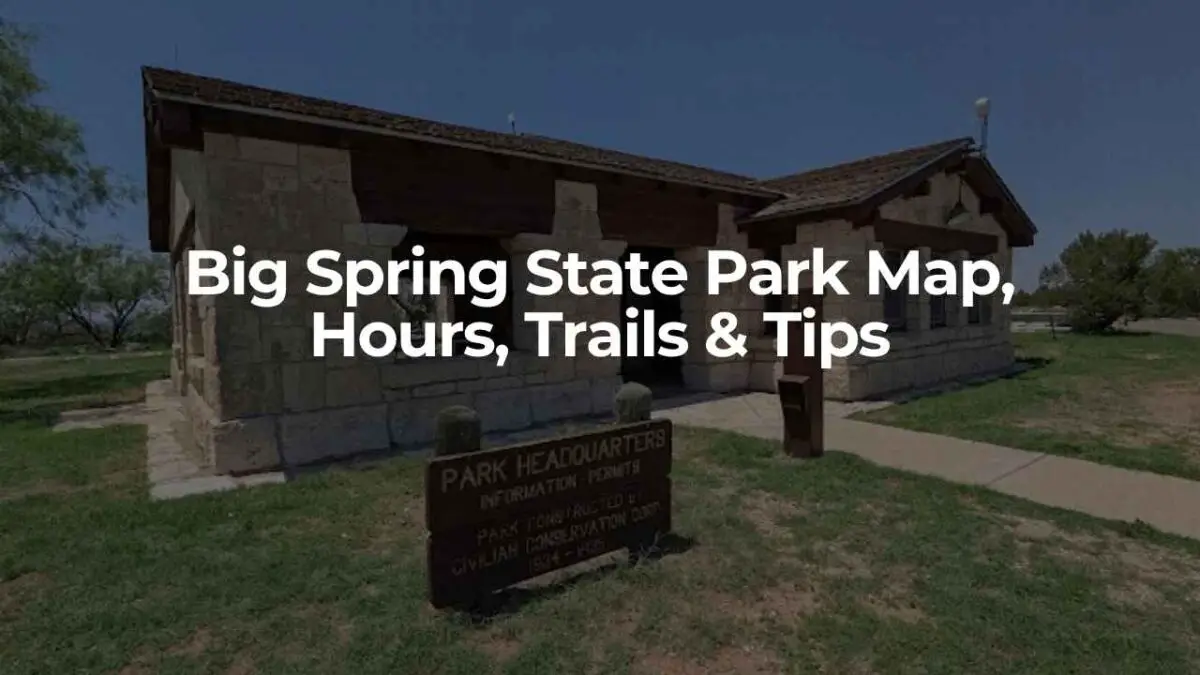
Big Spring State Park has a strong New Deal story. TPWD says the Civilian Conservation Corps built the park in 1934 and 1935, using limestone quarried on site to create the pavilion, headquarters, residence, pumphouse, restroom, and the loop road that still defines the park today.
The CCC work matters because it shaped both the look and the function of the park. The mountain drive, the stone pavilion, and the support buildings were not added as separate attractions later on; they were part of the original park vision, which gives the site a more unified feel than many older roadside stops.
TPWD also says the park has seen visitors for hundreds of years and points to a guide to historic rock carvings on Scenic Mountain. That detail gives the park a much older human timeline than the CCC era alone, and it adds archaeological interest to what could otherwise be just a scenic overlook.
According to TPWD’s Big Spring State Park history page, the bluff itself is known as Scenic Mountain, and the town below was named for the large spring that once served as the only watering place for people and herds across a wide radius. That history gives the park’s name and location a direct geographic logic instead of a purely decorative one.
- CCC-built structures: pavilion, headquarters, residence, pumphouse, restroom, and the loop road.
- Historic materials: limestone quarried on site and used to match the bluff setting.
- Old travel route: Scenic Mountain once served as a practical overlook and watering area in the region.
- Rock-carving context: the park preserves evidence of earlier visits to the mountain.
The CCC story also helps explain why the park feels so sturdy and geometric. The stonework is not ornamental for its own sake; it was built to last, and it still gives the park a distinct identity more than eighty years later.
The historic pavilion remains one of the most useful features on the hill. It gives the park a gathering space with a clear view, and it keeps the CCC legacy visible in the part of the park that visitors are most likely to notice first.
Nature, Wildlife, and the Best Seasons to Visit
Big Spring State Park sits where three ecological regions meet in Howard County. TPWD’s nature page says the western Rolling Plains are to the north and east, the Edwards Plateau lies to the south, and the Southern High Plains stretch to the west, which helps explain why the park feels like a meeting point rather than a single habitat.
That ecological overlap gives the park a mix of plants and animals that fit the semiarid West Texas setting. Mesquite, shin oak, skunkbush sumac, redberry juniper, prickly pear, and other cacti show up in the park, and the wildlife list includes cottontails, jackrabbits, ground squirrels, roadrunners, and a wide bird checklist.
According to TPWD’s Big Spring State Park nature page, the bluff also sits on the edge of the Edwards Plateau, with bluffs rising 200 feet above the rolling plains. That setting creates the broad, dry, open look that makes the park feel different from the greener state parks farther east.
The park’s climate is warm and dry, with a yearly mean temperature of 63 degrees, a January average low of 40 degrees, and a July average high of 82 degrees.
Those numbers make spring, fall, and the cooler edges of the day the most comfortable times for trail use and long view stops.
| Season | What it usually feels like | Best use of the park |
|---|---|---|
| Spring | Mild mornings, clearer views, and more comfortable walking weather | Trail walks, photography, and picnic stops |
| Summer | Dry, bright, and hotter in the middle of the day | Short visits, early starts, and sunset drives |
| Fall | Comfortable light and easier trail conditions | Longer scenic stops and relaxed hikes |
| Winter | Cooler air and smaller crowds | Quiet drives and easy daylight visits |
That climate pattern is one reason the park’s sunrise and sunset windows matter so much. The same bluff that can feel exposed at midday becomes much more inviting when the air cools and the horizon light softens.
Visitors who want a larger landscape contrast later in the trip can compare Big Spring with Palo Duro Canyon State Park. Palo Duro is a full canyon destination, while Big Spring is the easier stop for a quick overlook and a shorter walk.
That comparison works especially well for West Texas trip planning because it separates the quick scenic stop from the full destination park. Big Spring is the better fit for a simple visit, while Palo Duro and Caprock are the parks that justify a bigger chunk of the day.
Nearby Attractions and Bigger West Texas Loops
Big Spring State Park works well as part of a broader Howard County or West Texas outing. TPWD lists several area attractions near the park, including Comanche Trail Park and Historical Spring, Moss Creek Lake, the Heritage Museum or Potton House, Hangar 25 Air Museum, One Mile Lake, the Hotel Settles, and the Colorado Headwaters Loop.
Of those nearby stops, Hangar 25 Air Museum is one of the clearest add-ons for a full day in Big Spring. It gives the trip a history-and-technology angle that pairs well with the park’s CCC story and helps turn a quick scenic stop into a fuller local itinerary.
The park also works as a midpoint between smaller local stops and the larger West Texas headline parks. A traveler can stop at Big Spring, continue to Lake Colorado City State Park, and then plan a future loop to Caprock Canyons or Palo Duro Canyon when the schedule allows a much bigger park day.
Big Spring handles the short, scenic part of the trip, while the larger parks handle the longer hiking and camping goals that need more time and more water.
- Best nearby museum stop: Hangar 25 Air Museum for a history-and-aviation add-on.
- Best nearby park comparison: Lake Colorado City State Park for a second state park stop.
- Best bigger canyon comparison: Palo Duro Canyon for a longer day and more trail mileage.
- Best larger trail destination: Caprock Canyons for a more demanding West Texas outing.
Travelers who want overnight lodging can use Best State Parks in Texas with Cabins to compare state parks that offer cabins.
The park can serve as a first stop on a road trip, a final stop before dinner, or a quiet reset between larger attractions.
Frequently Asked Questions
Is Big Spring State Park free?
Yes. TPWD lists the entrance fee as free for Big Spring State Park, which makes it one of the easiest no-cost scenic stops in West Texas.
What are the hours at Big Spring State Park?
The park is open daily from 8 AM to sunset.
Early mornings and late afternoons are the best times for trail walks, drives, and photos.
What can visitors do at Big Spring State Park?
Visitors can drive the Scenic Mountain loop, walk or bike the paved route, hike the five-mile trail, use the short nature trail, picnic at the pavilion, and take in the long West Texas view from the bluff.
Is camping available at Big Spring State Park?
The official TPWD overview presents Big Spring State Park as a day-use park, so it is not a camping-focused destination. Travelers who want an overnight stay should look to other state parks or the cabin guide for lodging options.
Can visitors drive Scenic Mountain?
Yes. TPWD says the park’s paved three-mile loop road climbs to the top of Scenic Mountain and returns to the entrance, so visitors can experience the view without needing a long hike.
What should visitors know about current alerts?
As of April 3, 2026, TPWD lists a burn ban, a construction notice that shuts off electricity at the pavilion, and a city water notice. Anyone planning a picnic or group gathering should check the alert page before the trip.
How does Big Spring State Park compare with larger West Texas parks?
Big Spring is smaller, simpler, and faster to use than parks such as Palo Duro Canyon and Caprock Canyons. Those larger parks are better for long hikes and camping, while Big Spring is better for a scenic stop with very little setup.
Final Thoughts
Big Spring State Park delivers a clear West Texas payoff without asking for much time or money. The combination of a free entrance, a bluff-top view, short trails, and a historic CCC setting makes it a strong stop for travelers who want scenery without a complicated itinerary.
Big Spring State Park works as a drive, a short trail walk, and a view stop.
The nearby parks and museums add more stops to the West Texas loop.TPWD’s overview page, the alert page, and the history material remain the best sources for current conditions and park details.